Tag: repentance

  • Wednesday of the Fourth Week in Ordinary Time

    Wednesday of the Fourth Week in Ordinary Time

    Today’s readings

    Second Samuel, which we have been reading in our first readings over the last couple of weeks, paints King David, the ancestor of Our Lord, as a very human, very flawed man. Last Friday, we heard of his exploits with Bathsheba, which resulted in him murdering her husband, Uriah the Hittite. Yesterday’s reading, if it had not been Saint Blaise’s memorial, talked about the death of his son Absalom in battle.

    Today’s first reading shows a flawed David too, but maybe the flaw isn’t as easy to understand. But Joab, the leader of David’s army, can see it. In some of the verses that our first reading omits, Joab tries to dissuade David by saying: “May the LORD your God increase the number of people a hundredfold for my lord the king to see it with his own eyes. But why does it please my lord to do a thing of this kind?” Joab can see what David is choosing to ignore: that David should be content with the Lord’s blessings, and not try to take inventory. But David is convinced and the census takes place.

    What makes this even weirder is that in verse one of the 24th chapter of second Samuel, the verse that comes just before the reading we have, it is God himself who incites David to do this thing, because God is angry with the way the nation has been behaving. It’s almost like God used David to punish Israel for their sins.

    But it’s important to remember that David isn’t innocent in all this. He too has contributed to the sins of Israel, and so the punishment is warranted. Thank God that he has mercy at the end of the reading, putting an end to the pestilence.

    So here’s the thing. It’s a weird story, and it paints an Old Testament picture of a God who is quite different than the mercy we see in Jesus. But the message that we have to get is that the whole idea here is to stay in relationship with God. The Israelites wanted to ignore God unless they really, really needed him, relying instead on their alliances with pagan people, and committing the same sins as they did. Even good King David was caught up in that. The point of this reading is that God is not without mercy, but he wants his people to acknowledge their need for it. David does in the responsorial psalm, calling out to God, “Lord, forgive the wrong I have done.”

  • Tuesday of the Thirty-third Week in Ordinary Time

    Tuesday of the Thirty-third Week in Ordinary Time

    Today’s readings

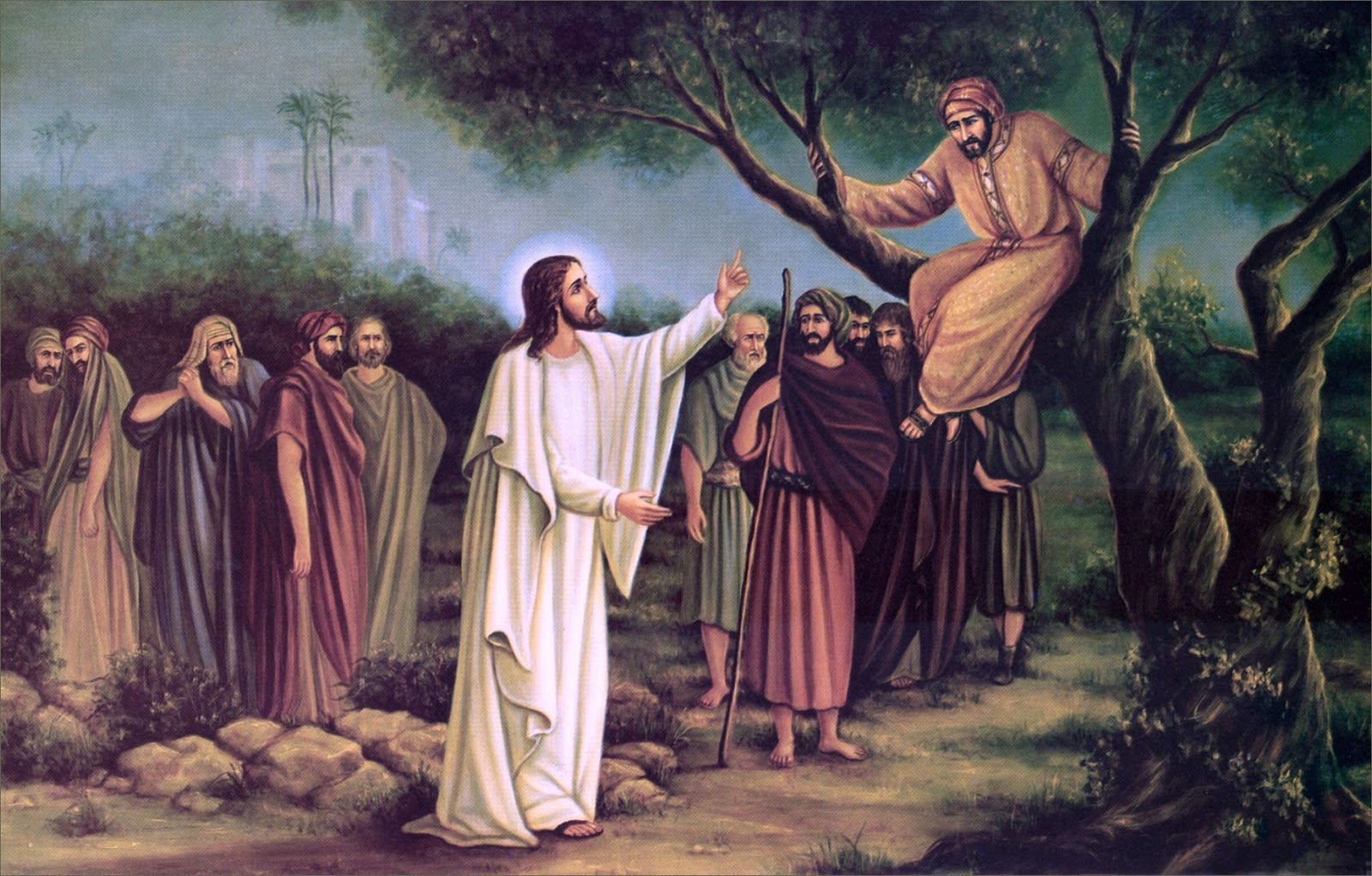
    I just love this story about Zacchaeus! In particular, there are two main components of the story that really stand out for me as hallmarks of the spiritual life.

    The first is Zacchaeus’s openness. First, he is so eager to see Jesus that he climbs up a tree to get a look at him. We don’t have to go that far. All we have to do is spend some time in Eucharistic Adoration, or even just some quiet moments reflecting on Scripture, or meditative prayer, even participating in Mass. All of those are ways to see Jesus, but like Zacchaeus, we have to overcome obstacles to get a look at him. For Zacchaeus, that meant climbing up a tree to overcome the fact that he was apparently vertically challenged! But for you and me, that might mean clearing our schedule, making our time with Jesus a priority. Zacchaeus’s openness also included inviting Jesus in, despite his sinfulness. He was willing to make up for his sin and change everything once he found the Lord. We might ask ourselves today what we need to change, and how willing we are to invite Jesus into our lives, despite our brokenness.

    The second thing that stands out for me is what Jesus says to those who chided him for going into a sinner’s house. “For the Son of Man has come to seek and to save what was lost.” What wonderful words those are for us to hear. Because we know how lost we have been at times, and how far we have wandered from our Lord. But the Lord seeks us out anyway, because we are too valuable for him to lose.

    And all we have to do is to be open to the Lord’s work in our lives, just like Zacchaeus was. What a joy it will be then to hear those same words Jesus said to him: “Today salvation has come to this house.”

  • The Third Sunday in Lent, Cycle C Readings

    The Third Sunday in Lent, Cycle C Readings

    Today’s readings

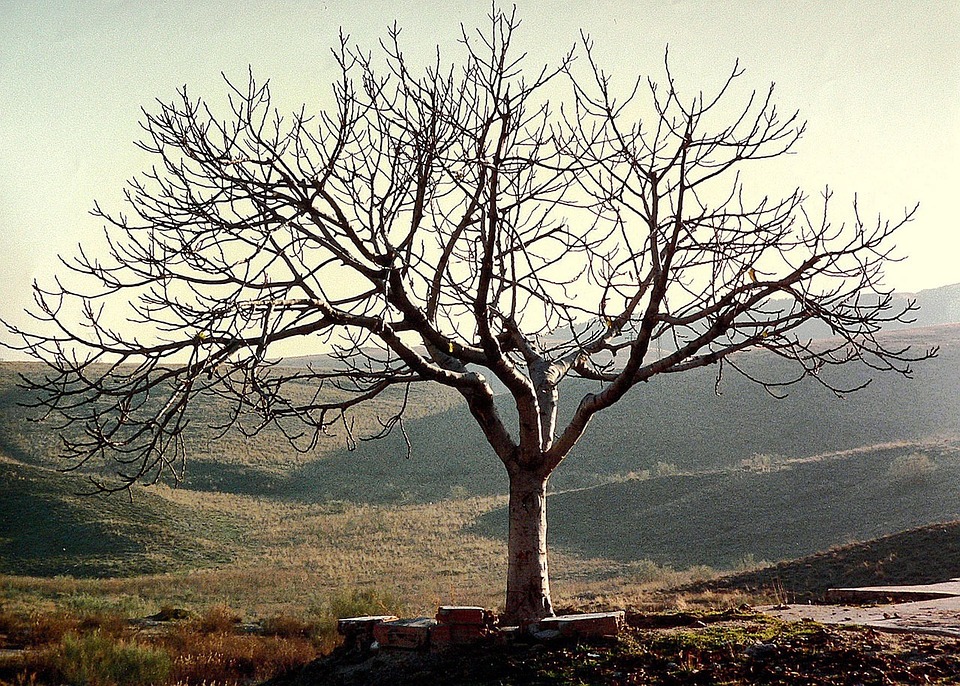
    God is extremely patient when it comes to extending mercy. That’s what Jesus is talking about in this rather odd parable. I have to admit that I’m no gardener: I’m just not patient enough for that! So I needed to do a little digging (no pun intended) to get a real sense of where this parable is going. I discovered that there are a couple of things we should all know before we get into this little story. First of all, fig trees actually did take three years to bear fruit. During those three years, of course, they would need to be nourished and watered and pruned and tended. It was a lot of work, so when those three years of hard work were up, you better believe the farmer certainly wanted fig newtons on his table! And the second piece of background is that, since the days of the prophet Micah, the fig tree has been a symbol for the nation of Israel, and Jesus’ hearers would have known that. So when they hear of a fruitless fig tree, it was a little bit of an accusation. Maybe more than a little bit.

    Conventional wisdom is that if the tree doesn’t bear fruit after three years of labor and throwing resources at it, you cut it down and plant a new one; why exhaust the nutrients of the soil? And if you’re an impatient gardener like me, why exhaust the gardener?! But this gardener is a patient one; he plans to give it another year and some extra TLC in hopes that it will bear fruit.

    So here’s the important take-away: God is not like Father Pat; he’s the patient gardener! And we, the heirs to the promise to Israel, if we are found unfruitful, our Lord gives us extra time and TLC in order that we might have time to repent, take up the Gospel, and bear fruit for the kingdom of God. That’s kind of what Lent is all about.

    But we have to remember: we don’t get forever; if we still don’t bear fruit when the end comes, then we will have lost the opportunity to be friends of God, and once cut down in death, we don’t have time to get serious about it. The time for repentance is now. As Saint Paul told the Corinthians, and us, on Ash Wednesday: “Behold, now is a very acceptable time; behold, now is the day of salvation.” The time for us to receive and share God’s grace is now. The time for us to live justly and work for the kingdom is now. The time for us to stop bickering and be kind to one another is now. The time to work on our prayer life is now. Because we don’t know that there will be tomorrow; we can never be presumptuous of God’s mercy and grace.

    The consolation, though is this: we don’t have to do it alone. The Psalmist today sings that our God is kind and merciful: We get the TLC that our Gardener offers; the grace of God and the gifts of the Holy Spirit. We can trust in the Lord God, our great “I AM,” to come to us and lead us out of captivity to sin just as he was preparing to do for the Israelites in the first reading today. We can put our trust in God’s mercy. We are always offered the grace of exodus, all we have to do is get started on the journey and begin once again to bear the fruit of our relationship with Christ.

    Fediverse Reactions
  • Tuesday of the Thirty-third Week in Ordinary Time

    Tuesday of the Thirty-third Week in Ordinary Time

    Today’s readings

    I just love this story about Zacchaeus! In particular, there are two main components of the story that really stand out for me as hallmarks of the spiritual life.

    The first is Zacchaeus’s openness. First, he is so eager to see Jesus that he climbs up a tree to get a look at him. We don’t have to go that far. All we have to do is spend some time in the Adoration Chapel, or even just some quiet moments reflecting on Scripture, or meditative prayer, even participating in Mass. All of those are ways to see Jesus, but like Zacchaeus, we have to overcome obstacles to get a look at him. For Zacchaeus, that meant climbing up a tree to overcome the fact that he was apparently vertically challenged! But for you and me, that might mean clearing our schedule, making our time with Jesus a priority. Zacchaeus’s openness also included inviting Jesus in, despite his sinfulness. He was willing to make up for his sin and change everything once he found the Lord. We might ask ourselves today what we need to change, and how willing we are to invite Jesus into our lives, despite our brokenness.

    The second thing that stands out for me is what Jesus says to those who chided him for going into a sinner’s house. “For the Son of Man has come to seek and to save what was lost.” What wonderful words those are for us to hear. Because we know how lost we have been at times, and how far we have wandered from our Lord. But the Lord seeks us out anyway, because we are too valuable for him to lose.

    And all we have to do is to be open to the Lord’s work in our lives, just like Zacchaeus was. What a joy it will be then to hear those same words Jesus said to him: “Today salvation has come to this house.”

  • The Second Sunday of Advent

    The Second Sunday of Advent

    Today’s readings

    When I was little, time seemed to go by so slowly.  But all of that has changed as I have gotten older.  This year, particularly, seems like a blur. This is the sense that we get in today’s readings. Saint Peter says in our second reading today that, “with the Lord one day is like a thousand years and a thousand years like one day.” And he makes the point that if time slips away so quickly, we need to be people who live the Gospel all the time.

    In the Gospel reading, the people are longing for newness, and they respond to Saint John the Baptist’s invitation to repent and be baptized. He preaches with urgency, and they responded in faith. We are offered that same invitation by Jesus who longs for us to be reconciled and to come into full relationship with him.

    So we then have to acknowledge our sins – personal sins and those in which we participate as a society.  And then we have to accept the process of repentance.  We can’t keep sinning; we have to repent, literally be sorry for our sins and turn away from them, as we turn back to God.  That’s an important Advent message for every time and place.

    It genuinely strikes me that, if we’re ever going to get past the bad stuff going on in our nation and our world, if we’re ever going to finally put an end to whatever sadness this world brings us, we have to begin that by putting an end to the wrong that we have done.  That’s why reconciliation is so important.  What each of us does – right or wrong – affects the rest of us.  The grace we put forward when we follow God’s will blesses others.  But the sin we set in motion when we turn away from God saddens the whole Body of Christ.  We are one in the Body of Christ, and if we are going to keep the body healthy, then each of us has to attend to ourselves.

    So today, I am going to ask you to go to confession before Christmas.  I don’t do that because I think you’re all horrible people or anything like that.  I do that because I know that we all – including me – have failed to be a blessing of faith, hope and love to ourselves and others at some point, and I know that so many people struggle with persistent sins, nasty thorns in the flesh, day in and day out.  And God never meant it to be that way.  He wants you to experience his love and mercy and forgiveness and healing, and you get that most perfectly in the Sacrament of Penance.

    Speaking of confession, here’s one of mine. You may have heard it before, but I think it’s important enough to share again. There was a time in my life that I didn’t go to confession for a long time.  I had been raised at a time in the Church when that sacrament was downplayed.  It came about from what I came to realize was a really flawed idea of the sacrament and the human person.  But the Church has always taught that in the struggle to live for God and be a good person, we will encounter pitfalls along the way.  We’ll fail in many ways, and we will need forgiveness and the grace to get back up and move forward.  That’s what the Sacrament of Penance is for!

    One day, I finally realized that I needed that grace and I returned to the sacrament.  The priest welcomed me back, did not pass judgment, and helped me to make a good confession.  It was an extremely healing experience for me, and now I make it my business to go to the sacrament as frequently as I can, because I need that healing and mercy and grace.  And you do too.  So please don’t leave those wonderful gifts unwrapped under the tree.  Go to Confession and find out just how much God loves you.

    When you do find that out, you’ll be better able to help the rest of the Body of Christ to be the best it can be.  When your relationship is right with God, you will help the people around you know God’s love for them too.  That kind of grace bursts forth to others all the time.

    This year, we have a very short Advent, and that makes it more important than ever to get to the sacrament as soon as you can. Next weekend is the last one before Christmas to go to confession here: there will not be confessions on December 24th or even on the 31st.   But next weekend, there are two opportunities.  On Saturday the 16th, we have our regular confessions at 2:30. Be sure to come at 2:30 so we don’t miss you.  Then the next day, Sunday the 17th, we have our regular “confessionpalooza” where there will be thirteen priests available to hear confessions in English, Spanish, and Polish. That begins shortly after the 12:15 Mass.

    If you have been away from the sacrament for a very long time, I want you to come this Advent.  Tell the priest you have been away for a while, and expect that he will help you to make a good confession.  That’s our job.  All you have to do is to acknowledge your sins and then leave them behind, so that Christmas can be that much more beautiful for you and everyone around you.  Don’t miss that gift this year: be reconciled.

  • Tuesday of the Twenty-seventh Week of Ordinary Time

    Tuesday of the Twenty-seventh Week of Ordinary Time

    Today’s readings

    Try as we might for perfection in our journey of faith, we stumble and fall sometimes.  That’s just the way it is in this fallen world.  But that being the case, we have in our Liturgy of the Word this morning some saints who can accompany us on this precarious journey.

    We will be immersed in Jonah’s story for the next few days.  This story is not at all about the great things Jonah did.  It is more about the journey of discipleship that was Jonah’s life, and about the wonderful things that God did in and through the rather unwilling disciple who was Jonah.  Today’s reading has Jonah finally doing what God asked him to do.  Fresh out of the belly of a big fish, Jonah finally realizes that God’s call in his life is not optional.  So he does what he is told to do, and accomplishes the conversion of the evil city Nineveh.  But Jonah’s story is not done yet, and we’ll see this week the ups and downs he still has to endure.

    And then we have the story of poor Martha in today’s Gospel.  I often think that Martha gets a raw deal in this story.  Someone had to make the food!  But I think the real message of this Gospel story is that neither Martha nor Mary had salvation all wrapped up.  Because there are times when we definitely have to be Mary, sitting at the Lord’s feet in adoration, prayer and praise.  But if we are never Martha, our faith is useless.  There has to be a balance between our spiritual life and our service.

    So for those of us who haven’t yet achieved spiritual perfection, the message is that we have lots of saints in Scripture who are on the journey with us.  The point is to keep moving on the journey, so that we will one day reach perfection in that kingdom that knows no end.  And may God be glorified in the belly of the big fish or in Nineveh; in our Martha days and our Mary days, in our prayer and our work.

  • Friday of the Twenty-sixth Week of Ordinary Time

    Friday of the Twenty-sixth Week of Ordinary Time

    Today’s readings

    Pride and presumption are insidious sins. They make any kind of grace impossible, for they even deny that grace is needed or wanted. If we have no need of a Savior, then no relationship with God is even possible. And not having a relationship with God is something we call “hell.” So the disciple doesn’t get to harbor pride and doesn’t get to presume that God will take care of her or him. Instead the disciple must be very mindful of God, and must constantly nurture the relationship in such a way that they are caught up in the very life of God.

    In our first reading, the Hebrew exiles in Babylon realized how far they were from this kind of relationship, and with the prophet Baruch, they pray a prayer of repentance. Too bad the people of Chorazin and Bethsaida, in our Gospel reading, didn’t do the same. They needed to. They were totally unmindful of God, and they refused to repent. Which is inconceivable given the mighty deeds Jesus had been doing among them. Jesus calls them to task on it. We don’t know if that had an effect on them. But we can be like that too.  Sometimes we are so presumptuous of God’s mercy and favor that we refuse to repent of the things that separate us from Him. We need to be open to change.

    The disciple is called to humbly place himself or herself in God’s mercy, acknowledging dependence on a Savior who has loved us into existence and sustains those who follow him. The disciple shuns pride and presumption, and humbly prays with the Psalmist, “For the glory of your name, O Lord, deliver us.”

  • Palm Sunday of the Passion of Our Lord

    Palm Sunday of the Passion of Our Lord

    Today’s readings

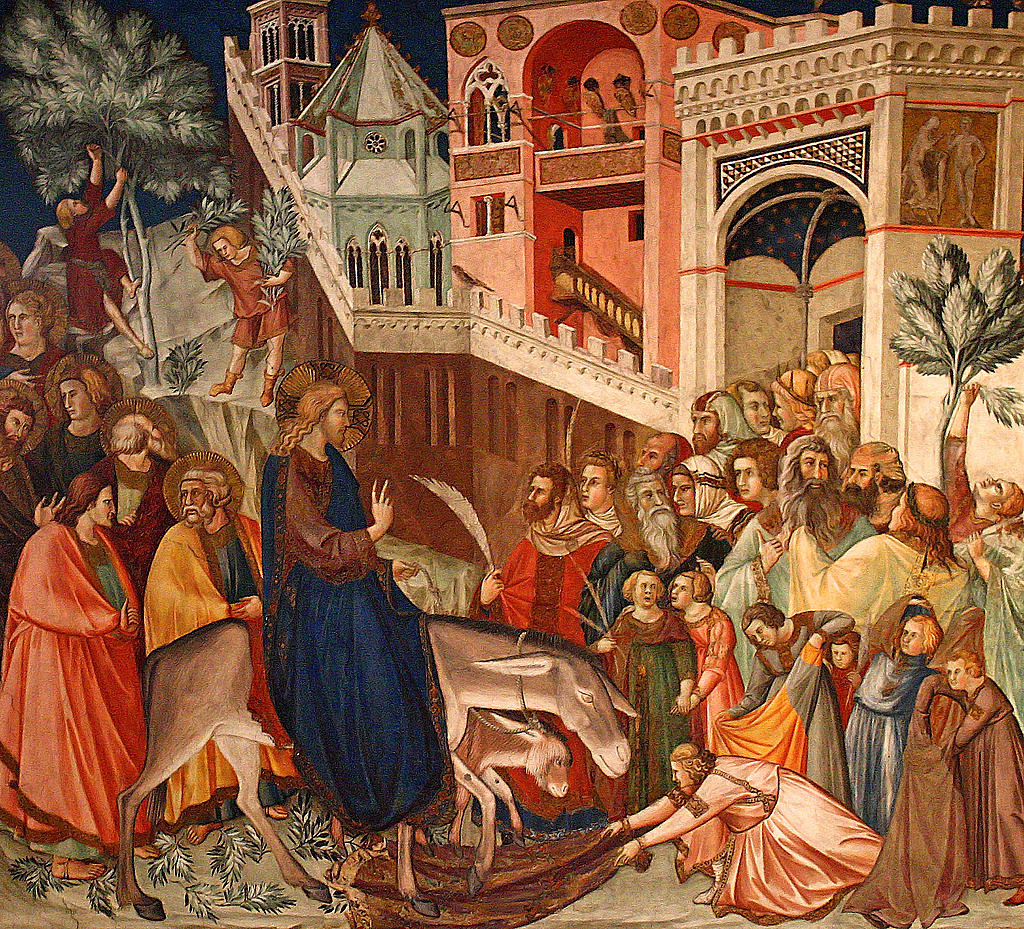
    Palm Sunday is a Liturgy that can be a little puzzling. We start out on a seemingly triumphant note.  Jesus enters Jerusalem, the Holy City, and the center of the Jewish religion; the city he has been journeying toward throughout the gospel narrative, and he enters it to the adulation of crowds of people assembled for the feast.  Cloaks are thrown down in the street, the people wave palms and chant “Hosanna.”  This is it, isn’t it?  It seems like Jesus’ message has finally been accepted, at least by the crowds who have long been yearning for a Messiah, an anointed one, to deliver them from foreign oppression.

    Only that wasn’t the kind of salvation Jesus came to offer.  Instead, he preached forgiveness and mercy and real justice and healed people from the inside out.  He called people to repentance, to change their lives, to hear the gospel and to live it every day.  He denounced hypocrisy, and demanded that those who would call themselves religious reach out in love to the poor and those on the margins.  It wasn’t a welcome message; it wasn’t the message they thought the messiah would bring.

    I think it’s instructive to reflect on the groups of people reacting to Jesus and turning their backs on him just five days after the triumph they offered.  First there are the Jewish leaders who were jealous and suspicious and angry about the way Our Lord called them out for abandoning the people and instead insisting on the rigorous and mindless observance of the law.  There are the Romans, those foreign occupiers who wanted the people to be quiet, obedient, and paying taxes, and who often sided with the Sanhedrin in order to keep the people docile.  There are the crowds, Jews and Gentiles, who were happy enough to be fed with miracles but disappointed that Jesus wasn’t the same kind of Messiah they were praying for, and instead was one who called them to repentance, a change in their lives.  There were the apostles, who you would think would trust Jesus by now, but instead fled in fear.  There was Peter who abandoned his friend, and Judas who gave in to despair.  There was Herod and Pilate who were manipulating the event trying to maintain their own pathetic little piece of history.  It’s almost a perfect storm.

    Who are we going to blame for this?  Whose fault is it that they crucified my Lord?  Well, we know none of those groups and people are really to blame.  They certainly did Jesus wrong, but that wasn’t ever the reason he went to the Cross.  Jesus was crucified for me.  For you.  For our sins.  For those sins that have kept us from being friends of God for far too long.  For those sins that have abandoned God and rejected his grace time and time again.  Jesus came, and lived, and bled, and died to take away my sins.  And yours.  He willingly gave his life so that we might live. 

    He gave himself for us.

    We adore you, O Christ, and we bless you.  Because by your Holy Cross you have redeemed the world.

  • Tuesday of the Fourth Week of Lent

    Tuesday of the Fourth Week of Lent

    Today’s readings

    The waters that flowed from the temple in the first reading are the same waters that were stirred up in the pool at Bethesda, and those are the same waters that if you’re real quiet, you can hear flowing over in the baptistry. These are the waters of baptism that freshen all of the world and refresh those who live in it. Those waters of baptism provide healing for our sins and hurts and addictions, and all the things that we find so difficult to let go of.

    But we have to have courage to wade into them as our Lord invites us in, and perhaps we may need some help to get in there.  But it’s not impossible. We, at least have been in them before and have been washed clean. Our joy is now to look back at our baptism, renew our baptismal promises, and recommit ourselves to the healing waters that wash away our sins and bring us, pure and joyful, to our God.

  • Tuesday of the Second Week of Lent

    Tuesday of the Second Week of Lent

    Today’s readings

    Many people who have been away from the Sacrament of Penance for a long time have said that they were afraid to come back to the Church because they felt like their sins defined them.  That they walked around with some kind of scarlet letter on their persons.  I think this is the experience that Isaiah is getting at when he says, “Though your sins be like scarlet, they may become white as snow; Though they be crimson red, they may become white as wool.”

    Our sins do not define us, they are absolutely not who we are, not who we have been called to be.  We are called to be people who embrace repentance, so that we can serve and worship our God in integrity of heart.  So for us, repentance has to include a commitment to justice for those we have marginalized.  As the prophet Isaiah commands us this morning: “redress the wronged, hear the orphan’s plea, defend the widow.”  Our penance and our righteousness has to be approached in humility, remembering that those who humble themselves will be exalted.  And repentance has its reward, as the Psalmist tells us: “To the upright I will show the saving power of God.”

    How do we need to repent today?  What does that need to look like for us?  Let’s take some quiet time to ask our God to guide us to humbling ourselves and repenting so that we can embrace the full graces of Lent.