Tag: sin

  • The Easter Vigil in the Holy Night

    The Easter Vigil in the Holy Night

    I have to let you in on a little secret tonight.  Very often, when we preach a homily, the message ends up being for us preachers.  It’s not that we set out to do that; actually if we thought about it I’m pretty sure we would avoid it at all costs.  It’s just that when we pray about our homily, and we write it with the inspiration of the Spirit, after we preach it, we often sit down and say, “Oh.  You were talking to me, weren’t you, God?”

    Lent has been like that for me.  Back when I picked the theme that we have been using to guide our reflection during these somber days, “Rediscover Our Need for a Savior,” I thought it was a clever way to hearken back to the book we gave out at Christmas, Rediscover Catholicism.  But as we’ve reflected and preached our way through Lent, I’ve found the message to be quite personal, more so than I would have intended.  I hope that you too have had the opportunity to rediscover a relationship with Christ that maybe wasn’t as fervent as it should be.  Lent is supposed to do that for us.

    For me, these Triduum days have been amazing reminders of why I need a Savior.  As we hear the Scriptures and watch the Liturgy unfold, we can’t help but be reminded of the awesome price our Lord paid for each one of us on that Cross.  On Friday, I looked at the cross and remembered it was my sins that put him there.  I remembered that it was my brokenness that he suffered to redeem.  And most of all, I remembered that God loved me enough that not doing it was completely out of the question.  He did that, for me.

    We do indeed need a Savior, all of us personally, but also as a society.  All you have to do is turn on the news and everything you hear points to a desperate, urgent need for salvation.  This world would have us accept the darkness and say it’s good enough.  This world would have us live for today, with no thought to an eternity that it really doesn’t acknowledge anyway.  This world would say there is no need for a Savior, because we’re good enough to do what we need to do.  But the world is dead wrong.

    We can’t possibly ever make up for our many sins personally and as a society all by ourselves.  We have constantly made choices that take us out of friendship with God and put us on paths that lead nowhere good.  If we’re honest, all of us would admit that.  It takes a Savior who loves us more than we deserve to set things right.

    And the thing is, we have that Savior.  Right here and right now.  This is the night.  Not some distant long-past night, but this night is the night, when Christ broke the prison-bars of death and rose triumphant from the underworld!  We keep vigil on this night because our celebration of this Most Holy Vigil brings us into communion with every believer from every time and place and with our Savior as he bursts forth from the underworld.

    This night changes everything.  The ancient foe is defeated, the sentence of condemnation has been remitted, even sinful Adam is raised up from death to new life.  As an ancient homilist wrote in today’s Office of Readings, “God has died in the flesh and hell trembles with fear.”  No power of any kind can keep our God’s salvation from coming to fruition.  Christ’s obedience on the Cross, suffering the sentence for our sins, rising from the dead, all of this gives us hope of eternal glory on that great day when we meet our God face to face.

    And this is possible for one very simple reason: we have a Savior.  Our Risen Lord is the one who urges us to toss aside our water jugs and receive living water; he urges us to wash away our blindness and see ourselves, our God, and other people the way they really are; he beckons us forth from the graves that have kept us from friendship with God for too long, untying the bandages of our sinful nature.  He gives us the opportunity for eternity, and all we have to do is to allow the fire of his glory to be ignited in our hearts.  All we have to do is acknowledge our need for a Savior, and embrace his cross in order to receive his resurrection.

    Because as I sang a while ago, our birth would have been no gain had we not been redeemed.  Who cares if we were born if all there is is this paltry existence?  Why would we want to be born if there is no eternity, no possibility of anything past this life, fraught as it often is with hardship and pain?  But on this night, this very night, that depressing prospect is given a proper burial, that darkness is set ablaze by the new fire, and our cries of anguish and despair give way to shouts of “Alleluia!”

    Brothers and sisters, we all need a Savior.  And that Savior is the one morning star who never sets: Jesus Christ our Lord who, coming back from death’s domain, has shed his peaceful light on all humanity, and lives and reigns for ever and ever!  Amen!  Alleluia!
  • Tuesday of the Second Week of Lent

    Tuesday of the Second Week of Lent

    Today’s readings

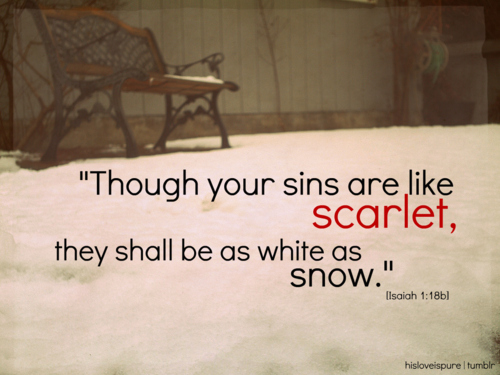
    Many people who have been away from the Sacrament of Penance for a long time have said that they were afraid to come back to the Church because they felt like their sins defined them.  That they walked around with some kind of scarlet letter on their persons.  I think this is the experience that Isaiah is getting at when he says, “Though your sins be like scarlet, they may become white as snow; Though they be crimson red, they may become white as wool.”

    Our sins do not define us, but our repentance does.  And that repentance has to include a commitment to justice for those we have marginalized: “redress the wronged, hear the orphan’s plea, defend the widow.”  Our penance and our righteousness has to be approached in humility, remembering that those who humble themselves will be exalted.  Our repentance has its reward, as the Psalmist tells us: “To the upright I will show the saving power of God.”

  • Saturday of the Twenty-ninth Week of Ordinary Time

    Saturday of the Twenty-ninth Week of Ordinary Time

    Today’s readings

    Sin is exhausting.  Anyone who has struggled with sin, or a pattern of sin, in his or her life can tell you that.  Those who have been dragged down by any kind of addiction or who have tried to work on a character flaw or striven to expel any kind of vice from their lives often relate how exhausting the sin can be.  Sin saps our spiritual energy, weakens our resolve to do good, and causes us to turn away in shame from family, friends, and all those whose spiritual companionship we need in order to grow as Christian men and women and flourish in the world.  That goes all the way back to Adam and Eve, who suddenly became aware of and ashamed of their nakedness in the Garden of Eden, and to Saint Paul who prayed over and over to get rid of his “thorn in the flesh. ” So when we are exhausted by sin, we should not be surprised.  That’s just the way sin works.

    But we don’t have to be content with that either.  The good news that St.  Paul brings us in the first reading today from his letter to the Romans is that sin doesn’t get the last word.  Those who did not know Christ had to live according to the law, with all of its precepts and principles and technicalities.  But the law doesn’t sanctify a person, it only makes them more aware of their guilt and unworthiness.  That’s why God sent his only Son into our world.  It is only through our relationship with Jesus Christ that we can ever be cleansed, only through his sacrifice on the Cross, that we can ever be reunited with our God.

    As the Psalmist says today, we are the people who long to see God’s face.  Because nothing else will heal us.  Even if our sin makes us want to turn away and hide, we cannot hide from our God – indeed we dare not hide from our God if we ever want to be unburdened of the exhausting weight of our sinfulness.  At this Eucharist, we celebrate our Lord who cares enough about us to bring us back unstained to the banquet of the Kingdom.  We open ourselves to his mercy, revealing our brokenness, our sinfulness, our shame and our unworthiness.  He opens himself to us in love, binding up that brokenness, erasing the sinfulness, healing our shame and lifting up whatever in us is unworthy.  Jesus Christ is our salvation and our redemption.  Our sins do not have to weigh us down, and we who receive him in the Eucharist today do not ever have to settle for being exhausted by our sins.

  • Thursday of the Twenty-fourth Week of Ordinary Time

    Thursday of the Twenty-fourth Week of Ordinary Time

    Simon the Pharisee had committed a grave error in hospitality, and a serious error in judgment.  In those days, when a guest came to your home, you made sure to provide water for him or her to wash their feet, because the journey on foot was often long and hot and dirty, and it was pretty much always made on foot.  But Simon had done no such thing for Jesus.

    Simon’s intentions were not hospitable; rather he intended to confront Jesus on some minutiae of the Law so as to validate his opinion that Jesus was a charlatan.  He judged the woman to be a sinner, and reckoned Jesus guilty of sin by association.  But Jesus is about forgiveness.  He didn’t care about the woman’s past; he just knew that, presently, she had need of mercy.  Her act of love and hospitality, her posture of humility, her sorrow for her sin, all of these made it possible for Jesus to heal her.

    But the one who doesn’t think he is in need of healing can never be healed.

  • The Eleventh Sunday of Ordinary Time

    The Eleventh Sunday of Ordinary Time

    Today’s readings

    Today’s Scriptures speak to us all about our need for a Savior.  If we didn’t need a Savior, this would be a pretty strange gathering.  Why bother getting out of bed and dragging ourselves here?   Even  good King David knew that he needed a Savior and he, very appropriately, helps us to pray in today’s Psalm response: “Lord, forgive the wrong I have done.”

    At the bottom of this need for a Savior is the fact that we are all sinners, every one of us.  We may not have done anything notorious, but we have to know that we all fall short of God’s expectations of us – and not just sometimes, but way more often than we’d like to count.  I know that’s not easy to hear, but it’s also not easy to argue against, is it?  It’s not popular to talk about sin even from the pulpit these days, because in our society everything is someone else’s fault.  In days gone by, if a child misbehaved in school, woe to him when he got home.  Today, if a child misbehaves in school, woe to the teacher when the parents find out the child has been held accountable.  If we spill coffee on ourselves and it burns us, we sue the purveyor who sold it to us.  Personal responsibility is not something we are ready to accept, let alone teach to our children.  Lord, forgive the wrong we have done indeed!

    And so all of us sinners who are in great need of a Savior have gathered here for this weekend Liturgy.  What we hear from today’s Scriptures is all about sin.  First, sin has consequences.  Second, repentance is crucial.  Third, forgiveness is freely given.  And finally, reconciliation brings joy.

    Sin has consequences.  This was what King David heard in today’s first reading.  You may know the story.  While the war was raging and his army was fighting for his own survival, David looked out and saw the wife of Uriah the Hittite, who was very appealing to him.  He sent for her, and had his way with her.  In the society of that day, such an act was an offense primarily against the woman’s husband, because it ended his blood line.  When that happened, the man’s property would not be passed on to his heirs after death, and would instead be given to the state.  King David was the state, so David’s taking of Uriah’s wife also meant that he stole his inheritance.  And just to make the deed complete, he arranged for Uriah to be “accidentally” killed in battle.  This was not just a minor sin or a tiny indiscretion.  What God says to David in today’s first reading is that yes, his sin is forgiven because God is mercy.  But, because of his wrong choices, David has unleashed a chain of events that will result in violence being part of his family’s inheritance forever.  That is not punishment for his sin, but rather the consequence of it.  Even when our sins have been forgiven, we often unleash consequences we could not have foreseen.  That’s how insidious and destructive sin can be, and that is why there is no such thing as a victimless or private sin in which no one else is affected.

    Repentance is crucial.  We see that move to repentance in King David’s behavior today.  When confronted by God, David is quick to repent: “I have sinned against the LORD,” David says.  And this is the crucial step.  God is always ready to forgive, but we have to recognize that we need to be forgiven.  We have to know that we need a Savior.  I think we struggle with this.  I remember the first Ash Wednesday after the new Roman Missal came out, and the words were changed for the giving of ashes.  A couple of people were really angry with me for saying “Repent and believe in the Gospel.”  I am so aware of my own need for repentance that I didn’t really know what to say to them.  God’s forgiveness takes two: God to offer it, and us to receive it.  That’s why the Sacrament of Penance is so important.  You have to get to confession at least once a year, and I say it should be more like once a month.  We should always put ourselves in the presence of God’s mercy.  If you want God’s grace, all you have to do is to make a move to receive it.  We all need a Savior, and we are all promised one if we will just ask for it.

    Forgiveness is freely given.  God’s response to David didn’t even take a minute.  As soon as he says that he had sinned against the Lord, God’s response comes through Nathan the prophet, loud and clear: “The LORD on his part has forgiven your sin: you shall not die.”  And notice, please, that the Lord doesn’t say, “OK, I forgive you,” as in “now that you’ve said ‘I’m sorry’ I will forgive you.”  No.  The message is that David’s sin has been forgiven; that is, the forgiveness has already happened.  It is not necessary that we repent, or do anything, in order that we be forgiven.  But it is crucial that we repent in order to receive that forgiveness and grace that is given to us freely, without a moment’s hesitation, by our God who is at his core, forgiveness and grace.  We should not, of course, commit the further sin of presumption by assuming that that it does not matter what we do because we are always forgiven.  But above all, we should not deprive ourselves of the grace of forgiveness by choosing not to confess and repent and receive what is offered to us.

    Reconciliation brings joy.  I think what is so important in today’s Gospel is for us to see how great is the joy that comes from sin forgiven and mercy received.  The unnamed “sinful woman” is not bathing and anointing the Lord’s feet so that he will then forgive her sins.  She is bathing and anointing him because she is overjoyed that her many sins have been forgiven.  The little parable Jesus tells to Simon the Pharisee makes that clear: the one who was forgiven the greater debt loves more.  He loves not to have his debt forgiven, but instead he loves because the debt has already been canceled.  And so we too come together with joy this day because the debt of our sin has been erased.  We pour out our time, talent, and treasure, and especially our own lives, on this altar of sacrifice, because our sins have been forgiven and the debt has already been paid by our Savior who stretches out his arms on the cross so that we might have salvation and might be reconciled with our God who created us for himself.  Today in that silent time after Communion, we should all be filled with joy because of the great forgiveness that is ours when we sinful people realize that we need a Savior and turn to find his arms already open to us.  What other response is there to that grace but tears of joy?

    It might not be popular to talk about sin these days but, brothers and sisters in Christ, it’s the only reason we’re here together this day.  If we don’t need a Savior, then we don’t need to waste an hour in Church, do we?  But the truth is we are a sinful people, a people in need of a Savior, who gather together to sing the words of King David, “Lord forgive the wrong I have done.”  In our gathering we can cry out in tears of joy for forgiveness freely given and mercy abundantly bestowed. “Blessed” – indeed happy – “is the one whose fault is taken away, whose sin is covered.”

  • The Easter Vigil in the Holy Night

    The Easter Vigil in the Holy Night

    Tonight’s readings

    Dear Brothers and Sisters, how good it feels to say “Alleluia” tonight!  Ever since we put the acclamation of our Resurrection joy away some forty days ago, we have been yearning for the opportunity to celebrate, once again, the fullness of our salvation.  And this is the night!  This is the night when Jesus Christ breaks the prison-bars of death and rises triumphant over the grave!  We have kept vigil for the fullness of that promise to be revealed, and now, here we are!  How could we do anything less than shout “Alleluia” with all of our joy?!

    Tonight, we have gathered in the oppressive darkness of the world around us.  The sadness of sin and death, culminating in the death of our Savior, seemed for a time to have triumphed.  We know, only too well, that it was our sins that brought Jesus to the Cross: it was indeed our infirmities that he bore, our brokenness on display for all the world to see.  So as we gathered in a dark Church or out on the dark piazza, we certainly must have felt that sadness in a special way.  But we know the whole story, don’t we?  And because we do know the whole story, even in our experience of sadness, there is that expectation, that part of us that knows that joy is on its way.

    As we have gathered over the last three nights to let the story of our salvation unfold, we have had an ever-heightened sense of yearning for the story to come to its fruition.  And tonight, we are treated to an even greater dose of that.  Tonight, we have heard stories of God’s desire to bring us back to him.  We have seen that time and time again, God has broken through the history of our brokenness, has triumphed over the lure of sin, and has redirected his chosen ones to the path of life.  We have recalled that God created everything to reflect the resplendent goodness that is God; we have seen Abraham, on the cusp of inheriting the promise of eternity for all his descendants, called upon to sacrifice his only son to show his love, only to have it all turned on its head when God promises to provide the lamb for the sacrifice, that lamb that is the foreshadowing of a Savior; we have seen Moses lead the people out of the Egypt that has held them slaves to sin, through the desert of desolation and yearning for God, safely through the waters of the Red Sea which flowed back to wash all their sins away, that journey that is the prefiguring of the sacrament of Baptism; then the prophets Isaiah and Ezekiel have called us to come to the water, to be nourished freely and cleansed of our impurities.

    Tonight we have heard in reading after reading, that God will absolutely not ever abandon his loved and chosen ones to sin and death.  We have heard that God initiated the covenant and pursues it forever, never forcing us to accept his will, but willing that we should follow him and accept his mercy.  God has provided the lamb of salvation, the acceptable sacrifice which brings salvation to the whole world.  God has gone to the cross and been in the tomb and descended to hell – there is nowhere that is beyond the reach of God’s mercy, there is no place, no depth to which God will not go to redeem his beloved creation.  God’s mercy endures forever!

    God delights in the freedom of will that we possess as a natural part of who we are, because it gives us the opportunity to freely choose to love him, as he freely chooses to love us.  But he knows that same free will can and will also lead us astray, into sin, into evil.  The free choice to love God is a greater good than the absence of evil, so not imbuing us with free will was never an option.  Instead, evil and sin and our fallenness are redeemed on this most holy of all nights, this night which “dispels wickedness, washes faults away, restores innocence to the fallen, and joy to mourners, drives out hatred, fosters concord, and brings down the mighty.”

    And thus it is fitting that this night is the night when we focus on Baptism.  Everything is in place: the waters of the Red Sea are parted, the pillar of fire glows to the honor of God, we are led to grace and joined to God’s holy ones of every time and place, Christ emerges triumphant from the underworld and the sin of Adam is redeemed forever.  And so Korrin, our Elect, in a few moments will enter the waters of Baptism from the west: that place of the setting sun, renouncing the prince of darkness, professing faith in God, dying with Christ in the waters, emerging to new life, triumphant with Christ on the east, and encountering the bright morning star whose light blazes for all eternity.  We will hold our breath as the waters flow over her, and sing Alleluia when she is reborn, crying out the praise of God with all the joy the Church can muster!

    Our joy will continue to overflow as she and Brian, our candidate for full Communion with the Church, are Confirmed in the Holy Spirit and fed for the very first time with the Eucharistic Bread of Life and Cup of Eternal Salvation.  God’s mercy has once again triumphed and brought two wonderful young people into the family of the Church and the community of our parish.  God’s goodness shows forth all its splendor in so many wonderful ways on this most holy of all nights!

    This is the night that redeems all of our days and nights.  This is the night when sin and death are rendered impotent by the plunging of the Paschal candle, the Light of Christ, into the waters of Baptism.  On this night, everything is turned upside-down; sin and death no longer define who we are as human beings; the forces of evil search in vain for darkness in which to cower, because the bright morning star has washed the darkness away.  On this night, the waters of Baptism kill death, wash away faults and wickedness, give refreshment to those who are parched for holiness, and bring life to all who have withered in the desert of brokenness.

    And so, may the flame of our joy, blazing against the darkness of the world’s night, be found still burning by the Morning Star:  the one Morning Star who never sets, Christ our Lord, God’s only Son, who coming back from even from the depths of death’s domain, has shed his peaceful light on humanity, and lives and reigns for ever and ever!  Amen!

  • Palm Sunday of the Passion of the Lord

    Palm Sunday of the Passion of the Lord

    Today’s readings

    I’ve always felt that the celebration of Palm Sunday was a little strange.  We start out on a seemingly triumphant note.  Jesus enters Jerusalem, the city of the center of the Jewish religion, the city he has been journeying toward throughout the gospel narrative, and he enters it to the adulation of throngs.  Cloaks are thrown down in the street, the people wave palms and chant “Hosanna.”  This is it, isn’t it?  It seems like Jesus’ message has finally been accepted, at least by the crowds who have long been yearning for a messiah to deliver them from foreign oppression.

    Only that wasn’t the kind of salvation Jesus came to offer.  Instead, he preached forgiveness and healed people from the inside out.  He called people to repentance, to change their lives, to hear the gospel and to live it every day.  He denounced hypocrisy, and demanded that those who would call themselves religious reach out in love to the poor and those on the margins.  It wasn’t an easy message for them to hear, it wasn’t the message they thought the messiah would bring.

    And that’s what brings us to the one hundred and eighty degree turn we experience in today’s second gospel reading.  Enough of this, they say, the religious leaders must be right: he must be a demon, or at least a troublemaker.  Better that we put up with the likes of Barabbas.  As for this one, well, crucify him.

    Who are we going to blame for this?  Whose fault is it that they crucified my Lord?  Is it the Jews, as many centuries of anti-Semitism would assert?  Was it the Romans, those foreign occupiers who sought only the advancement of their empire?  Was it the fickle crowds, content enough to marvel at Jesus when he fed the thousands, but abandoning him once his message was made clear?  Was it Peter, who couldn’t even keep his promise of standing by his friend for a few hours?  Was it the rest of the apostles, who scattered lest they be tacked up on a cross next to Jesus?  Was it Judas, who gave in to despair thinking he had it all wrong?  Was it the cowardly Herod and Pilate who were both manipulating the event in order to maintain their pathetic fiefdoms?  Who was it who put Jesus on that cross?

    And the answer, as we well know, is that it’s none of those.  Because it’s my sins that led Jesus to the Way of the Cross.  It’s my sins that betrayed him; it’s my sins that have kept me from friendship with God.  And so he willingly gave his life that I might have life.  And you.  He gave himself for us.

  • Saturday of the Fifth Week of Lent

    Saturday of the Fifth Week of Lent

    Today’s readings

    Caiaphas had no idea how prophetic his words were.  Actually, as far as the intent of his words went, they were nothing but selfish.  The Jews didn’t want to lose their standing with the Romans.  As it was, they had an uneasy peace.  The Romans pretty much let them practice their religion as long as there wasn’t any trouble.  But they knew that if everyone started following Jesus, the Romans would give preference to the new way, in order to keep the peace.  The religious leaders couldn’t let that happen, so they began plotting in earnest to kill Jesus, planning to find him when he came to celebrate the upcoming feast day, which they were certain he would attend.

    It’s a time of high intrigue, and for Jesus, his hour – the hour of his Passion – is fast approaching.  That’s so clear in the Gospel readings in these last days of Lent.  In just a few hours we will begin our celebration of Holy Week, waving palms to welcome our king, and praying through his passion and death.  It is an emotional time for us as we know our God has given his life for us, the most amazing gift we will ever get.  It is also a time of sadness because we know our sins have nailed him to the cross.  The sadness of our sinfulness comes to a peak this time of year.

    But, this is where the significance of Caiaphas’s words brings us joy.  Yes, it is better for one person to die than the whole nation.  God knew that well when he sent his only Son to be our salvation.  He took our place, nailing our sins and brokenness to the cross, dying to pay the price those sins required, and rising to bring the salvation we could never attain on our own.  Caiaphas was right.  It was better for one person to die than for the whole nation to die.  Amazing as it seems, that was God’s plan all along.

  • The Fifth Sunday of Lent

    The Fifth Sunday of Lent

    Today’s readings

    Back in the sixth century before the birth of Christ, the Israelites were in a bad way.  They had been separated from their God by sin: against God’s commands, they had betrayed their covenant with the Lord and made foreign alliances, which he had forbidden them to do.  He forbade this because he knew that as they made these alliances, they would give in to the temptation to worship the so-called gods of the people they with whom they allied themselves.  As punishment, God separated them from their homeland: the cream of the crop of their society was taken into exile in Babylon, and those left behind had no one to lead them and protect them.  Because they moved away from God, God seemed to move away from them.  But he hadn’t: I think it was really they who had exiled themselves from God.  In today’s first reading, God shows them that he still loves them and cares for them, and promises to make them a new people . I love the line: “See, I am doing something new! Now it springs forth; do you not perceive it?”  God would indeed bring them back and create their community anew.

    The Israelites were in exile, but exile can take so many forms.  And Saint Paul had a good sense of that.  For him, the exile was anything that was not Christ; a sentiment we should embrace.  Saint Paul knows that he has not yet taken possession of the glory that is promised him by Christ, and so he wants to leave behind the exile of the world and strains forward to all that lies ahead, the goal and prize of God’s calling in Christ.

    Which brings us back to the woman caught in adultery.  We certainly feel sorry for her, caught in the act, dragged in front of Jesus and publicly humiliated.  But the truth is, just like the Israelites in the sixth century before Christ, she had actually sinned.  And that sin threatened to put her into exile from the community; well, it even threatened her life.  The in-your-face reversal in the story, though, is that Jesus doesn’t consider her the only sinner – or even the greatest sinner – in the whole incident.  We should probably wonder about the man with whom she was committing adultery; that sin does, after all, take two.  And as serious a sin as adultery certainly is, Jesus makes it clear that there are plenty of serious sins out there, and they all exile us from God.  As he sits there, writing in the sand, they walk away one by one.  What was he writing?  Was it a kind of examination of conscience?  A kind of list of the sins of the Pharisees?  We don’t know.  But in Jesus’ words and actions, those Pharisees too were convicted of their sins, and went away – into exile – because of them.

    Sin does that to us.  It makes exiles out of all of us.  The more we sin, the further away from God we become.  And it doesn’t have to be that way.

    Jimmy and Suzy went to visit their grandparents for a week during the summer.  They had a great time, but one day Jimmy was bouncing a ball in the house, which he knew he shouldn’t be doing.  It didn’t take long for the ball to hit grandma’s favorite vase, knocking it off the table and breaking it.  He picked up the pieces and went out back and hid them in the woodshed.  Looking around, the only person who was around was his sister Suzy.  She didn’t say anything, but later that day, when grandma asked her to help with the dishes, Suzy said “I think Jimmy wanted to help you,” giving him a rather knowing look.  So he did.  The next day, grandpa asked Jimmy if he wanted to go out fishing.  Suzy jumped right in: “He’d like to, but he promised grandma he would weed the garden.”  So Jimmy weeded the garden.  As he was doing that, he felt pretty guilty and decided to confess the whole thing to grandma.  When he told her what had happened, grandma said, “I know.  I was looking out the back window when you were hiding the pieces in the woodshed.  I was wondering how long you were going to let Suzy make a slave of you.”

    That’s how it is with sin: it makes a slave of us, and keeps us from doing what we really want to do.  It puts us deep in exile, just as surely as the ancient Israelites.  And it doesn’t have to be that way.  You see, it’s easier than we think to end up in exile.  All we have to do is a good examination of conscience and then think about the way those sins have affected us.  Have they made us feel distant from God, family and friends?  Have they caused us to drift in our life and not feel God’s presence in times of hardship?

    Exile is heartbreaking.  And to the exile of sin, God has three things to say today:

    First, “Go, and from now on, do not sin anymore.”  That sounds like something that’s easy to say but hard to do.  But the fact is, once we have accepted God’s grace and forgiveness, that grace will actually help us to be free from sin.  Of course, that’s impossible to do all on our own.  But God never commands us to do something that is impossible for us, or maybe better, he never commands us to do something that is impossible for him to do in us.  God’s grace is there if we but turn to him.

    Second, God says: “Forget what lies behind and strain forward to what lies ahead.”  Once sin is confessed and grace is accepted, the sin is forgotten.  God is not a resentful tyrant who keeps a list of our offenses and holds them against us forever.  If we confess our sins and accept the grace that is present through the saving sacrifice of Jesus, the sins are forgotten.  But it is up to us to accept that grace.  We truly have to confess so that we can forget what lies behind and be ready for the graces ahead.

    Third, God says: “See, I am doing something new.  Now it springs forth, do you not perceive it?”  We are the ones who get stuck in the past, always fearing to move forward because of past sins, hurts, and resentments.  We are called today to be open to the new thing God is doing in our lives.  The way to open up is to confess our sins and get rid of the past.

    For a long time in my young life, I didn’t go to confession.  I didn’t think I needed to.  I grew up in that whole time of the church when it was all about how you felt about yourself.  Garbage.  I knew something was wrong when I was in my young adulthood and felt lost.  I took a chance and went to confession at a penance service, and the priest welcomed me back.  In that moment, I knew exactly the new thing God was doing in me, and it felt like a huge weight was lifted off of me.  In fact, I was released from the exile of all my past sins and hurts.

    I never forgot that, and whenever anyone comes to me in confession and says it’s been a long time since they went, I am quick to welcome them back.  Because that’s what God wants, and it’s a great privilege for me to be part of that.  He wants to lift that weight off of you, to end your exile.  All it takes is for you to see that new thing he is doing in you, and to strain forward to what lies ahead.

    So we have just a few times left to receive that grace before Holy Week and Easter.  On Monday evening at 6:30, we will hear confessions until all are heard.  Saturday, as usual, we will hear confessions from 4:00 to 4:45pm before Mass.  And next Sunday, Palm Sunday, we will hear confessions after the 7:30, 9:30 and 11:30 Masses until all are heard.  Would that we would all take this opportunity to forget what lies behind, and strain forward to what lies ahead.  God is doing a new thing in all of us these Lenten days.  Let us all be open to it.

  • Fourth Sunday of Lent/Second Scrutiny [Cycle A Readings]

    Fourth Sunday of Lent/Second Scrutiny [Cycle A Readings]

    Today’s readings

    The theme for this week’s liturgy is vision and light.  The gospel gets at that pretty quickly, healing the man born blind in the first couple of minutes of what is admittedly a pretty long reading.  And that’s a good thing because, honestly, who cares about the man born blind?  I know that sounds terrible, but he lived a couple thousand years ago, and he was healed, so you know, good for him, but how does that affect us?  I’ll tell you how it affects us: the man born blind is us.  We all have affected vision: that’s why the first reading is such a slap in our faces.  So we have to decide today if we are the man born blind who is easily and quickly healed, or if we want to be the Pharisees who, at the end of the day, never regain their sight because they just don’t want to.

    So maybe you’re asking the same question those Pharisees asked, “surely we are not also blind, are we?”  Of course we are.  That’s why we have Lent: to realize our brokenness and to accept the healing power of Christ.  Lent calls us to remember that we are dust, that we are broken people fallen into sin, but that none of that is any match for the power of Christ risen from the dead, if we just let him put a little clay on our eyes.

    Today’s Gospel then is a kind of journey to clearer vision.  We are all born blind, in a sense, and it takes the presence of Jesus to clear our vision.  Just as the man born blind was sent to the pool of Siloam, we too are sent to the waters of baptism, which clears our eyes and helps us to really see.  Our Elect, Korrin, will experience that in a very literal way this coming Easter Vigil.  In baptism, the darkness of life is transformed by the presence of Christ, the Light of the World.  We see that light shine brighter and brighter in today’s Gospel.  During the course of all the questionings that follow, the man’s vision becomes clearer and clearer.  At first he doesn’t know who Jesus is or where to find him.  Later on he testifies that Jesus is a prophet and finally, with the help of Jesus’ instruction, that Jesus is the Son of Man and worthy of worship.  We make this same journey ourselves.  From the waters of baptism, we need to continue the conversation and return to Christ again and again to grow in our faith.  We grow in the way that we see Jesus through our lives.  Our faith when we were young is not the same faith that works for us later in life.  At one point Jesus is a friend walking with us on life’s path; later on he might be a rock that helps us in a particularly stormy time of life.  Still later, he might be the one calling us to become something new, something better than we think we can attain.  Jesus is always the same, but we are different, and Jesus is with us at every point of life’s journey, if we open our eyes to see him.

    Traditionally, today is Laetare Sunday – laetare being Latin for “rejoice.”  That’s why we’re wearing these rose-colored vestments today.  We are now pretty much half way through Lent, and with eyes recreated by our own trips to the pool of Siloam – the waters of baptism – we can begin to catch a glimpse of Easter joy.  Laetare Sunday reminds us that even in the penance of Lent, that it’s not penance for penance’s own sake: there is reason for rejoicing.  We have, indeed been born blind.  But we don’t have to stay that way.