Tag: witness

  • Saint Agnes, Virgin Martyr

    Saint Agnes, Virgin Martyr

    Today’s readings

    There are a lot of saints in today’s Mass, but then, honestly, there always are.  Father John and I have an ongoing joke, that when one of us has the early 6:30 Mass, we say to the other, “I woke up the angels and saints for you.”  Now, obviously the angels and saints aren’t sleeping in the church, but they are in the church, and especially whenever we celebrate Mass.  We can’t see them, but they are all around the altar, praising God for the sacrifice of Jesus on the Cross that we remember at Mass, and helping us to lift up our own voices in prayer.  This is the “communion of saints” that we talk about when we say the Apostles’ Creed during the Rosary or sometimes at Mass.

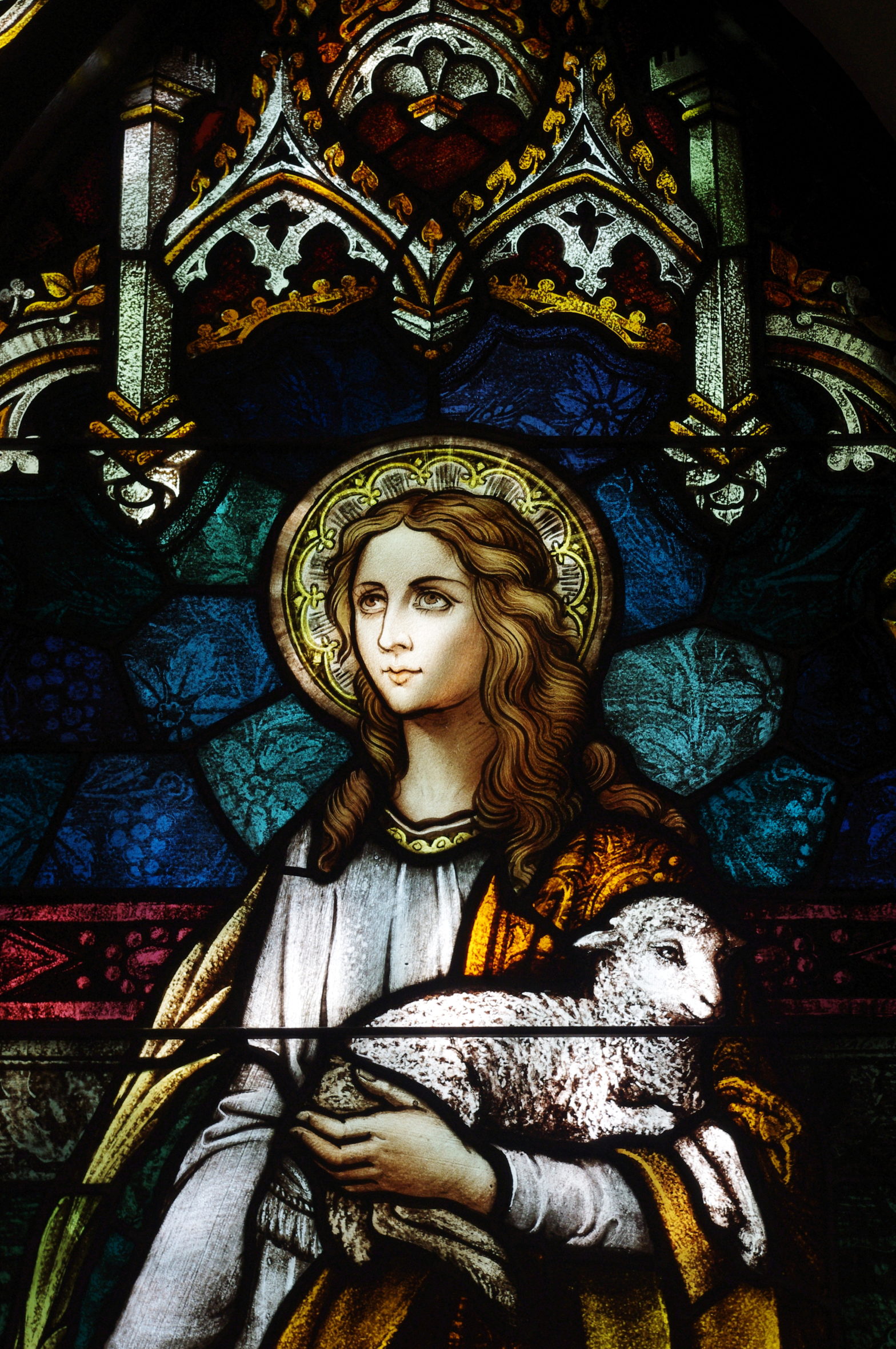
    Today we have two mentions of saints.  The first is the saint we celebrate today, Saint Agnes, a Virgin and Martyr of the early Church.  That’s the reason for the red vestments today.  She lived probably around the third century.  Legend tells us that Agnes was a young girl, probably twelve or thirteen years old, and very beautiful.  Many young men longed for her, lusted after her, really, and one such man, having looked at her lustfully, lost his eyesight.  But his sight was restored when Agnes herself prayed for him.

    Because of her dedication to Christ, she refused the advances of the men who lusted after her.  And one such man, having been refused, reported her to the government for being a Christian.  She was arrested and eventually put to death, although the method of her death is unclear.  She was buried near Rome in a catacomb that was then named in her honor, and Constantine’s daughter later built a basilica in her honor.  Her witness is that her dedication to Christ was most important in her life, and she had vowed to live a life of virginity in honor of that.

    The second mention of saints comes in the Gospel today, in which Jesus, at the early point of his ministry, calls those who followed him, and Appointed the Twelve Apostles.  Mr. Hueg tells me that I can ask the seventh graders to list all of the Apostles because they just had a quiz on that exact topic!  Then again, I could probably ask the eighth graders because I’m sure they’ll remember from last year!  Seriously, though, we know the importance of the apostles.  Because they risked their lives to witness to Christ – all of them except John dying a martyr’s death – because of their witness, we have the faith today.  Because of their faith, we can live and witness to our faith too.

    Both Saint Agnes and Saints Peter, James, John and the others, all of them lived their lives for Christ and all of them gave their lives to witness to Christ.  That’s a good inspiration for the way we should live.  God has given us everything we have, and more than that, he has given us the opportunity to choose eternal life and come to be one with him one day.  Even if we never have the opportunity to actually die for Christ, we are called to give ourselves in love to him, and to witness to his Gospel no matter what it costs us.

    The other thing that Saint Agnes has in common with the Apostles is that they are all mentioned in the words of Eucharistic Prayer I, which I will be using today.  When I pray it, see if you can hear the names of Agnes, Peter, James, Andrew, Philip and the others.  And when you hear them, give God thanks that he allowed them to give their lives so that we might have the faith.  And thank God that he gave his only Son to show us the way to heaven.

    Saint Agnes and the Apostles, pray for us!
  • Thursday After Epiphany

    Thursday After Epiphany

    Today’s readings

    The feast of Epiphany is a celebration of the fact that Christian life looks like something.  Because Jesus has appeared on the earth and taken our own human form, because he has walked among us and lived our life and died our death, we know what the Christian Way looks like.  We know that the Christian life consists of embracing our humanity, with all its weaknesses and imperfections.  We know that it consists of living our own lives well, mindful of the needs of others, forgiving as we have been forgiven, and spreading the light of the Gospel wherever it is that God puts us.  The Galileans in the synagogue in today’s Gospel were amazed at Jesus’ speaking words of grace.  We too are called to do this so that all will recognize in us the presence of Christ.

    Because Christ is still manifest among us.  Every encounter with someone else is an opportunity for Epiphany.  It is an opportunity for us to look for the presence of Christ in that other person, and for them to see Christ at work in us.  How we do that depends on the situation, certainly, but it must always be our top priority if we are eager to be called Christians.  John’s words in the first reading are clear, and are words of indictment on those times we forget to be the Epiphany to others: “If anyone says, ‘I love God,’ but hates his brother, he is a liar; for whoever does not love a brother whom he has seen cannot love God whom he has not seen.”

    Christ is made manifest in all of us and among all of us.  In the ordinariness of our lives, we can find Christ’s grace abundantly blessing us, or we can reject it.  If we make it our priority to be Christ’s presence in the world in every encounter with a brother or sister, we may find that we are blessed with epiphany upon epiphany, constantly growing in God’s grace.  This is all part of our faith, of course, and it is this faith, as John tells us, that conquers the world.

  • Saturday of the Second Week of Advent

    Saturday of the Second Week of Advent

    Today’s readings

    One of my favorite things about the season of Advent is the people we meet along the way.  In the early days of Advent we have celebrated the Immaculate Conception of Mary and we remember St. Juan Diego, St. John of the Cross, St. Lucy and St. Nicholas. We’ve been hearing from Isaiah all along in our first readings, and he has more to say to us still before we hear of his words’ fulfillment on Christmas Day.

    Then there’s the prophet Elijah, about whom we hear in today’s first reading.  Tradition and Scripture tell us that Elijah didn’t die; he was taken up to heaven in a fiery chariot on a whirlwind as his successor, Elisha, looked on.  It was expected that one day he would return.  And so ever since, even to this day, the Jewish people have left an empty place at the table for Elijah at every major celebration.

    Jesus makes it clear, however, that Elijah has already returned.  In today’s Gospel reading, we meet Jesus and the disciples coming down the mountain from the Transfiguration.  They have just seen Elijah on the mountaintop along with Jesus and Moses.  And so they ask Jesus, as they make their way down, about the return of Elijah.  When he tells them that Elijah has already returned, but nobody recognized him, they realize that he is speaking of Saint John the Baptist, that other Advent character that we have been privileged to meet.

    And it’s a bit of a foreshadowing.  Just as the people missed Elijah’s return, so they will miss Jesus’ return too.  The Resurrection is a sure sign of God’s love and presence in the world, but how many didn’t believe then, and how many still don’t believe!  For people to come to know that Christ has come and lived and died and risen for us, Isaiah’s voice must still be heard.  John the Baptist did that by crying out in the desert.  Now it’s our turn.

  • Saints Andrew Kim Tae-gŏn, Priest, and Paul Chŏng Ha-sang, and Companions, Martyrs

    Saints Andrew Kim Tae-gŏn, Priest, and Paul Chŏng Ha-sang, and Companions, Martyrs

    Today’s readings

    As we come together this evening to begin the year of faith formation in our Confirmation program, I think today’s readings and saints really speak to us.  The Gospel this evening reminds us that when we are filled with the Holy Spirit, we have the ability, the gift, and the obligation to witness to our faith.  We can’t light a lamp and put it under a bushel basket.  Who would think to do something like that?  No, when we light a lamp we do it for the express intention of giving light to the place we are.  The faith is like that.  When it’s lit by the Spirit, we don’t hide it; no, we put that faith on a lampstand, we witness to the faith in our words and actions, so that we can light up the darkness of the world around us.

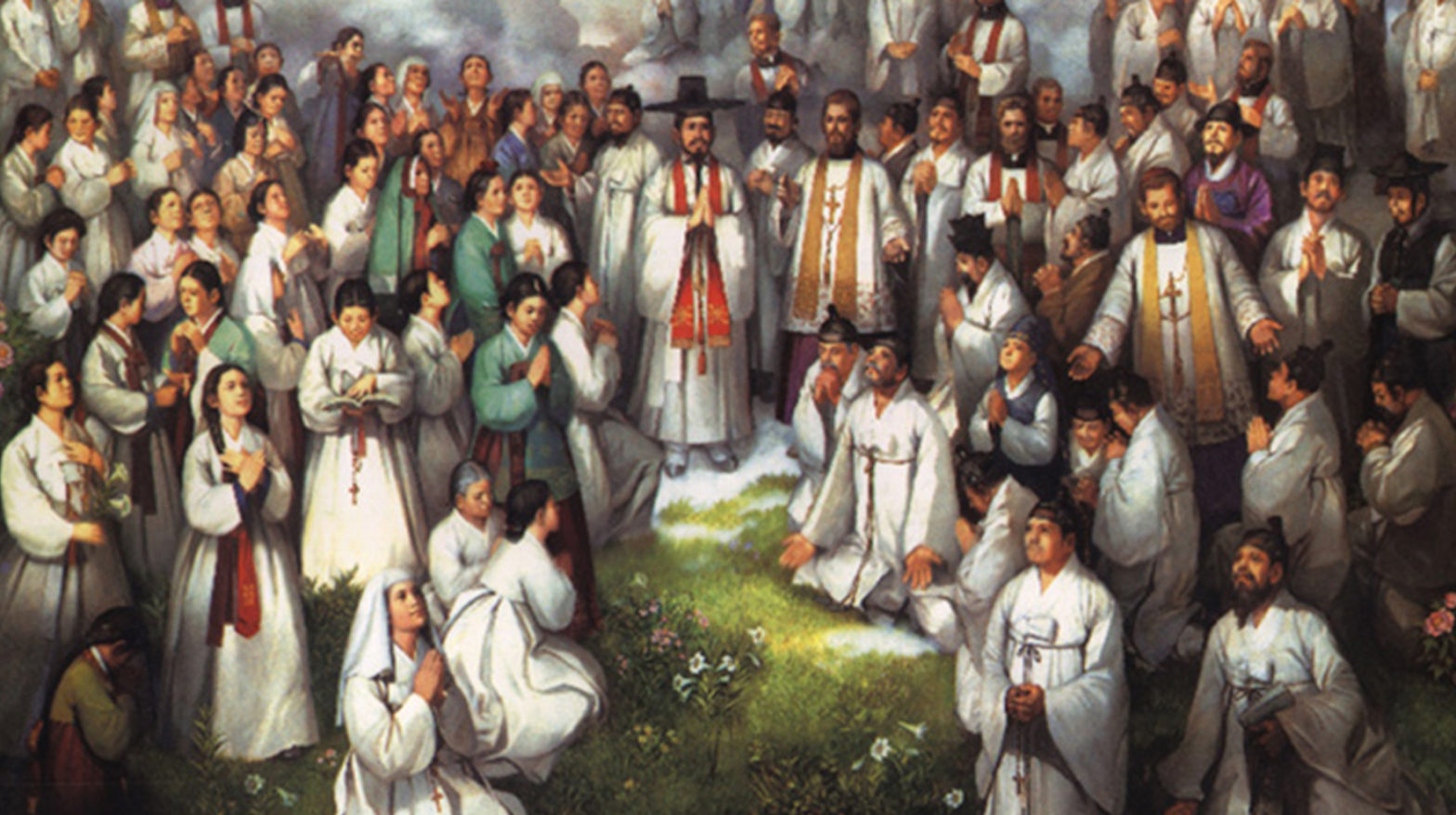
    The saints we honor today were like that.  Korea was not a Christian nation, but there were and are Christians who wanted to live and witness to their faith there.  In the 1800s, Andrew Kim became the first native Korean to become a priest when he traveled 1300 miles to seminary in China. He managed to find his way back into the country six years later. When he returned home, he arranged for more men to travel to China for studies. He was arrested, tortured and finally beheaded.

    St. Paul Chong was a lay apostle who was also martyred. During the persecutions of 1839, 1846, 1866 and 1867, 103 members of the Christian community gave their lives for the faith. These included some bishops and priests, but for the most part they were lay people, including men and women, married and unmarried, children, young people and the elderly. They were all canonized by Pope Saint John Paul II during a visit to Korea in 1984.

    These men and women gave witness to their faith at great cost.  We don’t have that same pressure in our society today; probably none of us will die for professing and witnessing to our faith.  But we may have to give up our lives in other ways to do that.  We might have to witness to the faith when people around us, people we want to impress, want no part of the faith.  We might feel very uncomfortable with the things a person or group are doing, and choosing the right path might make us less popular or even get us “canceled.”  But doing the right thing is never the wrong thing to do, and will never give us a moment’s true regret.  Living the faith will always lead us to something greater, even if we don’t see that right now.

    Saints Andrew Kim Tae-gon, Paul Chong Ha-sang, and their 103 companions did this at the cost of their own lives.  Their sacrifice, like the sacrifice of our Lord on the Cross, was a lamp shining in a very dark place.  Let us pray for the grace to live our lives with integrity, the grace to live our faith, so that we can be the lamp shining for others.

  • Friday of the Eleventh Week of Ordinary Time

    Friday of the Eleventh Week of Ordinary Time

    Today’s readings

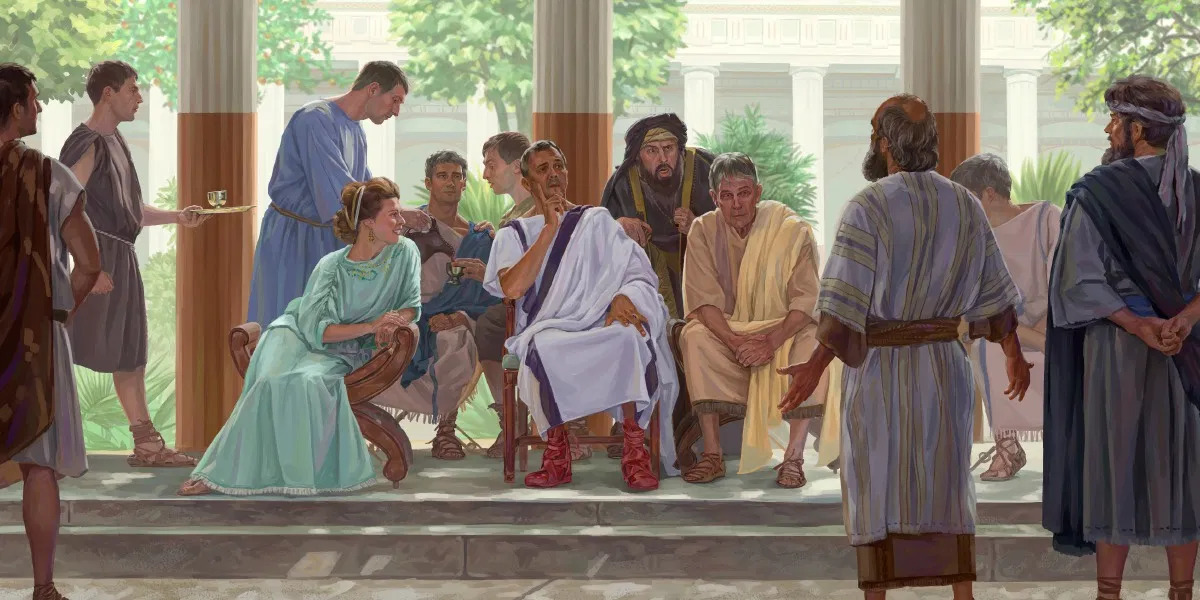
    It amazes me when I think about all that the early Church had to go through and put up with. Saint Paul writes that he put up with persecution from all sides: from his own people as well as the Gentiles. He was beaten often, endured hazardous journeys and perilous weather, as well as every kind of deprivation. His experience was definitely extreme, but others who lived the faith in those days were also subject to persecution, torture and death. Our experience isn’t quite like that, is it? I mean, here we sit in this air-conditioned church and relatively comfortable surroundings. We came here freely to Mass this morning and it is unlikely that anyone will openly persecute us or torture us or put us to death for worshipping our God, although of course, it does happen occasionally in some parts of the world.

    But there is a subtle kind of persecution that we often must endure. We know that even if our society is not openly hostile to living the Gospel, it might be just one step short of that. Life is not respected in our society: babies are aborted, the elderly are not respected or given adequate care, children are not raised in nurturing families, people are hated because of their race, color or creed. Faith is ridiculed as the crutch of the weak. Hope is crushed by those who abuse power. Love is diminished by the world’s shabby standards of loving. Living the Gospel is costly to anyone who would want to be taken seriously in our culture.

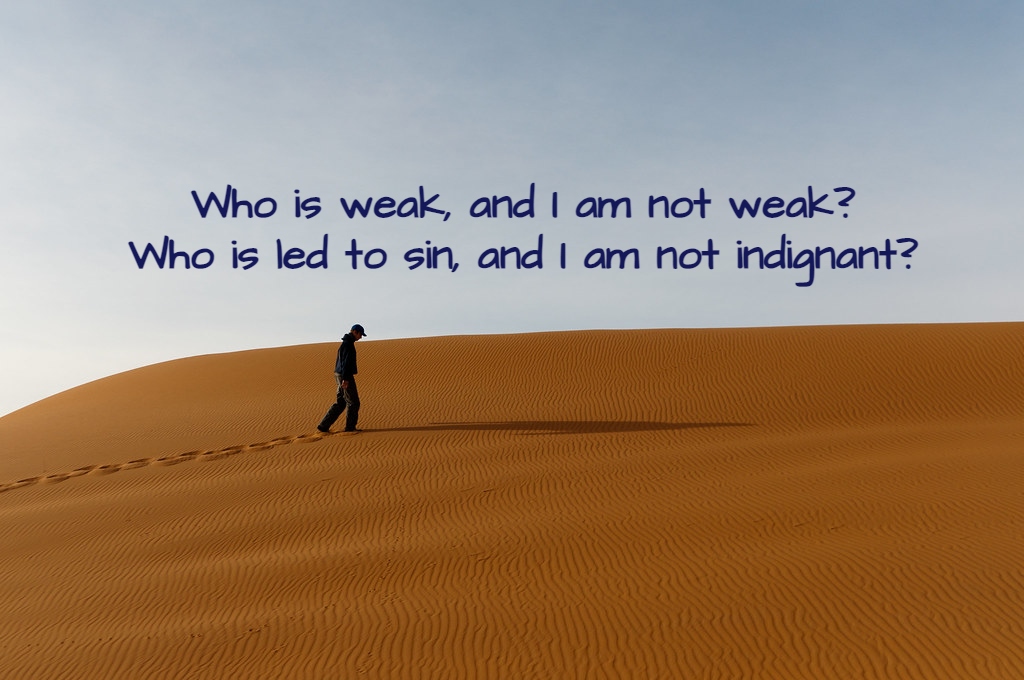
    To all of us who come to this holy place to worship this morning and who hope to work out our salvation by living the Gospel, Saint Paul speaks eloquently. We know that he, as well as all of the communion of saints, is there to intercede for us and show us the way. He says to us today, “Who is weak, and I am not weak? Who is led to sin, and I am not indignant?” He points us to our Lord Jesus who paid the ultimate price for the Gospel, and reminds us that in living that Gospel, regardless of its cost, we store up for ourselves incredible treasures in heaven, because it is in heaven that our heart resides.

  • Thursday of the Fifth Week of Easter (Religious Education and Confirmation Program Closing Mass)

    Thursday of the Fifth Week of Easter (Religious Education and Confirmation Program Closing Mass)

    Today’s readings

    In our first reading this evening, we have from the Acts of the Apostles a rather defining moment for the early Church.  Jesus hadn’t given them a precise rule book of how to make the Church develop: he simply sent them out to baptize.  But he also told them to make disciples of all the nations, and that’s what’s at stake in today’s reading.  The Gentile nations didn’t observe all the laws that the Jews did.  And so admitting non-Jews to the Church meant deciding whether they had to be circumcised, and whether they had to observe all the other laws of the Old Testament, as they had.

    Well, obviously, this little mini-council, swayed by the great stories of Paul and Barnabas, hearing all the wondrous deeds that God was doing among them, decided that the Spirit could call anyone God wanted to be disciples, and they shouldn’t get in the way.  So they decide to impose very little upon them, outside of avoiding idol worship and unlawful marriage.  

    And then the Psalmist’s prophecy, “Proclaim God’s marvelous deeds to all the nations” came to pass.  Think about it: because the disciples agreed to allow the Gentiles to come to Christianity in their own way, the proliferation of the Gospel was put into warp speed.  If it weren’t for this little council, we very well might not be Christians today.  Praise God for the movement of the Spirit!

    And now the command comes to us: we have to be the ones to proclaim God’s deeds to everyone, and not to make distinctions that marginalize other people.  God’s will is not fulfilled until every heart has the opportunity to respond to his love.  So we who have been learning about Jesus, now need to help others to know Jesus.  When we learn about Jesus, when we learn about our faith, it’s not just so that we know some good facts and can recite them.  We have to go beyond what we know in our head and bring it to our heart, so that we can love other people the way he has loved us.  When they experience that love in us, they will be attracted to come to know about Jesus too.

    That’s how it happened in the early Church.  That’s why Paul and the others were so successful.  That’s why the Gentiles couldn’t get enough of the faith.  We can reignite that fire in our world today if we bring what we have learned in Religious Education or Confirmation preparation, and take it from our head to our heart.

    Christ is risen!  He is risen indeed!  Alleluia!

  • Friday of the Second Week of Easter

    Friday of the Second Week of Easter

    Today’s readings

    Our first reading today is filled with kind of intense drama.  The disciples, ever since Jesus rose from the dead and sent them the gift of the Holy Spirit, have been going around and preaching in the name of Jesus.  This is obviously attracting the attention of the religious leaders, and they’re not too happy about it.  It bothers them that the crucifixion of Jesus wasn’t the end of the story.  The news that he rose from the dead is something they are trying to cover up, and they don’t want anyone to know about it.

    So they take counsel together, and intend to deal with the disciples so that they will stop preaching.  But there’s a little interesting plot twist.  The official Gamaliel is trying to keep a balance between wanting to silence the disciples and not wanting to anger the people who are hearing them.  So he convinces the other officials to let the whole thing play out.  He reasons that if this isn’t of God, which he obviously things is the case, well, then, it will all die out on its own.  But if it is of God, he cautions the others that they don’t want to get in the way of that.  Now Gamaliel is obviously trying to brush the disciples off and cover his bets in case this doesn’t go well, but in doing that, he’s actually being king of prophetic.  We know that the preaching of the disciples was certainly something that came from God, and we know how it worked out.  After all, we’re here talking about their preaching today.

    But the courage of the apostles is inspiring, isn’t it?  They have been warned twice, and put in prison, and now beaten, and still we are told that “all day long, both at the temple and in their homes, they did not stop teaching and proclaiming the Christ, Jesus.”  Thank God for that!  We are grateful for their new-found courage today, or we wouldn’t be here worshipping right now.

    We are called to display that same courage and to speak non-stop of our Lord Jesus Christ in all that we say and do.  The psalmist today reminds us that the only thing worth seeking is to dwell in the house of the Lord, and the only way to do that is to follow our Risen Lord.  So when you’re making a decision about what you’re going to say to someone who may be annoying you, or what you’re going to do in a difficult situation, stop and think about how you can proclaim the Christ, Jesus, in what you say and do.  God built a Church and is filling heaven because of the preaching of the disciples.  He can do a lot with our own proclaiming the Word in what we say and do, too.

    Christ is risen!  He is risen indeed!

  • The Thirty-third Sunday of Ordinary Time

    The Thirty-third Sunday of Ordinary Time

    Today’s readings

    I’ve often heard stories of those who grew up in the great depression.  Many years later, they still had deeply engrained in them the scrupulous care for everything they have that was etched into their very being during that horrible time in our history.  They spent a lifetime wasting nothing, which was a good thing, except it sometimes spiraled into hoarding things.  They would eat leftovers well past their freshness dates.  It was just their response to having nothing, so completely understandable.

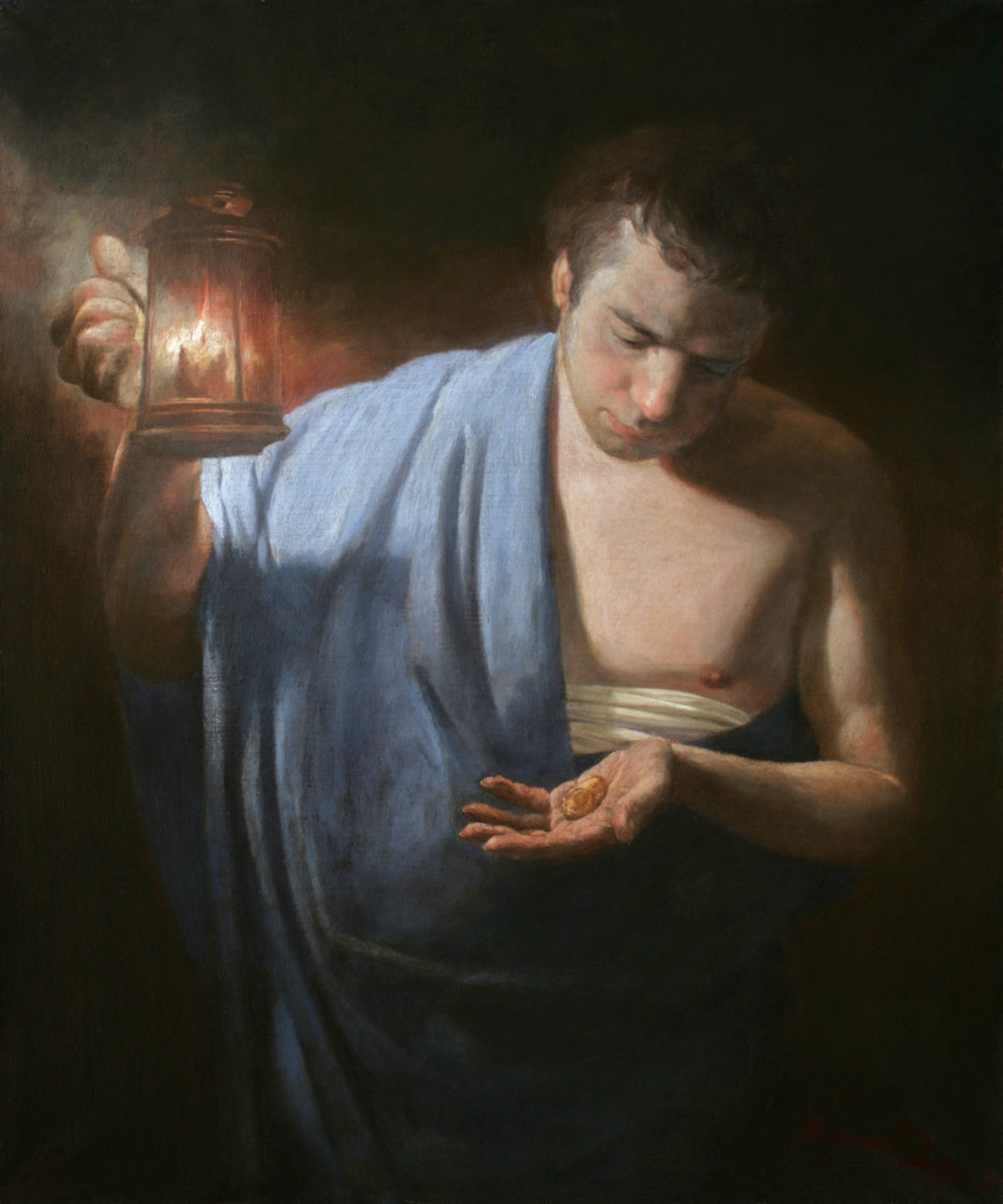
    And that’s the lens through which I think we need to see this week’s Gospel parable.  Here Jesus presents the very familiar story of a rich man entrusting his slaves with a great deal of wealth before he sets off on a long journey.  But because this is such a familiar parable, I think it often gets interpreted wrongly.  Often this parable gets turned into a lesson on sharing your gifts with others, but that’s not actually what’s going on here.  The word “talents” here does not mean what we mean when we use that word: here we are not talking about gifts or abilities.  No, a talent was a unit of money, and a large sum of money at that.  Scholars suggest that a talent was equal to something like one thousand days’ wages.  So think about it, even the servant who only received one talent actually received quite a bit – he received what the average person would earn in a little over three years!  That’s a lot of money for anyone.

    So we have this huge amount of money, given as a gift.  And that gift is being given, not to whom we would expect: not to senior advisers to the master, people who would have been in charge of his estate and his business transactions.  No, the text says he called in his “servants” – so we are talking here about slaves, slaves – not business advisers.  And so these slaves are getting ten talents, five talents, and one talent – all of them are getting a considerable amount of money!

    And we know the story.  Two of them take what they have and very successfully invest it and when the master returns, are able to hand over the original sum with one hundred per cent interest.  Very impressive, especially for a slave!  But the slave who received just a “little” (even though it was certainly still a lot of money), out of fear buries it in the ground and gives it back to the master untouched, with nothing to show for it.  It’s much like a person having gone through something like the great depression placing money under a mattress rather than trust the banks, which they saw fail miserably in their lifetimes.

    That’s the backstory, and there’s a lot to unpack here, so let’s get at it.  We’ve established that the gift they are receiving – even the slave who received little – is worth an incredible amount of money, especially to a slave who would never have the opportunity to see such wealth if not for the trust the master has placed in them.  We could almost understand, I think, if a servant hoarded the wealth entrusted to him, or used it for himself and his family.  So that the third servant even gave it back seems like a good thing. 

    I guess we have to unpack though, what the talent, the money, represents.  Here, these slaves have received something very great, some inestimable wealth.  What could that possibly be?  We should be able to see this pretty well.  What’s of inestimable value for us?  Well, of course, it’s God’s love, grace, and favor, which is undeservedly ours and given to us without merit.  That’s what the God, the master, was entrusting to his servants.

    So just for background, this is yet another indictment of the Pharisees and religious establishment of the time.  They were the ones who, because Christ was not yet present in the world, received just one talent.  They received that in the form of the covenant and the law that was the basis of their religion.  And let’s just acknowledge that God choosing them among all the nations was a huge sum of grace!  Yet, their practice was to protect it so scrupulously by attending to the minutiae of the 613 laws of the Torah, that they missed the opportunity to really invest God’s love in the world and grow the faith to full stature.

    So we disciples can’t be like that.  We can’t have the faith taken away from us and be tossed out to wail and grind our teeth.  We have to take the faith we’ve been given, the grace we have received in baptism, and invest it mightily in the world, without fear, so that everyone will come to know the Lord and we would all go on to be put in charge of greater things, in the kingdom of heaven.  That is our vocation in the world, brothers and sisters in Christ.  We have to get that right.  We can’t cower in fear, or think our faith is too little, or we don’t know enough.  In Matthew’s Gospel, fear is a huge sin.  “Do not be afraid” is a term we see over and over in the readings.  We have to be bold disciples and make sure that Christ is known everywhere we go, everywhere life takes us.  That is the only acceptable response to God’s love.

    We have come here today on the second-to-last Sunday of the Church year.  Next week, we will celebrate the Solemnity of Christ the King of the Universe, and then look forward to a new year as we begin the season of Advent.  And so it is important that we take today’s Gospel parable seriously.  We need to spend some time reflecting on how well we have invested God’s grace and love in the world around us.  Have we been good examples to our family and others?  Have we been people of integrity in our workplaces, schools and community?  Have we served those who are in need out of love for Christ?  Have we been zealous to grow in our spiritual lives?  Have we taken time to root sin out of our life, and to receive the grace of forgiveness in the Sacrament of Penance?  Have we been unafraid to witness to our faith in every situation?  In this most difficult year, have we been able to get beyond ourselves to care enough about others to do what we can to keep people healthy in the face of a pandemic, to respect people of every race, color and creed, to witness to life and vote according to our formed consciences, to keep the doors of discussion open so that understanding can grow?

    If we can’t answer all these questions affirmatively, we have some new-Church-year’s resolutions to make.  Because, and I can’t stress this strongly enough, brothers and sisters, the alternative is wailing and grinding of teeth.  And forever is a long time to be doing that!  No; God forbid.  Our desire is to hear those wonderful words from our Lord one day: “Well done, my good and faithful servant.  Since you were faithful in small matters, I will give you great responsibilities.  Come, share your master’s joy.”

  • Monday of the Twenty-second Week of Ordinary Time

    Monday of the Twenty-second Week of Ordinary Time

    Today’s readings

    I think much of the reason people don’t preach the Gospel to others is because they think whatever they say or do has to be flashy, has to be as big as God is.  But that never works because God is always bigger!  Proclaiming the Gospel, at its core, is and always should be, as simple as showing people what God has done for us and in us.

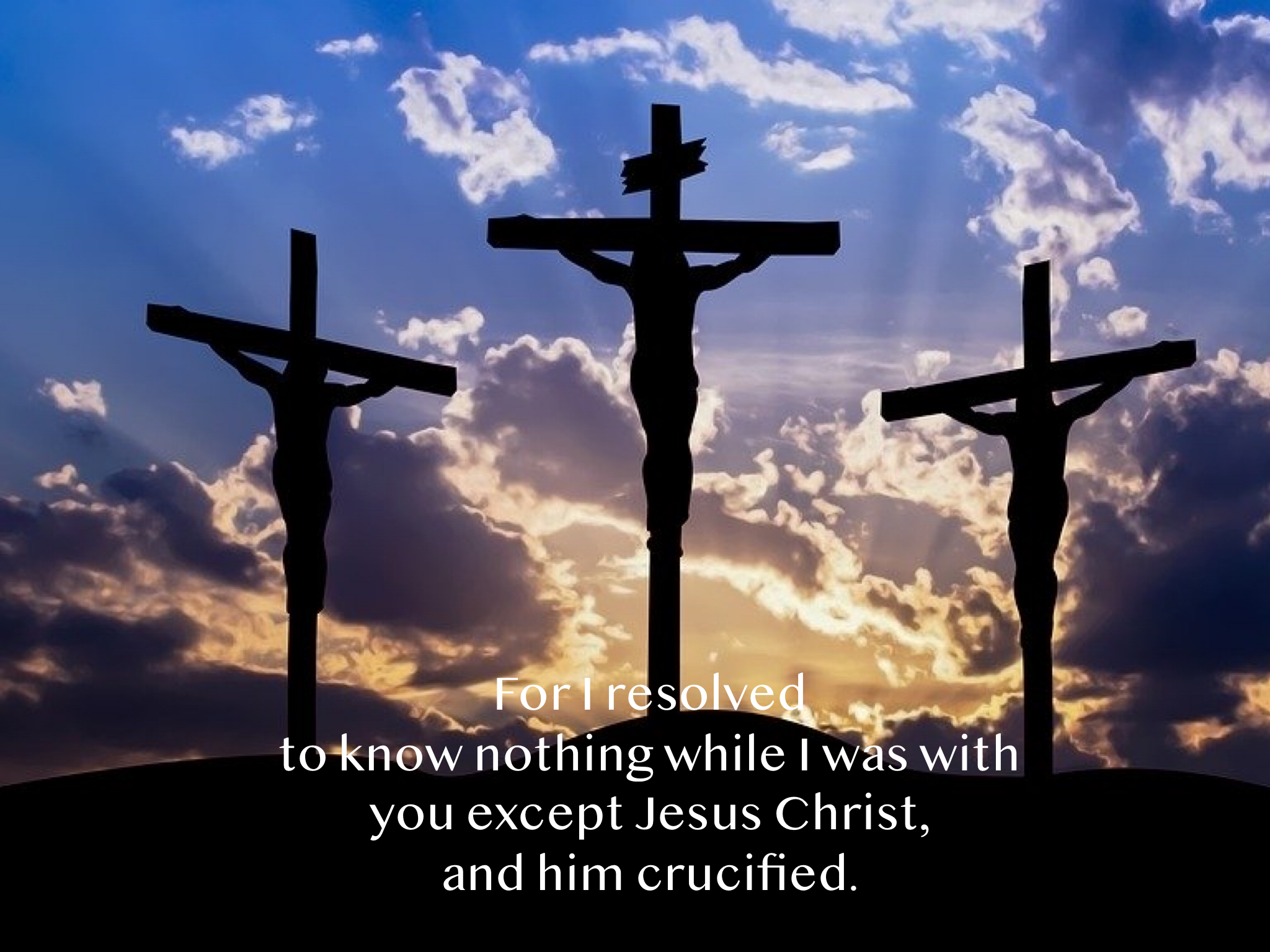
    The defense St. Paul was making to the Corinthians in today’s first reading describes a way of living that might be very useful for us to consider.  Rather than caring about what people thought of him and proclaiming the word in a powerful way, he instead resolved to keep himself focused on Jesus and to say what he would have him say and live as Jesus himself would live.  His proclamation of example called those Corinthians to recognize a message not based on mere human wisdom but instead on the power of God.  We too can proclaim that same kind of powerful message in the way that we live.

    So if there are people in our lives who we wish knew the joy of the Gospel — and who among us doesn’t have someone like that? — then I think today we’re being called to take a fresh look at how we bring Jesus to them. Our proclamation of the Gospel has to be simple and authentic. If our proclamation rests on what we can do, it’s always going to fail. But if it relies on Jesus and what he has done in us, it will be irresistible.

  • The Twenty-first Sunday of Ordinary Time

    The Twenty-first Sunday of Ordinary Time

    Today’s readings

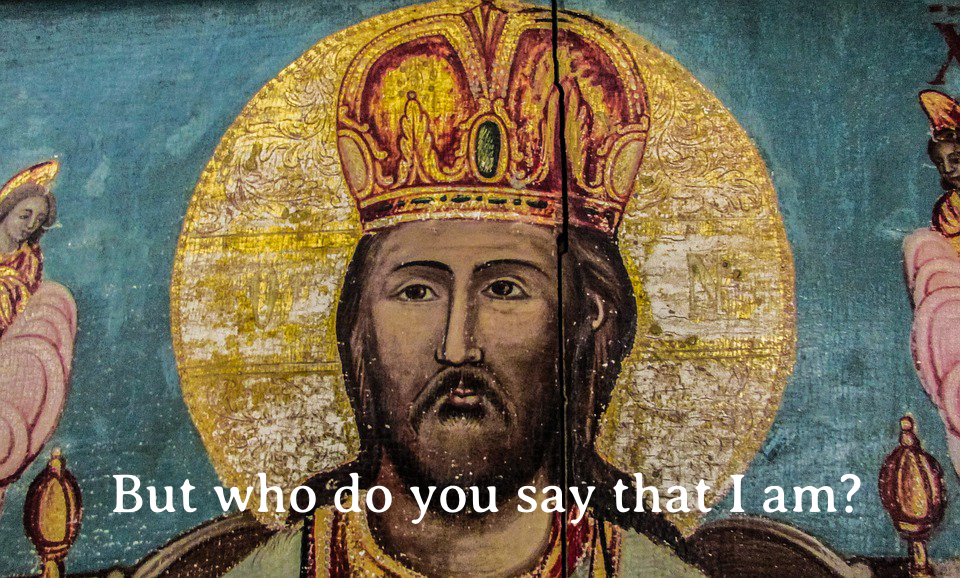
    One of my jobs before I went to seminary was in the sales department of a computer supply company.  In that job, they taught us that one of the first good rules of sales was never to ask a question to which you didn’t already know the answer.  I think teachers get taught that principle as well.  I can’t help but think that Jesus’ question to the disciples in today’s Gospel falls under that heading.  Because Jesus certainly knew who he was.  But, as often happens in our interactions with Jesus, there’s something more going on.  And to figure out what that something more is, all you have to do is go back to the Gospels the last couple of weeks and see in them that Jesus is looking for people’s faith.  He was looking for faith from Peter when he called him to walk on the water.  He was impressed by the faith of the Canaanite woman last week as she persisted in her request that Jesus heal her daughter.  And now he queries the disciples’ faith – and ours too – as he asks us the 64 thousand dollar question: “Who do you say that I am?”

    He actually starts with kind of a soft-ball question. “Who do people say that the Son of Man is?” And they recount all the obvious and probably much-discussed options of the time.  If there were bloggers and influencers and talk radio people and cable news in that first century, they too might have said “John the Baptist” or “Elijah” or “Jeremiah” or “one of the prophets.”  So this is an easy question for the disciples to answer.  But when he gets to the lightning round question, “But who do you say that I am?” there’s a lot more silence.  And, as often happens with the disciples, it’s the impetuous Peter who blurts out the right answer, “You are the Christ, the Son of the living God.”  Very good, Peter, you have been paying attention.

    But here’s the thing: that answer is going to require much of Saint Peter.  You see, his answer not just a liturgical formula or a scriptural title or even a profession of faith in the formal sense.  Jesus is looking for something that goes quite a bit deeper, something that comes from the heart, something integrated into Peter’s life.  He is looking for faith, not just spoken, but faith lived, and that’s why Peter’s answer is actually pretty dangerous.  If he is really convinced that Jesus is “the Christ, the Son of the living God” then that conviction has to show itself in the way Peter lives.  He can’t just believe that and keep it under his hat.  If Jesus really is the One who is coming into the world, the Promised One of all generations, the salvation of the world, then Peter has to proclaim it from the rooftops.  Now, to be fair, we should note that Peter had a little problem with this around the time of the crucifixion, when he denied Jesus not just once, but three times.  But that’s not going to be his everlasting reality, because Peter has to be the rock on which Jesus will build his Church.  Whether people want to accept that or not.

    So I’m very sorry to tell you all this, but we have all gathered here on a very dangerous Sunday.  We too, you know, are being asked today, “But who do you say that I am?”  And Jesus isn’t asking us just to recite the Creed, the Profession of Faith.  That’s too easy; we do it all the time.  Half the time it just flies past us by the time we say “Amen.”  Jesus doesn’t want to know what you learned at Bible Study or what you read on Facebook.  Those things are nice, but He isn’t going for what’s in your head.  Jesus is calling all of us today to dig deep, to really say what it is that we believe about him by the way that we act and the things that we do and the life that we live.  It’s a dangerous question for us, too, because what we believe about Jesus has to show forth in action and not just word.  Our life has to be a testament to our faith in God.  And if we cannot answer that question out of our faith today, if we are not prepared to live the consequences of our belief, then we have a lot of thinking to do.

    Because if we really believe – really believe – that Jesus is who he says he is, then we cannot just sit on the news.  Like Peter, we are going to have to proclaim it in word and deed.  In our homes, in our workplaces, in our schools, in our communities – we must be certain that everyone knows that we are Christians and that we are ready to live our faith.  That doesn’t mean that we need to interject a faith lesson into every conversation or bludgeon people with the Gospel.  But it does mean that we have to live that Gospel.  In St. Francis’s words, “Proclaim the Gospel at all times.  If necessary, use words.”  People absolutely need to be able to tell by noticing the way we live our lives that Jesus is the Christ, the Son of the living God.  If they can’t, then our faith is as tepid as the Pharisees’ and that’s certainly no cause for pride!  Frankly, that too has consequences.

    Every part of our Liturgy has consequences for us believers.  “The Body of Christ.”  When we hear that proclamation and respond with our “Amen,” we are saying “yes, that’s what I believe.”  And if we believe that, if we are then filled with the Body of Christ by receiving Holy Communion, then we have made a statement that has consequences.  If we truly become what we receive, then how does that change the way that we work, the way that we interact with others?  “Go in peace, glorifying the Lord by your life.”  “Thanks be to God.”  If we accept that command, then what?  What does it mean to glorify the Lord with our life?  Does it mean that we just do some kind of ministry here at Mass?  Absolutely not.  The first word in the command is “Go” and that means we have to glorify the Lord in our daily lives, in our business negotiations, in our community meetings, in our interactions with peers or the way that we mentor those who work for us.

    So if we really believe that Jesus is the Christ, the Son of the living God, then our lives just became a whole lot more complicated.  We may have to give up some of our habits and vices, we may have to make a concerted effort to be more aware of Christ in our daily lives, we may have to learn to treat other people as the Body of Christ.  We may have to do all this preaching in a hostile environment, because sometimes people don’t want to hear the Good News, or even be in the presence of it.  I think that’s more true today than every.  The Gospel is met with hostility just because Christians preach it.  And this is dangerous, because if we really believe, then we have to preach anyway.  Peter did, and it eventually led him to the cross.  What will it require of us?

    So I don’t know just how dangerous this will be for me or for you.  I’m not even sure how we will all answer the question right now.  But one thing is for sure, all of us sitting here today have the same one-question test that Peter and the disciples had.  Who do you say that the Son of Man is?  Be sure to take that to your prayer this week.