Tag: witness

  • The Fifth Sunday of Easter

    The Fifth Sunday of Easter

    Today’s readings

    Catholics by nature are not supposed to be stagnant people. Being Catholic means being on the move. Many of the ancient churches were built in a shape that evoked a ship, which hearkened back to Noah’s ark, which was a foreshadowing of the Church. Just as that ark was the means of salvation for a few people and a refuge against the storm, so the Church is the means of salvation for the world, and a refuge against everything that the world has raging around us. We are always and forever a people on the move; we are not at home in this world, wherever we may be, no matter how nice our place in the world may be. Our true home is in heaven and we are on our journey there. Every moment of our lives has to be a choice to move closer to our heavenly homeland.

    And that’s what today’s Gospel is all about. Jesus, foreseeing his death and resurrection, is preparing his disciples for the day when he returns to heaven to prepare a place for us. He promises that we can get there one day by following him: he who is the way, the truth and the life. And we need him to be that way for us, because our sinfulness had cut us off from God, and it was only the death and resurrection of Christ that could ever restore us to the inheritance that God always wanted for us. So today’s Scriptures, I think, give us the goal, and the way to get to the goal.

    We know, then, what our goal is. The goal is that mansion that Jesus speaks of – the Father’s house in which there are many dwelling places. It’s a mansion in which there is room for everyone, just as long as they find the way to get there. This reminds us that as nice as our home may be here on earth, there is something better awaiting us. It also serves as a reminder to those whose earthly home is difficult, or even non-existent, there is a place where they truly belong. Whatever our current living situation, however entrenched we are in our earthly life, we are reminded today that we are not home yet, that ultimately there is a place where we can live that will make us feel truly at home for all eternity.

    The way to get to that goal is made pretty clear in the Gospel too. Jesus is very direct about saying, “I am the way and the truth and the life. No one comes to the Father except through me.” So if we want to get to our promised inheritance, there is just one way to get there, and that is through Jesus Christ whose sole mission was to pave the way for us to get back home. Notice very carefully that Jesus does not say, “There are several ways, and I am just one of them; there are many possible truths, and you can hear one of them in me; you can live your life all sorts of ways, and my life is a nice one.” No – he says “I am the way, the truth, and the life. No one comes to the Father except through me.” This is a statement that has all sorts of implications for the work of evangelization, because if we believe this, seriously believe it – and we should! – then we have to make sure that everyone comes to know the Lord.

    Does this mean that those who do not ever come to know the Lord will never receive the heavenly inheritance? Put another way, more directly perhaps, does this mean that non-Christians don’t go to heaven? That’s a tough one. Vatican II addressed that concern by stating that while the fullness of the means of redemption were present in the Catholic Church, still there are elements of redemption present outside the Church. It says, “… some and even very many of the significant elements and endowments which together go to build up and give life to the Church itself, can exist outside the visible boundaries of the Catholic Church: the written word of God; the life of grace; faith, hope and charity, with the other interior gifts of the Holy Spirit, and visible elements too. All of these, which come from Christ and lead back to Christ, belong by right to the one Church of Christ.” (Unitatis Redintegratio, 3) Basically, we don’t have a monopoly on how Christ reveals himself to people, and we cannot know the depths of God’s mercy. Still, helping people to come to know the Lord needs to be at the top of our to-do lists.

    So the goal is heaven, and the way is Christ. Some people say that Jesus never came to establish a Church, but today’s readings tell us that is patently false. He certainly came to establish a Church, because after his death and resurrection, it was the actions of the Church that continued his saving work. It was the Church that continued the healing, reaching out to the needy, preaching the Word, and all the rest. And the Church continues this saving work in our own day. We are empowered to do wonderful works: to preach, to heal, to serve and love in the name of Jesus Christ. None of this happens on our own, or as a result of our own ambition. It only happens by joining ourselves to the One who is the way, the truth and the life.

    There’s a lot at stake in our Liturgy today. There is a world that needs to know Jesus so that they too can know the Father and experience the joy of a real home. There is a world that needs to know the touch of Jesus so that they can be healed and strengthened for life’s journey. There is a world that needs to hear the Word of Jesus so that they can come to the way, the truth and the life. It’s on us now, none of us can be passive observers or consumers only. As St. Peter says today, we “are ‘a chosen race, a royal priesthood, a holy nation, a people of his own, so that [we] may announce the praises’ of him who called [us] out of darkness into his wonderful light.” We are not home yet, but we can get there through Jesus: our way, our truth, and our life, and we have to gather everyone we can, and take them with us!

    Because Christ is risen! He is risen indeed! Alleluia!

  • Monday in the Third Week of Easter

    Monday in the Third Week of Easter

    Today’s readings

    So they drag Saint Stephen before the Sanhedrin, and make all sorts of false claims against him.  If this sounds familiar, it’s because we heard a story just like this during Holy Week!  In fact, Stephen is in good company.  He is brought to the same place where his Lord Jesus, and later Peter and the apostles, have gone before him.  And just like all of them, even with all the lies and accusations flying around him, he is at peace.  The source of his peace, is of course, his Lord who has gone before him, that same Lord who now fills him, as the first line of the reading says, with “grace and power.”  The peace that fills the martyrs is remarkable, and indicates that they have indeed been called to that kind of witness and are empowered to withstand it by their God.

    We too, will be tested in this life because of our faith.  It’s the mark, really, of authentic faith.  We too, can rely on that same grace and power if we unite ourselves to our Risen Lord.  Maybe we won’t be called on to actually give up our lives, but we will are all called at one time or another to suffer in some way when we give that true witness to our faith.  Like Stephen and the martyrs, that is our calling, it’s what disciples do, and we can rely on the help of the Lord to get us through it.

    Because Christ is risen.  He is risen indeed.  Alleluia.

  • Thursday in the Second Week of Easter

    Thursday in the Second Week of Easter

    Today’s readings

    Once again, the disciples are overjoyed that they had been found worthy to suffer dishonor for the sake of the Name.  That seems rather counter-intuitive, but when you stop to think about it, given all the possible reasons to suffer dishonor and to be beaten, the best reason is “for the sake of the Name.”  We know that those who suffer in that way are treasures for our God, and they are given their just reward.

    What I think is interesting in today’s first reading though, is the unintentional prophecy of Gamaliel.  His words are a combination of a brush-off, since he obviously thinks the early Christian community is a bunch of kooks, and a bit of rear-end covering, since if it does turn out that these kooks are right, then at least they don’t get to be guilty of putting them to death.  At least not yet.

    But the courage of the apostles is inspiring, isn’t it?  They have been warned twice and put in prison, and now beaten, and still we are told that “all day long, both at the temple and in their homes, they did not stop teaching and proclaiming the Christ, Jesus.”  We are grateful for their new-found courage today, or we wouldn’t be here worshipping right now.

    We are called to display that same courage and to speak non-stop of our Lord Jesus Christ in all that we say and do.  The psalmist today reminds us that the only thing worth seeking is to dwell in the house of the Lord, and the only way to do that is to follow our Risen Lord.

    Christ is risen!  He is risen indeed!

  • Thursday in the Octave of Easter

    Thursday in the Octave of Easter

    Today’s readings

    To understand how significant the Resurrection event was, I think it’s helpful to try and put together a picture of how the disciples had to be feeling at this point.  So prior to today’s Gospel selection, the women found the empty tomb, Peter has seen the Lord, and the two disciples had experienced him in the breaking of the bread on the way to Emmaus.  Their minds were most likely reeling with excitement; trying to get a grip on the things he had said to them while he was still with them.  I’m sure they were trying to figure out what all this meant, what they needed to do next.

    Maybe that’s why the Lord’s initial words to them are “Peace be with you.”  Unfortunately, though, it doesn’t seem to work, because the disciples think they’re seeing a ghost.  After Jesus eats some fish and speaks to them of the Scriptures, he sends them on mission with the very poignant words: “You are witnesses of these things.”

    The peace that Jesus gives them is certainly not the absence of conflict.  That they will be witnesses to the fulfillment of the Scriptures will be anything but peaceful for them.  They will have to make sacrifices – sacrifices of their very lives – to witness as Jesus calls them to, but there is no other choice.  They are now beginning to understand the significance of what has happened among them, and they must go forward to do what they had been chosen to do.

    When we have to make the decision to follow God’s call in our lives, we too will have to sacrifice.  Not our lives, probably, but we will have to sacrifice our own comfort, our control over our own lives, our own point of view.  But just like the disciples, we must remember what we have been chosen to do, and follow where we are being led.

    We are witnesses of these things too, we are called to live and proclaim the Gospel.  May we too receive the peace of Christ that we might focus on our call.

    Christ is risen!  He is risen indeed!

  • Wednesday of the Thirty-third Week in Ordinary Time

    Wednesday of the Thirty-third Week in Ordinary Time

    Today’s readings

    Today’s Gospel reading presents us with Luke’s version of the Parable of the Talents from Matthew’s Gospel. Luke’s version seems a little confusing to our ears; perhaps even a bit harsh. One wonders if Jesus was hangry or something. But we know he’s simply turning up the fire on his disciples because the task is urgent. So we have a jumble. Ten men get coins, but only three get questioned at the end, there’s the whole story about the nobleman and the delegation that didn’t want him to be king, and then the slaying of those delegates at the end. If you’re scratching your head about all that, I think that’s most understandable!

    I think the pivotal moment is the command given the servants when they receive the coins: “Engage in trade with these until I return.” That’s what the nobleman says to the ten servants who received the ten gold coins. The ten gold coins are extremely valuable. Their value is more or less what a poor servant might make in his entire lifetime. So the real question today is, what is it that is really worth that much? With what have we been entrusted that could possibly be so valuable?

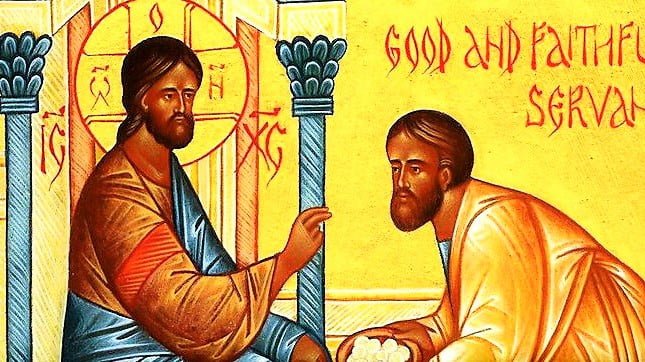
    Obviously those ten coins represent the Gospel to us, the command to engage in trade with them is our witness. And as we approach the end of the Church year, it would be a very good idea to see which of the servants we have been. Have we been hard at it, giving witness by the way we live our lives, the service we give without anyone knowing about it, the integrity with which we conduct our business, which has caused people to admire our way of life, to seek to find what we have? Or have we wrapped it all in a handkerchief and stored it away so that we won’t lose it and can find it when we need it, making it all about us, keeping our religion private, caving in to our fear, and never giving anyone a reason to suspect we are Christians? The Church year is ending, our Master will soon return. What return will we give him on his investment in our eternity?

    May our Master find us hard at work at his return, and say to us: “You have been faithful in this very small matter; take charge of more.”

  • The Ascension of the Lord

    The Ascension of the Lord

    Today’s readings

    For the early Apostles and disciples, today’s feast had to be a kind of “now what?” experience for them. Think about what they’ve been through. Their Lord had been betrayed by one of their friends, he had been through a farce of a trial and put to death in a horrible, ignoble way, they had been hiding in fear thinking they might be next, they had questioned what they were supposed to do without their Lord, and then they witness the Resurrection: Christ walks among them for a time, appearing to them and making himself known. They had seen redemption of a way of life they almost had abandoned, and now, on this feast of the Ascension, their Lord is leaving them again. In our first reading from the Acts of the Apostles, you can almost feel the amazement and desperation they are experiencing as they stare up into the heavens, incredulous that their Lord is gone, again.

    So once again, God sends two messengers, two men in white garments, to set them straight. God had sent two men in dazzling garments to the women at the tomb on the day of the Resurrection as well. That time, the men reassured the women that the Lord had not been moved or stolen, but had risen from the dead. This time, the men appear to the Apostles, assuring them that the Lord would return in the same way as he had just departed from their sight. Both times, it was the same kind of messengers, with the same kind of hopeful message. Go forward, don’t worry, God is in control.

    One of the great themes of Catholic theology is the idea of “already, and not yet.” Basically, that means that we disciples of Christ already have a share in the life of God and the promise of heaven, but we are not yet there. So we who believe in Jesus and live our faith every day have the hope of heaven before us, even if we are not home yet. And this hope isn’t just some “iffy” kind of thing: it’s not “I hope I’ll go to heaven one day.” No, it’s the promise that because of the salvation we have in Christ, we who are faithful will one day live and reign with him. This gives us hope in the midst of the sorrows that we experience in this world.

    Another great theme of Catholic theology is that our God is transcendent, but also immanent. Transcendent means that our God is higher than the heavens, more lofty than our thoughts and dreams, beyond anything we can imagine. Whatever we say about God, like “God is love” or “God is good” – those things only begin to scratch the surface of who God is, because God is transcendent beyond anything our limited words can describe. But our God is also immanent. God is not some far off entity that has brought the world into existence and set the events of our lives in motion and then drops back to observe things from afar. No, our God is one who walks among us and knows our sorrow and our pain and celebrates our joy. Saint Augustine said that God is nearer to us than we are to ourselves. Our God may indeed be mysterious and beyond us, but he is also the one we can reach out and touch. If that weren’t so, the Eucharist would be pretty meaningless.

    As you can see, Catholic theology is generally speaking not exclusive. We are not either already sharing in the promise or not yet sharing in it, but we are “already and not yet.” Our God is not either transcendent or immanent, but both transcendent and immanent. These two great theological themes come to a kind of crossroads here on this feast of the Ascension.

    Today, as Christ ascends into heaven, our share in the life of God and the promise of heaven is sealed. We have hope of eternal life because our Lord has gone before us to prepare a place for us. If he had not gone, we could never have shared in this life. So, although Jesus has left the apostles yet again, they can rejoice because they know that the promise is coming to fulfillment. We do not possess it yet, because we are not home yet, but we share in it already, because Christ is our promise.

    Today, as Christ ascends into heaven, he once again, with the Father, is transcendent, because we, along with the Apostles, can no longer see him. But he remains immanent by his promise to be with us always. Again, I will quote St. Augustine who said of Christ that “He did not leave heaven when he came down to us; nor did he withdraw from us when he went up again into heaven. The fact that he was in heaven even while he was on earth is borne out by his own statement: No one has ever ascended into heaven except the one who descended from heaven, the Son of Man, who is in heaven.” St. Augustine teaches that the notion of time is that everything is present to God all at once. This explains how our celebration of the Eucharist in a few minutes brings us to Calvary at the moment when Jesus gave his life for us. And it explains how Jesus can ascend into heaven and yet remain among us. Time is a limitation for us humans, but not for God who created time in the first place.

    All of this theology can be heady stuff, but what it boils down to is this: because Jesus died, rose from the dead, and ascended into heaven, we now have the hope of heaven and of sharing in the very life of God. Even though we do not possess heaven yet, we know that it belongs to all who have faith in Christ and live that faith every day. And even though we do not see Jesus walking among us, he is still absolutely present among us and promises to be with us forever. The preface to the Eucharistic prayer which I will sing in a few minutes makes this very clear; it says:

    Mediator between God and man,
    judge of the world and Lord of hosts,
    he ascended not to distance himself from our lowly state
    but that we, his members, might be confident of following
    where he, our Head and Founder, has gone before.

    Jesus, having explained the Scriptures to his Apostles yet again, tells them “You are witnesses of these things.” And so they don’t have the luxury of just standing there, staring up into the sky for hours, dejected and crushed because the One who had been their hope had disappeared. No, as the Gospel tells us today, they “returned to Jerusalem with great joy, and they were continually in the temple praising God.” They are witnesses, “clothed with power from on high,” and they must be filled with the hope and joy of the resurrection and ascension of the Lord.

    We disciples are witnesses of these things too. We must witness to a world filled with violence and oppression and sadness that our God promises life without end for all those who believe in him. And we have that hope already, even though not yet. We must witness to a world languishing in the vapidity of relativism and individualism and New Age Oprah and Dr. Phil philosophy that it is Jesus Christ, the Lord of All, who is one with us in heaven, and present among us on earth, who fulfills our hopes and longings and will never leave us. We must be witnesses to all these things, living with great joy, continually praising God because Christ’s ascension is our exaltation. We too might hear those men in dazzling white garments speak God’s words of hope to us: go forward, don’t worry, God is in control.

    Christ is risen! He is risen indeed! Alleluia!
  • Friday in the Sixth Week of Easter

    Friday in the Sixth Week of Easter

    Today’s readings

    Petty jealousy is a pernicious thing. Paul experienced it, directed against him by those Jews who were jealous of Paul’s effective preaching and suspicious of the Christian Way. In their fear and jealousy, they appeal to Gallio, a Roman official, complaining that Paul stirred up the people to worship God contrary to the law. What they were trying to do was get Paul and the others arrested for worshiping God at all, in violation of Roman law, even though they do the same thing. But Gallio sees through their very thinly veiled patriotism and throws them all out, turning a blind eye as they beat a synagogue official who was a supporter of Paul.

    Neither those troublemakers nor Gallio were at all virtuous. The troublemakers weren’t so much concerned about the laws of the land as they were quibbling about following Jesus. And Gallio wasn’t so concerned about defending the Christians as much as he wanted them all to go away and leave him alone. Through it all, Paul was able to see the fulfillment of God’s promise in the vision he had: “Do not be afraid. Go on speaking, and do not be silent, for I am with you. No one will attack and harm you.” And that’s exactly what Paul did.

    It is up to us to witness to our faith courageously too. We might face opposition, and even petty jealousy. But the message is too important to bury for fear of what might happen. We must trust that the Lord will preserve us too, in the same way he guarded Paul in his efforts to proclaim the Gospel.

    Christ is risen! He is risen indeed! Alleluia!
  • Thursday of the Fifth Week in Easter

    Thursday of the Fifth Week in Easter

    Today’s readings

    In our first reading this morning, Saint Luke, the author of the Acts of the Apostles, tells us about a very important, defining moment for the early Church. In these days, the Apostles were really trying to figure out how the Church was supposed to work, because there wasn’t a rule book or a roadmap on how to make a Church happen. But Jesus did tell them to make disciples of all the nations, and that’s what’s at stake in today’s reading. The Gentile nations didn’t observe all the laws that the Jews did, that wasn’t their culture or custom. And so admitting non-Jews to the Church meant deciding whether they had to be circumcised, and whether they had to observe all the other laws of the Old Testament, as they had.

    So they held this little meeting that we hear about in our first reading today. During that meeting, the Apostles were swayed by the great stories of Paul and Barnabas, hearing all the wondrous deeds that God was doing among them. So they realized that the Holy Spirit could call anyone God wanted to be disciples, and they decided that they shouldn’t get in the way. So they decide to impose very little upon the non-Jews, just requiring them to avoid idol worship and unlawful marriage.

    And then what we sang in the responsorial psalm, “Proclaim God’s marvelous deeds to all the nations” was a prophecy that came to pass. Think about it: because the disciples agreed to allow the Gentiles to come to Christianity in their own way, the spread of the Gospel was put into warp speed. If it weren’t for this little meeting, we very well might not be Christians today. Praise God for the movement of the Spirit!

    And now, friends, the command comes to us: we have to be the ones to proclaim God’s deeds to everyone, and not to marginalize other people. God’s will is not fulfilled until every heart has the opportunity to respond to his love. So we who have been learning about Jesus, now need to help others to know Jesus. When we learn about Jesus, when we learn about our faith, it’s not just so that we know some good facts and can recite them. We have to go beyond what we know in our head and bring it to our heart, so that we can love other people the way he has loved us. Remember, the only Jesus people see today might be Jesus in you or Jesus in me. We have to encourage others to be disciples just by the way we live when we are disciples. If we are loving, if we are joyful, then others can see that in us and want to be like that too. That’s the easiest way to preach the Gospel, and in many ways, the most effective way to preach the Gospel. It’s something all of us can do. When others experience God’s love in us, they will be attracted to come to know about God too.

    That’s how it happened in the early Church. That’s why Paul and the others were so successful. That’s why the Gentiles couldn’t get enough of the faith. We can reignite that fire in our world today if we bring what we have learned in our school classrooms, and take it from our head to our heart.

    Christ is risen. He is risen indeed. Alleluia!

  • Friday of the Thirty-first Week in Ordinary Time

    Friday of the Thirty-first Week in Ordinary Time

    Today’s readings
    Mass for the School Children.

    There’s an old joke that one day, Jesus returned to earth, and was walking around the Vatican square talking to people. Some of the Cardinals noticed and they got together and decided they should probably tell the Pope what was going on. So they went to the Pope’s office in the Vatican and said to him, “Your holiness! Our Lord has returned to earth and he is walking around Saint Peter’s square talking to people! What should we do?” Without even thinking, the Pope said, “Look busy!”

    That joke came to mind when I was thinking about today’s readings. In our first reading, Saint Paul is talking about the people in the Christian community who aren’t living as Christians. They are doing whatever they want, getting right at other people’s expense, and doing all sorts of immoral, earthly things. He tells them the need to get busy about remembering that their true home is in heaven and that they need to live in such a way as to get there.

    In the parable that Jesus tells in the Gospel reading today, the steward thinks that he’s busy about all the right things, making money for himself, until the day he finds out he’s about to be fired because someone has reported him for squandering the rich man’s property. It’s a confusing parable, but we have to remember that in the parable, God is the rich man, and we are the steward who is about to be fired. We need to be smart about remembering that we are children of light, and that light is God. We have to be smart about remembering where we are truly going, and that is to the joy of heaven. We have to be smart about what giving ourselves fully to the right person is all about, and that person is to Jesus.

    And we have to get busy about doing all this because it’s urgent. Time is running short. The days are shorter now and the end of the year is coming. This reminds us that time as a whole is always running shorter, and the time for Jesus to really return and take us with him is getting nearer all the time. We want to go with Jesus, so we don’t dare squander our time doing all the wrong things and being loyal to the wrong sort of people who don’t care anything about our spiritual well-being. We have to do the things that get us closer to Jesus: taking up our crosses, spending time with him in prayer, reading about him in Scripture, serving him by serving others, loving him by loving all the people he puts in our lives.

    When Jesus finds us busy doing all the right things, he can lead us to the place we all want to go one day, and that is to the kingdom of his Heavenly Father. We can’t be distracted though, we need to be focused on where he is taking us.

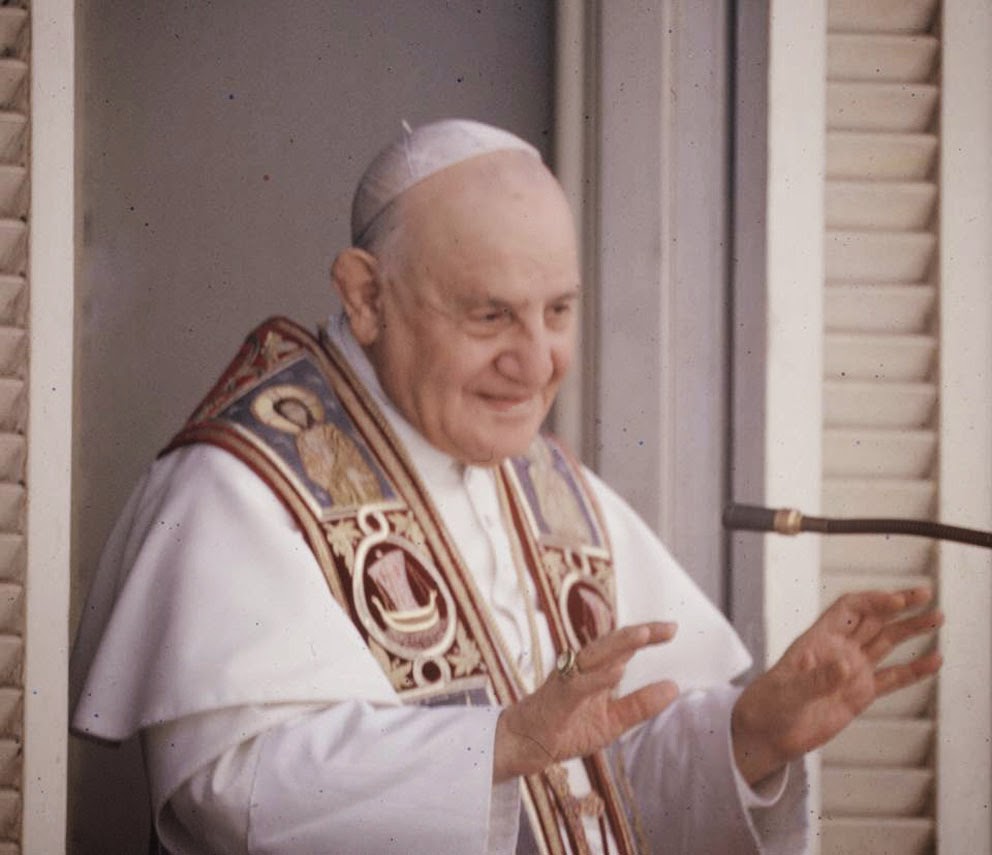
    This can be hard work sometimes, I know. And that reminds me of a real story about a real pope that I once heard. This is about Pope Saint John XXIII. He was an old man when he was elected pope, but he didn’t waste any time getting things done for the Lord. He was always busy about making the Church better so that people could come to know the Lord. And, at the end of the day, when he was very tired, he would say to Jesus: “Okay Lord. I’m tired and it’s your Church. Take care of it while I sleep.” And Jesus did.

    So, today, let’s all look busy. Knowing that Jesus wants to take us to his Heavenly Father, and it could be time to do that any time. We don’t want to waste our time: we want to be ready.

  • Friday of the Seventeenth Week of Ordinary Time

    Friday of the Seventeenth Week of Ordinary Time

    Today’s readings

    If we think simply obeying God’s call will make life much easier for us, today’s readings give us a, shall we say, different perspective. Sure not complicating our lives with sin and being certain to do what God asks of us is a good thing, and it does make life easier to an extent, but it does not guarantee a life without struggle or conflict.

    Certainly both Jeremiah and Jesus can attest to that. Jeremiah had the dangerous job of being a prophet to a people who wanted to do what they wanted to do. Evil was a way of life for them, and they certainly didn’t want to hear about their way of life coming to an end, and so our first reading ends with the people of Israel ominously surrounding Jeremiah in the house of the Lord. Jesus gets similar treatment from the people of his own native town. They took offense at one of them, the son of a laborer no less, working miracles and preaching with wisdom. And sadly, their lack of acceptance and lack of faith led to him not working many mighty deeds there.

    Maybe we have had a similar experience. Maybe we have tried to give witness to the Gospel, to what is right, to people very close to us. Many times that kind of thing is very unwelcome with those people. Maybe they are in our families, or at our job, or in our community. But like the prophet, and like Jesus, we must give witness anyway, and ask God to help them accept it. Preaching the truth in love can be dangerous, or at least ignored, at times, but it’s what we are called to do.