Tag: salvation

  • Friday of the Second Week in Lent

    Friday of the Second Week in Lent

    Today’s readings

    Today’s two readings remind us of what Lent is all about.  During Lent, we remember that our Lord, who came down from heaven to earth to save us from our sins and re-connect us with the love of God, paid the price for our many sins by laying down his own life.  And because of that, we have the promise of going to heaven one day, if we continue to follow Jesus.

    In our first reading, Joseph’s jealous brothers ended up selling him into slavery in Egypt, but in Egypt he became a powerful and talented government official who ended up saving many people, including his own brothers, from starvation during a famine.

    The parallels here between Joseph and Jesus are many.  Joseph was sold into slavery in Egypt; Jesus came to take away our slavery to sin.  Joseph’s own brothers plotted to kill him; Jesus was killed by us, his brothers and sisters.  Joseph fed the known world at that time by storing up grain for the day of famine; Jesus fed the multitudes, and us, with the bread that comes down from heaven.  Joseph was sold for twenty pieces of silver; Judas was given thirty pieces of silver to hand Jesus over to death.  Joseph, in many ways, was a foreshadowing of Jesus.

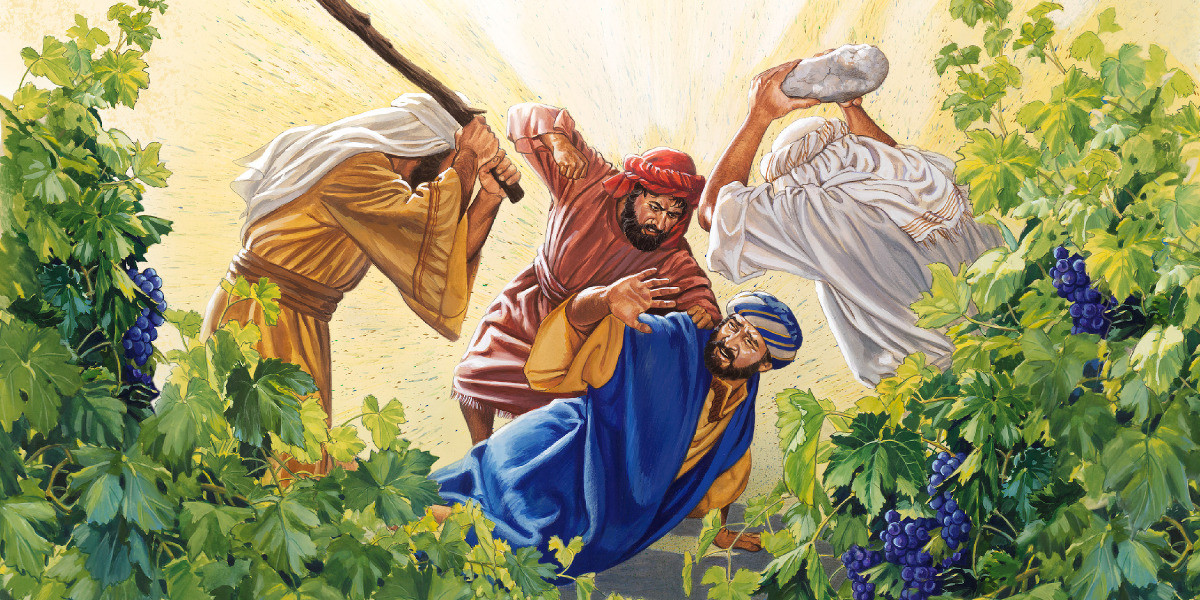
    In our Gospel today, Jesus tells a parable which tells the story of what will soon happen to him.  The vineyard owner is God the Father, and he is looking for the fruit of the harvest, which is our faith.  Instead, the people of old beat and murdered the prophets who came to give God’s word, just as the messengers of the vineyard owner were beaten and murdered.  And finally, when God, the vineyard owner, sends his own Son, he was killed too.   Just like Jesus.

    The people of Jesus’ day missed the message, they missed the parallels, they didn’t get that God was continually reaching out to them to gather them in faith.  But we know the story, all of it, and we can’t be like them.  We have to be ready to hear the truth and act on it, to see Jesus in other people and respond to him, to hear the Word he speaks to us and live that Word in faith each day.

    God loved us so much that he gave us his only begotten Son; we have to treasure that gift and let it make us new people.  That’s what Lent is all about, friends.  Lent means “springtime,” and so Lent should be a springtime of new growth in us, so that we can be a vineyard of faith to give joy to the world.

  • The Nativity of the Lord (Vigil Mass)

    The Nativity of the Lord (Vigil Mass)

    In a town called Nazareth in Galilee, a long time ago, a girl named Mary lived with her parents, Joachim and Ann. Mary was just around fourteen years old or so.  She came from a quiet little area of the world, and just looking at Mary and her parents, you’d have to say nothing about her family was very special, although God knew that they really were!  She was engaged to be married to a man named Joseph, because that was when people got married in those days, but she wasn’t married or living with him yet.

    She was busy doing her chores one day, when she was surprised by the appearance of an angel named Gabriel.  As you can imagine, the appearing of an angel can be a little frightening, but Gabriel reassured her and told her that the Lord was with her.  He said, “Hail Mary, full of grace, the Lord is with thee.” He told her not to be afraid, because God wanted her to be the mother of his Son Jesus.  Jesus would become great and would rule over the kingdom of Israel forever.  Mary was confused how she could have a baby, because she was not living with Joseph, and she didn’t have relations with any man, but the angel reassured her that all things are possible with God.  She was amazed, but she had faith, and said to the angel, “Let it happen as you have said.”

    Mary sang a hymn proclaiming how great God was, and went in haste to visit her older relative Elizabeth, who was also going to have a baby, even though she was very old.  When she got there, the baby in Elizabeth’s womb leapt for joy, and Elizabeth said, “Blessed are you among women and blessed is the fruit of your womb!” Mary stayed with Elizabeth for three months and then returned home.

    When Joseph heard that Mary was pregnant, he was confused and upset.  He didn’t understand the message from the angel, and couldn’t see how this was all God’s will and God’s doing. He was going to break off the engagement, but he had a visit from the angel too, in a dream. The angel told him not to be afraid to take Mary into his home.  And so he did. When the emperor called for a census, a time when every person in the kingdom was counted, he took Mary with him into the city of David to be counted, because that was where he was from.  

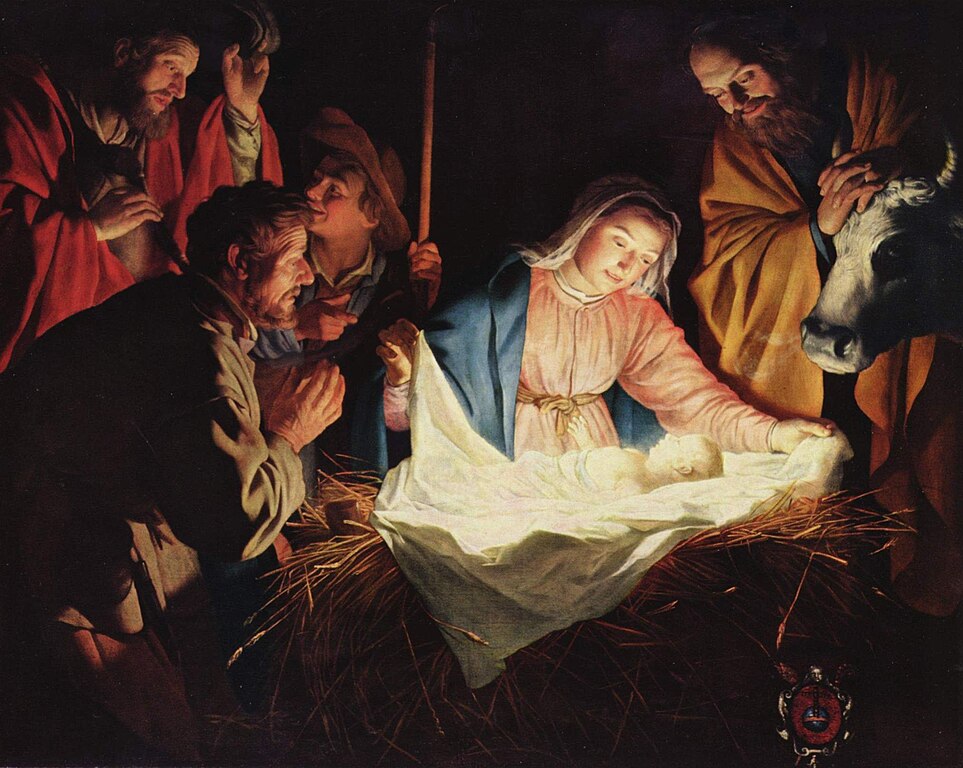
    They had a terrible time finding a place to stay during the journey, because so many people were traveling to take part in the census.  Eventually, it became urgent: on the way, Mary gave birth to her baby, and had Jesus in a manger where the animals stayed.  It was the best they could do. Many people came to visit Mary and Joseph and Jesus, and gave the baby gifts and said wonderful things about him, things Mary would never forget.  She kept all of this very close to her in her heart.

    Mary and Joseph raised Jesus and watched him become a strong, healthy, and smart young man.  One time, when the family went to Jerusalem for a visit to the holy temple, Mary and Joseph lost track of Jesus.  They were on the way home when they discovered Jesus wasn’t with them or any of their friends or family.  They were so upset and frightened!  Returning to Jerusalem, Mary and Joseph found Jesus in the temple, talking about their faith, with all of the rabbis and teachers.  He was only twelve years old!

    Eventually Joseph died, and Mary stayed near Jesus.  She watched him start his ministry, the whole reason God had sent him to earth in the first place.  He called his disciples and taught all the people.  He cured the sick and fed many hungry crowds.  He worked many miracles and always talked about how good God was, and how much God loved people, and how they should all turn back to God and turn away from the bad things they had been doing.  Mary watched as he did all these wonderful things, and she saw how faithful he was to God’s work.

    But Mary also began to see that Jesus wasn’t making everybody happy.  She saw that when he cured people on the Sabbath day, the day of rest, the leaders of the temple became angry.  She saw that when Jesus told them to take care of the poor and the hungry and the homeless instead of worrying about what day it was, the religious leaders wanted to kill him.  Mary watched as eventually they did take hold of Jesus, carried him off for a trial before Pilate the governor, and nailed him to the cross.

    At the foot of the cross, Mary stood sorrowful, knowing what a wonderful gift she and the whole world had been given in Jesus.  But Jesus took care of Mary even then, and entrusted her to the care of his friend John.  After Jesus died on the cross, Mary along with some of the other women in the group were the first ones to see that Jesus rose from the dead!  Mary stayed with the other disciples and prayed with them that the whole world would come to know the message of Jesus.  Her sorrow turned to joy as she watched the community grow and live the things Jesus had taught them.

    Those disciples were the ones who passed the faith on to us.  Because of the courage of the disciples and especially of Mary, we today can believe in Jesus and receive the gift of everlasting life from him.  Because of the faith of Mary, we can live forever with God and never have to be afraid of death or be mastered by sin.  All of this happened because Mary said to the angel back at the beginning of it all, “I am the handmaid of the Lord, let it be done to me according to your word.”

    It is good for us to hear Mary’s story, because she lived her life following Jesus.  We’re supposed to do that too.  Mary got to see Jesus face-to-face, even hold him in her arms.  We might not be able to do that, but Jesus is close to all of us as long as we let him in.  Just like they made a place for Jesus to be born in a manger, we need to make a manger for Jesus in our own hearts so that he can be born in us and always be with us.  It’s very important that we all hear that just as God sent an angel to Mary, he sends angels to us all the time.  Those angels tell us, too, that we should not be afraid because God loves us and cares for us and wants to do great things with us, just like he did with Mary.  All he needs for us to do is to say, “Let it be done to me according to your word.”

  • The Twenty-first Sunday in Ordinary Time

    The Twenty-first Sunday in Ordinary Time

    Mass at Saint Petronille, Glen Elllyn | Today’s readings

    In my first priestly assignment, at Saint Raphael in Naperville, there was a huge football program for elementary school kids called Saint Raphael Football. It was not just a team, but a league, and lots of surrounding churches had teams in the league. You couldn’t live in Naperville and not have heard of Saint Raphael Football. It had a rather tangential relationship to the parish. So once in a while, in a social setting, someone would ask me what church I was from, and I’d tell them, Saint Raphael. And they would say to me, “Oh yes, we go there, our son is in that football league.” I always wanted to tell them, “How nice. By the way, we also celebrate the Eucharist there.” Maybe I should have. Today’s gospel reading makes me think I should.

    We – as a society – have it all wrong. Our priorities are all messed up. I think we’re in real danger, now more than ever, and today’s Liturgy of the Word is a wake-up call for us to get it right. We live in a society that has not just lost its moral compass, but has actually taken pains to bury it away and never look at it again. Everyone seems to think that something is okay if it works for them in their current circumstance, regardless of how it affects others, regardless of how it affects even them in the long-run. In many alarming ways, our moral compass has been buried for so long that we hardly know what it looks like anymore.

    So this homily is probably going to come off sounding kind of harsh to some of you, but if I don’t say what I have to say, I’m not doing my job as a priest. And I know, really I know, that most of you get this. So please indulge me; if this doesn’t apply to you, please pray for someone who needs to hear it, because you know someone who does.

    When Jesus is asked whether only a few will be saved, he deflects the question. His answer indicates that it’s not the number of those who will be saved – that’s not the issue. The issue is that some people think they will be saved because they call themselves Christian, or religious, or spiritual, or whatever. It’s kind of like the people I talked to who considered themselves practicing Catholics simply because their children played in a football league that was marginally affiliated with the parish.

    Jesus says that’s not how it works. We have to strive to enter the narrow gate. So what does that mean? For Jesus, entering eternity through the narrow gate means not just calling yourself religious; that would be a pretty wide gate. It certainly wouldn’t mean saying that you’re basically a good person, since that criterion is pretty subjective, and so widely misunderstood. The narrow gate means actually practicing the faith: taking time for prayer and worship, receiving the Eucharist for strength, living the gospel, reaching out to the needy, showing love to your neighbor. It means making one’s faith the first priority, loving God first, worshiping first, loving others first. Because “some are last who will be first, and some are first who will be last.”

    And I’ll be the first to tell you that it’s hard to do that. Saint Paul says today that we have to strengthen our drooping hands and weak knees; Jesus says that many will attempt to enter that narrow gate but won’t be strong enough to do it. That narrow gate of love is hard to enter: it takes effort, it takes grace; it takes strength, and we can only get that grace and strength in one place, and that place is the Church. That’s why Jesus gives us the Church: to strengthen us for eternal life.

    That’s not the best news, however, because so many people these days settle for simply calling themselves religious, or being “spiritual” – whatever that means. They’ll play football on the team, but won’t make an effort to come to Church to receive the strength they need to live this life and to enter eternal life. It is here, in the Eucharist, freely given by our gracious Lord, that we receive the strength we need to love, the strength necessary to live our faith and be united with our God. It is here, in the proclamation of the Word, that we find instruction to live as disciples and are more and more conformed into the image of Christ. But it’s hard to get to Church because Billy has a soccer game, or Sally has a dance recital, or because Mom and Dad just want to sleep in after a really trying week.

    But those decisions, friends, have eternal consequences. So let me be clear: God is more important than soccer, or football, or cheer, or whatever sport you’re playing; God is more important than the dance recital, and as for sleeping in on Sunday, well, as my grandfather used to say, you can sleep when you’re dead. And it’s not like it’s an either/or proposition: people don’t have to choose between soccer and Mass or dance and Mass or even sleeping and Mass. Certainly not in our section of the world. This parish has Mass on Saturday evening, on Sunday morning, and even Sunday evening. If those don’t work, there are a bunch of parishes within a short driving distance that have other schedules. There’s probably a church within a few driving minutes of every football or soccer field in the area; I know a lot of families choose to take that option when schedules are hectic.

    The point is, we make time for what’s important to us. And eternal life is the only thing that we have of lasting importance. So we have to build up the strength to get through that narrow gate one day. We’ve got to worship God with consistency; we have to live the gospel with consistency.

    We’re not going to be able to say one day: “We ate and drank in your company and you taught in our streets and we played football on your team.” We can’t just call ourselves Catholic; we have to live our faith. We have to worship and pray; we have to reach out to the needy, stand up for truth and justice, make a real effort to love even when it’s not convenient to love, or even when the person who faces us is not as lovable as we’d like.

    All of this requires commitment and effort and real work from all of us. We have to strive to enter through that narrow gate, because we don’t ever want to hear those bone-chilling words from today’s Gospel: “I do not know where you are from. Depart from me, you evildoers!” The good news is we don’t ever have to hear those words: all we have to do is nourish our relationship with Jesus that will give us strength to enter the narrow gate. After all, the narrow gate is love, and the love of God in Jesus is more than enough to get us through it.

  • The Third Sunday in Lent, Cycle C Readings

    The Third Sunday in Lent, Cycle C Readings

    Today’s readings

    God is extremely patient when it comes to extending mercy. That’s what Jesus is talking about in this rather odd parable. I have to admit that I’m no gardener: I’m just not patient enough for that! So I needed to do a little digging (no pun intended) to get a real sense of where this parable is going. I discovered that there are a couple of things we should all know before we get into this little story. First of all, fig trees actually did take three years to bear fruit. During those three years, of course, they would need to be nourished and watered and pruned and tended. It was a lot of work, so when those three years of hard work were up, you better believe the farmer certainly wanted fig newtons on his table! And the second piece of background is that, since the days of the prophet Micah, the fig tree has been a symbol for the nation of Israel, and Jesus’ hearers would have known that. So when they hear of a fruitless fig tree, it was a little bit of an accusation. Maybe more than a little bit.

    Conventional wisdom is that if the tree doesn’t bear fruit after three years of labor and throwing resources at it, you cut it down and plant a new one; why exhaust the nutrients of the soil? And if you’re an impatient gardener like me, why exhaust the gardener?! But this gardener is a patient one; he plans to give it another year and some extra TLC in hopes that it will bear fruit.

    So here’s the important take-away: God is not like Father Pat; he’s the patient gardener! And we, the heirs to the promise to Israel, if we are found unfruitful, our Lord gives us extra time and TLC in order that we might have time to repent, take up the Gospel, and bear fruit for the kingdom of God. That’s kind of what Lent is all about.

    But we have to remember: we don’t get forever; if we still don’t bear fruit when the end comes, then we will have lost the opportunity to be friends of God, and once cut down in death, we don’t have time to get serious about it. The time for repentance is now. As Saint Paul told the Corinthians, and us, on Ash Wednesday: “Behold, now is a very acceptable time; behold, now is the day of salvation.” The time for us to receive and share God’s grace is now. The time for us to live justly and work for the kingdom is now. The time for us to stop bickering and be kind to one another is now. The time to work on our prayer life is now. Because we don’t know that there will be tomorrow; we can never be presumptuous of God’s mercy and grace.

    The consolation, though is this: we don’t have to do it alone. The Psalmist today sings that our God is kind and merciful: We get the TLC that our Gardener offers; the grace of God and the gifts of the Holy Spirit. We can trust in the Lord God, our great “I AM,” to come to us and lead us out of captivity to sin just as he was preparing to do for the Israelites in the first reading today. We can put our trust in God’s mercy. We are always offered the grace of exodus, all we have to do is get started on the journey and begin once again to bear the fruit of our relationship with Christ.

    Fediverse Reactions
  • Saturday of the Second Week in Lent

    Saturday of the Second Week in Lent

    Today’s readings

    That Jesus would welcome sinners and eat with them is obviously a huge deal. In those days, it was thought that associating with sinners made one complicit in the sin, or at least showed approval of the sin; so the audacity of such an action was sinful in and of itself, at least as far as the religious leadership was concerned. But as an act of mercy, it’s grace unlike anything else. And the significance for us is understandable. Jesus still welcomes sinners and eats with them. If that were not true, none of us would be here for the Eucharist today, would we?

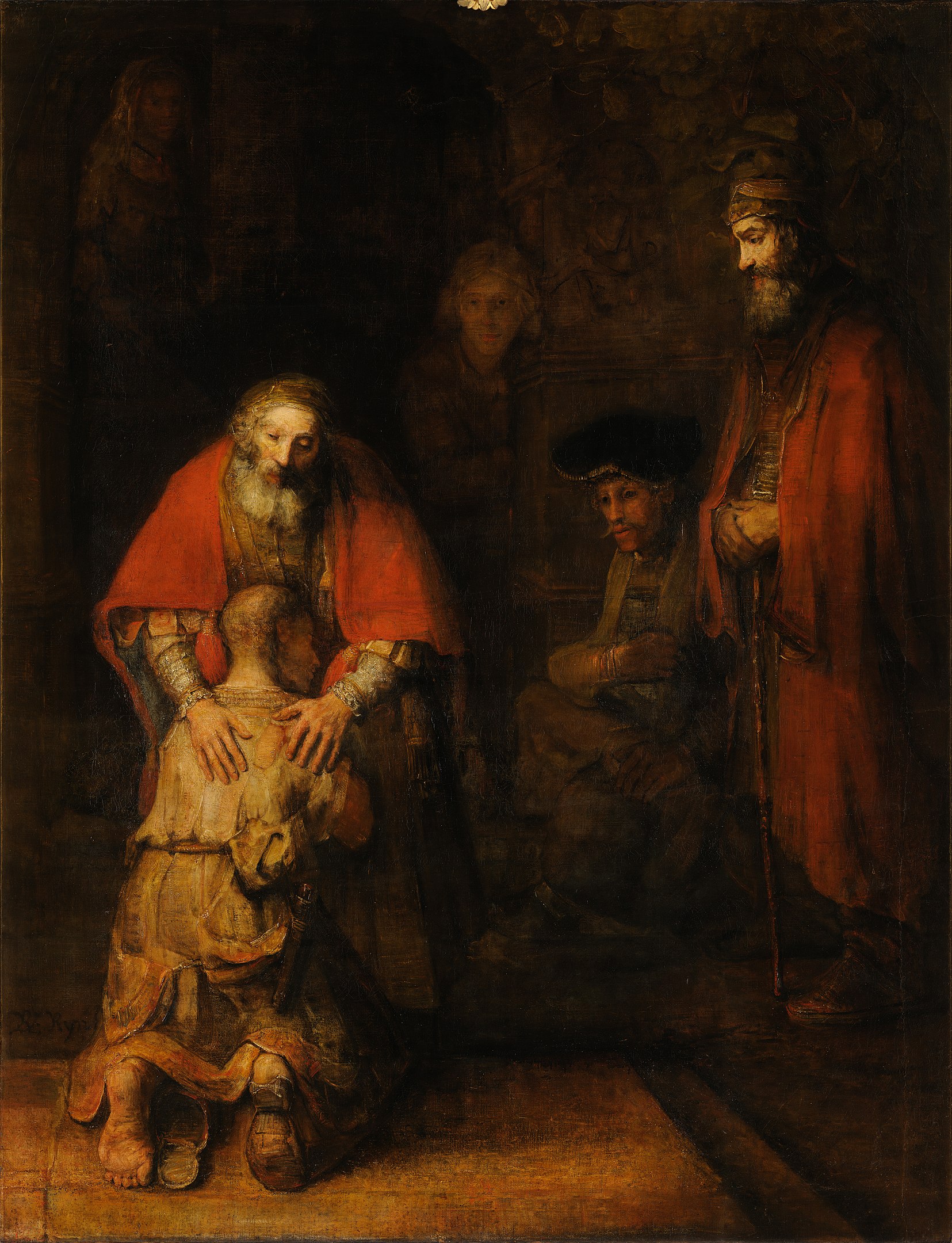
    Something that often gets overlooked in this very familiar parable is that both of the sons are sinful. It’s obvious that the youngest is sinful: taking half of his inheritance before his father is even in the grave, living a life of dissipation and sexual excess, using up all that money in a short time, content to eat among the swine which no good Jew would even think about touching, and finding himself very, very broken. But the so-called good son is sinful too. On his brother’s return, he refuses to go into the house to welcome him back, and takes his father to task for showing mercy and love. In the Gospel, failure to forgive is itself sinful.

    Both sons are sinful in their own way. Both need the father’s love and mercy and forgiveness. And both receive it. Far from the way a proper Jewish father would act, he runs out to meet both sons where they are. Protocol would have them come to him, and not he to them. But he comes out twice: once to meet the younger son who is on the way back to him, and once to meet his older son who refuses to come in.

    There is often discussion on where we find ourselves in this very familiar parable. Are we the sinful son? Are we the good son? Are we the father? It probably depends on the day – we might be like all of them at one time or another. I don’t think that’s what matters here. What matters is that Jesus welcomes sinners and eats with them – in our case, feeding us with the finest bread and wine which are of course his very own Body and Blood. Without this grace, we would have no life – salvation would only be a pipe dream. But because this grace is very real, we have the opportunity to gather here at the Table of the Lord, and one day, please God, at the great heavenly banquet. Praise God today for his forgiveness, mercy and grace. Praise God that he welcomes sinners and eats with them.

    Fediverse Reactions
  • Friday of the Second Week in Lent

    Friday of the Second Week in Lent

    Today’s readings

    In the readings this week, I’ve been noticing a lot of foreshadowing. How many of you know what foreshadowing is? It’s a literary device that you seen in the early part of some stories, that gives us a hint at the end of the story. Usually you don’t notice the foreshadowing until you get to the end. I think we see foreshadowing in both of today’s readings. These readings remind us of what Lent is all about. During Lent, we remember that our Lord, who came down from heaven to earth to save us from our sins and re-connect us with the love of God, paid the price for our many sins by laying down his own life.

    Back when I was much younger, for my birthday my family took me to see the musical Joseph and the Amazing Technicolor Dreamcoat. Our drama club here at Saint Mary’s performed that musical several years ago. The story goes that Joseph’s jealous brothers ended up selling him into slavery in Egypt, but that in Egypt he became a powerful and talented government official who ended up saving many people, including his own brothers, from starvation during a famine.

    In the story, you can see many parallels between Joseph and Jesus. Joseph was sold into slavery in Egypt; Jesus came to take away our slavery to sin. Joseph’s own brothers plotted to kill him; Jesus was killed by us, his brothers and sisters, by our sins. Joseph fed the known world at that time by storing up grain for the day of famine; Jesus fed the multitudes, and us, with the bread that comes down from heaven. Joseph was sold for twenty pieces of silver; Judas was given thirty pieces of silver to hand Jesus over to death. Joseph, in many ways, was a foreshadowing of Jesus.

    In our Gospel today, Jesus tells a parable which is a foreshadowing of what will soon happen to him. The vineyard owner, God the Father, is looking for the fruit of the harvest. That harvest should be our faith. Instead, the people of old beat and murdered the prophets who came to give God’s word, just as the messengers of the vineyard owner were beaten and murdered. And finally, when God, the vineyard owner, sends his own Son, he was killed too.

    The people of Jesus’ day missed the foreshadowing, they missed the parallels, they didn’t get that God was continually reaching out to them to gather them in faith. But we know the story, all of it, and we can’t be like them. We have to be ready to hear the truth and act on it, to see Jesus in other people and respond to him; to hear the Word he speaks to us and live that Word in faith each day.

    God loved us so much that he gave us his only begotten Son; we have to treasure that gift and let it make us new people. That’s what Lent is all about, friends. Lent means “springtime,” and it has to see new growth in us, so that we can be a vineyard of faith to give joy to the world.

  • The Feast of the Presentation of the Lord

    The Feast of the Presentation of the Lord

    Today’s readings

    Who is this king of glory?
    The Lord of hosts; he is the king of glory.

    Today we celebrate the traditional end of the Christmas season with this feast of the Presentation of the Lord. The current liturgical end of the Christmas season was back on January 12th, the feast of the Baptism of the Lord. But the older tradition reflected what we have seen in the readings for the Sundays ever since, and that is remnants of the Epiphany, or manifestation of who Christ is in our world. On Epiphany, Jesus was manifested to the Magi as priest, prophet and king. On the Baptism of the Lord, Jesus was baptized as the eternal Son of the Father, with whom the Father was well-pleased. Today, Jesus is manifested as a light to the Gentiles and the glory of Israel, as the king of glory.

    Like Epiphany, this feast of the Presentation of the Lord is a feast of light. On Epiphany the world was illumined by a star that pointed to the true Light of the world. Today, a world grown dark is illumined by that true Light and the glory of God sheds light on the whole world: Gentiles and Israelites alike. So today, the Church has always blessed candles, which we did at the beginning of Mass today. The reason the Church lights candles is always to draw our attention to Christ our Light, in the midst of whatever darkness the world throws at us. This feast is a foreshadowing of the Easter Vigil, when the deacon proclaims in a darkened church, “Lumen Christi,” “The Light of Christ,” and the Church responds, “Deo Gratias,” “Thanks be to God.” Today is a foretaste of Easter, when the true Light of the World, Christ our Light, will definitively conquer every darkness.

    And so you will be invited today to purchase some of the candles we just blessed to take into your home. Traditionally these blessed candles have been used in many ways: to be a sign of Christ’s presence when the priest is called to anoint a dying loved one; to be lit during a storm to remind us of Jesus who had power to conquer every storm; to be lit when the family gathers for prayer so that we remember that whenever we gather in Christ’s name, he is there in our midst. Every family should have blessed candles in their home because every family has times when Christ’s light needs to burn brightly.

    Those blessed candles which remind us of the presence of our Savior in good times and in bad remind us that we, too are meant to be the light of Christ. And we are called to be the light because the world has times of darkness too. The world needs us to be the light that scatters the darkness of apathy by looking in on a sick neighbor or bringing a meal to a family that has suffered the death of a loved one. We are called to be the light that scatters the darkness of ignorance by mentoring a young person, or opening our home to a foster child, or being a catechist. We are called to be the light that scatters the darkness of racism by standing in solidarity with our brothers and sisters, no matter where they’ve come from. We have to be the light that scatters the darkness of death by taking every opportunity to oppose abortion, euthanasia, and any endeavor that cheapens human life. We have to be the light that scatters the sadness of a spiritually bereft world by joyfully living our faith and standing up for what we believe. The world needs the light of Christ, and you might be the only candle someone sees on a given day. Be the light, friends: be Christ’s presence. People of faith don’t have any other option than that.

    The Methodist minister William L. Watkinson once said, “It is better to light a candle than to curse the darkness.” We can look at the darkness of our world – and there is plenty of it! – and shake our heads and walk away in sadness, but that doesn’t shed any light. We have to acknowledge the darkness and remember, as the Gospel of John proclaims, “the Light shines in the darkness and the darkness has not overcome it.” We are Catholics and we believe and proclaim that there is no darkness on earth that Christ our Light can’t overcome with the brightness of his glory. It is up to us to light the candle that helps others to see that glory.

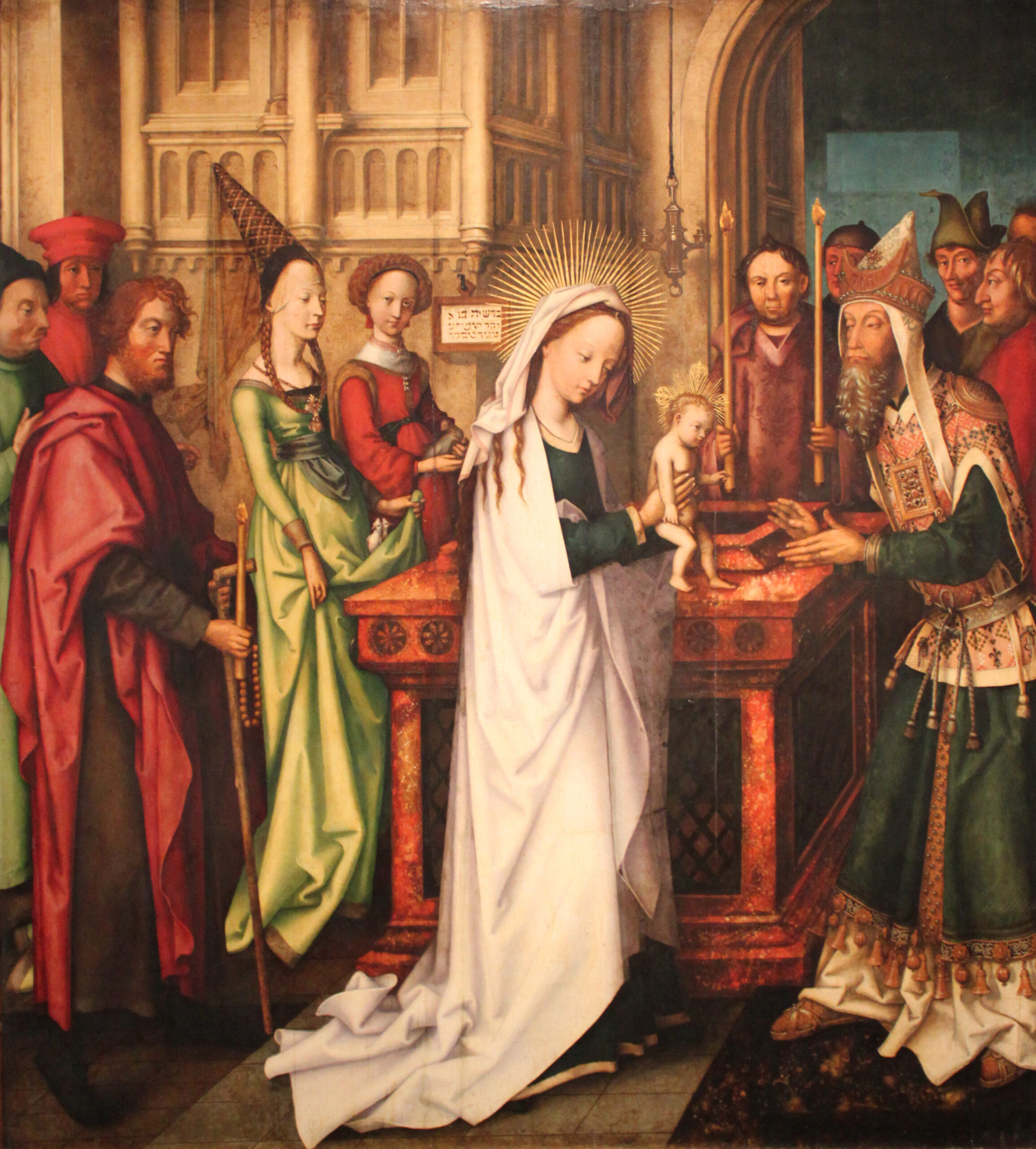
    In today’s Gospel reading, Simeon and Anna experienced the power of the Light of the World. They had been waiting and praying and fasting for the day of his appearance, and those prayers were answered. The Lord came suddenly to the temple, as Malachi prophesied, and they could now be at peace. But that appearance of the Lord requires a response: one doesn’t just experience the light and remain the same. Christ our light is that refiner’s fire that purifies the lives of his chosen ones so that they might go out and shed light on our dark world.

    And I don’t mean for this to just be an academic or poetic discussion. The light of Christ is not a mere metaphor. Being the light for the world isn’t just a “yeah, maybe I should do that some day” kind of thing. Every baptized one, according to her or his station in life, is called to actively shed light on the world. So let’s take a few moments to pray with this.

    • Call to mind a darkness that you have noticed, either in your life, in your community, or in the world: a darkness that affects you or those around you.
    • Take a moment to talk with Jesus about that darkness and let him know your concern.
    • Listen for Jesus as he acknowledges the darkness and accepts your concern.
    • Ask him for the grace to shed some light, small or big, on that darkness. Listen for him to tell you what he wants you to do.
    • If you don’t hear that call right away, bring it to your prayer this week. Ask Jesus for grace to be the light.

    And we pray: Christ be our light, shine in our hearts, shine through the darkness. Christ be our light, shine in your Church, gathered today.

  • The Solemnity of the Nativity of the Lord: Mass During the Day

    The Solemnity of the Nativity of the Lord: Mass During the Day

    Today’s readings

    There is a meme that has been going around on social media for a little while now, called “How it Started vs. How it’s Going.” The meme in general has two pictures, one labeled, obviously, “How it started” and the other “How it’s Going.” When it started, it was a way, on social media, to show the progress of a relationship. One picture would show the proposal or the first date, and the other would show a picture representative of the relationship at this point. Now it has evolved a bit, and often it will be a humorous meme. One meme I saw showed a famous chef early on in his career, and the “how it’s going” showed him flambeing a dessert with a huge ball of fire. Another showed the incredible Hulk as a mild mannered everyday guy, then after he got mad. You get the idea.

    Today’s Gospel reading makes me think of those memes. The first three words of the Gospel of John are the same as the first three words of the book of Genesis: “In the beginning.” How it started was that there was nothing, a swirling void as Genesis portrays it. But through Jesus, God the Word, working with God the Father, everything in the universe came to be. The Gospel tells us how it’s going:

    And the Word became flesh
    and made his dwelling among us,
    and we saw his glory,
    the glory as of the Father’s only Son,
    full of grace and truth.

    The Old Testament unfolds for us the many ways that God has intervened in history to save his people. He placed man and woman in the Garden of Eden, safe from all harm, should they choose to accept it (which, of course, they did not!). He brought eight people through the deluge of the great flood on Noah’s Ark. He promised Abraham his descendants would be as numerous as the stars of the sky. He led his people out of slavery in Egypt, through the desert and into the Promised Land, protecting them and guiding them through the hand of Moses all along the way. His love for his people, his desire that they be one with him, and his efforts to save them from their own folly have been abundant all through human history. But as numerous as his efforts have been, so have humankind’s failures to follow him been numerous as well.

    Which brings us to the event we celebrate today. Let’s be clear: this is not some last-ditch effort before he throws up his hands and leaves us to our own devices. This is the saving event, and there is no other. This is the way to salvation that has always been intended and has been promised through the ages, from the very days of the creation of the world, when the Word, as Saint John tells us today, was with God, and with God, created everything in heaven and on earth.

    This awesome event is the Incarnation: Jesus, the Word through which all were created, comes to be one of the created ones. This is the first and best of the mysteries of our faith: without the Incarnation, there could be no cross, no resurrection, no ascension, no salvation. None of the savings events of the Old Testament could be as effective and powerful as the Incarnation and the Paschal Mystery: in fact, those previous acts of salvation led up to the salvation we have in Christ Jesus, and paved the way for that saving act. In today’s feast, the great light of Christ has taken hold of the darkness this world brings to us and shatters it forever, shining great light into every corner of our dark world, and our sometimes very dark lives as well.

    This gift of the Incarnation is the best Christmas present we will receive – it is the best gift of any kind that we will ever receive, because in the Incarnation we have what’s necessary for us to be saved. This is so important a mystery and so great a gift, that at the words of the Incarnation in the Creed today, we are instructed to genuflect, not just bow. So we will genuflect when we say the words, “by the power of the Holy Spirit, He was born of the Virgin Mary, and became man.” And we genuflect because we remember with great gratitude that if the Word didn’t become flesh, if he wasn’t born of the Virgin Mary, if he didn’t become one like us, if he didn’t pay the price for our sins, we would never have salvation, or hope of life with God. Praise God for this great gift today!

    And so as we continue our prayer today, we offer God the darkness in our lives: our sins, our frustrations, our disappointments, our pain, our grief – and we hold up all of this to the great Light that is God’s Word, the one who became one like us, who pitched his tent among us, and who dwells with us now. We pray that the Light of the world would banish our darkness, and help us to see the way to God from wherever it is that we find ourselves on the spiritual path today. We celebrate that today and every day, Jesus Christ is the Light that shines in the darkness, and the darkness has not overcome it. That’s how it’s going for all who believe in Jesus and long for his salvation.

    Merry Christmas to all of you, and may God bless you in the year ahead.

  • Tuesday of the Second Week in Advent

    Tuesday of the Second Week in Advent

    Today’s readings

    In this morning’s readings, our God is doing everything possible to get our attention. Salvation is God’s number one priority and he won’t rest until all have come to it. And so he sends Isaiah to “cry out” so many truths that we need to absorb: flesh is fading, but the word of the Lord is forever; the glory of the Lord will be revealed; our guilt is expiated. And this is all good news if we would receive it, but humanity is prone to tuning God out, especially if times are good.

    And so he literally jumps up and down to get our attention: Isaiah runs up to the top of a high mountain crying out, “Here is your God!” And failing all of that, God becomes the good shepherd, who notices us lost sheep and sets out to bring us back, even though it would seem – to us – to be wiser not to do so, lest the other ninety-nine scatter.

    God wants us all to come to salvation. He won’t rest until we are where we should be. He wants us all to open our hearts and receive him. He comes among us, as the Psalmist says, “to rule the world with justice, and the peoples with his constancy.” God urgently seeks to bind up all the broken and lost ones and bring everyone to the kingdom. That’s Advent. Blessed are we when we hear God crying out to us and respond.

    Maranatha! Come, Lord Jesus!

  • Tuesday of the Thirty-third Week in Ordinary Time

    Tuesday of the Thirty-third Week in Ordinary Time

    Today’s readings

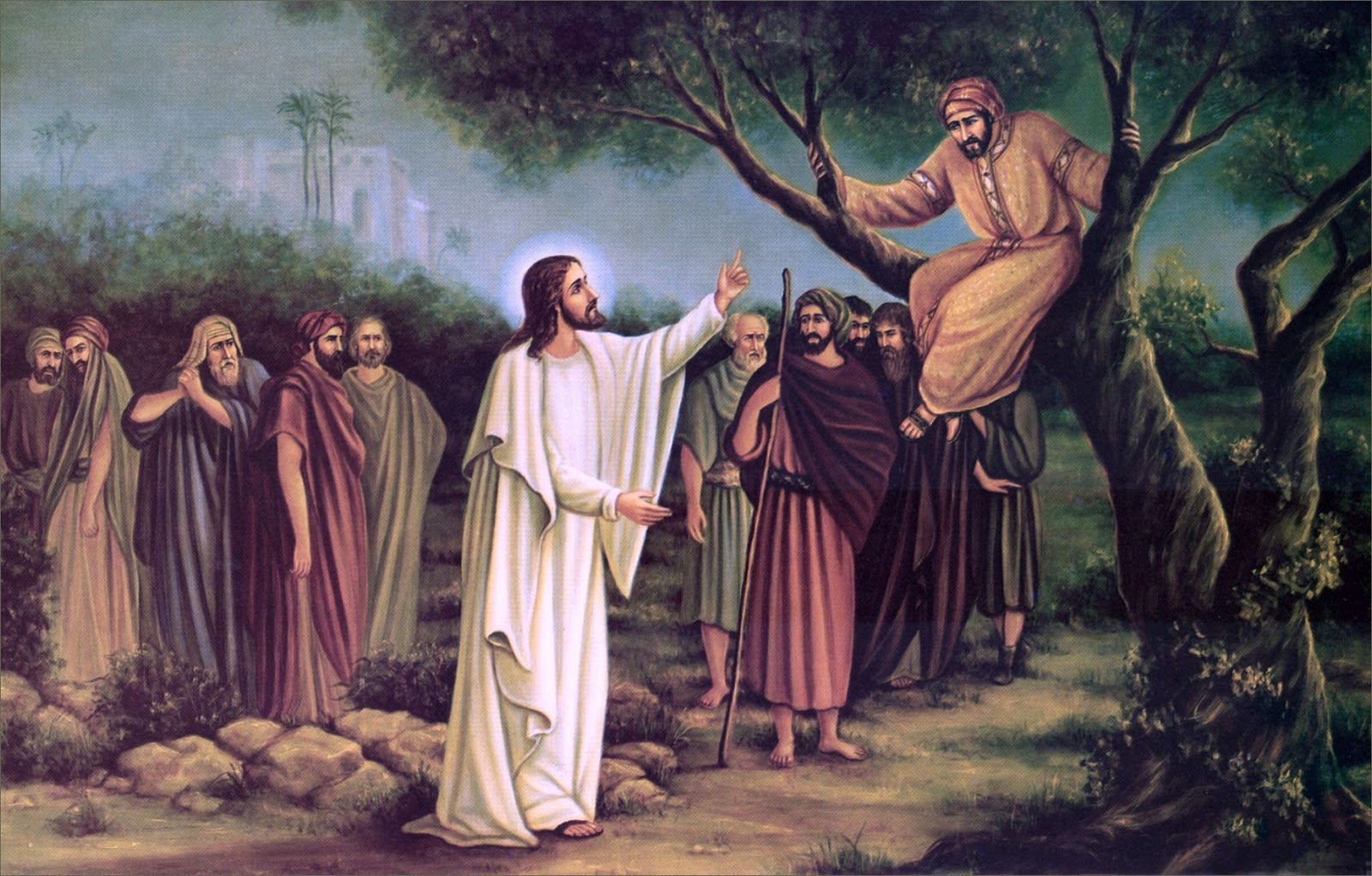
    I just love this story about Zacchaeus! In particular, there are two main components of the story that really stand out for me as hallmarks of the spiritual life.

    The first is Zacchaeus’s openness. First, he is so eager to see Jesus that he climbs up a tree to get a look at him. We don’t have to go that far. All we have to do is spend some time in the Adoration Chapel, or even just some quiet moments reflecting on Scripture, or meditative prayer, even participating in Mass. All of those are ways to see Jesus, but like Zacchaeus, we have to overcome obstacles to get a look at him. For Zacchaeus, that meant climbing up a tree to overcome the fact that he was apparently vertically challenged! But for you and me, that might mean clearing our schedule, making our time with Jesus a priority. Zacchaeus’s openness also included inviting Jesus in, despite his sinfulness. He was willing to make up for his sin and change everything once he found the Lord. We might ask ourselves today what we need to change, and how willing we are to invite Jesus into our lives, despite our brokenness.

    The second thing that stands out for me is what Jesus says to those who chided him for going into a sinner’s house. “For the Son of Man has come to seek and to save what was lost.” What wonderful words those are for us to hear. Because we know how lost we have been at times, and how far we have wandered from our Lord. But the Lord seeks us out anyway, because we are too valuable for him to lose.

    And all we have to do is to be open to the Lord’s work in our lives, just like Zacchaeus was. What a joy it will be then to hear those same words Jesus said to him: “Today salvation has come to this house.”