Category: Jesus Christ

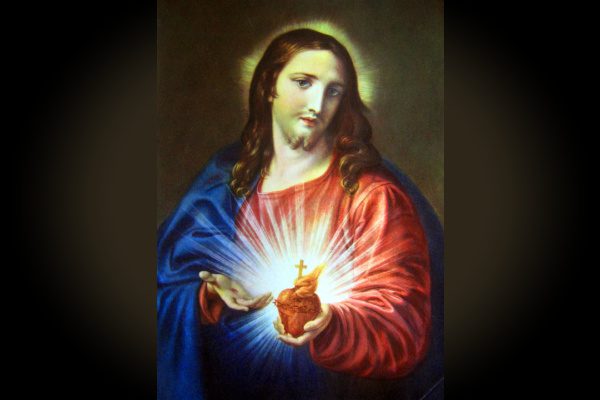
  • The Solemnity of the Most Sacred Heart of Jesus

    The Solemnity of the Most Sacred Heart of Jesus

    We’ve all heard the teaching that God is love.  And that’s a good thing to remember: I tell our school students they should always remember that, and if they do, they’ll know quite a bit about our God.  God is love in its purest form, so pure in fact that it burns away all our imperfections and makes us new people, washed clean in the Blood of Christ.  True love wills the good of the other for the sake of the other, and God models that best by having sent His only Son to live our life and die our death and raise us to new life with him forever.

    Today, the word “love” is tossed about in all sorts of ways.  Love can be construed as lust, or even affection, and real love isn’t any of that.  The popular saying is that “love is love,” and nothing could be further from the truth.  Real love isn’t bound by agendas, selfishness, or pride, and it is hard, no impossible, for us to avoid those things given our fallen human nature.  But, if we let Him, if we get out of his way, God will fill us with his grace, and give us love emanating from the Sacred Heart of Jesus that will fill our lives with love beyond measure.

    And let’s be clear: God loved us first and loves us best.  He loved us into creation and sustains us in his love.  Because God is love, he cannot not love.  But our agendas, selfishness, and pride can certainly get in the way, and now is the time to root all of that out because our world, our communities, our families, our churches need our love.  Everyone needs to see the Sacred Heart burning in us, because this world, left to its own crime, sin and blasphemy, is way too sad without it.

    We are all broken and hurting and in pain, spiritually. We might ignore it, or offer it up, or worst of all, might try to mask it with alcohol or other addictions. But none of that really heals us. The only thing that really heals is the Most Sacred Heart of Jesus.  The same is true for our broken world.

    We don’t trust God as much as we should; we don’t let God love us as much as we should. We want to pull ourselves up by our own bootstraps, take care of number one all by ourselves. Pope Francis says that God never gets tired of showing us mercy, it’s we who get tired of asking. And that’s so wrong. We weren’t made for that. We were made to be cared for and to be loved so that we can take care of others and love them in the name of Christ.

    God’s love is awesome. It doesn’t just cover our sins, it wipes them out, obliterates them so that they aren’t who we are any more. In the Sacred Heart of Jesus, we find a love that is so pure and so powerful that it cannot be overshadowed by any kind of darkness, nor be snuffed out even by the grave.

    But we absolutely have to let him love us, or we will miss it every time.

    Sacred Heart of Jesus, have mercy on us.

  • The Fourteenth Sunday of Ordinary Time: Blessed be the Name of Jesus

    The Fourteenth Sunday of Ordinary Time: Blessed be the Name of Jesus

    Today’s readings

    “Lord, even the demons are subject to us because of your name.”

    I don’t think we really understand and respect the power of the name of Jesus in our day to day lives.  Very often people take the name of the Lord in vain, violating the second commandment of the Decalogue, and even if we bristle about it a bit, how often do we challenge it?  How often do we ourselves take the Holy Name in vain?

    Here is some context.  In Judaism, the second commandment was taken so very literally that the name of God (the one is abbreviated YHWH) was never pronounced.  That very abbreviation was made without vowels, so that when it came up in a text, the reader would not pronounce it.  They would substitute with the word “Adonai,” which we translate as “Lord.”  Interestingly, for some time in the Church, it was commonplace to hear that Y-word in Catholic Liturgy, for which we should be ashamed.  There were even hymns (which have since been revised) that used the word.  The Congregation for Divine Worship and the Discipline of the Sacraments issued a directive in 2008 that this practice was forbidden.  So we can see here that names used to refer to the Divine Persons are sacred and not to be thrown around lightly.  Not even in the Sacred Liturgy. 

    We echo this slightly in Catholic worship.  You will often see the Presider of Liturgy bow his head when the names of Jesus, Mary, or the saint of the day, are mentioned.  This is a practice that is given in number 275 of the General Instruction of the Roman Missal.  It says, “A bow of the head is made when the three Divine Persons are named together and at the names of Jesus, of the Blessed Virgin Mary, and of the Saint in whose honor Mass is being celebrated.”  The instruction doesn’t say who does that, but clearly the Presider at least should, but even the faithful can do that as well.  In fact, in older times in very Catholic areas, whenever someone heard or used the name of Jesus in conversation, believers would bow their heads.  I once heard a homily in my young days from a priest who recommended that we should consider bowing our heads whenever we heard someone take the name of the Lord in vain, and it’s not a bad idea.

    And for good reason.  “Lord, even the demons are subject to us because of your name.”  Did you catch that?  The name of Our Lord terrifies demons!  So just as Jews don’t pronounce the name of the Lord, we should be very careful how we use it.  When we use the name of the Lord, it has to be with utmost respect and reverence.  Because His Name has power.

    Taking a cue from this very Gospel reading, there is a tradition of deliverance for those who are dealing with some kind of oppression.  It’s just short of an actual exorcism.  In that process, the oppressed persons are encouraged to name the things they are struggling with and to renounce them in the name of Jesus, and, in the name of Jesus, to claim blessing and victory over sin.  And believers are absolutely entitled to do that, yet we hardly ever think to do so.  Jesus sent the seventy-two out to claim victory over sin and illness and everything that oppressed people in his Holy Name.  They were to take nothing “extra” with them, because they could depend on the power of his Name to provide for them.

    We can do that too, but perhaps we need to be reconciled with his Holy Name.  We need to repent of using his name in vain, and repent of not knowing the power that His Name holds.  Even the demons know better.  We can claim victory over everything that oppresses us, whenever we do it in the name of Jesus.

    Say these with me if you know the prayer.  If you don’t know it, google “Divine Praises” and memorize the prayer.  It’s wonderful to have it in your prayer toolbox.

    Blessed be God.
    Blessed be his holy Name.
    Blessed be Jesus Christ, true God and true Man.
    Blessed be the name of Jesus.
    Blessed be his most Sacred Heart.
    Blessed be his most Precious Blood.
    Blessed be Jesus in the most holy Sacrament of the altar.
    Blessed be the Holy Spirit, the Paraclete.
    Blessed be the great Mother of God, Mary most holy.
    Blessed be her holy and Immaculate Conception.
    Blessed be her glorious Assumption.
    Blessed be the name of Mary, Virgin and Mother.
    Blessed be Saint Joseph, her most chaste spouse.
    Blessed be God in his angels and in his saints.

  • The Solemnity of the Annunciation

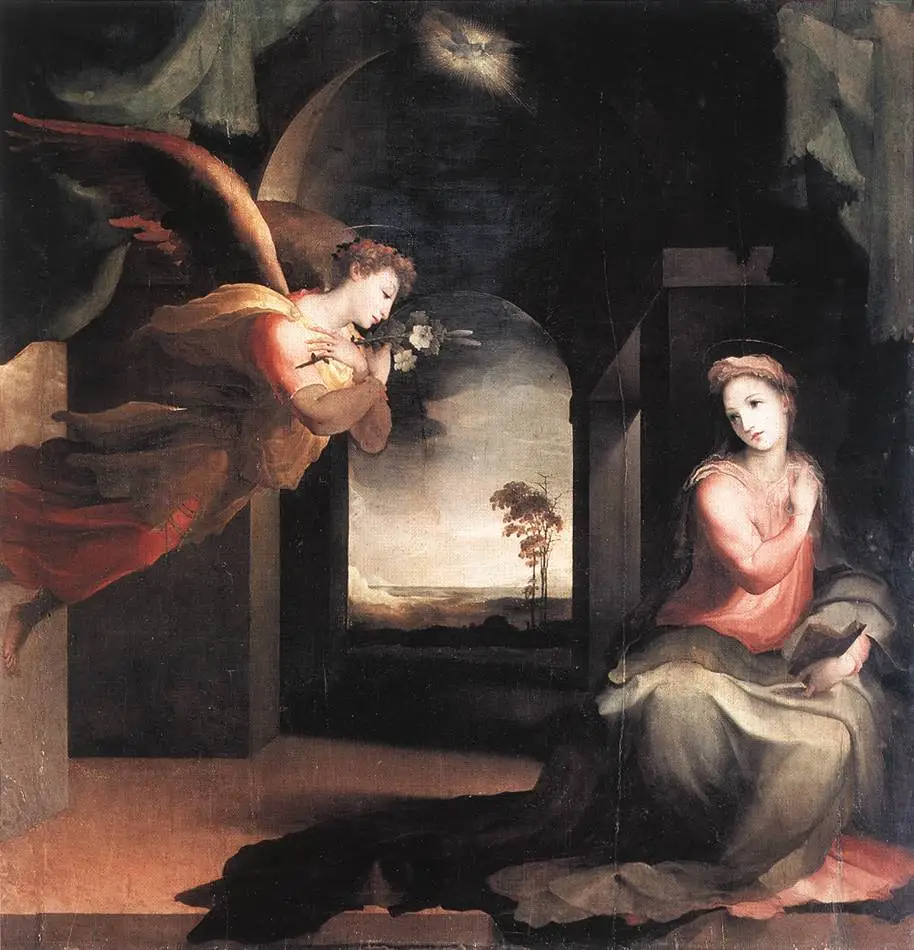
    The Solemnity of the Annunciation

    Today’s readings

    Fear keeps us from doing all sorts of things the Lord wants for us.  If we would truly let go of our fear and cling to our God, just imagine what he could do in us and through us.  Ahaz was King of Israel, a mighty commander, but yet was so afraid of God and what God might do that he refused to ask for a sign.  He was such an ineffective leader that he had good reason to be afraid.  Perhaps he knew how far he had strayed from God’s commands, and he was afraid to engage God on any level.  He would prefer to cut himself off from God rather than give himself over to the amazing power of God’s presence in his life and his rule.

    But his weakness did not disrupt the promise.  In the fullness of time, God’s messenger came to a young woman named Mary and proposed to accomplish in her life the sign for which Ahaz was too afraid to ask.  The difference, though, was that Mary heeded the initial words of the angel that have resounded through Salvation history ever since: “Do not be afraid.”  And, thanks be to God, Mary abandoned her fear and instead sang her fiat, her great “yes” to God’s plan for her, and for all of us.  “Behold, I am the handmaid of the Lord.  May it be done to me according to your word.” 

    And we know what happened from there.  Mary certainly knew that none of that could be accomplished through her own efforts, but she absolutely knew that God could do whatever he undertook.  Nothing would be impossible for God, and she trusted in that, and because of that, we have the great hope of our salvation.  We owe everything to Mary’s cooperation with God’s plan.

    And so the promise comes to us.  We have the great sign of which Ahaz was afraid, but in which Mary rejoiced.  We too are told that God can accomplish much in our own lives, if we would abandon our fears and cling to the hope of God’s presence and action in our lives.  Can we too be the handmaids of the Lord?  Are we bold enough to say, “Here I am, Lord; I come to do your will?”  All we have to do is to remember the first thing the angel said to Mary: “Do not be afraid.”

  • The Exaltation of the Holy Cross

    The Exaltation of the Holy Cross

    Today’s readings

    In a lot of ways, this is a strange feast we are celebrating today. Think about it. This is the Exaltation of the Holy Cross, which in Jesus’ day would have been as big an oxymoron as one could possibly imagine. No cross would ever have been thought exalted in that day.  That’s why they nailed Jesus to it: they thought by putting an end to him in such a horrible way, no one would ever speak his name again. It’s like us saying that we are going to celebrate the exaltation of a lethal injection chamber. There is nothing exalted about an instrument of execution: it’s tortuous, humiliating, and as dark as one can get.

    So to get from that to where we are now is nothing short of a miracle. A miracle, of course, of the highest order! God used this instrument of punishment to remit the punishment we deserved for our sins. God used the epitome of darkness to bathe the world in unfathomable light.

    And he didn’t have to. The cross is what we deserved for our many sins. Today’s first reading gives us just a glimpse into the problem. The Israelites, fresh from deliverance from slavery in Egypt, are making their way through the desert. Along the way, they pause to complain that God’s food, which he provided in the desert, wasn’t good enough for them. They had chosen slavery over deliverance; food that perishes over food that endures unto eternal life.

    But we’re there too, right? We often choose the wrong kind of food, get off the path, and choose slavery to our vices and sins over new life in Christ. In fact it was because of all that that Jesus came to us in the first place. God noticed our brokenness and would not let us remain dead in sin. So to put an end to that cycle of sin and death, he sent his only Son to us to die on that horrible cross, paying the price for our many sins. But, that death may no longer have power over us, he raised him up, cheating the cross and the evil one of their power, and exalting the Holy Cross to the instrument not of our death, but of our salvation.

    Because of the Cross, all of our sadness has been overcome. Disease, pain, death, and sin – none of these have ultimate power over us. Just as Jesus suffered on that Cross, so we too may have to suffer in the trials that this life brings us. But Jesus rose from the dead and ascended into heaven to prepare a place for us, a place where there will be no more sadness, death or pain, a place where we can live in the radiant light of God for all eternity. Because of the Cross, we have hope, a hope that can never be taken away.

    The Cross is indeed a very strange way to save the world, but the triumph that came into the world through the One who suffered on the cross is immeasurable. As our Gospel reminds us today, all of this happened because God so loved the world.

    We adore you, O Christ, and we praise you, because by your Holy Cross you have redeemed the world.

  • Monday of the Tenth Week of Ordinary Time: Votive Mass of the Precious Blood of Jesus

    Monday of the Tenth Week of Ordinary Time: Votive Mass of the Precious Blood of Jesus

    Today’s readings

    God’s blessings aren’t always things that might spring to mind when we think of blessings we would like.  For example, we might not think that those who are meek and those who mourn are blessed.  And we certainly wouldn’t celebrate the blessings of those who are persecuted for the sake of righteousness, would we?  It’s even more challenging when we remember that the word “blessed” in Scripture could also be translated as “happy.”  Would we think of those people as happy?  Probably not, but God does.

    Paul and Timothy in our first reading write to the people of the Church at Corinth that, when they are afflicted – as they surely were! – it was for the Church’s encouragement and salvation.  Paul knew well that following Christ meant going to the Cross.  Paul saw the blessing in suffering for the sake of Christ.  He realized that suffering, for him, it probably meant death, but for all of us, it means some kind of mortification, some kind of sacrifice.

    Today we celebrate a votive Mass of the Precious Blood of Jesus.  This Mass calls to mind the saving sacrifice of Jesus, in which his most Precious Blood was poured out for us.  That blood washes away the sins of the whole world, yes, our sins too, if we let him, if we join our sufferings to his.  The salvation won at the immense cost of the Precious Blood of Jesus is a blessing that should never be taken for granted.

    So it’s important for us to remember, I think, that while God never promises to make our lives free and easy, he does promise to bless us.  He will bless us with whatever gifts we need to do the work he has called us to do, the work for which he formed us in our mother’s womb.  We may be reasonably happy in this life, but the true happiness must come later.  Our reward, which Jesus promises will be great, will surely be in heaven.

    May the Precious Blood of Jesus keep us safe for eternal life.

  • The Presentation of the Lord

    The Presentation of the Lord

    Today’s readings

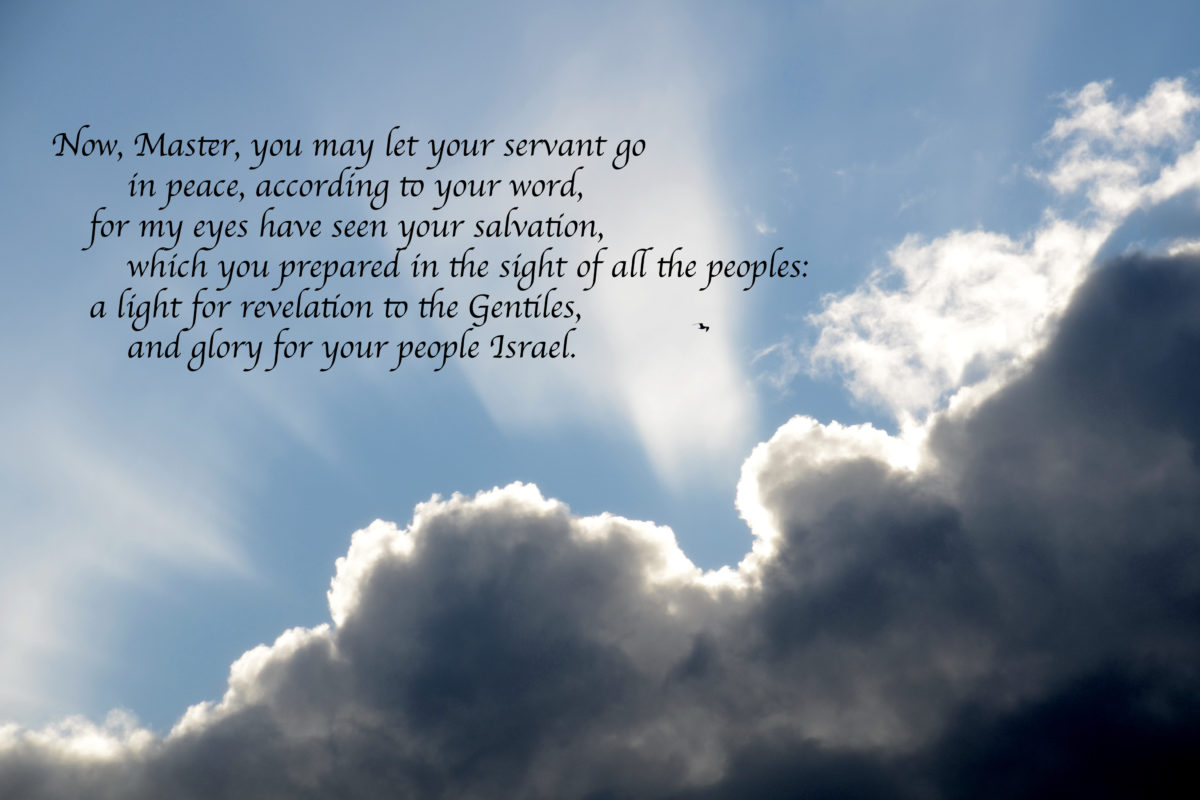
    Today we celebrate the traditional end of the Christmas season with this feast of the Presentation of the Lord.  The current liturgical end of the Christmas season was back on January 10th, the feast of the Baptism of the Lord.  But the older tradition reflected what we have seen in the readings for the Sundays ever since, and that is remnants of the Epiphany, or manifestation of who Christ is in our world.  On Epiphany, Jesus was manifested to the Magi as priest, prophet and king.  On the Baptism of the Lord, Jesus was baptized as the eternal Son of the Father, with whom the Father was well-pleased.  Today, Jesus is manifested as a light to the Gentiles and the glory of Israel, as the king of glory.

    Like Epiphany, this feast of the Presentation of the Lord is a feast of light.  On Epiphany the world was illumined by a star that pointed to the true Light of the world.  Today, a world grown dark is illumined by that true Light and the glory of God sheds light on the whole world: Gentiles and Israelites alike.  So today, the Church has always blessed candles, which we did at the beginning of Mass today.  The reason the Church lights candles is always to draw our attention to Christ our Light, in the midst of whatever darkness the world throws at us.  This feast is a foreshadowing of the Easter Vigil, when the deacon proclaims in a darkened church, “Lumen Christi,” “The Light of Christ,” and the Church responds, “Deo Gratias,” “Thanks be to God.”  Today is a foretaste of Easter, when the true Light of the World, Christ our Light, will definitively conquer every darkness.

    In today’s Gospel reading, Simeon and Anna experienced the power of the Light of the World.  They had been waiting and praying and fasting for the day of his appearance, and those prayers were answered.  The Lord came suddenly to the temple, as Malachi prophesied, and they could now be at peace.  But that appearance of the Lord requires a response: one doesn’t just experience the light and remain the same.  Christ our light is that refiner’s fire that purifies the lives of his chosen ones so that they might go out and shed light on our dark world.

    And I don’t mean for this to just be an academic or poetic discussion.  The light of Christ is not a mere metaphor.  Being the light for the world isn’t just a “yeah, maybe I should do that some day” kind of thing.  Every baptized one, according to her or his station in life, is called to actively shed light on the world.  So let’s take a few moments to pray with this.

    • Call to mind a darkness that you have noticed, either in your life, in your community, or in the world: a darkness that affects you or those around you.
    • Take a moment to talk with Jesus about that darkness and let him know your concern.
    • Listen for Jesus as he acknowledges the darkness and accepts your concern.  
    • Ask him for the grace to shed some light, small or big, on that darkness.  Listen for him to tell you what he wants you to do.
  • The Twenty-first Sunday of Ordinary Time

    The Twenty-first Sunday of Ordinary Time

    Today’s readings

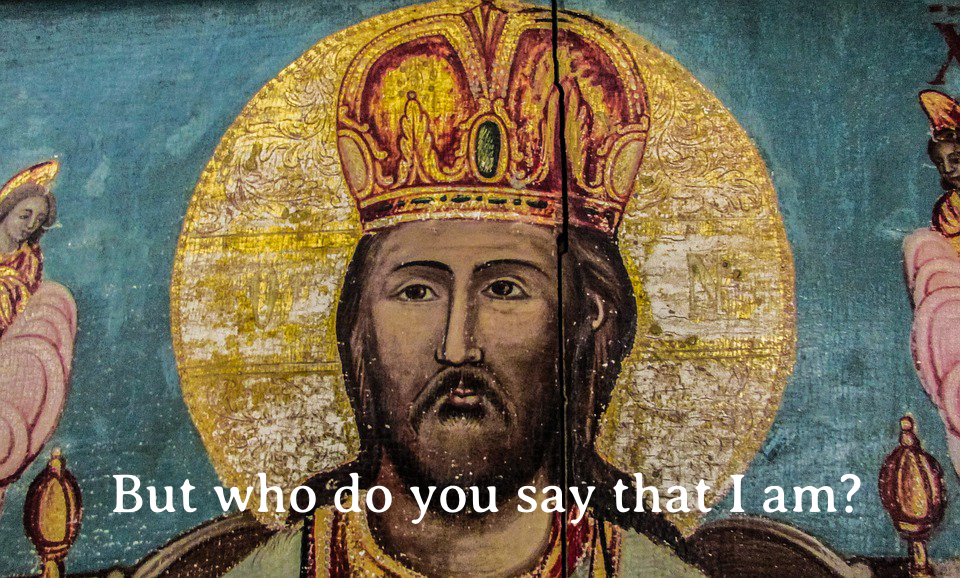
    One of my jobs before I went to seminary was in the sales department of a computer supply company.  In that job, they taught us that one of the first good rules of sales was never to ask a question to which you didn’t already know the answer.  I think teachers get taught that principle as well.  I can’t help but think that Jesus’ question to the disciples in today’s Gospel falls under that heading.  Because Jesus certainly knew who he was.  But, as often happens in our interactions with Jesus, there’s something more going on.  And to figure out what that something more is, all you have to do is go back to the Gospels the last couple of weeks and see in them that Jesus is looking for people’s faith.  He was looking for faith from Peter when he called him to walk on the water.  He was impressed by the faith of the Canaanite woman last week as she persisted in her request that Jesus heal her daughter.  And now he queries the disciples’ faith – and ours too – as he asks us the 64 thousand dollar question: “Who do you say that I am?”

    He actually starts with kind of a soft-ball question. “Who do people say that the Son of Man is?” And they recount all the obvious and probably much-discussed options of the time.  If there were bloggers and influencers and talk radio people and cable news in that first century, they too might have said “John the Baptist” or “Elijah” or “Jeremiah” or “one of the prophets.”  So this is an easy question for the disciples to answer.  But when he gets to the lightning round question, “But who do you say that I am?” there’s a lot more silence.  And, as often happens with the disciples, it’s the impetuous Peter who blurts out the right answer, “You are the Christ, the Son of the living God.”  Very good, Peter, you have been paying attention.

    But here’s the thing: that answer is going to require much of Saint Peter.  You see, his answer not just a liturgical formula or a scriptural title or even a profession of faith in the formal sense.  Jesus is looking for something that goes quite a bit deeper, something that comes from the heart, something integrated into Peter’s life.  He is looking for faith, not just spoken, but faith lived, and that’s why Peter’s answer is actually pretty dangerous.  If he is really convinced that Jesus is “the Christ, the Son of the living God” then that conviction has to show itself in the way Peter lives.  He can’t just believe that and keep it under his hat.  If Jesus really is the One who is coming into the world, the Promised One of all generations, the salvation of the world, then Peter has to proclaim it from the rooftops.  Now, to be fair, we should note that Peter had a little problem with this around the time of the crucifixion, when he denied Jesus not just once, but three times.  But that’s not going to be his everlasting reality, because Peter has to be the rock on which Jesus will build his Church.  Whether people want to accept that or not.

    So I’m very sorry to tell you all this, but we have all gathered here on a very dangerous Sunday.  We too, you know, are being asked today, “But who do you say that I am?”  And Jesus isn’t asking us just to recite the Creed, the Profession of Faith.  That’s too easy; we do it all the time.  Half the time it just flies past us by the time we say “Amen.”  Jesus doesn’t want to know what you learned at Bible Study or what you read on Facebook.  Those things are nice, but He isn’t going for what’s in your head.  Jesus is calling all of us today to dig deep, to really say what it is that we believe about him by the way that we act and the things that we do and the life that we live.  It’s a dangerous question for us, too, because what we believe about Jesus has to show forth in action and not just word.  Our life has to be a testament to our faith in God.  And if we cannot answer that question out of our faith today, if we are not prepared to live the consequences of our belief, then we have a lot of thinking to do.

    Because if we really believe – really believe – that Jesus is who he says he is, then we cannot just sit on the news.  Like Peter, we are going to have to proclaim it in word and deed.  In our homes, in our workplaces, in our schools, in our communities – we must be certain that everyone knows that we are Christians and that we are ready to live our faith.  That doesn’t mean that we need to interject a faith lesson into every conversation or bludgeon people with the Gospel.  But it does mean that we have to live that Gospel.  In St. Francis’s words, “Proclaim the Gospel at all times.  If necessary, use words.”  People absolutely need to be able to tell by noticing the way we live our lives that Jesus is the Christ, the Son of the living God.  If they can’t, then our faith is as tepid as the Pharisees’ and that’s certainly no cause for pride!  Frankly, that too has consequences.

    Every part of our Liturgy has consequences for us believers.  “The Body of Christ.”  When we hear that proclamation and respond with our “Amen,” we are saying “yes, that’s what I believe.”  And if we believe that, if we are then filled with the Body of Christ by receiving Holy Communion, then we have made a statement that has consequences.  If we truly become what we receive, then how does that change the way that we work, the way that we interact with others?  “Go in peace, glorifying the Lord by your life.”  “Thanks be to God.”  If we accept that command, then what?  What does it mean to glorify the Lord with our life?  Does it mean that we just do some kind of ministry here at Mass?  Absolutely not.  The first word in the command is “Go” and that means we have to glorify the Lord in our daily lives, in our business negotiations, in our community meetings, in our interactions with peers or the way that we mentor those who work for us.

    So if we really believe that Jesus is the Christ, the Son of the living God, then our lives just became a whole lot more complicated.  We may have to give up some of our habits and vices, we may have to make a concerted effort to be more aware of Christ in our daily lives, we may have to learn to treat other people as the Body of Christ.  We may have to do all this preaching in a hostile environment, because sometimes people don’t want to hear the Good News, or even be in the presence of it.  I think that’s more true today than every.  The Gospel is met with hostility just because Christians preach it.  And this is dangerous, because if we really believe, then we have to preach anyway.  Peter did, and it eventually led him to the cross.  What will it require of us?

    So I don’t know just how dangerous this will be for me or for you.  I’m not even sure how we will all answer the question right now.  But one thing is for sure, all of us sitting here today have the same one-question test that Peter and the disciples had.  Who do you say that the Son of Man is?  Be sure to take that to your prayer this week.

  • The Transfiguration of the Lord

    The Transfiguration of the Lord

    Today’s readings

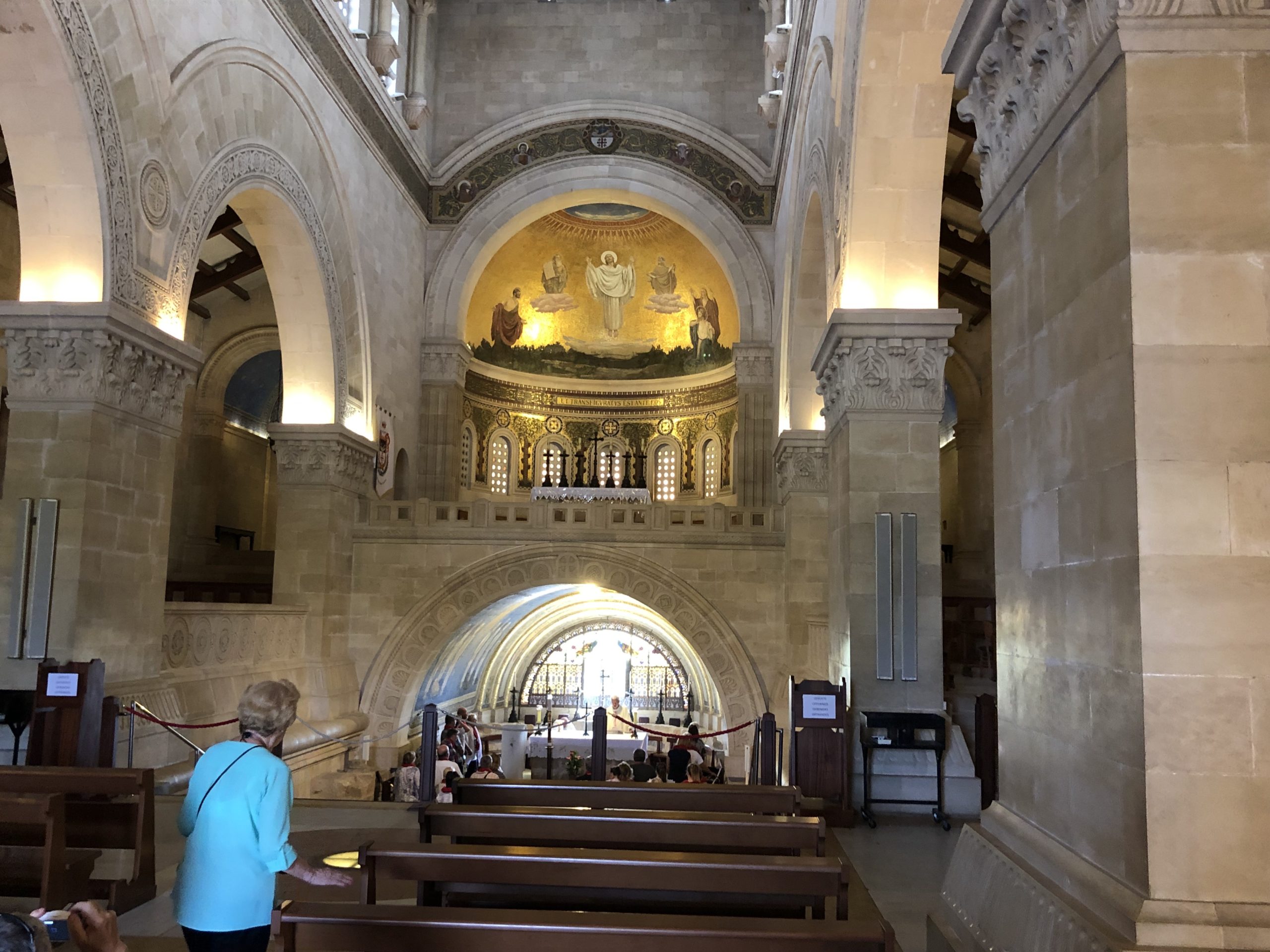
    When I was in Israel last fall, we were able to visit Mount Tabor, the traditional site of the transfiguration of the Lord, the feast we celebrate today.  We went up several mountains on that pilgrimage, and the thing about being on top of a mountain is that it’s like you can see everything.  And I think that is an important point about this feast, because, in the Transfiguration, the disciples started to see who Jesus really was.  The Transfiguration is the fourth Luminous mystery of the Holy Rosary, the mysteries on which we usually meditate on Thursdays.

    Sometimes I think that, because of the limitedness of our minds, we accept a rather small and rather bland view of Jesus.  I think that was true for the disciples too, although they had a good excuse: they didn’t have two thousand years of Church history to guide them!  It’s understandable that they were definitely familiar with the human side of Jesus: over the time they had spent with him thus far, they had become close to him and saw him as a friend, a companion on the journey, and a great teacher, even a miracle worker.  They experienced him in his humanity every day.  But they were always having trouble with his divinity; they often missed his connection with the Father.

    Today’s feast changes all of that for them, and for us as well.  If there was any doubt about who Jesus was, it had to be gone now.  That voice from the cloud is absolutely specific: “This is my beloved Son, with whom I am well pleased; listen to him.”  Jesus is the Son of God and his divinity must be embraced and proclaimed.  It’s nice, even comfortable, for us to have a picture of Jesus that is absolutely human, but we must always keep in mind the Transfigured Christ, dazzling white, radiating glory, the lamp shining in a dark place.  He is the “one like a Son of man” of whom the prophet Daniel speaks in our first reading today, and to him belongs dominion, glory, and kingship.  If Jesus were only human, we would have no Savior, we would be dead in our sins, and we would have no chance of being caught up in the divine life ourselves, that life for which we were created and intended from the very beginning.

    On the way to the mountain, the disciples came to know Jesus in his humanity, and on the way down, they came to know Jesus in his divinity.  Knowledge of both is absolutely necessary because Jesus is fully human and fully divine.  That trip down from the mountain took him to Calvary, and ultimately to the Resurrection, the glory of all glories.  Christ is both human and divine, without any kind of division or separation.  Peter, James, and John got a clear picture of that as Jesus was transfigured on the high mountain.  We too must be ready to see both natures of our Jesus, so that we ourselves can transfigure our world with justice, compassion and mercy, in the divine image of our beautiful Savior.  No matter what challenges may confront us or what obstacles may appear along the way, we must be encouraged to press on with the words of the Psalmist: “The Lord is king, the Most High over all the earth.”

  • The Presentation of the Lord

    The Presentation of the Lord

    Today’s readings

    Who is this king of glory?
    The 
    Lord of hosts; he is the king of glory.

    Today we celebrate the traditional end of the Christmas season with this feast of the Presentation of the Lord.  The current liturgical end of the Christmas season was back on January 12th, the feast of the Baptism of the Lord.  But the older tradition reflected what we have seen in the readings for the Sundays ever since, and that is remnants of the Epiphany, or manifestation of who Christ is in our world.  On Epiphany, Jesus was manifested to the Magi as priest, prophet and king.  On the Baptism of the Lord, Jesus was baptized as the eternal Son of the Father, with whom the Father was well-pleased.  Today, Jesus is manifested as a light to the Gentiles and the glory of Israel, as the king of glory.

    Like Epiphany, this feast of the Presentation of the Lord is a feast of light.  On Epiphany the world was illumined by a star that pointed to the true Light of the world.  Today, a world grown dark is illumined by that true Light and the glory of God sheds light on the whole world: Gentiles and Israelites alike.  So today, the Church has always blessed candles, which we did at the beginning of Mass today.  The reason the Church lights candles is always to draw our attention to Christ our Light, in the midst of whatever darkness the world throws at us.  This feast is a foreshadowing of the Easter Vigil, when the deacon proclaims in a darkened church, “Lumen Christi,” “The Light of Christ,” and the Church responds, “Deo Gratias,” “Thanks be to God.”  Today is a foretaste of Easter, when the true Light of the World, Christ our Light, will definitively conquer every darkness.

    And so you will be invited today to purchase some of the candles we just blessed to take into your home.  Traditionally these blessed candles have been used in many ways: to be a sign of Christ’s presence when the priest is called to anoint a dying loved one; to be lit during a storm to remind us of Jesus who had power to conquer every storm; to be lit when the family gathers for prayer so that we remember that whenever we gather in Christ’s name, he is there in our midst.  Every family should have blessed candles in their home because every family has times when Christ’s light needs to be shown brightly.

    Those blessed candles which remind us of the presence of our Savior in good times and in bad remind us that we, too are meant to be the light of Christ.  And we are called to be the light because the world has times of darkness too.  The world needs us to be the light that scatters the darkness of apathy by looking in on a sick neighbor or bringing a meal to a family that has suffered the death of a loved one.  We are called to be the light that scatters the darkness of ignorance by mentoring a young person, or opening our home to a foster child, or being a catechist.  We are called to be the light that scatters the darkness of racism by standing in solidarity with our brothers and sisters, no matter where they’ve come from.  We have to be the light that scatters the darkness of death by taking every opportunity to oppose abortion, euthanasia, and any endeavor that cheapens human life.  We have to be the light that scatters the sadness of a spiritually bereft world by joyfully living our faith and standing up for what we believe.  The world needs the light of Christ, and you might be the only candle someone sees on a given day.  Be the light, friends: be Christ’s presence.  People of faith don’t have any other option than that.

    The Methodist minister William L. Watkinson once said, “It is better to light a candle than to curse the darkness.”  We can look at the darkness of our world – and there is plenty of it! – and shake our heads and walk away in sadness, but that doesn’t shed any light.  We have to acknowledge the darkness and remember, as the Gospel of John proclaims, “the Light shines in the darkness and the darkness has not overcome it.”  We are Catholics and we believe and proclaim that there is no darkness on earth that Christ our Light can’t overcome with the brightness of his glory.  It is up to us to light the candle that helps others to see that glory.

    In today’s Gospel reading, Simeon and Anna experienced the power of the Light of the World.  They had been waiting and praying and fasting for the day of his appearance, and those prayers were answered.  The Lord came suddenly to the temple, as Malachi prophesied, and they could now be at peace.  But that appearance of the Lord requires a response: one doesn’t just experience the light and remain the same.  Christ our light is that refiner’s fire that purifies the lives of his chosen ones so that they might go out and shed light on our dark world.

    And I don’t mean for this to just be an academic or poetic discussion.  The light of Christ is not a mere metaphor.  Being the light for the world isn’t just a “yeah, maybe I should do that some day” kind of thing.  Every baptized one, according to her or his station in life, is called to actively shed light on the world.  So let’s take a few moments to pray with this.

    • Call to mind a darkness that you have noticed, either in your life, in your community, or in the world: a darkness that affects you or those around you.
    • Take a moment to talk with Jesus about that darkness and let him know your concern.
    • Listen for Jesus as he acknowledges the darkness and accepts your concern.  
    • Ask him for the grace to shed some light, small or big, on that darkness.  Listen for him to tell you what he wants you to do.
    • If you don’t hear that call right away, bring it to your prayer this week.  Ask Jesus for grace to be the light.
  • The Third Sunday of Ordinary Time: Sunday of the Word of God

    The Third Sunday of Ordinary Time: Sunday of the Word of God

    Today’s Readings
    Pope Francis’s “motu proprio” APERUIT ILLIS, instituting the Sunday of the Word of God

    About fifteen years ago now, my home parish put on a production of the musical Godspell, and somehow I found myself part of the cast.  If you’ve ever seen the musical, you know that it is based on the Gospel of Matthew, the Gospel that we are reading during this current Church year.  I remember the first song of the musical was kind of strange to me at the time.  It’s called “Tower of Babel” and the lyrics are a hodge-podge of lots of philosophies and philosophers throughout time.  I didn’t get, at the time, the significance of the song, but I do now.  “Tower of Babel” represents the various schools of thought about God, over time.  It shows how philosophy at its worst has been an attempt to figure out God by going over God’s head, by leaving God out of the picture completely.

    The song ends abruptly and goes right into the second song of the musical, “Prepare Ye,” of which the major lyric is “Prepare ye the way of the Lord.”  The message that we can take from that is that the useless, and in some ways sinful, babbling of the pagan philosophers was once and for all settled by Jesus Christ.  If we want to know the meaning of life, if we want to know who God is, we have only to look to Jesus.  That’s true of most things in life.

    That’s what is happening in today’s Liturgy of the Word too.  The people in the first reading and in the Gospel have found themselves in darkness.  Zebulun and Naphtali have been degraded.  They have been punished for their sinfulness, the sin being that they thought they didn’t need God.  They thought they could get by on their own cleverness, making alliances with people who believed in strange gods and worshiped idols.  So now they find themselves in a tower of Babel, occupied by the people with whom they tried to ally themselves.  Today’s first reading tells them that this subjection – well deserved as it certainly was – is coming to an end.  The people who have dwelt in darkness are about to see a great light.

    The same is true in another sense for Peter and Andrew and the sons of Zebedee in today’s Gospel.  These men have been fishermen all their lives.  Reading the Gospels and seeing how infrequently they catch anything unless Jesus helps them, we might wonder how successful they were at their craft.  But the point is that fishing is all they’ve ever known.  These are not learned men, nor are they known for their charisma or ability to lead people.  But these are the men who Jesus calls as apostles.  One wonders if they had any previous about Jesus, because on seeing him and hearing him and recognizing the Light of the World, they drop everything, turn their backs on the people and work they have always known, and follow Jesus, whose future they absolutely could never have imagined.

    All of this is good news for us. Because we too dwell in darkness at times, don’t we? We can turn on the news and see reports of men and women dying in war, crime and violence in our communities, corruption in government, and maybe worst of all right now, sniping between political candidates!  Then there is the rampant disrespect for life through the horrific sin of abortion, as well as euthanasia, hunger and homelessness, racism and hatred, and so much more.  Add to that the darkness in our own lives: illness of a family member or death of a loved one, difficulty in relating to family members, and even our own sinfulness.  Sometimes it doesn’t take much imagination to know that our world is a very dark place indeed.

    But the Liturgy today speaks to us the truth that into all of this darkness, the Light of Christ has dawned and illumined that darkness in ways that forever change our world and forever change us.  One of the Communion antiphons for today’s Liturgy speaks of that change.  Quoting Jesus in the Gospel of John, it says this:

    I am the light of the world, says the Lord;
    whoever follows me will not walk in darkness,
    but will have the light of life.  

    There is an antidote available for the darkness in our world and in our hearts, and that antidote is Jesus Christ.  The limits that are part and parcel of our human existence are no match for the light that is God’s glory manifested in Christ.  This is what we mean by the Epiphany, and we continue to live in the light of the Epiphany in these opening days of Ordinary Time.  Now that Jesus Christ has come into the world, nothing on earth can obscure the vision of God’s glory that we see in our Savior.

    Pope Francis has made this particular Sunday each year a celebration of the Word of God.  He means for us to spend time opening the Scriptures and finding the manifold riches that are there.  That’s what our Mass is always about.  Read carefully through the order of Mass and you’ll find scripture in every part of it.  Not just in the Liturgy of the Word – that’s a given, but in each and every one of the prayers of Mass.  Catholic worship isn’t something someone made up, it is literally a celebration of the Word of God from beginning to end.  And that makes sense, when you think about it: if we are called to “Go and announce the Gospel of the Lord,” as one of the dismissal formulas invites us, we can do that with confidence because we have just been fed on the Gospel in every part of our Mass.

    The Mass, too, is an Epiphany celebration at every point of the liturgical year.  Because when we’re attentive to the Word of God and the prayer of the Mass, we can’t possibly miss Jesus present among us.  So Pope Francis on this Sunday of the Word of God encourages us to devote ourselves to God’s word: to join a Bible study – we have that here at Saint Mary’s, to help others break open the word by leading that part of the RCIA, to teaching the scriptures to children in our school and religious education programs, to proclaiming the Word at Mass.  Do any one of those things, sisters and brothers, and I guarantee you’ll grow in your knowledge of scripture.  And, turning a famous saying of Saint Jerome around to the positive, knowledge of scripture is knowledge of Christ.

    Jesus came to be good news for us.  He is the Word of God incarnate among us, not just two thousand years ago, but even now if we would give ourselves over to loving the scriptures.  So for those of us who feel like every day is a struggle of some sort, and who wonder if this life really means anything, the Good news is that Jesus has come to give meaning to our struggles and to walk with us as we go through them. For those of us who are called to ministries for which we might feel unqualified – as catechists, Eucharistic Ministers, Lectors, RCIA team members, small group leaders or retreat leaders – we can look to the Apostles and see that those fishermen were transformed from the darkness of their limited life to the light of what they were able to accomplish in Christ Jesus. Wherever we feel darkness in our lives, the Good News for us is that Christ’s Epiphany – his manifestation into our world and into our lives – has overcome all that.

    As the Psalmist sings for us today, the Lord truly is our light and our salvation.