Category: Jesus Christ

  • The Transfiguration of the Lord

    The Transfiguration of the Lord

    Today’s readings

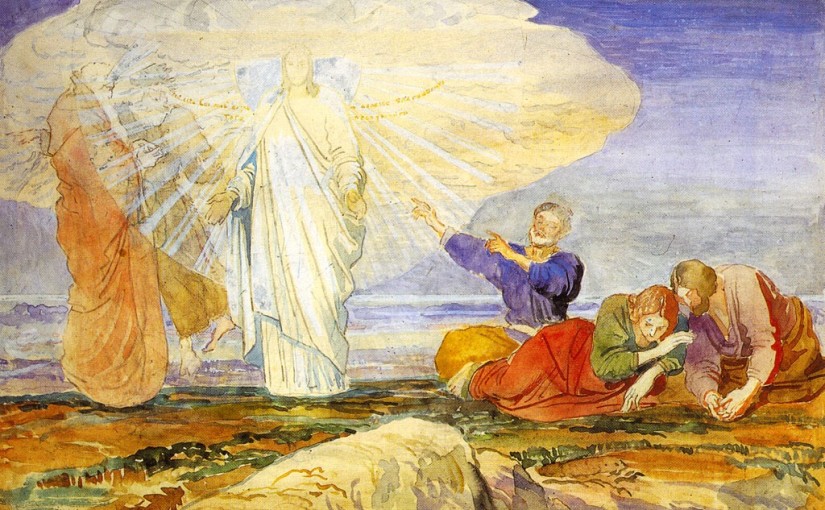
    How do you picture Jesus? We’ve never seen him face to face, but we have definitely seen artwork depicting him. That artwork can be very inspiring. But that artwork can also give us a perhaps false, overly-familiar look at Jesus our God. I tend to think Peter, James and John also had a kind of familiar picture of their Jesus. Over the time they had spent with him thus far, they had become close to him and saw him as a friend, a companion on the journey, and a great teacher. But they were always having trouble with his divinity. We can be like that too. We’ve been taught to see Jesus as a friend, and so sometimes we forget that he is also our God. Or vice-versa. The truth is, of course, that he is both.

    Today’s feast changes things for those disciples, and for us as well. If there was any doubt about who Jesus was, it’s gone now. That voice from the cloud is absolutely specific: “This is my chosen Son; listen to him.” Jesus is the Son of God and his divinity must be embraced and proclaimed. While it can be comfortable for us to have a picture of Jesus that is absolutely human, we must always keep in mind the Transfigured Christ, dazzling white, radiating glory, the lamp shining in a dark place. He is the Son of Man of whom Daniel speaks, and to him belongs dominion, glory, and kingship. If Jesus were only human, we would have no Savior, we would have no chance of touching divinity ourselves, that divinity for which we were created.

    On the way to the mountain, the disciples came to know Jesus in his humanity, and on the way down, they came to know Jesus in his divinity. That trip down from the mountain took him to Calvary, and ultimately to the Resurrection, the glory of all glories. Christ is both human and divine, without any kind of division or separation. We must be ready to see both natures of our Jesus, so that we ourselves can transfigure our world with justice, compassion and mercy, in the divine image of our beautiful Savior. No matter what challenges may confront us or what obstacles may appear along the way, we must be encouraged to press on with the words of the Psalmist: “The Lord is king, the Most High over all the earth.”

  • The Nativity of the Lord: Mass during the Night and Mass During the Day

    The Nativity of the Lord: Mass during the Night and Mass During the Day

    Readings of Christmas: Mass during the Night | Mass During the Day

    I was thinking over the last few days about some of my Christmases past. I was trying to see if I could remember the gifts I had been given as a child. As hard as I tried, I couldn’t remember them specifically, but of course I did remember the happiness of the times. The joy of being with my family and the love that we shared certainly marked my memory of those Christmases. Over time, some Christmases have been wonderful, and some marked by sadness, especially after Dad died. That is how Christmas comes and goes throughout our lives, of course.

    But the real revelation that I had while reflecting on those past Christmases is that we definitely sell Christmas short. Sure, we settle sometimes for the commercial, retail version of Christmas. If you love the people in your life, then you’ll gift them lavishly. Then we’ll all sit around the Christmas lights, eat a big feast, and sing some Christmas carols. And there’s nothing wrong with any of those things, of course, but that’s not the totality of Christmas.

    The totality of Christmas is, quite frankly, overwhelming. Christmas is the beginning of the Incarnation, in which our God – God who is higher than the heavens and more glorious than anything we can think of – this God takes on our flesh, broken and flawed as it can sometimes be, and becomes one of us. In fact, he so perfectly assumed our humanity that although he never sinned, he willingly laid down his life for us, paying the price for our sins, the price of a tortuous, ignominious death on a cross.  And far from letting death have the last word, God raised him up, gloriously throwing open the gates of the Kingdom for all to enter in.

    That’s pretty awesome, but even that is not the totality of what Christmas is. Because here’s the kicker: are you ready? He did all that for you. Saint Augustine points this out in one of his sermons. He writes: “I tell you again: for your sake, God became man.

    “You would have suffered eternal death, had he not been born in time. Never would you have been freed from sinful flesh, had he not taken on himself the likeness of sinful flesh. You would have suffered everlasting unhappiness, had it not been for this mercy. You would never have returned to life, had he not shared your death. You would have been lost if he had not hastened to your aid. You would have perished, had he not come.”

    And if you think about it, we need this kind of mercy right now, maybe more than ever. The constant threat of terror overseas, and even here in our country. The nightly shootings on the streets of Chicago and many other cities. The degradation of real authority sparked by misconduct of politicians, police officers, teachers, and even priests.

    Amid all of this mess, Pope Francis has called for a Year of Mercy. He, too, acknowledges the mess in the document that instituted this holy year. He writes: “How many uncertain and painful situations there are in the world today! How many are the wounds borne by the flesh of those who have no voice because their cry is muffled and drowned out by the indifference of the rich! During this Jubilee, the Church will be called even more to heal these wounds, to assuage them with the oil of consolation, to bind them with mercy and cure them with solidarity and vigilant care. Let us not fall into humiliating indifference or a monotonous routine that prevents us from discovering what is new! Let us ward off destructive cynicism! Let us open our eyes and see the misery of the world, the wounds of our brothers and sisters who are denied their dignity, and let us recognize that we are compelled to heed their cry for help! May we reach out to them and support them so they can feel the warmth of our presence, our friendship, and our fraternity! May their cry become our own, and together may we break down the barriers of indifference that too often reign supreme and mask our hypocrisy and egoism!”

    What we have to see on this most holy (night / day) is that our God knew the flaws of human flesh, but he loved it so much that he came into it anyway so that it might be redeemed. He was well aware of our brokenness, but he came into it anyway that he might bind it up and make it whole. Becoming one of us, he was in a powerful position to pour out his great mercy, taking his creation one step further by making it fit for heaven. And, as Saint Augustine points out, he did that for you.

    That is Christmas.  It’s the best and really only reason for us to celebrate so joyfully every December the 25th.  God’s mercy is what makes us who we are, what defines us as a Church and as a people.  The story of Christ’s Incarnation is what makes us a living sign of God’s mercy in the world.  That is who we really are, despite the world’s attempts to define us as something less.  The great gift of God’s mercy shines glorious light into every dark corner of our world and of our lives and calls us broken ones to redemption and healing and joy.

    It’s crucial for us to live that mercy and not accept what others want to make us.  If you’re joining us for the first time tonight, or if you’re visiting family, or if you came here looking for something more for Christmas, then we welcome you and we hope that you experience Christ’s presence among us.  We hope that you find in your time with us and with the Lord (tonight / today) a desire to go deeper in life and find the meaning of it all.  Please know that we would be glad to help you in that journey, and come to one of us on the parish staff, to point you in the right direction.  If you’re an active member of our parish family, then I hope the message that you receive (tonight / today) and your encounter with Christ in this moment leads you to a desire to share Christ’s presence with others.

    The Incarnation – the birth and personhood of Jesus Christ – along with his Passion, death and Resurrection, changes everything.  When we all rediscover God’s mercy, the Incarnation can change us too, so that we may then go out and change the world around us.  When that happens in us, the angels will sing just as joyfully now as they did on that most holy night.  Glory to God in the highest, and on earth peace to people of good will!

  • Our Lord Jesus Christ, the King of the Universe

    Our Lord Jesus Christ, the King of the Universe

    Today’s readings

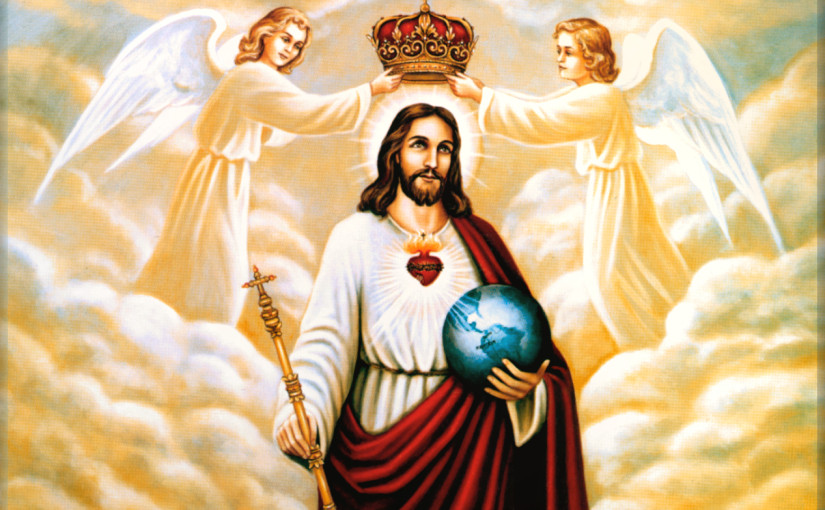
    Today we celebrate the great feast of Our Lord Jesus Christ the King of the Universe. In the past, I have said on this feast that it’s a little odd for us, mostly because we don’t have a king in our system of government, so it’s hard for us to relate. But lately, I’ve been thinking it goes a little deeper than that, because we have been conditioned to think that authority figures are someone we can ignore. And let’s face it, many authorities deserve to be ignored. Nobody in their right mind runs for political office anymore, it seems. Just look at the characters running for president this time: wouldn’t it be nice if even one of them was just not crazy?

    But it even goes deeper than that. Nobody respects the authority of the Church, it seems, and to some extent, we probably deserve that too. Many priests and bishops have abused their authority and have abused their parishioners, and that is shameful. But even deeper than that, people both young and old don’t respect their parents in the way they should be. And when you ask people why they do something that is objectively wrong, they’ll often tell you, “I think it’s okay,” as if their opinion were the be-all and end-all of morality.

    Some of this, as I’ve mentioned, is deserved, but much of it is a violation of the Fourth Commandment. Because here’s why: When we get used to ignoring the legitimate authority in our lives, we get used to doing our own thing. Then not even Jesus can be the Lord of our lives. And when that happens, we’re on the path to destruction, because he is the only one that can justify us, the only one who can redeem us. He is, as he says in another place in the Gospels, “The Way, the Truth, and the Life” (John 14:16). Notice: not just a way, or one possible truth, or a good but not obligatory life, but The way, the Truth, and the Life. He goes on to say, “No one comes to the Father except through me.”

    So I think we definitely need this feast of Our Lord Jesus Christ, the King of the Universe, to remind us that there is authority worth observing. And here, at the end of our liturgical year, we celebrate the one who is that authority. As we look back on the past year, there may have been times of great achievement, or times of failure. We may have celebrated life, or had to deal with sickness and death. We may have been blessed by wonderful, nurturing relationships or we may have had to deal with discord and strife. But if this year has meant anything, hopefully we can say that we have come through it with the help of Jesus our Savior, who is our Lord and King.

    In today’s first reading, we have the promise of a king: one like a son of man with an everlasting dominion. This part of the book of Daniel comes from a series of visions. In these visions, particularly the one we have today, Daniel gives the Jews hope in persecution. This is a vision that is spoken to lift the people up and help them to know that their hope is in God.

    The Jews of Daniel’s day have been being persecuted by the Greek tyrant, Antiochus Epiphanes IV. He and his henchmen were persecuting the Jews who insisted on living the Jewish way of life. But what is even more evil and more disastrous to the community, is that some of the Jews were starting to think that giving up their way of life and instead worshiping the gods of the Greeks was a good idea. They saw how powerful the Greeks were and attributed that to the gods they were worshipping. So, why not give up their own faith to follow one that seems to be working better? The biggest danger they faced was losing their faith, and really their way of life, to the pagans by adopting pagan ways of life.

    Well, we clearly are not under the persecution of Antiochus Epiphanes, but we are definitely in danger of losing our faith to the pagan forces of this world. Just look at the terror and discord in the world today, especially the Christians being forced out of Syria – and many other places, I might add. Our faith and our way of life are in danger too. And that is to say nothing of the way that the secular culture around us threatens to devour us. We might find ourselves going along with that culture without really thinking about it. Everything that promises us power, success and wealth has the ability to take our hearts and souls with it. Why not just give in? Won’t paganism and evil win out in the end?

    Well, Daniel sure didn’t think so. He prophesied that there would be one like a Son of Man who would triumph over Antiochus and others like him. This One would deliver them from the persecution they suffered and from the seduction that confronted them. This One would rule the world in justice and peace, and would lead the persecuted ones to a kingdom that would never pass away. The early Church identified this Son of Man with Jesus Christ. He is the One who has power to rule over all and he is the One whose kingdom is everlasting. He is the One who will overcome all of our enemies, even death itself.

    Jesus told Pilate in today’s Gospel that his Kingdom was not of this world. That should be the red flag for us. When we begin to worship and follow the forces of this world, we know that we are in the wrong place, because as I’ve said many times, we are not at home in this world – we are mere travellers, on our way to our true home in heaven. Christ is the King, the Son of Man, who will lead us to a kingdom not made by human hands, a kingdom that will not pass away, a kingdom of truth and life, a kingdom of holiness and grace, a kingdom of justice, love and peace. The choice is ours, though. Will we follow the pagan forces of this world, or will we acknowledge the authority of our Risen Lord and proclaim him as King of our lives and of our Universe and follow him to that perfect and everlasting kingdom?

  • Thursday of the Twenty-fifth Week of Ordinary Time

    Thursday of the Twenty-fifth Week of Ordinary Time

    Today’s readings

    You know, I think Herod was asking the right question.  Sure, he was asking it for all the wrong reasons, but still, it is the right question.  And that question is, “Who is Jesus?”

    What Herod was hearing about Jesus is pretty much what the disciples told Jesus when Jesus asked, “Who do people say that I am?”  Elijah, or one of the prophets, or maybe even John the Baptist.  But Herod was the one who killed John so he knew that couldn’t be it, so who is he really?  Herod kept trying to see him, and of course, he’d have more than ample opportunity soon enough, after Jesus is arrested.

    So we have the question too.  Oh, we know well enough – intellectually – who Jesus is, but we still have to answer that question in our hearts.  Who is Jesus for us?  We know he is not just some prophet; that he is not like anyone who lived before or after him.  But have we stopped being intrigued by the question, have we lost our fascination with Jesus?  Herod kept trying to see Jesus, and it’s the right instinct, or at least it is for us.  We have to keep trying to see him too, whether that takes us to a rereading of the Gospels or to adoration of the Blessed Sacrament or to contemplative prayer or even to service to the poor.  Whatever the case, fascination with Jesus is the right way to go, and we have to let ourselves be intrigued by the question again.  Who is Jesus for us?

  • The Exaltation of the Holy Cross

    The Exaltation of the Holy Cross

    Today’s readings

    In a lot of ways, this is a strange feast we are celebrating today. Think about it. This is the Exaltation of the Holy Cross, which in Jesus’ day would have been as big an oxymoron as one could possibly imagine. It’s like us saying that we are going to celebrate the exaltation of a lethal injection chamber. There is nothing exalted about an instrument of execution: it’s tortuous, humiliating, and as dark as one can get.

    So to get from that to where we are now is nothing short of a miracle. A miracle, of course, of the highest order! God used this instrument of punishment to remit the punishment we deserved for our sins. God used the epitome of darkness to bathe the world in unfathomable light.

    And he didn’t have to. The cross is what we deserved for our many sins. Today’s first reading gives us just a glimpse into the problem. The Israelites, fresh from deliverance from slavery in Egypt, are making their way through the desert. Along the way, they pause to complain that God’s food, which he provided in the desert, wasn’t good enough for them. They had chosen slavery over deliverance; food that perishes over food that endures unto eternal life.

    But we’re there too, right? We often choose the wrong kind of food, get off the path, and choose slavery to our vices and sins over new life in Christ. In fact it was because of all that that Jesus came to us in the first place. God noticed our brokenness and would not let us remain dead in sin. So to put an end to that cycle of sin and death, he sent his only Son to us to die on the cross, paying the price for our sins. But that death may no longer have power over us, he raised him up, cheating the cross and the evil one of their power, and exalting the Holy Cross to the instrument not of our death, but of our salvation.

    Because of the Cross, all of our sadness has been overcome. Disease, pain, death, and sin – none of these have ultimate power over us. Just as Jesus suffered on that Cross, so we too may have to suffer in the trials that this life brings us. But Jesus rose from the dead and ascended into heaven to prepare a place for us, a place where there will be no more sadness, death or pain, a place where we can live in the radiant light of God for all eternity. Because of the Cross, we have hope, a hope that can never be taken away.

    The Cross is indeed a very strange way to save the world, but the triumph that came into the world through the One who suffered on the cross is immeasurable. As our Gospel reminds us today, all of this happened because God so loved the world.

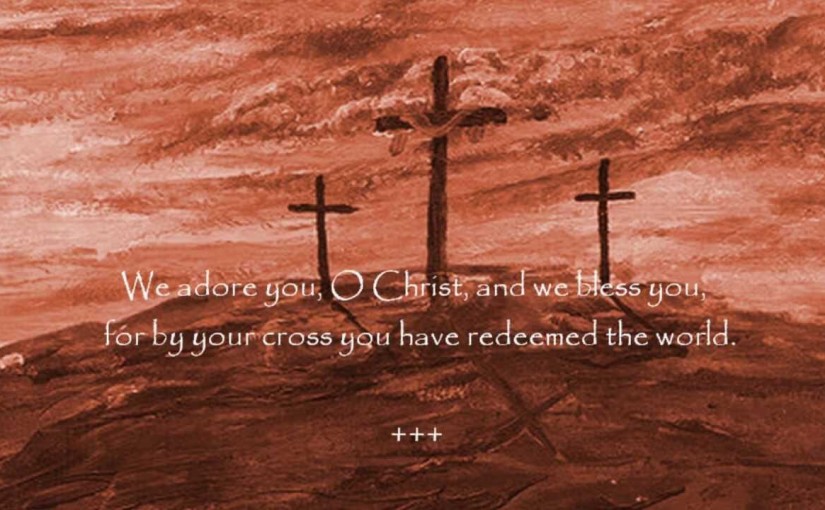
    We adore you, O Christ, and we praise you, because by your Holy Cross you have redeemed the world.

  • The Transfiguration of the Lord 

    The Transfiguration of the Lord 

    Sometimes I think that, because of the limitedness of our minds, we accept a rather small view of Jesus. We think of him as a friend and brother, which is okay, but he is also our Lord and God. The disciples had this problem too, although they had a good excuse: they didn’t have two thousand years of Church history to guide them! So they were definitely familiar with the human side of Jesus: Over the time they had spent with him thus far, they had become close to him and saw him as a friend, a companion on the journey, and a great teacher. But they were always having trouble with his divinity. 

    Today’s feast changes all of that for them, and for us as well. If there was any doubt about who Jesus was, it’s gone now. That voice from the cloud is absolutely specific: “This is my chosen Son; listen to him.” Jesus is the Son of God and his divinity must be embraced and proclaimed. While it can be comfortable for us to have a picture of Jesus that is absolutely human, we must always keep in mind the Transfigured Christ, dazzling white, radiating glory, the lamp shining in a dark place. He is the Son of Man of whom Daniel speaks, and to him belongs dominion, glory, and kingship. If Jesus were only human, we would have no Savior, we would have no chance of touching divinity ourselves, that divinity for which we were created. 

    On the way to the mountain, the disciples came to know Jesus in his humanity, and on the way down, they came to know Jesus in his divinity. That trip down from the mountain took him to Calvary, and ultimately to the Resurrection, the glory of all glories. Christ is both human and divine, without any kind of division or separation. We must be ready to see both natures of our Jesus, so that we ourselves can transfigure our world with justice, compassion and mercy, in the divine image of our beautiful Savior. No matter what challenges may confront us or what obstacles may appear along the way, we must be encouraged to press on with the words of the Psalmist: “The Lord is king, the Most High over all the earth.” 

  • The Most Sacred Heart of Jesus

    The Most Sacred Heart of Jesus

    Today’s readings

    Yesterday I had a bad flare-up of plantar’s fasciitis, and had to go to the doctor. I was in pain a lot of the day, and it just got exhausting. In the evening, I was to have dinner with one of my priest friends, and when he found out how I was feeling, he had dinner for me at his rectory so we could relax and not have to walk around a lot. It was nice to be taken care of. I think that is true whenever we’re not feeling well: when someone takes care of us, it seems to heal us deep inside.

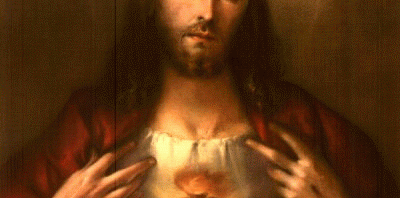
    And that’s what today’s feast of the Most Sacred Heart of Jesus is all about. We are all broken and hurting and in pain, spiritually. We might ignore it, or offer it up, or worst of all, might try to mask it with alcohol or other addictions. But none of that really heals us. The only thing that really heals is the Most Sacred Heart of Jesus.

    We don’t trust God as much as we should; we don’t let God love us as much as we should. We want to pull ourselves up by our own bootstraps, take care of number one all by ourselves. Pope Francis says that God never gets tired of showing us mercy, it’s we who get tired of asking. And that’s so wrong. We weren’t made for that. We were made to be cared for and to be loved so that we can take care of others and love them in the name of Christ.

    God’s love is awesome. It doesn’t just cover our sins, it wipes them out, obliterates them so that they aren’t who we are any more. In the Sacred Heart of Jesus, we find a love that is so pure and so powerful that it cannot be overshadowed by any kind of darkness, nor be snuffed out even by the grave.

    But we absolutely have to let him love us, or we will miss it every time.

  • The Presentation of the Lord

    The Presentation of the Lord

    Today’s readings

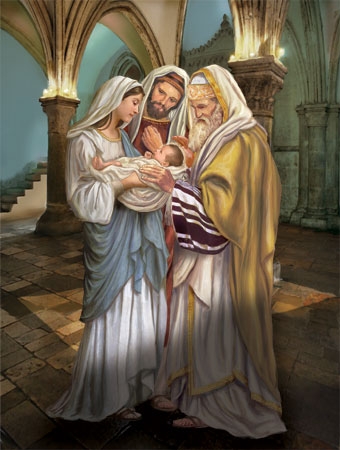
    Back in the time that Jesus lived, it was a law that every first-born male in a family was presented to God, given to God to do God’s will. They would come on the fortieth day of the child’s life and present the child, along with a sacrificial offering and they would receive a blessing from one of the priests. It hardly seems possible, but it’s already been forty days since Christmas, since the day Jesus was born! How time flies!

    Of course, you have to love the irony in the story here because, in the case of Jesus, his parents were presenting their child, who was God, to God. They were giving back to God the child that God only gave them to take care of for a while. Just as every first-born son was presented to God in order to do something special with his life, this first, and only born Son of God and son of Mary and Joseph had the most special thing ever to do with his life, and that was to lay his life down for all of us.

    On this feast day every year, we bless candles to light the Church and light people’s homes. We do that because we remember that on this day, Jesus, who is the Light of the World, was presented to the wise old Simeon, who recognized that Jesus was the Light that was to come into the world. God’s Spirit had promised that he would never die until he saw that Light, and now he knew that he could die in peace.

    Simeon was at peace because he knew that God was lighting the world and taking care of his people who used to dwell in darkness. The same is true for all of us. Sometimes the world can be a dark place because of war or violence or hatred, or many other evils. It can be hard to see where our world is going in times like that, and oftentimes we ourselves fall into temptation or into sin. We need light to show us the way out of all that darkness.

    And, of course, we have that light. Jesus is the one who came into the world and lit up the world and lights up our lives. He lit up the lives of Mary, and Joseph, and Simeon and now he lights up our lives and shows us the way out of the darkness. Even if we do fall here and there, Jesus’ light helps us to get back up and get going on the path once again.

    The Lord is our light and our salvation. Whom should we fear?

  • The Feast of the Baptism of the Lord

    The Feast of the Baptism of the Lord

    Today’s readings

    Sadly, today is the last day of the Christmas Season. The rest of society may have tossed out the Christmas trees, and taken down the festive decorations, but not us. What a wonderful gift we have as Catholics to celebrate the birth of our Lord for an extended period of time! Last Sunday was the Epiphany of the Lord, a time to celebrate Christ manifested in the flesh, the greatest gift of God to his creation. On the occasion of the Epiphany, we have three traditional readings. The first is the reading about the magi visiting the Christ Child. The second is the wedding feast at Cana, where Christ turned water into wine, the first of his miracles. And the third is the Gospel we have today, of Christ being baptized by John the Baptist in the River Jordan.

    As we heard last week, Epiphany means “manifestation.” In each of these Gospels, Christ is manifest in our world in a different way. The magi celebrated that this baby was truly the manifestation of God in our world, because no other birth would have been occasioned by such great astrological signs. The wedding feast at Cana celebrates that Jesus is no ordinary man, that he had come to change the world by the shedding of his blood, just as he changed the water into wine. And today his baptism celebrates that Christ is manifest in the weakness of human flesh to identify himself with sinners through baptism.

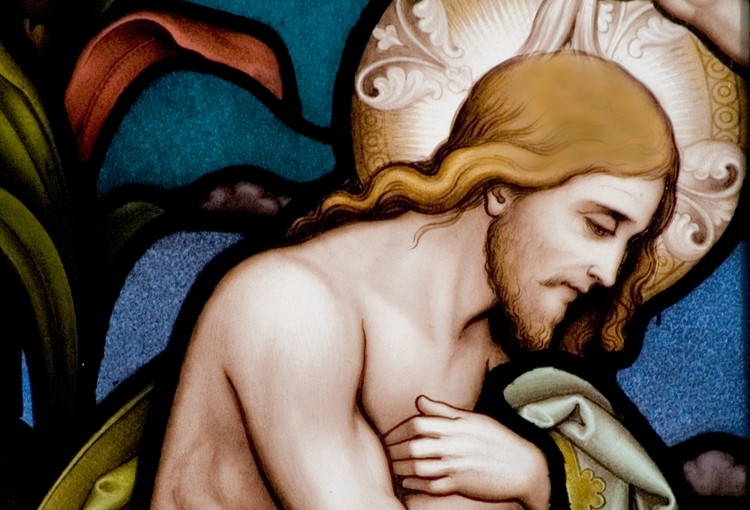
    Obviously, Jesus did not need Saint John the Baptist’s baptism, because it was a baptism for the forgiveness of sins, and Christ had no sins. So he chose to be baptized so that he could identify himself with us sinners through baptism. That being the case, then we who have been baptized must also identify ourselves with him. We must manifest him in the world through living the Gospel and following in his ways. Today we hear in the first reading from the prophet Isaiah that God sent his Word into the world to make things happen: “My word shall not return to me void, but shall do my will, achieving the end for which I sent it.”

    So today we need to reflect on the end, the goal of all that we have celebrated in these Christmas days. What was God’s purpose in sending his Son to take on our sinful flesh and live among us? Well, we know the whole story, don’t we? God sent his only-begotten Son, Jesus Christ, into our world as a human being, born to a poor family as a tiny child. He did that because he created us good, and even though we acquired sinfulness along the way, our humanity was good enough to be redeemed. He would not have us die in our sins, so he sent his Son to take flesh and lead us to heaven, our true home. That’s worth celebrating for many days, and that’s why our Christmas season extends beyond the point where the stores haul on the Valentine’s day candy!

    Christ is baptized today so that our own baptism can be the source of eternal life for all of us. His baptism sanctifies the waters of baptism forever, and to make the waters of baptism, with which we too were baptized, consecrated in holiness. Then we who have been sanctified in baptism must now go out and do what Jesus himself did: doing good and healing the broken and all who are possessed by evil spirits. It is easy to see how we can go about doing good. There are thousands of opportunities to do that in our lives. Every day there is an opportunity to do good in ordinary and extraordinary ways. All we have to do is decide to live our baptismal call and do it. Healing those oppressed by evil spirits might seem harder to do. But there are lots of ways to cast out demons. Teaching something to another person is a way to cast out the demons of ignorance. Reaching out to an elderly neighbor is a way to cast out the demons of loneliness. Educating ourselves on the evils of racism is a way to cast out the demons of hatred. We have opportunities to heal those oppressed by the devil all the time. All we have to do is decide to do it.

    On this Epiphany Day, on this Christmas day, Christ, born among us, enters the waters of baptism to sanctify them through his body. Our own baptism is a share in this great baptism and outpouring of the Holy Spirit. We who have been baptized then are literally INSPIRED – given the Holy Spirit – in order to continue to make Christ manifest in our world. All we have to do is decide to do it.

  • The Epiphany of the Lord

    The Epiphany of the Lord

    Today’s readings

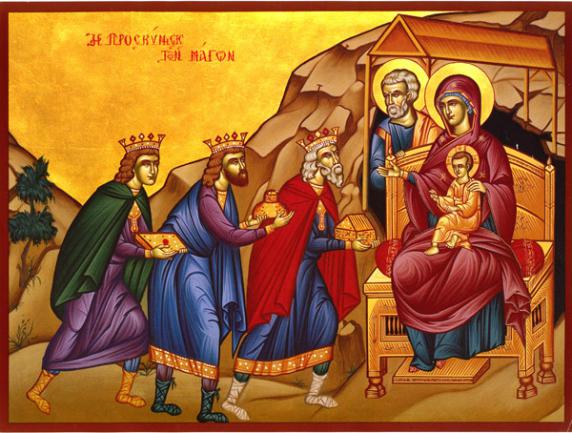
    “Where is the newborn king of the Jews?” This was the question those magi asked after their long and harrowing journey. They had observed the star at its rising and were proceeding to pay tribute to the newborn king. They brought with them gifts of gold, frankincense and myrrh. We know the story well enough; we’ve heard it so many times. But maybe this time, we can make a resolution not to lose sight of this wonderful event in the year to come.

    We celebrate Epiphany today, and Epiphany is a revelation, a manifestation of God here among us earthly creatures. Epiphany is God doing a God-thing so that we will sit up and take notice. But it takes some awareness to perceive such an Epiphany, such a wonderful event. We, like the magi, have to ask the question, “Where is the newborn king of the Jews?”

    To answer that question, we well might look toward our manger scenes, or assume we’ll only find him in church or in our prayer books, or in Adoration of the Blessed Sacrament. And, of course, we will find the Lord there – those are wonderful places to start. But the event of the Epiphany of the Lord reminds us that God wants to do a God thing in us in all sorts of circumstances. So now we have to find God at work, at school, in our homes, in our community.

    Can we see the Lord in the demanding customer, the needy co-worker, the sulky teenager, the hovering parent, the snippy public servant? We have to. We dare not ever miss the opportunity to seek out the newborn King in every situation! How could we ever turn up our nose at an opportunity for grace? Why would we ever knowingly miss a situation that could help us grow in holiness?

    Finding the Lord is a journey that we all must make, at every stage of our lives. God wants to do God-things in us all the time, leading us this way and that, helping us to know him in more profound ways and more relevant ways at all the stops and starts of our life-long journey of faith. When we find the Lord in our daily lives, the words of the prophet Isaiah from today’s first reading come to pass in us: “Then you shall be radiant at what you see.” Finding the Lord, we are changed, we become sources of his light to shine in the darkness of our world.

    Where is the newborn king for us? Are we ready to make the journey?