Category: Liturgy

  • Labor Day

    Labor Day

    Readings: Genesis 1:26-2:3 | Psalm 90 | 1 Thessalonians 4:1b-2, 9-12 | Matthew 6:31-34

    Today, we’ve gathered to celebrate and bless human labor.  Human labor is a cornerstone of our society and our world, dating all the way back to the creation of the world, as today’s first reading shows us.  Indeed, our labor is a participation in the ongoing creation of the world, and is one of the strongest ways that we can be in communion with our Creator God.  We know that, at the completion of the creation of the world and everything in it, God sanctified the whole of it through rest.  That’s an important point that I think we maybe don’t get the way we should.

    Today is an opportunity to take a step back and look at our working and our resting.  We know that we don’t get enough rest.  We are sleep deprived, we take working vacations, we very often don’t take all the vacation we’re allotted, and some don’t take a vacation at all.  Even our children are so over-scheduled that they are sleep deprived as they go from one activity to the next, day after day.  And so our lives are out of balance and I think, very often, we don’t do our best work when we’re working.

    Jesus tells us in today’s Gospel that this kind of thing is just crazy.  Worrying about work isn’t going to add a single moment to our lifespan.  In fact, it will more likely reduce them.  We are told very clearly: “Do not worry about tomorrow; tomorrow will take care of itself.  Sufficient for a day is its own evil.”  By “evil” here, Jesus doesn’t mean something sinister and dark, but just the daily worries and misfortunes that we deal with all the time.

    We are certainly required to work hard and always give the best that we have to our employers or employees.  That’s a matter of justice.  We are also required to provide for our families and maintain a home for our loved ones.  That’s a matter or charity.  Work is sacred and always has been, because, as the Genesis reading today shows us, work was instituted by God who told us to fill the earth and subdue it, having dominion over every living thing.  We work because it is a sharing in what we were created for, the very imitation of God.But there is that matter of balance.  And we do have to step back and realize that God did indeed sanctify the whole of creation by blessing it with that seventh day, with that day of rest.  And so we do our spiritual lives no favors when we ignore the commandment to observe the Sabbath through rest and worship.  So much of our lives is consumed in labor; may we never fail to sanctify that labor by observing rest and worship.

  • The Twenty-second Sunday of Ordinary Time

    The Twenty-second Sunday of Ordinary Time

    Today’s readings

    You’ve heard of the deadly sins. They are those sins that can really get at us time and time again in our lives and turn us away from God. They are things like lust, gluttony, greed, sloth, wrath, envy, and pride. But for each of those deadly sins, there is also a life-giving virtue. Today, our readings focus on humility, which is the life-giving virtue that is the antidote to pride. Of the seven deadly sins, pride is usually considered to be the original and the most serious of the sins. Pride was the sin that caused the angel Lucifer to fall from grace. Pride was the sin that caused our first parents to reach for the forbidden fruit that was beyond them, all in an attempt to know everything God does. A good examination of conscience would probably convince all of us that we suffer from pride from time to time, and sometimes even pervasively, in our own lives. It’s what causes us to compare ourselves to others, to try to solve all our problems in ways that don’t include God, to be angry when everything does not go the way we would have it. Pride is the deadly sin that often-times is the gateway to other sins like judging others, self-righteousness, and sarcasm. Pride, as the saying goes, and as Lucifer found out, doth indeed go before the fall, and when that happens in a person’s life, if it doesn’t break them in a way that convinces them of their need for God, will very often send them into a tailspin of despair. Pride is a particularly ugly thing.

    Humility, then, can be the answer to that particularly pernicious sin.  The wisdom writer Sirach, in our first reading, advises us to conduct our affairs with humility: “Humble yourself the more, the greater you are,  and you will find favor with God.”  But when we think about humility, maybe we associate that with a kind of “wimpiness.” When you think about humble people, perhaps you imagine breast-beating, pious souls who allow themselves to be the doormats for the more aggressive and ambitious.  Humble people, we tend to think, don’t buck the system, they just say their prayers, accept whatever life throws at them, and, when they are inflicted with pain and suffering, they just “offer it up.” (Not that offering up our sufferings is a bad thing, mind you.)

    But Jesus described himself as “humble of heart,” and I dare say we wouldn’t think of him as such a pushover.  He, of all people, took every occasion to buck the system and chastise the rich and powerful.  He never just let things go or avoided confrontation.  Confrontation was at the core of what he came to do.  But he was indeed humble, humbling himself to become human like the rest of us, when he could easily have clung to his glory as God.  He was strong enough to call us all, in the strongest of terms, to examine our lives and reform our attitudes, but humble enough to die for our sins.

    And so it is this humble Jesus who speaks up and challenges his hearers to adopt lives of humility in today’s gospel reading.  One wonders why the “leading Pharisee” even invited Jesus to the banquet.  If we’ve been paying attention to the story so far, we know that the Pharisee had ulterior motives; he was certainly looking to catch Jesus in an embarrassing situation.  But Jesus isn’t playing along with all that.  In fact, one can certainly taste the disgust he has for what he sees going on at the banquet.

    In our day, banquets are usually put together with thoughtfulness and with a mind toward making one’s guests feel comfortable.  If you’ve been involved in a wedding, you know that the hosts try to seat people with those of like mind, with people who might have common experiences.  It’s enough to drive a host to distraction, sometimes, because it is such hard work. But in Jesus’ day, the customs were even more rigid.  People were seated in terms of their importance, and at this banquet, Jesus watched people try to assert how important they were by the places they took at table.  This was all an exercise in pride, and it seems that Jesus was repulsed by it.  So he tells them the parable that exhorts them to humble themselves and take the lowest place instead: far better to be asked to come to a more important place than to be sent down to a lower place and face embarrassment.

    But there was another aspect of pride taking place here as well.  The “leading Pharisee” had obviously invited people who were important enough to repay the favor some day – with one obvious exception – Jesus was decidedly not in a position to do so, at least not in this life.  So he tells his host a parable also, exhorting him to humble himself and invite not those who are in a position to repay his generosity, but instead he should invite “he poor, the crippled, the lame, the blind” – and know that because they cannot repay him, he would be repaid at the banquet of the righteous in heaven.

    We don’t know how the guests or the host responded to Jesus’ exhortation to practice humility.  We do, however, know that Jesus modeled it in his own life.  Indeed, he was not asking them to do something he was unwilling to do himself.  When he said, “For every one who exalts himself will be humbled, but the one who humbles himself will be exalted” he was in a way foreshadowing what would happen to him.  Humbling himself to take up our cross – our cross – he would be exalted in the glory of the resurrection.

    The good news is that glory can be ours too, if we would humble ourselves and lay down our lives for others.  If we stop treating the people in our lives as stepping-stones to something better, we might reach something better than we can find on our own.  If we humble ourselves to feed the poor and needy, to reach out to the marginalized and forgotten, we might be more open to the grace our Lord has in store for us in the kingdom of heaven.

    For everyone who exalts himself will be humbled,
    but the one who humbles himself will be exalted.

  • The Twenty-first Sunday of Ordinary Time

    The Twenty-first Sunday of Ordinary Time

    Today’s readings

    In my first priestly assignment, at Saint Raphael in Naperville, there was a huge football program for elementary school kids called Saint Raphael Football.  It was not just a team, but a league, and lots of surrounding churches had teams in the league.  You couldn’t live in Naperville and not have heard of Saint Raphael Football. So once in a while, in a social setting, someone would ask me what church I was from, and I’d tell them, Saint Raphael.  And they would say to me, “Oh yes, we go there, our son is in that football league.” I always wanted to tell them, “How nice. By the way, we also celebrate the Eucharist there.”  Maybe I should have.  Today’s gospel reading makes me think I should.

    We – as a society – have it all wrong.  Our priorities are all messed up.  I think we’re in real danger, now more than ever, and today’s Liturgy of the Word is a wake-up call for us to get it right.  We live in a society that has not just lost its moral compass, but has actually taken pains to bury it away and never look at it.  Everyone seems to think that something is okay if it works for them in their current circumstance, regardless of how it affects others, regardless of how it affects even them in the long-run.  That’s why you turn on the news and hear about shootings everywhere, and that’s why we have politicians vying with one another to see who can support abortion in the strongest possible sense.  As Saint Theresa of Calcutta once said, “And if we can accept that a mother can kill her own child, how can we tell other people not to kill one another?”  In many alarming ways, our moral compass has been buried for so long that we hardly know what it looks like anymore.  

    So this homily is probably going to come off sounding kind of harsh to some of you, but if I don’t say what I have to say, I’m not doing my job as your priest.  And I know, really I know, most of you get this.  So please indulge me; if this doesn’t apply to you, please pray for someone who needs to hear it, because you know someone who does.

    When Jesus is asked whether only a few will be saved, he deflects the question.  His answer indicates that it’s not the number of those who will be saved – that’s not the issue.  The issue is that some people think they will be saved because they call themselves Christian, or religious, or spiritual, or whatever.  It’s kind of like the people I talked to who considered themselves practicing Catholics simply because their children played in a football league that was marginally affiliated with us.

    Jesus says that’s not how it works.  We have to strive to enter the narrow gate.  So what does that mean?  For Jesus, entering eternity through the narrow gate means not just calling yourself religious; that would be a pretty wide gate.  It certainly wouldn’t mean saying that you’re basically a good person, since that criterion is pretty subjective, and so widely misunderstood. The narrow gate means actually practicing the faith: taking time for prayer and worship, receiving the Eucharist for strength, living the gospel, reaching out to the needy, showing love to your neighbor.  It means making one’s faith the first priority, loving God first, worshipping first, loving others first.  Because “some are last who will be first, and some are first who will be last.”

    And I’ll be the first to tell you that it’s hard to do that.  Saint Paul says today that we have to strengthen our drooping hands and weak knees; Jesus says that many will attempt to enter that narrow gate but won’t be strong enough to do it.  That narrow gate of love is hard to enter: it takes effort, it takes grace; it takes strength, and we can only get that grace and strength in one place, and that place is the Church.  That’s why Jesus gives us the Church: to strengthen us for eternal life.

    That’s not the best news, however, because so many people these days settle for simply calling themselves religious, or being “spiritual” – whatever that means.  They’ll play football on the team, but won’t make an effort to come to Church to receive the strength they need to live this life and to enter eternal life.  It is here, in the Eucharist, freely given by our gracious Lord, that we receive the strength we need to love, the strength necessary to live our faith and be united with our God.  It is here, in the proclamation of the Word, that we find instruction to live as disciples and are more and more conformed into the image of Christ.  But it’s hard to get to Church because Billy has a soccer game, or Sally has a dance recital, or because Mom and Dad just want to sleep in after a really trying week.

    But those decisions, friends, have eternal consequences.  So let me be clear: God is more important than soccer, or football, or cheer, or whatever sport you’re playing; God is more important than the dance recital, and as for sleeping in on Sunday, well, as my grandfather used to say, you can sleep when you’re dead.  And it’s not like it’s an either/or proposition: people don’t have to choose between soccer and Mass or dance and Mass or even sleeping and Mass.  Certainly not in our section of the world.  This parish has Mass nine Masses on Saturday evening and all day Sunday, in three languages, all the way from 4pm on Saturday to 6pm on Sunday.  If those don’t work, there are a bunch of parishes within a short driving distance that have other schedules.  There’s probably a church within a few driving minutes of every football or soccer field in the area; I know a lot of families choose to take that option when schedules are hectic.

    The point is, we make time for what’s important to us.  And eternal life is the only thing that we have of lasting importance. So we have to build up the strength to get through that narrow gate one day.  We’ve got to worship God with consistency; we have to live the gospel with consistency.

    We’re not going to be able to say one day: “We ate and drank in your company and you taught in our streets and we played football on your team.”  We can’t just call ourselves Catholic; we have to live our faith.  We have to worship and pray; we have to reach out to the needy, stand up for truth and justice, make a real effort to love even when it’s not convenient to love, or even when the person who faces us is not as loveable as we’d like.

    All of this requires commitment and effort and real work from all of us. We have to strive to enter through that narrow gate, because we don’t want to ever hear those bone-chilling words from today’s Gospel, “I do not know where you are from. Depart from me, you evildoers!” The good news is we don’t ever have to hear those words: all we have to do is nourish our relationship with Jesus that will give us strength to enter the narrow gate.  After all, the narrow gate is love, and the love of God in Jesus is more than enough to get us through it.


  • The Twentieth Sunday of Ordinary Time

    The Twentieth Sunday of Ordinary Time

    Today’s readings

    As the current political season heats up in these late summer days, I find that it can be very easy to be dismayed. Every candidate, every bit of legislation, everything that comes at us is so disheartening. There is almost a complete rejection of the sanctity of life, there is very little concern for the poor and those in need, so much game playing and entitlement. And then add to that all the civil unrest in our society, the rampant crime, and constant threat of terror. This is most definitely a time of persecution. So it could well be that we are tempted to despair, to shake our heads and try to avoid hearing about it all.

    But we are called to live differently as Christian disciples.  Despair is not an option for us; we have the hope of the Gospel, the presence of the Holy Spirit, the promise of eternity.  So the question that we have is, how do we live through all the sadness of the world around us, not to mention the sadness in our own lives, while we wait for all those promises to be fulfilled?  The virtue that gets us through that is called fortitude, something we don’t talk about often enough, but something that has real value for our spiritual lives.

    The Church’s Catechism tells us that “Fortitude is the moral virtue that ensures firmness in difficulties and constancy in the pursuit of the good. It strengthens the resolve to resist temptations and to overcome obstacles in the moral life. The virtue of fortitude enables one to conquer fear, even fear of death, and to face trials and persecutions. It disposes one even to renounce and sacrifice his life in defense of a just cause.” (CCC, 1808) Jesus puts it even more succinctly in today’s Gospel: “I have come to set the earth on fire, and how I wish it were already blazing!” He wants us to be a people on fire, a people who will not waver in our pursuit of living the Gospel, a people who will not back down in the face of obstacles or even oppression, a people who live their faith joyfully and with firm conviction that our God is trustworthy and faithful. The Christian believer is called to exercise the virtue of fortitude because nothing else is worthy of our God.

    The author of the letter to the Hebrews speaks of fortitude today.  Speaking of Jesus, “the leader and perfecter of our faith,” he says:

    For the sake of the joy that lay before him

    he endured the cross, despising its shame,

    and has taken his seat at the right of the throne of God.

    Consider how he endured such opposition from sinners,

    in order that you may not grow weary and lose heart. 

    In your struggle against sin

    you have not yet resisted to the point of shedding blood.

    Resisting the opposition in our society and in our lives to the point of shedding blood is the kind of fortitude that we as disciples need to live in our lives.  It’s a tall order!

    Nobody says fortitude is easy. Jesus himself was very realistic about this, and warns us today that fortitude in living the Christian life can be a very divisive way of life. The disciple can and will run into all sorts of oppression, and can even lead to broken relationships with those who are close to us. If that Gospel calls upon us to take an unpopular position, and speak up on behalf of the poor, the alien, the prisoner, or a pro-life issue, we may find that even some of our friends or family cannot go there with us. Being a Christian can make us feel like foreigners in our own land. And we are foreigners, because for those of us who are first of all citizens of God’s kingdom, Jesus’ vision and values come first. All because Jesus has come to set a blazing fire on the earth and that fire, to some extent, already burns in us.

    Today’s reading from the letter to the Hebrews makes it clear that we aren’t running the race alone. We have at our disposal the support and encouragement of a “great cloud of witnesses” which the Church calls the Communion of Saints. They may be the official saints of the Church, or other saintly people we have known or do know who intercede for us in our struggle of faith.  These are men and women who have suffered much and overcome much in pursuit of the kingdom of God. This great cloud of witnesses cheers us on, is an example for us, and is part of God’s way of helping us to live lives marked by fortitude.  If we didn’t have the example of that great cloud of witnesses, the call to fortitude would surely be insurmountable.

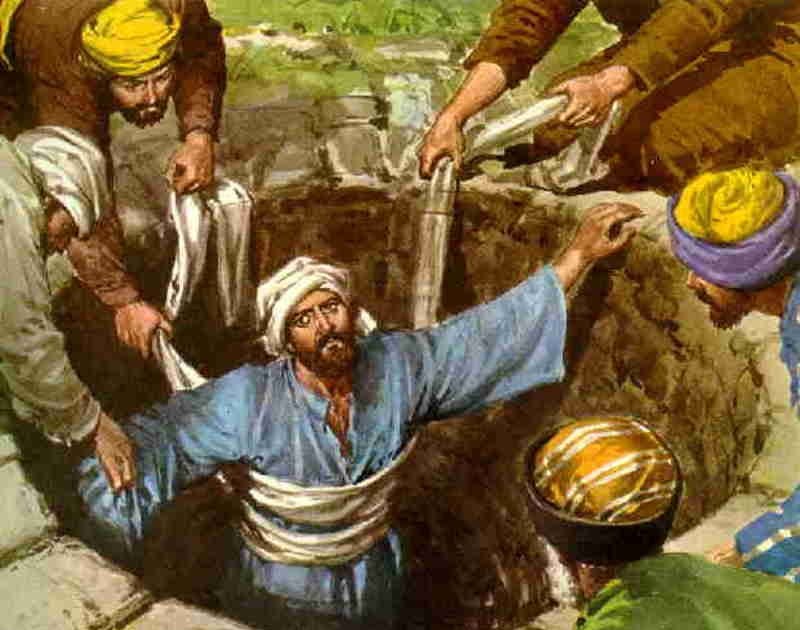
    Very often on the journey of discipleship, we may find that the oppression and division that the Gospel causes casts us down.  Think about the loved ones you have called to live the faith, come to Mass, make good decisions, and have rejected that call.  Like poor Jeremiah in today’s first reading, maybe we find that we have been thrown into a cistern of despair or hopelessness. All that sadness I mentioned in the beginning of my homily can be like that. Fortitude is the virtue that helps us in the midst of all that, to wait with faithfulness on someone like Ebed-melech the Cushite to come to our rescue and draw us up out of the pit.

    The truth is, today’s Liturgy of the Word can come across as very negative. Who wants to hear about being cast into a cistern? Are we eager to find that we are going to be in angry division with people close to us? The temptation to let all of this go in one ear and out the other, remaining instead in the comfort of our luke-warmness is almost overwhelming. But that’s just not good enough. We can’t live that way and still call ourselves disciples. It is not enough to love God in our heads. We need to be on fire, actively living the graces of baptism that we have received – to live with fortitude, integrity, conviction, fervor, and burning zeal. We have to be willing to live in the shadow of the cross, where we resolve all our divisions and receive the baptism that promotes Gospel peace.

  • Friday of the Nineteenth Week of Ordinary Time

    Friday of the Nineteenth Week of Ordinary Time

    Today’s readings

    God never forgets how much he loves us.  If this weren’t so, none of us would be in existence.  God loves us into life and loves us through our life and one day, if we let him, will love us into eternal life.  The people of Israel had to know this better than anyone.  In today’s first reading, Joshua gathers the people for a reminder.  God had called and given them the promise through Abraham.  Throughout the years, he dispelled all their enemies and especially the Egyptians who subjected them to abject slavery.  He also gave them a future and a city to dwell in: land they had not tilled and cities they had not built.  All of this because he loved them.

    The question the Pharisees asked Jesus in the Gospel today had nothing to do with love, which is odd because it was a question about marriage.  Or, actually, the converse of marriage: divorce.  They were asking not because they wanted to know about how to love better in their relationships, but rather because they were trying to trick Jesus into some Moses-bashing.  But Jesus has none of that, reminding them of the indissolubility of love.

    Many things can be forgotten.  God forgets things all the time – namely, our sins when we confess them.  But love can never be forgotten.  God never forgets how much he loves us because God is love itself, and we dare not forget how much we love him, and because we love him, how much we love one another.  That love may require all kinds of forgetting: forgetting past hurts, forgetting resentments, forgetting what we think we deserve.  

    May we all forget what we have to so that love is the only thing we can remember, and may we all go together, one day, to eternal life.

  • Tuesday of the Nineteenth Week of Ordinary Time

    Tuesday of the Nineteenth Week of Ordinary Time

    Today’s readings

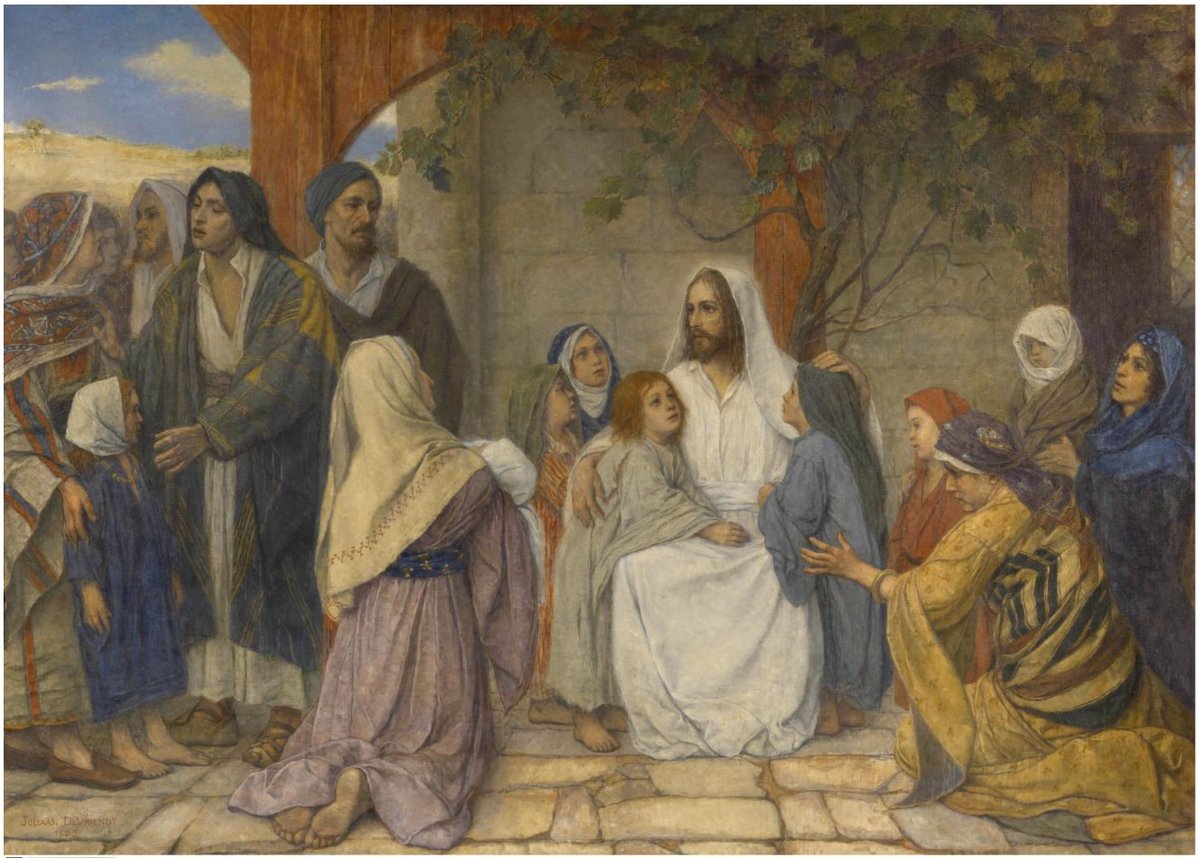
    I once heard it said that you’re only a child once, but you can be childish your whole life long!  I don’t think that Jesus wants us to be childish today, but certainly he is calling us to be more child-like.

    Jesus tells us today that we must become like children if we wish to enter the kingdom of heaven. Now when I stop to think about that, I wonder what it is about children that makes them so eligible for the kingdom. Anyone who’s spent quality time with a bunch of three year olds, or has been a substitute teacher for some sixth graders, knows that children aren’t righteous in and of themselves. So if it’s not that they are so pure, what is it that makes them heirs of the kingdom?

    One thing about children – at least before they become teenagers – is that they are absolutely dependent on their parents or guardians. They can’t do much of their own power, so they depend on adults to give them what they need. I think this is the crux of what Jesus is getting at today.

    Because so often we adults feel like we are supposed to handle everything ourselves. And we need to come to two very important realizations. The first is that we can’t do everything ourselves, and the second is that we’re not supposed to. We can’t because we simply don’t have the power. And that’s not a defect, it’s by design, and that’s why it’s important to realize that we’re not supposed to do everything ourselves. Only when we come to this point can we then turn and become like little children before our God who longs to nurture us into the kingdom of heaven.

    God refuses to let any of his little ones to be lost. No shepherd worth his salt would leave 99 sheep alone to go out in search of one. But God does, because every single one of his little ones is important, every one of them was created for the kingdom of heaven. He goes out to look for those who are lost, and when they are lost they are most like children, needing God to show them the way. And he does show them the way. What is it in us that needs to change so that we can become more like children before our loving God?

  • The Nineteenth Sunday of Ordinary Time

    The Nineteenth Sunday of Ordinary Time

    Today’s readings

    Wow.  If ever there was a frightening Gospel reading, I think we just heard it!  All this talk about beating the menservants and the maidservants, and the hope of being beaten “only lightly.”  Yikes.  Even the whole notion of the Son of Man coming at an hour we do not expect is pretty concerning.  We almost want to close the cover of the book, back away slowly, and say, “then who can be saved?”  But I promise this reading is really good news.

    I think we need the good news that this Gospel reading brings us these days.  With major mass shootings happening so very often – two of them last weekend, with families ripped apart as we struggle as a nation with defense of our borders versus welcoming those in need, with politicians vying with each other to see who is the most pro-choice, pro-abortion candidate, with the very dire effects of climate change that we are seeing lately, well, again, we almost want to turn off the television, close the newspaper, back away slowly and say, “then who can be saved?”  In these days we need the good news that there is something eternal and awesome and worth living for.

    Listen to the opening line of the Gospel again: Jesus says to his disciples, “Do not be afraid any longer, little flock, for your Father is pleased to give you the kingdom.”  That is a revelation so glorious that it should have us up dancing in the aisles, praising God, and throwing a huge party.  Think about it: the Father is pleased to give us the kingdom.  The whole thing.  Doesn’t cost us a cent.  All of it is ours!  If there was ever any good news to share, this is it.  It’s better than a huge promotion at work, it’s even better than winning the lottery.  All those things last but a moment, but the kingdom, well that’s for eternity.

    And it’s an eternity that we need to keep in mind these days.  Life on this earth is hard, so what is there to live for?  Well, we know it: we have the promise of the kingdom, and our Father is pleased to give it to us!  So now that we know that the Father is pleased to give us the kingdom, I’d like to explore two questions. First, are we pleased to receive the kingdom? And second, what on earth do we do with it?

    Okay, so are we pleased to receive the kingdom?  Well, the obvious answer is “yes!” I mean, the kingdom is the great promise that brings us here to church today.  Inheriting the kingdom means we are not going to hell; indeed, we will have everlasting happiness.  But I wonder how readily we receive this gift of all gifts – and let’s be clear: this is the best gift we’re ever going to get.  But there are so many other things out there, and we want to keep our options open.  We’d rather pursue the big promotion, the latest and greatest shiny gadget, and so much more.  Lots of things tempt us and look better than the gift the Father is pleased to give us.

    Another obstacle to receiving the kingdom is maybe we feel like there’s always time to receive that gift.  We’re going to live a long time, right?  So why deny ourselves so many passing things in favor of receiving the kingdom?  We can always receive the Father’s gift later. Except for the fact that none of us knows how much time we have in this life.  Procrastination is our enemy, because some day could well turn into never.  Not only that, but Jesus came to clearly proclaim that the kingdom is now, and why would we deny ourselves the pleasure of receiving the kingdom now and latch on to so many easily-tarnished things?  Now is the time, and there’s no gift greater.

    And that’s what I think Jesus is addressing in the scary-sounding parables that follow.  We don’t know when our Master will return, so best to be always ready. It’s not that we should fear being beaten – severely or “only lightly” – we should fear something far worse, which would be missing out on life in the kingdom of God.  Jesus came to proclaim very loudly that the kingdom of God is at had – he says those exact words all through the Gospels.  Friends, the kingdom is what happens while we’re busy with all the things that consume us day and night.  If we don’t live like we’ve inherited the kingdom now, we’ll never get it, because we will have lived somewhere else all our lives.

    So if we receive the kingdom, what are we supposed to do with it?  Well, just like all of God’s gifts, it’s not just for us.  We’re supposed to share it.  We’re supposed to live like we are part of it.  We’re supposed to live in the kingdom so that others will want to join us.  So this gift of the kingdom calls us to greater integrity, greater love, greater mercy, greater holiness.  This may well seem like hard work, and that’s because it is.  Jesus made it clear at the end of today’s Gospel: “Much will be required of the person entrusted with much, and still more will be demanded of the person entrusted with more.”

    So does that make the gift of the kingdom seem like a burden?  Well, maybe.  But it’s a happy burden, a glorious burden, a sweet burden.  All the saints tell us as much.  Even Jesus said, “My yoke is easy, and my burden is light.” (Matthew 11:30)  But we’ll never realize that until we go all in and receive the gift the Father is pleased to give us today.  It’s kind of like that project that seems daunting, but once we get into it, is actually kind of fun.  That’s the burden of the kingdom.

    Jesus brings us the best of all Good News today: the Father is pleased to give us the kingdom.  So what do we have to do, what do we have to let go of, in order to receive it?  How do we live with to greater integrity, greater love, greater mercy, greater holiness, so that when people see it in us, they will want what we have more than anything?  That’s what should be our to-do list this week.  Put aside the despair of the daily news, receive the Father’s gift of the kingdom, then live in such a way that we share that gift with everyone and brighten our own corner of the world.  We have to live like that’s our job.  Because it is.

  • The Eighteenth Sunday of Ordinary Time

    The Eighteenth Sunday of Ordinary Time

    Today’s readings

    You know, it doesn’t take too much thinking to see that our culture is way off base.  I saw a post on social media this week about the “do what makes you happy” aspect of our culture, and how toxic that is for us Christians. Our God does will our happiness.  But he directs that happiness to the afterlife, when all is perfected.  We are called to reasonable happiness in this life, but in this life we are called to glorify God in all of our thoughts, words and deeds, and depend on God to be the source of our joy.

    But our culture is all about selfishness being the source of our joy, which is completely disordered. Our attachment to stuff borders on hoarding.  Recently I noticed the proliferation of “you store it” businesses in our area.  Stuff does not make us happy; in many ways it almost makes us less happy because we have to figure out what to do with the stuff. We can be very rich in what matters to us, but the question is, when does it all become too much?

    Listen to the last line of this morning’s Gospel one more time: “Thus will it be for all who store up treasure for themselves but are not rich in what matters to God.” So right away the parable is turned around and directed at all of us. And it wouldn’t be so hard to put that parable in modern terms, would it? Think of winning the lottery, only to know that the day you receive the check is the day you go home to the Lord. Or think of spending your days and nights in the office, building wealth and prestige, only to be part of massive layoffs when the company is sold. Or, even worse, spending your days and nights at the office, only to miss the growing of your family. So, Jesus asks us, what treasures have we built up? With what have we filled our barns?

    Today’s first reading is from the book of Ecclesiastes, which in Hebrew is Qoheleth, who is the teacher in the book. Among the Wisdom books in the Scriptures, Ecclesiastes can be the hardest to read because it is almost prophetic in content. Qoheleth is the main character in the book, a man who is considered wise among his contemporaries, much like many of the popular wisdom teachers of his day. While we don’t know who Qoheleth was, the book is attributed to Solomon, the wise king. Solomon often wrote of the prizes that lay in store for those who were successful. But this book is a little different. Here he questions if it is all worth it, and challenges the complacency and dishonesty that run rampant in that society. If we didn’t know any better, he could well have been writing his words today, couldn’t he? In the end, though, Qoheleth’s message is basically encouraging, and brings us back to the God who made us. At the end of his book, which is not part of today’s reading, he says: “The last word, when all is heard: Fear God and keep his commandments, for this is man’s all; because God will bring to judgment every work, with all its hidden qualities, whether good or bad.” (Ecc. 12:13-14) Which is exactly what I found in that social media post: we need to concern ourselves with glorifying God.  That’s what Jesus is telling us in today’s Gospel, too.

    St. Paul has a little bit of Qoheleth in him too, today. In the letter to the Colossians, which we have been hearing these past few weeks, he is trying to get that community to lay aside earthly things and seek God. Sounds like the message of Qoheleth, doesn’t it? “If you were raised with Christ,” he tells them, “seek what is above, where Christ is seated at the right hand of God.” In other words, stop thinking about what makes you happy and do what glorifies God; stop filling your barns with the stuff that you accumulate on this earth, and be rich in what matters to God. Qoheleth, St. Paul, and Jesus are in complete concert today, and we must be careful to hear their message. St. Paul, typical for him, is very blunt about what he is asking us to lay aside: “Put to death then,” he tells us, “the parts of you that are earthly: immorality, impurity, passion, evil desire, and the greed that is idolatry.” And, “stop lying to one another.” We are called to be disciples who are pure, compassionate and truthful, because absolutely nothing else will lead us to the kingdom of God!

    So, let’s look at Jesus’ instruction at the end of today’s Gospel parable: “Thus will it be for all who store up treasure for themselves but are not rich in what matters to God.” We have to ask ourselves, then, the very important question: “what is it that matters to God?” I think we know what doesn’t qualify – St. Paul made that very clear. I think the things that matter to God are those things we might count among our blessings: namely our family and friends. Those things that matter to God might also be the things that make us disciples who are pure, compassionate and truthful. So we might seek to be rich in prayer, rich in reaching out to the poor and needy, rich in standing up for truth and justice.

    Today God is tugging at the heart-strings of the hoarder in all of us. What are we stockpiling? Maybe we need a look at our checkbooks, our calendars, and our to-do lists to see where our money, time and resources have gone. Can we take any of that with us if we are called home to God tonight? If those things are all we have, we could find ourselves in real poverty when we arrive at the pearly gates. This week’s to-do list might find us letting go of some of what we thought was important, so that we can be rich in what matters to God. These, brothers and sisters in Christ, are the riches that will not spoil and can never be taken away from us.

  • Friday of the Seventeenth Week of Ordinary Time

    Friday of the Seventeenth Week of Ordinary Time

    Today’s readings

    What kinds of mighty deeds is the Lord Jesus trying to do in our own lives? Is he finding success there, or have we put up obstacles through our own lack of faith?

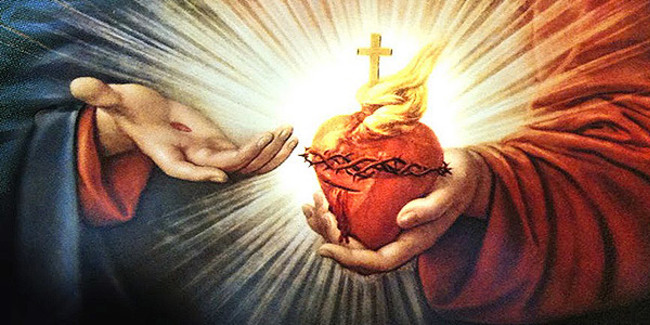
    Today we celebrate a Votive Mass of the Sacred Heart of Jesus for this First Friday. In this celebration, we realize that the “native place” of our Lord is in our own hearts. As he pours out the love of his Sacred Heart on us, he takes up residence in our own hearts in order to guide us and bring us to salvation. And so we cannot be like those in Jesus’ hometown who would give him no honor in his native place. We must joyfully give Christ honor in our hearts and let his love pour forth in all that we do and say this day and every day.

    And just as Moses taught the people to observe the Lord’s commands for worship and rest on the Sabbath and the festivals, so we too must carefully observe time for worship and rest in our own hearts, communing with our God who longs to warm us with his presence as the very blood flows through our bodies and who longs to guide the rhythm of our days just like the beating of our own hearts. May we all find a moment of our day today for contemplation to appreciate the presence of the Lord in our hearts and in our lives. May the mighty deeds the Lord longs to do in us pour forth from his Sacred Heart, which resides in the hearts of all of us.

    Sacred Heart of Jesus, have mercy on us.

  • Tuesday of the Seventeenth Week of Ordinary Time

    Tuesday of the Seventeenth Week of Ordinary Time

    Today’s readings

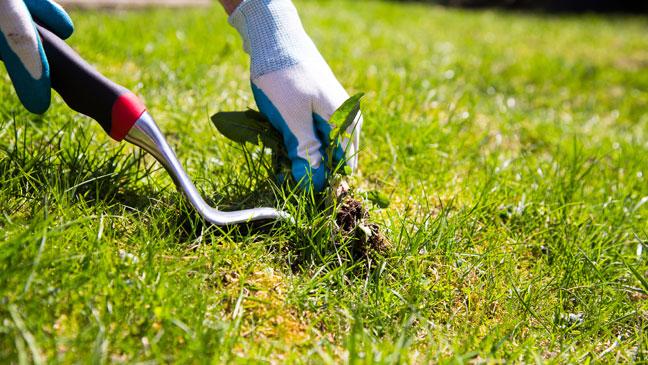
    I think we get a more vivid picture of today’s Gospel if we’ve ever had the task of weeding a good-sized garden. I’ve done it plenty of times.  It’s not a task I really enjoy, but it is kind of good in that when you finish a job like that, you can look at it and see something good happened. There’s a sense of accomplishment. But discerning what is a weed and what is a plant is sometimes a difficult task.

    That’s the kind of question the disciples had for Jesus today.  Jesus had just told them several parables about the kingdom of God, and this one was all the way back on Saturday of last week in the liturgy.  To refresh our memories, the story basically went that the landowner sowed good seed in the field, but when it started to grow, weeds came up too.  His laborers asked him about it and he said, “An enemy has done this.” So they wanted to pull up the weeds, but the master said to let them grow together until harvest time, lest in pulling them up they also accidentally pull up the good plants. They could then be pulled up and burnt at harvest time.

    Now I think a good gardener might quibble with the analogy.  But that’s not the point.  The point is good news, and the good news is this: however much we may resemble the weeds from day to day, Jesus gives us the time to grow into much lovelier plants during our lives.  He doesn’t blot us out of the book of life for one transgression.  But the warning is that we only have so much time until the harvest.  If we are going to turn to the God who sowed us and provide good fruit, we need to do it now.  If we wait until the harvest, it may well be too late.  Our God gives us the freedom to choose to be the good seeds in the field of the world, blessed are we who choose to grow that way.