Category: Liturgy

  • The Seventeenth Sunday of Ordinary Time: Teach Us to Pray

    The Seventeenth Sunday of Ordinary Time: Teach Us to Pray

    Today’s readings

    Today’s liturgy is a call to persistent prayer.  Prayer is a tool that we must hone and use and perfect over a lifetime of discipleship. Sometimes our prayer life may be rich: we hear what God wants for us and we find ourselves connected to God throughout the day.  Sometimes our prayer life may seem to be dead, or at least dormant, or even kind of stagnant: we don’t seem to hear from God, our prayers seem to be rote repetitions of useless words, we seem to just be going through the motions.  What is important for the Christian disciple to know though is this: however our prayer life may be unfolding: it is important to pray, no matter what, no matter how it seems to be going.

    There are three things at stake in our prayer lives which I’d like to focus on today.  First, prayer must be persistent.  Second, prayer must be part of a relationship with God. And third, does God really answer our prayers?  The first two issues are issues that every disciple, every pray-er, must learn on their spiritual journey.  And that last question is one that every disciple, if he or she is honest, probably has to answer or struggle with this question at some point in their lives.

    So, first, prayer must be persistent.  Jesus presents this concept in the parable he tells about prayer.  Even if friendship does not get the neighbor what he wants, persistent knocking on the door will certainly help.  Nothing illustrates this better, though, than the very astonishing story we have in our first reading.  This reading has always intrigued me, ever since I can remember hearing it as a child. God intends to destroy the city of Sodom because of its pervasive wickedness. Abraham, newly in relationship with God, stands up for the innocent of the city, largely because that was where his nephew, Lot, had taken up residence. In what seems to be a case of cosmic “Let’s Make a Deal,” Abraham pleads with God to spare the city if just fifty innocent people could be found there. God agrees and Abraham persists. Eventually God agrees to spare the city if just ten righteous people could be found in the city of Sodom.

    It is important, I think, to know that Abraham’s prayer does not really change his unchangeable God. Instead, God always intended to spare the city if there were just people in it. What I love about this reading is Abraham’s line, “See how I am presuming to speak to my Lord, though I am but dust and ashes!” Here he prefigures the kind of prayer Jesus has in mind for us, we who also are but dust and ashes. The prayer Jesus teaches us is amazingly familiar, and I mean “familiar” in the sense of being close to God. Our God is not a distant potentate who has set the world in motion and then stepped back to observe events as they unfold. No, instead our God can be called “Abba, Father” and we can approach God as we would a loving parent. Because of this, we can pray, “Father, hallowed be your name…”

    And this leads us to the second issue at stake for the praying disciple: prayer must come out of a relationship with God.  Abraham may have been somewhat presumptuous to speak to God the way that he did.  But if he didn’t know God, if he didn’t have a relationship with God, well, then his conversation would have been completely offensive, wouldn’t it?  And everything that Jesus teaches us about prayer in this Gospel presumes relationship. The prayer he gives is that of a community praying to its Father God.  The parable that he gives following that prayer tells of one neighbor begging another to help him provide for and unexpected, but not unwanted, guest.  All that we are taught about prayer is that prayer is to be an expression of our relationship with God, or else it’s a useless exercise.

    I once heard an apocryphal story of a woman who was not religious, never prayed, never worshipped. At one point in her life, she was going through some very hard times, and decided that she should pray.  Not really knowing how to pray, she reached for the dusty old Bible on her shelf that someone had given her years ago but she never really opened.  She decided to open it up, point to a passage, and hope it spoke to her.  So that’s what she did.  Opening the Bible, she pointed to a passage and read: “And Judas went out and hanged himself.”  She thought that was frightening, so she decided to try again. This time she opened it up, pointed to a passage, and read: “Go, and do likewise.”

    Now obviously, the woman was reading these passages out of context.  Had she read the whole story around each of these quotes, she would have been clear that neither of these brief sentences spoke to her situation. But more than that, she was praying without the context of a relationship with God.  Prayer can be very effective in times of crisis.  But a time of crisis is not the time to learn how to pray.  It is our relationship with God as disciples of the Lord that makes sense of our praying and teaches us how to speak to God.  Abraham learned that, and Jesus knew it well.

    The final issue is a sensitive one.  So often, parishioners will tell me, “Father, I’ve prayed and prayed for (whatever the issue is) and I don’t seem to be getting any answer from God.”  Whether you have a sick loved one, or a child who’s gone the wrong way, or a marriage that is troubled, or a job situation that is unhappy, or any one of thousands of other problems, you may have asked something like, “Why doesn’t God answer my prayers?” Today we’re hearing that we should be persistent in our prayer and that God will answer the prayers of those he loves, and so you may well be asking yourself, “What good does that do?” These are questions I get all the time, and I can understand them, having asked them a time or two myself. So let me give you my take on it with a parable out of my own life.

    When my dad was dying a few years ago, I was absolutely positive that he was going to be okay. If I had my own way, of course, I would have prayed that he would live many more years, but I knew that was selfish. God had made Dad for himself, and I knew that he was going back to be with God. I wanted nothing else for him than that he would be free of pain and happy forever. I was positive that was what was going to happen. So was Dad. Just before he died, he looked up at the nurse who was attending him and said, “It’s going to be okay.” And of course that was true.

    How did he know it was going to be okay? Well, he knew he’d be okay because Dad was a man of prayer. He went to Mass with my mom every Sunday and very often went to weekday Mass after he retired. He prayed his rosary and daily prayers every day. He and I used to go every Holy Thursday to pray before the Blessed Sacrament together. His wonderful life was immersed in prayer and he had no regrets. Everything was going to be okay. And because he was a man of prayer, I knew that I could let him go and that God would take care of him. Prayer is like that; it’s contagious. His example of persistent prayer was one that led me to my vocation.

    The point is this: praying persistently doesn’t necessarily mean that everything is going to come out the way we want it to, but it does mean that everything is going to come out the way God intended it, which is so much better than our little plans. If we are people of prayer, if we pray persistently, we will be able to see the blessings in the midst of sorrow and to have confidence when everything seems to be falling apart.  Sometimes, even when the circumstances don’t seem to change, the praying changes us, and makes us more open to the blessings God wants to give us in the midst of the pain.

    One final note: praying persistently, as we care called to do, does not mean praying constantly for just one thing. It means praying in all ways: praying in adoration before our beautiful Savior, praying in contrition and repentance for our sinfulness, praying in thanksgiving for our many blessings, praying in supplication for our needs and the needs of all the world. It means praying, above all, “Thy will be done, on earth as it is in heaven.”The psalmist today says, “Lord, on the day I called for help, you answered me.” God intends the very best for us, we may be certain of that. And if we are people of persistent prayer, then we will indeed see blessing all around us. My prayer today is that we would all be persistent in prayer, that we would become people of prayer, and that we would never, ever, ever lose heart.


  • Saturday of the Sixteenth Week of Ordinary Time

    Saturday of the Sixteenth Week of Ordinary Time

    Today’s readings

    There are a lot of pitfalls on the road through our spiritual lives.  We ourselves experience that all the time.  Making our confessions, we have a firm purpose of amendment, but it seems like the devil knows that, and so we barely make it to the parking lot and there’s a new temptation or frustration.  Those pitfalls in the spiritual life are many, and frequent, and exasperating at times.

    Jesus said it would be so. Listen to what he says in the Gospel reading again:

    The Kingdom of heaven may be likened to a man
    who sowed good seed in his field.
    While everyone was asleep his enemy came
    and sowed weeds all through the wheat, and then went off.

    Did you catch that? The Kingdom of heaven will be like that. It will be planted with good seed, but the enemy will sow weeds.  That’s still the Kingdom of heaven.  So when we are frustrated by the pitfalls we encounter, we can at least take some relative comfort in that our Savior said it would be like that, and we’re still in the Kingdom of heaven.

    But what we can’t do is accept that to the point that we decide we can participate in it and still be forgiven.  We can’t love our sins and expect God to save us.  That’s called presumption, and it too is a sin, and a pitfall in the spiritual life.  God is a God of justice; he sees that kind of nonsense and calls it what it is.

    So here’s the take away. Yes, there will be pitfalls in the spiritual life.  But when we run into them, it doesn’t mean we’re not still in the Kingdom of heaven. What we have to do is call them what they are, repent, reform our lives, and call on God’s mercy.  But we can’t presume God’s mercy so that we give ourselves permission to sin.  We have to love God more than our sins; love eternity more than today’s passing pleasures. We have to be like the Psalmist today who prophesies that God will take care of the things we worry about if we place our worship in the right place:

    “Offer to God praise as your sacrifice
    and fulfill your vows to the Most High;
    Then call upon me in time of distress;
    I will rescue you, and you shall glorify me.”

  • Tuesday of the Sixteenth Week of Ordinary Time

    Tuesday of the Sixteenth Week of Ordinary Time

    Today’s readings

    A perfectly respectable reading of the whole Exodus story is an allegorical one.  In this reading, the Egyptian army, its chariots and charioteers and even its horses, symbolize the forces of evil and sin – basically everything that stands between us and God.  God loved the Israelites, who are God’s chosen people, and in a sense, you and me, so much that he rescued them from their abject slavery in Egypt, a slavery that we all have to the forces of sin.  Anyone who has struggled with an addiction or any pattern of sin in their lives, can tell you how sinfulness is really its own kind of slavery, and can really relate to the Exodus story in this allegorical sense.  God leads his chosen people away from sin back to the Promised Land, the heaven he promises us all.  On the way, the forces of evil are drowned in the abyss of the Red Sea, which symbolizes the abyss between this world of sin and the Promised Land of heaven.  The action of being delivered from sin through the sea is a symbol of Holy Baptism, which washes away our sins, and destroys the power of evil to control our eternity.

    I love this allegorical reading because we are all pretty well removed from the ancient history of the Israelites and the Egyptians.  But the slavery that we all have to sin at one point or another in our lives is anything but ancient history.  God intends a very real exodus for all his chosen people, and he continues to do the work of salvation in and for all of us every day.  All of us who are sister and brother and mother to the Lord Jesus, all of his family, are too important to be left behind in slavery to sin.

    All we have to do is follow the Lord through the desert of purification, through the abyss of whatever the Red Sea looks like for us, into the Promised Land.  And it won’t be easy.  Wandering forty years in the desert is something anyone would look forward to.  But as God sustained the people of Israel during that wandering, so he will sustain us on the journey away from sin back to him.  We too might sing to the Lord for he is gloriously triumphant.  The horse and chariot of our own sinfulness has been cast into the sea.

  • The Fifteenth Sunday of Ordinary Time

    The Fifteenth Sunday of Ordinary Time

    Today’s readings

    At first glance, it all seems so simple, doesn’t it? “Go and do likewise.” Easy enough. But when a command like “go and do likewise” comes at the end of one of Jesus’ parables, we really ought to suspect it’s going to stretch us a little bit, and today is no exception.

    So let’s take a step back and look at today’s first reading to get some background for what’s happening in today’s Gospel. Moses is exhorting the people to keep the commandments of God. But which ones? The Ten Commandments? Perhaps. But the books of Deuteronomy and Leviticus give the fullness of the Jewish law. There you can read over six hundred laws pertaining to everything from hospitality to the treatment of slaves. I often think the people were overwhelmed when they thought about that many laws. They may even have been fearful that they would have accidentally broken one of those laws in the course of daily life. But Moses is telling them that they don’t have to be reaching to find the laws they need to follow. Those laws aren’t remote or mysterious. They don’t have to cross the sea or search the sky. Because the law they need to follow is very near to them: on their lips and in their heart. They have only to carry it out.

    This is almost exactly the same thing Jesus is saying in the Gospel today. The scholar of the law who approaches Jesus today isn’t really seeking further knowledge. Rather, he is showing off and testing Jesus to see what he would say. He wants to know what it takes to inherit eternal life. Which is the right question, but for the wrong reason. In other words, he really isn’t concerned about his salvation – he probably thinks that a scholar of the law like him has that all wrapped up anyway – instead he is trying to trap Jesus and make him look foolish. 

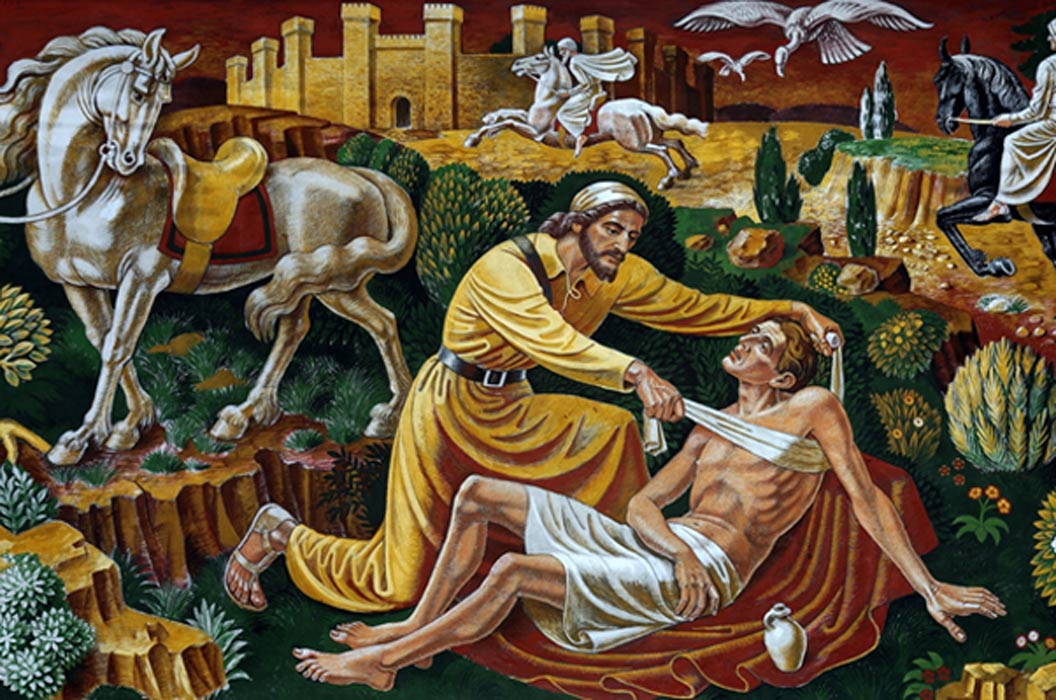
    As Jesus often does, he answers the question with a question: “What is written in the law?” The scholar feels on good, solid, comfortable ground with that question, and responds pretty well: Love God with everything that you are, and love your neighbor. Loving God and neighbor is the crux of the Law and the Prophets. So Jesus commends him, and says that if he does this he will live. But the man wants to justify himself a little more, and so he asks, “Who is my neighbor?” And this is the ten-thousand-dollar question of the day.

    There are three Greek words used to translate “neighbor.” Two of them deal with what you might think: friends, family, and those living near to a person. For most people, a neighbor meant people living in close proximity. For the Jews, it went a little further, meaning all fellow Jews. But the word that is used in this Gospel reading, the word for “neighbor” that Jesus chose, is very particularly something else, something a little higher. The word for “neighbor” here is almost a verb. It’s not just someone nearby, but instead the dynamic of coming near to another, of approaching and drawing close.

    I think we all have an idea in mind when we hear the word “neighbor.” I remember the neighborhood where I grew up, the neighborhood in which my mother continues to live. I had friends who went to school with me, and even to our Church. When we were growing up, we would spend hot summer nights together outside, playing “kick the can” and other kids’ games. Later, we attended our youth group together. Our parents kept an eye not just on their own kids, but on all the kids in the neighborhood. When my sister was little, she used to like to climb trees, and as soon as she did, the neighbor would call to let my mother know so she wouldn’t fall out of the tree and break her neck (she never did, thank God!). When someone had a death in the family, there would be food brought to the house. If there was work to be done, someone would always lend a hand. We were neighbors to each other.

    But again, as nice as this picture of “neighbor” is, Jesus is calling us to go deeper. He is asking us to step outside ourselves, and to see a person in need and respond, no matter where that person is, no matter his or her race, color or creed. This is a real challenge in every time and place.  The person in need is always our neighbor. Listen to that statement again, because it’s crucial to what we’re hearing today and I don’t want you to leave this holy place without coming to understand it: the person in need is always, always, always our neighbor.

    Before we come down too hard on the priest and the Levite in the story, let’s give them a bit of a break. In telling the story, Jesus doesn’t condemn the priest and the Levite.  They were doing what people in their position would probably do, because they had to be concerned about remaining ritually pure so that they could lead worship. But Jesus says to them that they cannot be so concerned about the finer points of the law that they miss responding to the needs of a neighbor among them.

    And we have to hear that too. Because we too can get so caught up in our own laws that we end up as self-righteous as that scholar of the law. We may claim to respect life if we have never been involved in an abortion. And that’s a great start, but respecting life also demands that we care for the poor and needy, that we care for the health of every person, that we honor our elderly brothers and sisters, and that we repent of our racism and refuse to honor stereotypes that are an affront to human dignity. We may claim to honor the sixth commandment if we have never committed adultery. But honoring that commandment also means that we live pure lives and strive always to purify our hearts. It means we don’t take part in off-color jokes and that we refrain from watching television or movies, or visiting internet sites that lead us down the wrong path. We may claim to be thankful for our daily bread when we say grace before meals. But being thankful for our blessings means also that we share them with those who are hungry. Because Jesus is leading us to a deeper reality today, we can no longer get caught up in the self-righteousness that the scholar of the law brings to his encounter with Jesus.

    The person in need is always our neighbor. We don’t need to search far and wide to figure out what to do for that person. We have only to see the generous and self-giving response of the Samaritan in today’s Gospel and, as Jesus commands us, to “go and do likewise.” The Law and the Prophets are as near to us as that.

  • Friday of the Fourteenth Week of Ordinary Time

    Friday of the Fourteenth Week of Ordinary Time

    Today’s readings

    Our God never promises that the life of faith and discipleship will be an easy one; only that it will be blessed. One thing is certain: that life will certainly entail hardship, even suffering. That’s pretty evident in today’s Gospel reading. Faithful disciples have to worry about being betrayed by even their closest family members.

    None of this is a surprise to anyone who has tried to live the faith. Perhaps at times the hardest people to evangelize are the members of one’s own family. I’m sure we all can think of people close to us who have abandoned the faith or practice it rarely. Maybe the ones who receive the Church’s teachings least are those we would hope would get it and be partners with us as we journey to the kingdom. It happens all the time – in your family and in mine.

    These are trying times. It is hard to give witness to the Truth when the culture around us wants to make its own truth. And it’s painful to see our brothers and sisters fall for the lie hook, line and sinker. So how do we stand for the Truth when our loved ones tune it out? What do we do when our loved ones reject what we’ve tried to give them to bring them to eternal life?

    Our Gospel tells us that what we do is persevere: we continue to live the Truth and witness to our faith. If those close to us tune out our words, then we have to be all the more attentive to our actions, to our lived witness, so that they can see that we live what we preach and believe. We have to depend on God to give us the right words and help us to do the right things so that we won’t be a stumbling block. And then we have to trust in God to work it all out in his time.

    None of this is going to be easy, but Jesus tells us that the one who endures to the end will be saved.

  • Monday of the Fourteenth Week of Ordinary Time

    Monday of the Fourteenth Week of Ordinary Time

    Today’s readings

    In today’s readings, God proves himself trustworthy, yet again. He appears to Jacob in a dream and promises that he will be with him wherever he goes, protecting him, and bringing him back to the land, which he would also give to Jacob’s descendants. In his joy, Jacob reacts by consecrating the land to the Lord.

    In the Gospel, Jesus heals not one, but two people: he stops the hemorrhage of a women who had suffered from the malady for twelve years, and then he raises the daughter of one of the local officials. In their joy, news of Jesus’ mighty deeds spread all throughout the land.

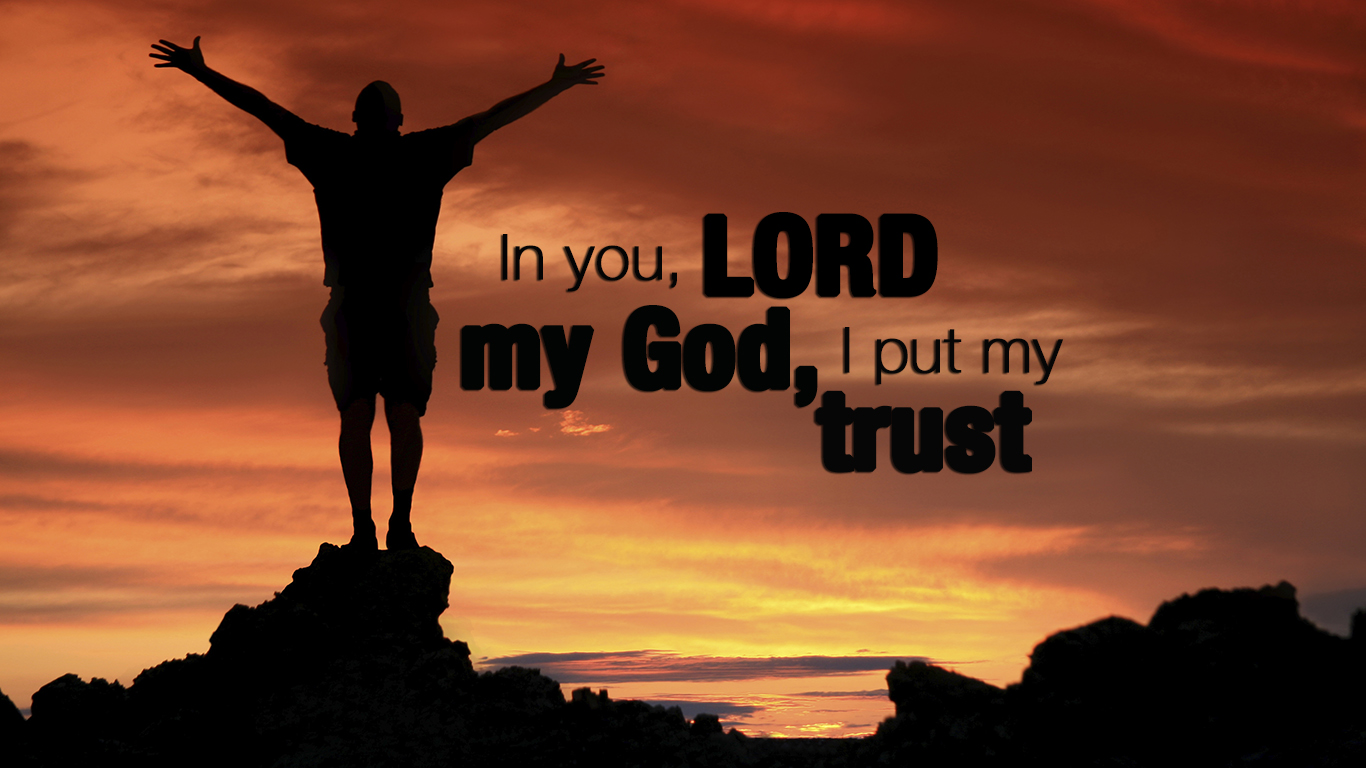
    The Psalmist prays today, “In you, my God, I place my trust.” It’s a call for us to do the same today. We certainly don’t know how God will answer our prayers or even when he will do so. He might bring healing, but maybe in a way we don’t expect. But his promise to Jacob is one in which we can trust as well: he will be with us wherever we go, and he will protect us.

  • The Fourteenth Sunday of Ordinary Time

    The Fourteenth Sunday of Ordinary Time

    Today’s readings

    Some of us on the Liturgy staff were reflecting in the last couple of weeks that it’s nice to be in Ordinary Time.  The wonderful feast days and solemnities of the year are great, and we love them, but while we take care to celebrate them with festivity, they can take a lot of our energy and leave us with little time to really pray them.  So we look forward to these days of Ordinary Time, and that’s good, because during this time of the year, Holy Mother Church gives us some great tools for living the Christian life of discipleship.  Today’s Gospel is a great example of that.

    So Jesus’ ministry is ramping up into full gear. In order to prepare the places he intends to visit, he sends out seventy-two disciples, in pairs, to prepare the way.  They are going to do some of the same things he will do:  curing the sick, healing the broken, and preaching the Kingdom of God, with its call to repentance.  This is the third Luminous Mystery of the Rosary.  They have great success because Jesus prepares them in advance and gives them advice about how to be good disciples.

    And we need to pay careful attention to that advice because, as you may have guessed, this story, nice as it is, is not about just those seventy-two.  It is about all of us.  At our baptism, we too have been sent out on mission.  We too are called to bring healing to a broken world, and to proclaim the Kingdom of God.  That Kingdom is here and now, and it is urgent that people come to enter into it. 

    We might protest, I think, saying that we’re not ready, not equipped to be evangelizers and preachers and healers. Well, news flash: neither were those seventy-two.  In fact, they came back amazed that they were able to accomplish the mighty deeds they did. And they were able to do those things because Jesus had prepared them in advance.  He gave them several rules for mission, and of them, three really stand out. I think we are supposed to hear and appropriate these things as well.

    So the first tool he gives us is the wisdom not to rely on ourselves. Listen to the instructions Jesus gives the seventy-two before they leave: “Carry no money bag, no sack, no sandals…” Now that all seems pretty impractical to those of us who have to travel in the twenty-first century, doesn’t it?  We need a wallet or purse to carry what we’d need to pay tolls and buy fuel and pay for what we need on the journey, and certainly we’d need a sack to carry identification as well as just basic things we’d need along the way.  I’m a compulsive over-packer, and I like to have all the details of a journey mapped out pretty precisely before I set out, so this advice gives me agita.  Here’s the point, though: If we were able to foresee every possibility and pack for every possible need, we would certainly not need Jesus, would we?  Jesus is telling the seventy-two, and us as well, to stop worrying and start following.  Rely on Jesus because he is trustworthy.  Experience the joy of letting Jesus worry about the small stuff while he is doing big things in us and through us.

    The second discipleship tool is to “greet no one along the way.”  That sounds pretty unfriendly, doesn’t it?  We would think he’d want us to greet everyone we can, but that’s not the point here. The point is, along the way, we can easily be derailed from the mission.  Other things can seem to be important, other people can try to get us off track, Satan can make so many other things seem important along the way. The point here is that there is urgency to the mission.  People have to hear that Jesus is Lord and that God loves them now, not later, when it may be too late.  We have to get the show on the road, and the time is now.

    The final tool is this: do not move from one house to another, to eat and drink what is set before us.  It’s not that Jesus doesn’t want us to spread the Good News. The discipline Jesus is teaching here is that we have to be focused in our ministry.  Once we have been given the mission, we have to stay with it, and not be blown about like the wind.  Eating and drinking what is set before them meant that if they were given ministry that is difficult, they needed to stay with it, because that’s what was set before them.  We, too, are called to stay with a person or a situation until what God wants to happen happens.  We too have to know that our mission may not be easy, but we have to accept the mission we have.  We are called to accept people and situations as they are and trust God to perfect our efforts.  When it’s time to move on, God will let us know, and we will come to know that time through prayer and discernment.

    So we’ve received pretty large task as we come here for worship today.  In just a while, we will be fed on the most excellent Body and Blood of our Lord which will give us strength to tend to the piece of the Kingdom that God has entrusted to us.  We have been instructed with some basic tools for doing the work of God.  If we use these tools and are faithful to the mission, I think we’ll be as overjoyed as were those disciples.  And then, we can rejoice with them that our names are written in heaven.

  • Tuesday of the Thirteenth Week of Ordinary Time

    Tuesday of the Thirteenth Week of Ordinary Time

    Today’s readings

    I want to feel bad for Lot’s wife in today’s first reading.  Not only is she not even called by name in the entire reading, but she gets turned into a pillar of salt just for a backward glance.  But, sad as it is, this is the whole point of the reading, and it’s not like they weren’t warned – the angel was very clear: “Flee for your life!  Don’t look back or stop anywhere on the Plain.  Get off to the hills at once, or you will be swept away.”  So in some ways, she deserved what she got.  But I think the reading is getting at something a little deeper here than a mere glance over one’s shoulder.

    Indeed the real issue is, what did that looking back mean?  Sodom and Gomorrah were being destroyed for their wanton evil.  They may have once been wonderful cities, but they had become centers of every kind of evil and debased action.  And this evil was so pervasive that no other corrective action other than total destruction of the cities would do.  In yesterday’s first reading, we heard the famous reading about Abraham and God bargaining to save those cities.  At the end of it all, God agrees, at Abraham’s urging, not to destroy the place if just ten righteous people could be found there.  Obviously the righteous numbered less than ten, amounting to just Lot, his wife, and his two daughters.  That’s a pretty sad indictment of that region.

    But, so pervasive was the evil of that place, that it infected even Lot’s wife, who didn’t just glance back to see if she dropped something.  No, the backward glance was more likely sorrow for what she left behind; she was not untainted by the scandal of Sodom and Gomorrah.

    The lesson is that when God leads us forward, we cannot debase ourselves to look back.  The Psalmist has it right today, as always, when he says, “For your mercy is before my eyes, and I walk in your truth.”  Your mercy is before my eyes, so I need to look forward, not back.  Looking backward leads us to our old sinful ways; looking forward is what leads us to our God.  So if God is giving us the chance to move forward, as he did for Lot and his wife and his daughters, then we can do no less than fix our eyes on the path ahead, cutting our ties with everything that is behind us.

  • The Thirteenth Sunday of Ordinary Time: Freedom!

    The Thirteenth Sunday of Ordinary Time: Freedom!

    Today’s readings

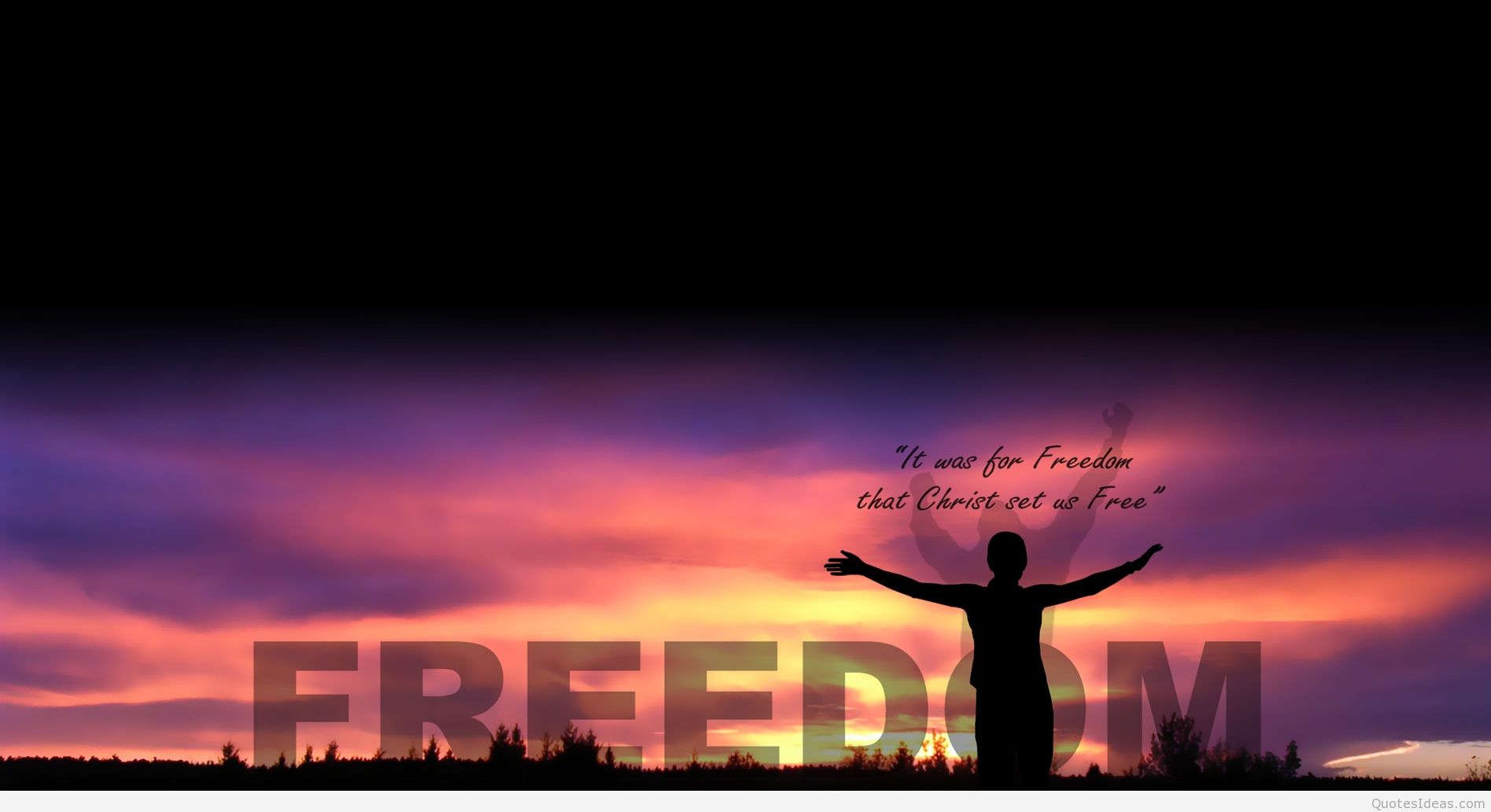
    “For freedom Christ set us free.” So writes Saint Paul in our second reading today. And it’s a beautiful reflection for this weekend, when we are getting ready for our Independence Day celebrations. When our nation’s founders set up this fledgling republic 243 years ago, freedom was certainly one of their primary concerns. Freedom of religion was of primary importance, and they also held dear freedom of expression, freedom of association, and many others. We are the beneficiaries of their hard work. As “they” say, freedom isn’t free, it is purchased at a price, and at this time of year we remember with gratitude those who paid that price for us, and those who continue to do so in the military every day.

    In that second reading, Saint Paul is reflecting on the freedom that the early Christians had. This freedom was a freedom from the constraints of the myriad of laws that they observed, laws that encouraged people to replace true devotion to the spirit of the law with mere surface-level observance of the letter of the law. Paul reminds them that their freedom was purchased at the incredible price of the Precious Blood of Jesus Christ the Lord who died that they, and we, might have life.

    For the Galatians, as well as for all of us, freedom had to be defined a little more exactly, and that was St. Paul’s purpose in today’s second reading. Because freedom isn’t free, it can’t be taken lightly or casually, and so he makes it clear what the freedom truly is. The Galatians had the mistaken notion that freedom meant the same thing as license, which isn’t the case at all. Freedom didn’t mean license to act against the law and to live lives of immorality and corruption. That would be replacing one form of slavery with another, really, since immorality has its own chains. Anyone struggling with a pattern of sin or addiction will tell you that. The freedom Christ won for us is a freedom to live joyful lives of dedication and devotion and discipleship, all caught up in the very life of God. Real freedom looses us from the bonds of the world and sets us free to bind ourselves to God, who created us for himself. Real freedom is freedom to be who we have been created to be.

    This distinction between true freedom and license for immorality is one that we must take seriously even in our own day, as we prepare to celebrate our nation’s own independence. Because in our own day, we too have confused the freedom we have inherited from our founders with a license to do whatever the heck we want. And that, brothers and sisters in Christ, is not the gift we have been given. Freedom of expression doesn’t mean we have the right to express ourselves in a way that slanders or ridicules others. And if you don’t think that’s an issue, just listen to some talk radio or watch some daytime television, or perhaps listen to any of the current campaigning for office, or even the debate of our state legislature’s last session. Freedom of religion doesn’t mean freedom from religion, and it doesn’t mean that we have to practice our faith in secret and not let people know that Jesus Christ is Lord by the way we live and talk. And you know that’s an issue: in the courts, in our places of business and our schools, and in our communities. Being free doesn’t mean we have license to do whatever we want; being free means we are free to better ourselves, our families, our churches and our communities. Real freedom is freedom to be who we have been created to be.

    This freedom to be who we have been created to be is a matter of some urgency for Elisha in today’s first reading and the would-be disciples that Jesus met in today’s Gospel. All of them received the message that when God calls, the time to answer is now. But all of them found that there were things going on inside them that kept them from answering the call; that kept them from being free to follow God in the way they were created to do that.

    Certainly the rebukes they all received seem a bit harsh to our ears. After all, they had good excuses, didn’t they? Who would deny a person the right to say goodbye to their families or bury their dead? But there are a couple of subtle distinctions that we have to get here. First, it wasn’t as if they had ever been told to follow the call instead of taking care of family and burying the dead. Yet they were using those things as an excuse to put off their response to God’s call. Second, following God’s call very well could have meant doing those exact things they were involved in, but in a way that honored God. The call was to put God first, and one could conceivably do that and still take care of family, friends and business.

    What’s at issue here is right relationship. Responding to God’s call must always come first, but responding to God’s call may mean raising one’s family, tending to a sick parent or elderly relative, reading to one’s children, grieving the loss of a loved one or battling an illness. It’s a matter of priorities, and true freedom means putting God first in all of that, trusting that God will help us to make sense of it all.

    It’s important to know that God pretty much always calls people out of the ordinariness of their lives. That was true of Elisha today. He was minding his own business – literally – by plowing the fields. And yet he gives it all up on the spot to follow God as Elijah’s successor. It must have been an incredibly moving event for Elisha, because he was so excited that he ran back, slaughtered his oxen and chopped up the yokes to use as fuel to cook the flesh and feed his people. Doing that was a complete break with his former life, and showed the lengths to which he was ready to go in order to do God’s will.

    On this Independence Day, may we all remember that true freedom doesn’t mean doing whatever we want, regardless of the implications for others and ignorant of our relationship with God. I hope we remember that true freedom doesn’t mean license to live an immoral life. Instead, true freedom is about living the life God has called us to live and following as committed disciples, free to be caught up in the life of God. True freedom means breaking with anything that holds us back from becoming the free sons and daughters of God we were created to be. True freedom means putting God first and serving him in the ordinariness of our lives, following his call to our dying breath. True freedom means finding the same joy that our Psalmist finds today when he sings, “You are my inheritance, O Lord.”

  • Thursday of the Twelfth Week of Ordinary Time

    Thursday of the Twelfth Week of Ordinary Time

    Today’s readings

    So today we learn that just because we call on the Lord, that doesn’t mean that the Lord is at our whim, someone we can summon in the same way as we press a button on the remote and the television comes to life. That’s what the whole nasty business with Abram and Sarai was about. Instead of trusting the Lord’s promises that God would make Abram the father of many nations, they took matters into their own hands and then were displeased at the result. That’s what happens when we forget to trust in God and instead trust in ourselves and in our own ability to do something clever.

    The same is true for the scribes and Pharisees, and also for the wanna-be followers of Jesus. They might claim mighty deeds in Jesus’ name, but Jesus can see their hearts and knows that they are not really open to the fullness of the Gospel. Simply crying, “Lord, Lord” will not get them into the kingdom of heaven. If they’re not willing to set their house on the rock solid foundation of Christ, they will not stand, and they will fall apart with the first of the storms.

    And so we disciples have to be careful about our relationship with Christ. It’s not something we can neglect and expect it to be deep and rich enough to lead us to eternal life. We have to be people of integrity, spiritual people who know who our Lord is and who are open to the fullness of his teaching. He teaches with authority, not as the scribes of old, nor as the so-called authorities of our time – like Oprah or Dr. Phil.  If we want teaching with authority, all we have to do is open the Bible, take some time in Adoration, or devote ourselves to prayer, and then fall in love all over again with our Lord who gave himself for our sakes so that we can all be one with him in the kingdom that has no end.