Category: Liturgy

  • The Twenty-second Sunday of Ordinary Time

    The Twenty-second Sunday of Ordinary Time

    Today’s readings

    So often, when someone thanks us for something, we might say, “It’s the least I could do.”  As if it were some kind of badge of achievement to do the least thing possible.  I think it’s human nature to try to do as little as possible, without being perceived as lazy or something.  Sometimes we want to do as little as possible, and have others feeling good about it.

    Well, I think it’s that kind of attitude that is behind today’s Liturgy of the Word.  Certain things are expected of believers, and over the course of history, people have tried to get away with doing as few of those things as they absolutely need to do.  The first reading sets the stage: Moses places the law before the people and tells them that they are a great nation, because they have a God so close to them, and who loves them enough to give them the whole law that they have received.

    Now the whole law is more than we might think.  Perhaps when we hear that, we think of the Ten Commandments, to which we also are bound in our discipleship.  But for the Jewish community back then, there were a total of over six hundred laws and precepts that made up the law.  Because of that, there was always this constant discussion over which of the laws was most important, and often people would be concerned more about a tiny little precept than about the whole big picture that God was trying to accomplish.

    This is the attitude Jesus came to address with the Gospel.  He wanted the people to get it right.  He wanted them to have concern for people more than for semantics in the law.  He wanted them to love as God loves, because if we do that, we’ll be keeping the law anyway.  But people didn’t always accept that teaching. If they did, Jesus wouldn’t have had to go to the Cross, and there would have been no need to preach the Gospel.

    So in today’s Gospel reading, Jesus makes a major correction.  There was a law of purifying vessels before festivals, which is not unlike the way the priest washes his hands before the Eucharistic Prayer or the way that the vessels for Mass are purified after Communion.  But somewhere along the way, the precept got mangled, and everyone was bound to scrupulously wash themselves and every vessel they owned before a feast.  And Jesus chastises them for having more concern about a human tradition than about the real intent of the law.

    The real intent of the law was obviously something way more important, way more personal.  The real intent of that purification was the purification of our hearts.  Jesus gives a rather horrifying list of sins at the end of the Gospel reading and notes that these are the things that defile; not some dirt on the outside of a cup or hands that had not been scrupulously cleaned.  If we want to really purify ourselves for the festival, which is to say the Eucharist, then we have to be cleansed of our sins.  That’s why we have the Sacrament of Penance, right?

    James, in the second reading, picks up on the theme.  If we really want to be thought to be wise in regard to keeping the law, then we have to keep ourselves unstained by the world, which would be the same thing as Jesus was saying, but also to care for those in need, with which Jesus would certainly not disagree!  Indeed, that’s what was really at stake in the Gospel reading: people were more concerned about the minutiae of the Law than they were for securing justice for all God’s people.

    The thing is, we are hearers of the Word.  We have experienced the love of our Lord in so many ways.  Everything that we have is a gift to us.  We have to be wise in regard to all that, and to be certain that we keep the whole of the law.  Not just those little minutiae, but the very spirit of the law, the law of love which binds all disciples and all people of good will.  Because when we lose sight of that, the whole Church can go off the rails.  And we have certainly seen the rotten fruit of that in these past weeks, haven’t we?

    So our reflection in these days has to be on where and how we need to realign ourselves with the Law of love and resolve to live it more faithfully. Because, as the Psalmist says today, it is they who do justice who will live in the presence of the Lord. And that’s just where we all want to be.
  • Friday of the Twenty-first Week of Ordinary Time

    Friday of the Twenty-first Week of Ordinary Time

    Today’s readings

    I’m sure you’ve had the experience, when you were talking to someone, that you felt like you weren’t both having the same conversation. Or, even though you were both speaking English, you weren’t talking the same language. Sometimes that happens: you think you’re both talking about the same thing, but very clearly, one or both of you is missing the point.

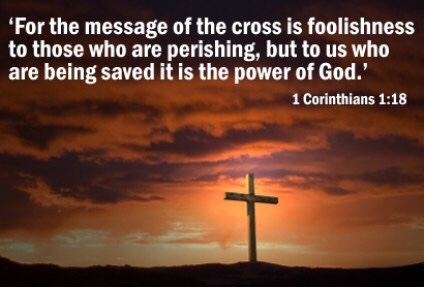
    I think Saint Paul’s message to the Corinthians today might be something like that. They think they know what wisdom is, and I believe they really do know how the world defines wisdom, but the thing is, God’s wisdom is very, very different from the world’s wisdom. God’s wisdom is way beyond anything anyone has ever thought. Because, for God, wisdom looks like that Cross up there. And the Cross is what the world thought of as the ultimate defeat. It was a death saved for the most horrible criminals. It was a very public way to put an end to someone’s criminal foolishness.

    But God used that horrible thing to make the best thing ever happen. He used the Cross to overcome the worst death ever by raising Jesus up on the third day. The worst death ever became the best life ever, where there is no more pain or sadness or death. It turns out God’s wisdom is very, very wise indeed!

    For Jesus in today’s Gospel the call to be truly wise was a bit more simple: be prepared. Just as the wise virgins who had taken the time to buy enough oil to last them through the night were rewarded by getting to join in the marriage feast, so all of us who are wise enough to be a light shining in a dark place will be rewarded with being able to join God’s feast and become one with him.

    So I’d have to say the takeaway here is to expect the unexpected when it comes to God’s wisdom. If we want to find ourselves truly wise, we have to be willing to have our world turned upside down, to abandon our own desires and ways of thinking and embrace all that the Cross means for us.

  • The Twenty-First Sunday of Ordinary Time – Bread of Life Discourse V: So What?

    The Twenty-First Sunday of Ordinary Time – Bread of Life Discourse V: So What?

    Today’s readings

    “So what?”  That’s perhaps the most important question of the spiritual life.  Maybe it’s even the most important question of life, period.  Because after we have all taken time to absorb the information around us, after we have learned all that we have been taught, we have to decide what, if anything, that information and teaching mean for us as human beings.  What is the impact of this information on our lives? What difference does it make to have come to know this?  How will this experience change my life?  So what?

    I mention that because I think today’s Liturgy of the Word gives us a “So what?” moment today.  As you know, these past several weeks, we have been reflecting on the “Bread of Life Discourse” as presented in chapter six of the Gospel of John. It all began five weeks ago with Saint John’s telling of the feeding of the multitudes: how thousands of people were fed with just five loaves of bread and two fish.  It was a great miracle of abundance: indeed, the leftovers were even more food than they started with: twelve baskets intended to feed those who couldn’t make it to the banquet, those who hungered throughout the whole world.

    Ever since that, in these last three weeks, Jesus has been unpacking the meaning of that miracle for the crowd.  They wanted more food, but he wanted to feed them in much more important ways, in ways that touched the deepest hungers of their lives, in ways that could lead them to the eternal banquet of the Lord where no one would ever hunger or thirst again.  He made a bold claim: “I am the living bread that came down from heaven; whoever eats this bread will live forever; and the bread that I will give is my flesh for the life of the world.” (John 6:58) And now, the crowds grapple with that information.

    Some of them are offended by the notion that he, the carpenter’s son, the one they have known and whose family they have seen, could ever be anything eternal. How on earth could this common man, this one who is one of them, be the Son of God, the Bread of Life, the answer to all their eternal questions?  Others are disgusted that the answer to these eternal questions involved eating his flesh and drinking his blood.  How horrible that he would even suggest such a cannibalistic approach to eternal life! And in today’s passage, we see the impact of all that: some of them leave and return to their former way of life. Those who walked away weren’t just hangers-on or spectators – they were among his disciples.  And then Jesus asks the Twelve – the Apostles – the question of all questions: “Do you also want to leave?”  He might as well have said to them: “So what?”

    And, as usual, it’s Saint Peter who expresses the faith of these twelve men: “Master, to whom shall we go?  You have the words of eternal life.”  For them, at least, the “So what?” moment had led them to recognize something deeper in this miracle of feeding and in the words of this uncommon common man, and that something was the possibility of an eternity, which would never be possible without Jesus.  Of course, they couldn’t have known the full meaning of that statement of faith, or the cost of it, but they would certainly see it all unfold in the death and resurrection of Christ, which would solidify their faith: well, for all but one of them.

    For me, the prayer of Saint Peter: “Master to whom shall we go?  You have the words of eternal life” has played a particularly important role.  It’s come up more than once in my journey of faith. I remember in my young adulthood, before I went to seminary, having a crisis in my own faith.  Even though I was always going to Mass, for a time I had also been attending Willow Creek – the big megachurch up in Barrington – with my friends.  The music was nice and the sermons sounded good.  But along the way my pastor, Father Mike O’Keefe of blessed memory, called me in and had a “come to Jesus” with me.  It was irritating at the time, but now I couldn’t be more grateful.  I remember he told me, “Patrick, I know you would never be able to go to the chapel and stand in front of the Tabernacle and say that Jesus wasn’t there.”  I took a while to think about that, and one night when I went to Willow Creek they were having their monthly communion.  They passed around bread and grape juice and I realized that Father Mike was right: Jesus was in the Tabernacle, not there at Willow Creek, and that I would never be able to live without the Sacraments of the Church.  In retrospect, that moment was pivotal in my vocational call. Father Mike’s fatherly pastoring of me and gentle rebuke helped me to see that I couldn’t leave the Catholic Church: “Master to whom shall we go?  You have the words of eternal life.”

    A few years later, when I was in seminary, that prayer became important again.  I started seminary in fall of 2001, and in the spring of that year, the clergy sexual abuse scandals broke open.  Half of my class left seminary that year, and by the end of my time at Mundelein the 23 of us who started together dwindled to just eight of us who graduated.  Plenty of times in those five years, I wondered if I should leave too.  Why would I want to get involved in the priesthood at this moment in our Church’s history – this painful moment?  As I prayed about it over and over, I kept getting the same answer, over and over: “Master to whom shall we go?  You have the words of eternal life.”

    In my last parish, I followed a beloved pastor who was very ill and had passed away a few months before I was asked to go there.  The people there, because of his illness, had coalesced in a way that they carried the burden of the parish duties and really were able to exist without an active pastor. So when I went there, it was more than difficult.  They hadn’t come to know me or my love for them yet – indeed, I hadn’t come to know my love for them yet.  And so I asked the Lord if I could leave my vocation.  His answer, obviously, wasn’t “yes.”  And the prayer that kept coming back to me was: “Master to whom shall we go?  You have the words of eternal life.”

    In these last days, with the resurgence of the scandals in Pennsylvania and elsewhere, I’ve found myself praying those words again.  It’s hard to be a priest right now; it’s hard to be Catholic.  If you’ve found yourself wanting to throw in the towel and leave it all behind, I dare say you’re not alone.  If you’re angry and hurt and disappointed and frustrated, then you and I have some common feelings.  But I have to believe in the power and presence of Christ our God in the Eucharist. That in these five weeks, the blessing of the Real Presence: Body and Blood, Soul and Divinity is what keeps me coming back, helps me get out of bed each morning.  In fact, that gift makes me want to be a better priest, a better Catholic, every single day.  Because only Jesus’ Eucharistic presence in the Church has the key to my eternal life. Where else on earth would I ever want to go?

  • Thursday of the Twentieth Week of Ordinary Time

    Thursday of the Twentieth Week of Ordinary Time

    Today’s readings

    This morning’s Gospel parable is admittedly a bit of a head scratcher.  It almost seems to portray our God in a rather unfavorable light, comparing him to a capricious king who destroys whole cities after being snubbed by some invited guests, and then tosses out a visitor who seems to have come to the banquet poorly dressed.  But obviously, that surface-level reading of the parable is inadequate, and so we have an invitation to read perhaps a bit deeper.

    Put very plainly, the banquet is the Eucharist, given for all.  The wedding is the marriage of God with his people, which makes us one with him and opens up the possibility of eternity for those who accept it.  Those guests who refused to come were the leaders of the Jewish people, who should have been looking for the feast and should have welcomed it with eager longing.  But instead they mistreated and murdered the servant-messengers, who were the prophets who announced God’s reign and helped forge the covenant.

    Those then who were pulled in off the streets to share in the banquet are everyone else who hears the Word of God and responds to it.  The guest thrown out for improper attire are those who accept the invitation of Christ with their lips, but remain clothed in the filthy garments of worldly desire and ambition instead of giving themselves to the marriage completely.

    So, if it’s not already obvious, we are among those pulled in off the streets.  We have heard the Word of God and know his desire to be one with us.  The question is, what kind of garments have we been wearing?  Are we clothed in that white garment of pure desire for God that is given us in Holy Baptism, or have we cast that beautiful vesture aside for the filth of the world? If it’s been the latter, filthy garment we have been wearing, today’s message is that it is time to wash them white in the Blood of the Lamb, the one who came to give his life that we might be wedded to him for all eternity.

  • The Twentieth Sunday of Ordinary Time – Bread of Life Discourse IV: Choosing the Table of the Lord

    The Twentieth Sunday of Ordinary Time – Bread of Life Discourse IV: Choosing the Table of the Lord

    Today’s readings

    Today we have set before us two tables.  One is the incredibly rich banquet of wisdom, and the other…  let’s call it the fast food of foolishness, I guess.  What we need to ask ourselves today is, at which table have we been eating, and is that where we want to find our nourishment?

    We see in today’s first reading the personification of wisdom.  Wisdom is seen as a female character who has made preparations for a luxurious meal.  Meat has been prepared, and that was a luxury in biblical times.  Wine has been mixed, probably with spices to improve its flavor and make it a bit more potent.  But the invitation has gone out not to the rich and powerful, but the simple and those who lack understanding.  These are the ones who are called to the banquet of wisdom to partake of this incredible meal.  They will feast on the rich meat of understanding and be carried away by the potency of the wine of enlightenment.  But coming to that table requires turning away from foolishness, and it is only by doing so and eating at this table that one can live.

    The second reading, too, speaks of this choice, but with a tone of warning: be sure to live not as foolish persons but as wise – watch carefully, St. Paul warns, how you live.  He acknowledges that the days in which the Ephesians were living were evil ones, something to which, I think, every generation can relate – no generation ever fails to experience evil in some way at some time.  Certainly we have seen that in the past few weeks with the return of clergy sexual abuse scandals, a sadness and humiliation for all who strive to follow the Gospel in the Catholic Church.  And so, to combat evil, they – and we – are warned to aspire to right conduct.  Certainly, we are unable to fix all the evil in the world on our own, but we can control what goes on in us.  We need to eradicate every source of evil in every aspect of our lives so that evil won’t have a feedbed on which to thrive.

    Saint Paul calls us to try to understand the will of God, the project of all our lives.  Don’t live in drunkenness, he warns, whether caused by wine or just by immersing oneself into the foolishness of the world around you.  Instead, we are called to be people of prayer, following God’s will, singing God’s praise, “giving thanks always and for everything.”  The word thanks here is, in Greek, eucharisteo, of course, meaning we are to live as Eucharistic people, aware of God’s blessings, and thankful for the grace we have received.

    All of this serves as a fitting prelude to the choice Jesus’ audience is facing in today’s Gospel.  They have been mesmerized by the feeding of the multitudes that we heard about a few weeks ago, as we began our little immersion in the “Bread of Life Discourse” which is the sixth chapter of John’s Gospel.  And they have been hanging in there as Jesus has unpacked the meaning of that event in the time that has followed.  But now, they have to come to terms with all of it.  Many are repulsed, understandably, I think, at the notion of eating the flesh and drinking the blood of another person.  And so now they have to decide if this is something they can live with.  Next week, in the Gospel, we will see how that shakes out.  But ironically, as we now know, this is something they – and we – cannot live without.

    As we come to worship today, we have been dining at one of the other of the tables ourselves.  Have we been dining at the table of foolishness?  Have we tried living by mere human wisdom; put our security and trust in material things; relied on temporary and superficial appearances and even put off feeding our spirits to another time?  Have we surfed the web to find wisdom, and gotten bogged down in the nonsense that lurks there?  Have we glued ourselves to television and hung on the words of politicians or other experts whose expertise is questionable at best, or been lost in the banal world of reality TV?  Those of us who are well educated may have thought book learning would give us answers to life’s imponderables.  Perhaps the results have left us still hungry; like trying to fill our stomachs eating lettuce soup.  We may feel some initial satisfaction, but it soon passes and all we can think of is where we can find food.  We have been dining at the wrong table.

    And so wisdom calls out to us simple ones to pull up a chair to the right banquet.  Feasting on the richness of wisdom leads us inevitably to the banquet of the Lord.  Will we be repulsed at the idea of eating the flesh and blood of our Lord, or will we set aside the so-called wisdom of the world and embrace the real wisdom of God, which is so far beyond our understanding?  Jesus says to us today that we can become part of God, indeed that is the whole point.  We were created to become part of God’s life, to be caught up in him, and to be part of him.  But the problem is, our dining on the fast food of foolishness, the so-called “wisdom” of this world, has left us sinful and sorrowful, with an emptiness that cannot be filled up in that way.

    And so God did the only thing he could do.  If we could not be part of him because of our foolishness, he decided to become part of us.  He sent his son Jesus into our world to walk among us, to live our life, to walk on the earth as we do.  Jesus ultimately gave himself for us, offering his body and blood for our salvation, giving us this great nourishment so that he could become part of us in a similar way to the way all food becomes part of us.  As we dine at the table of the Lord, our God who wanted us to become part of him becomes part of us, and so we are caught up again into his life as we were always supposed to have been.

    Jesus fed several thousand people with five loaves and two fish a few weeks ago.  But that was nothing.  It was a mere drop in the bucket compared to what he wants to do now.  Now he wants to give himself so that we can be one with him:

    For my flesh is true food,
    and my blood is true drink.
    Whoever eats my flesh and drinks my blood
    remains in me and I in him.

    People who content themselves in eating the food of this world – even if it’s manna from heaven – will still die.  But those – and only those – who eat the bread that is Jesus will live forever.  That’s what Jesus tells us today.  Because it is only by Jesus becoming part of us that we can become part of God, which is the fulfillment of our destiny as creatures of our God.  This is a hard teaching, and we may struggle with it in the same way the crowds struggled with it when Jesus said it.  But this is Truth; this is the wisdom of God; this is the way we get filled up so that we never hunger again.

    And so which table will we choose now?  Please God let us follow the Psalmist’s advice: Taste and see the goodness of the Lord!

  • Saturday of the Nineteenth Week of Ordinary Time

    Saturday of the Nineteenth Week of Ordinary Time

    Today’s readings

    “Return and live!”

    This is very good advice from the prophet Ezekiel.  He was preaching to a nation that was steeped in sin, and whose sinfulness was passed on from previous generations.  But unlike the punishments of old, where God punished those who sinned for many generations, Ezekiel proclaimed that God was going to do something new.  He was going to punish only those who did wrong, and bless those who did right.  If the son sinned, it was not the father’s fault, and if the mother sinned, it was not the daughter who would pay the price.

    We might call that “personal responsibility,” a notion that doesn’t get as much adherence these days as it ought to.  Now if the son sins, the parents sue the person who punished the son for it.  Nothing is anyone’s fault; no one has to step up and take responsibility for what they’ve done.  Or at least it sure seems that way.

    Ezekiel would take us all to task for that philosophy.  Our God is Truth, and we should live that truth every day of our lives.  So if we’ve wandered from that, Ezekiel has the remedy today: “Return and live!”

  • Monday of the Nineteenth Week of Ordinary Time

    Monday of the Nineteenth Week of Ordinary Time

    Today’s readings

    Things are starting to get real for those first followers of Jesus.  Jesus speaks to his disciples at the beginning of today’s Gospel reading about his impending demise.  He foretells that he will be handed over and killed.  And the disciples are overwhelmed with grief.  Certainly we can resonate with their grief.  They’ve been following him and living day-in and day-out with him for quite some time now, and just when they are really starting to appreciate his message and mission, he’s talking about the end of it all.

    We don’t have to spiritualize things too much to grieve ourselves over Jesus’ death.  Because we know what brought about that painful, humiliating death: our many sins.  Both our personal sins and the sins of our society have caused the evil which made his death the necessary means of salvation.  And so, as we look up there on that cross, well, we might feel a bit of grief ourselves over such great suffering for so much evil.

    But we can’t miss what the disciples seem to have missed.  Right after the foretells his handing over and death, and before Matthew comments on their overwhelming grief, Jesus says this: “and he will be raised on the third day.”  Now, granted, they had no idea what that meant, so probably it couldn’t have been much comfort for them.  But we do know what it means – it means everything!  Yes, the weight of our sins is ponderous, but they don’t define us.  Yes, the evil in our world is overwhelming, but it is not triumphant.  Yes, death is sorrowful, but it is not the end.  It wasn’t for Jesus, and it doesn’t have to be the end for us either, if we believe in him and follow him and live the Gospel.

  • The Nineteenth Sunday of Ordinary Time – Bread of Life Discourse III: Bread for the Journey

    The Nineteenth Sunday of Ordinary Time – Bread of Life Discourse III: Bread for the Journey

    Today’s readings

    You may have heard of Viaticum, which we generally think of as one’s last Communion. Indeed, the Church encourages us by precept of the Church to receive Holy Communion in our last moments, if at all possible.  The word viaticum is Latin for “bread for the journey.”  So in our last moments, when we set out on our journey to the life that is to come, we are fed with that Food that sustains us.  It’s a commendable practice and I highly encourage it.

    Today we see the Scriptural basis for viaticum, that bread for the journey.  In the first reading, the prophet Elijah has had just about enough, thank you very much.  Despite some successes in preaching the word of the Lord, he has felt that he is a failure.  Today’s reading comes after Elijah, with God’s help, just defeated all the prophets of the false god Baal in a splendid display of pyrotechnics on Mount Carmel.  It’s a wonderful story that you can find in chapter 18 of the first book of Kings, and your homework today is to go home and look it up!  I promise, you’ll enjoy the story.  Well after that outstanding success, one would expect Elijah to go about boasting of his victory.  Instead, Jezebel, the king’s wife and the one who brought the prophets of Baal to Israel in the first place, pledges to take Elijah’s life.  Today’s story, then, finds him sitting under a scraggly broom tree, which offered little if any shade, and praying for death.  For him it would be better for the Lord to take his life than to die by Jezebel’s henchmen.  The Lord ignores his prayer and instead twice makes him get up and eat bread that God himself provides, so that he would be strengthened for the journey.  In the story that follows, Elijah will come quite face-to-face with God, and be refreshed to go on.  But he can’t do that if he starves to death under the broom tree.  Sometimes God does not give us what we ask for, but exactly what we need.

    Our Gospel reading takes us back to Saint John’s “Bread of Life Discourse.”  We usually read from the Gospel of Mark during this liturgical year, but since Mark is shorter than Matthew and Luke, we have a five-week opportunity during the summer to hear John’s Eucharistic Theology beautifully told in the sixth chapter of his Gospel.  We began two weeks ago with the feeding of the multitudes; then last week the multitudes sought Jesus out so they could get more of the same and Jesus sets out to feed their spirits.  At the end of last week’s Gospel, Jesus told them that Moses didn’t give them bread from heaven, but rather God did; and then he made a very bold claim: “I am the bread of life.”  So this week, the people are angry with Jesus for that claim, for saying that he came down from heaven.  They murmured because they knew his family, and surmised that he couldn’t have descended from heaven.  They didn’t yet understand the depth of who Jesus was.  They were so hungry that they didn’t realize that the finest spiritual banquet stood right before them.

    The thing is, spiritual hunger is something we all face in one way or another.  We all have very difficult journeys to face in our lives.  Whether we’re feeling dejected and defeated like Elijah, or feeling cranky and irritable like the Ephesians, or whether we’re just feeling superior and murmuring like the Jews in today’s Gospel, spiritual hunger is something we all must face sometime in our lives.  From time to time, we all discover in ourselves a hole that we try to fill with something.  Maybe we try to fill that up with alcohol, or too much work, or too much ice cream, or the wrong kind of relationships, or whatever; and eventually we find that none of that fills up the hole in our lives.  Soon we end up sitting under a scraggly old broom tree, wishing that God would take us now.  If we’re honest, we’ve all been at that place at one time or another in our lives.

    We disciples know that there is only one thing – or rather one person – that can fill up that emptiness.  And that person is Jesus Christ.  This Jesus knows our pains and sorrows and longs to be our Bread of Life, the only bread that can fill up that God-sized hole in our lives.  We have to let him do that.  But it’s not so easy for us to let God take over and do what he needs to do in us.  We have to turn off the distractions around us, we have to stop trying to fill the hole with other things that never have any hope of satisfying us, and we have to turn to our Lord in trust that only he can give us strength for the journey.  Jesus alone is the bread that came down from heaven, and only those who eat this bread will live forever, forever satisfied, forever strengthened.  It is only this bread that will give us strength for the arduous journeys of our lives.

    Because this Food is so important to us, because it is such a great sign of God’s presence in our lives, we should be all the more encouraged to receive the Eucharist frequently and faithfully.  Certainly nothing other than sickness or death should deter us from gathering on Sunday to celebrate with the community and receive our Lord in Holy Communion.  We should all think long and hard before we decide not to bring our families to Sunday Mass.  Sometimes soccer, football, softball and other sports or activities become more important than weekly worship, as if Mass were just one option among many activities from which we may choose.  Or maybe we decide to work at the office or around the house instead of coming to Church on Sunday, a clear violation of the third commandment.  I realize that I may well be preaching to those who already know this, and I realize that it’s hard, especially for families, to get to Church at times, but this is way too important for any of us to miss.  It is Jesus, the Bread of Life, who will lead us to heaven – the goal of all our lives and our most important journey, – and absolutely nothing and no one else will do that.

    It all comes down to what we believe.  If we believe that Jesus is the Bread of Life, then why on earth would we ever want to miss worship?  If he is the only way to heaven, why would we think to separate ourselves from him?  Our Church teaches us that this is not just a wafer of bread and a sip of wine that we are receiving; we believe that it is the very real presence of our Lord, his Body and Blood, Soul and Divinity, under the mere appearance of bread and wine.  Because this is our Lord we are receiving, we should never allow anything to take its place.  Because this is our Lord we are receiving, we must return to this Eucharist every week, every day if we are able, acknowledging the great and holy gift that He is to us.

    We will come forward in a few minutes to receive this great gift around the Table of the Lord.  As we continue our prayer today, let us remember the advice God gives to Elijah: “Get up and eat, else the journey will be too long for you!”

  • The Eighteenth Sunday of Ordinary Time: Bread of Life Discourse II – What’s Your Hunger?

    The Eighteenth Sunday of Ordinary Time: Bread of Life Discourse II – What’s Your Hunger?

    Today’s readings

    My niece Molly used to say that she wanted to open a restaurant when she grows up. She even had a name all picked out for it: “Hungry.”  That makes a lot of sense when you think about it.  Where are you going to go when you’re hungry?  Well, to Hungry, of course!  I always think about that when these readings come around because today’s Liturgy of the Word speaks to those of us who are hungry – which is to say, all of us.

    There’s a lot of hunger in the readings today.  First we have the Israelites, fresh from their escape from slavery in Egypt, finding that they are hungry as they wander through the desert.  I think we can understand their hunger.  But what is hard to understand is the content of their grumbling about it.  They say that they would rather be back in Egypt, eating bread and the meat of the “fleshpots.”  Why on earth did God have to drag them out into the desert only to kill them by hunger and let them die there?  They would rather be in slavery in Egypt than be in the situation in which they find themselves.

    Please understand how serious this grumbling is: it is a complete rejection of God, God who has done everything miraculous to save them from abject slavery.  And that slavery was not some kind of minor inconvenience: the people were told to take care of the most strenuous of all labor, building the cities and even making the bricks for them themselves.  If they slacked off at all, or didn’t meet their captors’ unreasonable quotas, they were severely beaten.  They were subject to racism at its nastiest form, and their baby boys were put to death to keep them from rising up.  And yet, the people say they’d rather be in Egypt so they could have a little food in their stomachs.

    Not so different is the clamoring of the people in today’s Gospel reading.  Today we pick back up our reflection on the “Bread of Life Discourse,” the sixth chapter of John’s Gospel.  Because Mark’s Gospel, which we are hearing from this liturgical year, is a little shorter than the others, we get five wonderful weeks to take a little journey into John’s Eucharistic theology during these summer days.  We began last week, with the famous story of Jesus feeding the multitudes.  Today’s story picks up where last week’s left off: the people were so impressed by Jesus feeding so many with so little that they pursue him across the sea to Capernaum.

    Why do they follow him?  Well, they want more food, of course.  But the real feeding he intends is not just barley loaves, but instead something a little more enduring.  So Jesus tells them that the best way they can do God’s will is to believe in him – the one God sent.  So they have the audacity to ask him what kind of sign he can do so that they can believe in him.  Can you believe that?  He just finished feeding thousands of people with five loaves and two fish, leaving twelve baskets of leftovers to distribute to the whole world, proving that he was enough, and more than enough, to feed their hungers, and they stillwant to see a sign?  Instead, Jesus gives them a spiritual sign, a challenge really.  He tells them to believe in him because “I am the bread of life; whoever comes to me will never hunger, and whoever believes in me will never thirst.”

    Jesus wants to get to the root cause of their hunger … and ours too, by the way.  So I think the starting point is that we have to be clear about what it is we hunger for.  And that question is very pressing on all of us today.  Every one of us comes here hungering for something.  Our hungers may be very physical: some here may be unemployed or underemployed, or perhaps our hunger is for physical healing of some kind.  But perhaps our hungers are a bit deeper too: a relationship that is going badly, or a sense that we aren’t doing what we should be or want to be doing with our lives.  Our hunger very well may be very spiritual as well: perhaps our relationship with God is not very developed or our prayer life has become stale.  [Very much so for Antoinette, our new catechumen, God has stirred up the hunger in her heart to know him and come to him and to join with us in the Church as we worship him together.]  Whatever the hunger is, we need to be honest and name it right now, in the stillness of our hearts.

    Naming that hunger, we then have to do what Jesus encouraged the crowds to do: believe.  Believe that God can feed our deepest hungers, heal our deepest wounds, bind up our brokenness and calm our restless hearts.  Believe that Jesus is, in fact, the Bread of Life, the bread that will never go stale or perish, the bread that will never run out, or disappear like manna in the heat of the day.  Jesus is the Bread that can feed more than our stomachs but also our hearts and souls.  The Psalmist sings, “The Lord gave them bread from heaven.”  And we know that bread is the most wonderful food of all, because it is the Body of Christ. Amen!

  • Thursday of the Seventeenth Week of Ordinary Time

    Thursday of the Seventeenth Week of Ordinary Time

    Today’s readings

    Today’s readings present us with two very interesting images. The first is that of a potter working at the wheel. When the object turned out badly, the potter re-created the object until it was right. Jeremiah tells us that just so is Israel, in the hand of the LORD. Not that God couldn’t get it right the first time. This prophecy simply recognizes that through our own free will we go wrong all the time, and Israel’s wrong turns are legendary throughout the Old Testament. Just as the potter can re-create a bowl or jug that was imperfect, so God can re-create his chosen people when they turn away from him. God can replace their stony hearts with natural ones, and give them new life with a fresh breath of the Holy Spirit.

    The image in the Gospel is a fishing image. The fisher throws a net into the sea, casting it far and wide, and gathers up all sorts of fish. Some of the fish are good, and are kept; the others are cast back into the sea. So will it be at the end of the age. God will cast the nets far and wide, gathering up all of his creatures. Those who have remained true to what God created them to be will be brought into the kingdom; those who have turned away will be cast aside, free to follow their own whims and ideas. Turning away from God has a price however; following one’s own whims and ideas leads to nothing but the fiery furnace, where there is wailing and grinding of teeth.

    The message that comes to us through these images is one of renewal. We who are God’s creatures, his chosen people, can often turn the wrong way. But our God who made us is not willing to have us end up in that fiery furnace; he gives us the chance to come back to him, and willingly re-creates us in his love. Those who become willing subjects on the potter’s wheel will have the joy of the Kingdom. Those who turn away will have what they wish, but find it ultimately unsatisfying, ultimately sorrowful, ultimately without reward.