Category: Liturgy

  • The Thirteenth Sunday of Ordinary Time

    The Thirteenth Sunday of Ordinary Time

    Today’s readings

    Our readings today, I think, are very poignant and to the point.  As a pastor, I see a lot of suffering, and it breaks my heart when my parishioners are going through hard times.  Whether those hard times are brought about by death or sickness, or by relationship problems, or by poverty or job circumstances, or whatever it is, those hard times can be a real test of faith. The very first words of today’s Liturgy of the Word reach out and grab us: “God did not make death, nor does he rejoice in the destruction of the living.”  And perhaps we already knew that.  Perhaps we know that God does not intend our death or our suffering, but the really hard thing for us is that he permits it.  Why is that?  Why would God permit his beloved ones to suffer so much here on earth? This is one of those sticky questions that sometimes make people doubt their faith.

    When I was in seminary, I worked as a fire chaplain the last couple of years.  We were called out one wintry night, just before Christmas break, to speak to some medics who had extracted a nine-year old child from a badly mangled car, only to have the child die on the way to the hospital.  These medics were from a neighboring fire department, so we didn’t know them, and I didn’t have too much hope that the conversation would go well. But, to my surprise, these men did open up and expressed the frustration they felt.  One of the men was Catholic and he was the one who had the task of extracting the child from the car.  His enduring question was, why did this innocent child have to suffer and die?  It was a long evening of conversation that really centered around faith that provided some consolation, although it could never really erase their sadness.

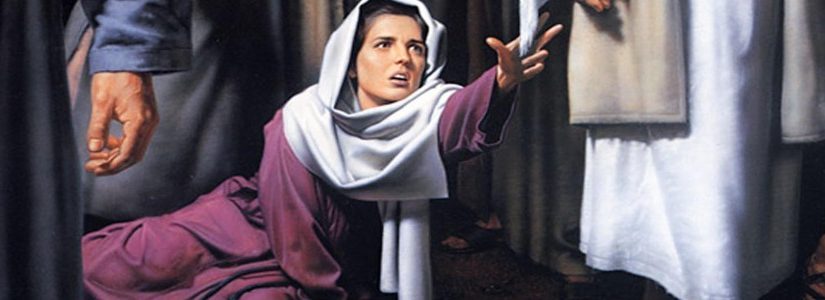
    Which brings us to today’s Gospel.  Two people reach out in very different ways to end suffering and provide healing.  One is a man, who approaches Jesus and falls at his feet, begging the teacher to heal his daughter.  The other is a woman, who dares not make herself known, who sneaks up behind Jesus to touch his clothing.  The situations were different, but what unites them is their faith.  They have faith that reaching out to Jesus in their own way will bring them the healing they desire.

    And there was a pretty serious leap of faith involved for the hemorrhaging woman.  Touch was her enemy.  She had suffered much at the hands of many doctors.  Not only have their ministrations failed to heal her, but they have also left her penniless.  And to touch anyone in her state of ritual impurity makes them ritually unclean too.  So she is totally marginalized: she is a woman in a patriarchal society, afflicted by an enduring and debilitating illness, she has no money to take care of herself, and she is unable to be part of the community or participate in worship.  Things could not have been worse.  Finding the courage to reach out to Jesus, even in her impure state, she is healed by her faith.

    Now please note that that same faith was lacking in the people who were attending to Jairus’s daughter.  Even if they believed that Jesus could cure her illness, she is now dead, and so his assertion that she is merely “sleeping” meets with ridicule and scorn.  So Jesus has to throw out the faithless ones so that they would no longer be an obstacle.  The child cannot reach out to Jesus so he reaches out to her, taking her hand, and raising her up.

    So it’s as simple as that.  An act of faith on the part of the hemorrhaging woman and the synagogue official provide healing and restore life. But how realistically does that match our experience?  I am guessing that those medics threw up a prayer or two in addition to all of the life-saving actions they performed on that nine-year old when he was in the ambulance with them, but the boy still died.  How many of us have prayed faithfully, constantly, only to be met by seemingly deaf ears?  We don’t even have the same opportunity as Jairus and the hemorrhaging woman.  We can’t reach out and touch Jesus in the flesh.  So I would never stand here and tell you that one simple act of faith is all it takes to make all your problems go away.  I always say that faith is not a magic wand.

    But I will also say this: as I have walked with people who have suffered, those who have reached out to Jesus in faith have not gone unrewarded.  Maybe their suffering continued in some way, or even in some cases got worse, but in Christ they found the strength to walk through it with dignity and find peace.  Maybe Jesus won’t always stop the bleeding of our hurts and inadequacies and woundedness.  But through his own blood, he will always redeem us.  We who are disciples need to make those acts of faith if we are to live what we believe.  For those medics I spent the evening with, the conversation of faith didn’t bring the boy back, but it did provide them with healing and peace and a sense that in God’s time, all would be made right.

    I am struck by the Eucharistic imagery at the end of today’s Gospel.  Jesus comes to the home of Jairus and finds his daughter asleep in death.  He reaches out to her, touches her, and raises her up.  Then he instructs those around her to give her something to eat.  We gather for this Eucharistic banquet today and Jesus comes to us, finding us asleep in the death of our sins.  Because we are dead in our sins, we can hardly reach out to touch our Lord, but he reaches out to us.  He takes our hands, raises us up, and gives us something to eat.

    We come to the Eucharist today with our lives in various stages of grace and various stages of disrepair.  At the Table of the Lord, we offer our lives and our suffering and our pain.  We bring our faith, wherever we are on the journey, and reach out in that faith to touch the body of our Lord.  We approach the Cup of Life, and whatever emptiness is in us is filled up with grace and healing love, poured out in the blood of Christ.  As we go forth, glorifying the Lord by our lives this day, all of our problems may very well stay with us, remaining unresolved at least to our satisfaction.  Our suffering and pain may very well be with us still.  But in our faith, perhaps they can be transformed, or at least maybe we can be transformed so that we can move through that suffering and pain with dignity and find peace.  And as we go forth, perhaps we can hear our Lord saying to us the same words he said to the woman with the hemorrhage: go in peace, your faith has saved you.

  • Tuesday of the Twelfth Week of Ordinary Time

    Tuesday of the Twelfth Week of Ordinary Time

    Today’s readings

    When I hear that the road that leads to life is narrow and constricted, that makes me a bit uneasy.  The reason for that is I am a lousy packer.  I pretty much always over-pack, not being able to shake the worry of not having something I might need.  What if the weather is cold?  I’ll need some warm clothes.  If it’s hot, I sure won’t want those warm clothes then, so I’ll need something light.  Better take along some Advil in case I get a headache, and well, the list goes on and on.  I just hate packing to go on a trip, because I always imagine what I pack will take up less space than it does.

    I think that can be true of us on our spiritual journeys as well.  We want to fill up every silence we have.  Better take our mobile phones, a book in case we’re bored, the tablet so we’ll be able to get our email, and who knows what else.  Heaven forbid we should let the silence be silent so that our God can speak to us.  I’m every bit as guilty of over-packing in that way too.

    But God doesn’t want our tablets or cell phones.  God just wants us.  He wants us to give him ourselves completely.  Sure, there’s an easier way to go, unfortunately that particular way leads to destruction.  But if we give up what holds us back, then travelling that narrow road to life won’t be so hard.

    What do we need to unpack from our lives today?

  • Tuesday of the Eleventh Week of Ordinary Time

    Tuesday of the Eleventh Week of Ordinary Time

    Today’s readings

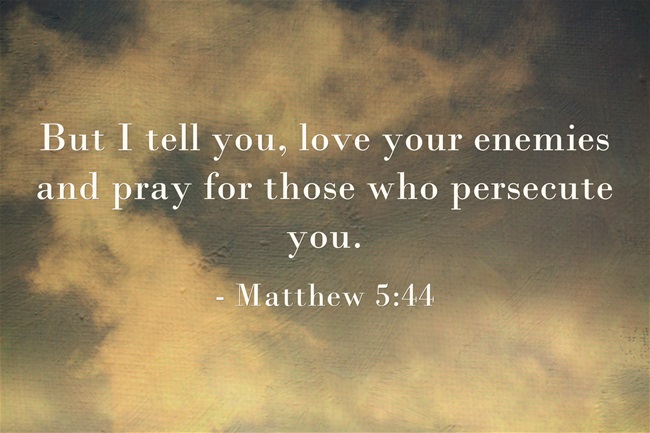
    Today’s Gospel is one that’s certainly very familiar to us.  But if we’re honest, every time we hear it, it must give us a little bit of uneasiness, right?  Because, yes, it is very easy to love those who love us, to do good to those who do good to us, to greet those who greet us.  And we know that Jesus is right – he always is! – there is nothing special about loving those we know well, and we certainly look forward to greeting our friends and close family.

    But that’s not what the Christian life is about.  We know that, but when we get a challenge like today’s Gospel, it hits a little close to home.  Because we all know people we’d rather not show kindness to, don’t we?  We all have that mental list of people who are annoying or who have wronged us or caused us pain.  And to have to greet them, do good to them, even love them, well that all seems too much some days.

    And yet that is our call.  We’re held to a higher standard than those proverbial tax collectors and pagans that Jesus refers to.  We are people of the new covenant, people redeemed by the life, death and resurrection of Jesus.  And so we have to live as if we have been freed from our pettiness, because, in fact, we have.  We are told to be perfect, as our heavenly Father is perfect.  That’s a tall order, but a simple kindness to one person we’d rather not be kind to is all it takes to make a step closer.

  • The Eleventh Sunday of Ordinary Time

    The Eleventh Sunday of Ordinary Time

    Today’s readings

    I really don’t have a green thumb, but for a while when I was young, I was very interested in growing things. My grandmother on my dad’s side had quite the green thumb: anything she planted grew to be quite prolific.  I have whatever the opposite of that is! But still, I have always been fascinated by things growing from tiny little seeds to become large plants; no matter if they become beautiful flowers to decorate the landscape, or delicious vegetables to bring to the table.

    It’s really a miracle when you think about it.  This tiny little dried-up thing looks for all the world to be useless and dead.  But when it gets planted in the earth, and watered by the rains, new life springs forth from it, and a tiny sprout appears, which grows day by day to become a fully mature plant by the summertime. Sure, we or the farmers might do a little work to nurture it and water it and keep the weeds and rabbits away, but we don’t make the plant grow: day by day, almost imperceptibly, growth happens.

    And this is the image that Jesus uses today to describe the Kingdom of God.  These parables are a lens through which we are to see life: the life of God, and our life, and how they all come together.  And it’s – I think – an encouraging message that we hear today. Today, our Lord assures us that the Kingdom of God doesn’t come about all at once, in great power and glory, or in some kind of dramatic explosion.  The Kingdom is like those crops that grow to be fully mature plants and yield a harvest, but it happens little by little, almost imperceptibly, always growing, but we know not how.  And the Kingdom is miraculous like a mustard seed which one day is the tiniest of all seeds and eventually becomes a large plant that gives shelter to the birds of the air.

    Here’s why I think these parables are so encouraging.  Because we all want to be part of the Kingdom of God.  We all want to grow in our faith.  We all want that faith to sustain us in good times and bad, and eventually lead us to heaven.  That’s why we’re here today.  But the truth is, if you’re like me, you get frustrated sometimes because it doesn’t seem like there’s any real growth going on.  We commit the same sins despite our firmest resolve.  We take one step forward and two steps back.  But still, like the seed scattered on the land, being here in church today isn’t nothing.  Our prayers, however lacking they may seem to be, are still a manifestation of our desire to be in relationship with God.  And God takes those tiny seeds of faith and waters them with grace and the sacraments and the life of the Church, until one day, please God, our faith makes a difference in our lives and the lives of those around us.  And whatever we start with in the life of faith may be as tiny as a mustard seed, but in God’s hands, it can become that shrub that is a shelter for those who are flying around in life from one thing to the next, without any real hope except for Christ in us.

    We may not be perfect yet, friends, but we’re graced.  And grace will perfect whatever we sow and make our tiny little beginnings into great things, all for the Kingdom of God.

  • Saturday of the Tenth Week of Ordinary Time

    Saturday of the Tenth Week of Ordinary Time

    Today’s readings

    One of the most vivid Church memories I have was of a friend who was making final vows as a Benedictine many years ago now. It was a very beautiful Mass, but what really stood out so vividly to me was that, while the assembly sang the Litany of the Saints and my friend lie prostrate before the altar, the abbot and some other monks placed the funeral pall over him.  This symbolized that he had “died” to his former life, in order to take up his new life in service to Christ.

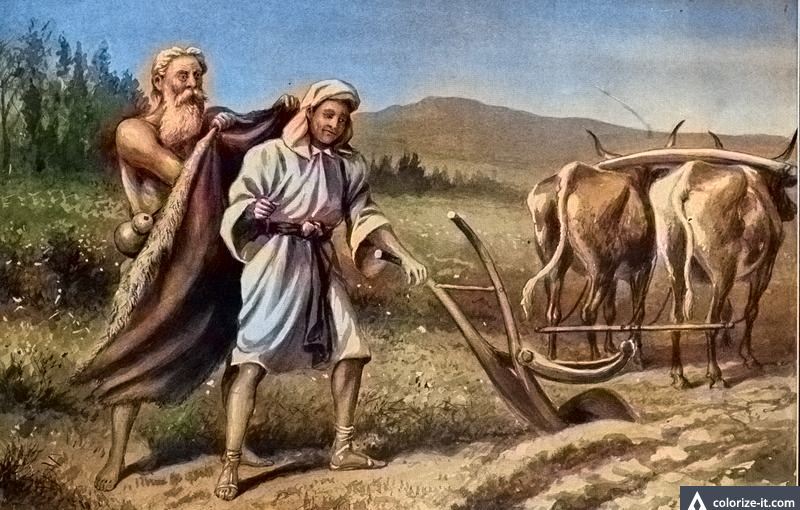
    So when we hear today’s first reading about Elijah placing his cloak over Elisha, it calls that memory to mind.  Elisha knew immediately what the action meant: he had been called to serve as prophet to succeed Elijah.  So after protesting he was not ready, he immediately set out to put to death everything in his life that held him back: he slaughtered his oxen and burned the plowing equipment to cook their flesh to feed his people. Then he freely left it all behind to serve God.

    We too have, at some point, the mantle placed upon us.  Whatever our calling is, it involves a death to whatever has come before so that we can freely serve in whatever way God is calling us.  For most, it won’t be quite so dramatic, but there is that death. For example, for those getting married, it’s a death to the single life so that they can serve their spouse in love and fidelity.  We have to be ready to die to whatever holds us back from fulfilling God’s call, so that we can pray with the Psalmist today, “You are my inheritance, O Lord.”

  • Friday of the Tenth Week of Ordinary Time

    Friday of the Tenth Week of Ordinary Time

    Today’s readings

    We know a little of the back story on our first reading, because we’ve been hearing it this week. You recall that Elijah has just come from soundly defeating all of the pagan “prophets” of Baal, which was very embarrassing to King Ahab and especially to Queen Jezebel, who vowed to take Elijah’s life in retaliation. So he has been hiding out in a cave, not for protection from inclement weather, but for protection from those who sought his life. In the midst of this, God asks Elijah why he is here. Elijah explains that the people of Israel have been unfaithful and have turned away from God, not listening to Elijah’s preaching, and they have put all the other legitimate prophets to death. Elijah alone is left.

    So God says that he will be “passing by” which in biblical language means that God will be doing a “God thing.” God will be revealing his presence. And so we have the story: there is a mighty wind, an earthquake and even fire. But Elijah only recognizes the Lord’s presence in the tiny whispering sound. After everything that had happened to him, mighty wind, an earthquake and a fire were just more of the same. But when there was that tiny whispering sound, Elijah heard the Lord speaking to him loud and clear. Then and there he receives instruction on how to move forward.

    In our own prayer lives, it’s good to be attentive to the tiny whispering sound. We too have a noisy life – not because we are running from our enemies like Elijah, but more because we have created enemies to a recollected life. The television, the phone, the tablet, the computer, all of that and more vie for our attention in every moment. And then we lament that we can’t hear God’s direction, can’t figure out what it is we’re supposed to do in this situation or that.

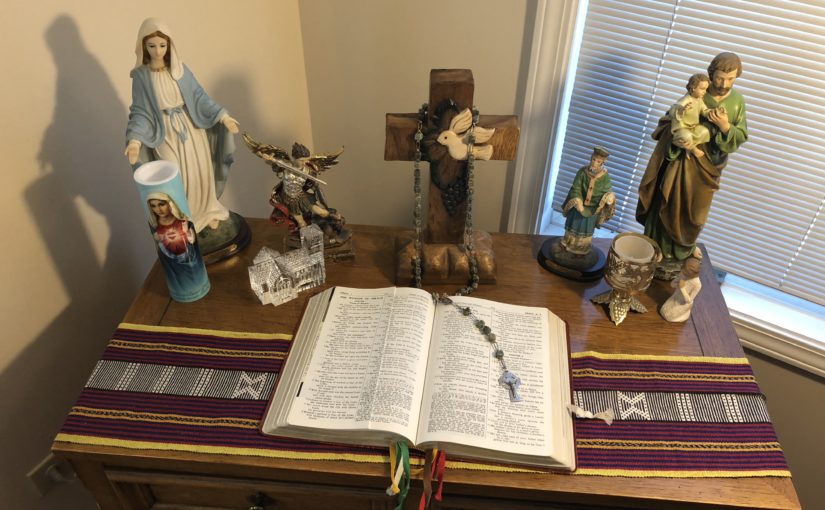
    In my own life, I have created a little space in my room for a prayer altar. It has my bible, a Crucifix, an icon of Jesus the Teacher, a statue of Saint Patrick, one of the Blessed Virgin one of Saint Joseph, one of Saint Michael the Archangel, and a candle. Now, when I want to hear the Lord, I can turn off everything, settle into a chair, and reflect. And the Lord has been speaking, was all along to be honest. Just now I’ve created a space, like Elijah’s cave, where I can hear him. God is always doing a “God thing” among us. We just have to make it our care to notice.

  • Thursday of the Tenth Week of Ordinary Time

    Thursday of the Tenth Week of Ordinary Time

    Today’s readings

    Sometimes the Gospel just makes good common sense.  Today, the Gospel expands on the Golden Rule, something we should all have learned when we were very little.  As my grandmother used to say, if you can’t say something nice, don’t say anything at all.  But actually what Jesus is telling us today goes a bit deeper even than that.  Jesus equates the hatred in our hearts with outright murder.  The Catechism of the Catholic Church takes up this theme from this very Gospel reading: “Deliberate hatred is contrary to charity. Hatred of the neighbor is a sin when one deliberately wishes him evil. Hatred of the neighbor is a grave sin when one deliberately desires him grave harm. ‘But I say to you, Love your enemies and pray for those who persecute you, so that you may be sons of your Father who is in heaven.’” (CCC, 2303)

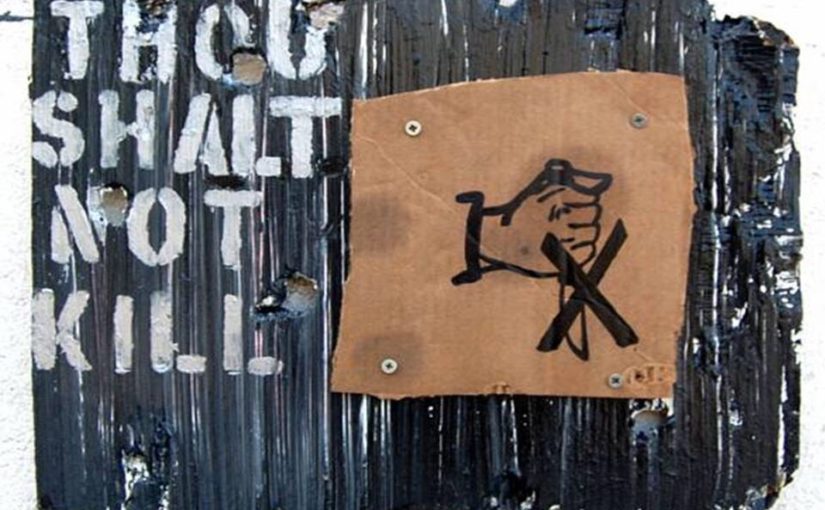
    Today might be a good time for us to examine our consciences for sins against the fifth commandment.  Jesus says that these include murder and abortion, certainly.  But also hatred, vengeance and anger.  This might be a good time for us to call to mind those we have yet to forgive, and to pray for the grace to forgive them.  Or at least the grace to want to forgive them.  This might be a good time for us to look deep within us and ferret out any traces of racism, which is simply hatred directed at a certain group or race.  Casual racist jokes and stereotyping are evidence of a hatred that may be buried deep within us that comes out in inappropriate ways.  Today’s Gospel even hints that gossip, backbiting, and sarcasm directed at a brother or sister in Christ is an attitude that detracts from the dignity of another’s life and has no place in the heart or mind of the disciple.

    “I tell you, unless your righteousness surpasses that of the scribes and Pharisees, you will not enter into the Kingdom of heaven,” Jesus says to us today.  Our witness to the life and dignity of the human person must be absolutely above reproach, or our witness for life is a sham.  And worse than that, we will have opted out of the Kingdom of heaven.

  • The Tenth Sunday of Ordinary Time: Where are you?

    The Tenth Sunday of Ordinary Time: Where are you?

    Today’s readings

    Where are you?

    This is the question God asked Adam and Eve early on in our first reading today.  And for them, the answer to the question was that they were not in an especially good place.  We know the story: God had given them everything they need to live in the Garden of Eden, instructing them that the only thing they could not do was eat from the fruit of the tree in the center of the garden.  The fall was already at work in them even then, because they found that the one thing they were not permitted to do was the one thing they wanted to do more than anything, and so they give into the seductive suggestions of the serpent and eat the fruit anyway.

    They soon find that they cannot hide from their sin: they are naked in the garden, and the sin is apparent, and so they do what fallen human beings have done ever since: they try to hide from God.  Which would certainly be easy to do if God did not create man and woman out of love for them.  But he did that, and continued to seek relationship with them, and so he asks the question, the answer to which he certainly knows: “Where are you?”

    Explaining that they had found their nakedness, the weight of their sin is apparent.  They desired something more than they desired God. That’s what sin is.  And what ensues is the first recorded instance of “passing the buck:” the man blames the woman (and also blames God for putting the woman in the garden with him in the first place), the woman blames the serpent. So it has gone ever since: we desire something more than God, that sinful desire drags us down, we try to hide from God, and when we can’t, we blame someone else.  Sin has entered the world and now darkens it in ways that are heartbreaking.

    Where are you?

    If you’re not seeing the face of God in your life; if you find yourself desiring something more than you desire God and the blessings God is giving you, it’s likely you’re not in a very good place right now.  Maybe we have just lost track of where we are, who we are and where we should be going.  Maybe we just plod along, very busy, very scattered by the rush and routine.  Or maybe, like Adam, we are hiding out, afraid to face or deal with something that needs addressing.

    But that’s no way for us to live our lives, friends.  God made us out of love, made us for love, made us to love, and he pursues us no matter how far we have wandered or to what depth we have fallen.  If we come clean with God, name our sin and refuse to blame someone else, we can have forgiveness, we can have mercy.  We can have God.

    That “unforgiveable sin” of which our Gospel seeks is exactly the kind of thing that got us into trouble in the first place.  It’s not something we’ve said or done to someone else, or even to God, but instead hiding from God and not wanting his mercy.  It’s like having a world-class chef offer you a sumptuous meal, but refusing to eat it because you don’t want to sit down with him and eat, so you go away hungry.  If you refuse God’s mercy because you don’t want his grace to change your life, you go away unforgiven.  You sin against the Holy Spirit.  It’s not that God won’t forgive, it’s that we don’t want to let God change our nakedness.

    Where are you?

    In these summer months, sometimes our routine changes.  Maybe there isn’t that constant daily hustle of getting the kids to school and then practices and activities and all the other things that make life crazy. Perhaps there’s a little leisure time, maybe even a vacation that provides a little more room for us to reflect on our lives and where we are and where we are going.  This is the time to see our lives for what they are, and come humbly to our God if we have been hiding.

    Sin is not who we are, sin is not part of human nature.  Sin has certainly entered our world and we have to deal it in our daily lives, but it cannot ever define us unless we let it.  Jesus was the most perfect example of human nature, completely free from sin. We can approach that glory when we stop hiding ourselves from God, when we let God into our lives, and when we let his grace change us into what we were created for.  We are better than our sins.  God doesn’t ever stop pursuing us in love.  All we have to do is answer his call and say, “I’m right here, God. Standing before you in need of your mercy.  Pleading for your grace.  Wanting you and what you want for me more than anything.  I’m right here.”  Maybe we can make that our prayer today.  I know it’s going to be mine.

    Where are you?

  • Thursday of the Ninth Week of Ordinary Time

    Thursday of the Ninth Week of Ordinary Time

    Today’s readings

    Truth is quite a topic these days. Mostly because people choose to define truth in any way that suits them. Absolute truth is taken to be authoritarianism and it’s the real death of any kind of conversation that would lead to conversion. It’s the kind of thing where some people might dote on their pets and go to great lengths to cure their illnesses, yet they would be okay with abortion. When we allow ourselves to accept moral relativism, then any thing goes. Yet it is absolute truth that is at the center of today’s Liturgy of the Word.

    Saint Paul exhorts his friend Timothy to be scrupulously careful to teach and defend the truth – “without deviation,” as he says at the end of today’s first reading. And we have to be that scrupulous in teaching truth, because the Truth is Christ. If we persevere in the Truth, we shall reign with Christ, but if we deny him he will deny us. Being denied by Christ our mediator and Savior is tantamount to eternal death. That’s what comes from deviating from the Truth.

    Jesus brings the Truth to life in the Gospel reading by presenting us with the basis of all Christian life: love of God and love of neighbor. This is the Truth, it is the basis of the Gospel, it is the summation of all the law and the prophets, which is what the scribe was seeking of Jesus. If we accept this truth, we too will not be far from the Kingdom of God.

  • The Most Holy Body and Blood of Christ

    The Most Holy Body and Blood of Christ

    Today’s readings

    Today we celebrate with great joy one of the most wonderful feasts on our Church calendar, the Most Holy Body and Blood of Christ.  Through this greatest of all gifts, we have been made one with our God who loves his people beyond all imagining.  We experience this love in perhaps one of the most basic ways of our human existence, which is to say by being fed.  Learning to satisfy our hunger is one of the first things we learn; we learn who we can depend on and develop close relationships with those people.  Today’s feast brings it to a higher level, of course.  The hunger we’re talking about is not mere physical hunger, but instead a deep inner yearning, a hunger for wholeness, for relatedness, for intimate union with our God.  This is a hunger that we all have, and despite our feeble attempts to do otherwise, it cannot be filled with anything less than God.

    What we see in our God is one who has always desired deep union with his people.  Salvation began with the creation of the whole world, the saving of Noah and those on the ark, the covenant made with Abraham, the ministry of the prophets, and ultimately culminated in the life, death, and resurrection of Christ, the acceptable sacrifice which brings salvation to the whole world.  God never lost interest in his creation; he didn’t set the world in motion and then back off to leave everything to its own devices.  God has time and again intervened in human history, offering us an olive branch, seeking renewal of our relationship with him, and bringing us back no matter how far we have fallen.

    God has repeatedly sought to have a covenant with us.  Eucharistic Prayer IV beautifully summarizes God’s desire. It says: “You formed man in your own image and entrusted the whole world to his care, so that in serving you alone, the Creator, he might have dominion over all creatures. And when through disobedience he had lost your friendship, you did not abandon him to the domain of death.  For you came in mercy to the aid of all, so that those who seek might find you.  Time and again you offered them covenants and through the prophets taught them to look forward to salvation.”  And unlike human covenants, which have to be ratified by both parties, and are useless unless both parties agree and commit to them, the covenant offered by God is effective on its face.  God initiates the covenant, unilaterally, out of love for us.  Our hardness of heart, our sinfulness, our constant turning away from the covenant does not nullify that covenant.  God’s grace transcends our weakness, God’s zealous love for us and constant pursuit of us is limitless.

    Today’s Liturgy of the Word shows us the history of the covenant.  The first reading recalls the covenant God made with the Israelites through the ministry of Moses.  The people agree to do everything the Lord commanded, and Moses seals the covenant by sprinkling the people with the blood of the sacrifice and saying, “This is the blood of the covenant that the LORD has made with you in accordance with all these words of his.”  The writer of the Letter to the Hebrews makes the point that if the blood of sacrificed animals can bring people back in relationship with God, how much more could the blood of Christ draw back all those who have strayed.  Christ is the mediator of the new covenant, as he himself said in the Gospel: “This is my blood of the covenant, which will be shed for many.”

    And so we, among the many, benefit from Christ’s blood of the covenant.  The preface for the Eucharist Prayer today says, “As we eat his flesh that was sacrificed for us, we are made strong, and, as we drink his Blood that was poured out for us, we are washed clean.”  God’s desire for covenant with us cannot be stopped by sin or death or the grave because his grace is mightier than all of that.

    We disciples are called then to respond to the covenant.  Having been recipients of the great grace of God’s love, we are called to live the covenant in our relationships with others.  Which isn’t always the easiest thing to do.  Sometimes people test our desire to be in covenant with them; sometimes they don’t even want to be in covenant with us.  But the model for our relationships with others is the relationship God has with us.  And so sometimes we have to unilaterally extend the covenant, even if the other isn’t willing, or doesn’t know, that we care for them.  God wants to offer the covenant to everyone on earth, and he may well be using us to extend the covenant to those he puts in our path.

    We do this in so many ways.  Here at Saint Mary’s, one of the important ways we do that is through the Interfaith Food Pantry which serves so many families each month.  Often food pantry donations dwindle in the summer when we are thinking about other things, or are away on vacation.  But the need for their ministry does not change.  One important way that we can extend the covenant of grace that we have received is to feed the hungry.  I would like to invite all of you to think about a donation of food for the poor the next time you do your grocery shopping.  It will go a long way to helping needy families through the summer months.

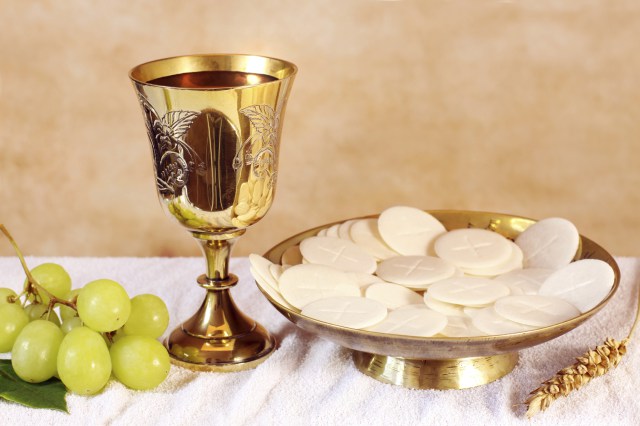
    God’s covenant with us is renewed every day, and celebrated every time we come to receive Holy Communion. When we receive the Most Holy Body and Blood of Christ in the Eucharist, we are renewed in the covenant, strengthened in grace and holiness, and brought nearer to our God who longs for us.  We who are so richly graced can do no less than extend the covenant to others, helping them too to know God’s love for them, feeding them physically and spiritually.

    The Psalmist asks today, “How shall I make a return to the LORD for all the good he has done for me?”  And the answer is given: by taking up the chalice of salvation, drinking of God’s grace, renewing the covenant, and passing it on to others.  May the Body and Blood of Christ keep us all safe for eternal life!