Category: Lent

  • Thursday of the First Week of Lent: Persistent Prayer

    Thursday of the First Week of Lent: Persistent Prayer

    Today’s readings

    The readings for these early days of Lent are focused on teaching us how to accomplish the various disciplines of Lent – which really are the various disciplines of the spiritual life. The whole point is that we enter more deeply into the spiritual life during these days of Lent, with a view toward growing in holiness. Today’s discipline then, I think, would be persistence in prayer. And this is a tough one, because I know very well that there are some of you here, maybe most of you, who have been frustrated by unanswered prayer, or at least prayer not answered in the way that you had hoped. So bear with me.

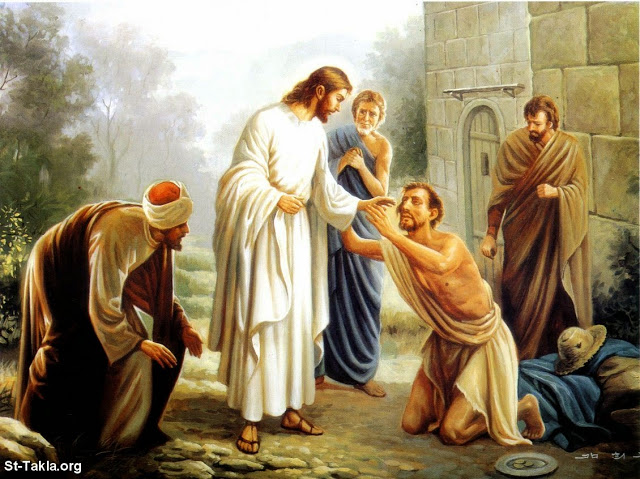
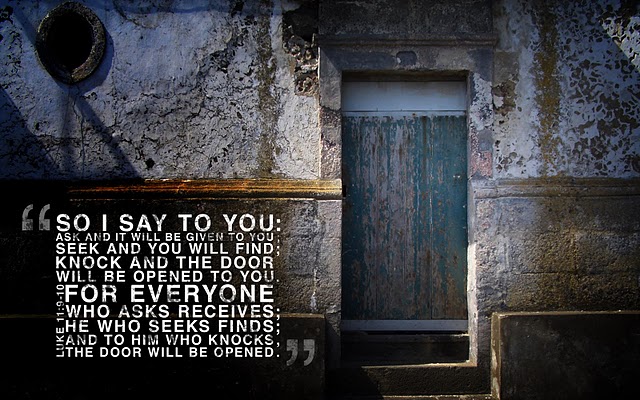
    In the first reading, we have Queen Esther, who is really between a rock and a hard place. The king does not know she is Hebrew, and worse than that, if she goes to the king without being summoned, she could well lose her life. But, Mordecai, the man who was her guardian and raised her as his own daughter, revealed to her that the king’s advisor had planned genocide against the Jews, and she was the only person in a position to beg the king to change his mind. So today, she prays that her life, as well as those of her people would be spared. Esther prayed for three days and nights that her prayer would be answered, and her persistence was rewarded. She received the reward that Jesus promised when he said, “Ask and it will be given to you; seek and you will find; knock and the door will be opened to you.”

    So we see in Esther’s case the beauty of persistent prayer answered. And we have in the Gospel Jesus’ directive to be persistent in prayer. But that brings us back to the issue I started with: how frustrating it is when prayer is not answered. I think that what we always need to remember about prayer is that it is not like wishing on a star or anything like that. There’s no magic to our words. We may or may not be rewarded with the exact gift we pray for; in fact, that rarely happens. But we will always be rewarded with the loving presence of our God in our lives. In fact, it could well be that God’s answer to our prayer is “no” – for whatever reason – but even in that “no” we have the grace of a relationship that has been strengthened by our prayerful persistence.

    The Psalmist prays, “Lord, on the day I called for help, you answered me.” This Lent, may the discipline of persistence in prayer lead us to a renewed and enlivened sense of the Lord’s will and presence in our lives.

  • The First Sunday of Lent: Remembering Who We Are

    The First Sunday of Lent: Remembering Who We Are

    Today’s readings

    Perhaps the greatest sin of modern times, maybe of all time, is that we sometimes forget who we are. Politicians forget that they are elected officials, given the trust of the people they serve, and so they become embroiled in a scandal or sell themselves to special interest groups. Church leaders forget that they are ordained by God for holiness and so they give in to keeping up appearances, and bring scandal to the Church. But it’s not just these people; all of us fall to this temptation at one time or another – maybe several times – in our lives. Young people forget that they have been raised in good Christian, loving homes, and in their quest to define themselves, turn away from the values they have been taught. Adults forget that they are vocationally called to love their spouse and their children and so get caught up in their careers to the detriment of their family. Think of any problem we have or any scandal that has been endured and deep at the core of it, I think it stems from forgetting who we are.

    Forgetting who we are changes everything for the worse. It makes solving problems or ending scandal seem insurmountable: we have to constantly cook up new solutions to new problems, because we’ve gone in a new direction on a road that never should have been traveled. That was the scandal of Eden, and the scandal of the Tower of Babel, among others. Once we’ve forgotten who we are and acted impetuously, it’s hard to un-ring the bell.

    One of the consequences of forgetting who we are is that we forget who God is too. We no longer look to God to be our Savior, because we instead would like to solve things on our own. Perhaps we are embarrassed to come to God because we are deep in a problem of our own making. We see this all the time in our lives: who of us wants to go to a parent or boss or authority figure – or anyone, really – and tell them that we thought we had all the answers but now we’ve messed up and we can’t fix it and we desperately need their help? If that’s true then we’re all the more reluctant to go to God, aren’t we?

    This forgetting who we are, and forgetting who God is, is the spiritual problem that our readings are trying to address today. Moses meets the people on the occasion of the harvest sacrifice, and challenges them not to make the sacrifice an empty, rote repetition of a familiar ritual. They are to remember that their ancestors were wandering people who ended up in slavery in Egypt, only to be delivered by God and brought to a land flowing with milk and honey. And it is for that reason that they are to joyfully offer the sacrifice.

    St. Paul exhorts the Romans to remember who Jesus was and to remember his saving sacrifice and glorious resurrection. They are to remember that this faith in Christ gives them hope of eternity and that, calling on the Lord, they can find salvation.

    But it is the familiar story of Christ being tempted in the desert that speaks to us most clearly of the temptation to forget who we are and who God is. The devil would like nothing more than for Jesus to forget who he was and why he was here. He would have Jesus forget that real hunger is not satisfied by mere bread, but must be satisfied by God’s word. He would have Jesus forget that there is only one God and that real glory comes from obedience to God’s command and from living according to God’s call. He would have Jesus forget that life itself is God’s gift and that we must cherish it as much as God does.

    But Jesus won’t forget. He refuses to turn stones into bread, remembering that God will take care of all his real hunger. He refuses to worship Satan and gain every kingdom of the world, remembering that he belongs to God’s kingdom. He refuses to throw away his life in a pathetic attempt to test God, remembering that God is trustworthy and that he doesn’t need to prove it.

    The way that we remember who we are as a Church is through Liturgy. In the Liturgy of the Word, we hear the stories of faith handed down from generation to generation. These are the stories of our ancestors, from the Old Testament and the New. In the Liturgy of the Eucharist, we re-present the story of Christ’s Passion and death, and as we do that, it becomes new for us once again. There is no better way for us to remember who we are as a people than to faithfully participate in the Sacred Liturgy.

    And so we come to this holy place on this holy day to remember that we are a holy people, made holy by our God. We remember who we are and who God is. We rely on the Spirit’s help to reject the temptations of Satan that would call us to forget who we are and instead become a people of our own making. We have come again to another Lent. Lent is a time of conversion. For the people in our Rite of Christian Initiation for Adults – RCIA – it is a time of conversion from one way of life to another. For the rest of us, Lent is a time of continued re-conversion. Our Church teaches us that conversion is a life-long process. In conversion, we see who our God is more clearly and we see ourselves in a new, and truer light – indeed we see who we really are before God.

    That is life in God as it was always meant to be. Remembering our God, remembering who we are, we have promise of being set on high, as the Psalmist proclaims today. This Lent can lead us to new heights in our relationship with God. Praise God for the joy of remembering, praise God for the joy of Lent.

  • Friday after Ash Wednesday

    Friday after Ash Wednesday

    Today’s readings

    A lot of people say they aren’t giving up something for Lent, they’re just going to try to do something positive. I think that can be a little vague, to be honest. I usually tell people it doesn’t just have to be one or the other. Indeed, today’s Liturgy of the Word tells us that it should actually be both.

    Fasting is important because it helps us to see how blessed we are. It is important because it helps us to realize that there is nothing that we hunger for that God can’t provide. Fasting teaches us, once again, that God is God and we are not. This is important for all of us independent-minded modern-day Americans. We like to be in charge, in control, and the fact is that whatever control we do have is an illusion. God is in control of all things, even when it seems like we are in chaos. Fasting teaches us that we can do without the things we’ve given up, and that God can provide for us in much richer ways. Fasting is absolutely essential to having an inspiring, life-changing Lent, and I absolutely think that people should give things up for Lent.

    But giving something up for Lent does not excuse us from the obligation to love our neighbor. This falls under the general heading of almsgiving, and along with fasting and prayer, it is one of the traditional ways of preparing our hearts for Easter during Lent. We might be more mindful of the poor, contributing to our food pantry or a homeless shelter or relief organization. We might reach out by actually serving in some capacity, like at a soup kitchen, or spending an hour at PADS. We also might give the people closest to us in our lives a larger portion of the love that has been God’s gift to us, in some tangible way.

    Today’s first reading reminds us that fasting to put on a big show is a sham. Fasting to bring ourselves closer to God includes the obligation of almsgiving and prayer. Together, these three facets of discipleship make us stronger Christians and give us a greater share of the grace that is promised to the sons and daughters of God.

  • Thursday after Ash Wednesday: The Road Less Traveled

    Thursday after Ash Wednesday: The Road Less Traveled

    Today’s readings

    When I hear today’s readings, I very often think of the poem, “The Road Less Traveled,” by Robert Frost. It goes, of course, like this:

    Two roads diverged in a yellow wood
    and sorry I could not travel both
    And be one traveler, long I stood
    and looked down one as far as I could
    to where it bent in the undergrowth;
    Then took the other, as just as fair,
    and having perhaps the better claim
    because it was grassy and wanted wear;
    though as for that, the passing there
    had worn them really about the same,
    And both that morning equally lay
    in leaves no feet had trodden black.
    Oh, I kept the first for another day!
    Yet knowing how way leads on to way,
    I doubted if I should ever come back.
    I shall be telling this with a sigh
    Somewhere ages and ages hence:
    Two roads diverged in a wood, and I –
    I took the one less traveled by,
    and that has made all the difference.

    I think of that poem because today’s readings speak, more or less, to the same sentiment, but with a more radical and crucial twist. Frost’s opinion is that both roads are equally valid, he simply chooses to take the one most people don’t. But the Gospel tells us that there really is only the one valid path, and that certainly is the road less traveled. We commonly call it the Way of the Cross.

    Moses makes it clear: he sets before the people life and death, and then begs them to choose life. Choosing life, for the Christian, means going down that less traveled Way of the Cross, a road that is hard and filled with pitfalls. And maybe the real problem is that there is a choice. Wouldn’t it be great if we only had the one way set before us and no matter how hard it would be, that was all we could choose? But God has given us freedom and wants us to follow that Way of the Cross in freedom, because that’s the only way that leads to life; the only way that leads to him.

    Our Psalmist says it well today:

    Blessed the one who follows not
    the counsel of the wicked
    Nor walks in the way of sinners,
    nor sits in the company of the insolent,
    But delights in the law of the LORD
    and meditates on his law day and night.

  • Ash Wednesday

    Ash Wednesday

    Today’s readings

    The Scriptures today call us to repentance, which is an important spiritual theme for Lent. In fact, if it were not for our need for repentance, we wouldn’t need Jesus, he wouldn’t have to have taken on flesh, he wouldn’t have to suffer and die. But we do need a Savior, and so Jesus came and he did all of that – for us. He didn’t come and do all that just because religion in those days was out of whack, or that people in that time were more in need of repentance than people in other times, including our own. He did that because we all have need of repentance, now just as much as always. We all have things we need to let go of and move away from, so that we can return to the Lord, and be happy with him forever. So we all need to repent, in little or big ways.

    Repentance is so much a part of Lent that one of the two instructions we can give when someone comes to us for ashes is “Repent and believe in the Gospel.” The other, of course, is “Remember, you are dust and to dust you shall return.” I tend to use both of these, alternating between the two, and letting the Holy Spirit decide who hears each.   I do that because I think they are both fitting reminders for us as we enter into holy Lent. We have to keep repentance, and our own return to dust one day, in our minds and hearts so that we can long for the salvation God wants to bring us.

    We have come here today for all sorts of reasons. But the most importnat reason we come to Church on this, the first day of Lent, is for what we celebrate on the day after Lent: the resurrection of the Lord on Easter Sunday. Through the Cross and Resurrection, Jesus has won for us salvation, and we have been blessed to be beneficiaries of that great gift. All of our Lenten observance, then, is a preparation for the joy of Easter.

    Lent calls us to repent, to break our ties with the sinfulness and the entanglements that are keeping us tethered to the world instead of free to live with our God and receive his gift of salvation. Our Church offers us three ways to do that: fasting, prayer and almsgiving. Giving things up, spending more time in prayer and devotion, dedicating ourselves to works of charity, all of these help us to deeply experience the love of Christ as we enter into deeper relationship with him. That is Lent, and the time to begin it, as we are told, is now: Now is the acceptable time! Now is the day of salvation!

    And none of this, as the Gospel reminds us today, is to be done begrudgingly or half-heartedly. None of it is to be done with the express purpose of letting the world see how great we are. It is always to be done with great humility, but also with great joy. Our acts of fasting, prayer, and charity should be a celebration of who God is in our lives, and a beautiful effort to strengthen our relationship with him.

    It is my prayer that this Lent can be a forty-day retreat that will bring us all closer to God. May we all hear the voice of the prophet Joel from today’s first reading: “Even now, says the Lord, return to me with your whole heart!”

  • Tuesday of Holy Week

    Tuesday of Holy Week

    Today’s readings

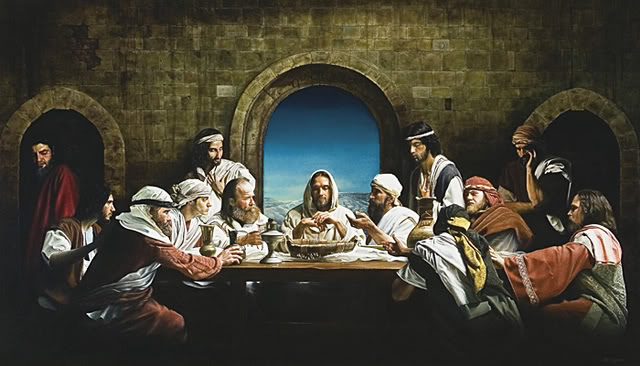
    Today’s Gospel reading contains four of the most chilling words in all of holy Scripture: “And it was night.”  Those narrative words come just after Judas takes the morsel and leaves the gathering.  But the Beloved Disciple didn’t include those words to tell us the time of day.  In John’s Gospel, there is an overriding theme of light and darkness.  The light and darkness, of course, refer to the evil of the world that is opposed by the light of Christ.

    That John tells us it was night meant that this was the hour of darkness, the hour when evil would come to an apparent climax.  This is the time when all of the sins of the world have converged upon our Lord and he will take them to the Cross.  The darkness of our sinfulness has made it a very dark night indeed.

    But we know the end of the story.  This hour of darkness will certainly see Jesus die for our sins.  But the climax of evil will be nothing compared to the outpouring of grace and Divine Mercy.  The darkness of evil is always overcome by the light of Christ.  Always.  But for now, it is night.

    In these Holy days, we see the darkness that our Savior had to endure for our salvation. May we find courage in the way he triumphed over this fearful night.

  • The Fifth Sunday of Lent (Scrutiny III)

    The Fifth Sunday of Lent (Scrutiny III)

    Today’s readings

    “Lord, by now there will be a stench.”

    That’s one of my favorite lines in scripture. It begs the question I want you to pray about this week, which is, “What in your life really stinks?” Because we have to have that stench washed away in order to really live.

    If you know my preaching, you’re not going to be at all surprised about this, but I have to tell you honestly, our Gospel reading isn’t about Lazarus. Yes, he got raised from the dead, so good for him, but he isn’t the center of action in the story. In fact, he’s dead for most of the reading, so he doesn’t play a major part. The action is, of course centered around Jesus, and as I tell our school children, if on a religion test they write something about Jesus, they should always get at least partial credit! Our Gospel today is about Jesus, who through baptism and grace is the remedy for all that stinks in our life.

    So Jesus hears that his friend Lazarus is ill. He knows that Lazarus will die, and he knows that he will raise Lazarus up, so very much like the rest of John’s Gospel, Jesus is in full control. He delays going to see Lazarus because it will give him the opportunity that will increase faith in the other players in the story. So when he arrives, Lazarus has been dead four days. That’s an important detail because it tells us that Lazarus is really, really dead. The Jews believed that the soul of a person hung around for about three days, but after that, well, he or she was gone forever. So if Jesus had raised Lazarus on the second day, no big deal. If on the third day, that would have been a foreshadowing of himself. But on the fourth day, he raises up someone who is really, really dead, someone just like us.

    So just like the man who was born blind last week, we are born dead, in a way. I know that sounds like an oxymoron, but stay with me. We are born dead in our sins, and there is nothing we can do to raise ourselves up out of it except for the grace of God. So the movement in our Gospel today is from life that is so mired in sin that it stinks, to life that is so free of death that burial bands and tombs cannot contain it.

    There are three groups of catechumens in today’s Gospel. The first group is Mary and Martha, those friends of Jesus that are part of John’s Gospel a few times. Here, the rubber meets the road in their faith. Here, like so many of us, they have something tragic happen in their lives, and now they have to grapple with whether their faith helps them with that or not. Mary is so troubled that she doesn’t even go out to meet the Lord until her sister tells her a white lie that Jesus was asking for her. Both she and Martha, when they first see Jesus, complain that he should have come sooner so that he could have saved Lazarus. But Martha has a little faith. She says very importantly that “Even now, I know that whatever you ask of God, God will give you.” That’s the beginning profession of faith. She knows that Jesus has power over life and death. So then they have a little catechesis about life and death and eternity, and at the end of it, Martha professes that Jesus is the Son of God who was coming into the world. The sisters move from their grief, to faith in Jesus, even before he accomplishes the miracle.

    The second group of catechumens is the Apostles. God bless them, they’re still trying to make sense of Jesus. We can’t be too hard on them, because they’re a lot like many of us who are trying to be men and women of faith, but don’t really have all the facts right now. “Let us also go to die with him,” Thomas says. And they will, of course: they have to go through the cross before they see and understand Jesus fully. We too will have to take up our own crosses before we can understand the salvation that Christ has won for us.

    The third group of catechumens is the Jews. A bunch of them are weeping with Mary, and they go with her to see Jesus. Along the way, they complain that if he could heal the man born blind like he did in last week’s Gospel, why couldn’t he have healed Lazarus? But seeing the miracle, they come to believe, in the very last verse of this long reading. They are a lot like those of us who are skeptical for a long time, but see something wonderful materialize in the life of another and finally decide there’s something to this Jesus that’s worth believing in.

    But key to all of these catechumens is that, in order to move to belief, they had to have some kind of stench in their lives washed away. For Martha and Mary, they had to see past their grief. For the Apostles, they had to get over themselves and realize that Jesus was in charge. For the Jews, they had to get past their skepticism and let him perform miracles among them. For all of us, on the journey of faith, some kind of stench has to be washed away, in order to come to full faith in Jesus. And that stench is, of course, sin. The way it gets washed away is in baptism.

    This reading is all about baptism, brothers and sisters in Christ. Is it a foreshadowing of Jesus’ death and resurrection, well maybe a little. But it is more about baptism. Because baptism is a kind of death. As Saint Paul says this morning, baptism is the kind of death that gives life to our mortal bodies. It’s hard for us to imagine that kind of thing when the baptisms we’ve seen are just a mere pouring of water over a baby’s head. But baptism in the early church was full submerging in water while the formula was pronounced, after which they came up out of the water gasping for air. Believe me, they got the connection of baptism with death and resurrection!

    Baptism is what washes away the stench in our lives. It does that with original sin, and if we live our baptism by participating in the sacraments, it does that with the sins of our daily life. The sacrament of Penance is an extension in a way of the sacrament of Baptism, in which the sins of our lives are completely washed away, leaving us made new and alive in ways we couldn’t imagine.

    So today, Jesus sees us dead in the flesh, stinking of our sins. But he calls us forth in baptism, rolling away the stone of sin that keeps us from relationship with him, releasing us from the burial-bands that bind us, and calling us to new life.
  • The Fifth Sunday of Lent (Cycle B)

    The Fifth Sunday of Lent (Cycle B)

    Today’s readings

    “The hour has come for the Son of Man to be glorified.”

    Bill had worked for the company for twenty-seven years, and he loved his job: it was energizing, he worked with great people, he worked for great people. It was a family business, and they treated the people who worked for them like family. They were paid well, had good benefits, and they all worked hard – it was an ideal situation. But, over the years, the brothers who ran the company retired, and sold the company to another in the same business. They were taken over a few years ago by still another company, so it was hard sometimes to remember who they even worked for. It wasn’t family any more –profits were most important, and the quality of work and product wasn’t so important as was the next big presentation for the stockholders. Everyone was trying to get ahead, and they were cutting corners to do it.

    Eventually he became aware that something was really off. What they were billing their biggest clients for, and what they were providing, were two different things. He’d seen the invoices and the sales orders and they didn’t match. And these were government contracts. He checked and re-checked, and there was no getting around it, the disparity was clear. As time went on, he knew he couldn’t live with what was going on. But if he blew the whistle, who was going to have his back? He had a family and needed the job and its benefits. But his faith had informed his conscience and he knew he couldn’t just look the other way.

    His hour had come.

    Many of us have to face our own “hours.” A teenager says his friends are constantly getting drunk and he does not want to join them. As a result he loses those friends. A parent objects to athletic practices for her children on Sunday morning. As a result, her child does not make the team. Our hour comes whenever our identity is on the line, when we are called on to make sacrifice, when we must make a decision that will cost us. The “hour” often puts our choices at odds with others and we must decide if we will live out and, in a way, die for what we believe.

    And so, maybe we can relate a bit to Jesus today. His hour had come, the hour for him to be glorified, sure, but it was also an hour that would lead first to his death. He knew this very well. In John’s Gospel, none of this is a surprise for Jesus – he is not dragged to the cross, there is no Garden of Gethsemane moment where he begs for the cup to be taken from him. Instead, John’s Gospel has Jesus in full control. He knows why he came, he knows that the hour is at hand, and he freely lays down his life for all of us.

    We are in the “homestretch” of Lent right now. Maybe this would be a good time to look back on our own “hours” and see how we’ve handled them. Have we stood for what we believe and died a little in the process? Or have we given in to the world and gone with the flow and lost our faith in the process? Chances are we are all somewhere on that journey, and now is a good time for us to return if we’ve gotten off track. Go to confession, maybe during our mission this week, and make plans to live our faith anew. It would be great if we could enter into the glory of Easter, knowing that we have made decisions that make our lives new.

    The hour has come for the Son of Man to be glorified. We know how he responded and what he gave for us. What are we willing to give for him?

  • The Fourth Sunday of Lent (Scrutiny II)

    The Fourth Sunday of Lent (Scrutiny II)

    Today’s readings

    Today’s Liturgy calls us to clear up our clouded vision and become people of light.  The gospel gets at that pretty quickly, healing the man born blind in the first couple of minutes of what is admittedly a pretty long reading.  And that’s a good thing because, honestly, who cares about the man born blind?  I know that sounds terrible, but he lived a couple thousand years ago, and he was healed, so you know, good for him, but how does that affect us?  I’ll tell you how it affects us: the man born blind is us.  We all have affected vision: none of us sees others or even sees ourselves as God does. The first reading then is a wake-up call to us.  And we have to decide today if we are the man born blind who is easily and quickly healed, or if we want to be the Pharisees who, at the end of the day, never regain their sight because, well, they just don’t want to.

    So maybe you’re asking the same question those Pharisees asked, “surely we are not also blind, are we?”  Of course we are.  We are, first of all, born blind. We don’t have a way of seeing the Truth that is in front of us; we can’t acknowledge that Jesus is the Christ and the King of our lives. It takes baptism to cure that born blindness in us. Secondly, we have a kind of blindness that affects us all through our lives. We often lose our vision and wander off the path to life. We are affected by temptation, by cyclical sin and by the darkness of our world. That’s why we have Lent: to realize our brokenness and to accept the healing power of Christ.  Lent calls us to remember that we are dust, that we are broken people fallen into sin, but it also proclaims that none of that is any match for the power of Christ risen from the dead, if we just let him put a little mud on our eyes.

    Today’s Gospel then is a kind of journey to clearer vision.  We are all born blind, in a sense, and it takes the presence of Jesus to clear our vision.  Just as the man born blind was sent to the pool of Siloam, we too are sent to the waters of baptism, which clears our eyes and helps us to really see.  Our Elect, Brandon, will experience that in a very literal way this coming Easter Vigil.  In baptism, our inherited sin and evil is washed away; the darkness of life is transformed by the presence of Christ, the Light of the World.  We see that light shine brighter and brighter in today’s Gospel.  During the course of all the questionings that follow, the man’s vision becomes clearer and clearer.  At first he doesn’t know who Jesus is or where to find him.  Later on he testifies that Jesus is a prophet and finally, with the help of Jesus’ instruction, that Jesus is the Son of Man and worthy of worship. As he sees more clearly, his faith becomes bolder.  We make this same journey ourselves.  From the waters of baptism, we need to continue the conversation and return to Christ again and again to grow in our faith.  We grow in the way that we see Jesus through our lives.  Our faith when we were young is not the same faith that works for us later in life.  At one point Jesus is a friend walking with us on life’s path; later on he might be a rock that helps us in a particularly stormy time of life.  Still later, he might be the one calling us to become something new, something better than we think we can attain.  Jesus is always the same, but we are different, and Jesus is with us at every point of life’s journey, if we open our eyes to see him.

    Traditionally, today is Laetare Sunday – laetare being Latin for “rejoice.”  That’s why we’re wearing these rose-colored vestments today.  We are now pretty much half way through Lent, and with eyes recreated by our own trips to the pool of Siloam – the waters of baptism – we can begin to catch a glimpse of Easter joy.  It kind of reminds me of the last section of the Exsultet that Deacon Chris Lankford will proclaim on the evening of the Easter Vigil. That last section tells us:

    May this flame be found still burning
    by the Morning Star:
    the one Morning Star who never sets,
    Christ your Son,
    who, coming back from death’s domain,
    has shed his peaceful light on humanity,
    and lives and reigns for ever and ever. 

    Christ’s peaceful light changes everything. It clears up the darkness of sin and evil, and allows all of us blind ones to see the glory of God’s presence.  All of us have, indeed been born blind.  But we’re not supposed to stay that way.

  • Saturday of the Third Week of Lent

    Saturday of the Third Week of Lent

    Today’s readings

    “O God, be merciful to me, a sinner.”

    These are perhaps the most important words of the spiritual life, uttered today by the repentant tax collector in the temple area. These words are so important, actually, that they form the basis of one of the most ancient acts of contrition that we have, called the Jesus Prayer. The Jesus Prayer comes out of the eastern and orthodox Church traditions, and the full version is “Lord Jesus Christ, be merciful to me, a sinner.” I want to put that in your prayer toolbox today: everyone should memorize this prayer.

    The Jesus Prayer, and our readings today, give us one of the great tools of Lent: humility. Humility is that great virtue that recognizes that I need a Savior. That because of my sins, I have no access to God, except for the fact that he loves me beyond anything I have a right to hope for. Humility recognizes that God loves us all so much that he gave everything for us, poured himself out for love of us, and desires to heal all of our sins and brokenness.

    All it takes is a little repentance: realizing my sinfulness, turning back to Christ, letting him love me, and accepting his forgiveness. The prayer that manifests that kind of attitude is not the prayer of the Pharisee in the Gospel reading today: his attitude is the antithesis of what prayer needs to be. The prayer that manifests the attitude we must have is that of the tax collector: “O God, be merciful to me, a sinner.”

    O, that God would grant us the great gift of humility this Lenten day.