Category: Lent

  • Palm Sunday of the Passion of Our Lord

    Palm Sunday of the Passion of Our Lord

    Today’s readings

    Sometimes, when I take a step back in preparing for Palm Sunday Mass, my head spins a little bit. That’s because this is no ordinary celebration of Mass. We have two Gospel readings: one at the beginning of Mass for the blessing of the palms, and one very long one in the normal spot in the Liturgy of the Word. And those two Gospel readings couldn’t be more different in tone! The first one tells of Jesus’ entry into Jerusalem, and it seems so triumphant. The crowds welcomed him and paraded with him into the city. But then we get to the Passion reading and everything changes in a heartbeat.

    I think if we had to sum up the Liturgy today with a contemporary quip, it might be, “Well, that escalated quickly!” We go from “Hosanna! Blessed is he who comes in the name of the Lord!” to “Crucify him! Crucify him! Give us Barabbas!” just five short chapters later! This, friends, really is the hour for which Jesus came. The hour for him to lay down his life.

    It seems like things have escalated quickly, but really we know they didn’t. All through the Gospel, Jesus has been getting under the skin of the religious establishment, calling out their weak and self-serving adherence to the Law, taking care of the real needs of people as they should have been, and showing people a way of life based not on legalism, but on caritas, love poured out in service to others. That he will punctuate that caritas love at the end of the Gospel today is quite instructive. The whole of the Gospel centers around laying down our lives for others.

    And, really, if we take a big picture view of the history of salvation, things haven’t escalated that quickly at all. All through the scriptures, Old and New Testaments alike, people – we – have been missing the point. The cycle of sin that spirals all through the scriptures has seen God send messages, through signs and prophets, of how things had gone wrong and what needed to be done. And all through the scriptures, people have heeded the message only in lip service, or have outright murdered the prophets who brought the message. And yet again, God sent new messages, and yet again, the people sinned. We know that the sacrifice of Christ, God made man, was always God’s plan for salvation. It has been incubating for generations, and now, finally, the hour has come.

    Honestly, though, we know things have continued to escalate. Wars in Iran, Lebanon, Israel, Gaza,Ukraine, Russia, and so many other places on the globe are decimating cities and killing thousands every day. The migrant crisis finds people coming to our nation with nothing, and being pawns in a great political argument, all while seeing people suffering cruelty at the hands of law enforcement. Crime and terrorism abounds, and we see politicians use all these heartbreaking issues to advance their careers, their own agendas, and the coffers of their allies and supporters. All of this almost causes Our Lord to fall a fourth time, crushed under the weight of the cross. We certainly need a Simon of Cyrene to help us shoulder the burden of it all, and a Veronica to wipe the blood and sweat from Christ’s face once again. People walk the Way of the Cross over and over, and the hour of Christ’s Passion seems to always be present.

    Who are we going to blame for this? Whose fault is it that they crucified my Lord? Is it the Jews, as many centuries of anti-Semitism would assert? Was it the Romans, those foreign occupiers who sought only the advancement of their empire? Was it the fickle crowds, content enough to marvel at Jesus when he fed the thousands, but abandoning him once his message was made clear? Was it Peter, who couldn’t even keep his promise of standing by his friend for a few hours? Was it the rest of the apostles, who scattered lest they be tacked up on a cross next to Jesus? Was it Judas, who gave in to despair thinking he had it all wrong? Was it the cowardly Herod and Pilate who were both manipulating the event in order to maintain their pathetic fiefdoms? Who was it who put Jesus on that cross? Even now, who do we blame for the death of our Lord?

    And the answer, as we well know, is that it is, and always was, me. Because it’s my sins that led Jesus to the Way of the Cross. I have been the selfish one. I have been the one who has looked down on people who are different from me, using my privilege at their expense. I have been the one that has withheld love and forgiveness and grace in so many different ways. I have been comfortable with my sins and content to stay the way I am. It’s my sins that betrayed my Jesus; it’s my sins that have kept me from friendship with God.

    But as ugly as I have been, as much as I have nailed him to the cross, even so: he willingly came to this hour and gave his life that I might have life.

    And you. He gave himself for us.

    Fediverse Reactions
  • Saturday of the Fifth Week in Lent

    Saturday of the Fifth Week in Lent

    Today’s readings

    Caiaphas had no idea how prophetic his words were. Actually, as far as the intent of his words went, they were nothing but selfish. The Jews didn’t want to lose their standing with the Romans. As it was, they had an uneasy peace. The Romans pretty much let them practice their religion as long as there wasn’t any trouble. But they knew that if everyone started following Jesus, the Romans would give preference to the new way, in order to keep the peace. The religious leaders couldn’t let that happen, so they began plotting in earnest to kill Jesus, planning to find him when he came to celebrate the upcoming feast day, which they were certain he would attend.

    It’s a time of high intrigue, and for Jesus, his hour – the hour of his Passion – is fast approaching. That’s so clear in the Gospel readings in these last days of Lent. In just a few hours we will begin our celebration of Holy Week, waving palms to welcome our king, and praying through his passion and death. It is an emotional time for us as we know our God has given his life for us, the most amazing gift we will ever get. It is also a time of sadness because we know our sins have nailed him to the cross.

    But, this is where the significance of Caiaphas’s words brings us joy. Yes, it is better for one person to die than the whole nation. God knew that well when he sent his only Son to be our salvation. Jesus took our place, nailing our sins and brokenness to the cross, dying to pay the price those sins required, and rising to bring the salvation we could never attain on our own. Caiaphas was right. It was better for one person to die than for the whole nation to die. Amazing as it seems, that was God’s plan all along.

    We adore you, O Christ, and we bless you:
    Because by your holy Cross, you have redeemed the world.

  • Thursday of the Fifth Week in Lent

    Thursday of the Fifth Week in Lent

    Today’s readings

    I don’t know if you can feel it as the readings are proclaimed in these Passiontide days, but the story is quickly coming to its climax. Jesus’ claims of divinity are really starting to rile the Jews. They have placed their hope in Abraham and the prophets – great men, certainly – but seem to have forgotten about the promise of a Messiah, and so they totally miss the Christ who is standing right in front of them. It’s a sad situation. But it is also quickly becoming dangerous for Jesus. These are the ones who will stir up the trouble at his trial and get them to release Barabbas, putting Jesus on the cross instead.

    And I feel like it’s necessary to make a quick aside here. We have heard and will hear many references to “the Jews” in John’s Gospel, from which we will be reading much over the next week or so. This wording was used for centuries to make anti-Semitic comments and policies seem like they are legitimate, blaming the Jews for killing the Lord, even centuries later. But remember, this is John’s Gospel, and Jesus is in full control. He knows what is in their hearts. The Jews may indeed want to take his life, but Jesus instead willingly lays it down. Jesus has the power. Because that was his mission; that is his mission – to give himself completely for our salvation, and the salvation of the whole world. And honestly, if we want to blame someone for sending Jesus to the cross, we know only too well that we don’t have to look any further than our own sinful hearts.

    What we see in today’s Liturgy of the Word, ultimately, is that God made a promise to Abraham, and, in the person of Jesus Christ, kept that promise. Abraham was made a mighty nation, God’s promises have always been kept, and we have salvation in Christ. That’s our Good News today, and every day really. As we wade through these somber Passiontide days, we have the joy of keeping the end of the story clearly in mind, that Resurrection that Abraham himself so longed to see.

    We adore you, O Christ, and we bless you:
    Because by your holy Cross, you have redeemed the world.

  • Friday of the Fourth Week in Lent

    Friday of the Fourth Week in Lent

    Today’s readings

    When people get us riled up, even, and perhaps especially when they’re right, we tend to look for ways to write them off. One way we can do that is to comment on where they are from. We reason that nothing good can come from someone from that neighborhood, that city, that side of the tracks.

    The people of Jerusalem see Jesus walking about openly, and they look down on him. “But we know where he is from.” Kind of like, we know where he was born, so why should we think he is the promised Messiah? Jesus sets them right: he is “from” God the Father, who sent him into the world. That’s his true home, and because that’s his true home, he can offer the Father’s forgiveness, the Father’s mercy, the Father’s love.

    The people’s attempt to write Jesus off because they knew where he was from was their attempt to deal with the change of life he called people to. Yes, he offered the Father’s love and mercy, but he also called them to change their lives, to live the right way, so they could live forever in the kingdom. That’s real love and mercy there: calling people back to the way that leads to heaven. But people don’t like to change, so they scoff at where he’s from.

    In our first reading today, a group of wicked people do the same kind of thing. They say, “Let us beset the just one, because he is obnoxious to us, he sets himself against our doings, Reproaches us for transgressions of the law and charges us with violations of our training.” They don’t like that the “just one” professes to be a child of God. But he is. In fact, even though this is the Old Testament and the book of Wisdom didn’t specifically speak of Jesus, it is, in fact, talking about Jesus. Jesus is the just one, the Son of God, who calls us to turn around from what we are doing and turn toward the way that leads to heaven, that leads to life.

    So that’s what our readings are calling us to do today. It’s a great message for Lent, because Lent is about repentance, about “turning around” and walking in the way that leads to eternal life. We all want to end up in heaven. Lent, and today’s readings, show us the way to get there: we just have to follow Jesus, and do what he tells us, even if what he asks us to do isn’t easy.

  • Saturday of the Third Week in Lent

    Saturday of the Third Week in Lent

    Today’s readings

    “O God, be merciful to me, a sinner.”

    These are perhaps the most important words of the spiritual life, uttered today by the repentant tax collector in the temple area. These words are so important, actually, that they form the basis of one of the most ancient acts of contrition that we have, called the Jesus Prayer. The Jesus Prayer comes out of the eastern and orthodox Church traditions, and the full version is “Lord Jesus Christ, be merciful to me, a sinner.” I want to put that in your prayer toolbox today: everyone should memorize this prayer.

    The Jesus Prayer, and our readings today, give us one of the great tools of Lent: humility. Humility is that great virtue that recognizes that I need a Savior. That because of my sins, I have no access to God, except for the fact that he loves me beyond anything I have a right to hope for. Humility recognizes that God loves us all so much that he gave everything for us, poured himself out for love of us, and desires to heal all of our sins and brokenness.

    All it takes is a little repentance: realizing my sinfulness, turning back to Christ, letting him love me, and accepting his forgiveness. The prayer that manifests that kind of attitude is not the prayer of the Pharisee in the Gospel reading today: his attitude is the antithesis of what prayer needs to be. The prayer that manifests the attitude we must have is that of the tax collector: “O God, be merciful to me, a sinner.”

    O God, grant us the great gift of humility this Lenten day.

  • Thursday of the Third Week in Lent

    Thursday of the Third Week in Lent

    Today’s readings

    How many times have you told someone in your life how to do something, and they chose another way, and you wanted more than anything to say, “I told you so!”? Maybe you’ve even gone so far as to actually say it. The whole thing about saying “I told you so!” is that it’s kind of a writing off of the other person, sort of washing your hands of the outcome of their decisions.

    But how much more could God say, “I told you so!” to us? How many ways have we been warned about doing the wrong thing, or been shown the path to the right thing, and have gone astray anyway? We have the Scriptures to show us the way – do we immerse ourselves in them? We have the Church to show us the way – do we look for her direction? We have prayer and Sacrament to show us the way – do we live in that? So how much more would God be justified in saying, “I told you so!” Yet, he doesn’t. Instead he keeps offering us mercy, keeps speaking to our hearts, through Scripture, the Church, prayer and Sacrament – he keeps on inviting us back.

    We are going to hear that invitation today, so let’s decide now that when we do, we will listen to it with all our attention, and let it permeate our hearts. May we let it guide the thoughts of our minds, the words of our lips, and the affections of our hearts.

    As the Psalmist invites us today: If today you hear God’s voice, harden not your hearts.

  • Tuesday of the Third Week in Lent

    Tuesday of the Third Week in Lent

    Today’s readings

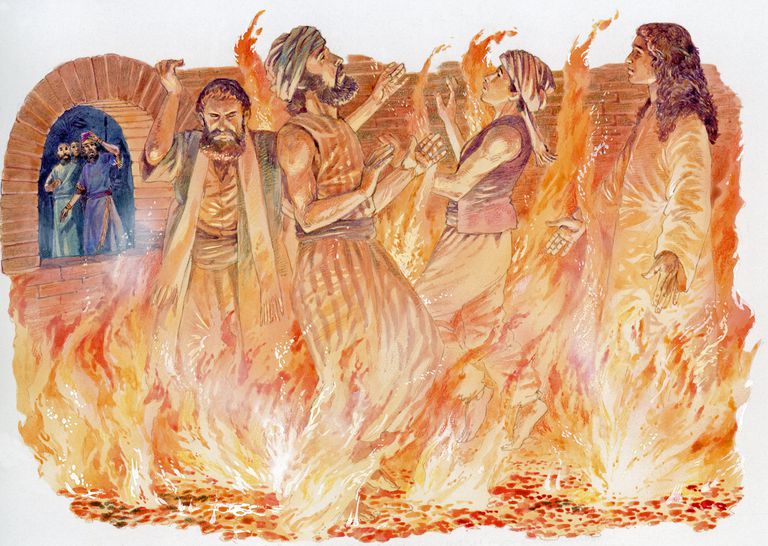
    Have you ever felt like you were certainly in the fire? Things in life may have gone from bad to worse. When we’re in those times of life, sometimes we know that the reason for it is that we have sinned. Now I’m not talking about when people in your life are sick or anything like that, God doesn’t punish sin by unleashing evil on us. Maybe it’s more like when relationships have gone bad, or things have gone wrong at work, or there’s financial hardship. You know the feeling, things are just piling up and you have no idea how to get out, it’s getting hotter all the time and it seems there is no salvation. But deep at the heart of it, you feel the weight of your own sin. I can testify to being in that place myself in my life on occasion. To that, the young man Azariah speaks:

    For we are reduced, O Lord, beyond any other nation,
    brought low everywhere in the world this day
    because of our sins.
    But with contrite heart and humble spirit
    let us be received;
    As though it were burnt offerings of rams and bullocks,
    or thousands of fat lambs,
    So let our sacrifice be in your presence today
    as we follow you unreservedly;
    for those who trust in you cannot be put to shame.

    We have to be a forgiven and forgiving people. When life crashes in on us, we have to confess our sins, and cry out for God’s pardon and mercy. And when it is given us – and it will be given us – we must become a merciful people who extend forgiveness to every single person in our lives without hesitation. We have to be a people who throw mercy around freely, because that’s just exactly how it’s been given to each of us.

  • The Third Sunday in Lent

    The Third Sunday in Lent

    Today’s readings

    There’s a lot of water in today’s Liturgy of the Word. The Israelites, near the beginning of their forty year journey through the desert, are beginning to miss some of the comforts of home, like water! So when they complain to the Lord, he gives them water in the desert. Which is pretty amazing – they had water in the desert! And in our Gospel today, our Lord stops along his own journey to get a drink of water from the Samaritan woman – and this whole interaction is less about Jesus’ physical thirst than it is about other kinds of thirst in the story – but more on that in a bit.

    We always have to think about why the Church is giving us these particular readings on this particular day. Why is it that we have part of the story of the Israelites wandering in the desert and the rather strange story of the interaction with the woman at the well today? Well, (no pun intended) whenever there’s this much water being mentioned in the readings, we need to think of a particular sacrament, and that sacrament of course is Baptism.

    Now maybe it makes a little sense. Today, throughout the Church, many people will experience the First Scrutiny of the Order of Christian Initiation. They are preparing to receive baptism at the Easter Vigil. But even that’s not the whole story, because this reading is for all of us. Lent itself is about baptism, and even if we’ve already been baptized, there’s still work to do. We are still being converted to become more like our Lord every day of our life. That’s what Lent is all about – getting back on the path and going a little farther forward. Lent points out for all of us that we’re still thirsty.

    For the Israelites, it’s hard to know what was going to help them. They’re just at the beginning of their journey and already they’re complaining. They get thirsty and the first thing they do is complain – not pray – and tell Moses that they’d rather be back in Egypt in slavery than out wandering around in the desert with nothing to quench their thirst. And it’s not like the slavery they experienced in Egypt was a minor inconvenience – it was pretty horrible and if they missed their quota even by a little bit, they were severely beaten. But sometimes it’s better the devil you know: sometimes we get stuck on what we’ve become used to and have given up yearning for something more.

    For the woman at the well, there’s a lot stacked against her and there is no reason Jesus should have been talking to her. In fact, the disciples, when they return and witness it, aren’t really sure what they should make of it. Because in that culture, nobody talked to Samaritans – it would be like striking up a casual conversation with an Isis member. And for a man to speak to an unaccompanied woman was unthinkable. But Jesus knew she was thirsty – see it wasn’t about his thirst at all, except, as Saint Augustine tells us, Jesus was thirsting for her faith.

    It’s a pretty weird conversation, to be honest. But in talking about her five previous husbands and the Samaritans’ practice of worshiping on the mountain, Jesus was pointing out how her own search for something to quench her thirst was so far pretty futile. She was looking for love in all the wrong places. The five men she was married to represented a history of failed attempts at finding love. And the guy she was shacked up with now represented the fact that she’d pretty much given up. But on some level, the fact that Jesus knew all this without her saying it woke her up a bit. And so then they talk about how the Samaritans worshiped. They were looking for God on the mountain, but the thing is, the God they were looking for is the same one that she had been searching for in her relationships, and he was standing right in front of her now.

    So what is it that is finally going to quench the thirst you have right now?

    Are you going to stay in the slavery of your former way of life, or do you want to journey on to the Promised Land? Are you going to continue to be content with failed or broken relationships, or are you going to refresh them with Living Water? Are you going to continue to leave God up on that mountaintop where he doesn’t get in the way of your daily life, until you need something? Or are you going to look him in the eye and ask him to give you what you really need so you’ll never thirst again?

    We’re all on a journey. All of us together are journeying on to the Promised Land of eternal life. And the only way we’re going to get there is by drinking deeply of the Living Water and allowing the One who gives it to us to lead us. It does mean, however, that we’ll have to leave Egypt, and our buckets, behind.

  • Friday of the Second Week in Lent

    Friday of the Second Week in Lent

    Today’s readings

    Today’s two readings remind us of what Lent is all about.  During Lent, we remember that our Lord, who came down from heaven to earth to save us from our sins and re-connect us with the love of God, paid the price for our many sins by laying down his own life.  And because of that, we have the promise of going to heaven one day, if we continue to follow Jesus.

    In our first reading, Joseph’s jealous brothers ended up selling him into slavery in Egypt, but in Egypt he became a powerful and talented government official who ended up saving many people, including his own brothers, from starvation during a famine.

    The parallels here between Joseph and Jesus are many.  Joseph was sold into slavery in Egypt; Jesus came to take away our slavery to sin.  Joseph’s own brothers plotted to kill him; Jesus was killed by us, his brothers and sisters.  Joseph fed the known world at that time by storing up grain for the day of famine; Jesus fed the multitudes, and us, with the bread that comes down from heaven.  Joseph was sold for twenty pieces of silver; Judas was given thirty pieces of silver to hand Jesus over to death.  Joseph, in many ways, was a foreshadowing of Jesus.

    In our Gospel today, Jesus tells a parable which tells the story of what will soon happen to him.  The vineyard owner is God the Father, and he is looking for the fruit of the harvest, which is our faith.  Instead, the people of old beat and murdered the prophets who came to give God’s word, just as the messengers of the vineyard owner were beaten and murdered.  And finally, when God, the vineyard owner, sends his own Son, he was killed too.   Just like Jesus.

    The people of Jesus’ day missed the message, they missed the parallels, they didn’t get that God was continually reaching out to them to gather them in faith.  But we know the story, all of it, and we can’t be like them.  We have to be ready to hear the truth and act on it, to see Jesus in other people and respond to him, to hear the Word he speaks to us and live that Word in faith each day.

    God loved us so much that he gave us his only begotten Son; we have to treasure that gift and let it make us new people.  That’s what Lent is all about, friends.  Lent means “springtime,” and so Lent should be a springtime of new growth in us, so that we can be a vineyard of faith to give joy to the world.

  • Thursday of the Second Week in Lent

    Thursday of the Second Week in Lent

    Today’s readings

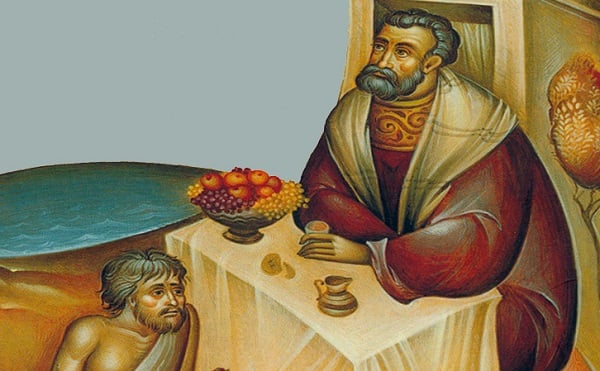
    You know, I don’t think the great sin of the rich man was the sin of neglecting poor Lazarus. Sure, that was certainly bad, but his greatest sin, I think, was that he trusted in himself instead of in God. That’s the deadly sin of pride, and the Fathers of the Church often tell us of the devastating effects of it. So the rich man thought he had everything he needed in life, and he trusted in himself and in his own means to get it. But he never had a relationship with God; he didn’t see that as something he needed. Would that he had heeded the prophecy of Jeremiah from today’s first reading. You don’t see him praying in the story or even giving thanks to God for his riches. All you see him doing is enjoying what he has amassed, to the neglect of the poor.

    So later on in the story, in death, he wants the good things God will provide for those who trust in him; people like Lazarus for example. Lazarus has suffered much, and as the Old Testament Prophets proclaim, God is especially close to the poor and needy, so now he is exalted. But the rich man isn’t exalted at all. He has already made his choice, and unfortunately now, trusting in himself doesn’t really help him.

    So the loud warning this morning is that we are all too often the rich man and not so often Lazarus. We have a lot of stuff, we are blessed on earth more than most of the people in the world today. But sadly that often puts us at odds with the things of heaven. We can’t reach out for those when we’re holding on to the passing things of this world. We can’t take the hand of Jesus when we’re grasping tightly the stuff life in this culture gives us.

    That’s why fasting is so important during Lent, as well as almsgiving: both bid us let go of passing things so that we can have, like Lazarus, things eternal. Both bid us trust in God, not in ourselves and other human beings. Jeremiah says it plainly today: “Cursed is the man who trusts in human beings, who seeks his strength in flesh, whose heart turns away from the LORD.” But, conversely, “Blessed is the man who trusts in the LORD, whose hope is the LORD.”

    So the question is, in whom do we trust? In ourselves? In other people? Or in God? “Blessed are they,” the Psalmist says today, “who hope in the Lord.”