Category: Lent

  • Monday of the Fourth Week of Lent

    Monday of the Fourth Week of Lent

    Today’s readings

    At the heart of our practice of prayer has to be trust in God. We don’t – or shouldn’t – need signs to convince us of God’s love and care for us.  But don’t we do that all the time?  Aren’t we just like those Galileans looking for a sign?  We might be hesitant to take a leap of faith that we know God is calling us to make, but are looking for some kind of miracle to get us off our behinds.  We might know that healing in a certain situation will take some time, but we want God to descend, wave a magic wand, and make it all go away.

    But just as the royal official trusted that Jesus could cure his son, so we too need to trust that God in his goodness will work the best for us, in his time, in his way. Isaiah tells us today that God is about to create a new heavens and a new earth, where there will always be rejoicing and gladness. But how hard it is for us to wait for that new creative act, isn’t it?  We just really want to see that big picture now, please, we want to know what’s on God’s mind and where he’s taking us.  But that’s not how God works is it?

    It can be hard for us when we look around for blessing and don’t see it happening on our timetable.  We forget, sometimes, that a big part of the grace comes in the journey, even when things are really painful.  The Psalmist says, “O LORD, you brought me up from the nether world; you preserved me from among those going down into the pit.”  Notice how he does not say that God shielded him from going to the nether world.  But the nether world was not the end of the Psalmist’s story.

    We don’t know where God is taking us today – or any day, for that matter.  We have to trust in our God who longs for our good, just like that royal official.  And we have to believe in the power of God to raise us up, just as he raised his Son from the dead.  We all long to celebrate our Easter Sundays, but our faith tells us that we have to get through our Good Fridays first.

  • The Fourth Sunday of Lent – Scrutiny II

    The Fourth Sunday of Lent – Scrutiny II

    Today’s readings

    Today’s Liturgy is all about vision and sight and light and darkness.  All of these, dear friends, are things that we certainly take for granted.  Think about it: we don’t appreciate the gift of light until that dark and stormy night when the electricity goes out and we’re fumbling around in the darkness trying to remember where it is we put that new package of batteries for the flashlight.  We likewise take for granted our own ability to see.  I think of my Aunt Mia, who several years before she passed away lost her sight and had to learn how to see things in a new way.

    When I hear today’s first reading, it always makes me think of my dad.  He was the kind of Irishman who never knew a stranger.  We couldn’t go anywhere without running into at least one person he knew.  But he didn’t just know them, he knew their story.  And so if someone were to complain about someone he knew, he would always be able to tell them something good about that person, because Dad saw the best in them.  That’s the kind of vision we are all called to have for one another: we need to see the best in them, we need to see Jesus in them.

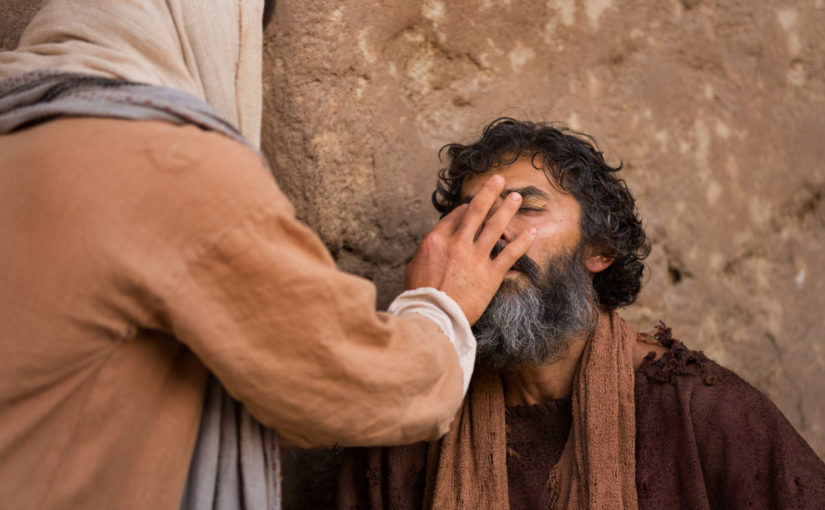
    So what about this miracle story in the Gospel today.  I have to just say it, who cares?  I mean, it’s nice for that man born blind who can now see, but I mean, he lived two thousand years ago, so what business is it of ours if he can see or not?  Why take up so much time with this reading?  Well I’ll tell you why we should care: we should care because the man born blind is us.  We all have affected vision: none of us sees others or even sees ourselves as God does.  So we have to decide today if we are the man born blind who is easily and quickly healed, or if we want to be the Pharisees who, at the end of the day, never regain their sight because, well, they just don’t want to.

    So maybe you’re asking the same question those Pharisees asked, “surely we are not also blind, are we?”  Well, of course we are.  We are, first of all, born blind.  We don’t have a way of seeing the Truth that is in front of us; we can’t acknowledge that Jesus is the Christ and the King of our lives.  It takes holy baptism to cure that born blindness in us.  Secondly, we have a kind of blindness that affects us all through our lives.  We often lose our vision and wander off the path to life.  We are affected by temptation, by cyclical sin and by the darkness of our world.  That’s why we have Lent: to realize our brokenness and to accept the healing power of Christ.  Lent calls us to remember that we are dust, that we are broken people fallen into sin, but it also proclaims that none of that is any match for the power of Christ risen from the dead, if we just let him put a little mud on our eyes.

    Today’s Gospel then is a kind of journey to clearer vision.  We are all born blind, in a sense, and it takes the presence of Jesus to clear our vision.  Just as the man born blind was sent to the pool of Siloam, we too are sent to the waters of baptism, which clears our eyes and helps us to really see.  Our Elect, who are here with us today, will experience that in a very literal way this coming Easter Vigil.  In baptism, our inherited sin and evil is washed away; the darkness of life is transformed by the presence of Christ, the Light of the World.

    We see that light shine brighter and brighter in today’s Gospel.  During the course of all the questionings that follow, the man’s vision becomes clearer and clearer.  At first he doesn’t know who Jesus is or where to find him.  Later on he testifies that Jesus is a prophet and finally, with the help of Jesus’ instruction, after he has been unceremoniously thrown out of the synagogue, he meets Jesus again and testifies that Jesus is the Son of Man and worthy of worship.  As he sees more clearly, his faith becomes bolder.

    We make this same journey ourselves.  From the waters of baptism, we need to continue the conversation and return to Christ again and again to grow in our faith.  We grow in the way that we see Jesus through our lives.  Think about it: our faith when we were young is not the same faith that works for us later in life.  At one point Jesus is a friend walking with us on life’s path; later on he might be a rock that helps us in a particularly stormy time of life.  Still later, he might be the one calling us to become something new, something better than we think we can attain.  Jesus is always the same, but we are different, and Jesus is with us at every point of life’s journey, if we open our eyes to see him.

    Traditionally, today is Laetare Sunday – laetare being Latin for “rejoice.”  That’s why we’re wearing these rose-colored vestments today.  We are now pretty much half way through Lent, and with eyes recreated by our own trips to the pool of Siloam – the waters of baptism – we can begin to catch a glimpse of Easter joy.  It kind of reminds me of the last section of the Exsultet that we will hear proclaimed on the evening of the Easter Vigil. That last section tells us:

    May this flame be found still burning 
    by the Morning Star:
    the one Morning Star who never sets,
    Christ your Son,
    who, coming back from death’s domain,
    has shed his peaceful light on humanity,
    and lives and reigns for ever and ever. 

    Christ’s peaceful light changes everything. It clears up the darkness of sin and evil, and allows all of us blind ones to see the glory of God’s presence.  All of us have, indeed been born blind.  But you know what?  We’re not supposed to stay that way.

  • Friday of the Third Week of Lent

    Friday of the Third Week of Lent

    Today’s readings

    “You are not far from the kingdom of God.”  That would be, the most reassuring thing we could hear from our Lord!  To know that you’re on the right track — that your thoughts and heart’s desires are in line with God’s will — that would be a wonderful thing to know.  And today’s Scriptures give us the roadmap for finding that reassurance.

    Step one is repentance. The prophet Hosea wrote of Israel’s repentance.  Israel, as a nation, as we well know, had turned away from the God of their ancestors Abraham, Isaac and Jacob.  They had turned to the false gods of their neighbors and had worshipped idols.  Hosea’s prophecy had been all about calling them back, urging them to return to the Lord who loved his people and yearned for them like a spurned lover.  In today’s first reading, Hosea prophecies the promise that God will accept back his wayward lover and will restore the people of Israel to his own loved possession.

    Step two is to hear the voice of God.  “If only my people would hear me,” the Psalmist says, “and Israel walk in my ways, I would feed them with the best of wheat, and with honey from the rock I would fill them.”  God longs to fill his faithful people with everything that they need to sustain life and live their faith.  All we have to do is hear his voice, to follow his commands, and walk in his ways.  This hearing the voice of God requires a steadfast faithfulness that will not be enticed by strange gods or flashy idols.  There is a single-mindedness that is called for here: the faithful are called not to hear God as one voice among many, but to hear God alone.

    And step three is love.  In today’s Gospel, Jesus famously boils the commandments down to two: love of God and love of neighbor.  Again, there is an underlying single-mindedness: “You shall love the Lord your God with all your heart, with all your soul, with all your mind, and with all your strength.”  Love of God and neighbor isn’t a third or fourth priority, if we ever get around to it.  Love is prime: love must the first inclination of the heart, thought of the mind, and action of life.

    What does it take for us disciples to be not far from the Kingdom of God?  It takes a Lent of repentance, a desire to hear and meditate on God’s Word and his presence in our lives, and then to love like there was nothing else to do in the whole world.  Maybe we’re not there yet, all of us, as we approach our Easter joy.  But at this mid-point of Lent, maybe we can come a little closer by asking God for the desire to change our hearts.

  • Tuesday of the Second Week of Lent

    Tuesday of the Second Week of Lent

    Today’s readings

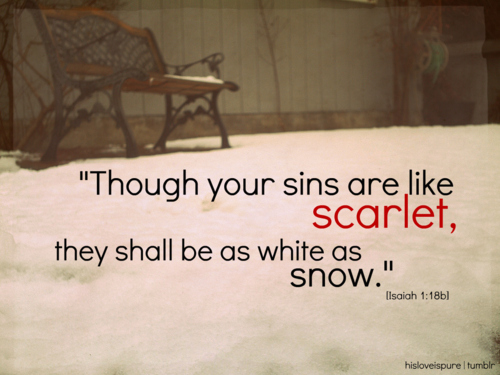
    Many people who have been away from the Sacrament of Penance for a long time have said that they were afraid to come back to the Church because they felt like their sins defined them.  That they walked around with some kind of scarlet letter on their persons.  I think this is the experience that Isaiah is getting at when he says, “Though your sins be like scarlet, they may become white as snow; Though they be crimson red, they may become white as wool.”

    Our sins do not define us, but our repentance does.  And that repentance has to include a commitment to justice for those we have marginalized: “redress the wronged, hear the orphan’s plea, defend the widow.”  Our penance and our righteousness has to be approached in humility, remembering that those who humble themselves will be exalted.  Our repentance has its reward, as the Psalmist tells us: “To the upright I will show the saving power of God.”

  • Monday of the Second Week of Lent

    Monday of the Second Week of Lent

    Today’s readings

    These readings for the weekdays of Lent are especially challenging, aren’t they?  They’re supposed to be.  They speak of what it means to be a disciple and take up the cross, and they speak of it with urgency.  We have to be willing to have our whole world turned upside-down; to do something completely against our nature; to let God take control of the life we want so much to control.

    “For the measure with which you measure will in return be measured out to you.”  I don’t know about you, but that sounds pretty ominous to me.  Because there have been plenty of times when I’ve failed to give someone a break.  The measure I sometimes use ends up being a bar set pretty high, and I would sure hate to have to leap over that bar myself.  But that’s what Jesus is saying we will have to do.

    The real measure of compassion is the compassion of God himself.  He is our model, He is the measure for which we are to strive, His example is how we are to treat each other.  But when we do that, it means we can’t judge others harshly.  It means that we have to see them as God does, which is to say that we have to see Jesus in them and to see the goodness in them.   And that’s hard to do when that person has just cut you off in traffic, or has gossiped about you, or has crossed you in some other way. But even then — maybe especially then — we are called to stop judging others and show them the compassion of God.

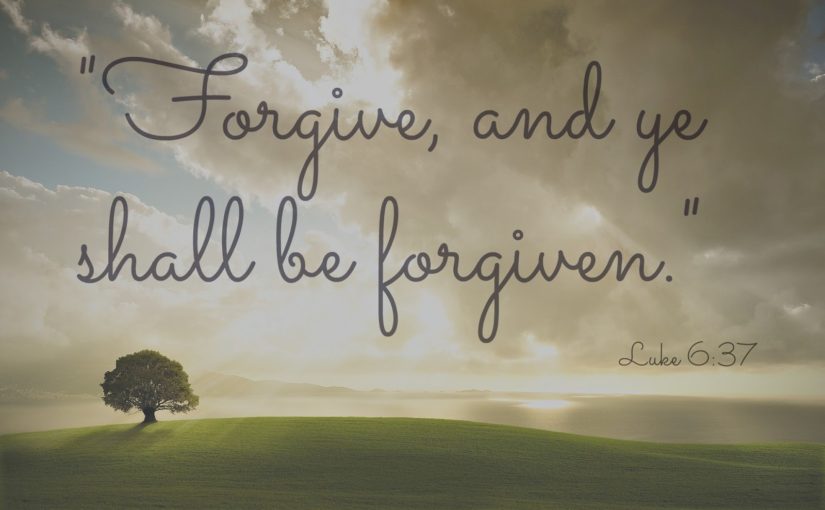
    “Lord, do not deal with us according to our sins.”  That is the prayer of the Psalmist today.  We are given the promise of forgiveness, but we are also warned that if we do not forgive others, we will not be forgiven either.  The measure with which we measure will in turn be measured out to us.  I don’t know about you, but I’m going to try real hard to give people a break today.

  • The Second Sunday of Lent: Yearning for Our True Home

    The Second Sunday of Lent: Yearning for Our True Home

    Today’s readings

    I think it’s very important for us to realize that we are not at home in this world, wherever we are.  We are always travelers until we reach heaven, which is our true home.  I remember on the last day of my dad’s life, almost ten years ago now, he kept looking at his watch and saying, “It’s almost time to go home.”  We kept telling him he couldn’t go home, because he was too sick.  But later that day when we were talking, we realized what he really meant.  He was on his way to his true home, our true home, that place we all want to go one day.

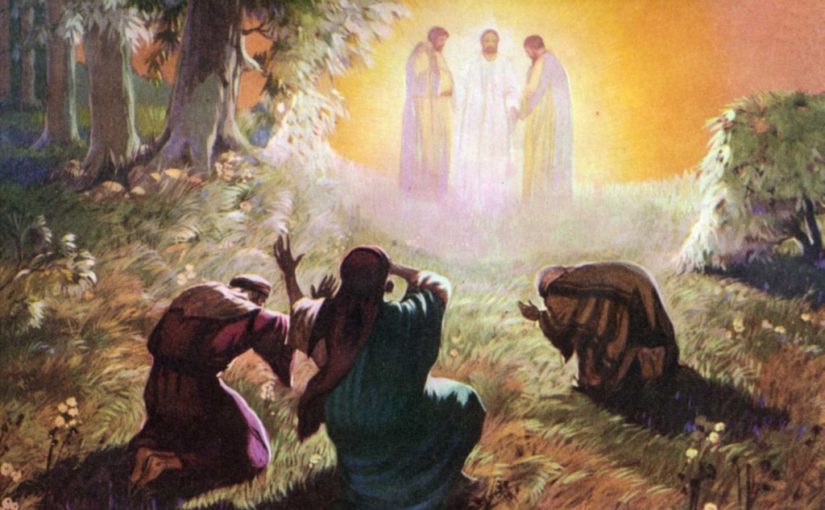
    Jesus gave Peter, James and John a glimpse of that in today’s Gospel.  On seeing the vision, I think Peter realized that there was something like that going on here.  He wanted to build tents, to keep Moses and Elijah there and make that their home.  But he really was babbling, because, quite understandably, he didn’t know what to make of it all.

    What they were getting, in a way, is a glimpse of heaven.  Jesus appearing with Moses, the giver of the Law, and Elijah, the epitome of Old Testament Prophets.  It’s Jesus himself who brings the Law to fulfillment, and Jesus himself who is the fulfillment of all the prophets’ messages.  They appeared in a dazzling vision that revealed what Jesus’ resurrected body would be like.  It was obviously different and glorious, and had the disciples stunned.

    As they come down the mountain, Jesus tells them to keep the vision under wraps until he has risen from the dead.  That’s because no one, not even Peter, James and John, would understand what it was about until they had actually seen Jesus risen and glorified.  Then they could have that “aha!” moment and realize that there is something more than just this life here on earth.

    So in these days of Lent, it is well for us to remember that there is more to life than just what we see here.  So the task is to live our lives like we’re going to heaven.  Because that’s what we want.  Yes, we will have to take up the cross to get there.  Yes, we will have to venture into unknown territory like Abram.  But if we ever want to get to the joys of heaven, we have to be willing to brave the unknown and endure the cross and go wherever it is God takes us.

    Sadly, this year, God is taking me somewhere too.  My term as pastor is up this summer, and I had hoped to be reassigned here.  But last Saturday, Bishop Conlon called to ask me to take a new assignment.  I didn’t want to, and I was praying about it all last weekend, but when I remembered my Ordination promises and when I actually listened to my own words preaching last weekend, I knew my answer had to be yes.

    So this June, I will become the new pastor of Saint Mary Immaculate Parish in Plainfield, which is the largest parish in our diocese, over five times bigger than Notre Dame.  I can hardly wrap my mind around that, so I would ask your prayers.  Transition may be God’s will, but it’s never easy.

    This weekend, the diocese will invite my brother priests to apply to be pastor of Notre Dame, and in the coming weeks, Bishop Conlon and the personnel board will make decisions about our parish and the other openings in the diocese.  I have been assured that Notre Dame will be taken care of.  I will let you know when I hear of the appointment, but now would be a good time to begin praying for your new pastor too.

    There will be time in the coming months for goodbyes and thanksgiving, but I want to assure you that being your pastor has been one of the greatest experiences of my life, and I’ll never forget you.  I am grateful for all that you have done for me, and all of your prayers for me each day.  Please be assured of mine for you.  Our prayer today could be the prayer of the Psalmist: “Lord, let your mercy be on us, as we place our trust in you.”

  • Tuesday of the First Week of Lent

    Tuesday of the First Week of Lent

    Today’s readings
    #LentND

    The prophet Isaiah and Jesus speak today about the great power of words. Isaiah speaks specifically of the power of God’s word, a word that will not return empty but will go out and accomplish the purpose for which God sent it.  We see the word that the prophet speaks of here, of course as the Word – with a capital “W.”  That Word is Jesus Christ who comes to accomplish the salvation of the world, the purpose of God ever since the world’s creation.

    The prayer that Jesus gives us today, the classic prayer that echoes in our hearts in good times and in bad, is a prayer with a specific purpose in mind.  That prayer, if we pray it rightly, recognizes that God’s holiness will bring about a Kingdom where his will will be done in all of creation.  It begs God’s forgiveness and begs also that we too would become a forgiving and merciful people, just as God is merciful to us.  Finally, it asks for help with temptation and evil, something with which we struggle every day.

    Today’s readings are a plea that God’s will would finally be done.  That his Word would go forth and accomplish God’s purpose.  That his will would be done on earth as in heaven.  As we pray those familiar words, they can often go past us without catching our attention.  But today, maybe we can slow down just a little, and pray them more reflectively, that God’s will would be accomplished in every place, starting in our very own lives.

    Because to God belongs the Kingdom, and the power, and the glory, forever and ever.

  • The First Sunday of Lent: Remembering Who We Are

    The First Sunday of Lent: Remembering Who We Are

    Today’s readings

    The devil wants more than anything for us to forget who we are.  He really didn’t care if Jesus ruined his fast by turning some stones into bread, or if he killed himself trying to test God, and he certainly had no intention of making him king of the world.  What he wanted, what he really wanted, was for Jesus to forget who he was and give himself over to him.  And we see in the first reading that that’s how it all started.  The serpent didn’t care what tree Eve ate from, he just wanted her, and Adam, to forget who they were, to forget that they were beloved children of God and that God would take care of them.

    So if I could suggest a theme for us for Lent, it might be “Remembering Who We Are.”  That’s why we have the Cross up here, front and center.  I want us to see that in the Cross, God gave us the very best he had, and that when we take up our own cross, God sustains us and makes us more than we could be on our own.  Just as Jesus remembered that he was God’s Son and that he came here for a reason, and that reason was to save us from our sins, so we have to remember that we are sons and daughters of God, and we are here for a reason.  The devil will try all sorts of tricks to get us to forget that.  He will throw at us job difficulties, serious illnesses, the death of loved ones, family strife, and the list goes on and on.  He will tempt us with the latest gadgets, the job promotion, the opportunity to get rich quick, and that list goes on and on too.  He wants us to forget who we are.

    Because if we forget who we are, the devil’s job is an easy one.  If we forget that God made us and redeemed us out of love for us, then he’s got his foot in the door.  Once that happens, hell looks like something glamorous, enticing and exciting.  It feels like living on our own terms, looking out for number one, and doing what feels right to me.  And that’s awesome, except of course, that it’s hell.  And the glamour fades and the excitement turns to rancor, and we’ve wasted our lives chasing after stuff that doesn’t really matter in the grand scheme of things.

    The antidote to this hell of our own making, is letting go – giving what might even seem to be necessary to us, and trusting that God will give us what we need.  That can be the treasure of Lent for us.  In fasting, we can let go of the idea that we alone can provide what is necessary for our survival.  God can feed our hungers much better than we can.  In almsgiving, we can let go of the idea that everything is ours if we would just worship the one who cannot give us what we truly need.  God gives us what’s really necessary in life, and also life eternal.  And in prayer, we can let go of the fading pleasures of this world and of Satan and take on the enduring luster of a life lived as a son or daughter of God.

    And so I would like to suggest a program of retreat for these forty days of Lent.  It’s nothing new; I didn’t create it.  It’s what the Church gives us every Lent, and I feel like if we want to remember who we are, we should take it on in its entirety.  So this retreat consists of the three things I just mentioned: fasting, almsgiving and prayer.  And our parish gives you so many resources for choosing something to do for each of them.  You may have seen our Lenten tear-out sheet in last week’s bulletin.  If you missed it, we will be mailing it to each house in the parish in the coming days.  Take a look at it, post it on your fridge, and plan to make this Lent a good one.

    For fasting, we have our day of Fasting and Reflection on April 1.  It’s a day that you do independently with some input from us.  Fast that day from 6am to 6pm, attend 8am Mass and pick up the reflection guide, attend Adoration from Noon to 1pm, then end the day with Mass and making lunches for PADS at 6pm.  It’s a day of making sense of fasting, and letting God give us what we need while we hunger for him.

    For almsgiving, I’d like to encourage us to help with the 40 Cans for Lent.  Our parish food pantry is in need of restocking right now, and so your donations of a box or can of food each day of Lent help so much.  You can also help our Knights of Columbus in this effort by distributing food bags on March 4th and collecting them on the 11th.  And that’s just one example of almsgiving that will really make a difference.

    And for prayer, our parish is doing the “Living the Eucharist” series this Lent.  This is an opportunity for us all to come to a greater understanding and love of the Eucharist that we share each week here at Mass.  So you can pick up a copy of the individual reflection booklet at the information desk today.  I’ve been using them for prayer the last few days and they are really good.  We also sent a family activity book home with each school and religious education family, so if you have one, please take some time as a family to work through it.  We also have a weekly reflection each Sunday of Lent in the bulletin.  And finally, it’s not too late to sign up for one of our “Living the Eucharist” small discussion groups; you can do that at the information desk today.

    Fasting, almsgiving and prayer remind us that we are beloved sons and daughters of God who are always taken care of by God, if we let Him; that when we give of ourselves, we all become more; and that as we become more our prayer leads us into the life of God himself.  May we have a blessed, and joyful Lenten retreat, all of us, sons and daughters of God.
  • Thursday after Ash Wednesday

    Thursday after Ash Wednesday

    Today’s readings

    When it comes right down to it, we have a choice.  We can choose life or death, blessing or curse, the way of the Cross or the way of the world.  The choice that we make has huge consequences, eternal consequences.  The stakes are big ones, and we must choose wisely.

    Many of us can probably recall some point in our lives where we had to make that choice of what we were going to do with our lives, what we wanted to be when we grew up.  That choice can be so confusing, so painful, so difficult to make.  When it finally worked for me was when I finally gave it over to God and asked that he challenge me in a big way.  That’s when I felt the call to go to seminary, which really surprised me, and I resisted it at first.  But when I gave in and let God do what he wanted in my life, when I finally decided to do what God asked me to do, the choice was much easier.  We all need that kind of guidance from the Holy Spirit, and that’s what gets us through those difficult choices in our lives.

    The command from Deuteronomy is clear: “Choose life, then, that you and your descendants may live, by loving the LORD, your God, heeding his voice, and holding fast to him.”  The way of the Lord is life-giving, the way of the world is death.  The way of the Lord is blessing, the way of the world is curse.  The passing pleasures of the world are nothing compared to the eternal pleasures of God’s way.  The trials we may experience in this life when we choose to follow God are passing things, and give way to great grace and peace.

    Jesus asks us today to make a choice to take up our crosses and follow him.  That’s not always so appealing on a day-to-day basis.  There is great suffering in the cross.  But, as he says, what profit is there for us if we gain the whole world but lose our very selves?  Blessed, the Psalmist tells us, is the one who walks in the way of the Lord and follows not the counsel of the wicked.  May we all this day choose life, that we and our descendants might live.

  • Ash Wednesday: This Campaign of Christian Service

    Ash Wednesday: This Campaign of Christian Service

    Today’s readings
    #
    AshWednesday #LentND #AshTag

    Back when I was in seminary, I was a fire chaplain for one of the local fire departments.  On Wednesdays, we only had one class, and since it was Ash Wednesday and our teacher was a pastor of a parish, he was obviously busy, so we had the day free.  I went with my friend Jeff, who was a chaplain with me, to the station to see how things were going and to spend some time doing some ministry there.  When we got there, though, there really wasn’t anyone around.  The receptionist told us they had all gone out on a fire call, and it looked pretty big.

    So Jeff and I got the address and headed out to the scene of the fire.  This was the first major fire I ever worked on, and when I got there and saw this four unit condo on fire, I said something like, “Oh my gosh! That building’s on fire!”  Jeff said something like “Well, what did you expect?”  Checking in with the fire chief, he told us that the families were in an apartment building across the street.  We went there and introduced ourselves.

    We talked to the families that were there for a while, and then had to get some other information, and during a lull, I asked the woman whose apartment we were trampling with our wet boots if she knew these families before.  She said no, but she wouldn’t have thought of not opening her home to neighbors in trouble.  I noticed she was wearing a sweatshirt with the letters WWJD on it – what would Jesus do? And I thought, well she obviously knew the answer to that question, and was not afraid to live it.

    Again, that was Ash Wednesday that year, and it made a big impact on me.  I realized it was so important for me to live those four letters – WWJD – during Lent, and really all year long.  But doing that is a process.  You have to develop new attitudes, new habits – new habits of the soul.  This Lent is all about doing that for us.

    We are called to repent, to break our ties with the sinfulness and the entanglements that are keeping us tethered to the world instead of free to live with our God. Our Church offers us three ways to do that during Lent.  First, we can fast.  We can give up snacks, or a favorite food, or eat one less meal perhaps one day a week, or we can give up a favorite television program or activity.  Fasting helps us to be aware of the ways God works to sustain us when we’re lacking something we think we need.  The whole idea of fasting is that we need to come to realize that there is nothing that we hunger for that God can’t provide, and provide better than we could ever find in any other source.

    Second, we can pray.  Sure, we’re called to pray all the time, but maybe Lent can be the opportunity to intensify our prayer life, to make it better, to make it more, to draw more life from it.  Maybe we are not people who read Scripture every day, and we can work through one of the books of the Bible during Lent.  Maybe we can learn a new prayer or take on a new devotion.  Maybe we can spend time before the Lord in the Tabernacle or in adoration.  Maybe we can just carve out some quiet time at the end of the day to give thanks for our blessings, and to ask pardon for our failings.  Intensifying our prayer life this Lent can help us to be aware of God’s presence at every moment of our day and in every place we are.

    Third, we can give alms or do works of charity.  We can visit a soup kitchen or go out to collect groceries for our food pantry during our “40 Cans for Lent” campaign.  Maybe we can devote some time to mentoring a child who needs help with their studies, or volunteer to help in our school or religious education program.  Works of charity might be a family project, choosing an activity and doing it together.  When we do works of charity, we can learn to see others as God does, and love them the way God loves them and us.

    And none of this, as the Gospel reminds us today, is to be done begrudgingly or half-heartedly.  None of it is to be done with the express purpose of letting the world see how great we are.  It is always to be done with great humility, but also with great joy.  Our acts of fasting, prayer, and charity should be a celebration of who God is in our lives, and a beautiful effort to strengthen our relationship with him.

    It is my prayer that this Lent can be a forty day retreat that will bring us all closer to God.  Our collect prayer calls this a “campaign of Christian service.”  Lent is a time to pay more attention to the ways God wants to bless us and respond by giving blessing to others.  May we all hear the voice of the prophet Joel from today’s first reading: “Even now, says the Lord, return to me with your whole heart!”