Category: Lent

  • The Fifth Sunday in Lent, Cycle A/Scrutiny III

    The Fifth Sunday in Lent, Cycle A/Scrutiny III

    Today’s readings

    Think about it: if you died and were brought back to life, would your life be different? I tend to think we’d all say yes, very different. But how? I often wonder about Lazarus and how his life looked after he was raised from the dead by Jesus. We don’t get that part of the story, but I imagine he took care to proclaim the Good News that he heard from Jesus, and saw as he sprang from the grave.

    You know, living is subjective. What we might think of as “really living” and what the world may tell us is living the life we should all have is probably going to be quite different than the real life we hear proclaimed in these readings today. So if we want to know the meaning of life, I think we should spend some time reflecting on today’s Liturgy of the Word. And then pray to know whether that corresponds to what we think life is all about, or not. We might find ourselves, like Lazarus, rethinking life and finding new purpose.

    Our first reading today tells us that life without spirit is really death. Ezekiel prophesies that God sees his people dead, but will open their graves and have them rise. But the new life he intends to give involves receiving the spirit:

    I will put my spirit in you that you may live,
    and I will settle you upon your land;
    thus you shall know that I am the LORD.
    I have promised, and I will do it, says the LORD.

    In the second reading, Saint Paul echoes Ezekiel’s words and tells the Roman Church, and us too, that we who are in Christ have the Spirit who raises us from the dead:

    If the Spirit of the one who raised Jesus from the dead dwells in you,
    the one who raised Christ from the dead
    will give life to your mortal bodies also,
    through his Spirit dwelling in you.

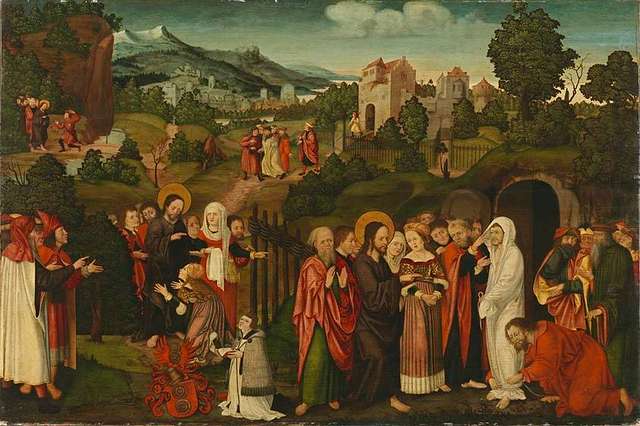
    Then we have Martha, Mary and Lazarus in our Gospel reading. In his Gospel, John is very clear about death. When Jesus hears about Lazarus’s illness he says to his disciples, “Our friend Lazarus is asleep,” and they are encouraged by that, thinking that sleep is a good cure for illness and trusting that Lazarus will be well. So Jesus has to say it clearly:

    Lazarus has died.
    And I am glad for you that I was not there,
    that you may believe.
    Let us go to him.”

    And, to underscore that Lazarus was really, really dead, when Jesus orders the bystanders to roll the stone away from the tomb, Martha points out the practical matter:

    Lord, by now there will be a stench;
    he has been dead for four days.”

    That was significant, because the Jews believed that, if a person stayed dead for three days, he or she was definitely dead. So on day four, Lazarus was really, really dead, and there would be no waking him up.

    Except for the Spirit of Jesus. That Spirit, the One who would raise Jesus from the dead, gives life to the mortal body of Lazarus, for the honor and glory of God. So good for Lazarus, but what does it mean for the rest of us, standing there in awe of the miracle we have just witnessed?

    During Lent, we have been journeying with our catechumens, who are now called the Elect, as they prepare to be baptized, confirmed, and receive first Holy Communion at the Easter Vigil. Much like them, there are three groups of catechumens in today’s Gospel. The first group is Mary and Martha, those friends of Jesus that are part of John’s Gospel a few times. Here, the rubber meets the road in their faith. Here, like so many of us, they have something tragic happen in their lives, and now they have to grapple with whether their faith helps them with that or not. Mary is so troubled that she doesn’t even go out to meet the Lord until her sister tells her a white lie that Jesus was asking for her. Both she and Martha, when they first see Jesus, complain that he should have come sooner so that he could have saved Lazarus. But Martha has a little faith. She says very importantly that “Even now, I know that whatever you ask of God, God will give you.” That’s the beginning profession of faith. She knows that Jesus has power over life and death. So then they have a little catechetical dialogue about life and death and eternity, and at the end of it, Martha professes that Jesus is the Son of God who was coming into the world. The sisters move from their grief, to faith in Jesus, even before he accomplishes the miracle.

    The second group of catechumens is the Apostles. God bless them, they’re still trying to make sense of Jesus. We can’t be too hard on them, because they’re a lot like many of us who are trying to be men and women of faith, but don’t really have all the facts right now. “Let us also go to die with him,” Thomas says. And they will, of course: they have to go through the cross before they see and understand Jesus fully. We too will have to take up our own crosses before we can fully understand the salvation that Christ has won for us.

    The third group of catechumens is the Jews. A bunch of them are weeping with Mary, and they go with her to see Jesus. Along the way, they complain that if he could heal the man born blind like he did in last week’s Gospel, why couldn’t he have healed Lazarus? But seeing the miracle, they come to believe, in the very last verse of this long reading. They are a lot like those of us who are skeptical for a long time, but see something wonderful materialize in the life of another and finally decide there’s something to this Jesus that’s worth believing in.

    Key to all of these catechumens is that, in order to move to belief, they had to have some kind of stench in their lives washed away. For Martha and Mary, they had to see past their grief. For the Apostles, they had to get over themselves and realize that Jesus was in charge. For the Jews, they had to get past their skepticism and let him perform miracles among them. For all of us, on the journey of faith, some kind of stench has to be washed away, in order to come to full faith in Jesus. And that stench, of course, is sin. The way it gets washed away is in baptism.

    So if you take away anything from today’s Liturgy, let it be this: this reading is really all about baptism. Is it a foreshadowing of Jesus’ death and resurrection? Sure. But it is more about baptism. Because baptism is a kind of death. As Saint Paul says in our second reading today, baptism is the kind of death that gives life to our mortal bodies. It’s hard for us to imagine that kind of thing when the baptisms we’ve seen are just a mere pouring of water over a baby’s head. But baptism in the early church was full submerging in water while the formula was pronounced, after which they came up out of the water gasping for air. Believe me, they got the connection of baptism with death and resurrection!

    Baptism is what washes away the stench in our lives. It does that with original sin, and if we live our baptism by participating in the sacraments, it does that with the sins of our daily life. The sacrament of Penance is an extension in a way of the sacrament of Baptism, in which the sins of our lives are completely washed away, leaving us made new and alive in ways we couldn’t imagine.

    So today, Jesus sees us dead in the flesh, stinking of our sins. But he calls us forth in baptism, rolling away the stone of sin that keeps us from relationship with him, releasing us from the burial-bands that bind us, and calling us to new life.

    So maybe in these closing days of Lent, we still have to respond to our Lord’s call to live. Maybe you haven’t yet been to confession before Easter. We have confessions tomorrow at 1:30pm, with thirteen priests to hear your confession. We invite you to come and have the stone rolled away and to be untied from your burial cloths. Wherever you find yourself at this point of Lent, I urge you, don’t let Easter pass with you all bound up and sealed in the grave. Don’t spend these last days of Lent in the grave. Come out, be untied, and be let go.


  • Friday of the Fourth Week in Lent

    Friday of the Fourth Week in Lent

    Today’s readings


    Saying, “We know where he is from” is from is a Scriptural way of labeling that person, and in a sense, writing him or her off. I think maybe we too have ways of “knowing where people are from” and we label them according to race, or parentage, or upbringing, or privilege, or whatever. We are especially quick to label and write off those who would challenge us, just like the just one was “beset” in today’s first reading, or the Jews who would write Jesus off because they know where he is from, in our Gospel reading. But we need to take care not to write people off – regardless if they are different from us, or are troublesome, or are challenging to us, because in doing so we write off Jesus himself, and turn our back once again on the words he would speak to us.

    Fediverse Reactions
  • Tuesday of the Fourth Week in Lent

    Tuesday of the Fourth Week in Lent

    Today’s readings

    Water is so important to us, and we see a lot of water in these readings. Water refreshes us, sustains us, cleans us. I find I always need to remind myself to drink more water. These readings talk so much about water, and when that happens, we are being led to a reflection on baptism. We ourselves are the sick and lame man who needed Jesus’ help to get into the waters of Bethesda. The name “Bethesda” means “house of mercy” in Hebrew, and that, of course, is a symbol of the Church. We see the Church also in the temple in the first reading, from which waters flow which refresh and nourish the surrounding countryside. These, of course, again are the waters of baptism.

    Lent, really, is all about baptism. This is the time when the Elect in our OCIA program are preparing intensely to receive that sacrament of initiation. But it’s not just about them; lent call us to renew ourselves in our own baptisms. We are called to renew ourselves in those waters that heal our bodies and our souls. We are called to drink deep of the grace of God so that we can go forth and refresh the world.

    But what really stands out in this Gospel is the mercy of Jesus. I think it’s summed up in one statement that maybe we might not catch as merciful at first: “Look, you are well; do not sin any more, so that nothing worse may happen to you.” Now, I’m sure being ill for thirty-eight years is really bad. It’s hard to imagine anything being worse. But I’m also pretty sure missing out on the kingdom of God would be that one, much worse, thing. There is mercy in being called to repentance, which renews us in our baptismal commitments and makes us fit for the Kingdom of Heaven.

    Back in the 80s and 90s, parishes would often remove the holy water from church during Lent in a kind of fasting. But here is why you shouldn’t: Lent is all about baptism, all about God’s mercy, all about being renewed and refreshed and healed in God’s grace. So I encourage you all to not take holy water for granted. Think about that the next time you put your hand into the font and stir up those waters of mercy. Be healed and made new; go, and from now on, do not sin any more.

  • The Fourth Sunday in Ordinary Time, Cycle C Readings

    The Fourth Sunday in Ordinary Time, Cycle C Readings

    Today’s readings

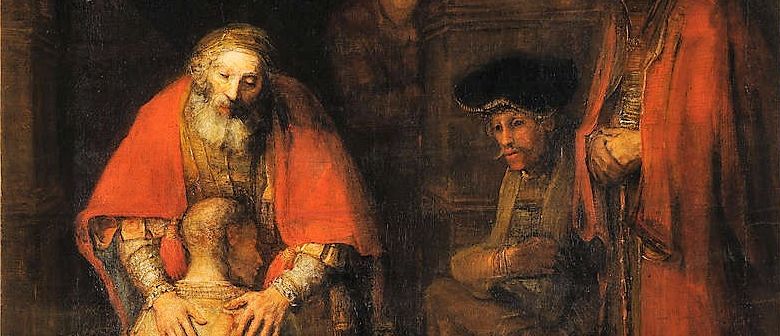
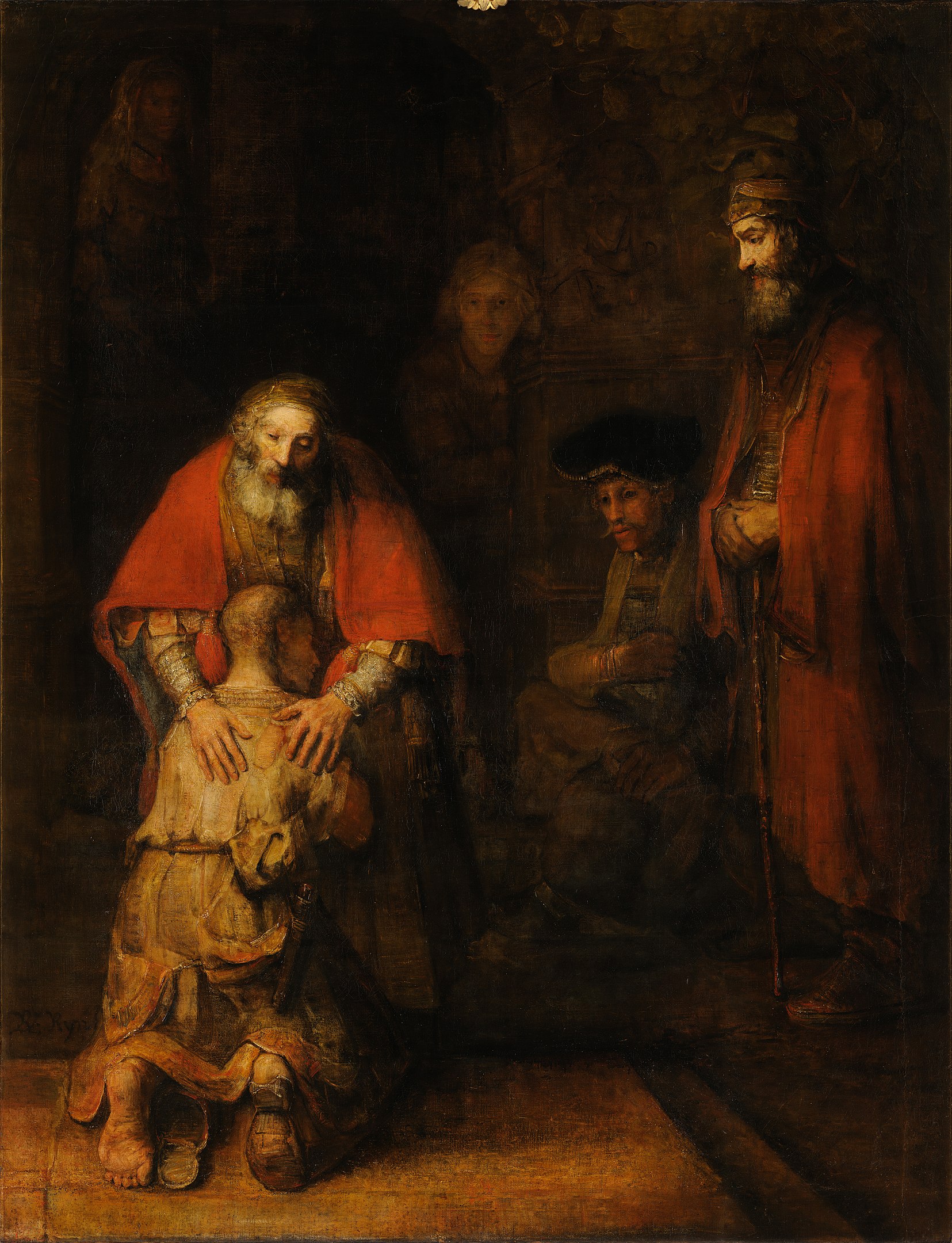
    Today we have in our Gospel reading one of my very favorite parables; maybe it’s your favorite too. It’s one that we have heard so often, and I think it’s one that we can see with the eyes of our imaginations. Three main characters: a forgiving father, a prodigal son, and a loyal, but perhaps cranky, son. It’s the kind of family situation I think we can all wrap our minds around; maybe it sits a little uncomfortably close to home.

    So it says right at the beginning that “a man had two sons.” And I think we need to keep that in mind, and I’ll say more about that in a bit. But the one son is dissatisfied with his life so much so that he feels the need to change it: he asks for his share of the inheritance right now, before his father is even dead. And that is a request is so presumptuous that it feels hurtful. Kind of like saying, “Hey dad, I wish you were dead, give me my inheritance now, please – I just can’t wait.” But the Father gives him the inheritance immediately and without ill-will. And you better believe that would have ruffled the feathers of Jesus’ hearers: there were strict rules of propriety in families and this absolutely flies in the face of that.

    But the other son is almost as guilty of that as the younger son. When the story runs its course, and the younger son returns to the father with his little memorized speech, the father, who has been waiting for his return, is moved with compassion and runs out to meet him. They throw a big party, but apparently they didn’t send someone out to invite the older son. On his return from the fields, he is indignant, partially, I think because he was overlooked, but also and importantly because He feels the injustice of the younger son being rewarded after tearing apart the family. His refusal to come in to join the feast and his making the father come out to him could also be seen as sinful.

    What amazes me is that the Father comes out of the house to meet both sons. That’s significant because a good Jewish father in those days wouldn’t come out to meet anyone – they would come to him. Probably on their hands and knees, begging for forgiveness. But the Father meets them where they are and desperately, lovingly, pleads with them to join the feast. It’s an image of our loving, forgiving Father God who won’t let anything – not past hurts, not resentments, not social propriety, not even our darkest sins – get in the way of his mercy, and love, and forgiveness, and grace. That’s the God we worship; that’s the Father we have.

    I love to call this the parable of the Forgiving Father, because I don’t think the point of this is to look at the son. I think the point of this is to look at the father, whose mercy and forgiveness are prodigious and even a little outlandish! The point of this is that, if we prodigal ones would just return, God will meet us more than half way. That’s a great message for Lent, and it gives us the action item of admitting our sins and returning to the Father.

    But there’s another way to look at this parable too. Again, the emphasis is going to be on the father, but this time the father is us. Bear with me on this. Amy Jill Levine, a Jewish scripture scholar, reads the parables with the eyes of one who has grown up with the Old Testament, much as Jesus and his hearers did. And so she sheds a little light on this parable that made me look at this anew this week and say, “Hmm…”

    So the father is us. A man had two sons, but he forgot to count. Let’s face it, the older son does get the rotten end of the stick here – I’ve always felt that when I read the parable growing up. But it was selfish of me because I saw myself as the loyal, hard working son, which, seen at age sixty, I can see is far from true. But that son does get the rotten end of the stick. Look at what happens: the younger son is rewarded for his initial disrespect in asking for the inheritance, and then when he comes back poorer and broken, he is rewarded with a feast. And not only that, apparently they had time to call the caterer, and time to shop for a ring and sandals, but they didn’t have time to tell the older son, who is out working hard for his father in the fields? What kind of craziness is that? Any one of us would be indignant.

    A man had two sons, but he forgot to count. That father, who is us, is all about taking care of the child who is most needy, to the detriment of the other son. Professor Levine says that it reminds her of her students: it’s easy to cater to the A-students and reward their accomplishments; it’s even easy to journey with the students who are having difficulty, offering them tutoring or answering questions. But the ones who are the B+ students, who can’t seem to cross the line to the A, do they count too? Think about that in our lives. The people who are good to us and doing good things are easy to walk with, they even support us. And we have the ones who are challenging, and we do everything we can to help them, out of love. But are there people in our lives that we forget to count? Who do we need to notice more, to think of more, to love more, this week? Perhaps that’s our action item this week.

    So whether our action item is admitting our sins and returning to the Father, or remembering to count and love the ones in our lives who we tend to forget, we have work to do. We have to return to God for forgiveness and mercy, and we have to love everyone in our lives as if they were the only ones there. The stakes of letting this parable fly past us and not engaging it are too high: we would be missing out on the banquet of eternal life to which Jesus Christ came to bring us. Taste and see that the Lord is good!

  • The Third Sunday in Lent, Cycle C Readings

    The Third Sunday in Lent, Cycle C Readings

    Today’s readings

    God is extremely patient when it comes to extending mercy. That’s what Jesus is talking about in this rather odd parable. I have to admit that I’m no gardener: I’m just not patient enough for that! So I needed to do a little digging (no pun intended) to get a real sense of where this parable is going. I discovered that there are a couple of things we should all know before we get into this little story. First of all, fig trees actually did take three years to bear fruit. During those three years, of course, they would need to be nourished and watered and pruned and tended. It was a lot of work, so when those three years of hard work were up, you better believe the farmer certainly wanted fig newtons on his table! And the second piece of background is that, since the days of the prophet Micah, the fig tree has been a symbol for the nation of Israel, and Jesus’ hearers would have known that. So when they hear of a fruitless fig tree, it was a little bit of an accusation. Maybe more than a little bit.

    Conventional wisdom is that if the tree doesn’t bear fruit after three years of labor and throwing resources at it, you cut it down and plant a new one; why exhaust the nutrients of the soil? And if you’re an impatient gardener like me, why exhaust the gardener?! But this gardener is a patient one; he plans to give it another year and some extra TLC in hopes that it will bear fruit.

    So here’s the important take-away: God is not like Father Pat; he’s the patient gardener! And we, the heirs to the promise to Israel, if we are found unfruitful, our Lord gives us extra time and TLC in order that we might have time to repent, take up the Gospel, and bear fruit for the kingdom of God. That’s kind of what Lent is all about.

    But we have to remember: we don’t get forever; if we still don’t bear fruit when the end comes, then we will have lost the opportunity to be friends of God, and once cut down in death, we don’t have time to get serious about it. The time for repentance is now. As Saint Paul told the Corinthians, and us, on Ash Wednesday: “Behold, now is a very acceptable time; behold, now is the day of salvation.” The time for us to receive and share God’s grace is now. The time for us to live justly and work for the kingdom is now. The time for us to stop bickering and be kind to one another is now. The time to work on our prayer life is now. Because we don’t know that there will be tomorrow; we can never be presumptuous of God’s mercy and grace.

    The consolation, though is this: we don’t have to do it alone. The Psalmist today sings that our God is kind and merciful: We get the TLC that our Gardener offers; the grace of God and the gifts of the Holy Spirit. We can trust in the Lord God, our great “I AM,” to come to us and lead us out of captivity to sin just as he was preparing to do for the Israelites in the first reading today. We can put our trust in God’s mercy. We are always offered the grace of exodus, all we have to do is get started on the journey and begin once again to bear the fruit of our relationship with Christ.

    Fediverse Reactions
  • Saturday of the Second Week in Lent

    Saturday of the Second Week in Lent

    Today’s readings

    That Jesus would welcome sinners and eat with them is obviously a huge deal. In those days, it was thought that associating with sinners made one complicit in the sin, or at least showed approval of the sin; so the audacity of such an action was sinful in and of itself, at least as far as the religious leadership was concerned. But as an act of mercy, it’s grace unlike anything else. And the significance for us is understandable. Jesus still welcomes sinners and eats with them. If that were not true, none of us would be here for the Eucharist today, would we?

    Something that often gets overlooked in this very familiar parable is that both of the sons are sinful. It’s obvious that the youngest is sinful: taking half of his inheritance before his father is even in the grave, living a life of dissipation and sexual excess, using up all that money in a short time, content to eat among the swine which no good Jew would even think about touching, and finding himself very, very broken. But the so-called good son is sinful too. On his brother’s return, he refuses to go into the house to welcome him back, and takes his father to task for showing mercy and love. In the Gospel, failure to forgive is itself sinful.

    Both sons are sinful in their own way. Both need the father’s love and mercy and forgiveness. And both receive it. Far from the way a proper Jewish father would act, he runs out to meet both sons where they are. Protocol would have them come to him, and not he to them. But he comes out twice: once to meet the younger son who is on the way back to him, and once to meet his older son who refuses to come in.

    There is often discussion on where we find ourselves in this very familiar parable. Are we the sinful son? Are we the good son? Are we the father? It probably depends on the day – we might be like all of them at one time or another. I don’t think that’s what matters here. What matters is that Jesus welcomes sinners and eats with them – in our case, feeding us with the finest bread and wine which are of course his very own Body and Blood. Without this grace, we would have no life – salvation would only be a pipe dream. But because this grace is very real, we have the opportunity to gather here at the Table of the Lord, and one day, please God, at the great heavenly banquet. Praise God today for his forgiveness, mercy and grace. Praise God that he welcomes sinners and eats with them.

    Fediverse Reactions
  • Friday of the First Week in Lent

    Friday of the First Week in Lent

    Today’s readings

    It would be so much easier if we could define our own righteousness. If we could choose who to reach out to and who to ignore, life would be good, wouldn’t it? If we could hold grudges against some people and only have to forgive some people, we would easily consider ourselves justified. But the Christian life of discipleship doesn’t work that way. Instead, our righteousness must exceed that of the Pharisees or we have no part in the Kingdom of heaven. It’s that simple.

    So when we bear grudges, we murder. When we label people and then write them off, we are liable to judgment. Because justice and righteousness in the Kingdom of God isn’t about looking squeaky clean, it’s about being clean inside and out, changing our attitudes, changing our hearts, renewing our lives.

    If Lent purifies us in this way, we can truly pray with the Psalmist, “with the LORD is kindness and with him is plenteous redemption.”

  • Thursday of the First Week in Lent

    Thursday of the First Week in Lent

    Today’s readings

    During this first week of Lent, our Liturgies of the Word are teaching us about the Lenten disciplines: fasting, almsgiving and prayer. On Tuesday, we heard the Lord’s prayer, and today we hear the prayer of Esther and Jesus’ injunction to persistence in prayer.

    I love the story of Esther, and as I often tell people, you should read the entire book of Esther from the Bible (it’s not very long). It reminds us that we need a Savior. Esther’s adoptive father Mordecai was a deeply religious man. His devotion incurred the wrath of Haman the Agagite, who was a court official of King Ahasuerus of Persia. Mordecai refused to pay homage to Haman in the way prescribed by law, because it was idolatry. Because of this, Haman developed a deep hatred for Mordecai, and by extension, all of the Israelite people. He convinced King Ahasuerus to decree that all Israelites be put to death, and they cast lots to determine the date for this despicable event.

    Meanwhile, Esther, Mordecai’s adopted daughter, is chosen to fill a spot in the King’s harem, replacing Queen Vashti. Esther, however, never had revealed her own Israelite heritage to the King. She would, of course, be part of the extermination order. Mordecai came to Esther to inform her of the decree that Haman had proposed, and asked her to intercede on behalf of her own people to the King. She was terrified to do this because court rules forbade her to come to the king without an invitation. She asked Mordecai to have all of her people fast and pray, and she did the same. The prayer that she offered is beautifully rendered in today’s first reading.

    Esther knew that there was no one that could help her, and that it was totally on her shoulders to intercede for her people. Doing this was a risk to her own life, and the only one that she could rely on was God himself. Her prayer was heard, her people were spared, and Haman himself was hung from the same noose that had been prepared for Mordecai and all his fellow Israelites. This evening, in fact, is the beginning of the Jewish feast of Purim, which is a festive observance of this biblical story.

    God hears our own persistent prayers. We must constantly pray, and trust all of our needs to the one who knows them before we do. We must ask, seek and knock of the one who made us and cares for us deeply. Prayer changes things, and most of all, it changes us. It helps us to rely on God who gives us salvation through Jesus Christ, the One who shows us how to ask, seek, and knock.

  • The First Sunday in Lent

    The First Sunday in Lent

    Today’s readings

    The devil wants us to forget who we are. That we are created good by a God who loves us more than anything; that we can never fall far from grace if we stay close to Jesus; that we are sons and daughters of God who have the freedom to love and grow and think and work with God to create the world anew. None of that serves the devil’s purposes, and so in our time, really in all time, he has worked very hard to make us forget who we are. If you think about any scandal or problem in the world today, I think you’ll find that at the core of most of it is when people forget who they are.

    Forgetting who we are changes everything for the worse. It makes solving problems or ending scandal seem insurmountable: we constantly have to cook up new solutions to new problems, because we’ve gone in a new direction on a road that never should have been traveled. That was the scandal of Eden, and the scandal of the Tower of Babel, among others. Once we’ve forgotten who we are and acted impetuously, it’s hard to un-ring the bell.

    One of the consequences of forgetting who we are is that we forget who God is too. We no longer look to God to be our Savior, because we instead would like to solve things on our own. Perhaps we are embarrassed to come to God because we are deep in a problem of our own making. We see this all the time in our lives: who of us wants to go to a parent or teacher or boss or authority figure – or anyone, really – and tell them that we thought we had all the answers but now we’ve messed up and we can’t fix it and we desperately need their help? If that’s true then we’re all the more reluctant to go to God, aren’t we?

    This forgetting who we are, and forgetting who God is, is the spiritual problem that our readings are trying to address today. Moses meets the people on the occasion of the harvest sacrifice, and challenges them not to make the sacrifice an empty, rote repetition of a familiar ritual. They are to remember that their ancestors were wandering people who ended up in slavery in Egypt, only to be delivered by God and brought to a land flowing with milk and honey. And it is for that reason that they are to joyfully offer the sacrifice.

    St. Paul exhorts the Romans to remember who Jesus was and to remember his saving sacrifice and glorious resurrection. They are to remember that this faith in Christ gives them hope of eternity and that, calling on the Lord, they can find salvation.

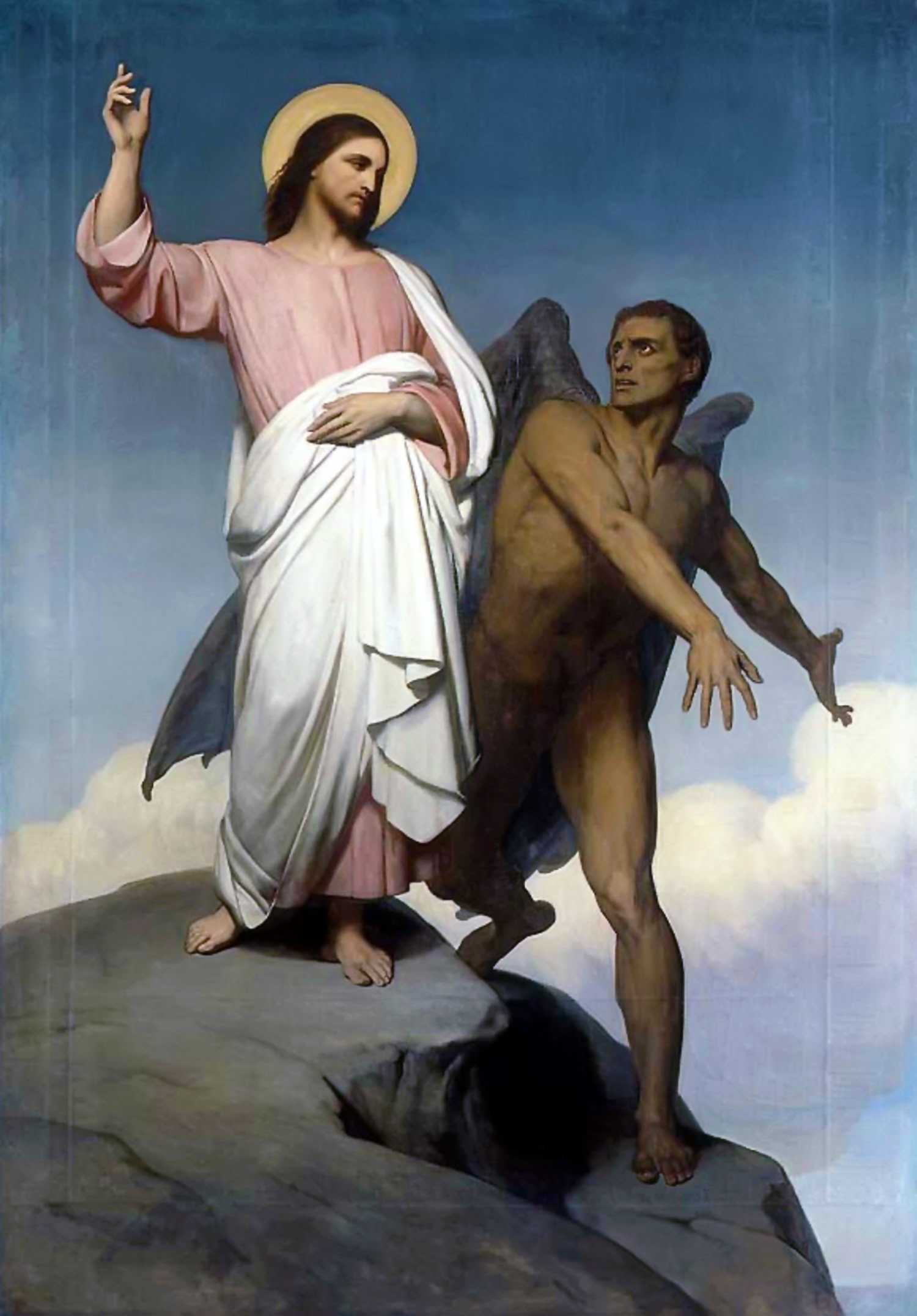
    But it is the familiar story of Christ being tempted in the desert that speaks to us most clearly of the temptation to forget who we are and who God is. The devil would like nothing more than for Jesus to forget who he was and why he was here. He would have Jesus forget that real hunger is not satisfied by mere bread, but must be satisfied by God’s word. He would have Jesus forget that there is only one God and that real glory comes from obedience to God’s command and from living according to God’s call. He would have Jesus forget that life itself is God’s gift and that we must cherish it as much as God does.

    But Jesus won’t forget. Satan in his arrogance thinks he can make him forget, but he is not more powerful than Jesus. And so, Jesus refuses to turn stones into bread, remembering that God will take care of all his real hunger. He refuses to worship Satan and gain every kingdom of the world, remembering that he belongs to God’s kingdom. He refuses to throw away his life in a pathetic attempt to test God, remembering that God is trustworthy and that he doesn’t need to prove it.

    The way that we remember who we are as a Church is through the Sacred Liturgy. In the Liturgy of the Word, we hear the stories of faith handed down from generation to generation. These are the stories of our ancestors, from the Old Testament and the New. In the Liturgy of the Eucharist, we engage in anamnesis, a remembering, or re-presentation of Christ’s Passion and death, and as we do that, it becomes new for us once again; it brings us to Calvary and the empty tomb and the Upper Room. There is no better way for us to remember who we are as a people than to faithfully participate in the Sacred Liturgy.

    And so we come to this holy place on this holy day to remember that we are a holy people, made holy by our God. We remember who we are and who God is. We rely on the Spirit’s help to reject the temptations of Satan that would call us to forget who we are and instead become a people of our own making. We have come again to another Lent. Lent is a time of conversion and springtime and re-creation. For the people in our Order of Christian Initiation for Adults – OCIA – it is a time of conversion from one way of life to another as they approach the Easter Sacraments. For the rest of us, Lent is a time of continued re-conversion and re-commitment to our sacramental life. Our Church teaches us that conversion is a life-long process. In conversion, we see who our God is more clearly and we see ourselves in a new, and truer light – indeed we see who we really are before God.

    That is life in God as it was always meant to be. Remembering our God, remembering who we are, we have promise of being set on high, as the Psalmist proclaims today. This Lent can lead us to new heights in our relationship with God. Praise God for the joy of remembering, praise God for the joy of Lent.

  • Saturday after Ash Wednesday

    Saturday after Ash Wednesday

    Today’s readings

    “Those who are healthy do not need a physician, but the sick do.”

    A few months ago, I had a reaction to my cholesterol meds: hives, itching, severe joint pain. At first it was just the hives and I dismissed it, thinking it was a bug bite. But they quickly spread. I was thinking if it didn’t get better I’d call the doctor the next day. But then I realized I had had this reaction before, and I knew it wasn’t going to go away on its own. I was sick, and I needed a physician. How often, though, do we just dismiss the illnesses we have and hope for the best?

    It’s important that we learn to do that in the spiritual life. If you don’t think you need a physician for your spiritual life, then you aren’t going to get much out of Lent, I’m afraid, and that’s sad. If you don’t admit you’re sick, you deprive yourself of the doctor. If you don’t admit your spiritual life is ailing, you deprive yourself of the Savior. Jesus is very clear today: he came to call sinners to conversion, and that includes all of us. It’s been said that the Church is not a museum of saints, but a hospital for sinners. And thank God that’s true, because all of us, me and you, all of us, need the medicine of grace in our spiritual lives time and time again. And the good news is that Jesus gives us Lent to do just that. Let’s be converted, be healed, be made whole so that the glory of Easter can brighten our lives.

    So our reflection this morning is two-fold. First, where and how do I need the Divine Physician in my life right now? And second, invite him in and ask him to heal us.