Category: Prayer

  • Saturday of the Nineteenth Week of Ordinary Time

    Saturday of the Nineteenth Week of Ordinary Time

    Today’s readings

    “Return and live!”

    This is very good advice from the prophet Ezekiel.  He was preaching to a nation that was steeped in sin, and whose sinfulness was passed on from previous generations.  But unlike the punishments of old, where God punished those who sinned for many generations, Ezekiel proclaimed that God was going to do something new.  He was going to punish only those who did wrong, and bless those who did right.  If the son sinned, it was not the father’s fault, and if the mother sinned, it was not the daughter who would pay the price.

    We might call that “personal responsibility,” a notion that doesn’t get as much adherence these days as it ought to.  Now if the son sins, the parents sue the person who punished the son for it.  Nothing is anyone’s fault; no one has to step up and take responsibility for what they’ve done.  Or at least it sure seems that way.

    Ezekiel would take us all to task for that philosophy.  Our God is Truth, and we should live that truth every day of our lives.  So if we’ve wandered from that, Ezekiel has the remedy today: “Return and live!”

  • The Eighteenth Sunday of Ordinary Time

    The Eighteenth Sunday of Ordinary Time

    Today’s readings

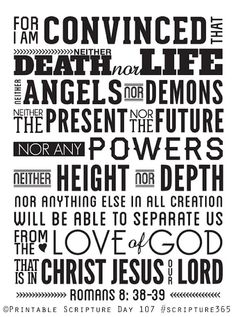
    Saint Paul asks a very important question in his letter to the Romans: “What will separate us from the love of Christ?”  Then he lists a number of rhetorical examples of what one might think would do that: anguish, distress, persecution, famine, the sword and many others.  Lest we let that little list run right past us, I want to emphasize that all of these things, when the original Roman church heard them, were equivalent to the end of the world.  Saint Paul was asking – rhetorically of course – if Armageddon could separate us from the love of Christ, and the answer is quite emphatically, “NO!”

    And the end of days was on the minds of the early Christians.  They were often persecuted, cast out of the community, and even put to death.  So it’s easy to see why Saint Paul would seek to give them comfort.  But what about us?  Does the message ring truth in our ears?  I think it does.  Turn on the news: war in Gaza and Israel, conflict in Russia and the Ukraine, including a plane being shot down that killed almost 300 men, women and children.  Then there’s the border crisis with Mexico, the expulsion of the last Christians from Iraq, rampant crime in the city of Chicago, and so much more.  There’s plenty for us to worry about and that is to say nothing of our own personal crises.  Illness, death of a loved one, relationship issues, job stress or employment uncertainty.  All of these things take a toll on us, and at times, we have to wonder if these are signs of the end times, or if we have actually been separated from God’s love.

    The answer is as it was in Saint Paul’s day, absolutely not.  If we want to see the answer underlined, all we have to do is look at today’s Gospel.  Matthew takes note that when Jesus saw the vast crowds who had been following his every word and hanging on every miracle, he was moved with pity for them.  And the word pity here translates a Greek word that means much more than it means for us.  It’s used also in John’s Gospel when Jesus arrives in the town of his friend Lazarus, who has just died, and sees the people’s grief.  In that Gospel, the pity that he has causes him to cry out in anguish, giving voice to an emotion that is something like pity, but also encompassing grief, sadness, pain, and exasperation.  Here, Jesus is moved with pity because of the people’s hunger: not just their physical hunger, but also the spiritual hunger that has been unmet for so very long.

    And so he takes five loaves and two fish – practically nothing – and feeds thousands of people, people he created out of practically nothing, but who had become something to him, who always were something to him, and he goes about feeding every kind of hunger they have.

    We’re going to go through rough stuff in our lives.  The world may seem like it’s crumbling around us.  And while God may allow the bad things that happen to us as a consequence of the fallenness of our human nature, I think it’s important to note that he never intends us to be unhappy, never wants us to despair of his love.  He might not wave a wand to make all our troubles go away, but he is always going to be with us in good times and bad, giving us grace to get through whatever we have to suffer, growing in his love, and becoming more in the process.

    If God had meant anything to separate us from his love, he would have written us off in the Garden of Eden.  But instead, he sent his Only-Begotten Son to walk with us, to feed us beyond anything we could hope for, to pay the price for our many sins, and to give us the invitation to everlasting life.  That’s our God.  And nothing can ever separate us from his love.  Nothing.
  • Saturday of the Seventeenth Week of Ordinary Time

    Saturday of the Seventeenth Week of Ordinary Time

    Today’s readings

    It’s dangerous to be a prophet.  It’s dangerous because nobody wants to really hear the truth.  Both Jeremiah and Saint John the Baptist find that out very clearly in today’s Scripture readings.  Both of them insisted on proclaiming the truth, and both of them ultimately paid for it with their lives, although Jeremiah was protected in today’s first reading.

    The thing we need to take with us this morning is that we are all called to be prophets.  We are all called to speak the truth.  And usually that truth won’t be welcome.  But we have to be people of integrity and say what the Lord puts on our hearts.  Maybe it will be received and maybe it won’t, but we will have at least fulfilled the call we received at baptism when we, like our Lord, were anointed as priest, prophet and king.

    It may be difficult to speak the truth, but God is faithful.  If we do what he asks us to do, he will walk with us and never leave us alone.  Being prophets is a dangerous business, but as the Psalmist tells us today, “For the LORD hears the poor, and his own who are in bonds he spurns not.”

  • The Seventeenth Sunday of Ordinary Time

    The Seventeenth Sunday of Ordinary Time

    Today’s readings

    You’ve probably heard me say that these summer weeks of Ordinary Time give us a wonderful look at how to live the Christian Life.  I always say that the Scriptures give us a kind of “Discipleship Toolbox” that helps us to know what we are supposed to be about and how we are to live the Gospel.  The tool with which we are presented this week is pretty obviously the tool of wisdom.  It’s an important tool and it’s not all that easy to attain.  Wisdom is that wonderful virtue that is kind of like knowledge, but more about knowing what is right and wrong.

    So think about it, God comes to you in a dream and says you can have anything you want; all you have to do is ask.  Ever since I can remember hearing that reading as a young boy, I have wondered how I would have answered if I had been in Solomon’s place.  It’s a question that I think is worthwhile for all of us to meditate on, because it says a lot about who we are and what is most important to us.

    Clearly, Solomon already had what he was looking for, because he was wise enough to ask for it.  He was already wise enough to seek God and fear God and rely on God, and so God rewards him with so much wisdom, that his very name becomes synonymous with that great virtue.  And it’s wisdom that is in motion in today’s Gospel.

    Over the past few Sundays, Jesus has taken time to tell us what the kingdom of God is like.  A couple of weeks ago, the kingdom was like seed that was scattered and sown.  Some fell on rocks, some among weeds, but some on the good soil that yielded more than anyone had a right to hope for.  The kingdom of God is something like that: the more we nurture and cultivate our life with God, the more we benefit ourselves and others.  Last Sunday, the kingdom was again like seed, which was carefully planted, but was interrupted by someone planting weeds too.  The landowner had the harvesters sort it all out at harvest time.  The kingdom of God is something like that: the good and the bad will all be sorted out in due time.

    This week we have more images of what the kingdom is like.  It’s like the pearl of great price or the buried treasure.  In both cases, the one finding that pearl or treasure sell everything they have to obtain it.  In both cases, the treasure seeker is wise enough to see the value of what they are looking at, and they give everything to have it.  The kingdom of God is like that.  It’s worth giving everything to have.

    But it does take some wisdom to recognize the pearl of great price.  Because lots of things out there are shiny and nice and tempting.  But they don’t lead to everlasting happiness.  And it takes wisdom to go for that pearl when you find it.  Because it costs something, well, everything really.  Just like the people in the Gospel sold everything they had to buy the field with the buried treasure and the pearl of great price, so we will be required to give everything to obtain the kingdom of God.

    That might mean walking away from a business deal that is profitable but has bad consequences for other people.  Or perhaps it means giving up a relationship that is destructive.  We may have to give up a leisure pursuit that is enjoyable but separates us from family and friends.  We have to make choices, changes and decisions that amount to selling everything in order to make room for something that is of ultimate importance: that pearl of great price which is the Kingdom of heaven itself.

    So think about it.  God gives you the opportunity to obtain anything you want.  What do you ask for?  What is it that you’d give everything to have?

  • Thursday of the Sixteenth Week of Ordinary Time

    Thursday of the Sixteenth Week of Ordinary Time

    Today’s readings

    We’ve just had this Gospel reading in the Sunday readings in the last couple of weeks, so I thought I’d touch on a few verses that I didn’t go into in that homily.  And these are some of the most powerful words in Scripture for me, and always a challenge for me:

    “But blessed are your eyes, because they see,
    and your ears, because they hear.
    Amen, I say to you, many prophets and righteous people
    longed to see what you see but did not see it,
    and to hear what you hear but did not hear it.”

    Sometimes we just overlook the blessing of every moment, don’t we?  We might be in the midst of a really good time in our lives.  We get to see new birth, restoration, healing, joy, laughter, and celebration.  But in the midst of all that, we can in fact become jaded to it.  Perhaps we even feel entitled to it and the blessing of it stops registering for us.

    Or maybe we’re in the midst of a really lousy time.  Maybe we are seeing death, degradation, sickness, brokenness, pain, weeping and grief.  And we can be real angry about that, overlooking the care that is extended to us, from the kind words, to the thoughtful deeds, or even just the loving embrace.  We miss the blessings of those hard times a lot.

    But regardless, in every moment of every day, we get to see things and hear things that others have not been privileged to see and hear.  We get to love and rejoice and persevere in whole new ways every single day.  Whether the times are good or bad, the moments are always blessed by our God who walks with us through every experience.  We have to take the time to see and hear those blessings, because the destruction of our soul that happens when we miss it is just irreparable.  So many have longed to see and hear what we have seen and heard.  Blessed are our eyes, blessed are our ears, blessed are we!

  • The Sixteenth Sunday of Ordinary Time

    The Sixteenth Sunday of Ordinary Time

    Today’s readings

    I think we’d all admit this has been a bit of a rough week.  We have heard of escalating tensions in the middle east, and very dangerous issues in the Russia/Ukraine situation.  Then a plane was shot down over the Ukraine, killing almost 300 people.  This week, we also heard of the death of Father John Barrett, a former pastor of this parish, and I’ve anointed a few parishioners who had difficult surgery planned.  Lots of challenges for one week, challenges for our faith and prayer life.  And so it is good for us to come here today and hear today’s scriptures speak to that rough week.

    The wisdom writer in the first reading praises God who has the care of all, and who permits repentance for sins.  The Psalmist extols God who is merciful and gracious, slow to anger and abounding in kindness and fidelity.  Saint Paul tells the Romans, and us, that the Holy Spirit comes to our aid in our weakness, helping us to pray the right way, even praying in our stead when we cannot.  We need all that consolation on a week such as this.

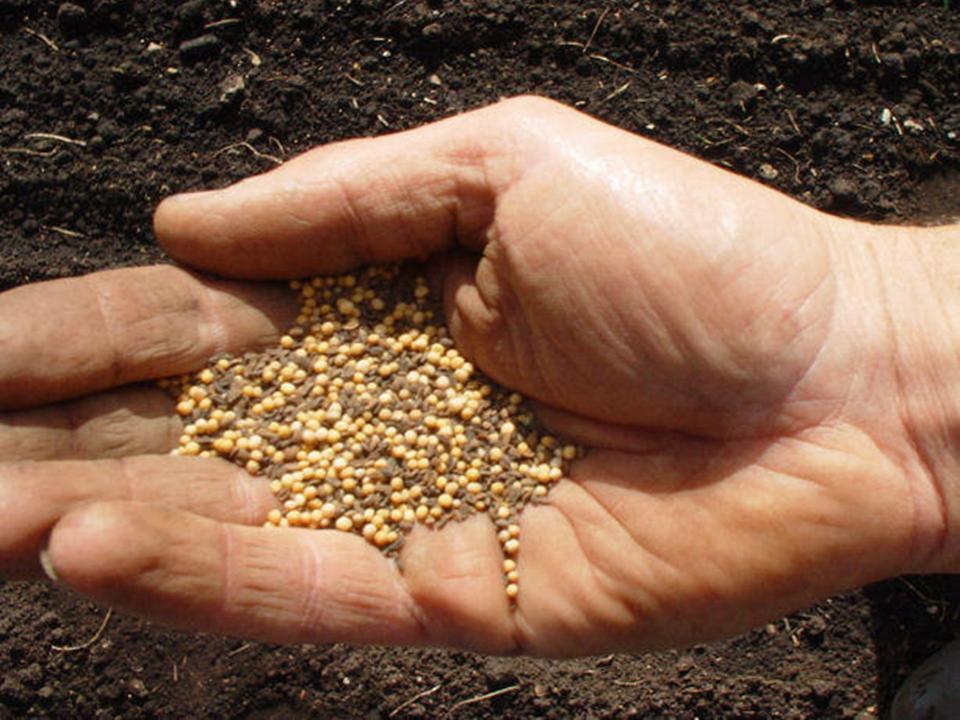
    And we have the Gospel, which continues the theme of planting seeds as we had last week.  Here we hear of the wisdom of God who allows the weeds to grow among the wheat and is wise enough to sort it all out at the harvest time.  This Gospel talks all about the Kingdom of God and what it will be like.  It will be like a tiny mustard seed that grows up to become a huge shrub.  It will be like a measure of yeast mixed with flour to become a loaf of bread.

    Here are a couple of things I want us to take from this Gospel.  First, the Kingdom of God is now.  Jesus made it real, showing us that the kingdom is present in ordinary ways: a mustard seed, a measure of yeast.  He wants us to see that we don’t have to wait for a far-off distant Kingdom, but instead to live in the Kingdom now, where he is our King.

    Second, the mustard seed, the yeast – that’s us.  We are the ones to make the Kingdom happen.  Jesus needs us to go out and proclaim the message, to witness to the presence of the Kingdom, to make people want to be part of it.  Our prayer, our love, our joy, all of that make it possible for people to come to know Christ.  The Kingdom of God is our true home; the rest of the world is just a travelling place.  When we live in the Kingdom here and now, we will be ready for the great coming of the Kingdom in heaven, where all will be made right and we will live forever with our God.

    On a week like this, we need that good news, we need that Kingdom.  And Jesus needs all of us to be leaven in the world, changing sadness into hope, directing all eyes to the One who is our true King.

  • Thursday of the Fifteenth Week of Ordinary Time

    Thursday of the Fifteenth Week of Ordinary Time

    Today’s readings

    Today’s Scripture readings have some “sound bytes” that I have found most meaningful in my prayer life.  Isaiah’s profession of faith today says, “For it is you who have accomplished all we have done.”  What a beautiful thing for us to remember.  This one statement, if we integrate it into our prayer life, will keep us from both false humility and excessive pride.  Because we have no right, when we are called by God to do something, to say, “Oh no, I could never do that.”  That might be absolutely correct, but it’s still completely meaningless.  If God calls us, he will make miracles happen from our willingness to follow.  For it is he who has accomplished all we have done.

    And we have no right to be puffed up and call attention to ourselves, and say, “Now look how wonderful I am.”  Because the really good things that we do we could never possibly do on our own: whether that’s becoming a priest and preaching the Word, or becoming a parent and raising children, or whatever our vocation consists of.  That we are willing is cause enough for celebration, but let’s not forget to celebrate the miracle that happens when God does what he needs to do in us.  For it is he who has accomplished all we have done.

    And the three verses in our Gospel reading are verses that have long stuck with me.  I have an old Bible in my office that my aunt gave me when I was probably in high school, so like a million years ago!  That Bible has these verses outlined in ink because I went back to them so often.  We all go through trials sometimes, but we can never give ourselves to despair because our Lord is so willing to help us shoulder the burden, and longs to give us the rest we all need to recuperate from the world’s trials.  All we need to do is to come to him for that rest, and to be willing to take up the burdens he offers us, knowing that we will never shoulder them alone.  For it is he who has accomplished all we have done.

  • The Fifteenth Sunday of Ordinary Time

    The Fifteenth Sunday of Ordinary Time

    Today’s readings

    Many of us have planted gardens, and maybe you’ve put in some plants this year.  That was really Father Steve’s thing, and my allergies kind of get in the way of all that, so I’m not doing that this year, but I have in the past.  But I’m always astounded when I’ve planted some seeds.  Here is this tiny, dead-looking thing: how can it ever give life to a large plant?  But that’s just what happens, isn’t it?  We carefully plant the seeds and then care for them – giving them water and keeping out the weeds and feeding them on occasion – and just about always they give life, flowers or vegetables for our table.  It’s a way to experience the miracle of life, that something can die and then give life and sustenance to the living.  What a beautiful little model of salvation the seed is!

    But if you’ve carefully planted seeds in rows at any point, you might wonder a bit about the methods used in today’s gospel reading.  Seed is scattered willy-nilly and a lot of it seems to be wasted.  But the original hearers of the parable would have understood what Jesus was saying.  It was a method used at that time: seed would be scattered, and then the soil would be tilled thus planting the seeds.  And so they would have understood that sometimes the seed falls in places the farmer didn’t intend, and those seeds don’t come to life, or if they do, it’s not for long, and it’s no big deal.

    So Jesus explains the parable for his disciples and for us.  The seed is the seed of faith.  God scatters it with wild abandon, pouring it out freely that his chosen ones – which obviously includes you and me – would come to know him.  Sometimes it works: we receive the seed of faith, it’s watered in the sacrament of baptism, fed with the Eucharist and the other sacraments, and we make of ourselves fertile ground, letting it come up and grow and give life to the world.  But sometimes, of course it doesn’t work out that way.

    The seed might fall in a place where the faith is not nourished and Christ is not known.  Maybe it’s a foreign land without benefit of missionaries, but it could even be a little closer to home.  Perhaps the seed falls on those whose turbulent lives can’t give the seed any roots: they receive the word of God with joy, but the trials and tribulations of daily living upset everything and the faith never really sinks in.  Or, maybe it falls on us embroiled as we are with the cares of the world.  The “weeds” of our living are improper relationships, too much time playing video games or surfing the wrong places of the internet, watching too much television, wasting time on passing things.  There is so much that can distract us from our faith, and too often, we are not as diligent about weeding the gardens of our souls the way we should be.

    We, dear brothers and sisters in Christ, are called to be rich, fertile ground to give life to the faith planted in our hearts.  That means that we must keep ourselves fresh by renewing the waters of baptism in our hearts.  We must feed that seed of faith by dedicating ourselves to the Eucharist and coming to Mass all the time, whether it’s convenient or not.  We must weed out the distractions of our lives and give that seed of faith room to grow.  We must shine the brilliant sunlight of God’s love on that faith by living the Gospel and reaching out in love to brothers and sisters who are in need.

    We are the ones who have been called to yield “a hundred or sixty or thirtyfold.”  The seed of faith comes in the form of something that might look dead – Christ’s saving action on the cross.  When we water and feed and weed and let the light shine on that faith, we can give life to the world around us and give witness that the world’s death is no match for the salvation we have in Christ.

  • Thursday of the Fourteenth Week of Ordinary Time

    Thursday of the Fourteenth Week of Ordinary Time

    Today’s readings

    Today’s Gospel is an impetus for the third Luminous Mystery of the Rosary: the proclamation of the Kingdom of God with its call to repentance.  Jesus charges his Apostles to go out and proclaim that the Kingdom is at hand, with all its accompanying signs and wonders.  We have to understand that this is the Church’s main job in every time and place.  We are now the ones who have to proclaim the Kingdom of God and call people to repentance by the witness of our lives.

    We are now the ones called to drive out demons, cure the sick, and all the rest.  We do this by being Christ’s presence in a world that is sorely in need of it.  We drive out demons by casting the glorious light of Christ into every dark corner.  We cure the sick by reaching out to those who are ill, looking in on them, caring for them, bringing the Eucharist to them.

    We also have to understand, though, that sometimes our efforts won’t prove fruitful.  Sometimes our peace won’t be received because the other person is not peaceful.  All we can do is do our best, offer Christ, and move on if that’s not accepted.  And we have to trust that God will give us everything we need on our journey.

  • Tuesday of the Fourteenth Week of Ordinary Time

    Tuesday of the Fourteenth Week of Ordinary Time

    Today’s readings

    Today’s Gospel underlines the failure of the Jewish leaders of the time.  Jesus was casting out demons from many people, which was what they were supposed to do but could not.  So instead of checking what was lacking in their faith, they accuse Jesus of being in league with the devil.  Jesus sees the vast number of people who long for spiritual care but are not getting it, and laments the lack of laborers for the harvest.

    The lack of laborers for the harvest is a real issue, now as much as then.  The needs aren’t different: people need to know God loves for them and is present to them; they need to see the value of living a Christian life.  It’s up to all of us disciples to make that life real and attractive, so that they can come to know the Lord.  You might be the Jesus that someone needs to see today.  You might be the laborer God is sending into some situation today.  Don’t be afraid to follow the Master of the harvest!