Category: Prayer

  • The Fifteenth Sunday in Ordinary Time

    The Fifteenth Sunday in Ordinary Time

    Today’s readings

    I really think one of the greatest obstacles to progress in our spiritual lives is the thought that we have to do everything ourselves. That we have to be trained and recognized and that whatever it is that has to be done has to be done by us. After all, we are good enough, aren’t we? So why should we ask for help?

    I think you can see where I’m going to go with this. But this leads to one or both of two things. First, if whatever it is does work out, it’s all about me. Aren’t I wonderful? Aren’t I great? Did you see what I did? But second, if it does not work out, it can make us think we aren’t good enough, we are a failure, and send us into frustration and depression and all sorts of bad behavior.

    Very often, this kind of thinking it’s all on us and all about us makes us shy away from doing something we are called to do. How can I do something like that? I’m not good enough to accomplish that. Someone, anyone else is more qualified to do that than I am.

    Look at the apostles. What a rag tag bunch they were. Who would ever have thought they were good enough to come together and do anything, let alone foster a fledgling Church and proclaim a new Gospel that a lot of people couldn’t bear to hear? Yet, Jesus knew them best, of course, and he saw the men he created for that very moment to do that very important task. And then, because they didn’t know everything and weren’t qualified to accomplish the task ahead of them, he gave them what they needed in pouring out the Holy Spirit on them.

    It’s so clear in today’s Gospel reading: “He instructed them to take nothing for the journey but a walking stick—no food, no sack, no money in their belts.” Because if they have everything they need, then they don’t need Jesus, they don’t need the Holy Spirit. So by going without, they have more than they could hope for. By being unqualified, they accomplish great things. Jesus makes it very clear today that that is the life of the disciple.

    And that includes you and me, friends. We aren’t qualified to do all the things we are asked to do, and we don’t have everything we need. I remember when Bishop Conlon called me to tell me he wanted me to come here to Saint Mary’s. I was very aware that I didn’t have what I needed to be the pastor of such a large parish. But as I prayed about it, God reminded me that it wasn’t about me at all, and that he would give me what I need.

    And he has been so faithful to that! Every single day, I am almost overwhelmed by how much of a blessing it was for me to come here. I look around at our marvelous volunteers, and I know I don’t deserve how wonderful they are to me. I meet you all as you come out of Mass, and I think how blessed I am that you took time out of your day to come pray and worship with me. I have what I need to be the pastor of this place because God knows what I need far better than I do, and he is faithful to giving me all that and more.

    So I offer that to you today. Wherever you need to go in your life, whatever you are being called to do, put it in the hands of Jesus and follow that path. Trust that he will give you more than just some food, a sack, and money in your belts. Trust that he will give you everything you need and more, and trust that then you will be truly happy. Who knows what amazing deeds God has planned to do in us and through us, if we just trust in his faithfulness!
  • The Fourteenth Sunday in Ordinary Time

    The Fourteenth Sunday in Ordinary Time

    Today’s readings

    I often wonder how people get through the hard times of their lives if they don’t have faith. We can all probably think of a time (or several) in our lives when we were sorely tested, when our lives were turned upside-down, and, looking back, we can’t figure out how we lived through it except for the grace of our faith and the abiding presence of God. During the course of my priesthood, I have been present to a lot of people who were going through times like that: whether it be illness or death of a loved one, relationship struggles, job issues, or financial struggles, or a host of other maladies. Some of them had faith, and some of them didn’t. It was always inspirational to see how people with faith lived through their hard times, and very sad to see how many who didn’t have faith just broken when their lives stopped going well.

    That’s the experience that today’s Liturgy of the Word puts before us, I think. Let’s look at the context. In last week’s Gospel, Jesus has cured two people miraculously. He actually raised Jairus’s twelve-year-old daughter from the dead, and he cured the hemorrhagic woman, who had been suffering for twelve years. So both stories had occurrences of the number twelve, reminiscent of the twelve tribes of Abraham, and later the Twelve Apostles, both of which signify the outreach of God’s presence into the whole world. So those two miraculous healings last week reminded us that Jesus was healing the whole world.

    But this week, we see the exception. This week, Jesus is in his hometown, where he is unable to do much in the way of miracles except for a few minor healings. Why? Because the people lacked faith. And this is in stark contrast to last week’s healings where Jairus handed his daughter over to Jesus in faith, and the hemorrhagic woman had faith that just grasping on to the garments of Jesus would give her healing. Faith can be very healing, and a lack of it can be stifling, leading eventually to the destruction of life.

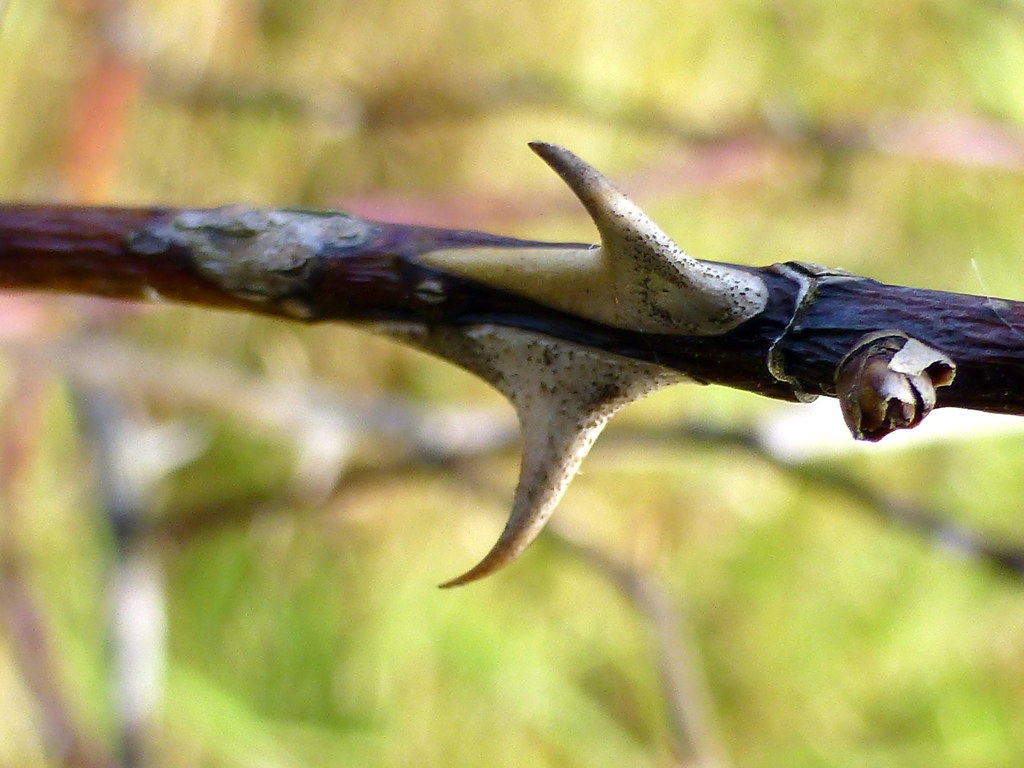
    We see that clearly in the first two readings today. First Ezekiel is told that the people he would be ministering to would not change, because they were obstinate. But at least they’d know a prophet had been among them. Contrast that with Saint Paul’s unyielding faith in the second reading to the Corinthian Church. Even though he begged the Lord three times to relieve him of whatever it was that was his thorn in the flesh, he would not stop believing in God’s goodness. Much has been said about what Saint Paul could possibly mean by this “thorn.” Was it an illness or infirmity? Was it a pattern of sin or at least a temptation that would not leave him alone? We don’t know for sure, but this “thorn” makes Saint Paul’s story all the more compelling for us who have to deal with our own “thorns” in our own lives. Saint Paul’s faith led him to be content with whatever weakness or hardship befell him, and he came to know that in his weakness, God could do more and thus make him stronger than he could be on his own. That assurance gives us hope of the same grace in our own struggles.

    We people of faith will be tested sometimes; that’s when the rubber hits the road for our faith. Knowing of God’s providence, we can be sure that he will lead us to whatever is best. And our faith can help us to make sense of the struggles and know God’s presence in the dark places of our lives. People of faith are tested by the storms and tempests of the world, but are never abandoned by our God. Never abandoned.

    Let’s pray with this notion today. Take a moment to quiet yourself, close your eyes if that works for you…

    Take a moment now to think of whatever thorn is in your side. Maybe it’s illness or infirmity, or a temptation that won’t go away, an uneasiness about something going on in your life, worry about yourself or a family member. Whatever that is, bring that to mind and tell Jesus about it. Yes, he knows your needs, but he wants to hear you say it and put it in his merciful hands…

    Now picture putting that need, that thorn, in Jesus’ hands. Give it up and stop holding on to it. Let go of whatever hold that thorn has on you…

    Take a moment now to pray to Jesus in your heart, using your own words. Tell him that you trust him to make of this thorn whatever he wants it to be. Tell him that you trust in his healing, and that you will stop holding on to the way you want it to work out. Ask him to take the burden from you and promise not to take it back…

    Repeat this after me: Jesus, I trust in you. Jesus, I give you my burdens. Jesus, I will accept healing in the way you want it for me. Jesus, I trust in you.

  • Tuesday of the Thirteenth Week of Ordinary Time

    Tuesday of the Thirteenth Week of Ordinary Time

    Today’s readings

    You probably remember, maybe not fondly, the readings we had from the Books of Kings the last couple of weeks. The names were hard to pronounce, and their deeds were hard to hear. Each and every one of the kings was worse than the one who had preceded him. How often did we hear the ancient historian write “and he did evil in the sight of the Lord?” What makes it doubly hard to hear, I think, is that Israel’s sordid history is in some ways our own. How often do we too turn away from the Lord and his mercy and his plan for our lives? Our deeds, hopefully, are not as murderous as those of the ancient kings, but they are still lacking, of course, in the sight of God.

    And so the Lord has sent Amos to call those Israelites – and us, too – to conversion. Amos is tough sometimes, because he calls a situation the way it is. He doesn’t beat around the bush or soft-pedal his prophecy. You know exactly what’s on his mind. And poor Amos can’t do anything less. He tells us in today’s first reading:

    The lion roars—
    who will not be afraid!
    The Lord GOD speaks—
    who will not prophesy!

    For Amos, not to say what God is calling him to say is as fearful as facing the roaring lion. And so, we are called to hear, and to reform our lives, and to follow the Lord once again.

    As Amos expresses the Lord’s displeasure, it is the Psalmist who expresses the Lord’s mercy:

    But I, because of your abundant mercy,
    will enter your house…

    We cannot make up for our sinfulness all on our own. We need our Savior, the one who calms the storms, despite our lack of faith. When we have messed up our lives so that we cannot see past the storm, we know that we can depend on our God who loves us back into relationship with him. Even the violent winds and stormy seas of our own lives obey the one who gave his life for us.

  • The Thirteenth Sunday of Ordinary Time

    The Thirteenth Sunday of Ordinary Time

    Today’s readings

    My absolute favorite line from this Gospel reading is, “Then he put them all out.” I can just imagine Jesus going into the house, encountering the mourners, seeing the lack of faith in all of them, and saying “Go on! Get outta here! I’ve got work to do!” Or maybe that’s just how I’d say it!

    It might be a funny little line, but I think it makes a significant point, and sums up the point made by the Liturgy of the Word we have for today. Faith is necessary in our relationship with God and in receiving God’s blessings and in living the life for which he has created us. Those incredulous mourners were symptomatic of a people who had abandoned hope of God’s interest in them. They were so abused by the scrupulous religious establishment, that they didn’t really even know God, nor did they believe that God cared about them. So all that was left for them was to mourn, because, as far as they knew, there was nothing for which to look forward. The only thing Jesus could do, then, was to put them out of the house, so that he could respond to the faith of Jairus, the synagogue official, the father of the girl, who had faith enough that he called Jesus to come heal her.

    That’s not so different from the situation with the woman who somewhat detained Jesus on the way to Jairus’s house. This poor woman had placed her faith in “many doctors,” who apparently did nothing but increase her suffering. Just an aside here, but as wonderful as health care is for the most part, as I get older I’m getting the significance of having to see “many doctors.” Two cardiologists, a sleep doctor, my primary care physician, and the list goes on and on. Maybe some of you can resonate with this too. Now this woman seems to have had a stirring of faith, or maybe it was even a last ditch effort, a “Hail Mary,” if you will, and that leads her to touch the garment of Jesus as he passes by. She makes an act of faith: “If I but touch his clothes, I shall be cured.” And in this humble act of faith, in which she undoubtedly hopes to go unnoticed, she finds that no act of faith is ever unnoticed by Our Lord. Even though the disciples laugh at him for wanting to know who in the pressing crowd touched him, Jesus, who surely already knew who it was, acknowledges this woman of faith and responds to that act of faith.

    “God did not make death,” as the wisdom author in our first reading tells us. And because he did not make death, he has given us faith as a remedy for its effects on our lives. Maybe we won’t be miraculously cured like the hemorrhagic woman, and maybe we won’t be raised from the dead like the daughter of Jairus. But we absolutely will experience resurrection and new life when we join ourselves to Christ who has triumphed over death. That experience requires faith, and we must make it our constant care to exercise that faith, live that faith, and to “put out” of our lives any negativity, any dependence on worldly remedies, anything, really, that interferes with that faith. Each of us must be absolutely willing to “put them all out” and react in faith to all that God wants to do in our lives. Because our lives depend on it. They really do.

  • Thursday of the Twelfth Week of Ordinary Time

    Thursday of the Twelfth Week of Ordinary Time

    Today’s readings

    Have you accepted Jesus as your personal Savior? I’m sure you’ve heard this question, perhaps someone even asked you that question. They teach that all you have to do is make that one-time decision and you’re saved. Not so fast.

    If salvation were something magical that came about as the result of just saying a simple prayer, once and for all, then why wouldn’t everyone do that? The fact is, salvation is hard work. It was purchased at an incredible price by Jesus on the cross. And for us to make it relevant in our lives, to live it in our lives, we have work to do too. Not the kind of work that earns salvation, because salvation is not earned, but the kind of work that appropriates it into our lives and makes it meaningful.

    People who are saved behave in a specific way. They are people who take the Gospel seriously and live it every day. They are people of integrity that stand up for what’s right in every situation, no matter what it personally costs. They are people of justice who will not tolerate the sexist or racist joke, let alone tolerate a lack of concern for the poor and the oppressed. They are people of deep prayer, whose lives are wrapped up in the Eucharist and the sacraments, people who confront their own sinfulness by examination of conscience and sacramental Penance. They are people who live lightly in this world, not getting caught up in its excess and distraction, knowing they are citizens of a heaven where such things have no permanence. Saved people live in a way that is often hard, but always joyful.

    Not everyone who claims Jesus as a personal Savior, not everyone who cries out “Lord, Lord,” will enter the kingdom of heaven. That’s what Jesus tells us today. We have to build our spiritual houses on the solid rock of Jesus Christ, living as he lived, following his commandments, and clinging to him in prayer and sacrament as if our very life depended on it. Because it does. It does.

  • The Twelfth Sunday of Ordinary Time

    The Twelfth Sunday of Ordinary Time

    Today’s readings

    What on earth do you do when everything comes crashing down around you?

    That’s a question that, quite frankly, all of us have to deal with at some time or another in our lives. Some people get more than their share of sadness, but really all of us have a heap of frustration delivered to our doorstep at some point. And it does seem to pour when it rains. Bad circumstances pile up and are mixed with frustration, anger, sadness, humiliation, and a whole host of other emotions that only make bad circumstances worse.

    So what on earth do you do when everything comes crashing down around you?

    Job had quite the storm on his hands. He was a just man and his righteousness had earned him the favor of God and the esteem of all those who knew him. He had a large and powerful family and a thriving business, and it seemed that things couldn’t be going better. Except when everything came crashing down around him. The devil didn’t like how just and upright Job was, and how much God took pride in him. And so, as the devil will do, he made plans to upset the apple cart. God allowed it, as he allows the things that befall us, because not to do so would violate our free will, which he gave us out of love.

    Job does okay for a while, but when everything piled on, Job couldn’t take it any more. His friends are no help, and they even blame him for the things that have happened. His wife tells him to “curse God and die” (2:9). Twenty-nine chapters of this has him blaming God, only to be rebuked by his friends. And in the passage we have today, God sets things right, and points out to Job that he can’t know all that God has in mind and he has no idea how the balance of good and evil in the world work. But in all of this, God has not forgotten Job, so when Job repents a few chapters later, God restores Job’s fortunes many more times greater than he had in the past.

    But what are you going to do when everything comes crashing down around you?

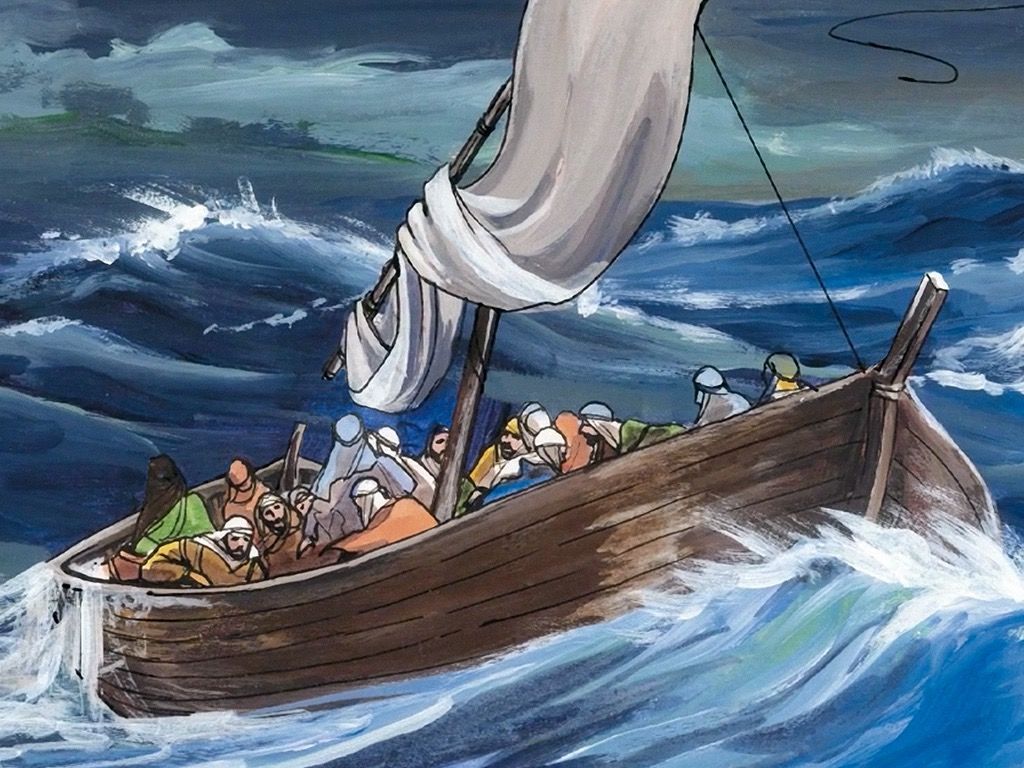
    The disciples of Jesus in the Gospel reading today certainly thought that moment had come. They had been following Jesus now, and while they were drawn to him, he clearly was not the kind of Messiah they had been expecting. Far from being a heroic military leader destined to return Israel to its place of prominence in the world at that time, Jesus was asleep on a cushion in the stern of a boat, while a violent squall threatened to dump them into the sea. Didn’t he get it? Doesn’t he know this is the kind of thing a Messiah takes care of? Couldn’t he be expected to lead them through the storm?

    Well, he does, of course. With just a few words, he rebukes the wind and the sea and tells them to be still, and the wind and the sea obey. They are astounded. And Jesus expects them to expect the astounding: “Why are you terrified? Do you not yet have faith?”

    And here we come to what is, I think, the crux of today’s Liturgy of the Word. And that is faith. You know, we have talked about this before: it’s easy to have faith when things are going well, as they were for Job in the early part of that book. But when everything crashes down around you, when everyone you know is killed, and all of your fortune destroyed, when the wind and the waves threaten to dump you into the sea, well, it’s hard to have faith then, isn’t it?

    But in those moments, those moments when everything is crashing down around you, when the world seems to be coming to a horrible end, those, friends, are the times when we need our faith the most. “Do you not yet have faith?” Jesus asks the disciples in the boat that question, but he could well enough ask us too, right? He could well ask us disciples that same question:

    • when you’re at the bedside of a loved one who went home way too soon.
    • when your job comes to an end and you have no idea what is coming next.
    • when your children can’t see what’s best for them and want to go their own way.
    • when your spouse doesn’t seem interested in your relationship any more.
    • when you’ve just received a difficult diagnosis, and you’re not sure you can withstand the medical treatment.
    • when you have no one to go home to, and the loneliness seems like a never-ending abyss.
    • when you’re listening to the news and you feel powerless to withstand the evil in the world, let alone to confront it.

    When everything is crashing down around us, do we have our faith in those moments? Because if we don’t, we’ll never be able to see Jesus in the stern of the boat, we will never be able to withstand the violent squall. There have been days where, absent my faith, I wouldn’t still be functional. But thanks be to God, I have God in my life and my faith sustains me through my hardest days.

    But that doesn’t mean it just happens. There isn’t a way to press a button and be in “faith mode” when everything comes crashing down around you. There has to be a pre-existing faith to engage. We get through tough times not by waving a magic wand, but instead by placing the storm at the foot of the Cross that we have learned to adore, and by accepting the will of Our Lord who we have learned to follow in love. The trust that we have in the Lord in whom we have put our faith is the salvation from the wind and the storm and the sea and everything crashing around us. If even the wind and the sea obey Jesus, then we have to also. And we have to do it before the storm catches us unprepared.

    “What are you going to do when everything comes crashing down around you?” isn’t really the most important question. The real question is, how are you going to build the faith that you need for when that happens?

  • Thursday of the Eleventh Week of Ordinary Time

    Thursday of the Eleventh Week of Ordinary Time

    Today’s readings

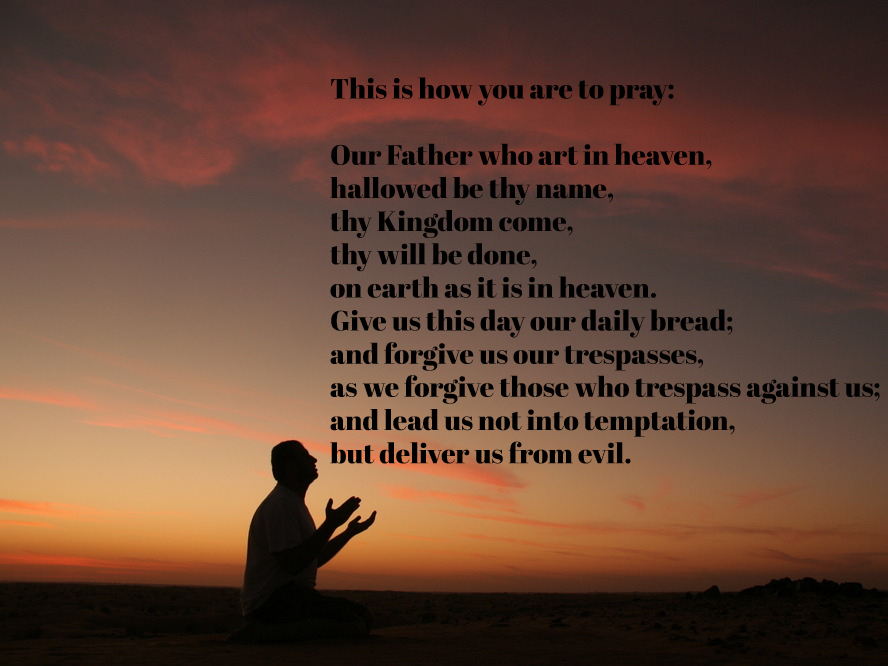
    When you stop to think about it, we are so richly blessed to have as our guide for prayer, and a prayer that we can say, the words of our Lord himself. It’s such a beautiful thing that this is usually one of the first prayers that we learn. It’s a powerful tool for our spiritual life, and can get us through good times and bad. In fact, I was celebrating the Last Rites for someone the other day, and she was in and out as often happens in one’s last moments. But when we got to the Lord’s prayer, she moved her lips in prayer along with us. I was really struck by the beauty of that moment.

    This wonderful prayer teaches us how to approach our God in prayer. First, it teaches us to pray in communion with our brothers and sisters in Christ. This week, in our Office of Readings, we priests and deacons and religious have been reading from a treatise on the Lord’s Prayer by Saint Cyprian. On Monday, that treatise told us: “Above all, he who preaches peace and unity did not want us to pray by ourselves in private or for ourselves alone. We do not say ‘My Father, who art in heaven,’ nor ‘Give me this day my daily bread.’ It is not for himself alone that each person asks to be forgiven, not to be led into temptation, or to be delivered from evil. Rather we pray in public as a community, and not for one individual but for all. For the people of God are all one.”

    Second, it acknowledges that God knows best how to provide for our needs. We might want all the time to tell him what we want, or how to take care of us, but deep down we know that the only way our lives can work is when we surrender to God and let God do what he needs to do in us. And so the Lord’s Prayer teaches us to pray “thy kingdom come, thy will be done.” The whole point of creation is that the whole world will be happiest and at peace only when everything is returned to the One who made it all in the first place. Until we surrender our lives too, we can never be happy or at peace.

    Third, this wonderful prayer acknowledges that the real need in all of us is forgiveness. Yes, we are all sinners and depend on God alone for forgiveness, because we can never make up for the disobedience of our lives. But we also must forgive others as well, or we can never really receive forgiveness in our lives. “Forgive us our trespasses as we forgive those who trespass against us” might just be the boldest prayer we can utter on any given day. Because if we have been negligent in our forgiving, is that really how we want God to forgive us? When we take the Lord’s Prayer seriously, we can really transform our little corner of the world by giving those around us the grace we have been freely given.

    So as we pray the Lord’s Prayer later in Mass, and even during our Rosaries and private prayer, let us take some time to reflect on these beautiful words and to give thanks that the One who wants us to be in relationship with us gave us a prayer that helps us to be in that relationship.

  • The Eleventh Sunday of Ordinary Time

    The Eleventh Sunday of Ordinary Time

    Today’s readings

    I love this image of seeds growing for a couple of reasons. First of all, it’s summer, and we are seeing things grow all around us. We hope the corn will be knee high by the Fourth of July, and that the flowers we’ve planted adorn our homes with beautiful color. Summer finds us looking for natural growth in our world and in our own yards. Second, though, as we find ourselves in Summer Ordinary Time, I believe the Church gives us tools for living the life of discipleship to which we are all called. Today we hear about how that life grows and comes to fruition.

    Now, I really don’t have a green thumb, but for a while when I was young, I was very interested in growing things. My grandmother on my dad’s side had quite the green thumb: anything she planted grew to be quite prolific. I have whatever the opposite of that is! But still, I have always been fascinated by things growing from tiny little seeds to become large plants; no matter if they become beautiful flowers to decorate the landscape, or delicious vegetables to bring to the table.

    It’s really a miracle when you think about it. A little seed, a tiny little dried-up thing, looks for all the world to be useless and dead. But when it gets planted in the earth, and watered by the rains, new life springs forth from it, and a tiny sprout appears, which grows day by day to become a fully mature plant by the summertime. Sure, we or the farmers might do a little work to nurture it and water it and keep the weeds and rabbits away, but we don’t make the plant grow: day by day, almost imperceptibly, growth happens. One day, for all the grace given it, it becomes a mature plant that gives nourishment and delight and shade for the birds of the air.

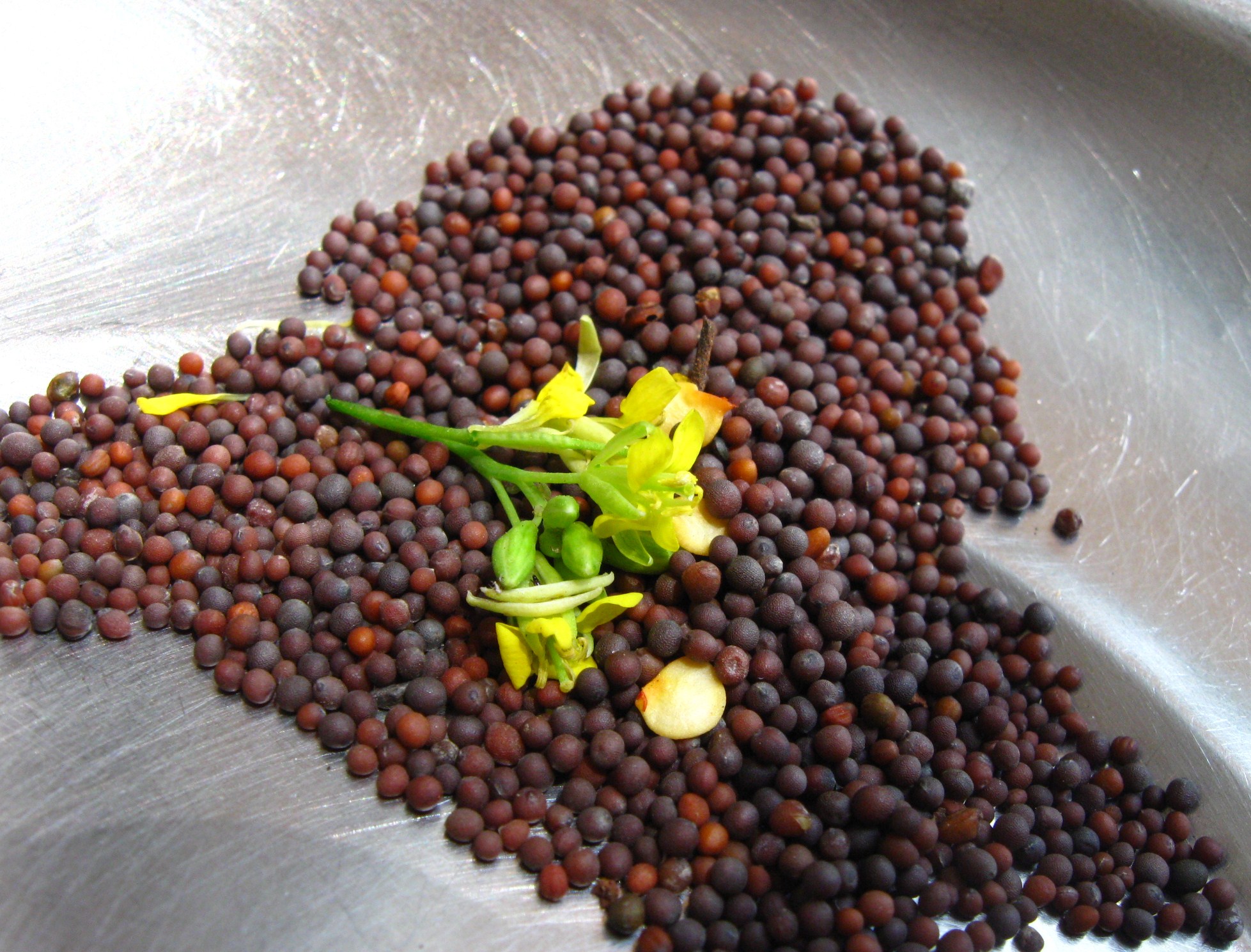
    And this is the image that Jesus uses today to describe the Kingdom of God. These parables are a lens through which we are to see life: the life of God, and our life, and how they all come together. And it’s an encouraging message that we hear today. Today, our Lord assures us that the Kingdom of God doesn’t come about all at once, in great power and glory, or in some kind of dramatic explosion. The Kingdom is like those crops that grow to be fully mature plants and yield a harvest, but it happens little by little, almost imperceptibly, always growing, but we know not how. And the Kingdom is miraculous like a mustard seed which one day is the tiniest of all seeds and eventually becomes a large plant that gives shelter to the birds of the air.

    Here’s why I think these parables are so encouraging: We all want to be part of the Kingdom of God. We all want to grow in our faith. We all want that faith to sustain us in good times and bad, and eventually lead us to heaven. That’s why we’re here today. But the truth is, if you’re like me, you get frustrated sometimes because it doesn’t seem like there’s any real growth going on. We commit the same sins despite our firmest resolve. Our plans to revive our prayer life fizzle out before they can get a firm foothold in our lives. We take one step forward and two steps back. But still, like the seed scattered on the land, being here for Mass today isn’t nothing. Our prayers, however lacking they may seem to be, are still a manifestation of our desire to be in relationship with God. And God takes those tiny seeds of faith and waters them with grace and the sacraments and the life of the Church, until one day, please God, our faith makes a difference in our lives and the lives of those around us. And even if whatever we start with in the life of faith is as tiny as a mustard seed, in God’s hands, it can become that shrub that is a shelter for those who are flying around in life from one thing to the next, without any real hope except for Christ in us.

    And that’s an important thing for us to get. Our faith life gets nourished and we grow in it from day to day. That’s a gift to us, for sure: every step gets us closer to the life of heaven. But it’s not for us only, friends. We are called as we mature to become the shrub that gives shelter to the birds of the air. We are meant to help others along the way of faith too. Because we don’t go alone to heaven; we’re supposed to take as many fellow seekers along with us as we possibly can.

    We may not be perfect yet, friends, but we’re graced. And that grace will perfect whatever we sow and make our tiny little beginnings into great things, all for the Kingdom of God.

  • Friday of the Tenth Week of Ordinary time

    Friday of the Tenth Week of Ordinary time

    Today’s readings

    This morning we have to wrestle with the question: is there something in my life that distracts me from living my life as God intended that I need to cut out?  It’s a ruthless image that we find in our Gospel reading: gouge out an eye, cut off a hand – all of that is better than taking the road to hell.  And it really does need to be that ruthless.  Because hell is real and it’s not going to be pleasant.  So we really need to attach ourselves to Jesus who is the way, the truth, and the life.  And whatever gets in the way of that needs to be brutally ejected from our lives.

    Yes, that might hurt sometimes.  But, as the cliché goes, whatever doesn’t kill us makes us stronger.  Elijah the prophet knew that very well. He had just embarrassed the prophets of Baal, and Jezebel was pursuing him to take his life. In our first reading this morning, he takes refuge in a cave, and only upon hearing the tiny whispering sound of God’s presence is he able to continue the journey and complete his mission.

    Elijah had put to death the many prophets of Baal who were leading the people astray. Just so, we too need to be willing to put to death in us anything that does not lead us to Christ.  The pain of it can be joined to the sufferings of Christ for God’s glory and honor.  It is something that we can offer to our God, as we pray with the Psalmist, “I long to see your face, O Lord.”

  • The Tenth Sunday of Ordinary Time

    The Tenth Sunday of Ordinary Time

    Today’s readings

    Where are you?

    This is the question God asked Adam and Eve early on in our first reading today. And for them, the answer to the question was that they were not in an especially good place. We know the story: God had given them everything they needed to live in the Garden of Eden, instructing them that the only thing they could not do was eat from the fruit of the tree in the center of the garden. The fall was already at work in them even then, because they found that the one thing they were not permitted to do was the one thing they wanted to do more than anything, and so they give into the seductive suggestions of the serpent and eat the fruit anyway.

    They soon find that they cannot hide from their sin: they are naked in the garden, and the sin is apparent, and so they do what fallen human beings have done ever since: they try to hide from God. Which would certainly be easy to do if God did not create man and woman out of love for them, and did not ultimately care about them. But he did care, and continued to seek relationship with them, and so he asks the question, the answer to which he certainly knows: “Where are you?”

    Explaining that they had found their nakedness, the weight of their sin is apparent. They desired something more than they desired God. That’s what sin is. And what ensues is the first recorded instance of “passing the buck:” the man blames the woman, and also blames God for putting the woman in the garden with him in the first place; the woman blames the serpent. So it has gone ever since: we desire something more than God, that sinful desire drags us down, we try to hide from God, and when we can’t, we blame someone else. Sin has entered the world and now darkens it in ways that are heartbreaking.

    Where are you?

    If you’re not seeing the face of God in your life; if you find yourself desiring something more than you desire God and the blessings God is giving you, it’s likely you’re not in a very good place right now. Maybe you have just lost track of where you are, who you are and where you should be going. Maybe you just plod along, very busy, very scattered by the rush and routine. Or maybe, like Adam, you are hiding out, afraid to face or deal with something that needs addressing.

    But that’s no way for us to live our lives, friends. God made us out of love, made us for love, made us to love, and he pursues us no matter how far we have wandered or to what depth we have fallen. If we come clean with God, name our sin and refuse to blame someone else, we can have forgiveness, we can have mercy. We can have God.

    That “unforgivable sin” of which our Gospel seeks is exactly the kind of thing that got us into trouble in the first place. It’s not something we’ve said or done to someone else, or even to God, but instead hiding from God and not wanting his mercy. It’s like having a world-class chef offer you a sumptuous meal, but refusing to eat it because you don’t want to sit down with him and eat, so you go away hungry. If you refuse God’s mercy because you don’t want his grace to change your life, you go away unforgiven. You sin against the Holy Spirit. It’s not that God won’t forgive, it’s that you don’t want to let God change your nakedness.

    Where are you?

    In these summer months, sometimes our routine changes. Maybe there isn’t that constant daily hustle of getting the kids to school and then practices and activities and all the other things that make life crazy. This is the time to see our lives for what they are, and come humbly to our God if we have been hiding.

    Sin is not who we are, sin is not part of human nature. Sin has certainly entered our world and we have to deal it in our daily lives, but it cannot ever define us unless we let it. Jesus was the most perfect example of human nature, completely free from sin. We can approach that glory when we stop hiding ourselves from God, when we let God into our lives, and when we let his grace change us into what we were created for. We are better than our sins.

    At our Eucharist today, maybe we can invite our merciful and loving God into our lives to:
         • help us deal with issues at home
         • tie up the evil and negative influences that afflict us and distract our children
         • help us break the habits we haven’t been able to break on our own
         • release our instincts to do good despite our fears
         • put aside anxieties that drain us of full life

    God doesn’t ever stop pursuing us in love. All we have to do is answer his call and say, “I’m right here, God. Standing before you in need of your mercy. Pleading for your grace. Wanting you and what you want for me more than anything. I’m right here.” Maybe we can make that our prayer today. I know it’s going to be mine.

    Where are you?