Category: Preaching, Homiletics & Scripture

  • Saturday of the Seventh Week of Easter

    Saturday of the Seventh Week of Easter

    Today’s readings

    One of the greatest obstacles to the Christian life is comparing ourselves to others. The Fathers of the Church all warn against that practice, and urge us to keep our eyes on our own relationship with God.  The essence of discipleship is doing what we were put here to do, we ourselves.  We discern that vocation by reflecting on our own gifts and talents, given to us by God, by prayerfully meditating on God’s will for us, and then engaging in conversation with the Church to see how best to use those talents and gifts.  That’s the process of discernment, which is always aided by the working of the Holy Spirit, and a worthy exercise on this eve of Pentecost.

    What causes us to get off track, though, is looking at other people and what they are doing, or the gifts they have, or the opportunities they have received.  We might be envious of their gifts or the opportunities they have to use them.  We may see what they are doing and think we can do it better.  We might be frustrated that they don’t do what we would do if we were in their place.  And all of that is nonsense.  It’s pride, and it’s destructive.  It will ruin the Christian life and leave us bitter people.

    That’s the correction Jesus made to Peter.  Poor Peter was getting it all wrong once again.  He thought Jesus was revealing secrets to John that he wanted to know also.  But whatever it was that Jesus said to John as they reclined at table that night was none of Peter’s business, nor was it ours.  Peter had a specific job to do, just as John did, and so do we.  If we are serious about our discipleship, then we would do well to take our eyes off what others are doing or saying or experiencing, and instead focus on the wonderful gifts and opportunities we have right in front of us.  As for what other people are up to, as Jesus said, “what concern is that of yours?”

    And so we pray this morning for the grace of discernment, the wisdom of the Holy Spirit, and the gift of being able to mind our own business, spiritually speaking.

  • School Graduation

    School Graduation

    Readings: Proverbs 3:13-35; Psalm 145; Philippians 2:1-5; Luke 6:27-38

    Tonight as we come together to celebrate the Eucharist as a class for the last time, I would imagine you are experiencing a great many emotions. You may be feeling happy, even relieved, as you come to this milestone. Many of you have been at Notre Dame School for as many as ten years, and so this accomplishment has been a long time coming. You might also be feeling sad that you’re leaving behind some friends as they go to other high schools, or even uneasy because you’ll be heading into unknown territory. I’m sure you’re also feeling proud of the success you’ve had here at Notre Dame, particularly proud of the success that has led you to graduation this evening.

    Success is the thing that everyone wants for you. Your parents want you to be successful, your teachers will be proud when you are successful. Even God wants you to be successful. But all those people may have different ideas of what success looks like. Some might see success as getting into a prestigious college. Others measure it by how much money you’ll eventually make. Maybe you will want to be the famous athlete, or the President of the United States. You might find success in inventing some new technology, or finding a cure for a disease. Success looks like a lot of different things.

    Many people have written on what success is. Dale Carnegie wrote, “The person who gets the farthest is generally the one who is willing to do and dare. The sure-thing boat never gets far from shore.” Woody Allen once said, “Seventy percent of success in life is showing up.” Johann Sebastian Bach wrote, “I was made to work. If you are equally industrious, you will be equally successful.” I could go on and on quoting all sorts of famous people who have given their opinion on how to be successful, but I thought I might stop there and instead focus on what success looks like for disciples of the Lord.

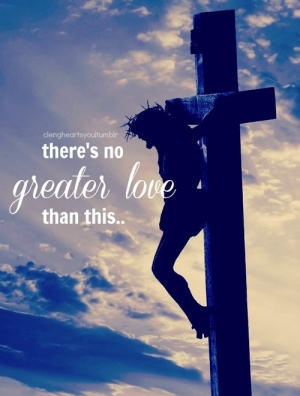
    Take a look at the Cross. Because that’s what success looks like for us believers in Christ. It looks like love beyond our wildest dreams. It looks like giving everything, trusting all the while that God will give us what we need in return. That’s how Jesus loves us, and that’s how we’re supposed to love one another too. He laid down his life for us, and we are called to do the same for others. We are probably not going to get nailed to a cross, but we are definitely called upon to give of ourselves, to lay down our lives for each other.

    And so for the believer, success might look like becoming a missionary to bring God’s love to people in faraway lands. Or it might look like finding the cure for a disease without harming the unborn. Believers in Christ could become politicians too; helping to make the world a better place by standing up for what is right. Successful believers could become priests or religious sisters or brothers. They might even be parents who raise their children to respect others and have a strong relationship with God. They could be owners of businesses that practice their trade with integrity and a concern for those in need.

    One thing is certain: successful believers will always have to sacrifice. Selfishness does not have a place in the life of a disciple and it will never even lead to real happiness anyway. A successful disciple might have to pass on a business deal because it looks shady, and trust God to give them something way better. Or she might give up a couple of years of her career in order to devote some time to working with the poor. A successful parent might have to put some of his or her plans on hold in order to raise a family. But successful disciples aren’t doormats either; they merely give of themselves and trust in God to give them real happiness.

    And God does want you to be happy. In fact if you’re ever finding yourself unhappy in life – and most of us will be there at some point or another – stop and see if maybe you’re not doing what God wants you to do. Because, in my life, I will absolutely witness that the happiest times have been the times when I’ve stopped doing my own thing and listened to God. God is love, God is mercy, God is truth and beauty and grace, and he never wants anything for his children but the very best – just like any good parent.

    Our Gospel tonight makes this all very clear. Jesus tells his disciples, which you well know includes every one of us here, to do everything I just said: love your enemies, do good to everyone, give when you don’t have to, love the people that are hard to love, give expecting nothing back. All of this stuff is sacrifice beyond belief. But then he makes a promise: “Give and gifts will be given to you; a good measure, packed together, shaken down, and overflowing…” When we give of ourselves and let go of the things that hold us back, then our hands are empty and ready to receive the enormous good gifts that God has in store for us. That, my friends, is real success.

    For all these years, we have tried to give you the tools to grow into the people you were meant to become. If you remember these things and use them and grow in them, you will be successful, happy and blessed. The goal of all our lives is to get to heaven one day, and for the time you’ve been in our Catholic school, we have done our best to give you what you need to get there, because getting to heaven is the ultimate badge of success; it’s the greatest measure of our having become who we were meant to be. I hope that you will be reasonably happy in this life, but I really want you to be eternally happy with Christ in heaven one day. I look forward to seeing the great people you will surely become as you continue to be involved here at Notre Dame in the years to come. May God bless you in every moment of your lives. And don’t ever forget where your spiritual home is: right here at Notre Dame, because I really don’t want this to be goodbye.

  • Tuesday of the Seventh Week of Easter

    Tuesday of the Seventh Week of Easter

    Today’s readings

    Today’s Liturgy of the Word represents a kind of wrap-up to the lives of St. Paul and Jesus, respectively. They both have completed the mission for which they had been sent, and both are now giving the mission back to God who would continue it as He alone saw fit. Paul’s mission had been one of conversion, beginning with his own, and then reaching out to the Gentiles he met traveling far and wide. Now he did not know what would happen to him, only that the Holy Spirit kept telling him it was to be an end filled with hardship, from which Paul refused to shrink.

    Jesus, one with the Father from the beginning, had come from the Father and was now going back to the Father. He brought God’s love to bear on the aberrations of sin and death and had drawn disciples into the mission to continue the work. It could not continue unless he returned to the Father and sent the Holy Spirit upon them. Doing that has brought the Gospel into every nation and into the lives of millions. He too faced an end filled with hardship, from which he refused to shrink.

    We disciples will come to our own ends as well. Will we too be able to give the mission back to the Father, confident that we’ve done it as best we could, and confident that it would be continued as God saw fit? Have our days sometimes been filled with hardship, and if so, have we also refused to shrink from it? We disciples are part of the mission that God has in the world. We take it for a time and will eventually have to hand it back over. Please God, may we all be able to do so with confidence that God’s will has been done in us!

  • The Ascension of Our Lord

    The Ascension of Our Lord

    Today’s readings

    When I was on my pastoral internship in seminary, my supervisor and I talked about the fact that our Liturgy is very wordy. Think about it: all of the prayers and readings and songs – it’s a lot of words to take in in an hour or less, but we do it all the time. So once in a while, I like to reflect on what are the important words in the Mass. We have the words of institution of the Eucharist – those are extremely important. The proclamation of the Scriptures, especially the Gospel, well we can’t discount those either. And let’s not forget the Creed, the words of which were the cause of many arguments and literally fights over the centuries – those words are very carefully chosen.

    But there is one word that I think is the most important, and I bet it’s going to surprise you. Because that word is “GO.” Go: we have to wait all the way to the end of Mass to hear the deacon or priest say it. “Go in peace.” Because it’s way at the end of Mass, I wonder if some people ever get to hear it. But whether we hear it or not, it’s kind of a throw-away, or it seems so. But it’s not. It’s not just a word of dismissal kind of like “you don’t have to go home but you can’t stay here.” It’s not just a word to get us out of the church and on to the next thing in life.

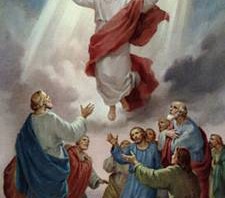
    I think it’s a word of mission. We’re singing a hymn with “Go” in the title today, and I think it catches the spirit of what the word “Go” means in our Liturgy. And we hear that spirit in our Gospel today. Jesus tells the disciples: “Go into the whole world and proclaim the gospel to every creature.” That was what the disciples were to do. They weren’t supposed to just stand there staring up into the sky: they were supposed to GO and do the work of salvation until Jesus returned in glory.

    Obviously, the command that was given to those first disciples is one that we are supposed to get as well. We are supposed to GO and preach the gospel in what we say and what we do. We are supposed to GO and baptize people by leading them to the faith in our witness. We are supposed to GO in peace, glorifying the Lord by our lives. We are supposed to GO and announce the gospel of the Lord. We do that by volunteering at the parish, looking in on a sick or elderly neighbor, living lives of integrity in the workplace. We do that by striving to be Christ-like to every person we meet.

    So I hope that you’ll hear that word “GO” at the end of Mass differently now than perhaps you have before. I hope that you’ll hear it as a calling, as a challenge, and as a sacred duty. I hope you’ll take up the call to GO and make the world into the Kingdom of God among us.

  • Saint Matthias, Apostle

    Saint Matthias, Apostle

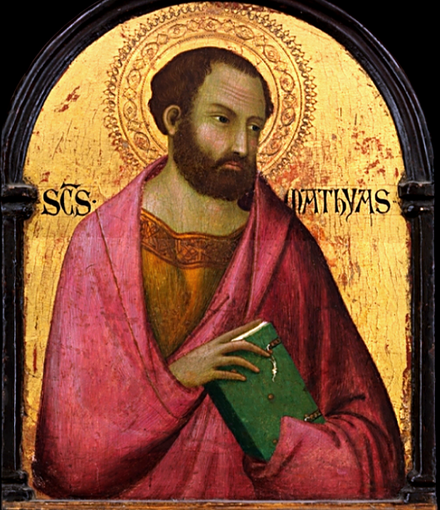
    We don’t really know much about St. Matthias.  We have no idea the qualifications  that led to his being nominated as one of two possibilities to take Judas’s position among the Twelve Apostles.  But clearly, they would have nominated a holy and faithful man, and then they left the deciding up to the Holy Spirit.  Praying, they cast lots, and the lots selected Matthias, who then became one of the Twelve.  He is not mentioned anywhere else in the New Testament, so we don’t know much about his ministry.

    What is striking about the selection of St. Matthias though is that this is the first of the disciples or Apostles that was not selected directly by Jesus.  Jesus selected all of the original Twelve, but Matthias is the first to be selected by the fledgling Church on the authority passed on by Jesus himself.  They act not on their own, but on the authority of Jesus, being led by the Holy Spirit for the glory of God the Father.
    A similar process has been repeated through the ages, over and over again, to select men to be popes, bishops, priests and deacons, and men and women for religious communities.  The process begins with prayer and ends with thanksgiving and glory to God.  People propose the candidates as being noted for holiness and ability, but it is God who makes the final choice.
    Today we praise God for the Twelve Apostles, of which Matthias was one.  We praise God for the authority of the Apostles which has echoed through the ages giving guidance to the Church.  We praise God for the gift of the Holy Spirit who is active in all our decision making.

  • The Sixth Sunday of Easter

    The Sixth Sunday of Easter

    Today’s readings

    I don’t know if you were counting or not, but between the second reading and the Gospel, the word “love” was used in one form or another eighteen times. So it’s pretty easy to see where the Church is leading us in today’s Liturgy of the Word. Love is a theme that runs through John’s Gospel and the letters of Saint John: John’s point is that the Gospel is summed up in that God is love.

    Now we get all kinds of notions about what love is and what it’s not.  Our culture feeds us mostly false notions, unfortunately, and it gets confusing because love can mean so many different things.  I can say, “cookies are my favorite food – I love cookies!” and that’s obviously not the kind of love Jesus wants us to know about today.  When we say “love” in our language, we could mean an attraction, like puppy love, or we could mean that we like something a lot, or we might even be referring to sex.  And none of that is adequate to convey the kind of love that is the hallmark of Jesus’ disciples.

    So I think we should look at the Greek word which is being translated “love” here.  That word is agape.  Agape is the love of God, or love that comes from God.  It is outwardly expressed in the person of Jesus Christ, who came to show the depth of God’s love by dying on the Cross to pay the price for our many sins.  So that’s the kind of love that Jesus is talking about today; it’s kind of a benchmark of love that he is putting out there for our consideration.

    To really see what Jesus meant by love in today’s Gospel, all we have to do is to look at Jesus. His command is that his disciples – including us, of course – should “Love one another as I have loved you.”  And the operative phrase there is: “as I have loved you.”   Meaning, in the same way I have loved you.  And we can see how far Jesus took that – all the way to the cross.  He loved us enough to take our sins upon himself and nail them to the cross, dying to pay the price for those sins, and being raised from the dead to smash the power of those sins to control our eternity.  So the love that Jesus is talking about here is sacrificial.  And he says it rather plainly in one of my favorite pieces of Holy Scripture: “No one has greater love than this: to lay down one’s life for one’s friends.”  This sacrificial quality a vital property of agape love.

    And the disciples clearly were called to that kind of sacrificial love.  They were persecuted, thrown out of the synagogues, beaten for stirring up trouble, put to death for their faith in Christ.  Like their Savior, they laid down their lives for their friends. That is what disciples do. And so, we disciples hear that same command too.   We may never be asked to literally lay down our lives for those we love, but we are called on to give up our own self-interests, our own selfishness, our own comforts, for the sake of others.

    We celebrate Mother’s Day this weekend, and this whole instruction on sacrificial, agape love could not be more appropriate.  Mothers are called upon in their vocation to form a bond with their children based on sacrificial love.  Good mothers lay down their lives in the process of bearing children, and then do it over and over again throughout their children’s lives as they nurture them, educate them, protect them and encourage them, finally teaching them, one hopes, that kind of agape love that is the essence of all of our vocations.

    So we’re going to look for opportunities this week to love sacrificially.  Doing a chore that’s not our job and not making a big thing of it.  Finding an opportunity to encourage a spouse or child with a kind word that we haven’t offered in a long time.  Picking the neighbor’s trashcan up out of the street when it’s been a windy day.  It doesn’t matter how big or small the thing is we do, what matters is the love we put into it.  Mother Theresa once said, “I am not sure exactly what heaven will be like, but I do know that when we die and it comes time for God to judge us, he will NOT ask, ‘How many good things have you done in your life?’  Rather he will ask, ‘How much LOVE did you put into what you did?’”

    When we are constantly on the lookout for opportunities to love, there is no way we can miss the joy that Jesus wants us to have today.  “Love one another as I have loved you” might be a big challenge, but it absolutely will be the greatest joy of our lives.

  • Saturday of the Fifth Week of Easter

    Saturday of the Fifth Week of Easter

    Today’s readings

    Just in case we thought living the Christian life of discipleship was going to be a rosy celebration of joy every single day, our Lord gives us a dose of reality today. He points out that if we find ourselves hated by the world, we have to remember that the world hated him first. If the world hates our Lord, then those of us who purport to follow after him have to expect that the world will hate us too.

    In fact, one might say that being hated by the world was a kind of litmus test of discipleship. If we are not actually hated by the world, one might wonder if we are truly living the Gospel, witnessing to the Truth and worshipping rightly. Because all of those hallmarks of discipleship necessarily cost something, and if we’re not paying the price, we’re not doing it right.

    So for us, being hated by the world might look like being passed over for a promotion or some other honor because we value time with our family over endless hours at work. It might look like being the object of unkind gossip because we value Sunday as a day of worship and family rest instead of having our children involved in all kinds of sports or artistic endeavors on the Lord’s day. It might look like skipping the latest gadget or the glitzier car so that we can be kind to the poor. The world will hate us because our commitment to Jesus will challenge their commitment to selfishness.

    We Christians live in the world, but we do not belong to the world. Our witness, our living, has to be at a different level. If we find ourselves fitting in nicely, it might just be that we’re doing it wrong.

  • Thursday of the Fifth Week of Easter

    Thursday of the Fifth Week of Easter

    Today’s readings

    In our first reading this morning, we have from the Acts of the Apostles a rather defining moment for the early Church. Jesus hadn’t given them a precise rule book of how to make the Church develop: he simply sent them out to baptize. But he also told them to make disciples of all the nations, and that’s what’s at stake in today’s reading. Because the nations didn’t observe all the laws that the Jews did. And so admitting non-Jews to the Church meant deciding whether they had to be circumcised, and whether they had to observe all the other laws of the Old Testament.

    Well, obviously, this little mini-council, swayed by the great stories of Paul and Barnabas, decided that the Spirit could call anyone to be disciples, and they shouldn’t get in the way. So they decide to impose very little upon them, outside of avoiding idol worship and unlawful marriage. And then the Psalmist’s prophecy, “Proclaim God’s marvelous deeds to all the nations” came to pass. If it weren’t for this little council, we wouldn’t be Christians today. Praise God for the movement of the Spirit.

    And now the command comes to us: we have to be the ones to proclaim God’s deeds to everyone, and not to make distinctions that marginalize other people. God’s will is not fulfilled until every heart has the opportunity to respond to his love.

  • The Fifth Sunday of Easter

    The Fifth Sunday of Easter

    Today’s readings

    Have you ever pruned a shrub? I have. I’ve done it many times on the shrubs that were on my parents’ property. When I did it, I often thought about the fact that this process could not be all that painless for the shrub.  It involved cutting away branches, some of which were dead, but some of them looked for all the world like they were healthy and life-giving. Sometimes, to make the shrub more vibrant, some branches had to be radically cut away.

    Here’s the thing: we have to give in to that kind of painful process in our own lives too, I think.  We have to be willing to get some of us pruned away if we are to grow as healthy and fully human people.  That’s our task in this world: to become fully human, fully the people God created us to be. So whatever gets in the way of that fullness has to be chopped off, and sometimes that’s just not pretty. Pruning ourselves is painfully difficult, but we recognize that the things we prune away can be really destructive: relationships that entangle us in ways that are not healthy, pleasures that lead to sin, habits that are not virtuous.  However enjoyable these relationships or activities may seem to be, and however painful it may be to end them, end them we must in the name of pruning our lives to be healthier, to be more fully the people we were created to be. There is no other way.

    There’s one other thing that our Gospel today tells us that we must do in order to become what we were meant to be, and that is to remain in Christ.  That’s what he says in the Gospel:

    Remain in me, as I remain in you.
    Just as a branch cannot bear fruit on its own
    unless it remains on the vine,
    so neither can you unless you remain in me.

    And I’d have to say that they key here is the word “remain” because Jesus uses it four times in that short quote!  You can read more about what Jesus means by remaining in my column of the bulletin this week. “Remain in me,” Jesus says, as the branch remains in the vine.  “Remain in me,” Jesus says, so that you can bear much fruit.  “Remain in me,” Jesus says, so that you will not wither and dry up only to be pruned off and burned as rubbish.  “Remain in me,” Jesus says, so that whatever you truly need and want will be done, and so that you can bear much fruit and be my disciples.

    If we want to be truly happy, if we want ultimate fulfillment in life, if we really want to be the wonderful creation God made us to be, we must remain in Jesus, because, as he says, “without me you can do nothing.”  And that’s true.  How many times have we tried to better ourselves and lost sight of the goal before we even started?  How many times have we tried to stamp out a pattern of sin in our lives, only to fall victim to it time and time again?  How many times have we tried to repair relationships only to have egos, hurts or resentments get in the way?  When we forget to start our work and continue our work with God’s help, we are destined to fail.  Apart from Jesus we can do nothing.  Well does he advise us to remain in him.

    But what does “remain in me” look like?  Unfortunately, we don’t get a clear-cut blueprint for that in today’s Gospel.  And the truth is, remaining in Christ is going to be different for every person.  Just like pruning shrubs isn’t a once-and-for-all activity, we are going to have to do some pruning every now and then so that we can remain in Christ.  And so we’ll have to continue to be on the lookout for parts of our lives that are not ultimately life-giving and prune them away.  But we’ll also have to look out for opportunities that will fertilize our growth.  We have to check our growth daily, we have to examine where we are remaining every day.  That might start with Sunday Mass attendance, and perhaps move on to daily Mass, praying devotions like the Rosary, reading Scripture every day, and taking time at the end of the day to see whether we’ve been part of the vine, or are in danger of breaking away from it.  We have to be willing to renew ourselves in Christ every single day of our lives.

    It’s not so easy for us to be most fully the wonderful human creation we were made to be.  But that, brothers and sisters in Christ, is our calling and our joy.  May we all support one another in our times of pruning and through our journey of remaining.

  • Thursday of the Fourth Week of Easter

    Thursday of the Fourth Week of Easter

    Today’s readings

    “Don’t shoot the messenger!” That’s our colloquial way of saying that the words we speak to someone come from someone else; they are not our ideas. Most of us have probably said that to someone at some time when giving them bad news.

    But that doesn’t work for we who are followers of Christ. Yes, we are messengers. The Greek word for messenger is “angeloi” from which we get our English word, “angel.” Angels are messengers sent by God to communicate something specific to humankind. For example, we’ve seen the archangel Gabriel herald the coming of Christ to a young woman named Mary. A whole host of angels heralded the birth of the Savior to shepherds working in the fields. The letter to the Hebrews tells us not to neglect hospitality, for we may be entertaining angels. And Jesus tells us today, “whoever receives the one I send receives me, and whoever receives me receives the one who sent me.”

    We are all sent, brothers and sisters in Christ, to be messengers. We have received the Gospel and have been schooled in it through our participation in the Mass and our education in faith. We are not angels, nor do we become angels after we die, because angels are a different species of creation than humankind. But we are in a sense angeloi; we are messengers who are sent by God to bring the Good News, the Gospel, to all those who need to hear it. We have to preach it every day, maybe not by standing on a soapbox, but definitely by our living of the message ourselves.

    Just as St. Paul courageously preached the truth in the synagogue in today’s first reading, we have to be ready to courageously share our faith in whatever way God calls us, wherever God puts us, to whoever God gives us. The Psalmist has it right today, as always, when he says, “Forever I will sing the goodness of the Lord!” We must always sing the praises of God who gives us everything we have and everything we could ever hope for. Singing those praises with our lives makes our message every bit as beautiful as the choirs of angels!

    May our guardian angels show us the way to be angeloi for the glory of God!