Blog

  • Monday of the Twelfth Week of Ordinary Time: Reining In Our Pride

    Monday of the Twelfth Week of Ordinary Time: Reining In Our Pride

    Today’s readings

    Pride is, perhaps, the most insidious of the sins with which we have to deal. And I say “we” because yes, we all have to deal with it at some level at some point in our lives. Pride keeps us from seeing that we’re headed down the wrong path. Pride also keeps us from asking for help, or even from accepting help, when we’re in trouble. Pride, as the saying goes, goes before the fall, and it can land us in some serious difficulty if we don’t work hard to eradicate it from our lives.

    In today’s Gospel, Jesus clearly wanted to make sure his disciples were not bogged down with pride. Perhaps he was trying to keep them from following the behavior of the Pharisees, or maybe he even saw traces of pride at work in them as a group. Whatever the case, he warns them clearly that pride has no place in the life of the disciple.

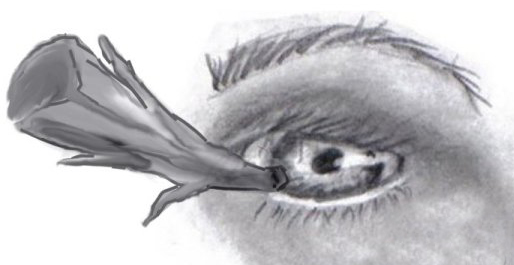
    Now, to be clear, he is not telling them that they can never pass judgment on anyone. Judging is a part of law and order, without which no society can survive. Also, he knows full well that rightly-disposed believers can and should stop others from heading down an erroneous or dangerous path. What he is saying, though, is that the rod we use to measure the other is the same measure that will be used on us, so it would be well to make sure that our motives are pure in all cases.

    It’s a chilling prediction, I think. I shudder to think of the measure I sometimes use on others being used to measure me. But if I measure with love and charity and genuine concern, I know that I can accept that same measure on myself. It’s a good thing that’s the kind of measure God wants to use on all of us. And he will, if we lay down our pride.

  • The Twelfth Sunday of Ordinary Time: Suffering, Redemption and Glory

    The Twelfth Sunday of Ordinary Time: Suffering, Redemption and Glory

    Today’s readings

    The talk of mourning and death in today’s Liturgy of the Word reminds us of a couple of really important life principles. The first is that we will have to suffer and mourn in this life, because this life is riddled with sorrows. We saw that clearly in Orlando this past week, and the truth is we see it all the time on the streets of Chicago. The second life principle is that Jesus embraced suffering himself, and did not come to make it go away. And finally, suffering was something our Lord redeemed, changing it from a dead end to a path to glory. The Gospel today in particular addresses these principles.

    The story begins with a lesson on who Jesus is. Our own self-identity is something many of us spend a lifetime trying to figure out. Our identity is important to us: it tells us how we fit into the social structure as well as what makes us unique from others. Until we really know who we are, we are very unlikely to accomplish anything of importance or even be comfortable in our own skin. And so when Jesus asks the disciples “Who do the crowds say that I am?” it is a question with which we all resonate on some level, at some time in our lives.

    Now, I’m not suggesting Jesus was having an identity crisis, or even that his notion of who he is was developing. Clearly, his asking that question wasn’t so much for his own information or even to see where he was in the social structure of Israel, but he was nudging the disciples to come to an understanding about what was going on. Jesus knows who he is and why he is here, but it’s for us and for those first disciples to begin to see Jesus in deeper ways.

    The answers the disciples give to that question are interesting. John the Baptist risen from the dead, Elijah returned from the whirlwind, or that one of the ancient prophets had arisen. Clearly he had no parallel on earth at the time; all their answers involved the return of someone from the dead or the beyond. The reason this is significant is because, at the time, the possibility of there being anything beyond death or any kind of resurrection was in great dispute. The Pharisees believed in a life after death, the Sadducees did not; that is the reason many of the Gospel stories show those two groups in opposition to each other.

    But the real significant part of their answers lies in what is going on in the disciples’ minds as they answer Jesus. You can almost hear the excitement in their voices. They had been seeing Jesus healing diseases and casting out demons. Not only that, they had just returned from their own missionary journey in which Jesus gave them authority to do those same things. Clearly they were in the presence of a superstar, and his charisma was rubbing off on them. They were ready for the glory, and they will get it, but not in the way they’re expecting.

    Now Jesus wants to dig a little deeper. “But who do you say that I am?” he asks them. Peter speaks for the disciples and gets the answer right the first time: “The Christ of God.” I think he answers that with deep reverence and awe, but unfortunately, he didn’t know the half of it.

    Jesus affirms his correct answer, but then goes on to reveal what that means for him. Yes, he is the Christ of God, but the Christ isn’t what they had anticipated. This was not going to be simply some glory trip. The Christ would have to suffer, be rejected, be killed, and then … then be raised from the dead. And that whole being killed part is the sticking point, but it’s absolutely necessary, he can’t be raised from the dead if he isn’t killed; that’s not a step one can skip.

    This all had to be pretty hard for them to digest. But it’s nothing compared to what Jesus reveals next. Those disciples who thought they were on the glory train could also expect to suffer:

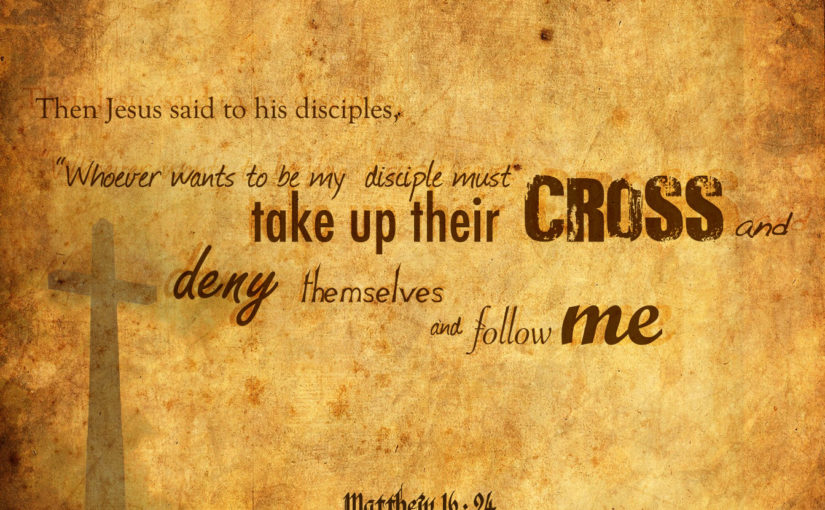
    If anyone wishes to come after me, he must deny himself
    and take up his cross daily and follow me.
    For whoever wishes to save his life will lose it,
    but whoever loses his life for my sake will save it.

    We don’t get to skip a step either. We too will be called to the cross. If we want eternal life, we have to be willing to give up this life. There is no resurrection without a cross; there is no Easter Sunday without a Good Friday. Not for Jesus and not for his disciples, not even for you and me.

    We know that suffering is part of life. We have experienced illness, injury, pain, loss of a job, death of a loved one, physical or psychological abuse – the list is long. Just in the past week, our nation has suffered so much loss. So often all this suffering seems pointless. We might even be tempted to quarrel with God: if God is loving, why to innocent people have to suffer, why do we have to suffer? Why can’t it be the guy who cuts us off in traffic while he’s drinking coffee with one hand and talking on a cell phone in the other?

    The truth is, the justice of suffering is beyond us. We don’t know why bad things happen to good people. Suffering can often seem so capricious, so random, so devoid of meaning. And it is, if we let it be. You see, sometimes we just get it wrong. We sometimes think that Jesus came to take away suffering and we get mad when that’s not what happens. But if Jesus came to take away suffering, he certainly wouldn’t have had to go through it himself. He didn’t come to take away suffering, but to give meaning to it, to redeem it – to come to glory through it.

    We can see in the cross that the path to glory and the path to life leads through suffering to redemption. There’s no way around it. The cross Jesus took up will be ours to take up daily if we wish to follow Jesus to eternal life. He is the Way: if we want to get to heaven we have to follow his path. Our own identity as disciples and followers of Christ is bound up in the ugliness of suffering and the agony of the cross.

    That flies in the face of our culture that wants us to take a pill for every pain and medicate every burden. Jesus says today that that kind of thinking is simply losing our lives trying to save them. The rest of life passes us by while we are self-medicated beyond our pain. But, if we lose our life for the sake of Jesus, if we take up our crosses and follow him, if we bear our burdens and our sorrows and our pain and our brokenness, if we join our sufferings to the suffering of Christ on the cross, then we too can experience what he did: the glory of eternal life. That was the only hope of those first disciples, and it is our only hope too, fellow disciples of the Lord.
  • Saint Anthony of Padua, Priest and Doctor of the Church

    Saint Anthony of Padua, Priest and Doctor of the Church

    Today’s readings

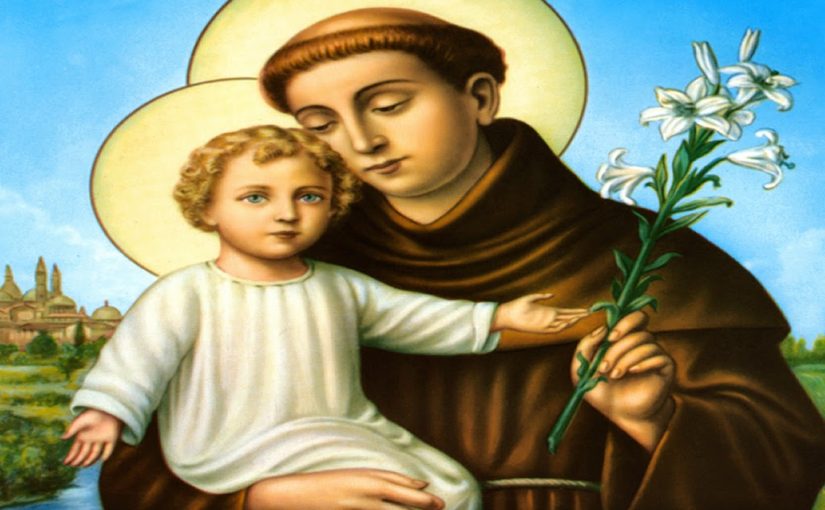
    St. Anthony is probably one of the best-known Catholic saints. As the patron for finding lost objects, I’m sure so many of us have prayed, “Tony, Tony, look around, something’s lost and can’t be found.” We all lose track of things from time to time, and it’s nice to have someone to help us find them.

    But the real story of St. Anthony centers around finding the way to Christ.

    The gospel call to leave everything and follow Christ was the rule of Anthony’s life. Over and over again God called him to something new in his plan. Every time Anthony responded with renewed zeal and self-sacrifice to serve his Lord Jesus more completely. His journey as the servant of God began as a very young man when he decided to join the Augustinians, giving up a future of wealth and power to follow God’s plan for his life. But later, when the bodies of the first Franciscan martyrs went through the Portuguese city where he was stationed, he was again filled with an intense longing to be one of those closest to Jesus himself: those who die for the Good News.

    So Anthony entered the Franciscan Order and set out to preach to the Moors – a pretty dangerous thing to do. But an illness prevented him from achieving that goal. He went to Italy and was stationed in a small hermitage where he spent most of his time praying, reading the Scriptures and doing menial tasks.

    But that was not the end for Anthony’s dream of following God’s call. Recognized as a great man of prayer and a great Scripture scholar and theologian, Anthony became the first friar to teach theology to the other friars. Soon he was called from that post to preach to heretics, to use his profound knowledge of Scripture and theology to convert and reassure those who had been misled.

    So yes, St. Anthony is the patron of finding lost objects, but what I really think he wants to help us find, is our way to Christ. As a teacher, a scholar and a man of faith, he was devoted to his relationship with God. And so his intercession for us might go a little deeper than where we left our keys. Maybe we find ourselves today having lost track of our relationship with God in some way. Maybe our prayer isn’t as fervent as it once was. Or maybe we have found ourselves wrapped up in our own problems and unable to see God at work in us. Maybe our life is in disarray and we’re not sure how God is leading us. If we find ourselves in those kinds of situations today, we might do well to call on the intercession of St. Anthony. Finder of lost objects, maybe. But finder of the way to Christ for sure.

  • Friday of the Tenth Week of Ordinary Time

    Friday of the Tenth Week of Ordinary Time

    Today’s readings

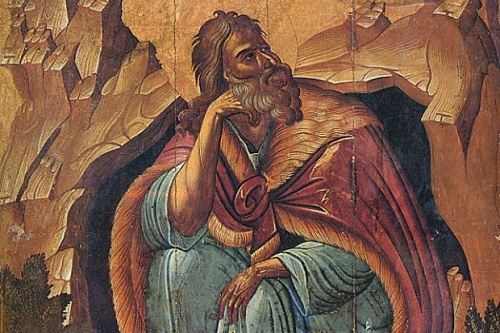
    So we know the back story on our first reading, because we’ve been hearing it this week. You recall that Elijah has just come from soundly defeating all of the pagan “prophets” of Baal, which was very embarrassing to King Ahab and especially to Queen Jezebel, who vowed to take Elijah’s life in retaliation. So he has been hiding out in a cave, not for protection from inclement weather, but for protection from those who sought his life. In the midst of this, God asks Elijah why he is here. Elijah explains that the people of Israel have been unfaithful and have turned away from God, not listening to Elijah’s preaching, and they have put all the other legitimate prophets to death. Elijah alone is left.

    So God says that he will be “passing by” which in biblical language means that God will be doing a “God thing.” God will be revealing his presence. And so we have the story: there is a mighty wind, an earthquake and even fire. But Elijah only recognizes the Lord’s presence in the tiny whispering sound. After everything that had happened to him, mighty wind, an earthquake and a fire were just more of the same. But when there was that tiny whispering sound, Elijah heard the Lord speaking to him loud and clear. Then and there he receives instruction on how to move forward.

    In our own prayer lives, it’s good to be attentive to the tiny whispering sound. We too have a noisy life – not because we are running from our enemies like Elijah, but more because we have created enemies to a recollected life. The television, the phone, the computer, all of that and more vie for our attention in every moment. And then we lament that we can’t hear God’s direction, can’t figure out what it is we’re supposed to do in this situation or that.

    In my own life, I just recently created a little space in my room for a prayer altar. It has my bible, a painting of the Crucifixion of the Lord, a statue of Saint Patrick and one of the Blessed Virgin, and a candle. Now, when I want to hear the Lord, I can turn off everything, settle into a chair, and reflect. And the Lord has been speaking, was all along to be honest. Just now I’ve created a space, like Elijah’s cave, where I can hear him. God is always doing a “God thing” among us. We just have to make it our care to notice.

  • Monday of the Tenth Week of Ordinary Time 

    Monday of the Tenth Week of Ordinary Time 

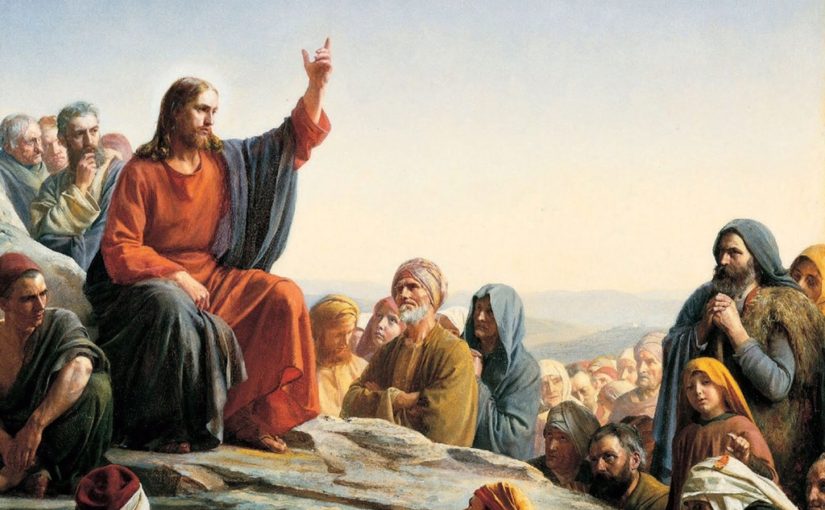
    Sometimes God’s blessings can be challenging. For example, we might not think that those who are meek and those who mourn are blessed. And we certainly wouldn’t celebrate the blessings of those who are persecuted for the sake of righteousness, would we? It’s even more challenging when we remember that the word “blessed” in Scripture could also be translated as “happy.” Would we think of those people as happy? Probably not, but God does.
    Elijah the Tishbite knew this blessing of God too. The prophet’s job is always a demanding one. It’s one of great blessing, because the prophet is called by God and formed from his mother’s womb. But it’s also a great challenge: people don’t usually want to hear what a prophet says – after all, if they were open to the message, a prophet probably wouldn’t be necessary – and quite often the prophets were chased out of town, beaten, and even murdered. Elijah’s job was going to be challenging, but it would also be blessed: God provided for his needs at Wadi Cherith and at the end of his life, whisked him off to heaven in a chariot of fire.

    So it’s important for us to remember, I think, that while God never promises to make our lives free and easy, he does promise to bless us. He will bless us with whatever gifts we need to do the work he has called us to do, the work for which he formed us in our mother’s womb. The happiness of the blessing might not come in this life, but we who do God’s will can look forward to our reward, which Jesus promises will be great, in heaven.

  • The Tenth Sunday of Ordinary Time: Baptism at Mass

    The Tenth Sunday of Ordinary Time: Baptism at Mass

    Today’s readings

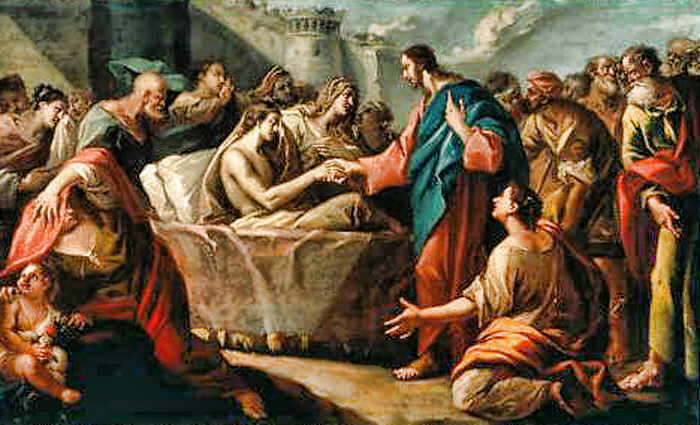
    Today’s readings about the two widows highlight the plight of widows in the ancient world. Without a husband, they would necessarily depend on their sons to help provide for them and keep them safe, and so when these two sons died, the widow was vulnerable and very likely would become destitute. But Elijah and Jesus both recognize their plight and, without even being asked, move to right the wrongs of the situation. Restoring their sons to life, they have really restored the life also of those widows, for God is rich in mercy!

    Today we celebrate the baptism of a child, and so maybe it’s hard to see how raising two people from the dead can relate to that, but I believe these readings are really all about baptism! Whenever we see death and life in the Scriptures, we really should think about holy baptism, in which our mortal bodies, dead in sin, are raised up to new life in Christ. I’ll be blessing the water of the font in a few minutes, and here are some of the words of that blessing:

    May this water receive by the Holy Spirit
    the grace of your Only Begotten Son,
    so that human nature, created in your image
    and washed clean through the Sacrament of Baptism
    from all the squalor of the life of old,
    may be found worthy to rise to the life of newborn children
    through water and the Holy Spirit.

    Just as Jesus said to the dead man in today’s Gospel, “Young man, I tell you, arise!” so he says to all who are baptized, “Be raised up, be washed clean, take possession of new life!” And so in the raising of the son of the widow of Zarephath and the son of the widow of Nain, we see the precursor of holy Baptism, in which God in his great mercy is re-creating the world anew and bringing new life to those whose bodies were dead in their mortality. Baptism is the great gift of new life that our Lord gives to his Church. It is a participation in his own death and Resurrection, in which death and sin are rendered impotent, and we are given new life.

    And so, as we hear of life restored to those who were thought to be dead, it is so appropriate that you bring your child here for baptism. In this sacrament, he receives new life in Christ, who wills that all children should come to him and be made new. As you continue to bring your child here to Church for Mass and religious instruction, God will continue to pour out his mercy and grace and give him a life made new in the Holy Spirit.

    Raising children these days can be difficult, as we all know. There are so many competing voices out there, so many opportunities for a young person to be tempted away from God, Church, and family. But the good news is that you aren’t expected to raise your child on your own. You are promised in this sacrament of Holy Baptism the grace that will help you in your task as parents, and as he is initiated into the Church today, you receive the promise of the Church’s help in teaching him and helping him to know God and his love.

    The Psalmist today sings of this hope that we have in Christ and in this sacrament. He sings:

    I will extol you, O LORD, for you drew me clear
    and did not let my enemies rejoice over me.
    O LORD, you brought me up from the nether world;
    you preserved me from among those going down into the pit.

    There is no death that can overcome our new life in Christ. Praise God for the gift of our baptism which raises us up and makes us new!

  • Thursday of the Ninth Week of Ordinary Time

    Thursday of the Ninth Week of Ordinary Time

    Today’s readings

    Truth is quite a topic these days. Mostly because people choose to define truth in any way that suits them. Absolute truth is akin to authoritarianism and it’s the real death of any kind of conversation that would lead to conversion. It’s the kind of thing that of late has so many angry people thinking that the life of an ape is more important than the life of a child – how could anyone defend a position like that? When we allow ourselves to accept moral relativism, then any thing goes. Yet it is absolute truth that is at the center of today’s Liturgy of the Word.

    Saint Paul exhorts his friend Timothy to be scrupulously careful to teach and defend the truth – “without deviation,” as he says at the end of today’s first reading. And we have to be that scrupulous in teaching truth, because the Truth is Christ. If we persevere in the Truth, we shall reign with Christ, but if we deny him he will deny us. Being denied by Christ our mediator and Savior is tantamount to eternal death. That’s what comes from deviating from the Truth.

    Jesus brings the Truth to life in the Gospel reading by presenting us with the basis of all Christian life: love of God and love of neighbor. This is the Truth, it is the basis of the Gospel, it is the summation of all the law and the prophets, which is what the scribe was seeking of Jesus. If we accept this truth, we too will not be far from the Kingdom of God.

  • The Visitation of the Blessed Virgin Mary

    The Visitation of the Blessed Virgin Mary

    Today’s readings

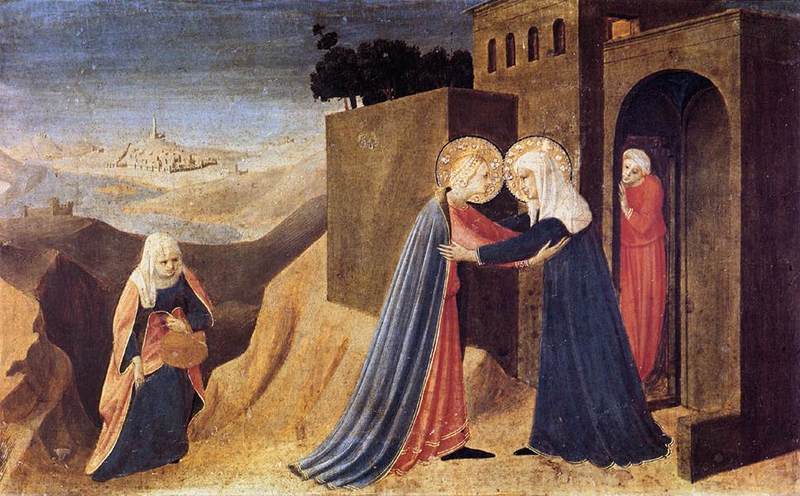
    This feast is one of the reasons I love the Blessed Virgin. Having given her fiat – her “yes” – to God, she now shows concern for her elder relative who is also with child. She goes to visit her in a great act of hospitality, which is one of the virtues Paul admonished the Romans to follow in our first reading today. Perhaps because of her faith and her great concern for Elizabeth, Elizabeth’s own child begins to rejoice in the womb, recognizing his Lord and the great woman who would bring him to human life.

    While we don’t have an exact account of what happened at that visit, we do have the Church’s recollection of its spirit, as told through Luke the Evangelist. The whole feeling of this Gospel story is one of great joy, which is perhaps why this is one of the joyful mysteries of the holy Rosary. Both Elizabeth and Mary represent the Church in the telling of the story. Because just as Elizabeth was moved by the faith and generosity of Mary, so the Church continues to be edified by her example of faith and charity. And just as Mary rejoiced in what God was doing in her life, so the Church continues to rejoice at the mighty acts of God in every person, time and place.

    The Gospel reading ends with the great song called the Magnificat which is Mary’s song of praise to God for the wonders he has done throughout all time, but also in her own life. We too should make that our own song as we continue to be overjoyed by the great acts of God, shepherding us all through our own lives, and intervening in our world and society to bring grace to a world darkened by sin. We, too, can pray with Mary, “From this day all generations will call me blessed: the Almighty has done great things for me, and holy is his Name.”

  • Memorial Day

    Memorial Day

    Readings: Isaiah 32:15-18 | Psalm 72 | Matthew 5:1-12a
    Mass of Peace and Justice

    One of the effects of a presidential election year for me, is taking a long hard look at who we hold up as our leaders or our heroes. In some ways these days, a presidential election is an emergence of whoever is the least objectionable candidate, because in this day and age, it’s hard to get good people to run for office. And who could blame them? It’s so hard for candidates to deal with all that public scrutiny, the months of campaigning, the financial outlay. It seems sometimes that those willing to go through all of that aren’t exactly the cream of the crop. But apply that to any other field of interest. What about our sports heroes, or entertainers? How many of them turn out to be flawed in many ways? The people we want to hold up as heroes are very often not very heroic.

    But today is a day to celebrate true heroes. Memorial Day originally began in our country as an occasion to remember and decorate the graves of the soldiers who died in the Civil War. Later it became a holiday to commemorate all those who had died in war in the service of our country. So today we remember those men and women who have given their lives for peace, justice, righteousness, and freedom. These have been people who have given everything, have made the ultimate sacrifice for our nation.

    On this day, I think it would be a mistake to glorify warfare. I don’t think that is the point of this day, or is even best way to honor the memories of those who have fallen in war. Our Church’s teachings counsel that war is not the way to peace and that developed societies like ours can and must use our resources to seek other ways to solve problems. But we have to acknowledge that there are and have been times in our nation’s history that have called on people to fight for our freedoms and to fight for justice. Today we honor their memory with immense gratitude, because without their sacrifice we may not be free to worship today.

    Our heroes should always include those who have given their lives for justice, righteousness, and the faith. Today, we might call to mind the great martyrs of the Church, those who have shed their own blood that we might have the Gospel. Perhaps they inspired those who have given their lives in service to our country.

    Today we pray for those who have been part of our lives, part of the life of our Church, and the life of our country. These are the ones who have been people of faith and integrity and are true heroes that God has given us. These are the ones who have laid down their lives for what is right. If we would honor them on this Memorial Day, we should believe as they have believed, we should live as they have lived, and we should rejoice that their memory points us to our Savior, Jesus Christ, who is our hope of eternal life.

  • The Most Holy Body and Blood of Christ

    The Most Holy Body and Blood of Christ

    Today’s readings

    During World War II, the officers of the Third Reich’s secret service forcefully recruited many 12- and 13-year-old boys into the Junior Gestapo. The harshly treated boys were given only inhumane jobs that they were to perform without rest or complaint. After the war ended, most had lost contact with their families and wandered aimlessly, without food or shelter. As part of an aid program to rebuild postwar Germany, many of these youths were housed in tent cities. There, doctors and nurses worked with them in an attempt to restore their physical, mental and emotional health.

    Many of the boys would awaken several times during the night screaming in terror. But one doctor had an idea for handling their fears. After serving the boys a hearty meal, he’d tuck them into bed with a piece of bread in their hands that they were told to save until morning. The boys began to sleep soundly after that because, after so many years of hunger and uncertainty as to their next meal, they finally had the assurance of food for the next day.

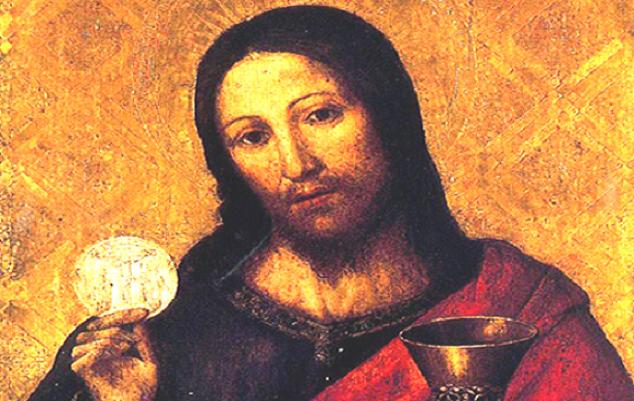
    On the last day of my dad’s life, I gave him Holy Communion for what would be the last time. He was able to pray with us, and was so grateful to receive the Sacrament of Jesus’ own Body and Blood. We call that last Communion Viaticum which, in Latin, means “bread for the journey.” Like the former Junior Gestapo boys who slept soundly because they knew they had food for the next day, my dad was able to rest in Christ knowing that he would be able to eat at the heavenly banquet table.

    On this feast of the Body and Blood of Christ, we are called to take comfort in the many ways God feeds us. We know that when we pray “give us this day our daily bread,” we will receive all that we need and more, because our God loves us and cares for us. But to really trust in God’s care can sometimes be a bit of a scary moment.

    It was certainly scary for the disciples, who asked Jesus to “dismiss the crowds” so that they could go into the surrounding cities and get something to eat. They were afraid for the crowds because they had come to the desert, where there was nothing to eat or drink. They were afraid for the crowds because it would soon be dark and then it would be dangerous to travel into the surrounding cities to find refuge and sustenance. And, if they were to really admit it, they were afraid of the crowds, because all they had to offer them were five loaves of bread and two fish – hardly a meal for Jesus and the Twelve, let alone five thousand.

    But Jesus isn’t having any of that. Fear is no match for God’s mercy and care and providence, so instead of dismissing the crowds, he tells the disciples to gather the people in groups of about fifty. Then he takes the disciples’ meager offering, with every intent of supplying whatever it lacked. He blesses their offerings, transforming them from an impoverished snack to a rich, nourishing meal. He breaks the bread, enabling all those present to partake of it, and finally he gives that meal to the crowd, filling their hungering bodies and souls with all that they need and then some. Caught in a deserted place with darkness encroaching and practically nothing to offer in the way of food, Jesus overcomes every obstacle and feeds the crowd with abundance. It’s no wonder they followed him to this out of the way place.

    The disciples had to be amazed at this turn of events, and perhaps it was an occasion for them of coming to know Jesus and his ministry in a deeper way. They were fed not just physically by this meal, but they were fed in faith as well. In this miraculous meal, they came to know that their Jesus could be depended on to keep them from danger and to transform the bleakest of moments into the most joyous of all festivals. But even as their faith moved to a deeper level, the challenge of that faith was cranked up a notch as well. “Give them some food yourselves,” Jesus said to them. Having been fed physically and spiritually by their Master, they were now charged with feeding others in the very same way.

    Christ has come to supply every need. In Jesus, nothing is lacking and no one suffers want. All the Lord asks of the five thousand is what he also asks of us each Sunday: to gather as a sacred assembly, to unite in offering worship with Jesus who is our High Priest, to receive Holy Communion, and to go forth to share the remaining abundance of our feast with others who have yet to be fed. After the crowd had eaten the meal, that was the time for them to go out into the surrounding villages and farms – not to find something to eat, but to share with everyone they met the abundance that they had been given. So it is for us. After we are fed in the Eucharist, we must then necessarily go forth in peace to love and serve the Lord by sharing our own abundance with every person we meet.

    You might do that by participating in a small faith community or a Bible study, sharing the Scriptures and our own living faith with your brothers and sisters. Maybe you would do that by becoming an Extraordinary Minister of Holy Communion, and dedicating yourselves to the ministry of distributing the precious gift of the Lord’s own Body and Blood each Sunday, or even volunteering to bring Holy Communion to the sick and homebound. But you could also do that by volunteering with our food pantry. Then too, sharing our abundance of spiritual blessing doesn’t have to be very elaborate. You might just bring a meal to a friend going through a hard time or visit a neighbor who is a shut-in. Jesus is the font of every blessing, and it is up to us to share that blessing with everyone in every way we can. We too must hear and answer those challenging words of Jesus: “Give them some food yourselves.”

    What we celebrate today is that our God is dependable and that we can rely on him for our needs. Just as he was dependable to feed the vast crowd in that out-of the-way place, so he too can reach out to us, no matter where we are on the journey, and feed us beyond our wildest imaginings. Just as the Junior Gestapo boys were able to rest easy as they clutched that bread for the next day, so we too can rest easy, depending on our God to give us all that we need to meet the challenges of tomorrow and beyond. The challenge to give others something to eat need not be frightening because we know that the source of the food is not our own limited offerings, but the great abundance of God himself. We need not fear any kind of hunger – our own or that of others – because it’s ultimately not about us or what we can offer, but what God can do in and through us.

    In our Eucharist today, the quiet time after Communion is our time to gather up the wicker baskets of our abundance, to reflect on what God has given us and done for us and done with us. We who receive the great meal of his own Body and Blood must be resolved to give from those wicker baskets in our day-to-day life, feeding all those people God has given us in our lives. We do all this in remembrance of Christ, proclaiming the death of the Lord until he comes again.

    May the Body and Blood of Christ keep us all safe for eternal life.