Blog

  • The Second Sunday of Advent

    The Second Sunday of Advent

    Today’s readings

    This fall, it was a real pain trying to get in and out of my driveway at the rectory, let alone into our parking lot here at church. The village had torn up the streets in order to rebuild them. It was a huge inconvenience then, but the streets are nice to travel on right now. My dad used to say that there are tearer-uppers and fixer-uppers when it comes to road construction, and apparently there are ten times as many tearer-uppers as there are fixer-uppers. Now, that may be a bit of an exaggeration, but when you’re sitting in a traffic jam, it starts to make real sense!

    We live in this area where there are just two seasons: winter and road construction, and so when we hear the prophet Baruch say “God has commanded that every lofty mountain be made low, and that the age-old depths and gorges be filled to level ground, that Israel may advance secure in the glory of God,” well, we may just cringe a little bit. But I think we can sure relate to the experience.

    At the time of the Babylonian empire, whenever the monarch traveled workers would precede him leveling the ground and filling in ditches to make the way smooth for his chariots. So that explains Baruch’s prophecy, and also the prophecy of Isaiah that St. Luke quotes in today’s gospel: “Prepare the way of the Lord, make straight his paths. Every valley shall be filled and every mountain and hill shall be made low. The winding roads shall be made straight, and the rough ways made smooth.” And it’s easy for us to extrapolate that in order to prepare the way for our monarch, Jesus Christ our king, we would want the way to be smooth and pristine too.

    But for us, the roadwork isn’t so much the topography of the countryside as it is the topography of our spiritual lives. We all have rough spots, crooked ways and assorted obstacles on our spiritual paths. Our intentions to be friends with God may be good, but often we have lost our way or been stuck in a kind of spiritual traffic-jam. Our goal is communion with our friend, Jesus Christ. Our best intentions are to get there. Our frustration is that often we are derailed and never seem to reach the goal. But the promise is that God will indeed bring that good work to fulfillment, as St. Paul says in today’s second reading, and we will then rejoice in our salvation with all God’s holy ones.

    But all of that presupposes that we are clear about the fact that we need a Savior. We need God’s mercy. Wherever we are on the journey to Christ, whatever the obstacles we face, God promises to make it right through Jesus Christ – if we will let him. We may be facing the valley of hurts or resentments. God will fill in that valley. Perhaps we are up against a mountain of sinful behavior or shame. God will level that mountain. We may be lost on the winding roads of procrastination or apathy. God will straighten out that way. We may be riding along on the rough and bumpy ways of poor choices, sinful relationships and patterns of sin. God will make all those ways smooth. And all flesh – every one of us, brothers and sisters – we will all see the salvation of God. That’s a promise. God will forgive us all of our sins. But we have to be open to the experience.

    And so, in the spirit of encouraging that openness, I want to make a very personal invitation. If you find that you have quite a bit of unfinished road construction to do in your spiritual life, I invite you to take care of it this Advent. The Sacrament of Penance is where we Catholics level those mountains, straighten those winding roads, and fill in the potholes that have derailed us along the way. And we have plenty of opportunities to do that. This Thursday, we will have our Advent Reconciliation Service, with a number of priests available to hear your confession. We also have First Reconciliation on Saturday, and invite all the parents and families of our second graders to go to confession along with their children. And each Saturday we have confessions from 3:45 to 4:30. So you have many opportunities to be open to the “baptism of repentance” that John the Baptist was preaching, and to make the way straight once again for the coming of the Lord in your own life.

    Now, having said that, I fully understand that there are many of you here who have not been to confession in many years. I get it. I myself was away from the sacrament for years before God worked on me and brought me back. So here is Father Pat’s “Consumer’s Guide to the Sacrament of Penance:” If you have been away a long time, it will be hard to go back, but take that leap of faith anyway. Be honest with the priest and tell him that it’s been years. Even tell him if you’re not sure how to make a confession. If he doesn’t welcome you back warmly and help you to make a good confession, you have my permission to get up and leave and find a priest who will. Because it’s my job to help you make a good confession. And it’s a privilege and a responsibility that I take very seriously. Nothing must stand in the way of you receiving God’s mercy and grace and forgiveness, because it is a gift too precious to miss.

    That’s what Advent is about. The coming of Christ in our world isn’t just something that happened two thousand years ago. Advent means that Christ is coming into our world today, and every day, if we would just open our hearts and smooth out a place for him. God becomes incarnate in our world every time someone turns back to him and repents of his or her sin. God’s love comes to birth every time we accept the gift of forgiveness and the unfathomable grace of the Eucharist. Advent means that Christ is Emmanuel, God-with-us NOW. Advent means that the salvation and forgiveness that God promises us is available to us NOW.

    The truth is, brothers and sisters in Christ, we come to this holy place to this sacred Liturgy, each of us at different places in the spiritual road. Our goal – all of us – is to advance on that road, tackling the obstacles that face us, and defeating our sin by the power of God’s forgiveness and mercy. There may only be one unforgivable sin: the sin of thinking that we don’t need a Savior. When we rationalize that we’re basically good people and we’re okay and that there is nothing wrong with our lives or our relationships, then we’re lost. It’s not that God doesn’t want to forgive us this sin, it’s more that we refuse to have it forgiven. If Advent teaches us anything, it’s got to be that we all need that baptism of repentance that John the Baptist preached, that we all need to prepare the way of the Lord in our hearts, making straight the paths for his return to us.

    On Tuesday, we begin the Holy Year of Mercy. What better way to begin than by experiencing God’s mercy in the Sacrament of Penance? The Psalmist sings today that “The Lord has done great things for us; we are filled with joy.” I pray that you all find that out in the Sacrament of Penance this Advent season.
  • Saint Francis Xavier, Priest, Diocesan Patron

    Saint Francis Xavier, Priest, Diocesan Patron

    Today’s readings: 1 Corinthians 9:16-19, 22-23;   Mark 16:15-20

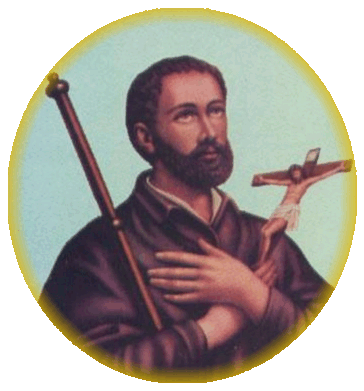
    We celebrate the memorial of St. Francis Xavier as a feast today, because he is the patron saint of the Diocese of Joliet.  Francis Xavier was a sixteenth century man who had a promising career in academics.  He was encouraged in the faith by his good friend, St. Ignatius of Loyola, and went to join the new community founded by Ignatius, the Society of Jesus, better known today as the Jesuits.

    Francis had a passion for preaching the Gospel and living a life of Gospel simplicity.  He would live with and among the poorest of the poor, sharing their living conditions, ministering to the sick, and preaching and teaching the faith.  In fact, we might say that he reminds us of a current Jesuit, Pope Francis!  Saint Francis Xavier lived in the East Indies for a time, before going on to minister to the Hindus, Malaysians, and Japanese.  He even learned a bit of Japanese in order to communicate well with his people and to preach to them.  He dreamed of going on to minister in China, but died before he could get there.

    Francis Xavier truly took to heart the words of St. Paul who said he made himself all things to all people in order to save at least some.  He made it his life’s work to live as his people lived, preaching to simple folk, and calling them to Jesus.  He was also able to live freely Jesus’ Gospel call today: “Go into the whole world and proclaim the Gospel to every creature.”

    Now we might not have the opportunity to live as Francis Xavier did and to actually go out to distant shores to preach the Gospel.  But we certainly are still called to preach it with our lives.  We are called to witness to Christ to everyone we meet: family, friends, coworkers, neighbors-anyone the Lord puts in our path.  Our diocese chose Francis Xavier for our patron because our founders took seriously the call to proclaim the Gospel to every person in this diocese.  We are called upon to do the same, according to our own life’s vocation and state of life.  May all who hear our words and see our actions come to believe and be saved.

  • The First Sunday of Advent

    The First Sunday of Advent

    Today’s readings

    Sometimes I think when it was time to pass out patience, I was in some other line. Waiting can be a real challenge for me, and I usually fill up the waiting time with worrying or something equally pointless. I’m pretty sure I’m not alone in that. None of us likes to wait: that may be the hallmark of our current society. We want to get rich quick, have what we want when we want it, and if someone in traffic gets in front of us going slow, we go nuts. Well, maybe that last thing is just me, after all!

    That’s too bad, really, because it means we miss a lot of stuff. When we can’t be in the moment, hanging in there and waiting to see what’s about to happen, then we distract ourselves with all sorts of things and really miss the grace that we’re meant to have. And to all of that, the Church gives us an antidote today. That antidote is Advent, the New Year of the Church.

    And so we’ve gathered here today on the precipice of something new.  Do you feel it?  Do you come here with a sense of hope and expectation?  Are you on the edge of your seat?  Well, if not, I certainly hope you will be by the end of Advent.  That’s what it’s all about.  The readings for these four weeks will focus on hope and expectation and will give us a view of the salvation God is unfolding for his own people.  It’s a message that I think we need now, more than ever.

    Just look around us. Yesterday, I was writing the Universal Prayers that we’re going to pray in a few minutes, after the Creed. I knew I wanted to have a prayer in there about all that is happening in Chicago, and I looked back at last year’s Universal Prayers for this First Sunday of Advent, and you know what? We were praying for Ferguson, Missouri. That gave me a little chill. Then there is the growing unrest with Isis, and so many terrorist events around the world. If ever there was a time for hope and expectation, I think it’s now.

    We might need a little hope and expectation in our own lives as well. As we come to the end of the year, maybe this was a year filled with blessing or maybe it’s one we won’t miss. Most likely, it was a little bit of both. Perhaps this last year might have seen the death of a loved one, the ending of a relationship, or some other significant event.  As we end another year, some of us might be doing that with some regret, looking back on patterns of sin or the plague of addiction.  And so, for many of us, maybe even most of us, it doesn’t take too much imagination to know that there is a lot of room for renewed hope in our lives.

    But it’s hard to wait for the fulfillment of that hope, isn’t it? If we can’t wait for Thanksgiving to be open before we go Christmas shopping, it’s hard to wait to see what God is doing in our lives. There’s a scene in the movie “Christmas Vacation” that I thought of when I was getting this homily ready. Clark Griswold is in his boss’s office, bringing him a Christmas gift. There’s an awkward silence and then he tells Clark that he’s very busy. He picks up the phone and says, presumably to his secretary, “Get me somebody. And get me somebody while I’m waiting!” None of us likes to wait.

    So we have to find the grace in the waiting. Maybe that’s why I love Advent so much. I’m so generally impatient, that Advent has me slow down and re-create that space so that it can be filled with our Lord’s most merciful presence. So what do we do while we are waiting?  How do we live among the chaos?  How do we keep on keepin’ on when every fiber of our being wants to pack it in and hope for it all to be over real soon?  Today’s Gospel warns us that people will die in fright when they see what is going to happen, but it cannot be so for people of faith.  Even in the midst of life’s darkest moments, even when it seems like we can’t withstand one more bout of hopeless worry, we are still called to be a hopeful people.  “Stand erect,” Jesus tells us, “and raise your heads because your redemption is at hand.”  God is unfolding his promise among us and even though we still must suffer the sadness that life can sometimes bring us, we have hope for something greater from the one whose promises never go unfulfilled.

    Then what does a hopeful people do while we are waiting for the fulfillment of God’s promises?  How is it that we anticipate and look for the coming of our Savior in glory?  Our consumerist society would have us get up at midnight on Black Friday (which I contend is at least a mildly evil name) and battle it out with a few thousand of our closest friends for the latest gadget or bauble or toy.  And to that kind of thinking, Jesus says, “Beware that your hearts do not become drowsy from carousing and drunkenness and the anxieties of daily life.”  Getting caught up in the things of this world does us no good.  It does not bring us closer to salvation or to our God, and all it does is increase our anxiety.  Who needs that?

    Instead, we people of faith are called to wait by being “vigilant at all times.”  We are called to forgive those who have wronged us, to reach out to the poor and the vulnerable, to advocate for just laws, laws that protect religious freedom and the sanctity of human life from conception to natural death, to challenge world powers to pursue true justice and real peace, to give of ourselves so that those in need might have Christmas too, and even to love those who drive us nuts sometimes.  When we do that, we might just be surprised how often we see Jesus among us in our lives, in our families and schools and workplaces and communities.  It might just seem like Jesus isn’t that far from returning after all, that God’s promises are absolutely unfolding before our eyes.

    We are a people who like instant gratification and hate to wait for something good to come along.  Maybe that’s why the Christmas shopping season starts about two weeks before Halloween.  But if we would wait with faith and vigilance, if we would truly pursue the reign of God instead of just assuming it will be served up to us on a silver platter, we might not be so weary of waiting after all.  That’s the call God gives us people of faith on this New Year’s day.

    We’re gathered here on the precipice of something new, on the edge of our seats to see God’s hope unfold before us and among us.  Do you feel it?  Are you ready for it?

  • Friday of the Thirty-fourth Week of Ordinary Time

    Friday of the Thirty-fourth Week of Ordinary Time

    Today’s readings

    Jesus says to us today, “this generation will not pass away until all these things have taken place.”  This includes all of us, past, present and future.  We will all live, in some way, to see the end of days, either here on earth, or from the joy of heaven.

    So what will we see; what things will take place?  We will see the signs of a new creation.  Just like the first buds of the fig tree and other trees that Jesus spoke about, all of which signaled the beginning of summer, so the signs of the new creation are evident among us.  Sins are forgiven, people return to God, miracles happen.  Granted, all these are imperfect in some ways now, given that they happen to us fallen creatures, but one day they shall be brought to perfection in the kingdom of God.  Then, we will see “the holy city, a new Jerusalem, coming down out of heaven from God, prepared as a bride adorned for her husband.”

    And so, in these closing days of the Church year, we pray for the coming of the kingdom, and hope for the salvation of the world as Jesus promised.

  • Thanksgiving Day

    Thanksgiving Day

    Today’s readings: Isaiah 63:7-9; Psalm 145; Colossians 3:12-17; Luke 17:11-19

    Lately, I have had to take a step back and look at how blessed I am. Being the only priest assigned to this parish, things can get a little hectic. I can get caught up in all the stuff I have to do administratively, I can get bogged down in all of the sacramental needs of the parish, I can get caught up in the mission to be an evangelizing parish, and all of it can get to be a little too much. I suspect you all can resonate with that. Your own lives are filled with so many things, and many families have to live by a master calendar or stuff will get lost in the shuffle. We are a busy people and we can grow resentful if we’re not very careful.

    I think that provides a little context for our celebration today. We begin with a Gospel story that is, quite frankly, a little scandalous. It’s scandalous because it seems that nine believers – people who should know how to be grateful to God – failed to express their gratitude over a miracle that literally gave them back the life that leprosy took away from them. It’s almost unthinkable.  Maybe we can cut them a little slack, because when you look closely at the story, Jesus really didn’t say or do anything indicative of healing – all he did was say “Go show yourselves to the priests.”  Now, it was the priests’ job to take care of ritual purity, but I’m guessing they had seen priests about their illness in the past and obviously had not been healed.  So I can see how they would have been confused, frustrated, and maybe even a little angry at Jesus’ response.  But they absolutely could not have been confused about the fact that they had been healed.  And yet the only one who thought to give thanks and praise to God was the other guy, a Samaritan – a foreigner and a religious outcast who wasn’t expected to know the religious etiquette that one should follow.

    Maybe the most deeply scandalous part of this whole reading is not just that nine lepers forgot to thank Jesus. I think the most scandalous part of this Gospel is that it really can be a kind of mirror of our own society, and perhaps even our own lives. Because these days gratitude is not a common occurrence; more often our society gets caught up in entitlement – we deserve blessings, we have a right to grace and mercy. Just as we think we have a right to everything in the whole world, we lay claim to God’s grace in ways that are deeply scandalous and even more than a little heretical.

    Just like those ten lepers had no right to lay claim to Jesus’ healing powers, so we too have no right to lay claim to his grace and mercy. Those things do not belong to us, and even more than that we are quite unable to earn them, even if we had a desire to earn them in the first place. But here’s the really great thing that shatters the scandal: even though the lepers had no right to be healed, Jesus healed them anyway. Even though we have no right to God’s grace and forgiveness for our many sins, he gives those things to us anyway, without a thought of doing otherwise. As the saying goes, God is good, all the time.

    And so the message today is that we have to decidedly leave behind our attitudes of entitlement and embrace an attitude of gratitude. And honestly, I think that can make us happier people. Grateful people live differently.  Grateful people look for the blessing in every moment, they hunt for the grace constantly at work in their lives.  They are like radios which are powered on so that they can receive the broadcast.  When you’re grateful, it’s amazing how much more you seem to be blessed.  Only it’s not necessarily that you’re blessed more; instead it’s that you’re more aware of the blessing.  Thankful people are happier with their lives, because they’re simply more aware of what God is doing, how God is leading them, and they feel the touch of God’s hand leading them through life.  Being grateful is a choice, but it’s a choice worth making, it’s a choice that makes our lives richer and more beautiful every day.

    As Catholics, we are a people who, at least liturgically, constantly choose to be grateful.  Our Eucharist – which, as we know, is the Greek word for thanksgiving – is the Thanksgiving feast par excellence.  Every time we gather to celebrate Mass, we remember that God in his infinite mercy sent his only Son to be our Savior.  He came into our world and walked among us, filling the earth with his most merciful presence.  He journeyed among us, a man like us in all things but sin.  His great love led him to bear the cross for our sake, dying the death we so richly deserved for our many sins.  And then he did the greatest thing possible: he burst out of the grave, breaking the chains of death, and rose to new life.  Because of this grace, we have the possibility of everlasting life with God, the life we were created for in the first place.

    Every time we celebrate the Eucharist, we remember this awesome mystery.  Not only that, our Eucharist brings us to the hour of that grace, giving us once again a share in its blessing.  As a Eucharistic people, we Catholics are a people of gratitude.  That’s what defines us.

    So how would a people defined by gratitude celebrate this Thanksgiving day?  Certainly we have made the best possible start: gathering for the Eucharist to give thanks for the presence of God and the grace he pours out on us.  Then we take that grace to our families’ own Thanksgiving feasts and beyond.  As we gather around the table today, maybe we can stop to reflect on God’s magnificent presence in our lives – in good times and in bad.  And then use that gratitude to make the world an awesome place – or at least your corner of it!

    So we’re not like those nine lepers that somehow missed the grace and blessing that was happening right before their eyes. On this day, we gather because we choose to be grateful. On this day, before all the turkey and stuffing and pumpkin pie, we stand up and bear witness that our God is good all the time, that there is grace and blessing all around us, and we can see it if we choose to do so. We grateful ones come into this holy place to show a watching world that we are who we say we are – a people of Eucharist – of thanksgiving: not just on this day, but every day. And we proclaim to the world that gratitude is the antidote for entitlement, and it’s an attitude that can make the world a more blessed place. Like the pilgrims on that first Thanksgiving, our gratitude can become the source of our survival through the hard times and the source of our joy in the good times.  May we never cease offer our gratitude to God, singing to him our songs of thanks and praise.

  • Monday of the Thirty-fourth Week of Ordinary Time

    Monday of the Thirty-fourth Week of Ordinary Time

    Today’s readings

    Very often, when we hear this story about the widow’s mite, the story is equated with the call to stewardship. That’s a rather classic explanation of the text. And there’s nothing wrong with that explanation. But honestly, I don’t think the story about the widow’s mite is about stewardship at all. Yes, it’s about treasure and giving and all of that. But what kind of treasure? Giving what?

    I think to get the accurate picture of what’s going on here, we have to ask why the Church would give us this little vignette at the end of the Church year, in the very last week of Ordinary Time. That’s the question I found myself asking when I looked at today’s readings. Well, first of all, it’s near the end of Luke’s Gospel so that may have something to do with it. But I think there’s a reason Luke put it at the end also. I mean, in the very next chapter we are going to be led into Christ’s passion and death, so why pause this late in the game to talk about charitable giving?

    Obviously, the widow’s mite means something other than giving of one’s material wealth. Here at the end of the Church year, we are being invited to look back on our lives this past year and see what we have given. How much of ourselves have we poured out for the life of faith? What have we given of ourselves in service? What has our prayer life been like? Have we trusted Jesus to forgive our sins by approaching the Sacrament of Penance? Have we resolved to walk with Christ in good times and in bad? In short, have we poured out everything we have, every last cent, every widow’s mite, for our life with Christ? Or have we held something back, giving merely of our surplus wealth?

    In this last week of the Church year, we have to hear the widow telling us that there is something worth giving everything for, and that something is our relationship with Christ.

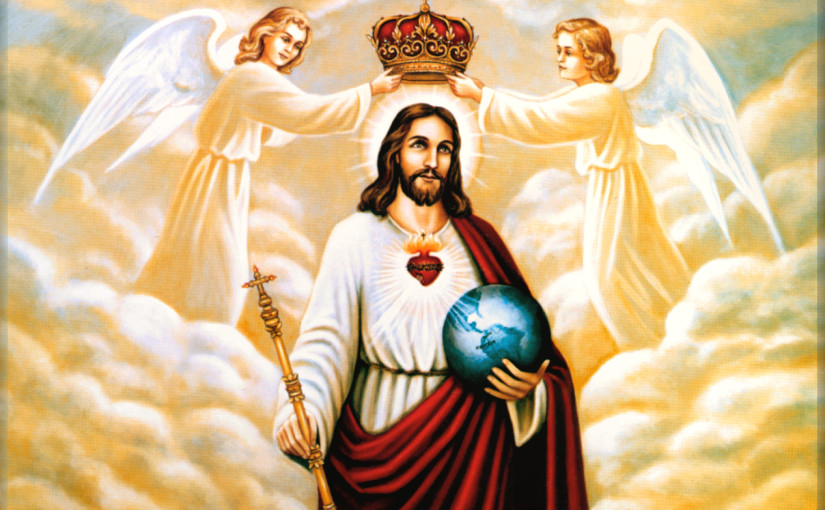
  • Our Lord Jesus Christ, the King of the Universe

    Our Lord Jesus Christ, the King of the Universe

    Today’s readings

    Today we celebrate the great feast of Our Lord Jesus Christ the King of the Universe. In the past, I have said on this feast that it’s a little odd for us, mostly because we don’t have a king in our system of government, so it’s hard for us to relate. But lately, I’ve been thinking it goes a little deeper than that, because we have been conditioned to think that authority figures are someone we can ignore. And let’s face it, many authorities deserve to be ignored. Nobody in their right mind runs for political office anymore, it seems. Just look at the characters running for president this time: wouldn’t it be nice if even one of them was just not crazy?

    But it even goes deeper than that. Nobody respects the authority of the Church, it seems, and to some extent, we probably deserve that too. Many priests and bishops have abused their authority and have abused their parishioners, and that is shameful. But even deeper than that, people both young and old don’t respect their parents in the way they should be. And when you ask people why they do something that is objectively wrong, they’ll often tell you, “I think it’s okay,” as if their opinion were the be-all and end-all of morality.

    Some of this, as I’ve mentioned, is deserved, but much of it is a violation of the Fourth Commandment. Because here’s why: When we get used to ignoring the legitimate authority in our lives, we get used to doing our own thing. Then not even Jesus can be the Lord of our lives. And when that happens, we’re on the path to destruction, because he is the only one that can justify us, the only one who can redeem us. He is, as he says in another place in the Gospels, “The Way, the Truth, and the Life” (John 14:16). Notice: not just a way, or one possible truth, or a good but not obligatory life, but The way, the Truth, and the Life. He goes on to say, “No one comes to the Father except through me.”

    So I think we definitely need this feast of Our Lord Jesus Christ, the King of the Universe, to remind us that there is authority worth observing. And here, at the end of our liturgical year, we celebrate the one who is that authority. As we look back on the past year, there may have been times of great achievement, or times of failure. We may have celebrated life, or had to deal with sickness and death. We may have been blessed by wonderful, nurturing relationships or we may have had to deal with discord and strife. But if this year has meant anything, hopefully we can say that we have come through it with the help of Jesus our Savior, who is our Lord and King.

    In today’s first reading, we have the promise of a king: one like a son of man with an everlasting dominion. This part of the book of Daniel comes from a series of visions. In these visions, particularly the one we have today, Daniel gives the Jews hope in persecution. This is a vision that is spoken to lift the people up and help them to know that their hope is in God.

    The Jews of Daniel’s day have been being persecuted by the Greek tyrant, Antiochus Epiphanes IV. He and his henchmen were persecuting the Jews who insisted on living the Jewish way of life. But what is even more evil and more disastrous to the community, is that some of the Jews were starting to think that giving up their way of life and instead worshiping the gods of the Greeks was a good idea. They saw how powerful the Greeks were and attributed that to the gods they were worshipping. So, why not give up their own faith to follow one that seems to be working better? The biggest danger they faced was losing their faith, and really their way of life, to the pagans by adopting pagan ways of life.

    Well, we clearly are not under the persecution of Antiochus Epiphanes, but we are definitely in danger of losing our faith to the pagan forces of this world. Just look at the terror and discord in the world today, especially the Christians being forced out of Syria – and many other places, I might add. Our faith and our way of life are in danger too. And that is to say nothing of the way that the secular culture around us threatens to devour us. We might find ourselves going along with that culture without really thinking about it. Everything that promises us power, success and wealth has the ability to take our hearts and souls with it. Why not just give in? Won’t paganism and evil win out in the end?

    Well, Daniel sure didn’t think so. He prophesied that there would be one like a Son of Man who would triumph over Antiochus and others like him. This One would deliver them from the persecution they suffered and from the seduction that confronted them. This One would rule the world in justice and peace, and would lead the persecuted ones to a kingdom that would never pass away. The early Church identified this Son of Man with Jesus Christ. He is the One who has power to rule over all and he is the One whose kingdom is everlasting. He is the One who will overcome all of our enemies, even death itself.

    Jesus told Pilate in today’s Gospel that his Kingdom was not of this world. That should be the red flag for us. When we begin to worship and follow the forces of this world, we know that we are in the wrong place, because as I’ve said many times, we are not at home in this world – we are mere travellers, on our way to our true home in heaven. Christ is the King, the Son of Man, who will lead us to a kingdom not made by human hands, a kingdom that will not pass away, a kingdom of truth and life, a kingdom of holiness and grace, a kingdom of justice, love and peace. The choice is ours, though. Will we follow the pagan forces of this world, or will we acknowledge the authority of our Risen Lord and proclaim him as King of our lives and of our Universe and follow him to that perfect and everlasting kingdom?

  • Thursday of the Thirty-third Week of Ordinary Time

    Thursday of the Thirty-third Week of Ordinary Time

    Today’s readings

    If the readings today stir up feelings of anxiety in us, well, that’s to be expected. These are not readings of comfort and peace – anything but! And that’s just how the Lectionary is arranged. Every year at the end of the Church year – which this is – we have readings about how times will end. These readings are called apocalyptic readings, and at the close of a year, it makes sense to read about the close of time.

    Generally speaking, apocalyptic readings are written during times of intense persecution in the Church. It makes sense that as persecution increases, the imaginations of those being persecuted would turn toward a time when one’s enemies would be vanquished in a glorious battle, and a new time of grace would come.

    But often these apocalyptic readings speak of the persecution itself, and that’s what’s happening in the book of Maccabees, which we have been hearing the last week or so. On Tuesday, old Eleazar would not give in to the unreasonable demands of Antiochus Epiphanes, even though he had been faithful his whole life long. He refused to be a cause of scandal for the young and went to his death. The same happened yesterday to the seven brothers and their mother who were all put to death. Well, today, Mattathias has had enough of all of this, and has seen one too many faithful Jews give up and give in, so he incites a revolution and gives courage to all those being persecuted.

    If today these readings stir up more feelings of uneasiness than they have perhaps in the past, well, that’s easy to understand. The apostasy is catching up with us too, in these days. Persecution of Christians and the proliferation of terror and violence seems to be coming to a fever pitch – not just in Paris, or even just in Beirut or Syria, but day after day in our cities.

    Understandably, we all wonder how to stay safe and stay out of harm’s way. But the truth is, living our faith is dangerous. Just ask Eleazar or the seven brothers, or Mattathias. It might seem “safe” to give up and give in to society, or even to go into hiding. But the Psalmist knows the only way to real safety and real peace: “Offer to God praise as your sacrifice / and fulfill your vows to the Most High; / Then call upon me in time of distress; / I will rescue you, and you shall glorify me.”

    The way to fight this spiritual battle is to find our safety where the only true safety exists: in God alone. Jesus tells us in another place that we ought not to fear those who can merely kill the body, but to fear instead the one who seeks to kill our souls (Matthew 10:28). So we believers put on the armor of faith: good works, fervent prayer, honest confession, reception of the sacraments. And then we trust in the One who alone is trustworthy: our God who gives us the only life worth living.

  • Monday of the Thirty-third Week of Ordinary Time 

    Monday of the Thirty-third Week of Ordinary Time 

    Today’s readings

    Right at the end of today’s first reading is one of the most chilling lines in all of Scripture: “and they did die.” The people’s faith was sorely tested: would they give in and worship the false gods of the people around them so that they could have some kind of peace and security, or would they prefer to stand up for what they believed and more likely than not, give their lives for their faith? Many gave up and gave in and worshipped the false gods. But many stood their ground and clung to their belief in the God of Abraham, Isaac and Jacob.
    But, let’s be clear about this: they all died. In some way. Those who were martyred literally gave their lives for the faith, we get that. But those who chose to give up and give in brought about the death of their culture and the death of their souls. Sure, they may have had some kind of peace and security now, but who would protect them if the people they allied themselves with were overtaken? And that is to say nothing of their eternal souls. They did die.

    The persecution never ends. It would be easier in our own day to give in and accept abortion as a necessity, or to change Church teaching on the nature of marriage and the family, or to accept whatever special interest groups think is best for us, or keep our faith private and never share it or show it in any way. Our culture would like that; they would appreciate our willingness to blend in and not give offense. But that would be the death of our way of life and our spirituality. It will surely cost us to witness to our faith, to challenge co-workers when a business deal blurs the lines of morality, to insist that our children attend Church on Sunday before they go to a weekend-long soccer tournament, or whatever the challenge may be.
    But better that we die a little for our faith than that we die without faith at all.

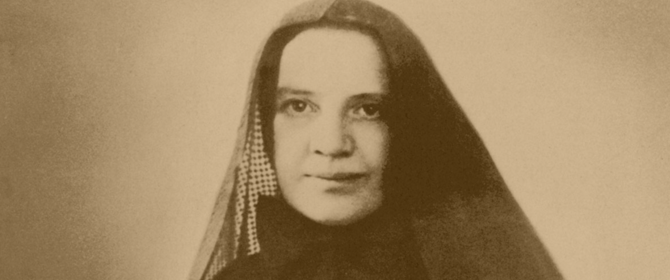
  • Saint Frances Xavier Cabrini, Virgin

    Saint Frances Xavier Cabrini, Virgin

    Today’s readings

    St. Frances Xavier Cabrini, who was called “Mother Cabrini” during her life, was a humble woman of great faith and fortitude, who stayed with her mission. She was refused entrance to the religious order that had educated her. So she began working at an orphanage, eventually becoming a sister in the religious order that ran it. She later became their prioress. She went to New York intending to found an orphanage there. The house they were to use turned out not to be available, and the bishop advised her to return to Italy. But she stayed, and eventually founded not only that one orphanage, but 67 institutions dedicated to caring for the poor, the abandoned, the uneducated and the sick. She died at Columbus hospital in Chicago, which she also founded. She was the first American citizen to be canonized a saint.

    Today’s first reading encourages us to clear out the clutter in our lives.  The wisdom writer says, “For they search busily among his works, but are distracted by what they see, because the things seen are fair.”  Lots of things of earth seem good, but nothing is good but God alone.  So what is it in our lives that is distracting us from God?  Perhaps today we might clear them away so that we can accomplish more in God’s name.  We might not found 67 institutions like Mother Cabrini, but who knows what the Spirit might do in us once we have cleared away our distractions.