Today we celebrate the memorial of Saint Josaphat, who was born in what is now Poland to Orthodox parents. He later became a Basilian monk, and was chosen bishop of Vitebsk, in what is now Russia. His task was to bridge the divide between the Roman and Orthodox Church, but this was not easy, because the Orthodox monks did not want union with Rome; they feared interference in liturgy and customs. But over time, using synods and other instruction, he was able to win many of the Orthodox in that area to the union.
But the fight was far from over. A dissident faction of the church was formed, and they fomented opposition to Josaphat. Eventually the mob murdered him and threw his body into a river. The body was recovered and is now buried in St. Peter’s basilica. Josaphat is the first saint of the Eastern Church to be canonized by Rome.
Josaphat had an insurmountable task to accomplish. But he had faith that God would give him what he needed to accomplish the mission. He knew well Jesus’ message in today’s Gospel: that the Kingdom is here and now. We don’t have to go searching for hidden signs or look for hidden messages in Scripture. So since the Kingdom is here and now, our job is to do everything possible to make sure nothing gets in the way of people entering into it.
Blog
-
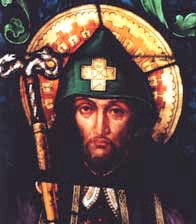
Saint Josaphat, Bishop & Martyr
-

The Anniversary of the Dedication of Saint John Lateran
Today we celebrate the feast of the dedication of the Cathedral of St. John Lateran in Rome. Most people think of St. Peter’s Basilica as the pope’s church, but that’s not true. As the Bishop of Rome, his Cathedral Church is the Lateran Cathedral, once dedicated to our Savior, but now named for St. John the Baptist. This site has served as the Cathedral church for the pope ever since the first structure was built in the late 300s. It served until the pope was moved to Avignon, and upon returning, it was found to have been destroyed. The present structure was commissioned in the 1600s and is one of the most massive churches in Rome. Because it is the parish church of the pope, it is in some ways considered to be the parish church for all Catholics. Today we celebrate the feast of its dedication on November 9, 324 by Pope St. Sylvester I.
The disagreement between Jesus and the Jews in the Gospel reading today showed what was really a difference of opinion on what Church is. The many services that were being offered outside the Temple were required for the sacrifice, so they supported the worship that went on there. In a sense then, they were legitimate enterprises. But Jesus came to bring about Church in a whole new way. His uncharacteristically violent reaction was frustration that those who should know better did not see what God really wanted in worship. He didn’t want birds or animals, he wanted people’s hearts so that he could re-create them anew.
Any feast like this is an opportunity for us to take a step back and look at this thing we call Church. The misunderstanding in the Gospel between Jesus and the Jews tells us that we cannot view Church as just a building. The reality of Church is brought to great perfection in the Body of Christ, and we see that because of Christ, the Church is a living, breathing thing that takes us in and out of time and space to be the body we were created to be. So today we celebrate Church; we peel back the Church’s many layers, touching and learning the concrete, living the experiential, asking for the intercession of the heavenly, and yearning to be caught up in the eternal. The Church is our Mother who has given us birth in the Spirit and who nurtures us toward eternal life.
The river of God’s life flows forth from the Church to baptize and sanctify the whole world unto the One who created it all. The Church has its foundation in Christ, who also raises it up to eternity. Blessed are all those who find their life in its sanctuary.
-
All Souls Remembrance Mass
Readings: Isaiah 25:6-9 | Psalm 23 | Romans 14:7-9, 10c-12 | Matthew 25:31-46
One of my most vivid childhood memories was when I was just about nine years old. My grandfather on my mother’s side, who had retired just a few months earlier, was diagnosed with cancer. There wasn’t so much that could be done about cancer in those days, so he wasn’t expected to live long. And so one night, as the oldest of the children, Mom and Dad came to my room to talk to me about Grandpa. That was the night I learned about life and death, sadness and grief, love and pain. We cried a bunch, hugged a lot, and talked about how we were going to miss him.
I went to the wake and funeral with my family, because that’s what we did when a loved one died. My parents could have shielded me from that experience in many ways, as so many parents do, but they chose not to, and I’m glad they made that decision. Death and grief aren’t things we actively seek, but we can’t be afraid to meet them head on, girded with faith, and confident of the hope we have in Christ Jesus.
I still miss Grandpa to this very day. He had a wonderfully silly sense of humor that never failed to make me laugh and probably rubbed off on me, to be honest; he made a homemade ravioli that blew away anything I’ve ever eaten since; he came from Italy and made a beautiful life for his family, and the stories of that have been an inspiration to me every day. The same is true of all of my grandparents, all who have gone on to the Kingdom, all of whom I miss and all of whom were a great example for me.
I miss Grandma Mulcahy when I’m planting flowers in my Mom’s garden, because she did that better than anyone, and while she did, we would talk about Ireland and I would hear about life in the “Old Country.” I miss Grandma Mastrodonato – Mom’s Mom – when I’m out in a public setting and see people doing crazy things because she always enjoyed people watching and listening to others. I missed Dad’s Dad a lot in my job previous to seminary, because he built the monstrous printing press that was, at the time, printing a job for my one of my customers.
And I miss Dad, so very much. When I’m having a rough day, I just want to sit down and talk, knowing he’d listen and understand, and support me in whatever way I needed. And there are aunts and uncles who have gone on to the Lord, too. All of these characters have been inspirational to me in some way, and I find that the grieving, while it may dissipate a bit, never seems to completely go away. I don’t think it’s supposed to. Because when we have loved much, the passing away of one we have loved leaves a hole in our life that shouldn’t go away. That doesn’t mean that our life comes to an end: we move on, as move on we must, but always with a sense of loss, hopefully tempered with fondness for the relationship we had, hopeful of a reunion in heaven one day.
“For if we live, we live for the Lord, and if we die, we die for the Lord; so then, whether we live or die, we are the Lord’s.” So says Saint Paul in his letter to the Romans from today’s second reading. That is our prayer for our loved ones, for all the faithful departed. Because, if we are convinced of that grace, we know they are alright, and have hope that we will be alright too. And our Liturgy gives us words to hope on as well. In a few moments, I will sing the words that have comforted me so many times in my sorrow: “Indeed, for your faithful, Lord, life is changed, not ended, and when this earthly dwelling turns to dust, an eternal dwelling is made ready for them in heaven.” This echoes the words of the Prophet Isaiah in today’s first reading: “The Lord God will wipe away the tears from all faces; The reproach of his people he will remove from the whole earth; for the Lord has spoken.”
During November, the Church continues to remember those we prayed for on the second day of this month, the Commemoration of All the Faithful Departed. And for this remembrance, I have chosen to reflect on our experience of grief, and I’ve done that because it’s an experience we all have, on some level, at some time in our lives. I want you to know how very natural grief is, and how very blessed an experience it is. We must always remember that blessed experiences aren’t always pain-free. Our God never flees from our brokenness, instead he has chosen to redeem it.
And so as we remember our loved ones, we offer our prayers for them too. We pray that God might place them one day on his right, saying to them and hopefully us too, “Come, you who are blessed by my Father. Inherit the kingdom prepared for you from the foundation of the world.” The goal of all our lives is the life of heaven, and we shall all be restless until we attain that great joy.
And so we are confident, because we know that death only separates us from those we love for a short time, and that death never has the last word because Christ has triumphed over death. The beginning and end of everything is Christ, and Christ is with us in our first moments, and also in our last. He is with us in our pain and with us in our joy. He helps us to remember our loved ones with love that continues beyond our death and beyond the grave. Grief and loss and pain are temporary things for us. Love is eternal, love never ends, love can never be destroyed by death, love leads us all to the great glory of the resurrection and eternal light in that kingdom where Christ has conquered everything, even death itself.
Eternal rest grant unto all of our loved ones, O Lord, and let perpetual light shine upon him. May the souls of all the faithful departed, through the mercy of God, rest in peace. Amen.
-
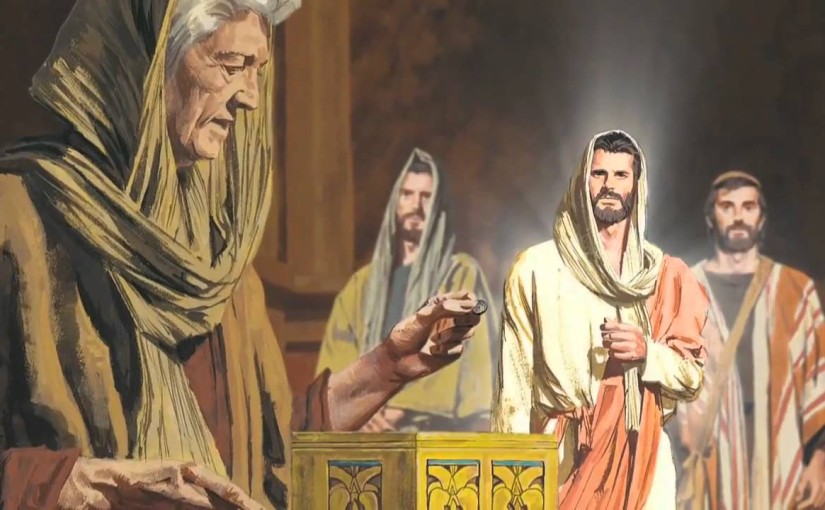
The Thirty-second Sunday of Ordinary Time: Going “All In”
Today’s Gospel has some rather obvious applications, not all of which are entirely accurate. For example, many may hear this Gospel reading as a condemnation of the rich or a warning against having too much money. Indeed, riches can be a distraction and an obstacle to a relationship with the Lord. Saint Paul says to Timothy that “the love of money is the root of all evil.” (1 Timothy 6:10) But having money is not in and of itself evil; in fact, having money can be an opportunity for holiness if one uses one’s money to build others up. But I really do not think that Jesus was using this opportunity to condemn greed.
Another application of this reading might be to encourage stewardship. Here the idea would be that virtuous stewardship consists of giving sacrificially and not just pledging some of one’s surplus wealth. There’s something to be said for that, because the requirement to be a good steward does include the notion of sacrificial giving, giving from one’s need. In giving from our need, we trust God with our well-being, and he never fails in generosity. So maybe Jesus is calling on us to give more so that he can give more – when we create want in our lives, there is space for God to give more grace.
So in both of these applications, the subject is money and its use. But when it comes down to it, I don’t think Jesus intended money to be the subject here. I think instead, he was focusing on the sacrifice.
Look at what he said the widow did. She put into the treasury a small amount, but it was all she had: Jesus says, “but she, from her poverty, has contributed all she had, hew whole livelihood.” Not so different from that is the sacrifice of the widow of Zarephath in the first reading. Elijah had prophesied a drought over all of the Land, God’s punishment for the wicked acts of their kings. And so water and food were in scarce supply, and God sends Elijah to the widow. She’s just about to use up the last of her flour and oil to cook a meal for herself and her son, when Elijah meets her and asks her to make him some food. He encourages her to trust God, and when she does by giving all that she has, she finds God faithful to feed all of them for some time.
So I’d like to suggest that both of these widows had gone “all in” for their relationship with God. They trusted Him with their very lives by giving everything had to give. It’s a super-scary thing to do, isn’t it? We are ones who love to be in control of our lives and of our situations, and so giving up all of that gives us more than a little pause. But honestly, it takes that kind of a leap of faith to get into heaven. If we still are grasping onto stuff, then our hands are full, and we cannot receive from God the gifts and the grace he wants to give us.
Look at that cross. That too is going “all in.” And our God did that for us. Jesus went “all in” by giving his life, suffering the pain of death that we might be forgiven of our sins and attain the blessings of heaven. God is faithful and he will not leave us hanging when we go “all in” for him.
And the time is short. The Church gives us this reading very purposely on the third-to-last Sunday of the Church year for a reason. Because if we’re still hanging onto the stuff that keeps us bound to this life, we may very well miss our invitation to eternal life in the kingdom of heaven. To get to heaven, we have to choose our relationship with God over everything else in our lives. We have to empty our hands of all this earthly wealth so that we might obtain heavenly wealth. We have to go “all in” or we’ll be left out.
-
Thursday of the Thirty-first Week of Ordinary Time
Today’s Gospel calls us to examine our perspective. Jesus asks, “What man among you having a hundred sheep and losing one of them would not leave the ninety-nine in the desert and go after the lost one until he finds it?” Well, those men he talked to were shepherds, or had shepherds in their family, so they would have responded “nobody would do that!” Why on earth would they risk losing the other ninety-nine sheep to find the lost one?
And as far as the coin goes, I guess it depends on what the coin is worth. If it’s a denarius – a day’s wage – then yes, it would be worth staying up all night and searching carefully. But if it’s just a small coin, why bother? It would probably have cost more to light the lamp and search all night than the coin was worth.
But here’s the perspective part: God is not like us. Every sheep among us is important, and he will relentlessly pursue us individually until he has us all in the sheepfold. And there are those among us who don’t see themselves as worth much. For some, their own self-image is so poor that they think they are dirt. But God does not; and if we’re lost, he’s going to light a lamp and stay up all night until he has us back. For him, one of us is every bit as important as the other ninety-nine. Even if our own self-image is poor, we are a treasure in God’s eyes.
And that’s all well and good, but we always have to ask ourselves why the Church gives us this reading again in the closing days of the Church year. We hear these kinds of parables typically in the summer months, when the Church wants us to see that God loves us and wants us to be his disciples. But hearing the parables in these days, there’s a little more urgency. Time is running short, and it’s time for the lost ones to be found and gathered up and celebrated. These waning days of the Church year are a foreshadowing of the end of time, and so we need to cooperate with God in making the urgent message of God’s love known in every time and place.
And so that’s what the Kingdom of heaven is like. It’s a relentless pursuit and a flurry of activity until we are all back where we belong. Once we are all with God, the joyful celebration can continue, knowing that we are all back where we were always meant to be.
-
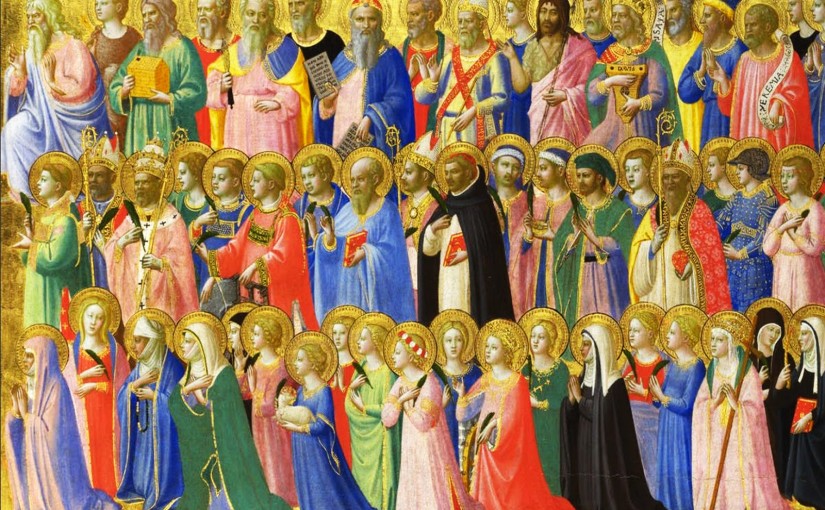
The Solemnity of All Saints: Yearning for Heaven
One of my favorite hymns is the one we sang at the beginning of Mass today, “For All the Saints.” Ever since I was a little kid, I can remember the rather stirring melody and the beautiful words in praise of the Saints Triumphant. For me, it kindled a little yearning to be a saint some day. You might hear that and think, “well, someone’s full of himself, isn’t he?” But honestly, we should all be having that yearning. Because we are all supposed to be saints.
When we think about saints, we get stuck, I think, on those saints of statues and medieval stories. But today, the Church is asking us to think about saints in a broader way. Yes, we include all those “official” saints that have been canonized through the ages. They are our intercessors and our inspiration. The Church rejoices in the saints because when someone becomes a saint, the Church recognizes that he or she is definitely in heaven, the goal of all our lives. So, from the many saints of every time and place, we know of thousands of people that are certainly in heaven. This illustrates that God’s will always done, doesn’t it?
But, as I said, I think the Church wants us to think about saints in a broader way. There is the story of a schoolteacher who asked her children what a saint was. One little girl thought about the saints she saw in stained glass windows, and said “Saints are people the light shines through.” Think about that for a minute – that little girl isn’t far from the kingdom of God there. Because all people are called to let the light of Christ shine through them, and saints are those people who have made that the business of their lives.
Heaven is that great multitude that John the Revelator tells us about in today’s first reading: that multitude “which no one could count, from every nation, race, people, and tongue.” They are wearing, he tells us, white robes, which have been washed in the blood of the lamb. That seems very counter-intuitive, doesn’t it? Everyone knows that blood stains like nobody’s business. But he’s speaking poetically here, and recognizes that nothing washes us sinners quite as clean as the saving blood of Jesus Christ.
And that’s really the only way. Because if we bristle a bit at my yearning to be a saint, we might be on to something. We can’t be saints all on our own. We aren’t good enough, we can’t make up for our sins with any kind of completeness, and there’s basically no way that we can jump high enough to get to heaven. But this feast of All Saints recognizes that we don’t have to. We don’t have to because Christ has saved us through no merit of our own but based solely on God’s love for us. The fact that we can be called saints is grace, and we dare not bristle so much that we turn away from that grace.
We are all of us on a journey, and we know that our true home is not in this place, however good it may be. We are on a journey to heaven, and that means that we are in the process of becoming saints. That journey consists in following the Way who is Jesus the Christ, our Lord and Redeemer. He has commanded, “be perfect as your heavenly Father is perfect” and there is no way to do that except to follow him.
So, no, of course, not all of us will be canonized. Most of us will go to the Kingdom rather imperfect in many ways, and will have to work that out in the grace of Purgatory. But if we look to those canonized saints for inspiration, perhaps our relationship with the Lord will lead us and our brothers and sisters to that place where all the saints worship around the Throne of the Lamb.
Today we, the Church militant, honor the Church triumphant: not only the great saints like Mary and Joseph, Patrick and Benedict, Michael and Gabriel, Francis and Dominic, but also those saints that God alone has known. We glory in their triumph that was made possible by them joining themselves to Christ. We take inspiration from their battles and from the faith that helped keep them in Christ when they could have turned away. If God could do that in their lives, he can certainly do that in ours too. Perhaps, if we are willing to accept it, he can fill us with saintly attributes: strength in weakness, compassion in the face of need, witness to faith in times when society lacks direction, and so much more.
Those virtues are virtues that we think about when we call to mind those official, canonized saints. But they are virtues for which we can and should strive as well. The desire and the grace to attain those virtues comes from God himself, and the reward for receiving that grace and living those virtues is a heavenly relationship with God. What could be better than that?
This is a lot of work, and it’s not easy to live a saintly life, but Jesus makes a promise today to those who strive to do so: “Rejoice and be glad, for your reward will be great in heaven!”
-
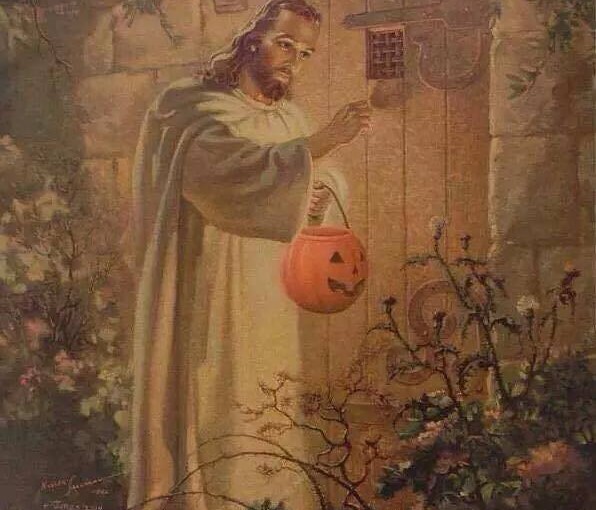
All Saints Eve: Would Jesus Trick-or-Treat?
Since we’re gathered here on Halloween, All Hallows Eve, I thought I might get your attention by doing a little homily I like to call “Would Jesus Go Trick-or-Treating?” It’s an important topic, because I think a lot of parents wrestle with the message of Halloween and whether or not they should support their children joining in the festivity.
And I think it’s an important thing to wrestle with. On one hand, we don’t want to make a joke out of evil, because evil is real and it’s no joke. But on the other hand, we don’t want to call attention to evil by making a big thing out of it. Exorcists tell us that those are the two common mistakes that we can make about: First, we might say think there is no such thing as the devil. Satan would be happy for us to do that, because then we’re not on guard against him. He is real, he’s out there, and we do have to be on guard. Second, we might look for evil everywhere, and that just shuts us down and keeps us from living the Gospel. Neither of these is a good thing.
So let’s talk about Halloween. Its origins are a bit murky, and lots of people think that what happened is that we sort of baptized a pagan festival. And there is a traditional pagan festival on October 31st, but apparently there is a traditional pagan festival on the last day of every month, so really that’s nothing special. More likely, Halloween was a celebration of the Eve of All Saints – hence the name. All Saints Day originated in the year 609, when it was celebrated in May. But in the ninth century, it was moved to the first of November, which is when the Germanic church celebrated it, and it’s been celebrated then ever since.
The origins of trick-or-treating may have been in Ireland where an ancient Gaelic festival celebrated the harvest and marked the beginning of winter – the time of year when a significant portion of the population would often die. Because of the fear of death that came with winter, these celebrations seemed to have included going door to door asking for treats dressed in costumes, which were thought to disguise the living from life-taking spirits.
So the origins and intent of Halloween are relatively benign, and mostly intended to honor the saints. But in our country, over time, a more sinister tone was added to the celebration. Think of some of the more horrific costumes, extremely elaborate and grotesque “haunted houses,” and parties where more evil customs were brought to the celebration. Add that to some of the more elaborate horror movies that get released this time of year, and you can see how it would be easy to brand Halloween as an evil holiday.
Fundamentalist Christians especially see the evil, and thus throw out the entire holiday. But we are not fundamentalist Christians. So we remember that God is good, and that he is in control, and we do not give the demonic or the evil any power that they don’t already have. Indeed, a lot of people think that there is more demonic activity at this time of year than normal, but exorcists tell us that is not true. It’s just that people tend to open more doors by their worrying and by doing some things they shouldn’t to celebrate the holiday.
So now let’s remember what this holiday is really about. Today we celebrate the feast of all the Saints – those who have been officially canonized over the ages, and those that perhaps we don’t know of, but who God certainly knows. This is the Church Triumphant, those who have conquered evil and have mastered holiness. They have accomplished what they were created for, to take up their rightful place in the Kingdom of Heaven, that place that God has prepared for each one of us. Today we celebrate their triumph, and hope for our own triumph, for we too wish to live forever with our God. We celebrate the example the saints have given us and we celebrate their intercession, which helps to guide our lives and lead us on the path of life eternal. So it is right to celebrate this as we celebrate other holidays, with great festivity.
I think it’s important that we celebrate Halloween and All Saints Day as one, which is the intent. If we do that, we keep our minds on what is positive and turn away from all that bids us evil. So yes, I think it’s okay to trick-or-treat, to celebrate with parties, and to dress up. But I’d skip the more evil costumes, and any party games that summon evil, like Ouija boards. Those are things that open the door to evil, and we always want to avoid that.
Avoiding evil was the glory of the saints. That was part of the path to holiness for them. As we celebrate all the saints today, we might think of some who famously battled evil and won. Saint Michael the Archangel, my middle-name patron, fights the battle of evil that we don’t see, every single moment. He is a wonderful patron, and we should memorize the prayer to him and pray it often. Saint Patrick, my principal patron, famously converted the pagan king of Ireland to Catholicism and exorcised the forces of evil in that country. His famous Breastplate prayer is considered a deliverance prayer and a help to those who feel oppressed by evil. Of course, the Blessed Virgin Mary, Queen of Heaven and Earth, is a powerful protector of all of us, her children. And let’s not forget our Guardian Angels, who do battle for us on a daily basis. That’s just some of the saints who battle for our good.
And in the spirit of their glorious battle, we should dedicate ourselves to joining them one day. We are all supposed to be saints, and as tall an order as that may sound, it needs to be our number one priority. Because there is no one in heaven who is not a saint. So then, we need to take all the help God and His Church gives us: we must dedicate ourselves to the sacraments, particularly the sacrament of Penance and the Eucharist, which together are more powerful than a solemn exorcism. We must put prayer at the beginning, in the middle and the end of our to-do lists, dedicating ourselves to the Blessed Sacrament, to the reading of scripture, and devotions, particularly the rosary. We have to make every effort to live the Gospel, and to give witness to the power of God’s love in our lives and in our world. Because if we honor and witness to Christ in this life, he will surely be our advocate in the life to come.
So yes, I think Jesus might trick-or-treat. But we come to him today for the best of all treats, the saving grace that he offers us that we might join the saints in heaven one day. We come to Jesus rejoicing and full of gladness, because we know that those who belong to him will have great reward in heaven.
-
Thursday of the Thirtieth Week of Ordinary Time
The question that Saint Paul asks at the beginning of today’s first reading is one that we’ve all heard countless times: “If God is for us, who can be against us?” We might even be tempted to pass by that question and move on to something else in today’s Liturgy of the Word, but I don’t think that’s wise. Because it’s an important question, and one that confronts us all, in some way, time and time again.
We might go through a rough patch in our lives: loss of a job, death of a loved one, a severe and trying illness, damage to a marriage or strain in any relationship. These are the issues that try our souls and sorely test our faith. We might even at times be tempted to give in to despair and lose our focus in such a way that it affects our health and well-being. But we believers dare not do so, because God is for us.
We might hear news that is difficult to absorb. Our society may be in a sad state of affairs; the political climate may be divisive and disheartening; we may be fatigued or even alarmed by the rise of terrorism and the proliferation of war; morality of our communities may be far off-base and all of this might cause us to question what is going on. We might be tempted to throw up our hands and lose all hope. But we believers dare not do so, because God is for us.
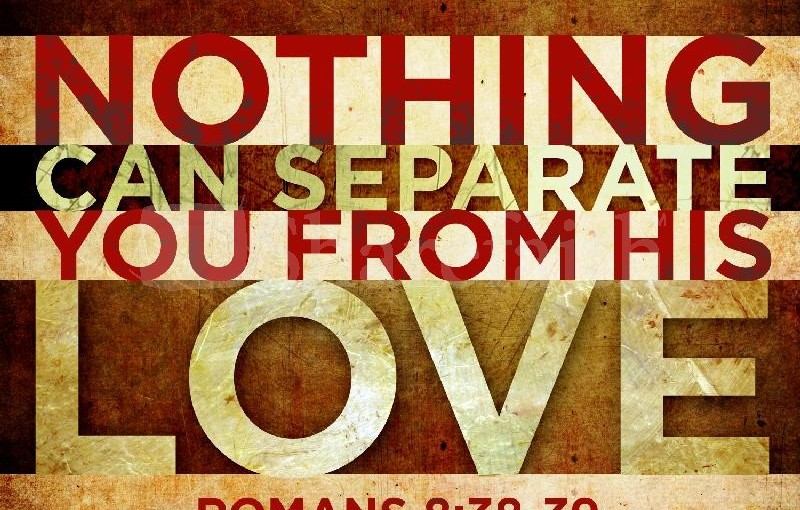
There is someone, certainly, who is against us, and that one is Satan, and yes he and his threat are real. Even the celebration of this Halloween day might make us shake our heads. But Saint Paul reminds us that even Satan cannot ultimately take us down, because God is for us. Saint Paul quite rightly insists that “Neither death, nor life, nor angels, nor principalities, nor present things, nor future things, nor powers, nor height, nor depth, nor any other creature will be able to separate us from the love of God in Christ Jesus our Lord.”
That is the same consolation that comes from devotion to the Sacred Heart of Jesus or the Divine Mercy. It is the consolation for which we gather this morning at the Table of the Lord. It is the consolation that takes on every threat we encounter this day or ever in our lives: nothing and no one can separate us from God’s love. Nothing.
-
Saints Simon and Jude, Apostles
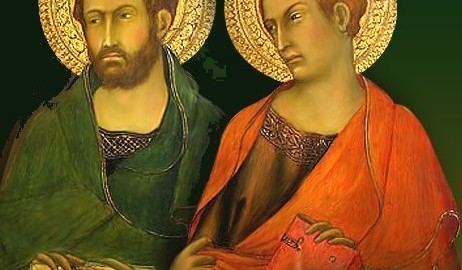
Today, we celebrate two apostles who, as often is the case, are relatively unknown except that they were followers of Jesus. Jude is called Judas in Luke and in the Acts of the Apostles. Matthew and Mark call him Thaddeus. We have in the New Testament the letter of Jude, which scholars say is not written by the man whose feast we celebrate today. Saint Jude is perhaps best known as the patron saint of the seemingly-impossible, reminding us that in God, all things are possible.
Simon – and this is not the Simon who Jesus later named Peter – was a Zealot, a member of a radical party that disavowed all ties with the government, holding that Israel should be re-elevated to political greatness under the leadership of God alone. They also held that any payment of taxes to the Romans was a blasphemy against God.
Neither of these men held any claim to greatness here on earth; they found their glory in following Christ. Their joy was, as St. Paul instructs us in his letter to the Ephesians, in that their citizenship was in heaven, as it is for all of us. We are merely passing through this place, and our task while we are here, as was the task for Simon and Jude and all the apostles, is to live for Christ and to live the Gospel. The reward for them, then, as is for all of us, is in heaven, their and our true home.
Their message, as the Psalmist says, goes out to all the earth. Blessed are all of us when we catch that message and live that message, following the way to Christ Jesus.
-
The Thirtieth Sunday of Ordinary Time
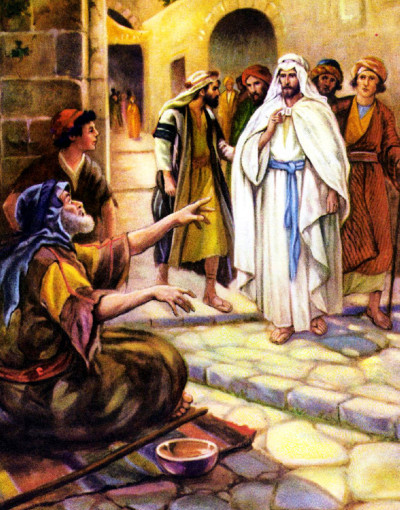
You probably know me well enough that you know I’m going to say that the Gospel story that we have today isn’t about the healing of the blind man. And you’re right; I’m not. But you might be expecting me to say that the story is really about some more pervasive blindness that the man had, and truly, we all have, and the real miracle is that he was healed of that, and that we should reflect on what blindness we have and pray to be healed of that. And honestly, I thought that was how I was going to preach it, until Saturday afternoon when I noticed something I had never seen in the story before.
It’s a throw-away detail, almost, but it changed what the message was for me. It comes at the end of the Gospel, when Jesus tells the man, “Go your way; your faith has saved you.” And then it says that it the man received his sight and followed him on the way. So notice the difference: “Go your way” versus “followed him on the way.”
If Bartimaeus had gone his way, as Jesus suggested, he would have returned to sitting on his cloak begging for alms. After all, that was all he knew, having done it his whole life. But he had cast that aside in the pursuit of Jesus, and having received sight, he clearly saw that that was the wrong way, and instead follows Jesus on “the way.” So it’s important to note here that “The Way” was an early way that Christians, before they were called Christians, referred to themselves. They would be known as members of “The Way.” So here we see that the real miracle is that Bartimaeus clearly saw that his life lacked the meaning he needed and that the only cure was following Jesus.
That jibes well with the first reading today. Through the prophet Jeremiah, God says to the Israelites in persecution that he would bring them back: back to Israel, back to the Temple, back to himself. Then, even though they departed in tears – as indeed they did – they would return shouting for joy.
So the real miracle here is not one of blindness and seeing, but one of metanoia, which is the Greek word meaning a change in ones life – really a complete reversal – based on a spiritual interior conversion. The Israelites had been going the wrong way, so God gave them over to their persecutors, but because that penance produced conversion, he brought them back. Bartimeus had been going the wrong way living a pointless life of begging, but through giving himself over to Jesus and trusting in him, he found purpose in following him on The Way.
And we have to see what’s going on in our own lives. For me, even though I’ve been busy about the stuff of pastoral ministry, God has been doing amazing things calling me to new holiness. What is he doing in you right now? Have you been coasting in your spiritual life? Have you paid it little attention? If so, maybe God is calling you to forsake your own way, and give yourself over to The Way.
You must be logged in to post a comment.