Blog

  • The Immaculate Conception of the Blessed Virgin Mary

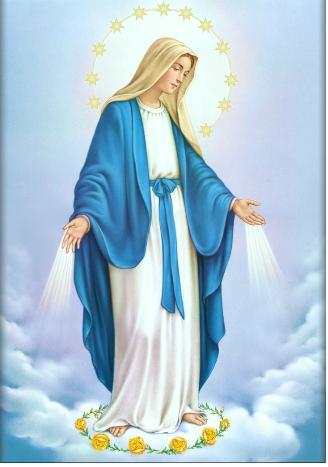
    The Immaculate Conception of the Blessed Virgin Mary

    Today’s readings

    I think we’re so blessed that we get to come to church and celebrate so many of Mary’s feasts. Today is a very special feast because Mary, Our Lady of the Immaculate Conception, is the patroness of the United States of America, and so she is very special to us.

    I think today’s readings can be a little confusing. The Gospel makes it sound like this day is about the conception of Jesus, but it isn’t. We celebrate the conception of Jesus nine months before he was born, so that would be March 25th. We call that day the Annunciation, because that was the day the Angel Gabriel came to announce to Mary that she would have a baby, but we’ll talk more about that in a minute. Today we celebrate the conception of Mary, nine months before her birthday, so if you do the math on that one, her birthday is September 8th, just a few months ago. This day celebrates that Mary was free from sin from the very beginning, the only person other than Jesus to be born without sin.

    The other confusing reading is the first one. Why do we go all the way to the beginning of creation when we’re talking about Mary today? Well, I think the reason is that Mary solved a problem that began all the way at the beginning. And that problem was sin. From the very beginning, we human beings have been tempted to sin. Adam and Eve ate the fruit of the forbidden tree in the Garden of Eden, and people have been committing sin ever since. Again and again, God broke in to history, leading people back to him, giving them prophets to show them the way, and again and again, people turned away from God. And we continue that today. Again and again, we are tempted and we sin and we turn away from God. Eve represented our fall into sin.

    But God didn’t want that to be the way things ended up for us. So he sent his Son to become one of us. God knew that in order for Jesus to be born among us, his mother was going to have to be pretty special. So before Mary was ever in her mother’s womb, God chose her to be his Son’s mother. He made her free from sin so that no stain of sin would ever touch his Son.

    Because Mary was so special, she loved God very much. So when the angel came and told her she would have a baby by the power of the Holy Spirit, she said yes to God’s plan. I don’t know if she really understood what was going to happen, I don’t know if she really knew how this wonderful event would take place, and she probably didn’t fully understood what would happen to Jesus in his life, but she said yes anyway. We call that her fiat, her “yes” to God’s plan for her. She took a big leap of faith that day, and we have been blessed ever since.

    This is all very good news. But there is even more good news: because Mary was so special to God, she shows us how special we are to God. As we celebrate God’s love for Mary today, we also celebrate his love for us. Mary got to hold her Savior – the One God promised us – in her own arms. When those of us who are old enough come to Communion today, we will be able to hold our Savior – the One God promised us – in the palm of our hand. Mary’s life was brightened when Jesus was born. Our lives will be brightened too, this coming Christmas, and every time we make room in our hearts for Jesus.

    Pray for us, O holy Mother of God, that we may be made worthy of the promises of Christ. Amen.

  • The Second Sunday of Advent: Be Reconciled

    The Second Sunday of Advent: Be Reconciled

    Today’s readings

    I don’t know about you, but this week, when I heard that New York was going to announce whether another police officer was indicted or not for the death of a suspect, I pretty much held my breath. After seeing all that has been going on in Ferguson, Missouri, I just feared the worst. And none of it is good. Crime is a problem, and so is racism; all of this comes about as a byproduct of the reign of sin in the world.

    And so as we enter into Advent this year, I think we need it more than ever. We need Jesus to come and put an end to all our foolishness, to fix all our brokenness, and heal all our sin and shame. I am guessing the followers of Saint John the Baptist felt the same way. They dealt with all the same stuff that we do: corruption in government, poverty, racism, and crime – none of this is new to our day and age. And so they did what I think has to be a model for all of us today: they came to John, acknowledged their sins, and accepted the baptism of repentance.

    They came to John, because at that point, Jesus wasn’t in full swing with his ministry, and they were seeking something new and something good. We then, might come to Jesus in the same way, come to the Church, seeking something good and something new. And then, like them, we have to acknowledge our sins – personal sins and those that we participate in as a society. And then we have to accept the process of repentance. We can’t keep sinning; we have to repent, literally be sorry for our sins and turn away from them, as we turn back to God. That’s an important Advent message for every time and place.

    It genuinely strikes me that, if we’re ever going to get past the events at Ferguson or New York, or if we’re ever going to finally put an end to whatever sadness this world brings us, we have to begin that by putting an end to the wrong that we have done. That’s why reconciliation is so important. What each of us does – right or wrong – affects the rest of us. The grace we put forward when we follow God’s will blesses others. But the sin we set in motion when we turn away from God saddens the whole Body of Christ. We are one in the Body of Christ, and if we are going to keep the body healthy, then each of us has to attend to ourselves.

    So today, I am going to ask you to go to confession before Christmas. I don’t do that because I think you’re all horrible people or anything like that. I do that because I know that we all – including me – have failed to be a blessing of faith, hope and love to ourselves and others at some point, I know that so many people struggle with persistent sins, little thorns in the flesh, day in and day out. And God never meant it to be that way. He wants you to experience his love and mercy and forgiveness and healing, and you get that most perfectly in the Sacrament of Penance.

    There was a time in my life that I didn’t go to confession for a long time. I had been raised at a time in the Church when that sacrament was downplayed. It came about from a really flawed idea of the sacrament and the human person. But the Church has always taught that in the struggle to live for God and be a good person, we will encounter pitfalls along the way. We’ll fail in many ways, and we will need forgiveness and the grace to get back up and move forward. That’s what the Sacrament of Penance is for!

    One day, I finally realized that I needed that grace and I returned to the sacrament. The priest welcomed me back, did not pass judgment, and helped me to make a good confession. It was an extremely healing experience for me, and now I make it my business to go to the sacrament as frequently as I can, because I need that healing and mercy and grace. And you do too. So please don’t leave those wonderful gifts unwrapped under the tree. Go to Confession and find out just how much God loves you.

    When you do find that out, you’ll be better able to help the rest of the Body of Christ to be the best it can be. When your relationship is right with God, you will help the people around you know God’s love for them too. That kind of grace bursts forth to others all the time.

    This year, we have plenty of opportunities to receive the Sacrament of Penance. Those of you who have a second grader receiving the sacrament for the first time can also receive the sacrament when they do, next Saturday. Then our parish reconciliation service is Tuesday, December 16th at 7pm. Finally, on the weekend just before Christmas, on Saturday the 20th, we will have four priests here from 4:00 to 5:00 or until all are heard. We will also hear confessions after all of the Masses on Sunday the 21st. And if none of those fit in your schedule, or if you would prefer to go to another parish, we will be publishing the schedules for other parishes in the bulletin.

    If you have been away from the sacrament for a very long time, I want you to come this Advent. Tell the priest you have been away for a while, and expect that he will help you to make a good confession. All you have to do is to acknowledge your sins and then leave them behind, so that Christmas can be that much more beautiful for you and everyone around you. Don’t miss that gift this year: be reconciled.

  • Thursday of the First Week of Advent

    Thursday of the First Week of Advent

    Today’s readings

    One of the most difficult sins is to think we don’t need God: that’s the sin of pride. It’s a difficult sin because when we shut God out of the picture, we cut off any possibility of reconciliation. This kind of thing is what Isaiah is warning against in today’s first reading. Israel, and we, have to trust in God if we want anything good to happen in our lives. The problem can be that we want God to come to our rescue when things go awry, as they always do when we depend only on ourselves. But if things are going well, we sometimes feel like we can do without God’s direction, thanks anyway.

    Advent is a season for us to examine our lives and see if we might have thought ourselves to be lofty recently. How much do we depend on God? Do we rely on his help day after day? Do we consider his will in our daily plans? Are we open to the movement of his Spirit? If not, we might find ourselves tumbling and falling. But if we choose to be aware of God and our need for him, nothing will ever make us stumble. As the Psalmist sings today:

    It is better to take refuge in the LORD
    than to trust in man.
    It is better to take refuge in the LORD
    than to trust in princes.

    And so we forge onward in Advent, anticipating the coming of Christ, building our houses on his rock-solid foundation. He wants to come to the earth and into our hearts. But we’ll miss him if we don’t let him in.

  • Monday of the First Week of Advent

    Monday of the First Week of Advent

    Today’s readings

    Could you do that? You have someone close to you at home, and you know Jesus is near and one visit could heal her or him. Yet, you realize the unworthiness that you have, that we all have, for him to come under your roof. Would you have faith enough to tell him not to come, but just say the word? Would you be confident enough that his word would heal your loved one? I think that’s an important question for us, because we are often completely solid in our faith until something happens, and then we tend to fall apart. But faith is so necessary, especially in those trying times.

    We pray the centurion’s iconic words just before we all receive Holy Communion. We acknowledge our unworthiness, and we also express our desire that our Lord would say the word so that our souls would be healed. And then he does, by feeding us on the Eucharist, giving us grace and strength to live the Gospel and live our lives.

    So that’s the faith we are called to have, and I wonder if we have that kind of faith when we pray. Do we trust God enough to let him “say the word” and then know that we don’t have to set “Plan B” in motion? Today’s Scriptures call us to greater trust as we begin this Advent journey to the house of the Lord. In what way do we need to trust God more today?

  • The First Sunday of Advent

    The First Sunday of Advent

    Today’s readings

    To you, I lift up my soul, O my God.
    In you, I have trusted; let me not be put to shame.
    Nor let my enemies exult over me;
    and let none who hope in you be put to shame.

    Those are the very first words in the Roman Missal’s Proper of Time.  This is today’s proper entrance antiphon, and with these words, the Church begins the new Church year.  We stand here on the precipice of something new: a new Church year, a new season of grace.  We eagerly await God’s new creation, lifting up souls full of hope and expectation.  We come to this place and time of worship to take refuge from the laughing enemies that pursue us into our corner of the world.  And yet we wait for God on this first day of the year, keenly aware that our waiting will not be unrewarded.  This is Advent, the season whose name means “coming” and stands before us as a metaphor of hope for a darkened world, and a people darkened by sin.

    When we’re praying through Advent, perhaps we feel a sense of longing. We do long for that newness. This time of year, we long for warmer days. In the news lately, we long for peace in the world and even in cities and communities. Perhaps we long for peace in our families. As a community of faith, we long for the One who alone can bring the real, lasting peace that makes a difference in our lives and in our world. We long for the promised Savior who will bind up what is broken in us and lead us back to the God who made us for himself.

    I sure think Isaiah had it right in today’s first reading, didn’t he?  “Why do you let us wander, O Lord, from your ways,” he cries, “and harden our hearts so that we fear you not?”  What a wonderful question for all of us – it’s a question that anyone who has struggled with a pattern of sin has inevitably asked the Lord at one time or another.  He goes on to pray “Would that you might meet us doing right, and that we were mindful of you in our ways!”  We so much want to break free of the chains of sin and sadness, and turn back to our God, but so often, we encounter so many obstacles along the way.

    Whether it’s our own personal sin, which is certainly cause enough for sadness, or the sin in which we participate as a society, there’s a lot of darkness out there.  Wars raging all over the world, abortions happening every day of the year, the poor going unfed and dying of starvation here and abroad.  Why does God let all of this happen?  A quick look at the news leads us to ask ourselves, what kind of people have we become?  Why does God let us wander so far from his ways?  Why doesn’t he just rend the heavens and come down and put a stop to all this nonsense?

    There is only one answer to this quandary, and that’s what we celebrate in this season of anticipation.  There has only ever been one answer.  And that answer wasn’t just a band-aid God came up with on the fly because things had gone so far wrong.  Salvation never was an afterthought.  Jesus Christ’s coming into the world was always the plan.

    I’ve been thinking about some of my favorite Advent hymns this week.  One of my favorites is “O Come, Divine Messiah,” a seventeenth-century French carol translated into English in the late nineteenth century.  It sings of a world in silent anticipation for the breaking of the bondage of sin that could only come in one possible way, and that is in the person of Jesus Christ:

    O Christ, whom nations sigh for,
    Whom priest and prophet long foretold,
    Come break the captive fetters;
    Redeem the long-lost fold.

    Dear Savior haste;
    Come, come to earth,
    Dispel the night and show your face,
    And bid us hail the dawn of grace.

    O come, divine Messiah!
    The world in silence waits the day
    When hope shall sing its triumph,
    And sadness flee away.

    As we prepare to remember the first coming of our Savior into our world, we look forward with hope and eagerness for his second coming too.  You’ll be able to hear that expressed in the Preface to the Eucharistic Prayer today.  That second coming, for which we live in breathless anticipation, will finally break the captive fetters and put an end to sin and death forever.  That is our only hope, our only salvation, really the only hope and salvation that we could ever possibly need.

    All of this requires vigilance; we must be watchful, be alert, as Jesus instructs us in today’s Gospel. We want our God to meet us doing right.  And so our task now is to wait, and to watch.  Waiting requires patience: patience to enjoy the little God-moments that become incarnate to us in the everyday-ness of our lives.  Patience to accept this sinful world as it is and not as we would have it, patience to know that, as Isaiah says, we are clay and God is the potter, and he’s not done creating, or re-creating the world just yet.  And so we watch for signs of God’s goodness, alert to opportunities to grow in grace, with faith lived by people who are the work of God’s hands.

    We wait and we watch knowing – convinced – that God will rend the heavens and come down to us again one day; that Christ will return in all his glory and gather us back to himself, perfecting us and allowing hope to sing its triumph so loud that all the universe can hear it, dispelling the night and putting sadness to flight once and for all. Be alert for that day.

  • Thanksgiving

    Thanksgiving

    Today’s readings

    A couple of years ago, my sister emailed me pictures of a storybook that my niece, Molly, wrote for a second grade school project.  It was a story about an unnamed boy and girl – but we might as well name them, because it was clear to me that the girl was the author and the boy was her brother Danny! The boy and the girl were having a discussion, and later an argument, about what they wanted to be when they grew up.  At some point, they were called to dinner, and the table was set with their favorite meal: pizza and fries.  They both enjoyed the meal and cleaned their plates and the boy said, “I want more.”  He didn’t get more, of course, but the girl did, because she asked nicely and thanked her mother. Then she told her brother, “Use your manners.”  The really scandalous part of this exchange is that I’ve heard the real girl demand more at the table without using her manners on more than one occasion!

    That little story provides a rich framework for what I want to talk about today, and it’s an interesting illustration of today’s Gospel reading. That reading is scandalous too, because it seems that nine believers – people who should know how to be grateful to God – failed to express their gratitude over a miracle that literally gave them back the life that leprosy took away from them. It’s almost unthinkable.  Maybe we can cut them a little slack, because when you look closely at the story, Jesus really didn’t say or do anything indicative of healing – all he did was say “Go show yourselves to the priests.”  Now, it was the priests’ job to take care of ritual purity, but I’m guessing they had seen priests about their illness in the past and obviously had not been healed.  So I can see how they would have been confused, frustrated, and maybe even a little angry at Jesus’ response.  But they absolutely could not have been confused about the fact that they had been healed.  And yet the only one who thought to give thanks and praise to God was the other guy, a Samaritan – a foreigner and a religious outcast who wasn’t expected to know the religious etiquette that one should follow.

    Maybe the most deeply scandalous part of this whole reading is not just that nine lepers forgot to thank Jesus. I think the most scandalous part of this Gospel is that it really can be a kind of mirror of our own society, and perhaps even our own lives. Because these days gratitude is not a common occurrence; more often our society gets caught up in entitlement – we deserve blessings, we have a right to grace and mercy. Just as we think we have a right to everything in the whole world, we lay claim to God’s grace in ways that are deeply scandalous and even more than a little heretical.

    Just like those ten lepers had no right to lay claim to Jesus’ healing powers, so we too have no right to lay claim to his grace and mercy. Those things do not belong to us, and even more than that we are quite unable to earn them, even if we had a desire to earn them in the first place. But here’s the really great thing that shatters the scandal: even though the lepers had no right to be healed, Jesus healed them anyway. Even though we have no right to God’s grace and forgiveness for our many sins, he gives those things to us anyway, without a thought of doing otherwise. As the saying goes, God is good, all the time.

    And so the message today is that we have to decidedly leave behind our attitudes of entitlement and embrace an attitude of gratitude. And honestly, I think that can make us happier people. Grateful people live differently.  Grateful people look for the blessing in every moment, they hunt for the grace constantly at work in their lives.  They are like radios which are powered on so that they can receive the broadcast.  When you’re grateful, it’s amazing how much more you seem to be blessed.  Only it’s not necessarily that you’re blessed more; instead it’s that you’re more aware of the blessing.  Thankful people are happier with their lives, because they’re simply more aware of what God is doing, how God is leading them, and they feel the touch of God’s hand leading them through life.  Being grateful is a choice, but it’s a choice worth making, it’s a choice that makes our lives richer and more beautiful every day.

    As Catholics, we are a people who, at least liturgically, constantly choose to be grateful.  Our Eucharist – which, as we know, is the Greek word for thanksgiving – is the Thanksgiving feast par excellence.  Every time we gather to celebrate Mass, we remember that God in his infinite mercy sent his only Son to be our Savior.  He came into our world and walked among us, filling the earth with his most merciful presence.  He journeyed among us, a man like us in all things but sin.  His great love led him to bear the cross for our sake, dying the death we so richly deserved for our many sins.  And then he did the greatest thing possible: he burst out of the grave, breaking the chains of death, and rose to new life.  Because of this grace, we have the possibility of everlasting life with God, the life we were created for in the first place.

    Every time we celebrate the Eucharist, we remember this awesome mystery.  Not only that, our Eucharist brings us to the hour of that grace, giving us once again a share in its blessing.  As a Eucharistic people, we Catholics are a people of gratitude.  That’s what defines us.

    So how would a people defined by gratitude celebrate this Thanksgiving day?  Certainly we have made the best possible start: gathering for the Eucharist to give thanks for the presence of God and the grace he pours out on us.  Then we take that grace to our families’ own Thanksgiving feasts and beyond.  As we gather around the table today, maybe we can stop to reflect on God’s magnificent presence in our lives – in good times and in bad.  And then use that gratitude to make the world an awesome place – or at least your corner of it!

    So we’re not like those nine lepers that somehow missed the grace and blessing that was happening right before their eyes. On this day, we gather because we choose to be grateful. On this day, before all the turkey and stuffing and pumpkin pie, we stand up and bear witness that our God is good all the time, that there is grace and blessing all around us, and we can see it if we choose to do so. We grateful ones come into this holy place to show a watching world that we are who we say we are – a people of Eucharist – of thanksgiving not just on this day, but every day. And we proclaim to the world that gratitude is the antidote for entitlement, and it’s an attitude that can make the world a more blessed place. Like the pilgrims on that first Thanksgiving, our gratitude can become the source of our survival through the hard times and the source of our joy in the good times.  May we never cease offer our gratitude to God, singing to him our songs of thanks and praise.

  • Saint Andrew Dŭng-Lạc, Priest, and Companions, Martyrs

    Saint Andrew Dŭng-Lạc, Priest, and Companions, Martyrs

    Today’s readings

    St. Andrew Dŭng-Lạc was a priest in Vietnam in the early nineteenth century. He and his 116 companions, including Spanish Dominicans, members of the Society of Foreign Missions of Paris, and 96 Vietnamese, including 36 other priests, were all martyred around the year 1839. It is estimated that between 100,000 and 300,000 Catholics were martyred in Vietnam during the seventeenth to nineteenth centuries.

    Like the poor widow in today’s Gospel reading, St. Andrew and his companions willingly gave everything – their very lives – for the faith and for our Lord. Because of their generosity and courage, the faith exists in Vietnam today. The cross has long been part of Vietnam’s history, from the early days of those persecutions, to the more recent history of war, and later communist rule. The faith is still there, but many have given up homes, lands, and even lives to pay for it.

    As our Church year ends, may we take courage from the example of the Vietnamese martyrs and courageously rededicate ourselves to witnessing to the faith, regardless of the cost.

  • Our Lord Jesus Christ the King of the Universe

    Our Lord Jesus Christ the King of the Universe

    Today’s readings

    I think this Gospel reading is wonderful because of the rather vivid picture that it paints. When I hear it, I can’t help but picture the king separating the sheep from the goats, making known their good works, or lack thereof, and ushering them into their version of eternity. It would seem that the moral of the story is very clear: we are all put here to do some very important things for the Kingdom of God; we are called to use our time and talent to serve those in need. These are the corporal works of mercy, and we should all certainly know them and do them. They aren’t mere suggestions, they are, apparently, the way that we get into heaven.

    And that would be a very good message, but I think Jesus is going for something else because that message would be a good one any time of the year. So, the question we have to ask ourselves is why this message at this point of the Church year? And perhaps just as poignantly, why this message so close to the end of Jesus’ life? This reading comes from the twenty-fifth chapter of Matthew’s Gospel, which is just twenty-eight chapters long. Indeed, in the very next chapter, Judas begins to conspire against Jesus. So here at the end of Jesus’ life, and on the very last Sunday of the Church year, why this particular parable?

    Well, we don’t have to look very far for the answer. The very setting itself tells us what Jesus was getting at: “When the Son of Man comes in his glory…” So this is clearly a prediction of the end of time, particularly the day of judgment. And I think this setting makes that vivid picture even more vivid. Here our Lord has all of his creatures before him, and he begins to separate them out. There are two places that one might go: the kingdom or eternal fire.

    I think we all know what line we’re supposed to get into. But just in case there was any doubt, the Gospel makes it very clear. The kingdom, he says, was “prepared for you from the foundation of the world.” For you. The eternal fire, on the other hand, was “prepared for the devil and his angels.” So not for you. And this echoes a truth that has been preached all along the way of this Church year. We were made for heaven, heaven is our true home, and we are just passing through this place.

    But just because the kingdom was prepared for us doesn’t mean we can’t make the wrong choice. The devil and his angels have already made their choice, and they’re hoping to take as many of us with them as they can. They do that by convincing us that we can live our lives any way we choose. They try to convince us that morality isn’t really objective, that anything is okay as long as it works for me. What they want us to say is that we are in charge, that there isn’t any God. They want us to choose life outside the Kingdom of God – you know, that kingdom that was prepared for us from the foundation of the world.

    And we can choose that if we want to, but it will be a lonely place, with more than our share of sadness. To get to the real Kingdom, all we have to do is to accept the wonderful sheep and shepherd imagery that we have in today’s readings. In our first reading, Ezekiel portrays our God as a shepherd who goes out of his way to seek out and save the ones who are lost. This is a shepherd who wants to heal our brokenness and make us fit for the Kingdom of God. In just the same way, the sheep who are destined for the Kingdom might recognize the Son of Man throughout the Church year and throughout the Gospel and respond to his call to live for the Kingdom and not just for today, to care about others and love as we have been loved, and let that Love take us to our rightful place.

    Today, on the last Sunday of the Church year, we celebrate Our Lord Jesus Christ the King of the Universe. We proclaim boldly that our Jesus is King of kings and Lord of Lords and there is absolutely no other. We profess that one way of life isn’t just as good as another, that there is only One who is the Way, the Truth and the Life and that is our Lord Jesus Christ. He is King of the Universe and King of our hearts and our lives. When we make the right choice to follow our King and do what he has commanded, we can follow him to that Kingdom that was prepared for us from the foundation of the world.

  • Thursday of the Thirty-third Week of Ordinary Time

    Thursday of the Thirty-third Week of Ordinary Time

    Today’s readings

    Our worshipping in these last days of the Church year is often difficult, I think, because these readings are just hard to hear. The readings from Revelation this week have been confusing, to say the least, and maybe even a little frightening. And even if we could ignore the fright of the Revelation, well the Gospel is a bit more violent this morning than we’d like to experience at 7:00 in the morning, I think.

    But there is a spiritual principle at work here. We are being called to mindfulness. If during this liturgical year we’ve been a little lax, or even have become complacent, these readings are calling us to wake up lest we miss what God is doing. God is bringing the whole of creation to its fulfillment, and we are called to be witnesses of it. We dare not be like those who missed the time of their visitation. We have been given the wonderful gift of Christ’s presence in our lives all year long, and we are asked to look back at where that wonderful gift has taken us.

    And if we haven’t come as far as we should, then we are called to wake up and realize what’s slipping away from us. We must not be left out of the kingdom, all our hopes smashed to the ground, all because we didn’t recognize that our greatest hope was right in front of us all the time. We know the time is running short. The days are shorter, and night approaches more quickly than we’d like. The leaves have gone from the trees. The nip in the air has turned to cold and even frost; and we’ve even seen more than a few snowflakes. These are the physical manifestations of creation groaning to come to its fulfillment, at least for the meteorological year.

    But if the encroaching winter leaves us empty and aching for warmth, then these final days of the Church year might find us also aching for the warmth of the kingdom, that kingdom we were created to live in all our days. Let us not be like Jerusalem; we dare not miss the time of our visitation!

  • Saint Elizabeth of Hungary, Religious

    Saint Elizabeth of Hungary, Religious

    Today’s Readings

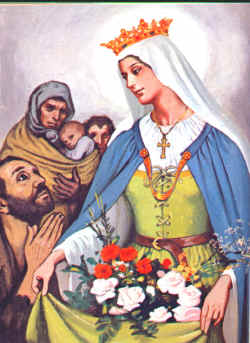
    St. Elizabeth was the daughter of the king of Hungary, and she married Louis IV of Thuringia when she was fourteen years old. They were happily married and had three children together. Together, they tried to live the ideals of St. Francis, so they sold their possessions and gave the money to the poor. This upset Elizabeth’s in-laws, who probably were hoping to inherit the things Louis and Elizabeth owned. When Louis was on the way to fight in a war, he was killed. Elizabeth’s in-laws forced her out of the palace, and she and her children went to live with her uncle who was a bishop. After Louis’s friends returned from the war, they restored Elizabeth to the palace and her rightful place. St. Elizabeth is a woman who lived a simple life and dedicated her life to loving others and helping the poor. She is the patron of Catholic Charities.

    The Psalmist today proclaims that those who are victorious are fed from the tree of life. Saint Elizabeth was indeed victorious, not giving up her principles of living for the poor, even when she was deposed from the palace. The Psalmist goes on to say, “For the LORD watches over the way of the just, but the way of the wicked vanishes.” That turned out to be the case for her at the end of it all, as it will be for us. God will reward all of those who live the Gospel, if not in this life, certainly and triumphantly in the life to come.