Blog

  • Saturday of the Thirty-second Week of Ordinary Time

    Saturday of the Thirty-second Week of Ordinary Time

    Today’s readings

    You know, this Gospel reading is filled with all sorts of off-putting comments, isn’t it? I don’t know about you, but I bristle at the thought of comparing God to a dishonest judge! But that’s not the point here. Of course, Jesus means that God is so much greater than the dishonest judge, that if the dishonest judge will finally relent to someone pestering him, how much more will God, who loves us beyond anything we can imagine, how much more will he grant the needs of this children who come to him in faith?

    But people have trouble with this very issue all the time. Because I am sure that almost all of us have been in the situation where we have prayed and prayed and prayed and nothing seems to happen. But we can never know the reason for God’s delay. Maybe what we ask isn’t right for us right now – or ever. Maybe something better is coming our way, or at least something different. Maybe the right answer will position itself in time, through the grace of God at work in so many situations. Most likely, we just don’t have the big picture, which isn’t ours to have, really.

    But whatever the reason, the last line of the Gospel today is our key: “When the Son of Man comes, will he find faith on earth?” And that’s why we have this particular Gospel reading at this late date in the Church year. As the days of Ordinary Time draw to a close, we find it natural to think of the end of time. We don’t know when the end of time will come; Jesus made that clear – nobody knows but the Father. But when it does come, please God let there be faith on earth. Let that great day find us living our faith and living the Gospel and loving one another.

    Today we begin our Weekend of Service as a parish. This is a way that we can live our faith. This is the kind of thing that we pray that Jesus might find us doing on the great day of his return. If we’re loving God and one another, the time of his return is immaterial. If he finds us faithful on that day, we will live with our honest and loving and merciful Judge for all eternity.

  • Friday of the Thirty-second Week of Ordinary Time

    Friday of the Thirty-second Week of Ordinary Time

    Today’s readings

    So many religious people tend to get concerned about the end of time. Just recently, the movie “Left Behind” was remade, and the premise is that Jesus returned to take all the faithful people home, and “left behind” everyone else. It’s a notion known as the rapture, which is not taught by the Catholic Church, because it was never revealed in Scripture or Tradition. In fact, no Christian denomination taught this until the late nineteenth century, so despite being a popular notion, it is not an authentic teaching.

    You might hear today’s Gospel and think of the rapture. But Jesus is really talking about the final judgment, which we hear of often in the readings during these waning days of the Church year. In the final judgment, we will all come before the Lord, both as nations and as individuals. Here those who have made a decision to respond to God’s gifts of love and grace will be saved, and those who have rejected these gifts will be left to their own devices, left to live outside God’s presence for eternity.

    So concern about when this will happen – which Jesus tells us nobody knows – is a waste of time. Instead, we have to be concerned about responding to God’s gift and call in the here-and-now. John tells us how to do that in today’s first reading: “Let us love one another.” This is not, as he points out, a new commandment; indeed, Jesus commanded this very clearly, and pointed out that love of God and neighbor is the way that we can be sure that we are living all of the law and the prophets.

    The day of our Lord’s return will indeed take us all by surprise. We’ll all be doing what we do; let’s just pray that we’re all doing what we’re supposed to do: love one another.

  • Saint Frances Xavier Cabrini

    Saint Frances Xavier Cabrini

    Today’s readings

    Saint Frances Xavier Cabrini was a humble woman of great faith and fortitude. She was refused entrance to the religious order that had educated her. So she began working at an orphanage, eventually becoming a sister in the religious order that ran it. She later became their prioress. She went to New York intending to found an orphanage there. The house they were to use turned out not to be available, and the bishop advised her to return to Italy. But she stayed, and eventually founded not only that one orphanage, but 67 institutions dedicated to caring for the poor, the abandoned, the uneducated and the sick. She died at Columbus hospital in Chicago, which she also founded. She was the first American citizen to be canonized a saint.

    Like Saint Paul, Mother Cabrini would never have given up on someone like Onesimus. She would see his potential and nurture his faith, as Saint Paul did for Onesimus. That same kind of thing happens all the time when teachers and catechists and parents nurture children and call forth their giftedness. So many young people have grown up to bless their corner of the world because some adult in their lives saw something special in them.

    This is the kind of ministry of teaching and healing that was always so special to Mother Cabrini. She was known to be a tough lady who got things done, obviously so based on all the institutions she birthed into existence. As the Psalmist reminds us today, the Lord secures justice for the oppressed, lets captives go free, gives sight to the blind, raises up those bent low, and all the rest. So we are called to echo that action in what we do. We may not found 67 institutions to help the poor, but we can certainly affect those entrusted to our care right here in this little corner of the world.

    Mother Cabrini, pray for us.

  • Pope Saint Leo the Great, Doctor of the Church

    Pope Saint Leo the Great, Doctor of the Church

    Today’s readings

    Pope St. Leo the Great was known to be a wonderful administrator of the Church. But far from being caught up in purely administrative matters, he was also a very spiritual and prayerful man, many of whose great writings have become part of the lifeblood of our Church. He was elected to the papacy in the year 440, and he set the tone as a pope who believed in the pontiff’s total responsibility for the flock he led.

    His work included extensive defense of the church against the heresies of Pelagianism and Manichaeism and others, he played the role of peacemaker, defending Rome against attacks by the Barbarians, and very significantly helped to settle a controversy in the Church of the east on the two natures of Christ. His work on that issue was promulgated at the Council of Chalcedon in 451.

    Leo was well versed in Scripture and ecclesiastical awareness, and he also had the ability to reach the everyday needs and interests of his people. We have many of his writings to this day, and some are used in the Office of Readings in the Liturgy of the Hours. Some of his prayers also exist today in the Roman Missal. He would probably have echoed the words the Apostles in today’s Gospel: “Increase our faith!”

    St. Leo held that holiness consisted in doing the work we were called upon to do in our station in life, but not so much that it costs us our relationship with Christ. Prayer and spiritual growth are also required of the disciple, and holiness consists of doing both work and prayer in proper balance. Following that way, we too can say that we have done what we were obliged to do, and trust that God will be pleased with our efforts and bless our lives.

  • The Anniversary of the Dedication of the Saint John Lateran Cathedral

    The Anniversary of the Dedication of the Saint John Lateran Cathedral

    Today’s readings

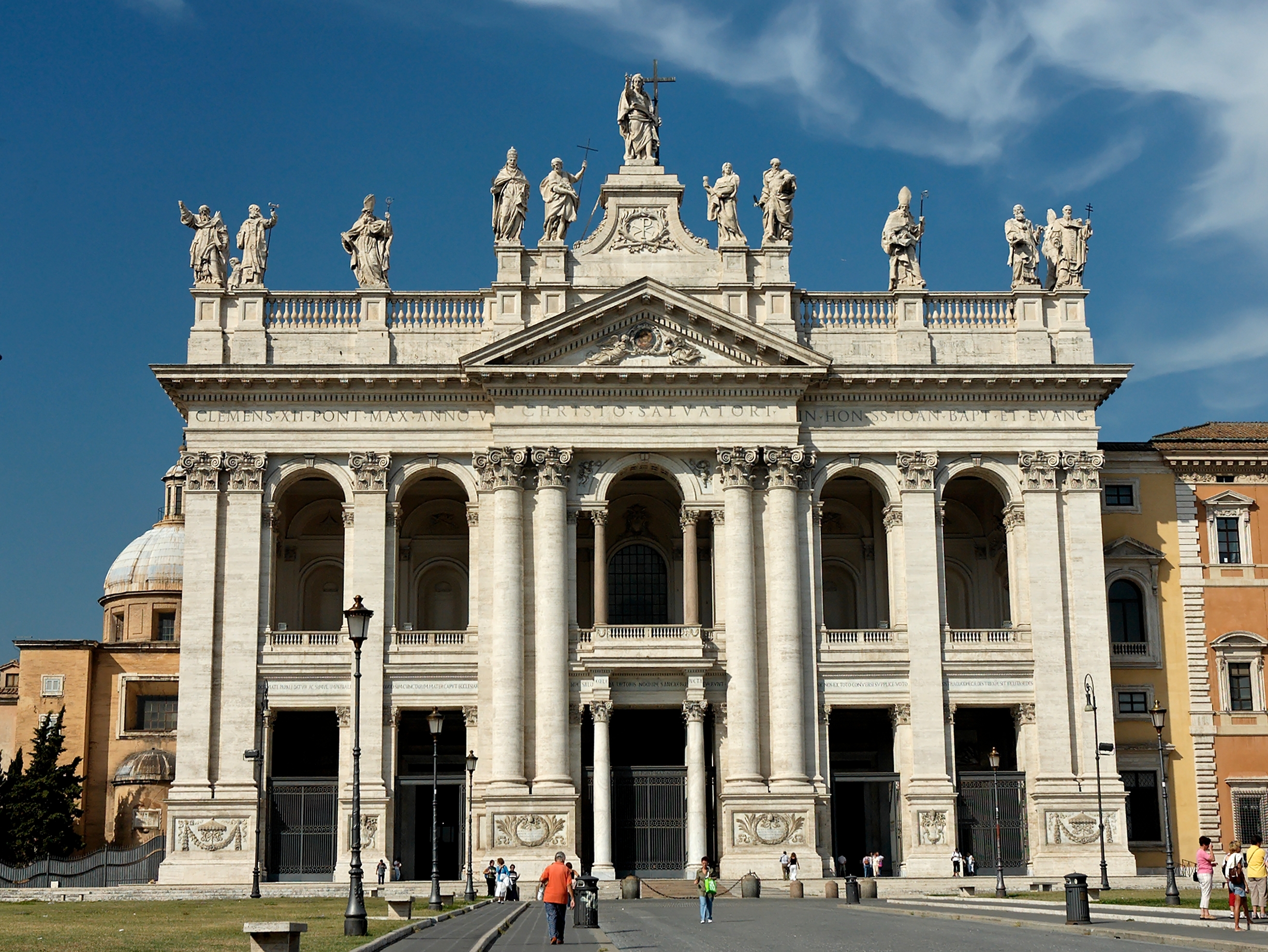
    Today we celebrate the feast of the Dedication of the Saint John Lateran Cathedral in Rome. That seems a little obscure to us, I know, but it’s an important feast for the Church because it is a celebration of Church and a reflection on what Church is. The Lateran Cathedral is the cathedral church for the Diocese of Rome. As bishop of the diocese, the Lateran Cathedral is the pope’s church. Because of that, Saint John Lateran is considered to be the mother church of the Catholic faithful. So it’s an important church, and it gives us cause to celebrate the Church as a whole, so this feast is celebrated throughout the world, and when it falls on Sunday, it takes the place of the Ordinary Time Sunday. So that’s why we’re celebrating the Dedication of Saint John Lateran today.

    So let’s take a look at what Church (big “C”) is. The Church is a reality that is at the same time concrete and experiential and heavenly and eternal. The concrete structures of it are the nuts and bolts that make it work. The building itself, the parish staff, the rubrics of liturgy and the holy books, as well as teachings and dogma and sacraments – all of these are things we can touch, or learn or work with. But there is another layer, one more experiential. These include the people as a whole, on the way to holiness; the Word at work in believers; the effects of grace mediated through the sacraments; the Gospel lived out day by day and the love of God shown through Charity. And in yet another layer, the Church is not just here on earth. It’s in heaven, celebrated among the Communion of Saints and sung by the choirs of angels. And finally it is eternal, not just limited to our own puny ideas of time and space, but all wrapped up in the Mind of God who is ever-present, all-powerful and all-knowing. The Church is an incredible reality that has been pondered by people much more saintly and learned than I, and a reality that will be advanced and celebrated for ages yet to come.

    The Scriptures today are a beautiful meditation on Church. The gospel is a little jarring, to be honest. Jesus has this famous dust-up with the temple merchants and officials. A lot of people find this disturbing, because it jars their view of Jesus as a peaceful man. For the record, I don’t think Jesus was about peace the way we think of peace. He was definitely more about zeal for the truth, for justice, and for proper worship of God, all of which is in play here. Those merchants were doing a necessary task, honestly. People needed to pay the temple tax, and they needed the proper coinage to do it, so there had to be money changers. People needed to make sacrifice, and they needed unblemished animals for it, so there had to be people selling animals. What didn’t need to happen was for these people to be taking advantage of the poor, and charging more than they should have. That was dishonest and unjust and Jesus was sick of it.

    But even more than that, this whole dishonest structure was a view of Church that Jesus was saying was completely unnecessary now. The kingdom of God is at hand, we’ve been hearing that in the readings for months now, and so this unjust and corrupt view of Church needed to come to an end. So in his zeal for the real house of God, Jesus turns the old stuff upside-down. That’s what’s going on here. Saint Paul underscores the similar notion to the people of Corinth in today’s first reading. What is the Church? He says, “YOU are God’s building!” He and the Apostles have laid the foundation, and we are building it up, becoming a Temple of the Holy Spirit. There is an entirely new view of Church going on here, and it’s one that we should celebrate and have zeal for.

    So today we celebrate Church; we peel back the Church’s many layers, touching and learning the concrete, living the experiential, asking for the intercession of the heavenly, and yearning to be caught up in the eternal. The Church is our Mother who has given us birth in the Spirit and who nurtures us toward eternal life. The river of God’s life flows forth from the Church to baptize and sanctify the whole world unto the One who created it all. The Church has its foundation in Christ, who also raises it up to eternity. Blessed are all those who find their life in its sanctuary.

  • Saturday of the Thirty-first Week of Ordinary Time

    Saturday of the Thirty-first Week of Ordinary Time

    Today’s readings

    “The love of money is the root of all evil.” “Money can’t buy happiness.” We have all sorts of proverbs that aim to keep us at right relationship not just with our financial resources, but really with all the many gifts that we have. Today’s Liturgy of the Word gives us some humble pointers too on this important issue.

    St. Paul, in thanking his friends in Philippi for their generous support of his ministry, tells them: “I know indeed how to live in humble circumstances; I know also how to live with abundance. In every circumstance and in all things I have learned the secret of being well fed and of going hungry, of living in abundance and of being in need.” His gratitude isn’t so much that their gift to him filled him with plenty, but instead that their gift was a testament to their faith, and their love for the Gospel he preached to them. He was able to use that gift to further his ministry elsewhere, making Christ known to others who longed to hear of him.

    Jesus today speaks to the Pharisees, who, as the Gospel today tells us, “loved money.” He tells them that their love of money was not going to lead them to God. Instead, it leads them to dishonest transactions with dishonest people. Just as a servant cannot serve two masters, so they could not expect to serve both God and mammon, the so-called god of material wealth and greed.

    We live in times where the love of money has led us to considerable evil. Greed and the desire for instant gratification has led people to be overspent and overextended. Major corporations, greedy for more wealth, playing off the misguided desires of so many people, have defaulted, and others have grown rich at the expense of the poor. Major breaches in retail security have cost millions of dollars due to hacking of financial information. In these days, it may be well for us to hear that we cannot serve both God and mammon. It may be well for us to come to the conclusion that we can live in both abundance and need. And it’s never a bad time to hear that we need to make God our only God, yet again.

  • All Saints & All Souls

    All Saints & All Souls

    Readings: All Saints | All Souls

    “Beloved, we are God’s children now;
    what we shall be has not yet been revealed.
    We do know that when it is revealed we shall be like him,
    for we shall see him as he is.”

    “The souls of the just are in the hand of God,
    and no torment shall touch them.
    They seemed, in the view of the foolish, to be dead;
    and their passing away was thought an affliction
    and their going forth from us, utter destruction.
    But they are in peace.”

    This weekend we celebrate two closely-related feasts: The Solemnity of All Saints and the Commemoration of All the Faithful Departed, which we commonly call All Souls Day. I say they are closely-related feasts because they show the journey we are on to our salvation. We know that we are not at home in this world: our true citizenship is in heaven, and we are but travellers through this world, hoping to come at last to the Kingdom of Heaven. The people that we know for sure are in heaven are saints, and so it is our quest in this world to become saints. Our goal is to come to perfection and get caught up in the life of God, so that we can live forever with him one day.

    The Solemnity of All Saints celebrates all those men and women who have lived heroic lives and have attained the goal of perfection in holiness and complete unity with God. We know they are in heaven either because they died a martyr’s death, giving their lives for Christ and pouring out their blood just like he did, or we know of miracles that have been attributed to their intercession that occurred after their death, indicating they are with God in heaven. These saints may already be canonized saints, or perhaps they are people we don’t even know about who have attained that perfection. It is conceivable that we don’t know every saint, because ultimately God knows whether one has attained perfection or not. All Saints Day allows us to celebrate all those saints we don’t know about in addition to the ones we do know.

    The Commemoration of All the Faithful Departed, or All Souls Day, is an opportunity to pray for all those who have gone before us, marked with the sign of faith, as well as those whose faith God alone knows. On this day, we especially pray for those who have not attained full perfection in this life, either because of venial sins or attachment to mortal sins, and we endeavor to help them through prayer and through the Sacrifice of the Mass. This is what Purgatory is about, and far from being a punishment, Purgatory is understood to be a gift through which a soul is cleansed through the sanctifying action of our Lord so that they can fully enter into the Kingdom of Heaven.

    As I said, these feasts are closely related, and during their observance we as a church remember three ranks of saints. There are the saints associated with the Church Triumphant, and these would be the saints in heaven, those who have overcome the power of the evil one and have been perfectly united with God. There are the saints associated with the Church Suffering, those who are in purgatory and especially those who have no one to pray for them, for whom we pray that our Lord would give them the salvation and rest they long for. And there are the rest of us, the saints associated with the Church Militant, including you and me, who are doing our best to overcome evil in this world, and to unite ourselves with our God so that we may come to everlasting life.

    What we really celebrate in these days is the joy of salvation. God made us all for himself, and he wills that every single one of us would be saved. He will not rest until all of this is made right, and all have had a chance to enter into eternal life. This journey of salvation, the quest to become saints, is what our faith life is all about. The goal is not so much to “graduate” from faith formation by receiving all the sacraments. The goal is not to jump through hoops and check off the requirements of the Church. The goal is to become saints, because as far as we know, there are only saints in the Kingdom of Heaven, and the Kingdom of Heaven is where we long to take our rest.

    This journey of salvation is wonderfully expressed in one of my favorite hymns, “For All the Saints.” Here is one of the verses:

    O blest communion, fellowship divine!
    We feebly struggle, they in glory shine;
    Yet all are one in Thee, for all are Thine.
    Alleluia, Alleluia!

  • Thursday, October 30, 2014

    Thursday, October 30, 2014

    I think today’s reading from St. Paul’s letter to the Ephesians is a good one for us to hear. How often are we beset by all the frustrations of the world, and all of the sadness that our own lives can sometimes bring? I’m not saying that every day is horrible, but we all go through times when it seems like it’s too much, like one more phone call and we’ll explode.

    And to all of that today, St. Paul advises us to “put on the armor of God.” Because when things go wrong, we have two choices. We can go to pieces, wondering where is God when we really need him, getting angry with God, ourselves, and others, and lashing out at anyone and everyone in our lives. Or, we can realize that what God allows he doesn’t necessarily wish on us. We can join ourselves to him, and draw our strength and courage from the Lord himself, knowing that he walks with us in good times and in bad.

    Because we know which one the devil himself would choose for us, right? That evil one wants to use the trying times to drive a wedge between God and us. And we need strength to guard against that “evil day.” And so, St. Paul tells us, “In all circumstances, hold faith as a shield, to quench all the flaming arrows of the Evil One.” And that shield, he says, is prayer: “With all prayer and supplication, pray at every opportunity in the Spirit.” Prayer and faith are the armor we need to get through the trying times of life without falling victim to the evil one.

    Sometimes life can feel like a war, but as the Psalmist says today, “Blessed be the LORD, my rock, who trains my hands for battle, my fingers for war.” Our stronghold is that whatever life brings us, we are never alone. Never.

  • Monday of the Thirtieth Week of Ordinary Time

    Monday of the Thirtieth Week of Ordinary Time

    “Loose lips sink ships.” That’s a saying that I learned somewhere in my early elementary school life. I don’t think I fully understood what it meant at the time – all I appreciated was that it told me to keep my mouth shut. But as I’ve lived and matured, I know very well that frivolous talk can be hurtful and even dangerous. Our gift of speech is an important one: through it we communicate with each other and it is the basis of our being able to work and live in society. But using speech in the wrong way can cause a whole host of problems. We’ve all probably been in the midst of that in some way at some time in our lives.

    And so Saint Paul’s words to the Ephesians are probably good ones for us to hear today:

    Immorality or any impurity or greed must not even be mentioned among you,
    as is fitting among holy ones,
    no obscenity or silly or suggestive talk, which is out of place…

    All of us, who are called to be God’s holy ones, have a very important responsibility to use our gift of speech wisely. We must not engage in idle, frivolous, or even obscene speech, because this is out of place for those who follow the Lord. But what I think is so important is what Saint Paul says needs to be on the lips of God’s holy ones – and that is thanksgiving.

    Big deal, right, of course we can speak about thanksgiving. But the Greek word that is translated “thanksgiving” here is eucharistia – and we all know what that means. The Eucharist – which is our thanksgiving – is always to be on our lips. So that’s the lens by which we ought always to view the words we say: are our words Eucharist? Are they thanksgiving? Because those are the only words we need to be saying.

  • The Thirtieth Sunday of Ordinary Time: Time/Talent/Treasure

    The Thirtieth Sunday of Ordinary Time: Time/Talent/Treasure

    Today’s readings

    One of our parishioners showed me some pictures yesterday of the new chapel at my alma mater, Mundelein Seminary. The chapel has stained glass windows that depict various saints of the New Evangelization, and the one that stood out for me was that of Saint Maximilian Kolbe. Maximilian is a modern saint, a Franciscan priest who was captured during the Nazi occupation of Poland, and eventually brought to Auschwitz. One day there, a prisoner escaped, and so in retribution, the commandant intended to execute ten men. He walked among them as they were lined up in the compound and randomly selected ten of them. One of them was a man who had a wife and children, so Maximilian volunteered to take his place. The commandant asked “what about you?” to which Maximilian replied, “I am a priest.” Because the regime at the time was striving to eliminate all the leaders of the people, Maximilian’s request was granted, and he died in the starvation chamber some three months later.

    I thought about Saint Maximilian when I was reflecting on today’s Gospel reading, because it strikes me that Maximilian, like all the other saints really, knew how to live the commandments of Jesus in that reading. The Pharisees are testing Jesus again, asking him perhaps the most argued question in all of Jewish scholarship: which commandment of the Law is the greatest? Jesus’ response was hard to argue with: “You shall love the Lord your God with all your heart, with all your soul, and with all your mind.” Indeed that was a line, from the book of Deuteronomy, that every good Jew memorized and honored. But Jesus goes them one better: “And you shall love your neighbor as yourself.” This command, from the book of Leviticus, is a reminder that genuine love of God is demonstrated by a genuine love of others. This is a love that Saint Maximilian had for God and the people he served, including his fellow prisoners at Auschwitz.

    I think if we wanted to boil down the mandate of the Gospel, and really all of the Scriptures, we would be pretty safe to focus on loving God and loving our neighbor. We love because God has loved us first; his love shows us how to love him and love others, and even how to love ourselves. When we have been loved so greatly, the only appropriate response is love in return. That’s the whole attitude of stewardship, and stewardship of our time, talent and treasure is what I’m here to discuss today.

    This year, as we renew our stewardship of time, talent and treasure, I have two asks of you. The first is that of time and talent. Giving of our time and talent is an important way to show our love of God and neighbor. This is where we walk the talk of the Gospel. And giving of our time and talent is a true sacrifice. We are all busy people, and our families are busy. But setting aside just a little time to give to others helps us not only to show God’s love but also to receive God’s love. And you probably know what I mean: whenever we take time to be with others, we are often rewarded far beyond what we feel like we’ve given.

    This year, we have a couple of opportunities to give of our time and talent. The first is on our weekend of service, which is the 15th and 16th of November this year. We have little acts of service around the parish campus, but also some great new projects this year. We have some outreach opportunities to help the Little Sisters of the Poor at their home for the elderly poor in Palatine, and also to help feed the families at the Ronald McDonald house at Loyola. We are scheduling activities through the weekend, in the hope that everyone can find something that fits their schedule. Sign up sheets are in the narthex today, and will be there for the next couple of weeks.

    Another opportunity is for some ongoing needs here at the parish. In the letter you received from me this past week, there was a little flier with a few of the most needed volunteer positions here. They include sacristans, who take time to clean the church and the linens and liturgical vessels, staffing the information desk, helping with PADs and some others. Most of these opportunities require only occasional service – the more hands, the easier the overall effort. As Scott Marshall said a couple of weeks ago here, we’re not looking for one person to put in 80 hours, but more like 80 people to put in an hour or so to build up our community and reach out to others. Please reflect on how you can set aside a few hours of your time now and then to build up the body of Christ.

    The second ask I have is for support of the Sunday collection. The letter you received this past week asked for your increased financial support. The Sunday collection is the sole source of funding for all the daily operations of our parish: everything from keeping the lights on, to having staff here to serve our parishioners and the community, to educating the next generation of Catholics in our School and Religious Education programs. A couple of weeks ago Scott Marshall or Tim French – depending on which Mass you attended – spoke about our financial situation. That report was made available in our bulletin and can be found in the archived bulletins on our website. This year we are focusing on doing everything possible to use our parish funds wisely to support the daily operations of the parish and school, and also to keep the parish and school facilities in good order to serve our community’s needs in the future.

    Once again, I’m not asking one or a few people to give a lot more money, but more that I am asking everyone, especially those who have not given regularly, to give a little something more. Every family’s situation is different – I know that. And I respect where you are and appreciate what you can do. I’ve received a few notes just this past week from faithful parishioners who are doing what they can and can’t do more for various reasons. I want you to know that I read every one of those letters, and that I appreciate them. I keep all of you in my prayers every day and if there’s something I can pray for to help you or your family, I appreciate knowing about it.

    Saint Maximilian’s love for God and neighbor, very much like Jesus’ love for his Father and for all of us, was radical. They literally gave their lives for us. We are called to that same kind of holy love, we are called to give of ourselves and lay down our lives for love of God and neighbor. Stewardship of our time, talent and treasure is an important way to live that kind of love. God bless you all for all that you do for our parish and our community!