Blog

  • Saturday of the Twenty-ninth Week of Ordinary Time

    Saturday of the Twenty-ninth Week of Ordinary Time

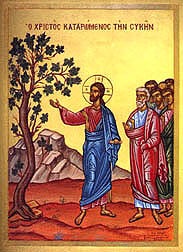
    Have you ever seen a fig tree? I haven’t. But I can tell you I’d be pretty frustrated if I had cared for a fig tree for three years and never saw one bit of fruit. I think we could all understand the man wanting his gardener to cut the tree down and give the good soil to some other plant. Having nourished the plant and watered it and put in hours pruning it and doing all the things it takes to care for a tree, nothing has come of it. Time to get rid of it and move on.

    And so, one could certainly understand if God would turn out to be just like that frustrated man. Having cared for, fed, nurtured, guided and corrected us sinners, when we don’t bear fruit, certainly in his frustration, God would be justified in blotting us out and never giving us a second thought.

    But God is not the frustrated man in the parable, is he? No, God is the gardener, the one who has really done all the work of nurturing, and he is amazingly patient. The gardener says of the tree, “leave it for this year also, and I shall cultivate the ground around it and fertilize it; it may bear fruit in the future. If not you can cut it down.” And so God is with all of us. God gives us another chance, even when we’ve had so many chances before, even when it seems like we just aren’t worth the trouble. But God is patient.

    And we are better than fig trees. We know enough to respond to the nurturing of our God. Our prayer today leads us to reflect on those ways in which we have borne fruit, and those times that we have been fruitless. We are being cultivated and fertilized yet again at this Mass, so may we be fruitful in the days and years to come.

  • Friday of the Twenty-ninth Week of Ordinary Time

    Friday of the Twenty-ninth Week of Ordinary Time

    Today’s readings

    In our overly-litigious society, Jesus’ words that we are to make an effort to settle the matter on the way are a good call to refocus.  This call shifts the emphasis from winning to healing, and it calls us to do some hard things.  In order to settle the matter, we will have to communicate and be open to the fact that we may be in the wrong.  If we are open to settling things the way Jesus would have us do it, we might find ourselves growing in maturity and faith, and becoming better people in the process.

    But even that is not the primary focus of today’s Gospel reading. Jesus begins by chiding the crowds for failing to interpret the signs of the times. Time is short, he says, and we don’t have forever to come to repentance, we don’t have forever to fix our broken relationships, we don’t have forever to set wrong things right. Now is the time, because the time for salvation is nearer now than it ever was.

    We would do well to hear this same message. We need to be about the business of setting things right, fixing relationships, settling long-standing arguments, because the time for salvation is near. What if the return of our Lord finds us mired deep in age-old hurts, resentments, and feuds. God forbid.

  • Thursday of the Twenty-ninth Week of Ordinary Time

    Thursday of the Twenty-ninth Week of Ordinary Time

    Some people would say that Jesus was a peaceful man. Saying that is really misunderstanding Jesus and who he was. Because peace wasn’t necessarily his primary interest, at least not peace in the way that we would probably define it.

    Because sometimes I think we misread what peace is supposed to be. We might sell peace short and settle for the absence of conflict. Or even worse, we may settle for peace at any price, swallowing our disagreements and never coming close to true healing in our relationships. There are families in which never a harsh word would be said, but the underlying hostility is palpable. There are workplaces in which there are never any arguments, but there is also never any cooperative work done. Sometimes there are relationships where fear replaces love and respect.

    And this is not the kind of peace that Jesus would bring us today. This is the One who came to set the earth on fire, and his methods for bringing us to peace might well cause division in the here and now. But there is never any resurrection if we don’t have the cross. And so there will never be any peace if we don’t confront what’s really happening. The fire may need to be red hot and blazing if there is ever to be any regrowth.

    And so today we have to stop settling for a peace that really isn’t so peaceful. We may just have to have that hard conversation we’ve been trying to avoid. Of course, we do it with love for our brothers and sisters, but out of love we also don’t avoid it. We have to work for true healing in all of our relationships. May all of our divisions lead to real peace!

  • Monday of the Twenty-ninth Week of Ordinary Time

    Monday of the Twenty-ninth Week of Ordinary Time

    Today’s readings

    It has often struck me that, the economy of our nation and the world being as precarious as it is, that being rich in what matters to God is more important than ever. With all the bad news out there – financial news, political news, news of epidemic diseases, war and terrorism, who among us hasn’t had the sinking feeling that this world’s riches are nothing at time but straw?

    So you’d think that these times of uncertainty, people would be coming to Church, reconnecting with their God, and drawing strength from their faith, building up those riches that are from God. But you’d be wrong. All you have to do is look around and see that Mass attendance is nothing like it was in the past, that there are too many empty spaces in the pews.

    In some ways it strikes me that we are quickly losing our faith, or even worse, that we as a society are becoming indifferent to faith, seeing it as irrelevant or ultimately meaningless. At a time in our history when we should be returning to God in droves, people instead are staying away in droves.

    And it’s hard to live through uncertain times without faith. How can we ride the ups and downs of life with anything close to tranquility without the rock that is our faith? Instead we as a society seem content to look to the government to save us, while we continue to practice unprecedented greed. And to all of that, God warns us: we may just find ourselves wanting in what matters to God. If our lives were demanded of us this day, would we find ourselves rich or poor?

  • The Twenty-ninth Sunday of Ordinary Time

    The Twenty-ninth Sunday of Ordinary Time

    Today’s readings

    When a couple comes to me for marriage, one of the things I have them do is to write me letters, individually, asking to be married. I ask them to reflect on their relationship and to say something about their faith. Over the years I’ve received a lot of letters and some are very deep, some are very emotional, some are kind of surface-level. I usually find something in every letter to quote in my wedding homily. Yesterday, I celebrated the wedding of a couple that was very faith-filled. They had been raised by strong Catholic families, had gone to Catholic schools, and faith was and continued to be a big part of their lives. One of the most quotable lines in their letters came from the groom. He said, “Many people want to think of God only in times of trouble or sadness; (my fiancé) and I want to think of God all the time.”

    I think he got at what our Liturgy of the Word is teaching us today. In the Gospel, the Pharisees are at it again: they want to trap Jesus in speech so that they’ll be able to bring him to justice. And so they decide to ask him if it’s lawful to pay the census tax or not. It was a no-win argument: if he said it was not lawful, then he’s a revolutionary and should be put to death; if he said it was lawful, then he’s an idolater – putting the government over God – and should be put to death. But, as usual, Jesus answers their question with a question. “Whose image is this (on the coin) and whose inscription?” Since it was Caesar’s, his instruction is to give Caesar his due, but then, to give God what he is due.

    This then becomes a reflection on the first commandment of the Decalogue: “I am the Lord your God; you shall have no other gods before me.” This is echoed by the prophet Isaiah in today’s first reading: “I am the Lord and there is no other, there is no God besides me. It is I who arm you, though you know me not, so that toward the rising and the setting of the sun people may know that there is none besides me. I am the LORD, there is no other.”

    There’s a reason that this is the first commandment: it is foundational to all the others. If we get the first commandment right, the others should follow pretty easily. If we know and live that God is in charge, that God is God and we are not, then we will easily live the other nine commandments dealing with love of God and love of neighbor. The trouble is, even though it’s easy to say, it’s difficult to do.

    Modern life does everything it can to distract us. It’s hard to get to Mass because the kids have sports or dance or studies or whatever. And as wonderful as those things are, they don’t lead the children to God, so they can’t take precedence over Mass. It’s hard to take time for prayer because we are busy – we work and we have family commitments and we have things we want to do in the community. And as great as all that is, it doesn’t lead us to God, so they can’t take precedence over our prayer. It’s hard to be of service because we’re busy people, and that’s a shame because service – stemming from a love of neighbor – leads us to love of God, and we’ve said no to it again. Just like those Pharisees, we have too often allowed ourselves to be distracted from what’s really important, we’ve said no to a relationship with our God, and we have put him out of our lives and our families’ lives time and time again.

    Giving to God what belongs to God is foundational. Failure to do that leads to all other kinds of sin. Today, we have in our Scriptures an examination of conscience. Have we been zealous to give to God what belongs to God? Have we taken time for prayer? Have we been of service to our brothers and sisters in need? Have we made teaching the faith to our children our primary priority? Have we been vigilant to prevent anything from getting in the way of celebrating Mass as a family? If we have fallen short in any of those ways, this is the time to reverse the course and get it right. Caesar gets what’s his one way or the other. We have to be the ones who are on fire to give to God what belongs to God.

    Some of our sisters this week have set aside a couple of days to reflect on doing that by attending our Christ Renews His Parish retreat. They’re here with us at Mass today, and I was able to spend some time with them yesterday evening. I have been very touched by what the Lord is doing among them in these hours of retreat. It’s amazing that if you give God just a little of your time, how much he can do with that to change your life. I hope that many more of you will do that by attending future CRHP retreats – the next men’s retreat is coming up in early spring.

    The whole point of our life on this earth is to travel through it and become perfected so that we can go to heaven. A huge first step in that is putting God first, giving to God what belongs to God. And he wants all of us: our hearts, our souls, our lives. He made us for himself, and as Saint Augustine said, we will be restless until we rest in him. What step do we need to make to give to God what belongs to God this week?

  • Saint Ignatius of Antioch, bishop and martyr

    Saint Ignatius of Antioch, bishop and martyr

    Today’s readings

    Franklin Roosevelt once said “There is nothing to fear but fear itself.” We can be afraid of all sorts of things: of the dark, of strangers, of taking a risk, of all sorts of danger. And to a certain extent, fear is good. It keeps us from putting ourselves in harm’s way. But sometimes fear can keep us from taking normal risks that help us to become what we were meant to be. Maybe it keeps us from trying out for a team or a play or starting an activity at school that would have helped us. And at its worse, maybe it keeps us from forming a relationship with Jesus.

    In today’s Gospel, Jesus warns us not to be afraid of the things of this world. “There is nothing concealed that will not be revealed, nor secret that will not be known.” He tells the people to get it right, to be afraid of the devil; the evil one who can keep us from God for all eternity. But he also gives us consolation: we should not be afraid because God knows us intimately; he even knows how many hairs we have on our heads! We are worth everything to our God who made us and wants us to be close to him.

    Saint Ignatius of Antioch knew that, because he preached Christ and refused to worship pagan gods, that the Roman government was going to put him to death. He wrote to his parishioners and begged them not to try to pull strings to stop his death. He would rather die for Christ than live a lie. He ultimately was not afraid to die; he willingly gave up his life for Jesus, just like Jesus willingly gave up his life for all of us.

    In these days before Halloween, there are all sorts of spooky things that try to scare us. But we should not ever be afraid because our God knows us and loves us and won’t let anyone take us away from Him, if we do our part and choose to love him every day.

  • St. Margaret Mary Alacoque, Virgin

    St. Margaret Mary Alacoque, Virgin

    “I need nothing but God, and to lose myself in the heart of Jesus.” St. Margaret Mary spoke these as her dying words, while being anointed at the age of 43. Margaret was a simple woman and a Visitation nun. She worked as an assistant in the convent infirmary, but God had other plans for her. After being a nun for just three years, she began to receive revelations in which Christ called her to make his love for all humanity known. His human heart was to become the symbol for this divine and human love for all of us. He called her to frequent Holy Communion, especially on First Fridays, and to spend Thursday evenings in an hour’s meditation on the agony at Gethsemane. This devotion eventually spread to the entire Church under the name of the Sacred Heart of Jesus.

    I have two Margaret Marys in my own life: my sister and my grandmother on my father’s side. My grandmother was one who was a great model of faith for me. She and I would often sit together and talk about her childhood in Ireland, and all the problems of the world. She was one of my best friends until her death shortly after I graduated from college. She too had a devotion to the Sacred Heart of Jesus – in fact, I remember seeing the painting of the Sacred Heart on the wall of her living room, prominently displayed, with last year’s palm from Palm Sunday tucked behind it. It’s a huge understatement to say that grandma’s love for Christ and the Church helped encourage my vocation throughout my life.

    We all have a place wrapped up in the Sacred Heart of Jesus, and we have St. Margaret Mary to thank for bringing that devotion to the Church. Like St. Margaret Mary, we disciples are also called to make God’s love manifest in the world through his most Sacred Heart. With St. Margaret Mary, we need to say, “I need nothing but God, and to lose myself in the heart of Jesus.

  • Monday of the Twenty-eighth Week of Ordinary Time

    Monday of the Twenty-eighth Week of Ordinary Time

    Today’s readings

    I think it’s a pretty common experience for people to look for a sign from God. So many comedies have that premise somewhere in the story line. Don’t we all look for signs from God to make sure we’re doing the right thing?

    Well, yes, signs are necessary and helpful events in our spiritual journey.  And Jesus was never stingy about giving signs.  After all, he healed the sick, raised the dead, and fed the multitudes.  Who could have possibly missed the signs and wonders he was providing?  The thing was, the people, especially the religious authorities, were cynical and hard of heart, and they soon forgot the wonders he had done.  So they wanted to see Jesus do things they were pretty sure he couldn’t do; in other words, they were asking for a sign not from an attitude of faith, but an attitude of cynicism.

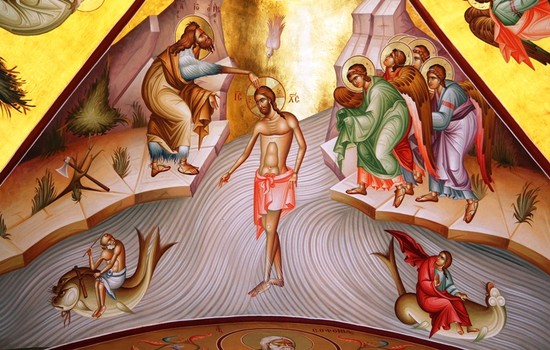
    And Jesus had no intention of playing that game.  These people would get no further sign, at least not until the sign of Jonah.  So what did that mean?  Well, as we remember, Jonah was swallowed up in the belly of a big fish for three days, then disgorged on the shores of Nineveh.  Jesus was foreshadowing that, in the same way, he himself would be swallowed up in the grave for three days, then raised to new life.  These cynical people would just have to wait for that great sign, and even then, they certainly wouldn’t believe.

    And so, yes, we can ask for a sign.  We can ask God to help us to know we have discerned the right path.  But we always must ask from the perspective of our faith, being open to whatever God shows us, being open to silence if that’s what he gives us, ready to follow him, sign or no sign, wherever we are led.  God is always there, even in our most difficult quandaries, ready to give us confidence by his presence.

    And never forget that we have already received the sign of Jonah, and that sign is incredibly good news for all of us!

  • The Twenty-eighth Sunday of Ordinary Time

    The Twenty-eighth Sunday of Ordinary Time

    Today’s readings

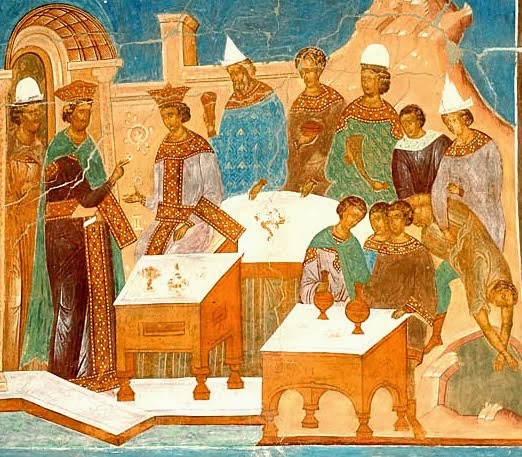
    If this isn’t a difficult Gospel passage to understand, I don’t think there is one! What are we to make of such a convoluted story? Surely we are not supposed to think that the king is God, are we? I mean, why would Scripture portray God in such a terrible manner? Do we want to believe in a God who would seemingly-arbitrarily destroy a whole city because people wouldn’t come to a banquet, and then throw someone out of the banquet who did come, because he wasn’t appropriately dressed? These are good questions, and when we have so many urgent questions, we know that the Gospel is trying to teach us something. So let’s get at it.

    First of all, it’s important to know that this parable isn’t intended to be taken literally, of course. We don’t want to draw a direct analogy here. Don’t read it as saying, “If you don’t behave, God is going to put you to an ugly death, burn your city, and leave you to the place where there will be wailing and grinding of teeth.” Obviously, Jesus is using hyperbole here – he likes to employ literary devices to get our attention, and that’s exactly what it happening. So even though we shouldn’t draw a direct analogy, we should sit up and take notice – that’s the whole point.

    Let’s imagine the story happening in our day. Suppose you were to receive an invitation from the President of the United States to attend the wedding of one of his children. Regardless of how you may feel about the President, you’re probably somewhat unlikely to turn down the invitation. You might have respect for the office, or a curiosity of how opulent an affair this would be, and you’re unlikely to get a better dinner offer. Well that’s how the people in the story should have reacted to the invitation from the king, but they didn’t. Instead they found all sorts of lame excuses, and some of them even went so far as to murder the messengers!

    Jesus is speaking rather directly to the Jews, and especially to their leaders. He is saying that they were the first to be invited. But they had all sorts of excuses for not showing up to the banquet. They couldn’t be bothered to turn away from the distractions of their lives to accept the invitation that was theirs by right. Not only that, but along the way, some of them went so far as to murder the prophets who were the messengers of the invitation, so that they wouldn’t have to bear their reproach. There could be no bigger affront to our King than to turn away so completely. Therefore, Jesus says, the invitation goes out to all the world.

    So what is this all about for us, then? Well, here’s the message. The marriage that is intended is the marriage of God to the world. He longs for us to become one flesh with him, so that we can inherit the eternity of grace for which we were created. And the banquet is, of course, the Eucharist, which celebrates that marriage and nourishes us to live the Gospel and carry the Cross and make our way to heaven, our true home. That is the feast of rich food and choice wines that we hear of in today’s first reading. That invitation has been put out to all of us, wandering along wherever we might be on our life’s journey, and we have been told that the feast is ready for all of us, bad and good alike. It means that no matter how far we have wandered, if we accept the invitation, we can join the banquet.

    But only certain attire is suitable. We can’t be putting on the ugliness of the world: sin and immorality and self-concern. That will only lead to wailing and grinding of teeth. Instead we must clothe ourselves with the wedding garment that is Christ Jesus. None of our own garments are going to get us to heaven, but only the beauty of our Lord Jesus Christ, whose urgent desire is to make us one with our God. It would have been just for our God to leave us off the invitation list entirely, distracted from him as we are. But our God will do no such thing: instead he clothes us in our Lord at our Baptism, gives us feast of rich food and choice wines in the Eucharist, and invites us to become one with him in a wedding covenant that takes us to our eternal home.

    And so in preparation for today’s Eucharist, maybe we can take some time in the offering to accept the invitation of our Lord and to put on Christ Jesus so that we might worthily partake of the Banquet.

  • Monday of the Twenty-seventh Week of Ordinary Time

    Monday of the Twenty-seventh Week of Ordinary Time

    Today’s readings

    What a wonderful instruction for Jesus to give us this morning.  “Go and do likewise.” Jesus is telling us that those who hear the Gospel must also live it, or it is useless.  Those who do not go out and do likewise are like the foolish Galatians in today’s first reading who seem to be abandoning the Gospel and replacing it with all kinds of other rules, including circumcision, that are mere appearances of holiness.  Those of us who would call ourselves disciples of the Lord must do better than that.  We must indeed “go and do likewise.”

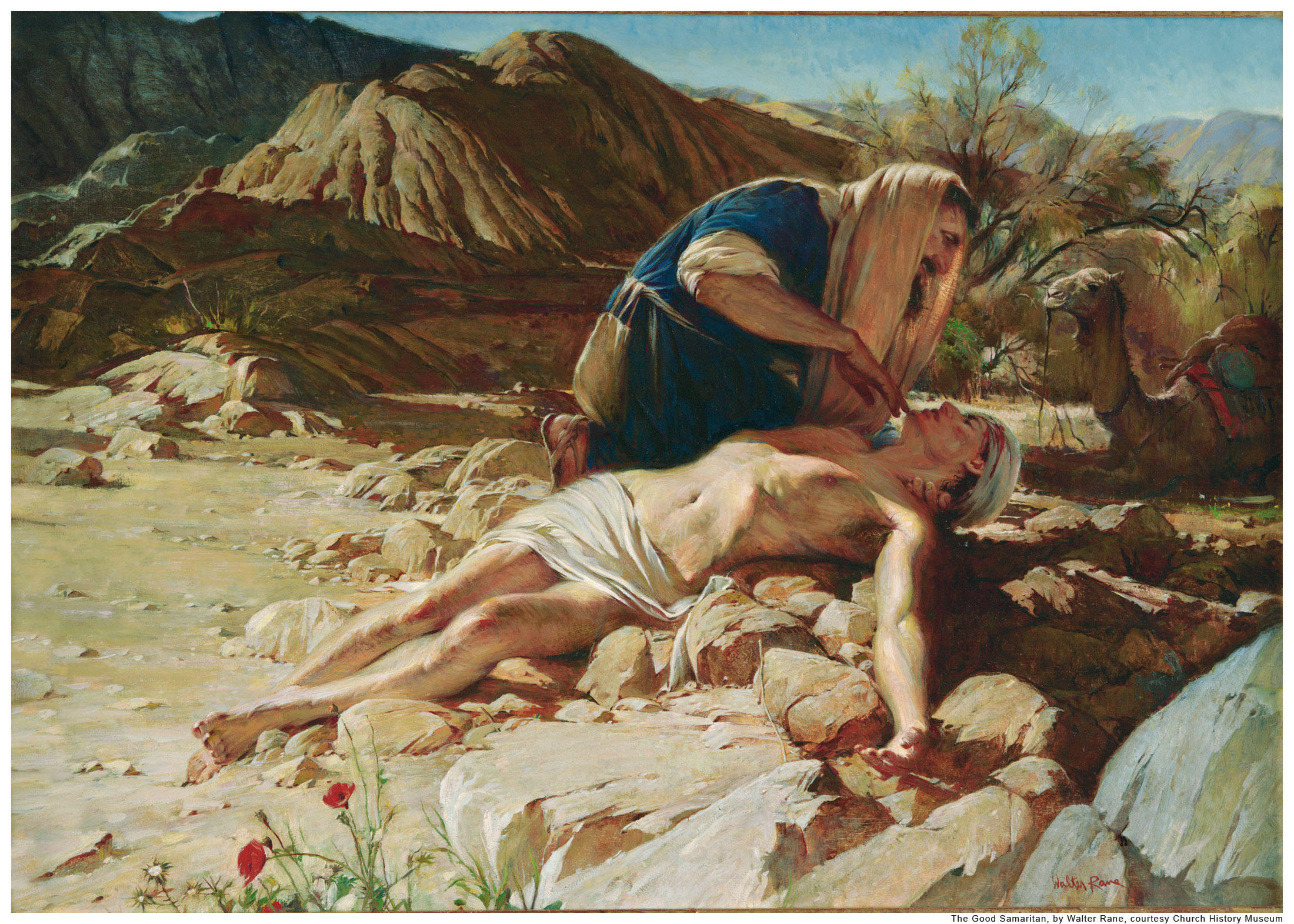
    We’ve all heard the story of the Good Samaritan umpteen times so it may all too easily go in one ear and out the other.  But we really must hear what Jesus is saying in this parable if we are to get what living the Christian life is all about.  The good person in the story is one that Jesus’ hearers would have expected to be anything but good: the very name “Samaritan” was synonymous with being bad.  So for the Samaritan to come out as the good guy was something that made his hearers stand up and take notice.

    Yet it was this person, who was considered to be less-than-good, that knew instinctively the right thing to do.  Compassion for others is part of the natural law, something that every person should possess, Christian or not, and for Christians it is certainly foundational to living the Gospel.  Turning one’s back on those in need is reprehensible and any who do that are not hearing what the Gospel is teaching us.

    The Gospel is not merely for our edification; it is for our instruction.  Those of us who would dare to hear it must be willing to go and do likewise.