Blog

  • The Feast of the Dedication of the Lateran Basilica in Rome

    The Feast of the Dedication of the Lateran Basilica in Rome

    Today’s readings

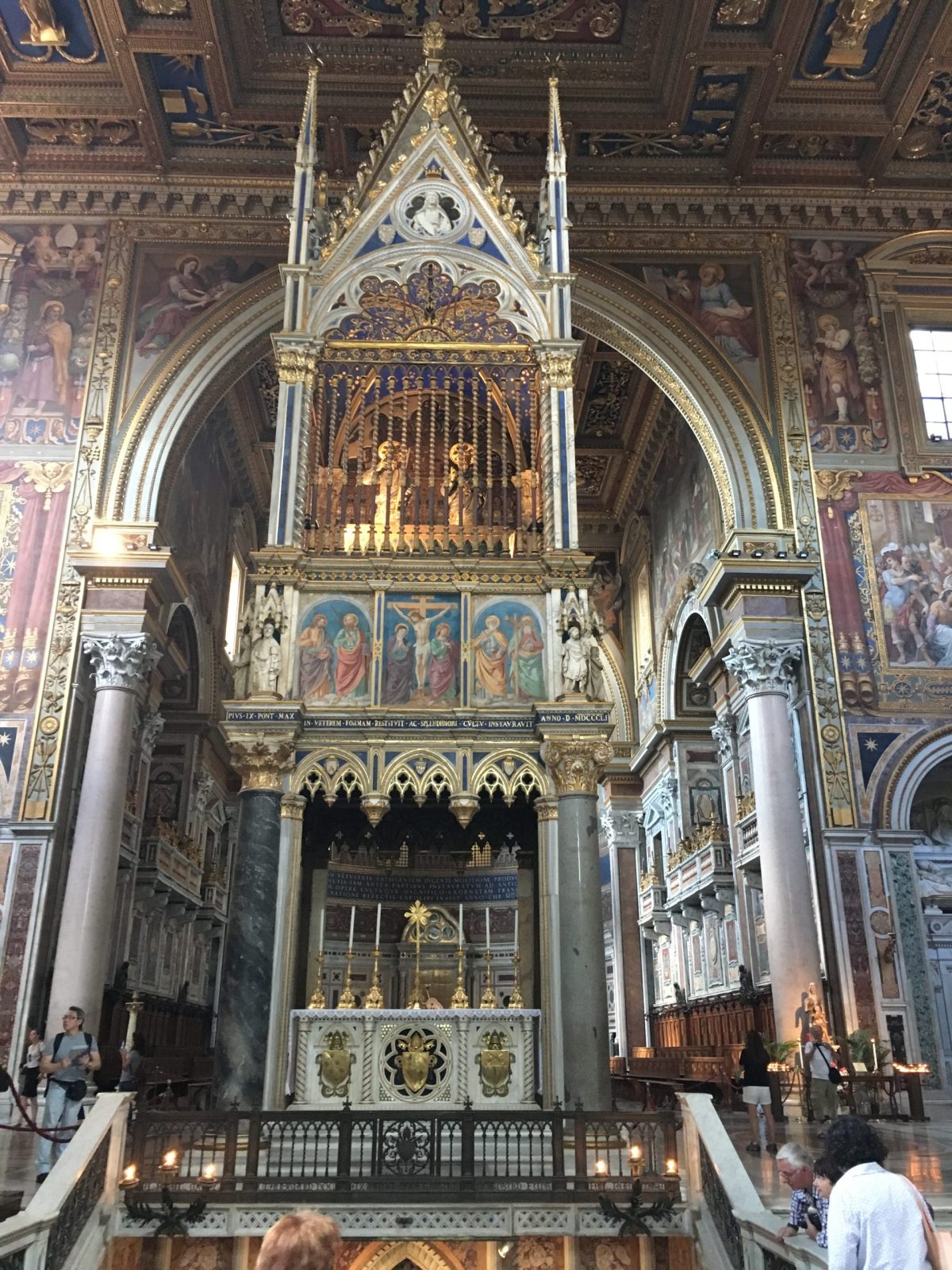
    Today we celebrate the feast of the dedication of the St. John Lateran Basilica in Rome.  That might seem like a strange feast for us to celebrate, since few of us have probably ever even been there.  But St. John Lateran is a very important church for us Catholics.  It is the “mother church” of all Catholics around the world.  It is the Pope’s parish church, the cathedral of Rome. It’s an enormous basilica built over three hundred years ago on the site of a former church built there in the fourth century.  Within the building are representations of the popes going all the way back to Peter.  Over time the churches on this site have been subject to fire, earthquakes and war, and have had to be rebuilt several times.  But a church has always been there. It is a visual reminder, inside and out, of our connection to our tradition and the fact that the Church has survived a lot over the centuries–from both within and without. The building attracts many tourists.  They can’t help but admire this grand edifice, much like the Jews of Jesus’ time strolled the Temple precincts and admired its splendor.


    While it is a solid structure, and probably needs constant upkeep, it is a reminder of another edifice, the real Temple Jesus laid the foundation for and Paul and subsequent preachers carefully built upon, and that temple is God’s people.  This structure also requires constant upkeep, that’s what we are about in our celebration today, remembering who we are and “tending to the Temple.”


    This church that is ourselves, this temple of the Holy Spirit that we are, needs constant upkeep and maintenance – just like this building where we worship, and just like old St. John Lateran.  Because we often fall into the disrepair of sin or the neglect that is spiritual laziness.  And often the repairs can seem daunting.  But they are certainly possible because of the love of God and the outpouring of the Holy Spirit, that spirit that brings us back to the Church and helps us with the sacraments.


    And that’s the point of today’s celebration.  We remember that we are connected as Catholics throughout the world by our connection to the Pope.  We remember that we ourselves are the temple of God, as St. Paul tells us today, built on the rock-solid foundation of Jesus Christ, built up with the teaching of the apostles, the proclamation of the Holy Scriptures, and the guidance of the Church’s tradition.


    The Scriptures today paint the picture of a Church that is not just a building, but is a living thing that goes forth and makes the whole world new.  Just as Ezekiel’s vision painted the picture of water flowing forth from the temple, cleansing and renewing the earth, so the waters of baptism flow forth from the Church of God, taking with it the many ministries of the parishes and the myriad of giftedness possessed by all the baptized believers in all the churches of the world, and flowing out into the world to make a real difference.  This is how the lost come to find salvation.  This is how the poor are fed.  This is how the unborn and the elderly sick are protected.  This is how the world, dark in sin and lost in the disrepair of apathy is bound up and made new and washed clean and healed.  Saint Paul makes it very clear today: we are the temple of God, and we are filled with the Spirit to make a difference in the world.  The Church that is us, we baptized ones, goes forth into a world aching for renewal and brings it all back to the God who made everything, and makes everything new.


    And that newness is exactly what Jesus meant when he upturned the moneychangers’ tables and scattered the doves.  Because the doves were needed for the sacrifice, and the money which bore the inscription of pagan deities had to be changed for money that could be brought into the temple treasury – they weren’t doing anything wrong.  But Jesus’ message here is completely different than we might think at first – what he means by all of this is that there is a new temple, the temple that is he himself – that temple which will be torn down by disbelievers but restored in the Resurrection.  There is a new temple, and so that old one with all its dove-sellers and moneychangers isn’t really necessary any more, so take it all and go home, or come to worship rightly, in the temple that is Christ, that temple that will never ever fall into disrepair.


    We very much need the church buildings we have among us.  We need St. John Lateran to be a symbol of the Catholic faith that has withstood persecution of every sort and remained standing to give witness to Christ.  We need St. John the Baptist’s church here in Winfield so that we can come and worship and find our Lord in Word and Sacrament.  But all of that pales in comparison to the importance of the Church that is you and me, and all the baptized ones of every time and place, filled and inspired and breathed forth with the Holy Spirit, gifted beyond imagining, flooding the earth with the torrent of God’s grace, making everything new, and bringing it all back to God who made it all possible.


    The task is daunting, but we cannot be afraid to be Church to one another and Church to the world.  As our Psalmist tells us today, “The Lord of hosts is with us; the God of Jacob is our stronghold!”

  • Saint Hildegard of Bingen, Virgin and Doctor of the Church

    Saint Hildegard of Bingen, Virgin and Doctor of the Church

    Mass at Saint John the Baptist, Winfield

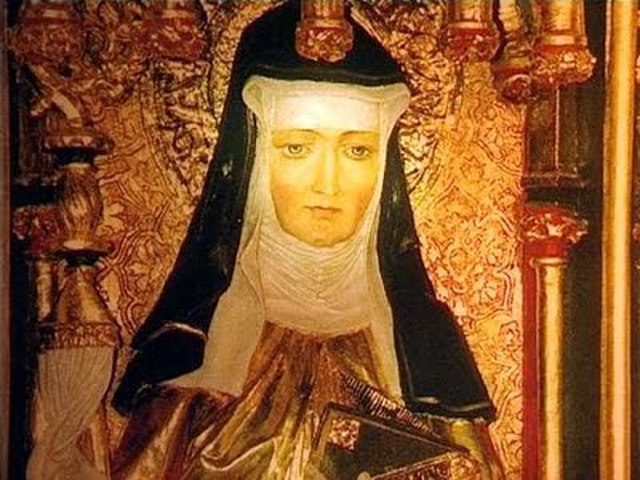
    I love that the Church celebrates women who were intellectual, influential, and beautiful, which is why I chose to celebrate this optional memorial today. Today is the (optional) memorial of Saint Hildegard of Bingen, a twelfth century German Benedictine nun and Doctor of the Church who has recently become one of my favorite saints. She was a writer, music composer, philosopher, mystic, cook, medical doctor of sorts, and Benedictine abbess. Clearly she was a very busy woman!

    She was very sick in her childhood, and so her parents promised her to God for her healing. At age 8, she was placed in the care of a Benedictine nun, Blessed Jutta. She was taught to read and sing the psalms. Her holiness of life attracted her to many people, and at a young age, she began having mystical visions. At age 18, she was professed a nun and eventually elected abbess when Sister Jutta died. She went on to found monasteries at Bingen and Eibingen, which she felt was at divine command.

    Although she never had formal education and did not know how to write, she amassed great knowledge of the faith, music, natural science, herbs, and medicinal arts. Her insights and learning were attributed to visions, which were faithfully transcribed by confreres of her spiritual director. Hildegard became famous throughout Europe and people would travel to see her. The works that were transcribed from her visions included commentaries on the Gospels, the Athanasian Creed, and the Rule of Saint Benedict, in addition to Lives of the Saints and a medical work on the well-being of the body.

    As a person who loves to cook, I am thrilled that we have some of her recipes. Last year on her feast day, I made her “Cookies of Joy,” which are a crisp spice cookie not unlike gingerbread. I did, indeed, experience joy when I ate them! Her recipes, by and large, were written to include healthy ingredients (at least as that was understood in the twelfth century), but also to give delight.

    And in that delight, Hildegard encourages us to sing. She was a musician and she wrote: “Don’t let yourself forget that God’s grace rewards not only those who never slip, but also those who bend and fall. So sing! The song of rejoicing softens hard hearts. It makes tears of godly sorrow flow from them. Singing summons the Holy Spirit. Happy praises offered in simplicity and love lead the faithful to complete harmony, without discord. Don’t stop singing.”

    After her death, she was strongly revered. She became a saint, and in 2012, Pope Benedict XVI, of blessed memory, declared her to be a Doctor of the Church, one of just four women and just 35 saints to be given that title. Pope Benedict XVI called Hildegard, “perennially relevant” and “an authentic teacher of theology and a profound scholar of natural science and music.”

    Saint Hildegard of Bingen, pray for us!

  • The Feast of the Exaltation of the Holy Cross

    The Feast of the Exaltation of the Holy Cross

    Today’s readings
    Mass at Saint John the Baptist, Winfield

    Bishop Robert Barron tells about an interreligious dialogue between Catholics and Buddhists at which he was present. At one point, one of the Buddhists said to him, pointing to the Cross above the door in the meeting room, “Why is that obscene image on every wall in your buildings?” The Buddhist explained that it would be considered a mockery in his religion to venerate the very thing that killed their leader. The truth is, of course, that it is obscene. It is strange, and I don’t think we give that as much thought as we should. Just because it’s strange doesn’t make it wrong, and Barron wrote a whole book about it called The Strangest Way.

    And we all must have thought about this at one time or another. Why is it that God could only accomplish the salvation of the world through the horrible, brutal, and lonely death of his Son? That question goes right to the root of our faith. We know that we had been alienated from God, separated by a vast chasm of sin and death, which we freely chose. But into this obscene world, Jesus becomes incarnate; he is born right into the midst of all that sin and death. He walks among us, and goes through all of the sorrows and pains of life and death right with along with us. If sin and death have been the obscenities that have kept us from God, then God was going to use those very obscenities to bring us back. Jesus comes into our world and dies our death because God wants us to know that there is no place we can go, no depth to which we can fall, no experience we can ever have that is outside of the reach of God’s saving power and love.

    Today’s feast of the Exaltation of the Holy Cross, also called the Triumph of the Cross, was celebrated very early in the Church’s history. In the fourth century St. Helena, mother of the Roman Emperor Constantine, went to Jerusalem in search of the holy places of Christ’s life. She destroyed the Temple of Aphrodite, which tradition held was built over the Savior’s tomb, and her son built the Basilica of the Holy Sepulcher over the tomb. During the excavation, workers found three crosses. Legend has it that the one on which Jesus died was identified when its touch healed a dying woman. The Cross immediately became an object of veneration.

    About this great feast, St. Andrew of Crete wrote: “Had there been no Cross, Christ could not have been crucified. Had there been no Cross, life itself could not have been nailed to the tree. And if life had not been nailed to it, there would be no streams of immortality pouring from Christ’s side, blood and water for the world’s cleansing. The legal bond of our sin would not be canceled, we should not have attained our freedom, we should not have enjoyed the fruit of the tree of life and the gates of paradise would not stand open. Had there been no Cross, death would not have been trodden underfoot, nor hell despoiled.”

    Because of the Cross, all of our sadness has been overcome. Disease, pain, death, and sin – none of these have ultimate power over us any more. Just as Jesus suffered on that Cross, so we too may have to suffer in the trials that this life brings us – we know that. But Jesus rose from the dead and ascended into heaven to prepare a place for us, a place where there will be no more sadness, death or pain, a place where we can live in the radiant light of God for all eternity. Because of the Cross, we have hope, a hope that can never be taken away.

    The Cross is indeed a very strange way to save the world, but the triumph that came into the world through the One who suffered on the cross is immeasurable. As our Gospel reminds us today, all of this happened because God so loved the world.

    We adore you, O Christ, and we praise you, because by your Holy Cross you have redeemed the world.

    Fediverse Reactions
  • Wednesday of the Twenty-third Week in Ordinary Time

    Wednesday of the Twenty-third Week in Ordinary Time

    Today’s readings
    Mass at Saint John the Baptist, Winfield

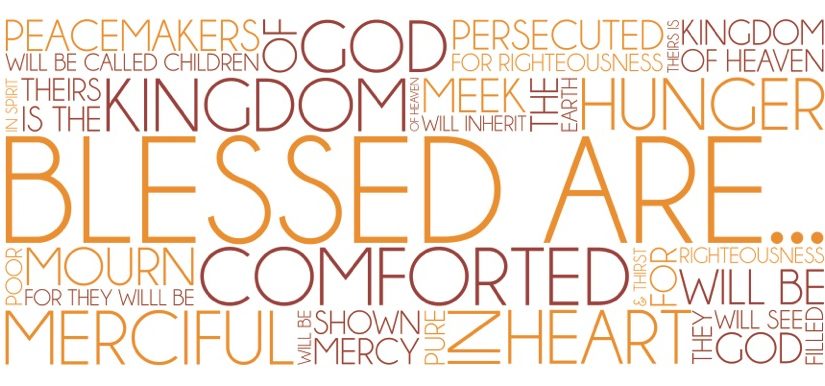
    Luke’s treatment of the Beatitudes is a little different than Matthew’s. While Matthew lists the blessings, it is only Luke who lists the woes. Whether we are looking at the blessings or the woes, it is clear that God’s wisdom is different than ours. How many of us would choose to accept hunger, grief, hatred and insult? How many of us would turn down wealth, plenty, laughter and good feelings? Yet the Lord makes it clear to us that what we choose may not ultimately be what we get.

    It’s kind of like my grandmother used to say, when we were playing and laughing a lot, “that laughing is going to turn into crying.” Usually, she was right. And that’s true of all of our lives. Time has a way of changing our circumstances and life comes with its ebbs and flows. But what Jesus is worried about here is a little more serious than that. He is concerned about those who make comfort and good feelings and wealth their number one priority, those who are addicted to these things. If this is what becomes our god, then what use have we for God our maker?

    Today’s Gospel is a call to get it right. To put our priorities in order. It’s not just about us; we have to take up the cross and follow Christ. That might indeed mean some hardship, some hunger, grief, hatred and insult. We might have to put aside the wealth, plenty, laughter and good feelings for a time. We are not home yet; we are mere travelers on this earth. And so the sufferings of this present time are but temporary. Our real reward is in heaven, and we pray that we don’t miss it by striving here on earth for all the wrong things.

  • Pope Saint Gregory the Great, Doctor of the Church

    Pope Saint Gregory the Great, Doctor of the Church

    Mass at Saint Petronille, Glen Ellyn

    Saint Gregory showed a great deal of promise at a young age. He had a stellar political career, becoming prefect of Rome before the age of thirty. After a short time, he resigned his office and dedicated his life to the priesthood. He joined a Benedictine monastery and became abbot, founding several other monasteries during his time there. Eventually he was called to become the Bishop of Rome, the Pope, and he dedicated his papal ministry to reforming the Church, the Liturgy, and its priests. He is the one for whom Gregorian Chant is named. He also spent a good deal of time and money ransoming the political prisoners of the Lombards, and helped to stabilize the social climate somewhat during a time of great strife in the medieval world.

    Of course, there’s always strife in the world. Whether we measure that in the secular world, noting the many acts of violence throughout the world, and even in our own cities, or if we measure it in our Church, noting the scandals and sadness that has marred our recent history, a lot of what we deal with on a daily basis needs to be set right. Reform is always needed, or else good institutions become stagnant, and then corrupt. We look for the intercession of people like Pope Saint Gregory the Great to lead us back to Christ.

    Jesus, too, was about setting things right, of course. In our Gospel today, he heals Saint Peter’s mother-in-law, cures many of the sick, casts out demons, and prepares to move on preaching in many other towns. Setting things right is the duty of the Christian disciple, whenever she or he sees things that need fixing. Advocating for those neglected and in need, looking in on the sick and lonely, mentoring young people, and preaching the Word by the way we live our lives. That’s how we do it, always relying on the Holy Spirit and the intercession of saints like Pope Saint Gregory the Great.

    Fediverse Reactions
  • Saint Augustine, Bishop and Doctor of the Church

    Saint Augustine, Bishop and Doctor of the Church

    You’ve probably heard the saying that youth is wasted on the young. I think Saint Augustine might painfully agree with that sentiment. He was a man who thought he had everything figured out at a young age. He was prideful, caught up in the world’s pleasures and focused solely on what could be learned from his own reasoning. He had no room for the religion of his mother, Saint Monica, whose memorial we observed yesterday. But through her tireless prayers, Augustine began to come to know the God she worshiped, and began to respond to grace. He was finally baptized at 33 years of age, became a priest at 36, and a bishop at 41. Grace can work fast in a person’s life.

    Saint Augustine’s Confessions are among the best works on the spiritual life. In that work, he reflects, among other things, on his conversion, and how he felt called to repentance, but did not want to give up the world’s pleasures just yet. But throughout the work, he praises God for God’s work in his life. One of the best-known sections speaks of how the beauty of God was near, yet seemed beyond him:

    Late have I loved you, Beauty so ancient and so new, late have I loved you!
    Lo, you were within,
    but I outside, seeking there for you,
    and upon the shapely things you have made
    I rushed headlong – I, misshapen.
    You were with me, but I was not with you.
    They held me back far from you,
    those things which would have no being,
    were they not in you.
    You called, shouted, broke through my deafness;
    you flared, blazed, banished my blindness;
    you lavished your fragrance, I gasped; and now I pant for you;
    I tasted you, and now I hunger and thirst;
    you touched me, and I burned for your peace.

    Saint Augustine was always grateful for the grace he saw at work in the world, and especially in his own life. If anyone was a witness to how God’s embrace can take hold of a person and change their lives, it was Saint Augustine. So today, may we all be mindful and grateful for those gifts in our lives. May we take a moment today and look back on how things are different in our lives and give thanks for the beauty that is so ancient, and so new. And may we commend to his intercession all those in our lives who are in need of conversion.

  • The Twenty-first Sunday in Ordinary Time

    The Twenty-first Sunday in Ordinary Time

    Mass at Saint Petronille, Glen Elllyn | Today’s readings

    In my first priestly assignment, at Saint Raphael in Naperville, there was a huge football program for elementary school kids called Saint Raphael Football. It was not just a team, but a league, and lots of surrounding churches had teams in the league. You couldn’t live in Naperville and not have heard of Saint Raphael Football. It had a rather tangential relationship to the parish. So once in a while, in a social setting, someone would ask me what church I was from, and I’d tell them, Saint Raphael. And they would say to me, “Oh yes, we go there, our son is in that football league.” I always wanted to tell them, “How nice. By the way, we also celebrate the Eucharist there.” Maybe I should have. Today’s gospel reading makes me think I should.

    We – as a society – have it all wrong. Our priorities are all messed up. I think we’re in real danger, now more than ever, and today’s Liturgy of the Word is a wake-up call for us to get it right. We live in a society that has not just lost its moral compass, but has actually taken pains to bury it away and never look at it again. Everyone seems to think that something is okay if it works for them in their current circumstance, regardless of how it affects others, regardless of how it affects even them in the long-run. In many alarming ways, our moral compass has been buried for so long that we hardly know what it looks like anymore.

    So this homily is probably going to come off sounding kind of harsh to some of you, but if I don’t say what I have to say, I’m not doing my job as a priest. And I know, really I know, that most of you get this. So please indulge me; if this doesn’t apply to you, please pray for someone who needs to hear it, because you know someone who does.

    When Jesus is asked whether only a few will be saved, he deflects the question. His answer indicates that it’s not the number of those who will be saved – that’s not the issue. The issue is that some people think they will be saved because they call themselves Christian, or religious, or spiritual, or whatever. It’s kind of like the people I talked to who considered themselves practicing Catholics simply because their children played in a football league that was marginally affiliated with the parish.

    Jesus says that’s not how it works. We have to strive to enter the narrow gate. So what does that mean? For Jesus, entering eternity through the narrow gate means not just calling yourself religious; that would be a pretty wide gate. It certainly wouldn’t mean saying that you’re basically a good person, since that criterion is pretty subjective, and so widely misunderstood. The narrow gate means actually practicing the faith: taking time for prayer and worship, receiving the Eucharist for strength, living the gospel, reaching out to the needy, showing love to your neighbor. It means making one’s faith the first priority, loving God first, worshiping first, loving others first. Because “some are last who will be first, and some are first who will be last.”

    And I’ll be the first to tell you that it’s hard to do that. Saint Paul says today that we have to strengthen our drooping hands and weak knees; Jesus says that many will attempt to enter that narrow gate but won’t be strong enough to do it. That narrow gate of love is hard to enter: it takes effort, it takes grace; it takes strength, and we can only get that grace and strength in one place, and that place is the Church. That’s why Jesus gives us the Church: to strengthen us for eternal life.

    That’s not the best news, however, because so many people these days settle for simply calling themselves religious, or being “spiritual” – whatever that means. They’ll play football on the team, but won’t make an effort to come to Church to receive the strength they need to live this life and to enter eternal life. It is here, in the Eucharist, freely given by our gracious Lord, that we receive the strength we need to love, the strength necessary to live our faith and be united with our God. It is here, in the proclamation of the Word, that we find instruction to live as disciples and are more and more conformed into the image of Christ. But it’s hard to get to Church because Billy has a soccer game, or Sally has a dance recital, or because Mom and Dad just want to sleep in after a really trying week.

    But those decisions, friends, have eternal consequences. So let me be clear: God is more important than soccer, or football, or cheer, or whatever sport you’re playing; God is more important than the dance recital, and as for sleeping in on Sunday, well, as my grandfather used to say, you can sleep when you’re dead. And it’s not like it’s an either/or proposition: people don’t have to choose between soccer and Mass or dance and Mass or even sleeping and Mass. Certainly not in our section of the world. This parish has Mass on Saturday evening, on Sunday morning, and even Sunday evening. If those don’t work, there are a bunch of parishes within a short driving distance that have other schedules. There’s probably a church within a few driving minutes of every football or soccer field in the area; I know a lot of families choose to take that option when schedules are hectic.

    The point is, we make time for what’s important to us. And eternal life is the only thing that we have of lasting importance. So we have to build up the strength to get through that narrow gate one day. We’ve got to worship God with consistency; we have to live the gospel with consistency.

    We’re not going to be able to say one day: “We ate and drank in your company and you taught in our streets and we played football on your team.” We can’t just call ourselves Catholic; we have to live our faith. We have to worship and pray; we have to reach out to the needy, stand up for truth and justice, make a real effort to love even when it’s not convenient to love, or even when the person who faces us is not as lovable as we’d like.

    All of this requires commitment and effort and real work from all of us. We have to strive to enter through that narrow gate, because we don’t ever want to hear those bone-chilling words from today’s Gospel: “I do not know where you are from. Depart from me, you evildoers!” The good news is we don’t ever have to hear those words: all we have to do is nourish our relationship with Jesus that will give us strength to enter the narrow gate. After all, the narrow gate is love, and the love of God in Jesus is more than enough to get us through it.

  • Pope Saint Pius X

    Pope Saint Pius X

    Mass at Saint Petronille, Glen Ellyn | Today’s readings

    Today we celebrate Saint Pius X, a man dedicated to pastoral ministry, and helping people to let go of whatever would hold them back on the journey of faith. He was born Joseph Sarto, the second of ten children in a poor Italian family. He became pope at the age of 68, and he wanted to open the banquet for all those who would come worthily. He encouraged frequent reception of Holy Communion, which was observed sparingly in his day, and especially encouraged children to come to the Eucharist. During his reign, he famously ended, and subsequently refused to reinstate, state interference in canonical affairs. He had foreseen World War I, but because he died just a few weeks after the war began, he was unable to speak much about it. On his deathbed, however, he said, “This is the last affliction the Lord will visit on me. I would gladly give my life to save my poor children from this ghastly scourge.”

    Turning to the readings, particularly the first reading because I feel it needs explanation: and I’m not going to sugar-coat this – the truth is that this is a really horrible story. Why on earth would we worship a God who would accept such a vow from Jephthah (or anyone else for that matter), or hold him to it? Well, let’s not get ahead of ourselves: first, a bit of context. The footnotes in the New American Bible remind us that this was a fairly common theme in ancient mythology. When the topic of sacrificing children comes up in Scripture, it is usually strongly condemned. Here, the writer simply records the story, probably to explain the tradition that is recorded in the next verse after our reading stops: “It became a custom in Israel for Israelite women to go yearly to mourn the daughter of Jephthah the Gileadite for four days of the year.”

    Why this comes up at all in the Sacred Liturgy is another matter. Bad enough that this story is in the Bible, must we hear it every second year on this day? Well, all we have to do is wait a minute to hear the Psalmist explain what’s really important:

    Sacrifice or oblation you wished not,
    but ears open to obedience you gave me.
    Burnt offerings or sin-offerings you sought not;
    then said I, “Behold I come.”

    So let’s let the horrible story remind us that the Psalmist directs us how to really pray and really live. Leave behind the crazy sacrifices and unholy vows, and instead give ourselves completely to the Lord, and obey his commands.

    Pope Saint Pius X, pray for us.

  • Monday of the Thirteenth Week in Ordinary Time

    Monday of the Thirteenth Week in Ordinary Time

    Today’s readings

    Today’s first reading has always intrigued me, ever since I can remember hearing it as a child. God intends to destroy the city of Sodom because of its pervasive wickedness. Abraham, newly in relationship with God, stands up for the innocent of the city, largely because that was where his nephew, Lot, had taken up residence. In what seems to be a case of cosmic “Let’s Make a Deal,” Abraham pleads with God to spare the city if just fifty innocent people could be found there. God agrees and Abraham persists. Eventually God agrees to spare the city if just ten righteous people could be found in the city of Sodom.

    It is important, I think, to know that Abraham’s prayer does not really change his unchangeable God. Instead, God always intended to spare the city if there were just people in it.  What I love about this reading is Abraham’s line, “See how I am presuming to speak to my Lord, though I am but dust and ashes!”  It seems Abraham is testing the relationship, seeing how far it will go.  What happens is that he learns something great about our unchanging God: he learns that, as the psalmist sings today, “The LORD is kind and merciful.”

    All of this leads us to an important issue at stake for the praying disciple: that is, prayer must come out of a relationship with God.  Abraham may have been somewhat presumptuous to speak to God the way that he did.  But if he didn’t know God, if he didn’t have a relationship with God, well, then his conversation would have been completely offensive, wouldn’t it?  But he did know God, and was getting to know him better, so his pleas for the just people of Sodom were completely appropriate.

    We too are called to relationship with God, a relationship that finds its source in our prayer.  We can persistently plead for loved ones, but we also have to spend time in adoration and praise and thanksgiving, and even quiet contemplation so that this most important of our relationships can grow.  The LORD is kind and merciful, and he longs to reveal his mercy as we come to him in prayer.

  • The Solemnity of Saints Peter and Paul, Apostles

    The Solemnity of Saints Peter and Paul, Apostles

    “I can’t believe you messed up again.”
    “You’re never going to amount to anything.”
    “No one will ever understand you … love you … care about you.”

    I think we can all agree that these statements are examples of negative self-talk. We can recognize that easily enough when other people say them. But what happens when we are the ones saying them about ourselves? I also think most of us, maybe all of us, have said these things or something like them some time in our lives. Please God, we have gotten past that, but maybe we haven’t yet. The Good News today is that the Liturgy today takes aim against that self-talk head-on.

    By all accounts, Peter was an abject failure. As a fisherman, the Gospels record him catching nothing almost every single time he gets out on the water, at least until Jesus enters the picture. As a disciple, he was bold enough to get out of the boat and try to walk on water, only to get distracted by the wind and waves and sink, until Jesus pulls him up. As a friend, he denies Jesus three times on the night of his arrest and after his friend’s death he is in a tailspin of depression, until Jesus gives him three opportunities to profess his love.

    By all accounts, Paul was a murderer who wanted to destroy Christianity by destroying Christians. He was noted for his acumen in rooting out the Christian leaders and dragging them off in chains, and even consented to the stoning of Saint Stephen. He was emboldened and authorized to do the same in Damascus, until Jesus caught up with him on the road and blinded his distorted vision.

    Both Peter and Paul could have had the negative self-talk, and for good reason, and maybe, especially in Peter’s case, they actually did. But our God will tolerate no such thing for those he has chosen as his own. That’s why he gave Peter tons of fish, pulled him out of the water, and forgave him his denials, charging him to feed his sheep. That’s why he caught up with Paul on the road and redirected his vision, charging him to preach the Gospel. Our God has chosen them, chosen us, to be his own, and he won’t rest until we see who we are to be for him. Our God is the God of second chances.

    God sees past our negative self-talk, sees past our brokenness, sees past our failure, pulls us out of the water, tackles us on the road, and gives us a second chance. Or a third. Or a fiftieth, or whatever. [Father John and] I can attest to this. I hope you can too.

    So yes, on this feast of Saints Peter and Paul, we celebrate men who were great for the Church. Indeed we might not be here without their witness and example and ministry. But we do well to celebrate more the God who gave them second chances so that they could be the men he created them to be and to do the ministry he created them to do.

    So if you find yourself in the midst of negative self-talk today, I hope you’ll take Saints Peter and Paul as your patrons, and let God do in you what he did in them. But you need to let go of the vision that keeps you from him, you need to let God re-direct your vision, so that you can see the man or woman that God created you to be.

    Saints Peter and Paul, pray for us.