Blog

  • Pope Saint Gregory the Great, Doctor of the Church

    Pope Saint Gregory the Great, Doctor of the Church

    Mass at Saint Petronille, Glen Ellyn

    Saint Gregory showed a great deal of promise at a young age. He had a stellar political career, becoming prefect of Rome before the age of thirty. After a short time, he resigned his office and dedicated his life to the priesthood. He joined a Benedictine monastery and became abbot, founding several other monasteries during his time there. Eventually he was called to become the Bishop of Rome, the Pope, and he dedicated his papal ministry to reforming the Church, the Liturgy, and its priests. He is the one for whom Gregorian Chant is named. He also spent a good deal of time and money ransoming the political prisoners of the Lombards, and helped to stabilize the social climate somewhat during a time of great strife in the medieval world.

    Of course, there’s always strife in the world. Whether we measure that in the secular world, noting the many acts of violence throughout the world, and even in our own cities, or if we measure it in our Church, noting the scandals and sadness that has marred our recent history, a lot of what we deal with on a daily basis needs to be set right. Reform is always needed, or else good institutions become stagnant, and then corrupt. We look for the intercession of people like Pope Saint Gregory the Great to lead us back to Christ.

    Jesus, too, was about setting things right, of course. In our Gospel today, he heals Saint Peter’s mother-in-law, cures many of the sick, casts out demons, and prepares to move on preaching in many other towns. Setting things right is the duty of the Christian disciple, whenever she or he sees things that need fixing. Advocating for those neglected and in need, looking in on the sick and lonely, mentoring young people, and preaching the Word by the way we live our lives. That’s how we do it, always relying on the Holy Spirit and the intercession of saints like Pope Saint Gregory the Great.

    Fediverse Reactions
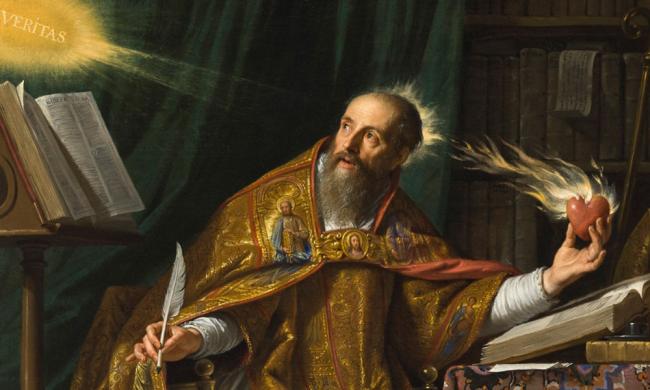
  • Saint Augustine, Bishop and Doctor of the Church

    Saint Augustine, Bishop and Doctor of the Church

    You’ve probably heard the saying that youth is wasted on the young. I think Saint Augustine might painfully agree with that sentiment. He was a man who thought he had everything figured out at a young age. He was prideful, caught up in the world’s pleasures and focused solely on what could be learned from his own reasoning. He had no room for the religion of his mother, Saint Monica, whose memorial we observed yesterday. But through her tireless prayers, Augustine began to come to know the God she worshiped, and began to respond to grace. He was finally baptized at 33 years of age, became a priest at 36, and a bishop at 41. Grace can work fast in a person’s life.

    Saint Augustine’s Confessions are among the best works on the spiritual life. In that work, he reflects, among other things, on his conversion, and how he felt called to repentance, but did not want to give up the world’s pleasures just yet. But throughout the work, he praises God for God’s work in his life. One of the best-known sections speaks of how the beauty of God was near, yet seemed beyond him:

    Late have I loved you, Beauty so ancient and so new, late have I loved you!
    Lo, you were within,
    but I outside, seeking there for you,
    and upon the shapely things you have made
    I rushed headlong – I, misshapen.
    You were with me, but I was not with you.
    They held me back far from you,
    those things which would have no being,
    were they not in you.
    You called, shouted, broke through my deafness;
    you flared, blazed, banished my blindness;
    you lavished your fragrance, I gasped; and now I pant for you;
    I tasted you, and now I hunger and thirst;
    you touched me, and I burned for your peace.

    Saint Augustine was always grateful for the grace he saw at work in the world, and especially in his own life. If anyone was a witness to how God’s embrace can take hold of a person and change their lives, it was Saint Augustine. So today, may we all be mindful and grateful for those gifts in our lives. May we take a moment today and look back on how things are different in our lives and give thanks for the beauty that is so ancient, and so new. And may we commend to his intercession all those in our lives who are in need of conversion.

  • The Twenty-first Sunday in Ordinary Time

    The Twenty-first Sunday in Ordinary Time

    Mass at Saint Petronille, Glen Elllyn | Today’s readings

    In my first priestly assignment, at Saint Raphael in Naperville, there was a huge football program for elementary school kids called Saint Raphael Football. It was not just a team, but a league, and lots of surrounding churches had teams in the league. You couldn’t live in Naperville and not have heard of Saint Raphael Football. It had a rather tangential relationship to the parish. So once in a while, in a social setting, someone would ask me what church I was from, and I’d tell them, Saint Raphael. And they would say to me, “Oh yes, we go there, our son is in that football league.” I always wanted to tell them, “How nice. By the way, we also celebrate the Eucharist there.” Maybe I should have. Today’s gospel reading makes me think I should.

    We – as a society – have it all wrong. Our priorities are all messed up. I think we’re in real danger, now more than ever, and today’s Liturgy of the Word is a wake-up call for us to get it right. We live in a society that has not just lost its moral compass, but has actually taken pains to bury it away and never look at it again. Everyone seems to think that something is okay if it works for them in their current circumstance, regardless of how it affects others, regardless of how it affects even them in the long-run. In many alarming ways, our moral compass has been buried for so long that we hardly know what it looks like anymore.

    So this homily is probably going to come off sounding kind of harsh to some of you, but if I don’t say what I have to say, I’m not doing my job as a priest. And I know, really I know, that most of you get this. So please indulge me; if this doesn’t apply to you, please pray for someone who needs to hear it, because you know someone who does.

    When Jesus is asked whether only a few will be saved, he deflects the question. His answer indicates that it’s not the number of those who will be saved – that’s not the issue. The issue is that some people think they will be saved because they call themselves Christian, or religious, or spiritual, or whatever. It’s kind of like the people I talked to who considered themselves practicing Catholics simply because their children played in a football league that was marginally affiliated with the parish.

    Jesus says that’s not how it works. We have to strive to enter the narrow gate. So what does that mean? For Jesus, entering eternity through the narrow gate means not just calling yourself religious; that would be a pretty wide gate. It certainly wouldn’t mean saying that you’re basically a good person, since that criterion is pretty subjective, and so widely misunderstood. The narrow gate means actually practicing the faith: taking time for prayer and worship, receiving the Eucharist for strength, living the gospel, reaching out to the needy, showing love to your neighbor. It means making one’s faith the first priority, loving God first, worshiping first, loving others first. Because “some are last who will be first, and some are first who will be last.”

    And I’ll be the first to tell you that it’s hard to do that. Saint Paul says today that we have to strengthen our drooping hands and weak knees; Jesus says that many will attempt to enter that narrow gate but won’t be strong enough to do it. That narrow gate of love is hard to enter: it takes effort, it takes grace; it takes strength, and we can only get that grace and strength in one place, and that place is the Church. That’s why Jesus gives us the Church: to strengthen us for eternal life.

    That’s not the best news, however, because so many people these days settle for simply calling themselves religious, or being “spiritual” – whatever that means. They’ll play football on the team, but won’t make an effort to come to Church to receive the strength they need to live this life and to enter eternal life. It is here, in the Eucharist, freely given by our gracious Lord, that we receive the strength we need to love, the strength necessary to live our faith and be united with our God. It is here, in the proclamation of the Word, that we find instruction to live as disciples and are more and more conformed into the image of Christ. But it’s hard to get to Church because Billy has a soccer game, or Sally has a dance recital, or because Mom and Dad just want to sleep in after a really trying week.

    But those decisions, friends, have eternal consequences. So let me be clear: God is more important than soccer, or football, or cheer, or whatever sport you’re playing; God is more important than the dance recital, and as for sleeping in on Sunday, well, as my grandfather used to say, you can sleep when you’re dead. And it’s not like it’s an either/or proposition: people don’t have to choose between soccer and Mass or dance and Mass or even sleeping and Mass. Certainly not in our section of the world. This parish has Mass on Saturday evening, on Sunday morning, and even Sunday evening. If those don’t work, there are a bunch of parishes within a short driving distance that have other schedules. There’s probably a church within a few driving minutes of every football or soccer field in the area; I know a lot of families choose to take that option when schedules are hectic.

    The point is, we make time for what’s important to us. And eternal life is the only thing that we have of lasting importance. So we have to build up the strength to get through that narrow gate one day. We’ve got to worship God with consistency; we have to live the gospel with consistency.

    We’re not going to be able to say one day: “We ate and drank in your company and you taught in our streets and we played football on your team.” We can’t just call ourselves Catholic; we have to live our faith. We have to worship and pray; we have to reach out to the needy, stand up for truth and justice, make a real effort to love even when it’s not convenient to love, or even when the person who faces us is not as lovable as we’d like.

    All of this requires commitment and effort and real work from all of us. We have to strive to enter through that narrow gate, because we don’t ever want to hear those bone-chilling words from today’s Gospel: “I do not know where you are from. Depart from me, you evildoers!” The good news is we don’t ever have to hear those words: all we have to do is nourish our relationship with Jesus that will give us strength to enter the narrow gate. After all, the narrow gate is love, and the love of God in Jesus is more than enough to get us through it.
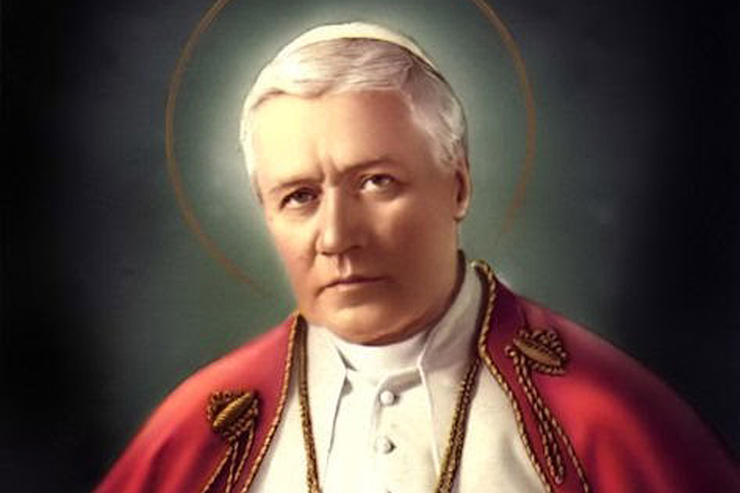
  • Pope Saint Pius X

    Pope Saint Pius X

    Mass at Saint Petronille, Glen Ellyn | Today’s readings

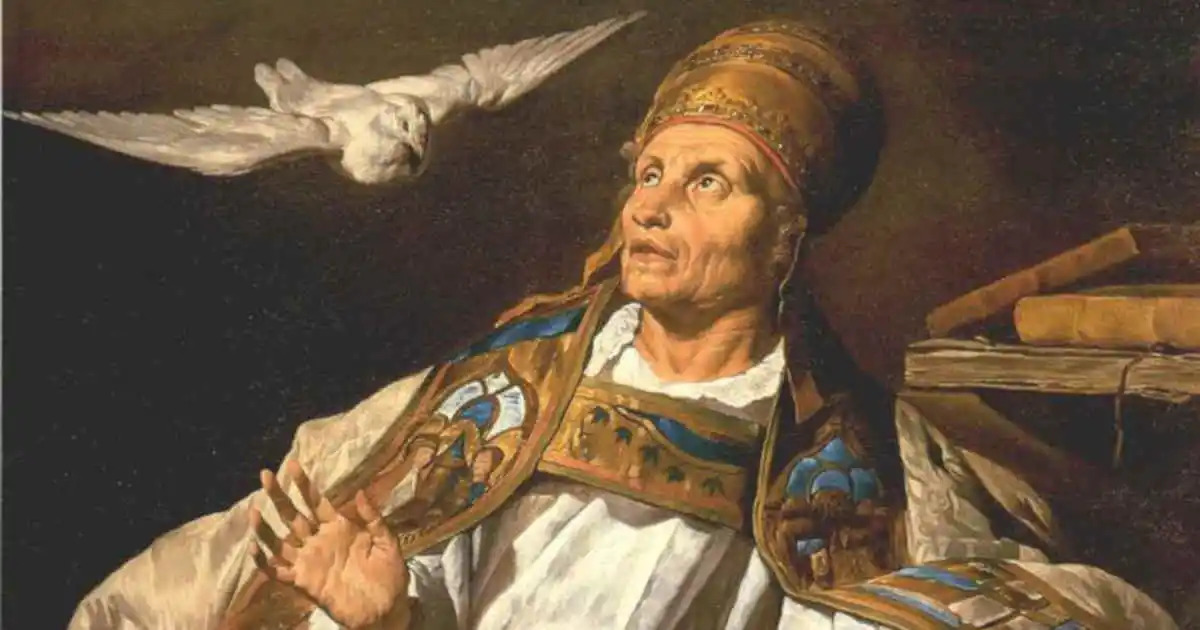
    Today we celebrate Saint Pius X, a man dedicated to pastoral ministry, and helping people to let go of whatever would hold them back on the journey of faith. He was born Joseph Sarto, the second of ten children in a poor Italian family. He became pope at the age of 68, and he wanted to open the banquet for all those who would come worthily. He encouraged frequent reception of Holy Communion, which was observed sparingly in his day, and especially encouraged children to come to the Eucharist. During his reign, he famously ended, and subsequently refused to reinstate, state interference in canonical affairs. He had foreseen World War I, but because he died just a few weeks after the war began, he was unable to speak much about it. On his deathbed, however, he said, “This is the last affliction the Lord will visit on me. I would gladly give my life to save my poor children from this ghastly scourge.”

    Turning to the readings, particularly the first reading because I feel it needs explanation: and I’m not going to sugar-coat this – the truth is that this is a really horrible story. Why on earth would we worship a God who would accept such a vow from Jephthah (or anyone else for that matter), or hold him to it? Well, let’s not get ahead of ourselves: first, a bit of context. The footnotes in the New American Bible remind us that this was a fairly common theme in ancient mythology. When the topic of sacrificing children comes up in Scripture, it is usually strongly condemned. Here, the writer simply records the story, probably to explain the tradition that is recorded in the next verse after our reading stops: “It became a custom in Israel for Israelite women to go yearly to mourn the daughter of Jephthah the Gileadite for four days of the year.”

    Why this comes up at all in the Sacred Liturgy is another matter. Bad enough that this story is in the Bible, must we hear it every second year on this day? Well, all we have to do is wait a minute to hear the Psalmist explain what’s really important:

    Sacrifice or oblation you wished not,
    but ears open to obedience you gave me.
    Burnt offerings or sin-offerings you sought not;
    then said I, “Behold I come.”

    So let’s let the horrible story remind us that the Psalmist directs us how to really pray and really live. Leave behind the crazy sacrifices and unholy vows, and instead give ourselves completely to the Lord, and obey his commands.

    Pope Saint Pius X, pray for us.

  • Monday of the Thirteenth Week in Ordinary Time

    Monday of the Thirteenth Week in Ordinary Time

    Today’s readings

    Today’s first reading has always intrigued me, ever since I can remember hearing it as a child. God intends to destroy the city of Sodom because of its pervasive wickedness. Abraham, newly in relationship with God, stands up for the innocent of the city, largely because that was where his nephew, Lot, had taken up residence. In what seems to be a case of cosmic “Let’s Make a Deal,” Abraham pleads with God to spare the city if just fifty innocent people could be found there. God agrees and Abraham persists. Eventually God agrees to spare the city if just ten righteous people could be found in the city of Sodom.

    It is important, I think, to know that Abraham’s prayer does not really change his unchangeable God. Instead, God always intended to spare the city if there were just people in it.  What I love about this reading is Abraham’s line, “See how I am presuming to speak to my Lord, though I am but dust and ashes!”  It seems Abraham is testing the relationship, seeing how far it will go.  What happens is that he learns something great about our unchanging God: he learns that, as the psalmist sings today, “The LORD is kind and merciful.”

    All of this leads us to an important issue at stake for the praying disciple: that is, prayer must come out of a relationship with God.  Abraham may have been somewhat presumptuous to speak to God the way that he did.  But if he didn’t know God, if he didn’t have a relationship with God, well, then his conversation would have been completely offensive, wouldn’t it?  But he did know God, and was getting to know him better, so his pleas for the just people of Sodom were completely appropriate.

    We too are called to relationship with God, a relationship that finds its source in our prayer.  We can persistently plead for loved ones, but we also have to spend time in adoration and praise and thanksgiving, and even quiet contemplation so that this most important of our relationships can grow.  The LORD is kind and merciful, and he longs to reveal his mercy as we come to him in prayer.

  • The Solemnity of Saints Peter and Paul, Apostles

    The Solemnity of Saints Peter and Paul, Apostles

    “I can’t believe you messed up again.”
    “You’re never going to amount to anything.”
    “No one will ever understand you … love you … care about you.”

    I think we can all agree that these statements are examples of negative self-talk. We can recognize that easily enough when other people say them. But what happens when we are the ones saying them about ourselves? I also think most of us, maybe all of us, have said these things or something like them some time in our lives. Please God, we have gotten past that, but maybe we haven’t yet. The Good News today is that the Liturgy today takes aim against that self-talk head-on.

    By all accounts, Peter was an abject failure. As a fisherman, the Gospels record him catching nothing almost every single time he gets out on the water, at least until Jesus enters the picture. As a disciple, he was bold enough to get out of the boat and try to walk on water, only to get distracted by the wind and waves and sink, until Jesus pulls him up. As a friend, he denies Jesus three times on the night of his arrest and after his friend’s death he is in a tailspin of depression, until Jesus gives him three opportunities to profess his love.

    By all accounts, Paul was a murderer who wanted to destroy Christianity by destroying Christians. He was noted for his acumen in rooting out the Christian leaders and dragging them off in chains, and even consented to the stoning of Saint Stephen. He was emboldened and authorized to do the same in Damascus, until Jesus caught up with him on the road and blinded his distorted vision.

    Both Peter and Paul could have had the negative self-talk, and for good reason, and maybe, especially in Peter’s case, they actually did. But our God will tolerate no such thing for those he has chosen as his own. That’s why he gave Peter tons of fish, pulled him out of the water, and forgave him his denials, charging him to feed his sheep. That’s why he caught up with Paul on the road and redirected his vision, charging him to preach the Gospel. Our God has chosen them, chosen us, to be his own, and he won’t rest until we see who we are to be for him. Our God is the God of second chances.

    God sees past our negative self-talk, sees past our brokenness, sees past our failure, pulls us out of the water, tackles us on the road, and gives us a second chance. Or a third. Or a fiftieth, or whatever. [Father John and] I can attest to this. I hope you can too.

    So yes, on this feast of Saints Peter and Paul, we celebrate men who were great for the Church. Indeed we might not be here without their witness and example and ministry. But we do well to celebrate more the God who gave them second chances so that they could be the men he created them to be and to do the ministry he created them to do.

    So if you find yourself in the midst of negative self-talk today, I hope you’ll take Saints Peter and Paul as your patrons, and let God do in you what he did in them. But you need to let go of the vision that keeps you from him, you need to let God re-direct your vision, so that you can see the man or woman that God created you to be.

    Saints Peter and Paul, pray for us.

  • Thursday of the Twelfth Week in Ordinary Time

    Thursday of the Twelfth Week in Ordinary Time

    Today’s readings

    So today we learn that just because we call on the Lord, that doesn’t mean that the Lord is at our whim, someone we can summon in the same way as we press a button on the remote and the television comes to life. That’s what the whole nasty business with Abram and Sarai was about. Instead of trusting the Lord’s promises that God would make Abram the father of many nations, they took matters into their own hands and then were displeased at the result. That’s what happens when we forget to trust in God and instead trust in ourselves and in our own ability to do something clever.

    The same is true for the scribes and Pharisees, and also for the wanna-be followers of Jesus. They might claim mighty deeds in Jesus’ name, but Jesus can see their hearts and knows that they are not really open to the fullness of the Gospel. Simply crying, “Lord, Lord” will not get them into the kingdom of heaven. If they’re not willing to set their house on the rock solid foundation of Christ, they will not stand, and they will fall apart with the first of the storms.

    And so we disciples have to be careful about our relationship with Christ. It’s not something we can neglect and expect it to be deep and rich enough to lead us to eternal life. We have to be people of integrity, spiritual people who know who our Lord is and who are open to the fullness of his teaching. He teaches with authority, not as the scribes of old, nor as the so-called authorities of our time – like Oprah or Dr. Phil. If we want teaching with authority, all we have to do is open the Bible, take some time in Adoration, or devote ourselves to prayer, and then fall in love all over again with our Lord who gave himself for our sakes so that we can all be one with him in the kingdom that has no end.

  • The Most Holy Body and Blood of Christ (Corpus Christi)

    The Most Holy Body and Blood of Christ (Corpus Christi)

    Today’s readings

    “Give them some food yourselves.”

    Perhaps the most distinctive aspect of Catholic worship is our celebration of the Eucharist. We state very strongly that it’s not just a symbol, not just a nice memory. It is the actual Body and Blood, Soul and Divinity of our Lord. We know that we are spiritually in the presence of our Lord whenever we receive Communion or adore the Blessed Sacrament. But even more, we believe that, in the Eucharist, we become what we receive: we become part of the Mystical Body of Christ, and in that Body we all become one. We Catholics believe that the Eucharist makes us one, and because of that, it is good for all of us to come together as one to celebrate this feast of the Most Holy Body and Blood of Christ.

    On this feast of the Body and Blood of Christ, we are called to take comfort in the many ways God feeds us. We know that when we pray “give us this day our daily bread,” we will receive all that we need and more, because our God loves us and cares for us. But to really trust in God’s care can sometimes be a bit of a scary moment.

    It was certainly scary for the disciples, who asked Jesus to “dismiss the crowds” so that they could go into the surrounding cities and get something to eat. They were afraid for the crowds because they had come to the desert, where there was nothing to eat or drink. They were afraid for the crowds because it would soon be dark and then it would be dangerous to travel into the surrounding cities to find refuge and sustenance. And, if they were to really admit it, they were afraid of the crowds, because all they had to offer them were five loaves of bread and two fish – not much of a meal for Jesus and the Twelve, let alone five thousand.

    But Jesus isn’t having any of that. Fear is no match for God’s mercy and care and providence, so instead of dismissing the crowds, he tells the disciples to gather the people in groups of about fifty. Then he takes the disciples’ meager offering, with every intent of supplying whatever it lacked. He blesses their offerings, transforming them from an impoverished snack to a rich, nourishing meal. He breaks the bread, enabling all those present to partake of it, and finally he gives that meal to the crowd, filling their hungering bodies and souls with all that they need and then some. Caught in a deserted place with darkness encroaching and practically nothing to offer in the way of food, Jesus overcomes every obstacle and feeds the crowd with abundance. It’s no wonder they followed him to this out of the way place.

    The disciples had to be amazed at this turn of events, and perhaps it was an occasion for them of coming to know Jesus and his ministry in a deeper way. They were fed not just physically by this meal, but they were fed in faith as well. In this miraculous meal, they came to know that Jesus could be depended on to keep them from danger and to transform the bleakest of moments into the most joyous of all festivals. But even as their faith moved to a deeper level, the challenge of that faith was cranked up a notch as well. “Give them some food yourselves,” Jesus said to them. Having been fed physically and spiritually by their Master, they were now charged with feeding others in the very same way.

    “Give them some food yourselves.”

    The Twelve certainly thought that was easier said than done, but how do we feel when we hear that command? Because, let’s be clear about this, it is a command for us as well. I just think this quote jumps off the page at me. Give them some food yourselves. Religious people often expect the proverbial deus ex machina, the “god out of the machine” that appears in some literary works when things go awry and sets everything right. God is expected to do all the heavy lifting while all we need to do is keep people in our thoughts and prayers. But that’s not how any of this works. The life of the disciple is not some contrived ancient drama, and God is not a literary device that we can employ when we’d rather not take care of people.

    The way prayer works when we notice a need is that we ask God to help us to make the situation right. What can we ourselves do to make things right? The answer to that depends on our proximity to the problem, our station in life, and the resources we have. If we see a disaster in a far away place, like the wildfires in California earlier this year, our best effort might be to raise funds to assist those most in need, as we did for our Lenten Service Project this year, raising over $15,000 to assist those in the poorest areas of the LA Wildfires. But maybe we are a little closer, and we can go to a soup kitchen to provide a literal meal. Perhaps our situation gives us free time to go on a mission trip, bringing the love of Christ to those who need so much assistance. The list goes on. We need to take Jesus’ command to “give them some food yourselves” seriously, because he wasn’t just joking around.

    Jesus has come to supply every need. In Jesus, nothing is lacking and no one suffers want. All the Lord asks of us each Sunday is to gather as a sacred assembly, to unite in offering worship with Jesus who is our High Priest, to receive Holy Communion, and then to go forth to share the abundance of our feast with others who have yet to be fed. After the crowd had eaten the meal, that was the time for them to go out into the surrounding villages and farms – not to find something to eat, but to share with everyone they met the abundance that they had been given. So it is for us. After we are fed in the Eucharist, we must then necessarily go forth in peace, glorifying the Lord by sharing our own abundance with every person we meet. We too must hear and answer those very challenging words of Jesus: “Give them some food yourselves.”

    In our Eucharist today, the quiet time after Communion is our time to gather up the wicker baskets of our abundance, to reflect on what God has given us and done for us and done with us. We who receive the great meal of his own Body and Blood must be resolved to give from those wicker baskets in our day-to-day life, feeding all those people God has given us in our lives. We do all this, gathered as one in the Eucharist, in remembrance of Christ, proclaiming the death of the Lord until he comes again.

    Give them some food yourselves.

    Que el Cuerpo y la Sangre de Cristo nos mantengan seguros para la vida eterna.  May the Body and Blood of Christ keep us all safe for eternal life.

  • Friday of the Eleventh Week in Ordinary Time

    Friday of the Eleventh Week in Ordinary Time

    Today’s readings

    Saint Paul writes that he put up with persecution from all sides: from his own people as well as the Gentiles. He was beaten often, endured hazardous journeys and perilous weather, as well as every kind of deprivation. His experience was definitely extreme, but others who lived the faith in those days were also subject to persecution, torture and death. Our experience isn’t quite like that, is it? However, persecution like this does happen occasionally in some parts of the world.

    But there is a subtle kind of persecution that we often must endure. We know that even if our society is not openly hostile to living the Gospel, it might be just one step short of that. Life is not respected in our society: babies are aborted, the elderly are not respected or given adequate care, children are not raised in nurturing families, people are hated because of their race, color or creed. Faith is ridiculed as the crutch of the weak. Hope is crushed by those who abuse power. Love is diminished by the world’s shabby standards of loving. Living the Gospel is costly to anyone who would want to be taken seriously in our culture.

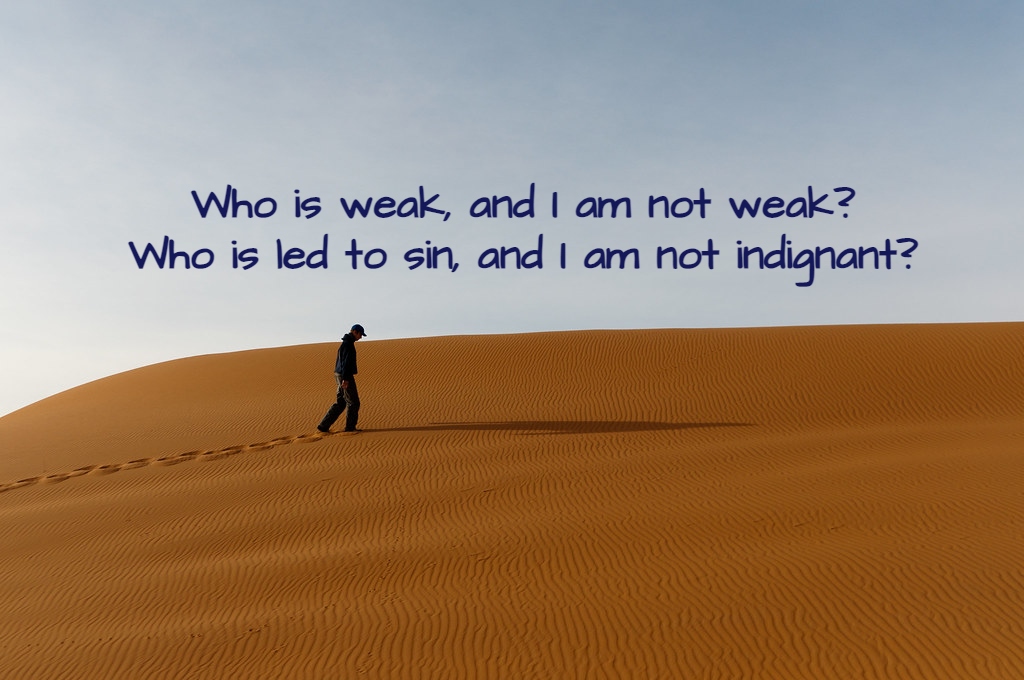
    To all of us who come to this holy place to worship this morning and who hope to work out our salvation by living the Gospel, Saint Paul speaks eloquently. He speaks to us as our intercessor today: “Who is weak, and I am not weak? Who is led to sin, and I am not indignant?” He points us to our Lord Jesus who paid the ultimate price for the Gospel, and reminds us of what our Gospel proclaims to us today: that in living that Gospel, regardless of its cost, we store up for ourselves incredible treasures in heaven, because it is in heaven that our heart resides.

  • Thursday of the Eleventh Week in Ordinary Time

    Thursday of the Eleventh Week in Ordinary Time

    Today’s readings

    Back when I was a seminarian intern, I had been visiting a parishioner at a local nursing home every week. I got to know her and her husband, and prayed with them often. One day, she was in the hospital, and I visited her there. Her husband told me she had been nonverbal: she hadn’t said anything for the last few days. So after talking a bit, we prayed – the Lord’s Prayer and the Hail Mary. I had invited her to pray along in her heart as best she could. When we got to those prayers, she began to pray them softly with us, and her husband had some tears of joy. Me too.

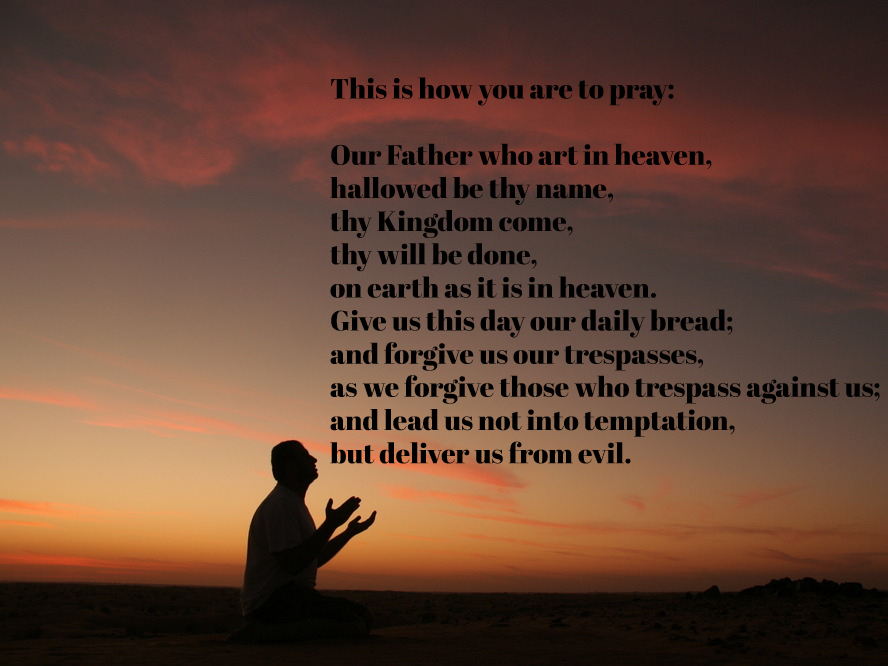
    I always say that we need to have a “prayer toolbox” for when times are difficult and we don’t know what to say or how to pray. And so it is glorious that Holy Mother Church has passed on some wonderful prayers, including the Lord’s Prayer, which he gave us in our Gospel this morning. When we don’t know what we are to pray or how to express our needs to God, these wonderful prayers do all that for us. Thanks be to God.

    So it’s good if we learn our prayers early on in life. Because if we have grown up saying them, we will never lose them, and they will be a comfort to us in good times and bad, up to our dying breath. So when times are difficult, it’s freeing to say, “Thy will be done…” When we don’t know what’s best for us, it’s best to say, “Give us this day our daily bread…” When we feel crushed by our sins and ashamed of our past, it’s healing to say, “forgive us our trespasses…”

    Today, let’s pray the Lord’s Prayer, as often as we pray it, with intention and attention. And let’s give thanks to Our Lord who entrusted these words to our hearts.