Blog

  • Saints Timothy and Titus, Bishops

    Saints Timothy and Titus, Bishops

    The sign of a good leader is her or his ability to perpetuate their activity. A good corporate leader is future-minded, and lays the groundwork for his successor to carry the company forward. A good parent raises children that can be set free one day to be successful and prudent in life, extending their integrity and love into the next generation. Paul’s ministry was no different. He knew he wouldn’t be around forever; indeed his ministry marked him for martyrdom. And so in today’s saints, Timothy and Titus, he invests in leaders who will take the fledgling churches into the next generation.

    During the fifteen years Saint Timothy worked with Saint Paul, he became one of his most faithful and trusted friends. He was sent on difficult missions by Paul—often in the face of great disturbance in local churches which Paul had founded. Paul installed him as his representative at the Church of Ephesus. Titus has the distinction of being a close friend and disciple of Paul as well as a fellow missionary. Titus is seen as a peacemaker and capable administrator. Paul’s second letter to the Corinthians affords an insight into the depth of his friendship with Titus, and the great fellowship they had in preaching the gospel. When Paul was having trouble with the community at Corinth, Titus was the bearer of Paul’s severe letter and was successful in smoothing things out. The Letter to Titus addresses him as the administrator of the Christian community on the island of Crete, charged with organizing it, correcting abuses, and appointing presbyter-bishops.

    In today’s first reading from his second letter to Saint Timothy, Saint Paul shows his mentoring. He reminds Timothy to “stir into flame the gift of God that you have through the imposition of my hands. For God did not give us a spirit of cowardice but rather of power and love and self-control.” He urges his protégés to be strong and stand fast for the faith. At the end of the reading, he also reminds them that they would indeed have to bear their share of hardship for the faith.

    Saints Timothy and Titus, along with Saint Paul, were the ones who scattered the seed trusting in God’s power to bring the Kingdom of God to its fulfillment. Through their intercession, and by their testimony in the Scriptures we read, they beckon us to be those who tend and nurture the seeds of faith growing around us. It is always our turn to “proclaim God’s marvelous deeds to all the nations.”

  • The Third Sunday in Ordinary Time: Sunday of the Word of God

    The Third Sunday in Ordinary Time: Sunday of the Word of God

    Today’s readings

    Many years ago now, before I went to seminary, this parish put on a production of the musical Godspell, and somehow I found myself part of the cast. If you’ve ever seen the musical, you know that it is based on the Gospel of Matthew, the Gospel that we are reading during this current Church year. I remember the first song of the musical was kind of strange to me at the time. It’s called “Tower of Babel” and the lyrics are a hodge-podge of lots of philosophies and philosophers throughout time. I didn’t get, at the time, the significance of the song, but I do now. The song represents the various schools of thought about God, over time. It shows how philosophy at its worst has been an attempt to figure out God by going over God’s head, by leaving God out of the picture completely.

    The song ends abruptly and goes right into the second song of the musical, “Prepare Ye,” of which the major lyric is “Prepare ye the way of the Lord.” The message that we can take from that is that the useless, and in some ways sinful, babbling of the pagan philosophers was once and for all settled by Jesus Christ. If we want to know the meaning of life, if we want to know who God is, we have only to look to Jesus. That’s true of most things in life.

    That’s what is happening in today’s Liturgy of the Word too. The people in the first reading and in the Gospel have found themselves in darkness. Zebulun and Naphtali have been degraded. They have been punished for their sinfulness, the sin being that they thought they didn’t need God. They thought they could get by on their own cleverness, making alliances with people who believed in strange gods and worshiped idols. So now they find themselves in a tower of Babel, occupied by the people with whom they tried to ally themselves. Today’s first reading tells them that this subjection – well deserved as it certainly was – is coming to an end. The people who have dwelt in darkness are about to see a great light.

    The same is true in another sense for Peter and Andrew and the sons of Zebedee in today’s Gospel. These men have been fishermen all their lives. Reading the Gospels and seeing how infrequently they catch anything unless Jesus helps them, we might wonder how successful they were at their craft. But the point is that fishing is all they’ve ever known. These are not learned men, nor are they known for their charisma or ability to lead people. But these are the men who Jesus calls as apostles. One wonders if they had any previous knowledge about Jesus, because on seeing him and hearing him and recognizing the Light of the World, they drop everything, turn their backs on the people and work they have always known, and follow Jesus, whose future they absolutely could never have imagined.

    All of this is good news for us. Because we too dwell in darkness at times, don’t we? We can turn on the news and see reports of men and women dying in war, crime and violence in our communities, corruption in government, and so much more. Then there is the rampant disrespect for life through the horrific sin of abortion, as well as euthanasia, hunger and homelessness, racism and hatred, intolerance of people who have different opinions, and so much more. Add to that the darkness in our own lives: illness of a family member or death of a loved one, difficulty in relating to family members, and even our own sinfulness. Sometimes it doesn’t take much imagination to know that our world is a very dark place indeed.

    But the Liturgy today speaks to us the truth that, into all of this darkness, the Light of Christ has dawned and illumined that darkness in ways that forever change our world and forever change us. One of the Communion antiphons for today’s Liturgy speaks of that change. Quoting Jesus in the Gospel of John, it says this:

    I am the light of the world, says the Lord;
    whoever follows me will not walk in darkness,
    but will have the light of life.

    There is an antidote available for the darkness in our world and in our hearts, and that antidote is Jesus Christ. The limits that are part and parcel of our human existence are no match for the light that is God’s glory manifested in Christ. This is what we mean by the Epiphany, and we continue to live in the light of the Epiphany (which we celebrated three weeks ago) in these opening days of Ordinary Time. Now that Jesus Christ has come into the world, nothing on earth can obscure the vision of God’s glory that we see in our Savior.

    Pope Francis, of blessed memory, has made this particular Sunday each year a celebration of the Word of God. He means for us to spend time opening the Scriptures and finding the manifold riches that are there. That’s what our Mass is always about. Read carefully through the order of Mass and you’ll find scripture in every part of it. Not just in the Liturgy of the Word – that’s a given, but in each and every one of the prayers of Mass. Catholic worship isn’t something someone made up: it is literally a celebration of the Word of God from beginning to end. And that makes sense, when you think about it: if we are called to “Go and announce the Gospel of the Lord,” as one of the dismissal formulas invites us, we can do that with confidence because we have just been fed on the Gospel in every part of our Mass.

    The Mass, too, is an Epiphany celebration at every point of the liturgical year. Because when we’re attentive to the Word of God and the prayer of the Mass, we can’t possibly miss Jesus present among us. So Pope Francis on this Sunday of the Word of God encouraged us to devote ourselves to God’s word: to join a Bible study, to help others break open the word by leading that part of the OCIA, to teach the scriptures to children in our school and religious education programs, to proclaim the Word at Mass. Do any one of those things, sisters and brothers, and I guarantee you’ll grow in your knowledge of scripture. And, turning a famous saying of Saint Jerome around to the positive, knowledge of scripture is knowledge of Christ.

    Jesus came to be good news for us. He is the Word of God incarnate among us, not just two thousand years ago, but even now if we would give ourselves over to loving the scriptures. So for those of us who feel like every day is a struggle of some sort, and who wonder if this life really means anything, the Good news is that Jesus has come to give meaning to our struggles and to walk with us as we go through them. For those of us who are called to ministries for which we might feel unqualified – as catechists, Eucharistic Ministers, Lectors, OCIA team members, small group leaders or retreat leaders – we can look to the Apostles and see that those fishermen were transformed from the darkness of their limited life to the light of what they were able to accomplish in Christ Jesus. Wherever we feel darkness in our lives, the Good News for us is that Christ’s Epiphany – his manifestation into our world and into our lives – has overcome all that.

    As the Psalmist sings for us today, the Lord truly is our light and our salvation.

  • The Feast of the Baptism of the Lord

    The Feast of the Baptism of the Lord

    Today’s readings

    I think we have to read and hear today’s readings very carefully. We’re still in the Christmas season – at the end of it, actually – and, more precisely, we’re at the octave day of the Epiphany of the Lord, which we celebrated last week, in which we started to see Jesus revealing himself, manifesting himself, to the world. Today’s readings are Epiphany readings, too, because they show us even more about who Jesus is and why he came.

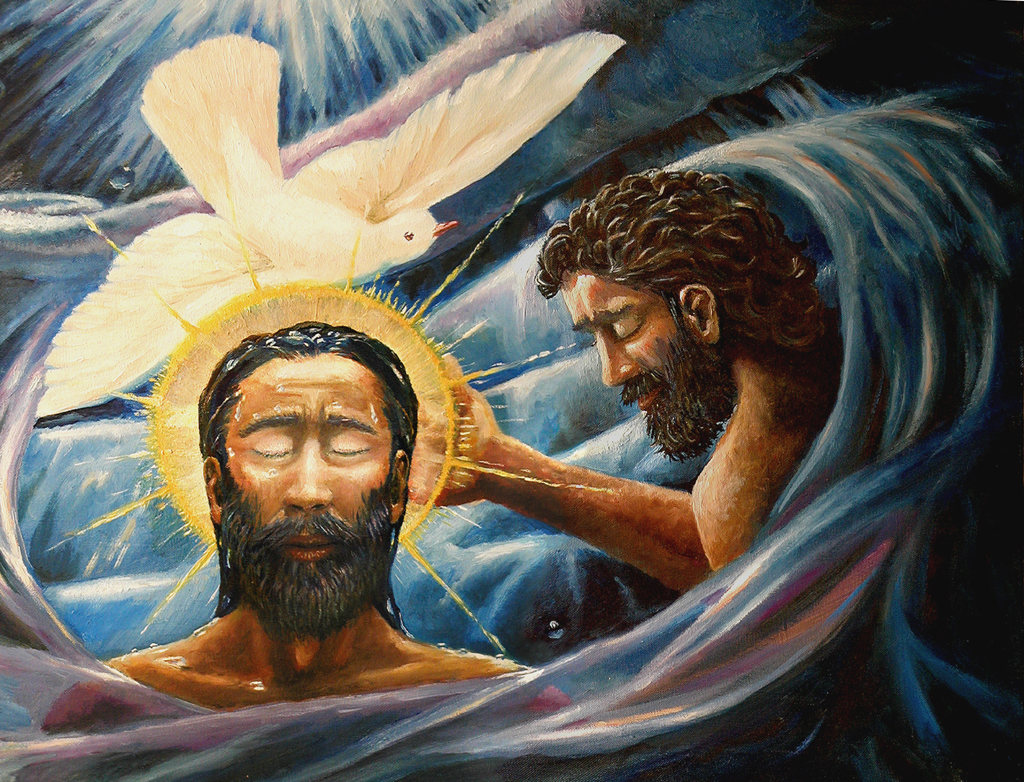
    In these readings he comes to be baptized by his cousin, Saint John the Baptist, in the River Jordan. This one moment says a lot about his mission: namely, that he came to be identified to us sinners. Now, that’s not the same thing as saying that he came to sin: clearly he was like us in all things but sin. But John’s baptism was one of repentance for the forgiveness of sins, which Jesus did not need to do. So why did he do it? He did it to say loudly and clearly that he loves us so much that he takes on our flesh and our sin – not his sin, because he never sinned – he takes on our sins so that they can be forgiven and washed away in his own baptism.

    But I say that we have to hear these readings carefully because I think they can lead us to define Jesus by what he does. And that’s a start, but it’s just inadequate. Let’s see if we can recognize this a bit more clearly. In our first reading, the prophet Isaiah tells us about the Suffering Servant, and he says that that suffering servant is one who would “open the eyes of the blind … bring out prisoners from confinement …. and from the dungeon, those who live in darkness.” So it’s easy to see Jesus as the suffering servant who would bring about justice. This in itself is pretty huge, but again, if we define Jesus as simply a justice-bringer, then he’s just a glorified judge or legislator. But Jesus is the true Suffering Servant: the one who would come and serve the people while himself suffering the effects of the peoples’ sins. Jesus did in fact came to suffer and die for us, to pay the price for our many sins. So far from being a judge or legislator, he also stands in place of the condemned – that would be us – and pays the price we deserve for our own lack of justice.

    In our second reading from the Acts of the Apostles, Saint Luke tells us that Jesus “… went about doing good and healing all those oppressed by the devil, for God was with him.” Going about doing good and healing those who are suffering is a great thing. But if we see Jesus merely in this way, then he’s just a social worker or physician – and anyone can do those things. But during this year of grace, we will see Jesus as the divine physician who heals us from the inside out and makes us fit for heaven. He won’t be just a food service worker, but instead the one who spreads the lavish feast that becomes food for the journey to heaven, where we are called to the heavenly banquet.

    And we know this is hard because we get confused about our own identities all the time. We can easily define ourselves or especially others by what we or they do. “He’s a computer programmer … she’s an attorney … he’s a retail worker.” Or we may even go so far as to define ourselves or others by superficial factors like nationality or sexual identity. None of this is adequate; it all falls short of saying who we really are.

    So we’re in a quandary. If we don’t know who we are, it will be pretty hard for us to see who Jesus is. If we define ourselves by what we do, then we’re definitely going to look to Jesus to fill a role for us, perhaps a different role depending on where life has us at the moment. But it’s all inadequate, and we go through life confused.

    Until we hear the words of God the Father in today’s Gospel. With Jesus coming up out of the river Jordan, the Father boldly proclaims: “This is my beloved Son, with whom I am well pleased.” So Jesus isn’t what he does: he is what he was begotten: the Son of God, who is in relationship with the Father and the Holy Spirit from before time began and until eternity. Because of this, his interaction with us is life-changing. Maybe he will heal us of this or that current ailment, but whether he does or whether he doesn’t, he will surely heal us from the inside out, and if we let him, he will lead us to heaven. Maybe he will help us with a family issue that has us up half the night every day, but whether he does or whether he doesn’t, he will surely give us a strength we never expected that will help us through it. All we have to do is stop seeing Jesus for what he does, stop expecting him to fill a role, and instead enter into relationship with him as the Son of God who does nothing but please his heavenly Father.

    When we do that – when we enter into relationship with Christ – he will give us identity too. And not just the paltry identity of what we do or our nationality or whatever, but the real identity that God created us with – our identity as sons and daughters of God. It is our task to live that identity with authenticity. And no one says that’s going to be easy. But thank God he gives us himself and gives us the Church to help us on the way to him.

    Today, Jesus is manifested as one who came to save us sinners. He is manifested as the only-begotten Son of God with whom the Father is well-pleased. We sons and daughters of God live for that day when he tells us that with us, too, he is well-pleased.

  • The Nativity of the Lord

    The Nativity of the Lord

    All during Advent, we have been yearning for the light. Advent reminds us that the world can sometimes be a very dark place, that war and terrorism and crime and disease and sin and death can really give us a beating, that very often we experience life much differently than God intended us to, and that all of this darkness has kept us from union with our God. But Advent also has reminded us that it’s not supposed to be that way, and that God has always intervened for love of the people he has created. And so in Advent, we came to see that God promises salvation for the people that are his own, and that he would do anything and everything to make that promised salvation happen for us.

    The Old Testament unfolds for us the many ways that God has intervened in history to save his people. He placed man and woman in the Garden of Eden, safe from all harm, should they choose to accept it (which, of course, they did not!). He brought eight people through the deluge of the great flood on Noah’s Ark. He promised Abraham his descendants would be as numerous as the stars of the sky. He led his people out of slavery in Egypt, through the desert and into the Promised Land, protecting them and guiding them through the hand of Moses all along the way. His love for his people, his desire that they be one with him, and his efforts to save them from their own folly have been abundant all through human history. But as numerous as his efforts have been, so have humankind’s failures to follow him been numerous as well.

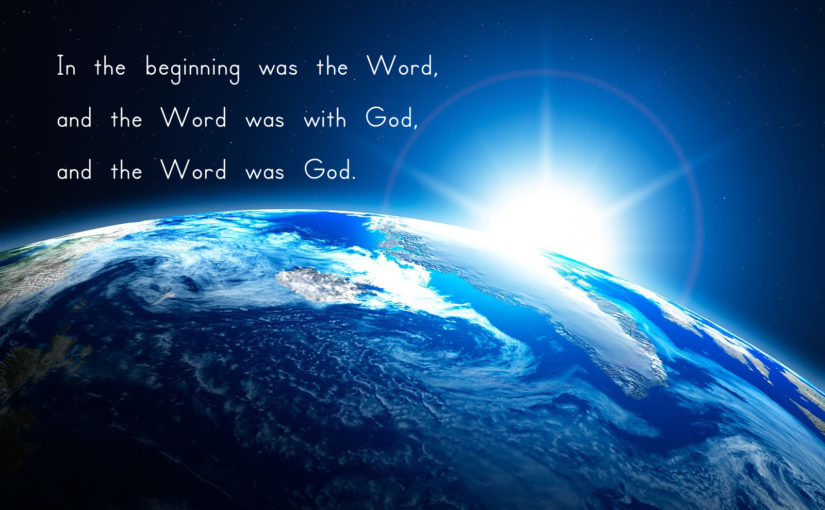
    Which brings us to why we are here this evening. Let’s be clear: this is not some last-ditch effort before God throws up his hands and leaves us to our own devices. This is the saving event, par excellence. This is the way to salvation that has always been intended and has been promised through the ages, from the very days of the creation of the world, when the Word, as Saint John tells us, was with God, and with God, was the Word through which everything in heaven and on earth came to be.

    This awesome event is the Incarnation: Jesus, the Word through which all were created, comes to be like his created ones. This is the primordial mystery of our faith: without the Incarnation, there could be no cross, no resurrection, no ascension, no salvation. None of the savings events of the Old Testament could be as efficacious as the Incarnation and the Paschal Mystery: in fact, those previous acts of salvation led up to the salvation we have in Christ Jesus, and paved the way for that saving act. In today’s feast, the great light of Christ has taken hold of the darkness this world brings to us and shatters it forever, shining great light into every corner of our dark world, and our sometimes very dark lives as well.

    This gift of the Incarnation is the best Christmas present we will receive – it is the best gift of any kind that we will ever receive, because in the Incarnation we have what’s necessary for us to be saved. This is so important a mystery and so great a gift, that at the words of the Incarnation in the Creed today, we are instructed to genuflect, not just bow. So, for those who are able, we will genuflect when we say the words, “by the power of the Holy Spirit, He was born of the Virgin Mary, and became man.” And we genuflect because we remember with great gratitude that if the Word didn’t become flesh, if he wasn’t born of the Virgin Mary, if he didn’t become one like us, if he didn’t pay the price for our sins, we would never have salvation, or hope of life with God. Praise God for this great gift!

    And so as we continue our prayer this evening, we offer God the darkness in our lives: our sins, our frustrations, our disappointments, our pain, our grief – and we hold up all of this to the great Light that is God’s Word, the one who became one like us, who pitched his tent among us, and who dwells with us now. We pray that the Light of the world would banish our darkness, and help us to see the way to God from wherever it is that we find ourselves on the spiritual path today. We celebrate that today and every day, Jesus Christ is the Light that shines in the darkness, and the darkness has not overcome it.

  • The Nativity of the Lord (Vigil Mass)

    The Nativity of the Lord (Vigil Mass)

    In a town called Nazareth in Galilee, a long time ago, a girl named Mary lived with her parents, Joachim and Ann. Mary was just around fourteen years old or so.  She came from a quiet little area of the world, and just looking at Mary and her parents, you’d have to say nothing about her family was very special, although God knew that they really were!  She was engaged to be married to a man named Joseph, because that was when people got married in those days, but she wasn’t married or living with him yet.

    She was busy doing her chores one day, when she was surprised by the appearance of an angel named Gabriel.  As you can imagine, the appearing of an angel can be a little frightening, but Gabriel reassured her and told her that the Lord was with her.  He said, “Hail Mary, full of grace, the Lord is with thee.” He told her not to be afraid, because God wanted her to be the mother of his Son Jesus.  Jesus would become great and would rule over the kingdom of Israel forever.  Mary was confused how she could have a baby, because she was not living with Joseph, and she didn’t have relations with any man, but the angel reassured her that all things are possible with God.  She was amazed, but she had faith, and said to the angel, “Let it happen as you have said.”

    Mary sang a hymn proclaiming how great God was, and went in haste to visit her older relative Elizabeth, who was also going to have a baby, even though she was very old.  When she got there, the baby in Elizabeth’s womb leapt for joy, and Elizabeth said, “Blessed are you among women and blessed is the fruit of your womb!” Mary stayed with Elizabeth for three months and then returned home.

    When Joseph heard that Mary was pregnant, he was confused and upset.  He didn’t understand the message from the angel, and couldn’t see how this was all God’s will and God’s doing. He was going to break off the engagement, but he had a visit from the angel too, in a dream. The angel told him not to be afraid to take Mary into his home.  And so he did. When the emperor called for a census, a time when every person in the kingdom was counted, he took Mary with him into the city of David to be counted, because that was where he was from.  

    They had a terrible time finding a place to stay during the journey, because so many people were traveling to take part in the census.  Eventually, it became urgent: on the way, Mary gave birth to her baby, and had Jesus in a manger where the animals stayed.  It was the best they could do. Many people came to visit Mary and Joseph and Jesus, and gave the baby gifts and said wonderful things about him, things Mary would never forget.  She kept all of this very close to her in her heart.

    Mary and Joseph raised Jesus and watched him become a strong, healthy, and smart young man.  One time, when the family went to Jerusalem for a visit to the holy temple, Mary and Joseph lost track of Jesus.  They were on the way home when they discovered Jesus wasn’t with them or any of their friends or family.  They were so upset and frightened!  Returning to Jerusalem, Mary and Joseph found Jesus in the temple, talking about their faith, with all of the rabbis and teachers.  He was only twelve years old!

    Eventually Joseph died, and Mary stayed near Jesus.  She watched him start his ministry, the whole reason God had sent him to earth in the first place.  He called his disciples and taught all the people.  He cured the sick and fed many hungry crowds.  He worked many miracles and always talked about how good God was, and how much God loved people, and how they should all turn back to God and turn away from the bad things they had been doing.  Mary watched as he did all these wonderful things, and she saw how faithful he was to God’s work.

    But Mary also began to see that Jesus wasn’t making everybody happy.  She saw that when he cured people on the Sabbath day, the day of rest, the leaders of the temple became angry.  She saw that when Jesus told them to take care of the poor and the hungry and the homeless instead of worrying about what day it was, the religious leaders wanted to kill him.  Mary watched as eventually they did take hold of Jesus, carried him off for a trial before Pilate the governor, and nailed him to the cross.

    At the foot of the cross, Mary stood sorrowful, knowing what a wonderful gift she and the whole world had been given in Jesus.  But Jesus took care of Mary even then, and entrusted her to the care of his friend John.  After Jesus died on the cross, Mary along with some of the other women in the group were the first ones to see that Jesus rose from the dead!  Mary stayed with the other disciples and prayed with them that the whole world would come to know the message of Jesus.  Her sorrow turned to joy as she watched the community grow and live the things Jesus had taught them.

    Those disciples were the ones who passed the faith on to us.  Because of the courage of the disciples and especially of Mary, we today can believe in Jesus and receive the gift of everlasting life from him.  Because of the faith of Mary, we can live forever with God and never have to be afraid of death or be mastered by sin.  All of this happened because Mary said to the angel back at the beginning of it all, “I am the handmaid of the Lord, let it be done to me according to your word.”

    It is good for us to hear Mary’s story, because she lived her life following Jesus.  We’re supposed to do that too.  Mary got to see Jesus face-to-face, even hold him in her arms.  We might not be able to do that, but Jesus is close to all of us as long as we let him in.  Just like they made a place for Jesus to be born in a manger, we need to make a manger for Jesus in our own hearts so that he can be born in us and always be with us.  It’s very important that we all hear that just as God sent an angel to Mary, he sends angels to us all the time.  Those angels tell us, too, that we should not be afraid because God loves us and cares for us and wants to do great things with us, just like he did with Mary.  All he needs for us to do is to say, “Let it be done to me according to your word.”

  • Wednesday of the Second Week in Advent

    Wednesday of the Second Week in Advent

    Today’s readings

    The bane of our spiritual lives is the horrible thought that we have to handle all of life’s challenges and battles on our own. This stems from the sin of pride, which is a conviction that we are to take care of ourselves and depend on no one else, and that we are more than qualified to do so. But it’s a lie, right? We make ourselves sick trying to rely on our own strength. We may be strong people, but there’s a limit to what we can do, and in fact, a limit to what we are supposed to do.

    Dependence on God lets God take us where he wants us to be, which is always better for us in the long run. And Advent is all about letting God do this new thing in us. Advent calls us to step aside and let God be God, and depend on his strength, and let him answer our prayers the way he knows they should be answered.

    That’s what Isaiah has for us in our first reading. God has created all things, and by his might and the strength of his power, all things are held in being. God’s strength is infinitely greater than the strength of the strongest young person. Indeed, we are told “Though young men faint and grow weary, and youths stagger and fall, They that hope in the LORD will renew their strength… They will run and not grow weary, walk and not grow faint.” And that is the gentle yoke that Jesus offers us in the Gospel reading. His yoke is easy and his burden is light. All we need to do is to put down our own yokes and take up his.

    Advent calls us to rely on the strength of God in our own personal struggles and those in the world around us. We can’t do it on our own. We’re not supposed to.

    Maranatha! Come, Lord Jesus!

  • Wednesday of the Thirty-third Week in Ordinary Time

    Wednesday of the Thirty-third Week in Ordinary Time

    Today’s readings

    Today’s Gospel reading presents us with Luke’s version of the Parable of the Talents from Matthew’s Gospel. Luke’s version seems a little confusing to our ears; perhaps even a bit harsh. One wonders if Jesus was hangry or something. But we know he’s simply turning up the fire on his disciples because the task is urgent. So we have a jumble. Ten men get coins, but only three get questioned at the end, there’s the whole story about the nobleman and the delegation that didn’t want him to be king, and then the slaying of those delegates at the end. If you’re scratching your head about all that, I think that’s most understandable!

    I think the pivotal moment is the command given the servants when they receive the coins: “Engage in trade with these until I return.” That’s what the nobleman says to the ten servants who received the ten gold coins. The ten gold coins are extremely valuable. Their value is more or less what a poor servant might make in his entire lifetime. So the real question today is, what is it that is really worth that much? With what have we been entrusted that could possibly be so valuable?

    Obviously those ten coins represent the Gospel to us, the command to engage in trade with them is our witness. And as we approach the end of the Church year, it would be a very good idea to see which of the servants we have been. Have we been hard at it, giving witness by the way we live our lives, the service we give without anyone knowing about it, the integrity with which we conduct our business, which has caused people to admire our way of life, to seek to find what we have? Or have we wrapped it all in a handkerchief and stored it away so that we won’t lose it and can find it when we need it, making it all about us, keeping our religion private, caving in to our fear, and never giving anyone a reason to suspect we are Christians? The Church year is ending, our Master will soon return. What return will we give him on his investment in our eternity?

    May our Master find us hard at work at his return, and say to us: “You have been faithful in this very small matter; take charge of more.”

  • Tuesday of the Thirty-third Week in Ordinary Time

    Tuesday of the Thirty-third Week in Ordinary Time

    Today’s readings

    I just love this story about Zacchaeus! In particular, there are two main components of the story that really stand out for me as hallmarks of the spiritual life.

    The first is Zacchaeus’s openness. First, he is so eager to see Jesus that he climbs up a tree to get a look at him. We don’t have to go that far. All we have to do is spend some time in Eucharistic Adoration, or even just some quiet moments reflecting on Scripture, or meditative prayer, even participating in Mass. All of those are ways to see Jesus, but like Zacchaeus, we have to overcome obstacles to get a look at him. For Zacchaeus, that meant climbing up a tree to overcome the fact that he was apparently vertically challenged! But for you and me, that might mean clearing our schedule, making our time with Jesus a priority. Zacchaeus’s openness also included inviting Jesus in, despite his sinfulness. He was willing to make up for his sin and change everything once he found the Lord. We might ask ourselves today what we need to change, and how willing we are to invite Jesus into our lives, despite our brokenness.

    The second thing that stands out for me is what Jesus says to those who chided him for going into a sinner’s house. “For the Son of Man has come to seek and to save what was lost.” What wonderful words those are for us to hear. Because we know how lost we have been at times, and how far we have wandered from our Lord. But the Lord seeks us out anyway, because we are too valuable for him to lose.

    And all we have to do is to be open to the Lord’s work in our lives, just like Zacchaeus was. What a joy it will be then to hear those same words Jesus said to him: “Today salvation has come to this house.”

  • Saint Francis Xavier Cabrini, Virgin

    Saint Francis Xavier Cabrini, Virgin

    Today’s readings

    St. Frances Xavier Cabrini, who was called “Mother Cabrini” during her life, was a humble woman of great faith and fortitude, who stayed with her mission. She was refused entrance to the religious order that had educated her. So she began working at an orphanage, eventually becoming a sister in the religious order that ran it. She later became their prioress. She went to New York intending to found an orphanage there. The house they were to use turned out not to be available, and the bishop advised her to return to Italy. But she stayed, and eventually founded not only that one orphanage, but 67 institutions dedicated to caring for the poor, the abandoned, the uneducated and the sick. She died at Columbus hospital in Chicago, which she also founded. She was the first American citizen to be canonized a saint.

    Mother Cabrini truly embodied the spirit of Wisdom that we hear about in our first reading this morning. That spirit, as the wisdom writer tells us, is “intelligent, holy, unique, Manifold, subtle, agile, clear, unstained, certain, Not baneful, loving the good, keen, unhampered, beneficent, kindly, Firm, secure, tranquil, all-powerful, all-seeing, And pervading all spirits…” That wisdom inspired Mother Cabrini to do so much good in her life and gave her the grace to make it all happen.

    Wisdom is available to all of us, to do what we are called to do by our creative and redemptive God. We might not found 67 institutions like Mother Cabrini, but who knows what the Spirit might do in us once we open our hearts to his wisdom and rely on his grace.

    Saint Francis Xavier Cabrini, pray for us.

    Fediverse Reactions
  • Pope Saint Leo the Great, Doctor of the Church

    Pope Saint Leo the Great, Doctor of the Church

    Pope Saint Leo the Great was known to be a wonderful administrator of the Church. But far from being caught up in purely administrative matters, he was also a very spiritual and prayerful man, many of whose great writings have become part of the lifeblood of our Church. He was elected to the papacy in the year 440, and he set the tone as a pope who believed in the pontiff’s total responsibility for the flock he led.

    His work included extensive defense of the church against the heresies of Pelagianism and Manicheism and others, he played the role of peacemaker, defending Rome against attacks by the Barbarians, and very significantly helped to settle a controversy in the Church of the East on the two natures of Christ. His work on that issue was promulgated at the Council of Chalcedon in 451.

    Leo was well versed in Scripture and ecclesiastical awareness, and he also had the ability to reach the everyday needs and interests of his people. We have many of his writings to this day, and some are used in the Office of Readings in the Liturgy of the Hours. Some of his prayers also exist today in the Roman Missal.

    Saint Leo held that holiness consisted in doing the work we were called upon to do in our station in life, but not so much that it costs us our relationship with Christ. Prayer and spiritual growth are also required of the disciple, and holiness consists of doing both work and prayer in proper balance.

    In today’s Office of Readings in the Liturgy of the Hours, Saint Leo writes about the priesthood that we all share as believers. He says, “[A]ll spiritual and mature Christians know that they are a royal race and are sharers in the office of the priesthood. For what is more king-like than to find yourself ruler over your body after having surrendered your soul to God? And what is more priestly than to promise the Lord a pure conscience and to offer him in love unblemished victims on the altar of one’s heart?” As we approach the end of the year, it’s a good time for us to consider whether we have offered ourselves and surrendered ourselves to God, for our own happiness, and for the glory of God.

    Pope Saint Leo the Great, pray for us.