Tag: salvation

  • Friday of the Twenty-ninth Week of Ordinary Time

    Friday of the Twenty-ninth Week of Ordinary Time

    Today’s readings

    In our overly-litigious society, Jesus’ words that we are to make an effort to settle the matter on the way are a good call to refocus.  This call shifts the emphasis from winning to healing, and it calls us to do some hard things.  In order to settle the matter, we will have to communicate and be open to the fact that we may be in the wrong.  If we are open to settling things the way Jesus would have us do it, we might find ourselves growing in maturity and faith, and becoming better people in the process.

    But even that is not the primary focus of today’s Gospel reading. Jesus begins by chiding the crowds for failing to interpret the signs of the times. Time is short, he says, and we don’t have forever to come to repentance, we don’t have forever to fix our broken relationships, we don’t have forever to set wrong things right. Now is the time, because the time for salvation is nearer now than it ever was.

    We would do well to hear this same message. We need to be about the business of setting things right, fixing relationships, settling long-standing arguments, because the time for salvation is near. What if the return of our Lord finds us mired deep in age-old hurts, resentments, and feuds. God forbid.

  • The Exaltation of the Holy Cross

    The Exaltation of the Holy Cross

    Today’s readings

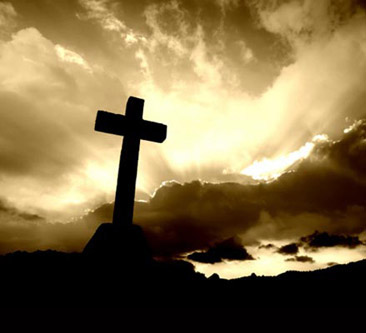
    In a lot of ways, this is a strange feast we are celebrating today. Think about it. This is the Exaltation of the Holy Cross, which in Jesus’ day would have been as big an oxymoron as one could possibly imagine. It’s like us saying that we are going to celebrate the exaltation of a lethal injection chamber. There is nothing exalted about an instrument of execution: it’s tortuous, humiliating, and as dark as one can get.

    And really, that was the whole point. Jesus claimed to be God – and of course we know he was right. But the Jewish people of his time didn’t see it that way. Their leaders in particular became weary of his teachings and his challenges to their way of life. Certainly they felt inadequate about their work when he had a different approach, which was, for all the world to see, more effective. So they wanted to do away with him in the most public, most humiliating way possible: they nailed him to a cross and left him to die in agony. Then they could go back to the way things were, the ways they were comfortable with.

    So to get from that to where we are now is nothing short of a miracle. A miracle, of course, of the highest order! God used this instrument of punishment to remit the punishment we deserved for our sins. God used the epitome of darkness to bathe the world in unfathomable light.

    And he didn’t have to. The cross is what we deserved for our many sins. Today’s first reading gives us just a glimpse into the problem. The Israelites, fresh from deliverance from slavery in Egypt, are making their way through the desert. Along the way, they pause to complain that God’s food, which he provided in the desert, wasn’t good enough for them. They had chosen slavery over deliverance; food that perishes over food that endures unto eternal life.

    But we’re there too, right? We often choose the wrong kind of food, get off the path, and choose slavery to our vices and sins over new life in Christ. In fact it was because of all that that Jesus came to us in the first place. God noticed our brokenness and would not let us remain dead in sin. So to put an end to that cycle of sin and death, he sent his only Son to us to die on the cross, paying the price for our sins. But that death may no longer have power over us, he raised him up, cheating the cross and the evil one of their power, and exalting the Holy Cross to the instrument not of our death, but of our salvation.

    Because of the Cross, all of our sadness has been overcome. Disease, pain, death, and sin – none of these have ultimate power over us. Just as Jesus suffered on that Cross, so we too may have to suffer in the trials that this life brings us. But Jesus rose from the dead and ascended into heaven to prepare a place for us, a place where there will be no more sadness, death or pain, a place where we can live in the radiant light of God for all eternity. Because of the Cross, we have hope, a hope that can never be taken away.

    The Cross is indeed a very strange way to save the world, but the triumph that came into the world through the One who suffered on the cross is immeasurable. As our Gospel reminds us today, all of this happened because God so loved the world.

    We adore you, O Christ, and we praise you, because by your Holy Cross you have redeemed the world.

  • Thursday of the Twelfth Week of Ordinary Time

    Thursday of the Twelfth Week of Ordinary Time

    Today’s readings

    Some people say all you need to do is make a one-time decision to accept Jesus as your personal Savior and you’re saved.   If salvation were something magical that came about as the result of just saying a simple prayer, once and for all, then why wouldn’t everyone pursue a relationship with Christ?  The fact is, salvation is hard work.  It was purchased at an incredible price by Jesus on the cross.  And for us to make it relevant in our lives, we have work to do too.  Not the kind of work that earns salvation, because salvation is not earned, but the kind of work that appropriates it into our lives.

    People who are saved behave in a specific way.  They are people who take the Gospel seriously and live it every day.  They are people of integrity that stand up for what’s right in every situation, no matter what it personally costs.  They are people of justice who will not tolerate the sexist or racist joke, let alone tolerate a lack of concern for the poor and the oppressed.  They are people of deep prayer, whose lives are wrapped up in the Eucharist and the sacraments, people who confront their own sinfulness by examination of conscience and sacramental Penance.  They are people who live lightly in this world, not getting caught up in its excess and distraction, knowing they are citizens of a heaven where such things have no permanence.  Saved people live in a way that is often hard, but always joyful.

    Not everyone who claims Jesus as a personal Savior, not everyone who cries out “Lord, Lord,” will enter the kingdom of heaven.  That’s what Jesus tells us today.  We have to build our spiritual houses on the solid rock of Jesus Christ, living as he lived, following his commandments, and clinging to him in prayer and sacrament as if our very life depended on it.  Because it does.  It does.

  • Easter Sunday of the Resurrection of the Lord: Mass During the Day

    Easter Sunday of the Resurrection of the Lord: Mass During the Day

    Today’s readings

    There’s certainly a flurry of activity in today’s readings, isn’t there?  Especially in the Gospel, we see Mary Magdalene run from the empty tomb to get the Apostles.  And then Peter and the “disciple whom Jesus loved” ran to the tomb.  This flurry of activity centers around a crisis in their faith, a time of confusion that will ultimately lead to stronger faith.

    So Mary comes to the tomb, early in the morning, while it is still dark.  In Saint John’s Gospel, the idea of light or dark always means something more than whether or not you can see outside without a flashlight.  Often he is talking about light and darkness in terms of good and evil.  That’s the way it was when we heard of Judas in Friday’s Passion reading: when he went out to do what he had to do, the Gospel says “and it was night.”  That wasn’t just to record the time of day, it meant that we had come to the hour of darkness.  But here when Mary comes to the tomb, I think the darkness refers to something else.  Here, I think it means that the disciples were still in the dark about what was happening and what was going to happen.

    Obviously, their confusion gives that away. Jesus had tried to tell them what was going to happen, but to be fair, what was going to happen was so far outside their realm of experience, that really, how could they have understood this before it ever happened?  All they know is what Mary told them: the tomb is empty and she has no idea of where they have taken the Lord.  And after all that had just happened with his arrest, farce of a trial, and execution, their heads had to be spinning.  How could they ever know this was all part of God’s plan?

    And even us – we who know that this was part of God’s plan – could we explain what was going on?  Could we give a step-by-step picture of what happened when, and why?  I know I couldn’t.  But, like you, I take it on faith that, after Jesus died, the Father raised him up in glory.  It’s a leap of faith that I delight in, because it is that leap of faith that gives me hope and promises me a future.  How could we ever get through our lives without the grace of that hope?  How could we ever endure the bad news that appears on our TV screens, in newspapers, and even closer to home, in our own lives – how could we endure that kind of news without the hope of the Resurrection?

    And so, even though there is this flurry of kind of confused activity among the Apostles this Easter morning, at least this day finds them running toward something, rather than running away as they had the night of the Passover meal.  They are running toward their Lord – or at least where they had seen him last, hoping for something better, and beginning with the “disciple whom Jesus loved,” coming to understand at last.  It’s not night anymore for them.  The day is dawning, the hope of the Resurrection is becoming apparent, the promise of new life is on the horizon.

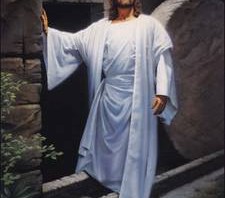
    And may this morning find us running too.  Running toward our God in new and deeper ways.  Running back to the Church if this has been the first visit you’ve made in a long while.  Running back to families if you have been estranged.  Running to others to witness to our faith both in word and in acts of service.  We Christians have to be that flurry of activity in the world that helps the hope of the Resurrection to dawn on a world groaning in darkness.  It’s not night anymore.  The stone has been rolled away.  This is the day the Lord has made, let us rejoice and be glad!  Alleluia!

  • The Easter Vigil in the Holy Night

    The Easter Vigil in the Holy Night

    I have to let you in on a little secret tonight.  Very often, when we preach a homily, the message ends up being for us preachers.  It’s not that we set out to do that; actually if we thought about it I’m pretty sure we would avoid it at all costs.  It’s just that when we pray about our homily, and we write it with the inspiration of the Spirit, after we preach it, we often sit down and say, “Oh.  You were talking to me, weren’t you, God?”

    Lent has been like that for me.  Back when I picked the theme that we have been using to guide our reflection during these somber days, “Rediscover Our Need for a Savior,” I thought it was a clever way to hearken back to the book we gave out at Christmas, Rediscover Catholicism.  But as we’ve reflected and preached our way through Lent, I’ve found the message to be quite personal, more so than I would have intended.  I hope that you too have had the opportunity to rediscover a relationship with Christ that maybe wasn’t as fervent as it should be.  Lent is supposed to do that for us.

    For me, these Triduum days have been amazing reminders of why I need a Savior.  As we hear the Scriptures and watch the Liturgy unfold, we can’t help but be reminded of the awesome price our Lord paid for each one of us on that Cross.  On Friday, I looked at the cross and remembered it was my sins that put him there.  I remembered that it was my brokenness that he suffered to redeem.  And most of all, I remembered that God loved me enough that not doing it was completely out of the question.  He did that, for me.

    We do indeed need a Savior, all of us personally, but also as a society.  All you have to do is turn on the news and everything you hear points to a desperate, urgent need for salvation.  This world would have us accept the darkness and say it’s good enough.  This world would have us live for today, with no thought to an eternity that it really doesn’t acknowledge anyway.  This world would say there is no need for a Savior, because we’re good enough to do what we need to do.  But the world is dead wrong.

    We can’t possibly ever make up for our many sins personally and as a society all by ourselves.  We have constantly made choices that take us out of friendship with God and put us on paths that lead nowhere good.  If we’re honest, all of us would admit that.  It takes a Savior who loves us more than we deserve to set things right.

    And the thing is, we have that Savior.  Right here and right now.  This is the night.  Not some distant long-past night, but this night is the night, when Christ broke the prison-bars of death and rose triumphant from the underworld!  We keep vigil on this night because our celebration of this Most Holy Vigil brings us into communion with every believer from every time and place and with our Savior as he bursts forth from the underworld.

    This night changes everything.  The ancient foe is defeated, the sentence of condemnation has been remitted, even sinful Adam is raised up from death to new life.  As an ancient homilist wrote in today’s Office of Readings, “God has died in the flesh and hell trembles with fear.”  No power of any kind can keep our God’s salvation from coming to fruition.  Christ’s obedience on the Cross, suffering the sentence for our sins, rising from the dead, all of this gives us hope of eternal glory on that great day when we meet our God face to face.

    And this is possible for one very simple reason: we have a Savior.  Our Risen Lord is the one who urges us to toss aside our water jugs and receive living water; he urges us to wash away our blindness and see ourselves, our God, and other people the way they really are; he beckons us forth from the graves that have kept us from friendship with God for too long, untying the bandages of our sinful nature.  He gives us the opportunity for eternity, and all we have to do is to allow the fire of his glory to be ignited in our hearts.  All we have to do is acknowledge our need for a Savior, and embrace his cross in order to receive his resurrection.

    Because as I sang a while ago, our birth would have been no gain had we not been redeemed.  Who cares if we were born if all there is is this paltry existence?  Why would we want to be born if there is no eternity, no possibility of anything past this life, fraught as it often is with hardship and pain?  But on this night, this very night, that depressing prospect is given a proper burial, that darkness is set ablaze by the new fire, and our cries of anguish and despair give way to shouts of “Alleluia!”

    Brothers and sisters, we all need a Savior.  And that Savior is the one morning star who never sets: Jesus Christ our Lord who, coming back from death’s domain, has shed his peaceful light on all humanity, and lives and reigns for ever and ever!  Amen!  Alleluia!

  • Saturday of the Fifth Week of Lent

    Saturday of the Fifth Week of Lent

    Today’s readings

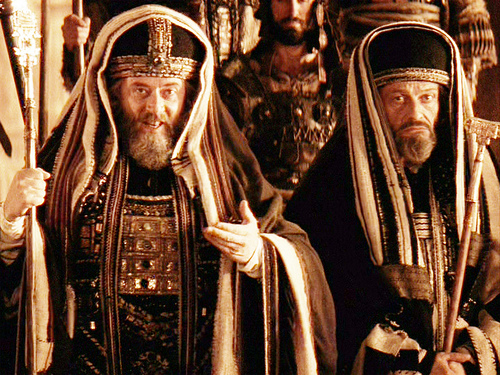
    Caiaphas had no idea how prophetic his words were.  Actually, as far as the intent of his words went, they were nothing but selfish.  The Jews didn’t want to lose their standing with the Romans.  As it was, they had an uneasy peace.  The Romans pretty much let them practice their religion as long as there wasn’t any trouble.  But they knew that if everyone started following Jesus, the Romans would give preference to the new way, in order to keep the peace.  The religious leaders couldn’t let that happen, so they began plotting in earnest to kill Jesus, planning to find him when he came to celebrate the upcoming feast day, which they were certain he would attend.

    It’s a time of high intrigue, and for Jesus, his hour – the hour of his Passion – is fast approaching.  That’s so clear in the Gospel readings in these last days of Lent.  In just a few hours we will begin our celebration of Holy Week, waving palms to welcome our king, and praying through his passion and death.  It is an emotional time for us as we know our God has given his life for us, the most amazing gift we will ever get.  It is also a time of sadness because we know our sins have nailed him to the cross.  The sadness of our sinfulness comes to a peak this time of year.

    But, this is where the significance of Caiaphas’s words brings us joy.  Yes, it is better for one person to die than the whole nation.  God knew that well when he sent his only Son to be our salvation.  Jesus took our place, nailing our sins and brokenness to the cross, dying to pay the price those sins required, and rising to bring the salvation we could never attain on our own.  Caiaphas was right.  It was better for one person to die than for the whole nation to die.  Amazing as it seems, that was God’s plan all along.

  • Thursday of the Fifth Week of Lent

    Thursday of the Fifth Week of Lent

    Today’s readings

    The story is quickly coming to its climax. Jesus’ claims of divinity are really starting to rile the Jews. They have placed their hope in Abraham and the prophets – great men to be sure – but seem to have forgotten about the promise of a Messiah, and so they totally miss the Christ who is standing right in front of them. It’s a sad situation, to be sure. But it is also quickly becoming dangerous for Jesus. These are the ones who will stir up the trouble at his trial and get them to release Barabbas, putting Jesus on the cross instead.

    And I feel like it’s necessary to make a quick aside here. We have heard and will hear many references to “the Jews” in John’s Gospel. This wording was used for centuries to make anti-Semitic comments and policies seem like they are legitimate, blaming the Jews for killing the Lord. But this is John’s Gospel, and Jesus is in full control. He knows what is in their hearts. The Jews may indeed want to take his life, but Jesus instead willingly lays it down. Because that was his mission; that is his mission – to give himself completely for our salvation, and the salvation of the whole world. And honestly, if we want to blame someone for sending Jesus to the cross, we know only too well that we don’t have to look any further than our own hearts.

    What we see in today’s Liturgy of the Word, ultimately, is that God made a promise to Abraham, and, in the person of Jesus Christ, kept that promise. Abraham was made a mighty nation, God’s promises have always been kept, and we have salvation in Christ. That’s our Good News today, and every day really. As we enter the somber days ahead, we have the joy of keeping the end of the story clearly in mind, that Resurrection that Abraham himself so longed to see.

  • Monday of the Third Week of Ordinary Time

    Monday of the Third Week of Ordinary Time

    Today’s readings

    This is a tough text from the Gospel today.  Jesus says that “whoever blasphemes against the Holy Spirit will never have forgiveness…”  This seems to be an incongruous statement from Jesus, who came to be all about forgiveness.  That he would withhold it from any sinner is shocking, I think.

    But we have to remember what it is that Jesus was addressing here.  The scribes who had come from Jerusalem catch up with Jesus and begin to make trouble for him.  They are being obstinate in their unbelief, even to the point of being intellectually dishonest.  They know that Satan cannot cast himself out, but that’s just what they’re accusing Jesus of being and doing.  They would rather say foolish things than to believe that Jesus came to cast out sin and forgive sinners.

    Salvation and forgiveness are a gift, and gifts must be accepted.  If one refuses to be forgiven, he or she will never have forgiveness.  If one refuses to believe that he or she needs a Savior, then he or she will never come at last to eternity.

    May we never forget how much we need our Savior.

  • The Nativity of the Lord: Mass During the Night and Mass During the Day

    The Nativity of the Lord: Mass During the Night and Mass During the Day

    Sometimes I wrestle with the question of what is the greatest feast of the Church year.  Easter comes to mind, and probably Good Friday, because it is through the events those feasts commemorate that we were saved from our sins and the possibility of eternal life in the Kingdom of God became real for us.  Lots of Church people would argue that Holy Week is the greatest time of the Church year for that very reason.  And I’m inclined to agree, except for one detail: and that detail is the feast that we celebrate tonight (today).

    Today we celebrate the mystery of the Incarnation.  It’s a great and holy mystery that tells us that God loved us so much, he couldn’t bear to live without us.  When we had gone our own way and wandered far away from him, he pursued us to bring us back.  He went so far as to become one of us: the Great and Almighty One, who is higher than the heavens and more glorious than all the heavenly hosts, this God of ours took on our frail human flesh to walk among us and touch us and bring us back to himself.  He so perfectly assumed our humanity that although he never sinned, he willingly laid down his life for us, paying the price for our sins, the price of a tortuous, ignominious death on a cross.  And far from letting death have the last word, God raised him up, gloriously throwing open the gates of the Kingdom for all to enter in.

    This, brothers and sisters, is truly a great and wonderful feast!  It’s no wonder the angels sang on that glorious night!  If it weren’t for the incarnation – Jesus’ taking on our mortal flesh – there could never be a Good Friday or an Easter, there could never be salvation, never be hope for us.  But there is.  That’s the good news that we celebrate tonight (today) and every day of our lives.

    Knowing God’s love in this way is the whole reason the Church exists.  That people would not know God’s love and not experience his friendship was so unthinkable to the early followers of Jesus that they went forth everywhere preaching the Good News of God’s love and grace.

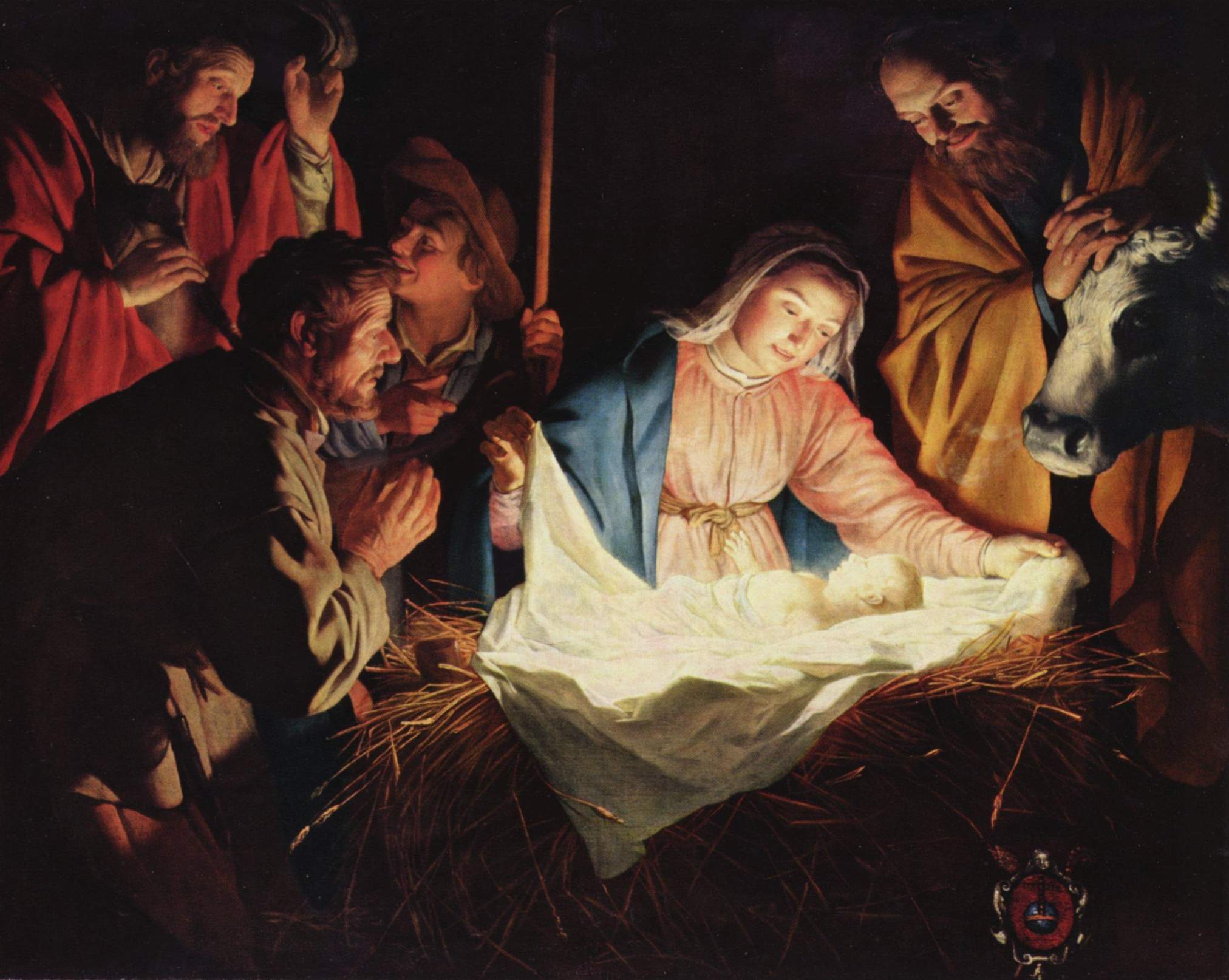
    So we come to this holy place tonight, gathered together to gaze on the gift of Christ in our Manger.  The message of this peaceful scene is that God wants to save the world.  He created us in love and for love, so he greatly desired in his grand plan that we would all come back to him one day and live forever with him in the kingdom.  But he knew that, steeped in sin as our world can be, fallen and flawed, as we individually can be, that we could never really return to him on our own.  We were – and are – too caught up in things that are not God and that are not ultimately going to bring us happiness.  So he knew that the only thing that he could do was to enter our history in a decisive way.

    And he could have done that in any way that he pleased – he is God after all: all-powerful, all-knowing and present everywhere.  John’s Gospel, though, tells us just exactly how God chose to enter our history: “And the Word became flesh and made his dwelling among us.”  He chose not just to visit us, but instead to become one of us, taking upon himself all of our weaknesses, our pain, and our sorrows.  He was born a baby: the all-powerful One taking on the least powerful stage of our existence.  He was born to a poor family and announced to an unwed mother.  The one who created the riches of the world and who himself was clothed in the splendor of the Almighty turned aside from all of it so that he could become one with his people.  Because he chose to take upon himself all that we must go through and then some, he is the way to salvation for all of us.

    The only way that the full brokenness of our human form could be redeemed was for Jesus to take on all of it when he came to save us.  That’s why his birth was so messy, why he had to be born in a manger with all the farm animals, that’s why he never had a place to lay his head in all his life.  What is amazing is that, as wretched as our earthly lives can be sometimes, God never considered himself above it all, never hesitated for a moment to take it on and fill it with grace.

    God didn’t take on our form so that he could become less, he took on our form so that we could become more.  So, yes, God becomes one of us and takes on all of our infirmities and weaknesses.  But in doing that, we ourselves become more than we could ever be on our own.  Our lowliness is filled with grace, our sadness is filled with rejoicing.  That was always the plan God had for us.

    That’s our story.  It’s really important that we don’t forget it, even more important that we tell it to everyone we can.  It’s the best and really only reason for us to celebrate so joyfully every December the 25th.  Our story is what makes us who we are, what defines us as a Church and as a people.  The story of Christ’s Incarnation is what makes us a living sign of God’s love in the world.  That is who we really are, despite the world’s attempts to define us as something less.  The great gift of God’s love shines glorious light into every dark corner of our world and of our lives and calls us broken ones to redemption and healing and joy.

    It’s crucial for us to live that story and not accept what others want to make us.  If you’re joining us for the first time tonight, or if you’re visiting family, or if you came here looking for something more for Christmas, then we welcome you and we hope that you experience Christ’s presence among us.  We hope that you find in your time with us and with the Lord tonight (today) a desire to go deeper in life and find the meaning of it all.  Please know that we would be glad to help you in that journey, and see our bulletin, or one of us, to point you in the right direction.  If you’re an active member of our parish family, then I hope the message that you receive tonight and your encounter with Christ tonight leads you to a desire to share Christ’s presence with others.

    The Incarnation – the birth and personhood of Jesus Christ – along with his Passion, death and Resurrection, changes everything.  When we all rediscover Christ, the Incarnation can change us too, so that we may then go out and change the world around us.  When that happens in us, the angels will sing just as joyfully now as they did on that most holy night.  Glory to God in the highest, and on earth peace to people of good will!
  • Monday of the Third Week of Advent

    Monday of the Third Week of Advent

    Today’s readings

    The whole progression of Advent is one that has always captured my imagination.  I see Advent as a kind of dawning of a new day.  Just as the day doesn’t come all at once, so Advent progresses and we see the coming of Jesus ever more gradually as we participate in each day’s Liturgy of the Word.  At the same time though, night doesn’t last forever, and the day arrives more quickly than we might be ready for.  I think that’s kind of where we are at this sort of late-middle point of Advent.

    Today we see some glimmers of light.  The prophet Balaam speaks of a star advancing from Jacob and a spear from Israel.  This wasn’t terribly good news for Balaam’s people, but it sure is for us.  The hope of all the earth was in the somewhat distant future for the people of Israel, and even though in the Gospel that hope was standing right in front of them, the Truth of it all had not yet dawned on the chief priests and elders.

    Tomorrow we begin a special part of Advent, marked by reflection on the “O Antiphons” which we famously sing in the hymn “O Come, O Come, Emmanuel” and which we pray during Evening Prayer each day.  The Liturgy is pretty strict during these days and calls for us to focus on the coming of Christ and his manifestation among us in so many wonderful ways.

    So the question is, have we been progressing faithfully this Advent?  Has the light been made ever brighter in our hearts?  Are we progressing toward the dawning of the day, or will it happen all at once and find us unprepared?  This is the time to light the lamp if we’ve been keeping it dim.  This is the time to wake from our sleep.  Our salvation is near at hand.