Tag: salvation

  • Tuesday of Holy Week

    Tuesday of Holy Week

    Today’s readings

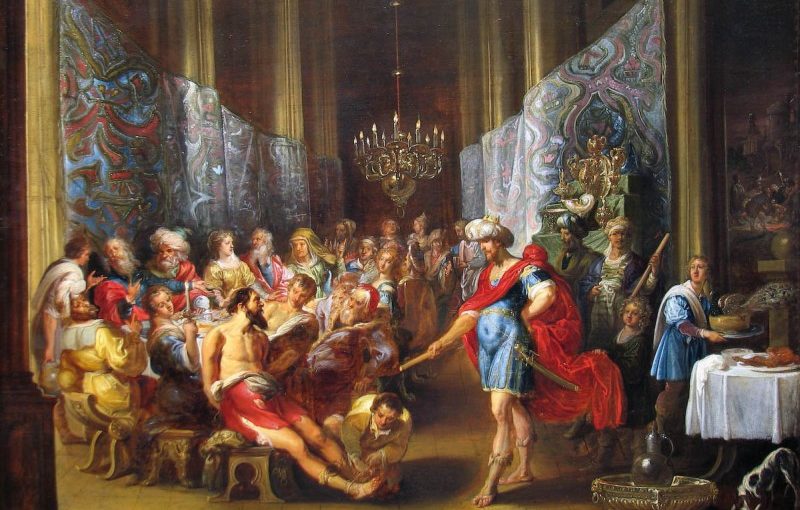
    Today’s Gospel reading contains four of the most chilling words in all of holy Scripture: “And it was night.”  Those narrative words come just after Judas takes the morsel and leaves the gathering.  But the Beloved Disciple didn’t include those words to tell us the time of day.  In John’s Gospel, there is an overriding theme of light and darkness.  The light and darkness, of course, refer to the evil of the world that is opposed by the light of Christ.

    So John isn’t just telling us what time it is.  When he says “and it was night,” he is telling us that this was the hour of darkness, the hour when evil would come to its apparent climax.  This is the time when all of the sins of the world have converged upon our Lord and he will take them to the Cross.  The darkness of our sinfulness has made it a very, very dark night indeed.

    But we know the end of the story.  This hour of darkness will certainly see Jesus die for our sins.  But the climax of evil will be nothing compared to the outpouring of grace and Divine Mercy.  The darkness of evil is always overcome by the light of Christ.  Always.  But for now, it is night.

    In these Holy days, we see the darkness that our Savior had to endure for our salvation. May we find courage in the way he triumphed over this fearful night and burst forth with him to the brilliant glory of morning.

  • Palm Sunday of the Passion of the Lord

    Palm Sunday of the Passion of the Lord

    Today’s readings

    And so it begins.  We who have been keeping Lent these forty days are coming to Lent’s fulfillment.  Over the course of this week, we will gather several times to mark the events that have won our salvation.  On Thursday, we will gather at 7pm to celebrate the Lord’s Supper: that night when he gave us the Eucharist and the priesthood so that he would be among us until the end of time.  On Friday, we will gather at 3pm to revisit the Lord’s Passion, to venerate the Cross which was the altar on which he sacrificed his life for ours.  And on Saturday, we will gather on the piazza at 8pm to recount the stories of our salvation and welcome the Resurrection, baptizing new believers into the faith, and rejoicing with all of the Church on that most holy night.  No Catholic should ever miss these incredible liturgies: they are in fact the reason we are a Church and they highlight our mission in the world.  If you struggle to find the meaning in life, these celebrations will help you on the way.

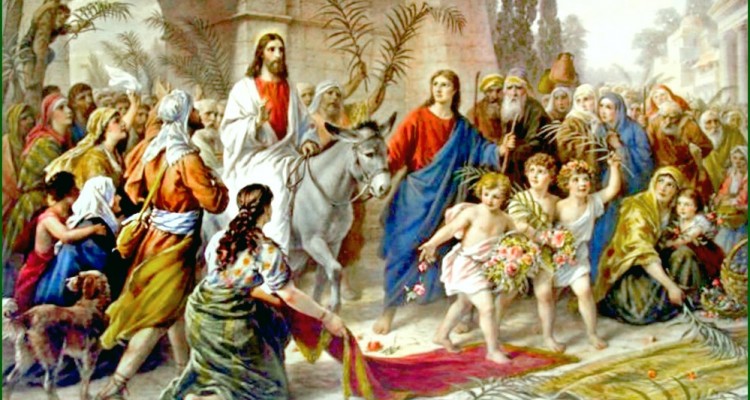
    And we begin that on a seemingly triumphant note.  Jesus enters Jerusalem, the city of the center of the Jewish religion, the city he has been journeying toward throughout the gospel narrative, and he enters it to the adulation of throngs.  Cloaks are thrown down in the street, the people wave palms and chant “Hosanna.”  This is it, isn’t it?  It seems like Jesus’ message has finally been accepted, at least by the crowds who have long been yearning for a messiah to deliver them from foreign oppression.

    Only that wasn’t the kind of salvation Jesus came to offer.  Instead, he preached forgiveness and mercy and real justice, and he healed people from the inside out.  He called people to repentance, to change their lives, to hear the gospel and to live it every day.  He denounced hypocrisy, and demanded that those who would call themselves religious reach out in love to the poor and those on the margins.  It wasn’t a message that was particularly welcome; it wasn’t the message they thought the messiah would bring.

    And that’s what brings us to the one hundred and eighty degree turn we experience in today’s second gospel reading, the reading of our Lord’s Passion and death.  Enough of this, they say; the religious leaders must be right: he must be a demon, or at least a troublemaker.  Better that we put up with the likes of Barabbas.  As for this one, well, crucify him.

    Who are we going to blame for this?  Whose fault is it that they crucified my Lord?  Is it the Jews, as many centuries of anti-Semitism would assert?  Was it the Romans, those foreign occupiers who sought only the advancement of their empire?  Was it the fickle crowds, content enough to marvel at Jesus when he fed the thousands, but abandoning him once his message was made clear?  Was it Peter, who couldn’t even keep his promise of standing by his friend for a few hours?  Was it the rest of the apostles, who scattered lest they be tacked up on a cross next to Jesus?  Was it Judas, who gave in to despair thinking he had it all wrong?  Was it the cowardly Herod and Pilate who were both manipulating the event in order to maintain their pathetic fiefdoms?  Who was it who put Jesus on that cross?

    And the answer, as we well know, is that it’s none of those.  Because it’s my sins that led Jesus to the Way of the Cross.  It’s my sins that betrayed him; it’s my sins that have kept me from friendship with God.  And so he willingly gave his life that I might have life.  And you.

    He gave himself for us.

  • Thursday of the Fifth Week of Lent

    Thursday of the Fifth Week of Lent

    Today’s readings

    The story is quickly coming to its climax. Jesus’ claims of divinity are really starting to rile the Jews. They have placed their hope in Abraham and the prophets – great men to be sure – but seem to have forgotten about the promise of a Messiah, and so they totally miss the Christ who is standing right in front of them. It’s a sad situation, to be sure. But it is also quickly becoming dangerous for Jesus. These are the ones who will stir up the trouble at his trial and get them to release Barabbas, putting Jesus on the cross instead.

    And I feel like it’s necessary to make a quick aside here. We have heard and will hear many references to “the Jews” in John’s Gospel. This wording was used for centuries to make anti-Semitic comments and policies seem like they are legitimate, blaming the Jews for killing the Lord. But this is John’s Gospel, and Jesus is in full control. He knows what is in their hearts. The Jews may indeed want to take his life, but Jesus instead willingly lays it down. Because that was his mission; that is his mission – to give himself completely for our salvation, and the salvation of the whole world. And honestly, if we want to blame someone for sending Jesus to the cross, we know only too well that we don’t have to look any further than our own sinful hearts.

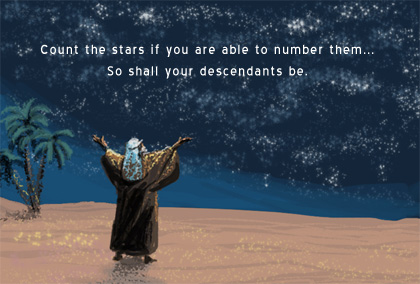
    What we see in today’s Liturgy of the Word, ultimately, is that God made a promise to Abraham, and, in the person of Jesus Christ, kept that promise. Abraham was made a mighty nation, God’s promises have always been kept, and we have salvation in Christ. That’s our Good News today, and every day really. As we enter the somber days ahead, we have the joy of keeping the end of the story clearly in mind, that Resurrection that Abraham himself so longed to see.

  • Tuesday of the Fifth Week of Lent

    Tuesday of the Fifth Week of Lent

    Today’s readings
    “When you lift up the Son of Man,
    then you will realize that I AM…”

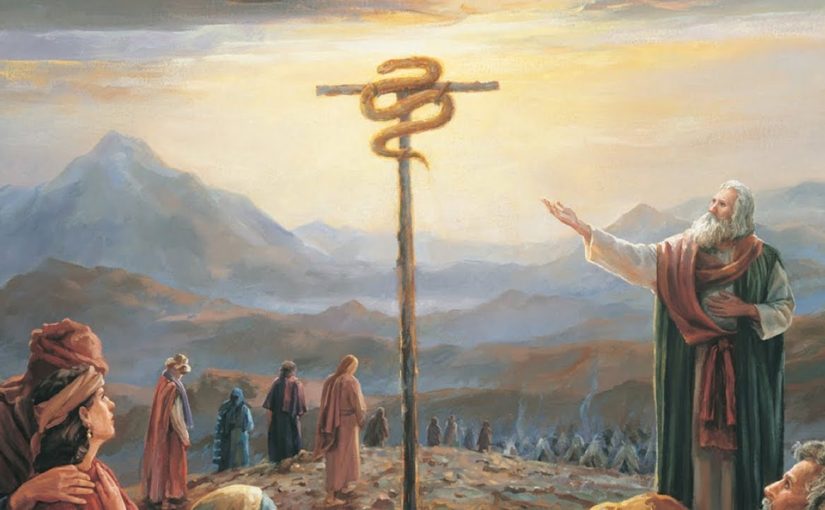
    Just as the saraph serpent was lifted up on a pole in the desert for the people to see, and thus live, so the Son of Man, Jesus Christ, was lifted up on the cross for the salvation of the world.  In these late Lenten days, the Church is looking to the Cross, looking toward Jerusalem, knowing that the hour of the Lord, in which he would pay the dear price of our salvation, is near at hand.

    With hearts filled with gratitude, we come to this Eucharist, with our eyes fixed on our Lord lifted up for us, who pours himself out for us again and still.  When we see him lifted up, we remember that he is “I AM,” our crucified and risen Lord, and whenever we look to him, we are saved from all that ails us, from our sins and brokenness, and we ourselves are lifted up to eternal life.

    Our challenge in these late Lenten days is to be that icon of the Cross, like the saraph serpent, to whom people can look and find healing and salvation. We have to be the image of Christ crucified so that the world can become whole.

  • Monday of the Second Week of Ordinary Time

    Monday of the Second Week of Ordinary Time

    Today’s readings

    One of the great problems that many people have with living the spiritual life is that they want it on their own terms.  So often, we think we know what God wants, or even worse, we want God to want what we want.  And so we act according to our own desires instead of God’s, and then we’re surprised when it doesn’t work out.  If we’re honest, we all struggle with this on some level from time to time in our lives.

    In today’s Gospel, the Pharisees expected the disciples of Jesus to fast.  But Jesus hadn’t asked for fasting, he asked his disciples to follow.  The Pharisees couldn’t see that, and they complained about the actions of Jesus’ disciples rather than focusing on their own spiritual lives and what God wanted from them.  They wanted everyone to be religious in the same way they were, including, quite frankly, God himself.

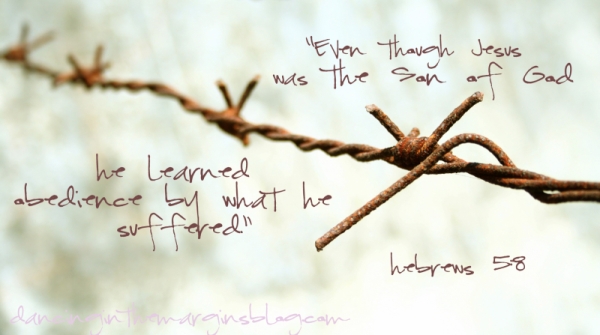
    Juxtaposed against this is the description of Jesus as a servant in the letter to the Hebrews.  Jesus is the Son of God who could have insisted on his glory and expected everyone to fall into line or be damned.  But that was not the Father’s will, and so for him, that is not his will either.  Instead, he suffered, learned obedience, and became the source of salvation for all of us.

    We are all asked by God to do something all the time.  It’s not up to us to decide what God wants or how he wants us to do it.  Our task as disciples is to follow, to obey the Lord.  Because that’s the only way we’re ever going to triumph over sin and death, the only way that we will ever be truly happy, the only way that we will find our salvation.

  • Thursday of the Thirty-first Week of Ordinary Time

    Thursday of the Thirty-first Week of Ordinary Time

    Today’s readings

    Today’s Gospel calls us to examine our perspective. Jesus asks, “What man among you having a hundred sheep and losing one of them would not leave the ninety-nine in the desert and go after the lost one until he finds it?” Well, those men he talked to were shepherds, or had shepherds in their family, so they would have responded “nobody would do that!” Why on earth would they risk losing the other ninety-nine sheep to find the lost one?

    And as far as the coin goes, why bother staying up all night? It would probably have cost more to light the lamp and search all night than the coin was worth. It would be wiser to wait until she had the morning light and could find it easily.

    But here’s the perspective part: God is not like us. Every sheep among us is important, and he will relentlessly pursue us individually until he has us all in the sheepfold. And if we’re lost, he’s going to light a lamp and stay up all night until he has us back. For him, one of us is every bit as important as the other ninety-nine. Even if our own self-image is poor, we are a treasure in God’s eyes.

    And that’s all well and good, but we always have to ask ourselves why the Church gives us this reading again in the closing days of the Church year. We hear these kinds of parables typically in the summer months, when the Church wants us to see that God loves us and wants us to be his disciples. But hearing the parables in these days, there’s a little more urgency. Time is running short, and it’s time for the lost ones to be found and gathered up and celebrated. These waning days of the Church year are a foreshadowing of the end of time, and so we need to cooperate with God in making the urgent message of God’s love known in every time and place.

    And so that’s what the Kingdom of heaven is like. It’s a relentless pursuit and a flurry of activity until we are all back where we belong. Once we are all with God, the joyful celebration can continue, knowing that we are all back where we were always meant to be.

  • Thursday of the Twentieth Week of Ordinary Time

    Thursday of the Twentieth Week of Ordinary Time

    Today’s readings

    This morning’s Gospel parable is admittedly a bit of a head scratcher. It almost seems to portray our God in a rather unfavorable light, comparing him to a capricious king who destroys whole cities after being snubbed by some invited guests, and then tosses out a visitor who seems to have come to the banquet poorly dressed. But obviously, that surface-level reading of the parable is inadequate, and the invitation it brings is worth reading deeper.

    So, put plainly, the banquet is the Eucharist, given for all. The wedding is the marriage of God with his people, which makes us one with him and opens up the possibility of eternity for those who accept it. Those guests who refused to come were the leaders of the Jewish people, who should have been looking for the feast and have welcomed it with eager longing. But instead they mistreated and murdered the servant-messengers, who were the prophets who announced God’s reign and helped forge the covenant.

    So those pulled in off the streets to share in the banquet are everyone else who hears the Word of God and responds to it. The guest thrown out for improper attire are those who accept the invitation of Christ with their lips, but remain clothed in the filthy garments of worldly desire and ambition instead of giving themselves to the marriage completely.

    So, if it’s not already obvious, we are among those pulled in off the streets. We have heard the Word of God and know his desire to be one with us. The question is, what kind of garments have we been wearing? Are we clothed in that white garment of pure desire for God that is given us in Holy Baptism, or have we cast that beautiful vesture aside for the filth of the world?

  • Thursday of the Twelfth Week of Ordinary Time 

    Thursday of the Twelfth Week of Ordinary Time 

    Some people say all you need to do is make a one-time decision to accept Jesus as your personal Savior and you’re saved. If salvation were something magical that came about as the result of just saying a simple prayer, once and for all, then why wouldn’t everyone do that? The fact is, salvation is hard work. It was purchased at an incredible price by Jesus on the cross. And for us to make it relevant in our lives, we have work to do too. Not the kind of work that earns salvation, because salvation is not earned, but the kind of work that appropriates it into our lives.

    People who are saved behave in a specific way. They are people who take the Gospel seriously and live it every day. They are people of integrity that stand up for what’s right in every situation, no matter what it personally costs. They are people of justice who will not tolerate the sexist or racist joke, let alone tolerate a lack of concern for the poor and the oppressed. They are people of deep prayer, whose lives are wrapped up in the Eucharist and the sacraments, people who confront their own sinfulness by examination of conscience and sacramental Penance. They are people who live lightly in this world, not getting caught up in its excess and distraction, knowing they are citizens of a heaven where such things have no permanence. Saved people live in a way that is often hard, but always joyful.

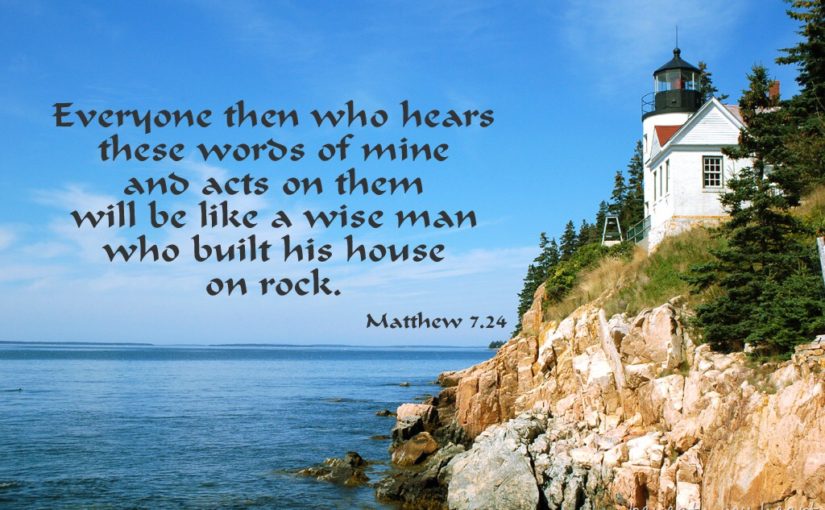
    Not everyone who claims Jesus as a personal Savior, not everyone who cries out “Lord, Lord,” will enter the kingdom of heaven. That’s what Jesus tells us today. We have to build our spiritual houses on the solid rock of Jesus Christ, living as he lived, following his commandments, and clinging to him in prayer and sacrament as if our very life depended on it. Because it does. It does.

  • Easter Sunday of the Resurrection of the Lord: The Mass of Easter Day

    Easter Sunday of the Resurrection of the Lord: The Mass of Easter Day

    Today’s readings (I actually opted to use the Gospel of the Vigil, Luke 24:1-12, which is permitted)

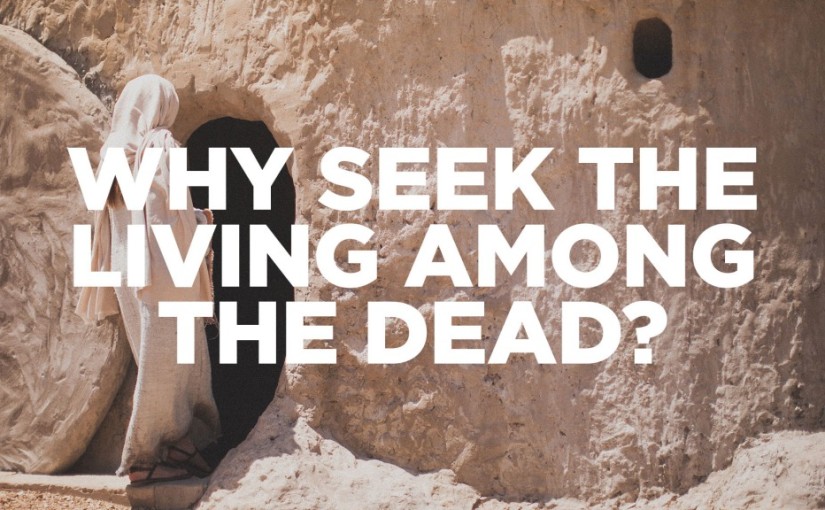
    “Why do you seek the living one among the dead?”

    That was the question the men in white garments asked the women in today’s Gospel reading.  This is an important question for all of us people of faith on this Easter day.  Because we often seek life among the dead.  Jesus came to change all of that.

    To be honest, it wasn’t even a fair question to ask of those women of faith.  Oh, it’s easy for us to know that Jesus wasn’t in the tomb – we have a couple of thousand years of Church teaching to lead us to the right conclusions.  But they, and the disciples, had not been given any road maps or instruction sheets.  They didn’t know what was going to happen and when, and they were puzzled.

    All they knew is that Jesus, the one they had been devoted to, had been arrested, put through a farce of a trial, and had been killed in the most horrible, humiliating way possible, a death that was reserved for the most obdurate of criminals.  To say that they were saddened and disappointed and confused and frightened – well those emotions just slightly scratched the surface.  So they come to the tomb – the place where they had seen Jesus last – to prepare his body for burial.  The stone was rolled away from the entrance of the tomb, which was odd, because it had taken several men to seal it up, and when they went in to the tomb, Jesus’ body was not there.  They had to be thinking, “Now what?”

    They then meet the two mysterious men who ask them, “Why do you seek the living one among the dead?”  Again, this is a startling question.  They didn’t think they were seeking a living one, did they?  No, they had just seen their friend crucified and placed in the tomb.  They carefully noted where he was buried, and now they had come to complete his burial.  They had abandoned hope, perhaps, that he was the living one.

    But they are told to remember what Jesus had said to them.  And when they thought about it, things finally started to make some sense.  He had told them that he would have to suffer and die and rise again, and now they can see that that is what must have happened.  So they go to tell the Eleven apostles what they had seen.  But for them, the story seemed like nonsense and they didn’t believe.  Only Peter comes to believe, after he goes to see the empty tomb himself.

    It’s time for them to stop looking for the living one among the dead.  They will come to see him risen and walking among them in the days to come.  And that will reinvigorate their faith and help them come to see – finally – what Jesus has been trying to tell them ever since they met him.  There is only one way to come to new life, only one way to rise up out of the grave, only one way to have sins forgiven, and that is through the mercy of our God in the person of Jesus Christ.  He became one of us, he died the death we deserved to pay the price for our sins, and he has risen from the dead in order that we may have eternal life, forever shattering the power sin and death have – or rather, had – over us.

    So we need to stop looking for the living one among the dead too.  We’ll never find real life by burying ourselves in work or careers.  We’ll do nothing but damage our life if we seek to find it in substance abuse.  We’ll never find our life by clinging to past hurts and resentments.  We are only going to find life in one place, or more precisely in one person, namely, Jesus Christ. We must let everything else – everything else – go.

    Today, Jesus Christ broke the prison-bars of death, and rose triumphant from the underworld.  What good would life have been to us, if Christ had not come as our Redeemer?  Because of this saving event, we can be assured that our own graves will never be our final resting places, that pain and sorrow and death will be temporary, and that we who believe and follow our risen Lord have hope of life that lasts forever.  Just as Christ’s own time on the cross and in the grave was brief, so our own pain, death, and burial will be as nothing compared to the ages of new life we have yet to receive.  We have hope in these days because Christ is our hope, and he has overcome the obstacles to our living.  We no longer need to seek the living one among the dead.

    The good news today is that we can find the living one today and every day of our lives, by coming to this sacred place. It is here that we hear the Word proclaimed, here that we partake of the very Body and Blood of our Lord. An occasional experience of this mystery simply will not do – we cannot just partake of it on Easter Sunday.  No; we must nurture our faith by encountering our Risen Lord every day, certainly every Sunday, of our lives, by hearing that Word, and receiving his Body and Blood.  Anything less than that is seeking the living one among the dead.

  • The Easter Vigil in the Holy Night:  The Triumph of the Cross

    The Easter Vigil in the Holy Night: The Triumph of the Cross

    Tonight’s readings

    “You shall be my people, and I will be your God” (Ezekiel 36:28). I love that last line from the last of the Old Testament readings we heard tonight. There is a covenant, there has always been a covenant, there always will be a covenant. God created us in love, and he loves us first and best. No matter where we may wander; no matter how far from the covenant we may stray, God still keeps it forever. We will always be his people and he will always be our God. If I had to pick a line that sums up what we’re here for tonight, that would be it.

    Over the past couple of days, as we have observed this Sacred Paschal Triduum, which comes to its denouement tonight in this Vigil of vigils, I have reflected on the Cross. I did that because it is the Cross that Holy Mother Church sets before us during the Triduum, from the lines of the Entrance Antiphon way back on Holy Thursday Evening:

    We should glory in the Cross of our Lord Jesus Christ,
    i
    n whom is our salvation, life and resurrection,
    through whom we are saved and delivered.

    On Thursday, I reflected on the scandal of the Cross, rejecting the idea that going to the Cross made our God any less, and instead acknowledging that the real scandal was the reason he went there, which was for my sins. Yesterday, on Good Friday, I reflected on the Way of the Cross, noting that our Savior willingly took up the Cross so that you and I might have life, and I reflected on the reality of our own little crosses and the way that we disciples have to travel. Tonight, I would like to conclude that reflection on the Holy Cross, which is our glory, by celebrating the Triumph of the Cross. We actually celebrate that on September the 14th each year, but the reason for its Exaltation is what we come to experience tonight.

    It might seem a little odd to reflect on the Cross – triumph or not – on this holy night. I mean, surely we’ve moved on, haven’t we? We came here for resurrection and want to get on with our lives. Just like we tend to rush through our grieving of loved ones – to our own psychological and spiritual peril, by the way – so too we want to rush through our Lent and particularly our Good Friday and Holy Saturday, so that we can eat our Peeps and chocolate bunnies and call it a day.

    But we disciples dare not let it be so. Because certainly we know how we got here to this moment. We know that we don’t get an Easter Sunday without a Good Friday, that we can’t have resurrection if there hasn’t been death, that we can’t have salvation if there hasn’t been a sacrifice.

    And there sure was a sacrifice. Our Lord suffered a brutal, ugly death between two hardened criminals, taking the place of a revolutionary. He was beaten, humiliated, mistreated and nails were pounded into his flesh, that flesh that he borrowed from us. He hung in agony for three hours and finally, when all was finished, he cried out in anguish and handed over his spirit. Placed in the tomb, he descended into hell. Collecting the souls of the blessed ones of old, he waited while earth mourned and disciples scattered and everyone wondered what happened to this Christ.

    And then came the morning. The Sabbath was over, and the sun was rising in the east on the first day of the week, and the women came with spices to prepare our Lord for burial. But they couldn’t: he has been raised! He is not here! Our Lord is risen and death is defeated! The menacing, ugly Cross has become the altar of salvation! The Cross, that instrument of horror, has triumphed over every darkness thrown at it, and we can do – should do – no less than praise our God!

    We have journeyed with our Jesus for three days now. We ate with him, we prayed through the night with him, some of us at seven churches. We saw him walk the way of the Cross and tearfully recalled his crucifixion. We reverenced the Cross, joining our own crosses to his. Now we’ve stayed up all night and shared the stories of our salvation, with eager excitement at the ways God has kept that covenant through the ages. A roaring fire shattered the darkness, and a candle was lit to mingle with the lights of heaven. Then grace had its defining moment as Christ shattered the prison-bars of death and rose triumphant from the underworld.

    Our birth would have meant nothing had we not been redeemed. If we were born only to live and die for this short span of time, how horrible that would have been. But thanks be to God, the sin of Adam was destroyed completely by the death of Christ! The Cross has triumphed and we are made new! Dazzling is this night for us, and full of gladness! Because our Lord is risen, our hope of eternity has dawned, and there is no darkness which can blot it out. We will always be God’s people, and he will always be our God!

    We should glory in the Cross of our Lord Jesus Christ,
    in whom is our salvation, life and resurrection,
    through whom we are saved and delivered.

    He is risen! He is risen indeed! Alleluia!