Category: Blessed Virgin Mary

  • The Solemnity of the Annunciation

    The Solemnity of the Annunciation

    Today’s readings

    Fear keeps us from doing all sorts of things the Lord wants for us.  If we would truly let go of our fear and cling to our God, just imagine what he could do in us and through us.  Ahaz was King of Israel, a mighty commander, but yet was so afraid of God and what God might do that he refused to ask for a sign.  He was such an ineffective leader that he had good reason to be afraid.  Perhaps he knew how far he had strayed from God’s commands, and he was afraid to engage God on any level.  He would prefer to cut himself off from God rather than give himself over to the amazing power of God’s presence in his life and his rule.

    But his weakness did not disrupt the promise.  In the fullness of time, God’s messenger came to a young woman named Mary and proposed to accomplish in her life the sign for which Ahaz was too afraid to ask.  The difference, though, was that Mary heeded the initial words of the angel that have resounded through Salvation history ever since: “Do not be afraid.”  And, thanks be to God, Mary abandoned her fear and instead sang her fiat, her great “yes” to God’s plan for her, and for all of us.  “Behold, I am the handmaid of the Lord.  May it be done to me according to your word.” 

    And we know what happened from there.  Mary certainly knew that none of that could be accomplished through her own efforts, but she absolutely knew that God could do whatever he undertook.  Nothing would be impossible for God, and she trusted in that, and because of that, we have the great hope of our salvation.  We owe everything to Mary’s cooperation with God’s plan.

    And so the promise comes to us.  We have the great sign of which Ahaz was afraid, but in which Mary rejoiced.  We too are told that God can accomplish much in our own lives, if we would abandon our fears and cling to the hope of God’s presence and action in our lives.  Can we too be the handmaids of the Lord?  Are we bold enough to say, “Here I am, Lord; I come to do your will?”  All we have to do is to remember the first thing the angel said to Mary: “Do not be afraid.”

  • The Nativity of the Lord (Vigil Mass)

    The Nativity of the Lord (Vigil Mass)

    In a town called Nazareth in Galilee, a long time ago, a girl named Mary lived with her parents, Joachim and Ann. Mary was just around fourteen years old or so.  She came from a quiet little area of the world, and just looking at Mary and her parents, you’d have to say nothing about her family was very special, although God knew that they really were!  She was engaged to be married to a man named Joseph, because that was when people got married in those days, but she wasn’t married or living with him yet.

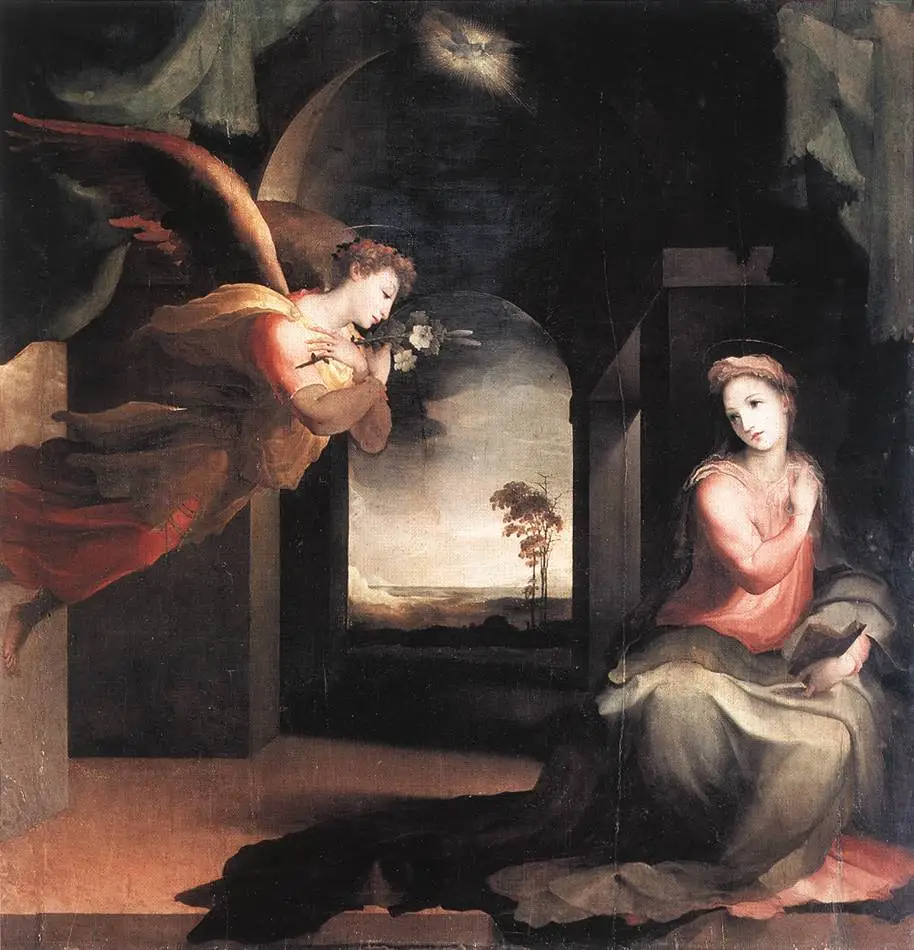
    She was busy doing her chores one day, when she was surprised by the appearance of an angel named Gabriel.  As you can imagine, the appearing of an angel can be a little frightening, but Gabriel reassured her and told her that the Lord was with her.  He said, “Hail Mary, full of grace, the Lord is with thee.” He told her not to be afraid, because God wanted her to be the mother of his Son Jesus.  Jesus would become great and would rule over the kingdom of Israel forever.  Mary was confused how she could have a baby, because she was not living with Joseph, and she didn’t have relations with any man, but the angel reassured her that all things are possible with God.  She was amazed, but she had faith, and said to the angel, “Let it happen as you have said.”

    Mary sang a hymn proclaiming how great God was, and went in haste to visit her older relative Elizabeth, who was also going to have a baby, even though she was very old.  When she got there, the baby in Elizabeth’s womb leapt for joy, and Elizabeth said, “Blessed are you among women and blessed is the fruit of your womb!” Mary stayed with Elizabeth for three months and then returned home.

    When Joseph heard that Mary was pregnant, he was confused and upset.  He didn’t understand the message from the angel, and couldn’t see how this was all God’s will and God’s doing. He was going to break off the engagement, but he had a visit from the angel too, in a dream. The angel told him not to be afraid to take Mary into his home.  And so he did. When the emperor called for a census, a time when every person in the kingdom was counted, he took Mary with him into the city of David to be counted, because that was where he was from.  

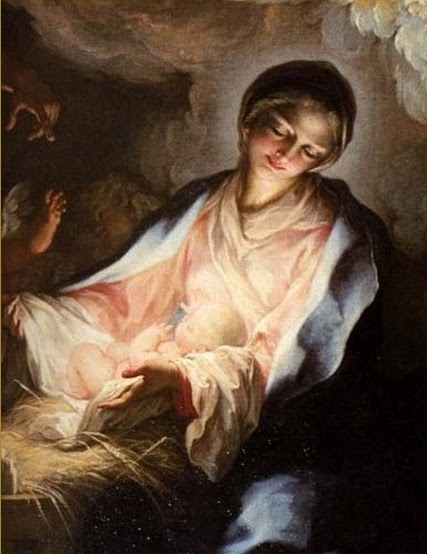
    They had a terrible time finding a place to stay during the journey, because so many people were traveling to take part in the census.  Eventually, it became urgent: on the way, Mary gave birth to her baby, and had Jesus in a manger where the animals stayed.  It was the best they could do. Many people came to visit Mary and Joseph and Jesus, and gave the baby gifts and said wonderful things about him, things Mary would never forget.  She kept all of this very close to her in her heart.

    Mary and Joseph raised Jesus and watched him become a strong, healthy, and smart young man.  One time, when the family went to Jerusalem for a visit to the holy temple, Mary and Joseph lost track of Jesus.  They were on the way home when they discovered Jesus wasn’t with them or any of their friends or family.  They were so upset and frightened!  Returning to Jerusalem, Mary and Joseph found Jesus in the temple, talking about their faith, with all of the rabbis and teachers.  He was only twelve years old!

    Eventually Joseph died, and Mary stayed near Jesus.  She watched him start his ministry, the whole reason God had sent him to earth in the first place.  He called his disciples and taught all the people.  He cured the sick and fed many hungry crowds.  He worked many miracles and always talked about how good God was, and how much God loved people, and how they should all turn back to God and turn away from the bad things they had been doing.  Mary watched as he did all these wonderful things, and she saw how faithful he was to God’s work.

    But Mary also began to see that Jesus wasn’t making everybody happy.  She saw that when he cured people on the Sabbath day, the day of rest, the leaders of the temple became angry.  She saw that when Jesus told them to take care of the poor and the hungry and the homeless instead of worrying about what day it was, the religious leaders wanted to kill him.  Mary watched as eventually they did take hold of Jesus, carried him off for a trial before Pilate the governor, and nailed him to the cross.

    At the foot of the cross, Mary stood sorrowful, knowing what a wonderful gift she and the whole world had been given in Jesus.  But Jesus took care of Mary even then, and entrusted her to the care of his friend John.  After Jesus died on the cross, Mary along with some of the other women in the group were the first ones to see that Jesus rose from the dead!  Mary stayed with the other disciples and prayed with them that the whole world would come to know the message of Jesus.  Her sorrow turned to joy as she watched the community grow and live the things Jesus had taught them.

    Those disciples were the ones who passed the faith on to us.  Because of the courage of the disciples and especially of Mary, we today can believe in Jesus and receive the gift of everlasting life from him.  Because of the faith of Mary, we can live forever with God and never have to be afraid of death or be mastered by sin.  All of this happened because Mary said to the angel back at the beginning of it all, “I am the handmaid of the Lord, let it be done to me according to your word.”

    It is good for us to hear Mary’s story, because she lived her life following Jesus.  We’re supposed to do that too.  Mary got to see Jesus face-to-face, even hold him in her arms.  We might not be able to do that, but Jesus is close to all of us as long as we let him in.  Just like they made a place for Jesus to be born in a manger, we need to make a manger for Jesus in our own hearts so that he can be born in us and always be with us.  It’s very important that we all hear that just as God sent an angel to Mary, he sends angels to us all the time.  Those angels tell us, too, that we should not be afraid because God loves us and cares for us and wants to do great things with us, just like he did with Mary.  All he needs for us to do is to say, “Let it be done to me according to your word.”
  • The Blessed Virgin Mary, Mother of the Church

    The Blessed Virgin Mary, Mother of the Church

    Today’s readings

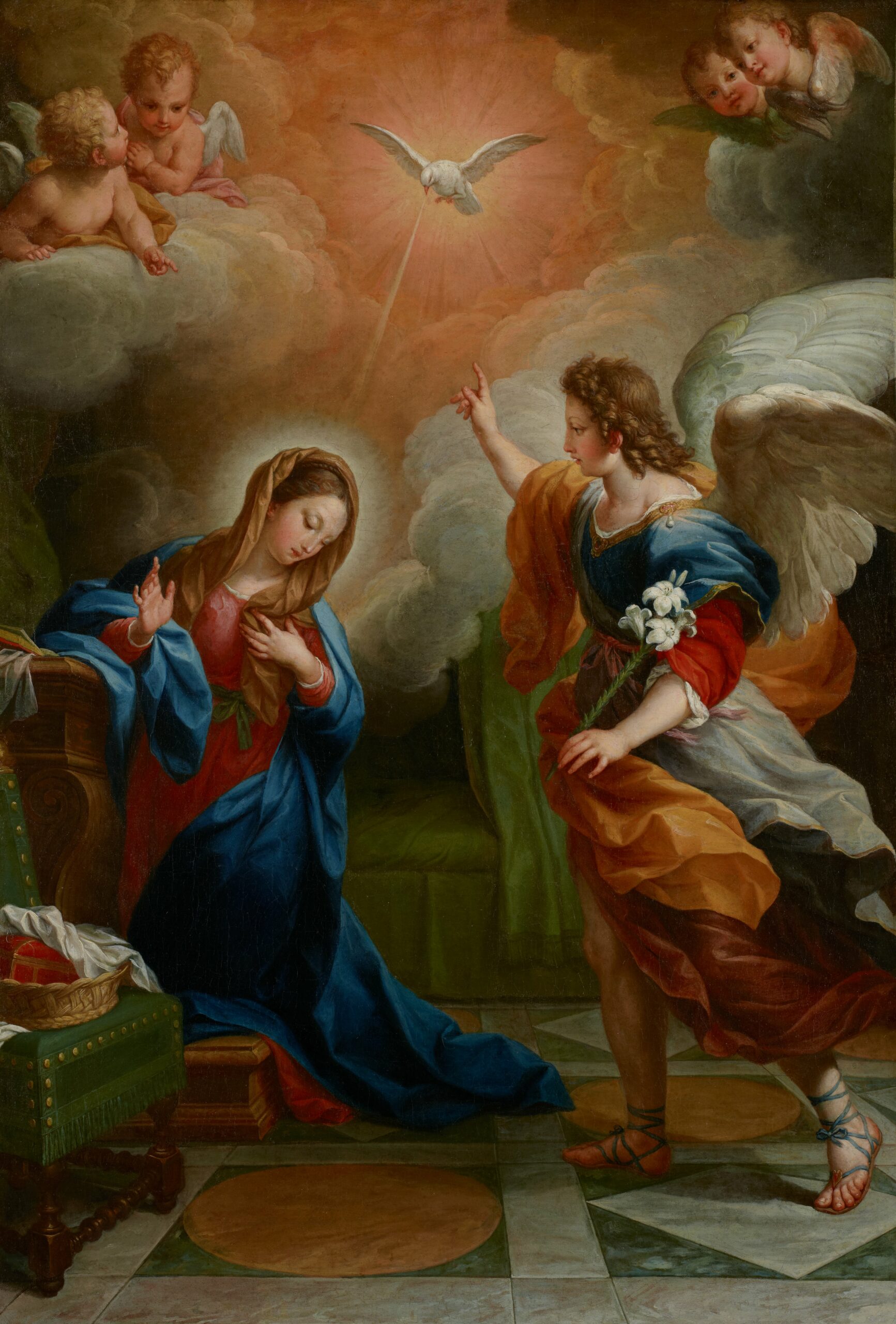
    Today, the Church celebrates the relatively new memorial of the Blessed Virgin Mary, Mother of the Church. This memorial occurs each year on the day after Pentecost. Pope Francis, of blessed memory, extended this feast to the Universal Church in 2018. Before that, it had a long history in Poland, and it was Saint John Paul II who commissioned a mosaic of Mary, Mother of the Church, at Saint Peter’s Basilica.

    The image of Mary, Mother of the Church, has its origins in the Gospels, and in Sacred Tradition. At the foot of the Cross, Jesus commended Saint John to Mary as his mother, and her to Saint John as her son. The Church has seen this as Mary welcoming all members of the Church in the person of Saint John, and relating to them as mother. This gives strength to the Tradition that since Mary is the Mother of Jesus, the head of the Body, so she is also the mother of the members of that same Body.

    Mary also prayed with the disciples in the Upper Room for the coming of the Holy Spirit, as we saw in our first reading this evening from the Acts of the Apostles, and as the Spouse of the Holy Spirit, she became the mother of the Church as it came into being. Mary is the one who guides the Church as Mother by interceding for the Church in our need, by pointing us to the leadership of her son Jesus Christ, and by giving us comfort and encouragement in times of need and crisis. Mary is indeed our Mother and because of that grace and comfort, we are truly blessed.

    And so today, we pray with Holy Church, that Mary would continue to intercede for us and bring us to her Son, Jesus. We strive to follow her example of faith and love, to serve the people God puts in our lives. We give witness by our actions that the Gospel is a valid way of life for all people, and that our Lord continues to act in our world for the good of all.

    Pray for us, O Holy Mother of God, that we may be made worthy of the promises of Christ. Mary, Mother of the Church, pray for us.

  • The Visitation of the Blessed Virgin Mary

    The Visitation of the Blessed Virgin Mary

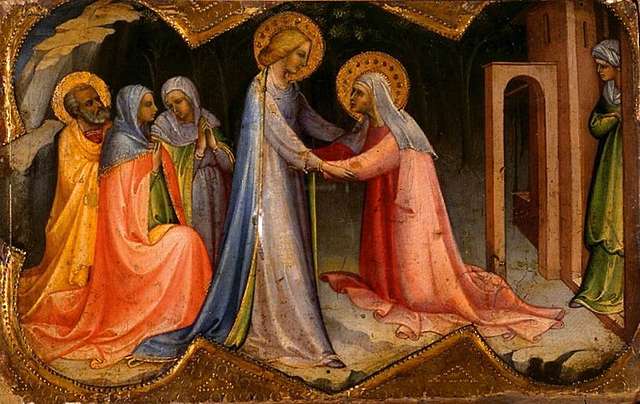
    This feast of the Visitation of the Blessed Virgin shows us the great love, joy, and faith of our Blessed Mother. Having given her fiat – her “yes” – to God, she now shows concern for her elder relative who is also with child. She goes to visit her in a great act of hospitality, which is one of the virtues Paul admonished the Romans to follow in our first reading today. Perhaps because of her faith and her great concern for Elizabeth, Elizabeth’s own child begins to rejoice in the womb, recognizing his Lord and the great woman who would bring him to human life.

    While we don’t have an exact account of what happened at that visit, we do have the Church’s recollection of its spirit, as told through Luke the Evangelist. The whole feeling of this Gospel story is one of great joy. Both Elizabeth and Mary represent the Church in the telling of the story. Because just as Elizabeth was moved by the faith and generosity of Mary, so the Church continues to be edified by her example of faith and charity. And just as Mary rejoiced in what God was doing in her life, so the Church continues to rejoice at the mighty acts of God in every person, time and place.

    The Gospel reading ends with the great song called the Magnificat which is Mary’s song of praise to God for the wonders he has done throughout all time, but also in her own life. We too should make that our own song as we continue to be overjoyed by the great acts of God, shepherding us all through our own lives, and intervening in our world and society to bring grace to a world darkened by sin. We, too, can pray with Mary, “From this day all generations will call me blessed: the Almighty has done great things for me, and holy is his Name.”

    Because Christ is risen. He is risen indeed. Alleluia!

  • The Solemnity of the Annunciation of the Lord

    The Solemnity of the Annunciation of the Lord

    Today’s readings

    Behold, I am the handmaid of the Lord.
    May it be done to me according to your word.”
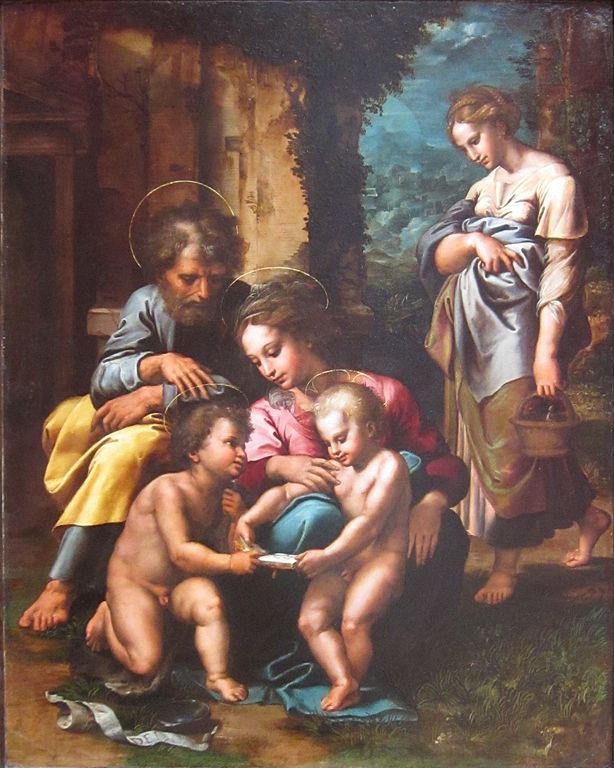
    Today, we celebrate one of the most important feasts on the Church calendar. This is when we remember the time when the Angel Gabriel came to visit Mary, and to let her know God’s plan for the world, that would involve her in a very special way. She was to have a baby, whose name would be Jesus, and he would save the world from sin and bring forth the Kingdom of God. Mary’s cooperation was necessary to bring mercy in the way God wanted it to come to us.

    Without this feast of the Annunciation, there would never have been a Christmas. Without the Annunciation, there never would have been a Good Friday or an Easter. So this feast is so very important. Mary’s cooperation meant that Jesus could be born in her, and through her, come to save us. The faithfulness of Mary, especially as a very young girl, has to be an inspiration for all of us. Mary had no roadmap or big-picture view of how this would come about, yet she is full of grace and so she is very firm in her fiat, her “yes” – her decision to exercise her faith: She says, “Behold, I am the handmaid of the Lord. May it be done to me according to your word.” Mary says yes to God’s plan for her, and because of that, God is able to say yes to us, to invite us into the Kingdom.
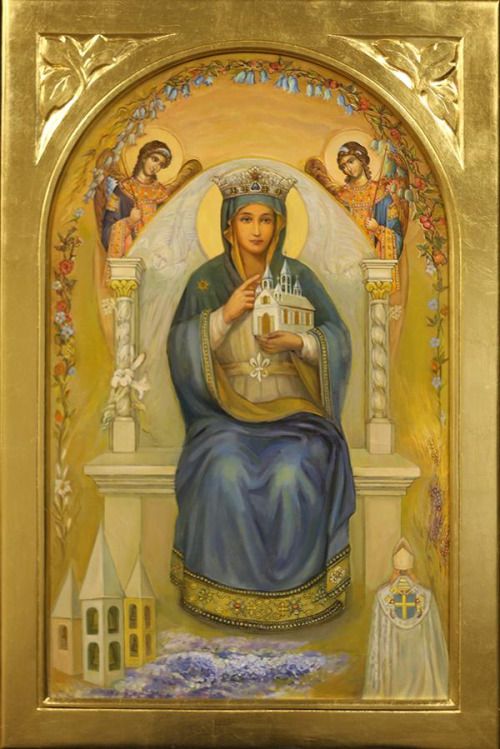
    We too are called to have the kind of faith that Mary had. And that’s because surely the glory of God is aching to be born in all of us; God wants to do important things for the world through all of us. We are called to bring Christ’s presence to every corner of our world, every place where we are. Sometimes, that can be scary, because we too don’t know what God’s work will call us to do or experience. We may be called upon to feed the hungry, or clothe the naked, or visit the sick, or shelter the homeless, or any of the works of mercy. But do we have the strength and ability to do that? Maybe not, but we are called to be Christ in those situations anyway. We might respond as Mary did at first: “How can this be?” But ultimately, we are called to respond that we are the Lord’s handmaids and accept the call with great faith.

    Mary is our patron whenever we feel overwhelmed by what we are called to do. May we rely on her intercession to guide us through the dark pathways of the unknown. May we look to her for an example of faith. May we follow her great example and let the Lord be born in us too, so that our Incarnate Lord can be made manifest in our world yet again. May we, like Mary, cry out in faith, “Behold, I am the handmaid of the Lord. May it be done to me according to your word.”
    Pray for us, O holy Mother of God,
    that we may be made worthy of the promises of Christ.

  • The Solemnity of the Blessed Virgin Mary, the Holy Mother of God

    The Solemnity of the Blessed Virgin Mary, the Holy Mother of God

    Today’s readings

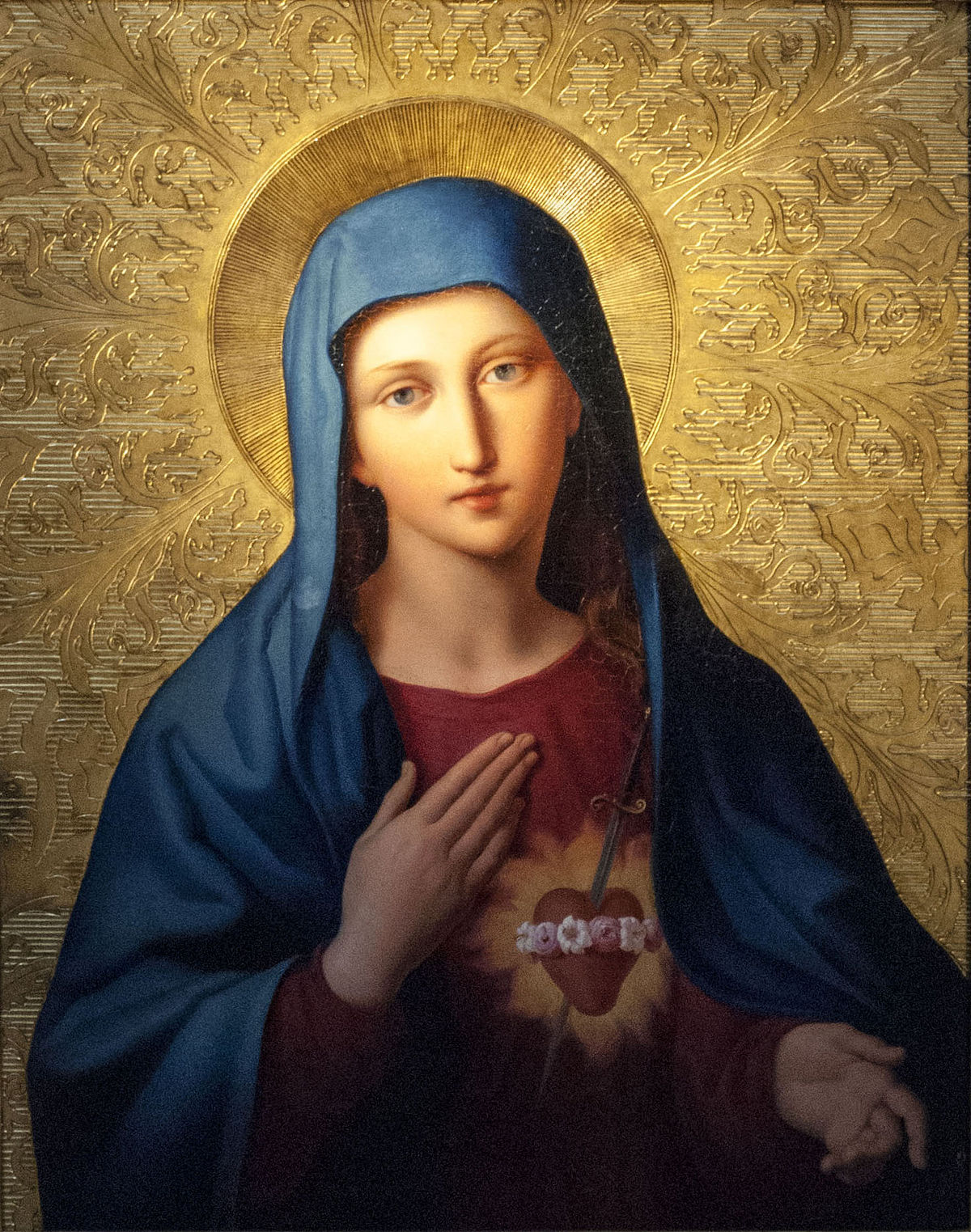
    What is it that you reflect on in your heart? Our Gospel reading today tells us that Mary, whose feast we celebrate today, reflected on all the things that happened surrounding the birth of her beloved son in her heart. I just love that detail. Mary’s most Immaculate Heart was filled with the wonders God was doing in her life and through her life. She treasured those memories and reflected on them in her heart. I think that is a wonderful spiritual model for all of us, her children.

    We ought to reflect on things in our heart more than we do, I think. Certainly I know that’s the case for me. Because I find that when I take a moment to reflect on those things, I know how blessed I am and how much God loves me. Very often, I will sit off to the side of the sanctuary before Mass in quiet prayer. As I prepare for Mass, I like to take a moment to reflect on why I am there. The Eucharist that we celebrate is the feast of thanksgiving, and I want to make sure that I bring my heart to that place of giving thanks. When I do, I find myself reflecting on God’s blessings within my heart. Often it’s the blessing of being the pastor of this wonderful parish; I’m thankful for all the great characters here who help me to know that I am loved. I’m thankful for the volunteers that help make Mass happen here at Saint Mary’s. I’m also thankful for my family, my health, and for all the ways God takes care of me.

    I want to suggest that reflecting on things in our heart might be a very solid resolution for the year ahead. Being thankful helps us to grow in faith: it helps us see God active in our lives and gives God the opening to work in our lives to bless others as well. Being thankful makes us happier people: pausing to reflect on the graces and blessings we have received helps us to know that, even in the midst of our hardest moments, God is working to pour out his love in so many ways. Being thankful helps us to make our world a better place. Gratitude is inspirational in that it helps us to know what makes us glad, and gives us the tools to make others glad and happy too. Thankful people are Eucharistic people: they bring the presence of our Lord to every person and circumstance of their lives. Reflecting on our blessings, holding them in our hearts, is a special treasure and one that we should not be so quick to dismiss.

    Mary’s life wasn’t an easy one. It was going to be marked by hardship and sadness from the very moment she said “yes” to the angel Gabriel. She was going to have to move to a foreign country to escape the wiles of the tyrant who wanted to take her son’s life. She was going to have to follow her son’s ministry and watch as so many misunderstood him and dismissed him and wanted to be rid of him. She was, in fact, going to have to watch him suffer and die.

    But Mary, full of grace, was going to also see so very much blessing. She was going to be the very first one to behold the Word of God as he came to life in her. She was going to be the very first to hold our Lord in her blessed hands. She was going to see the miracles, hear his radically inspirational preaching, and watch him change people’s lives. She was going to be among the first to behold the Resurrection and among those first disciples who brought the Church to birth.

    There was a lot for Mary to reflect on in her heart: good things and sad things, but all things that changed the world and brought salvation to the lives of all who would receive it. Mary is the mother of God the Word, according to his human nature, and as the first to receive the grace of salvation, she was able to behold it all, to take it in, and to reflect on it in her heart.

    If we want to make a real change in our lives in the year ahead, I think a good place to start is to follow the example of the Holy Mother of God and to treasure the graces and blessings that we receive in our heart. Let her example of contemplation stir up our hearts and give direction to our prayer and acts of service. The change that happens in us as we reflect with gratitude on the presence of God in our lives is one that can change our corner of the world.

    Pray for us, O Holy Mother of God, that we may be made worthy of the promises of Christ.

  • The Feast of Our Lady of Guadalupe

    The Feast of Our Lady of Guadalupe

    It’s so important to our spiritual lives that we be willing to be interrupted by the holy. If we just keep doing what we’re doing, and never take notice of what God is doing, we miss out on some pretty wonderful experiences. The apparitions of our Blessed Mother are holy interruptions, experiences that call our attention to what God is doing.

    Appropriately enough, I think, we celebrate a second of Mary’s feasts in the space of just three days. We also had the optional memorial of Our Lady of Loreto, portions of the litany of which decorate the back entrances of our church, on Tuesday. During Advent, we naturally turn our hearts in gratitude to Mary for her fiat that made possible our world’s salvation. Today, we celebrate Our Lady of Guadalupe in part because she is the patroness of all the Americas, and so, a special patron for us.

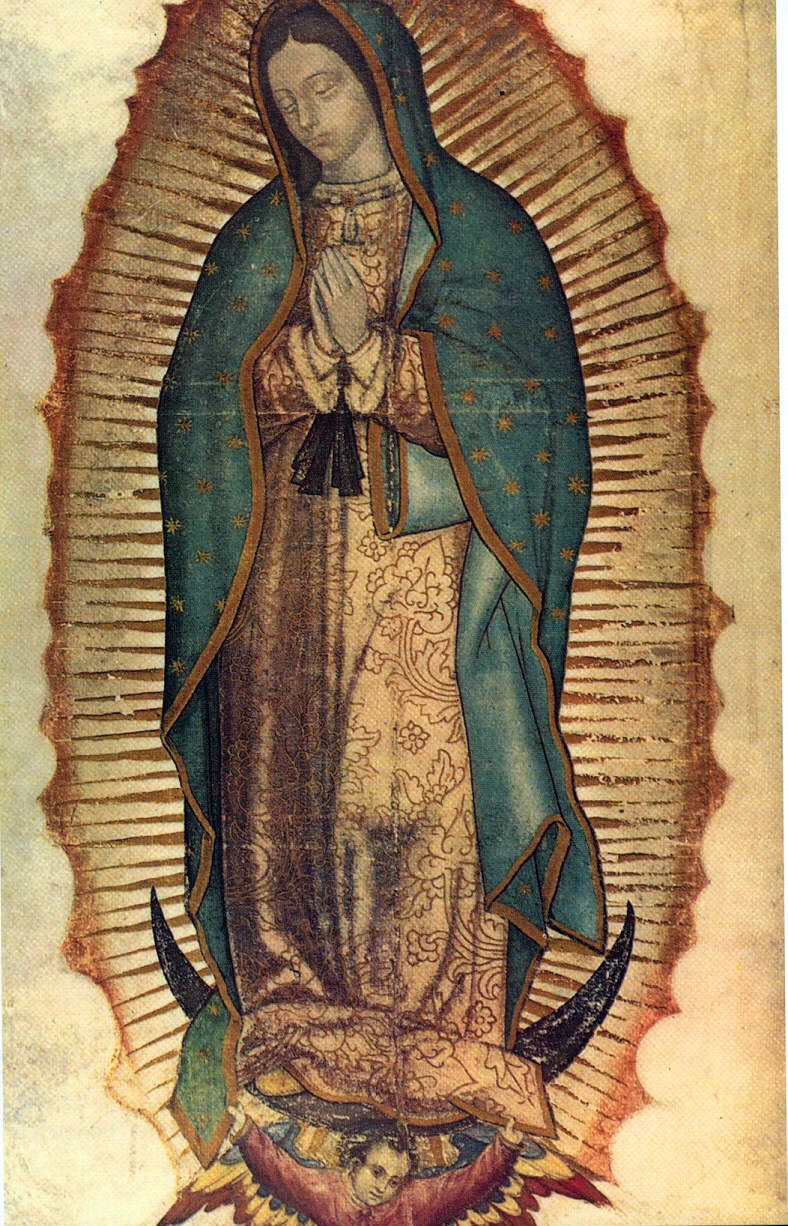
    A Native American author of the sixteenth century describes the story of our Lady of Guadalupe in today’s Office of Readings. He tells us of a Native American named Juan Diego, who was on his way from his home to worship on the hill of Tepeyac. There he heard someone calling to him from the top of the hill. When he got to the top of the hill, he saw a woman whose clothing shone like the sun. She told him that it was her desire that a church be erected on the hill so that all could worship her son Jesus. She sent him to the local bishop to plead that cause.

    The bishop didn’t believe Juan Diego’s story and sent him away. He returned to the hilltop to find the radiant Lady once again, and she told him to tell the bishop that she, the ever virgin Holy Mary, Mother of God, sent him. Again the bishop did not believe, telling him that unless he had a miraculous sign, he would not believe the story.

    At that point Juan Diego’s uncle became quite ill. Juan then set out for the local church to have a priest come to anoint his uncle. He purposely took a route around the hill at Tepeyac to avoid seeing the Lady and being detained, since the need for a priest was urgent. But of course, she met him at the side of the hill and spoke to him again. She assured him that his uncle had already been cured and sent him up the hilltop to find flowers of various kinds. He got to the top of the hill to find many Castilian roses growing there, which was odd for that time of the winter. He cut them and carried them down the hill in his tilma, a kind of mantle that he wore for warmth. She sent him to the bishop bearing the miraculous flowers as proof.

    He went confidently to the bishop and informed him that the Lady had fulfilled his request for a sign. He opened up his tilma, the flowers fell to the ground, but the great miracle was that the inside of the tilma revealed the image of our Blessed Mother, in the same manner as Juan had seen her on the hill. The bishop built the church, and devotion to Our Lady of Guadalupe, as she had referred to herself, has grown ever since. You can still see the tilma, still bearing the image of Mary, at the shrine in Guadalupe today. That’s another miracle, since it really should have deteriorated all these centuries later.

    During Advent we are blessed to have the saints interrupt us with the holy, pointing the way to Jesus. None of them does this more faithfully than his very own mother, and so we are blessed to celebrate her feast today. May Mary our mother and the mother of God, lead us one day to her Son, our Lord Jesus Christ.

    Pray for us, O holy Mother of God, that we may be made worthy of the promises of Christ. Amen.

  • The Solemnity of the Immaculate Conception of the Blessed Virgin Mary

    The Solemnity of the Immaculate Conception of the Blessed Virgin Mary

    Today’s readings

    I love that the Immaculate Conception of the Blessed Virgin Mary is celebrated during the season of Advent. Advent is a season of anticipation: God’s promises echo through the Old Testament, and in these Advent days, we see those promises coming to fruition in exciting and world-changing ways. Today’s feast is a glorious glimpse of that reality.

    We are honored today to celebrate this, the patronal feast day of our parish and of our nation. This, of course, celebrates Mary’s conception, not that of Jesus, which we celebrate on the feast of the Annunciation. Blessed Pope Pius IX instituted the solemnity of the Immaculate Conception of the Blessed Virgin Mary on December 8, 1854, when he proclaimed as truth the dogma that our Lady was conceived free from the stain of original sin.

    This feast celebrates the belief that God loved the world so much that he sent his only Son to be our Savior, and gave to him a human mother who was chosen before the world began to be holy and blameless in his sight. This feast is a sign for us of the nearness of our salvation; that the plan God had for us before the world ever took shape was coming to fruition.

    The prayer over the offerings today uses a very technical theological term to describe how Mary was born, conceived actually, without sin, and that term is “prevenient grace.” The prayer specifically says, “…Grant that, as we profess her, on account of your prevenient grace, to be untouched by any stain of sin…” Prevenient grace is the same as other kinds of grace in that it relies on the saving action of Jesus on the Cross at Calvary, dying for our sins. But prevenient grace refers to grace applied before that happened, as would have been in the case for Mary who was obviously conceived before her son was put to death. This prevenient grace relies on the fact that God loved us so much that he foresaw the sacrifice of the Cross and applied the grace of it to Mary at her conception. As the Collect prayer today said, “…as you preserved her from every stain by virtue of the Death of your Son, which you foresaw…” All of this is a very technical discussion that boils down to the fact that God will not let the constraints of time limit the outpouring of his grace. And that’s the really good news we celebrate today.

    So, I think we know why this prevenient grace, this Immaculate Conception, was necessary: the readings chosen for this day paint the picture. In the reading from Genesis, we have the story of the fall. The man and the woman had eaten of the fruit of the tree that God had forbidden them to eat. Because of this, they were ashamed and covered over their nakedness. God noticed that, and asked about it. Of course, he already knew what was going on: they had discovered the forbidden tree and eaten its fruit. They had given in to temptation and had grasped at something that was not God, in an effort to control their own destiny.

    Thus begins the pattern of sin and deliverance that cycles all through the scriptures. God extends a way to salvation to his people, the people reject it and go their own way. God forgives, and extends a new way to salvation. Thank God he never gets tired of pursuing humankind and offering salvation, or we would be in dire straits. It all comes to perfection in the event we celebrate today. Salvation was always God’s plan for us and he won’t rest until that plan comes to perfection. That is why Saint Paul tells the Ephesians, and us, today: “He chose us in him, before the foundation of the world, to be holy and without blemish before him. In love he destined us for adoption to himself through Jesus Christ…”

    And so, in these Advent days, we await the unfolding of the plan for salvation that began at the very dawn of the world in all its wonder. God always intended to provide an incredible way for his people to return to them, and that was by taking flesh and walking among us as a man. He began this by preparing for his birth through the Immaculate Virgin Mary – never stained by sin, because the one who conquered sin and death had already delivered her from sin. He was then to be born into our midst and to take on our form. With Mary’s fiat, her “yes” to God, in today’s Gospel, God enters our world in the most intimate way possible, by becoming vulnerable, taking our flesh as one like us. Mary’s lived faith – possible because of her Immaculate Conception – makes possible our own lives of faith and our journeys to God.

    Our celebration today is a foreshadowing of God’s plan for us. Because Mary was conceived without sin, we can see that sin was never intended to rule us. Because God chose Mary from the beginning, we can see that we were chosen before we were ever in our mother’s womb. Because Mary received saving grace from the moment of her conception, we can catch a glimpse of what is to come for all of us one day. Mary’s deliverance from sin and death was made possible by the death and resurrection of her Son Jesus, who deeply desires that we all be delivered in that way too.

    Pray for us, O holy Mother of God, that we may be made worthy of the promises of Christ.

  • The Most Holy Name of the Blessed Virgin Mary

    The Most Holy Name of the Blessed Virgin Mary

    Today we celebrate a new-ish feast of Mary on the American version of the Church Calendar. The feast of the Most Holy Name of Mary began in Spain in 1513 and in 1671 was extended to all of Spain and the Kingdom of Naples. In 1683, King John Sobieski, of Poland, brought an army to the outskirts of Vienna to stop the advance of Muslim armies loyal to Mohammed IV in Constantinople. After Sobieski entrusted himself to the Blessed Virgin Mary, he and his soldiers thoroughly defeated the Muslims. Pope Innocent XI subsequently extended this feast to the entire Church in commemoration of the victory.

    After the liturgical reforms of Vatican II, this memorial was removed from the calendar, but it was restored by Pope Saint John Paul II in 2002, along with the memorial of the Most Holy Name of Jesus. And so we reverence Mary’s Most Holy Name, as we do the Most Holy Name of Jesus. That’s why a humble bow of the head at the mention of their names is a pious practice, and actually a required rubric in the Liturgy.

    The Blessed Virgin Mary’s whole life was about preaching the goodness of our God, as she saw it developed so clearly in the life of her Son. Everything she said and did always led to Jesus, because Jesus is the Incarnation of God’s love. Mary’s message was and is that we are called to partner with Jesus to make the Kingdom of God known in our own time and place.

    Blessed be the name of Mary, virgin and mother.

  • The Solemnity of the Assumption of the Blessed Virgin Mary (School Mass)

    The Solemnity of the Assumption of the Blessed Virgin Mary (School Mass)

    Today’s readings

    Well, I am sure you all noticed the church looks different. Hopefully you saw that over the weekend, but if not, I’m sure when you saw it yesterday it was quite a surprise. The church really, really needed to be painted, but we didn’t just want to slap a coat of paint on the walls and ceiling. When the church was built, that’s what had to be done because there wasn’t money to do much else. So in painting the church this time, we wanted to take the opportunity to do what art in the Church has always been used to do, and that is to tell the story of the Gospel and teach us the faith. In the early days of the Church, most people could not read and write, so in order to teach the faith, people were taught to read the churches. So the artwork and the decoration of the church was meant to preach the Gospel and call people to Jesus. We wanted to do the same here at Saint Mary’s.

    So there are two major themes going on here. First and most importantly, we wanted to express the truth that this is the holiest place on our campus, the place where heaven meets earth, the place where Jesus Christ dwells with us until the end of the age. Some of you who have come to a class Mass with me have heard me say that. So the dome was painted as a night sky, complete with stars; the cupola was painted a light blue to allow natural light to reflect and illuminate the sanctuary; the Tabernacle was raised on a step, and placed on an altar with a stone top; and the reredos was painted with a stunning mural depicting the light of God coming down from heaven and enveloping us all as he calls us into his presence. The text on the upper border of the reredos says, Agnus Dei Qui Tolis Pecatta Mundi; which is Latin and it means, Lamb of God who takes away the sins of the world.

    The second theme is that our parish church is dedicated to the Blessed Virgin Mary in the Immaculate Conception. So the deep blue which support the architectural features of the sanctuary, and the earthy green on the wings of the church proclaim that Mary is Queen of Heaven and Earth. The golden rim around the “sky” above the sanctuary reminds us of her crown, and the gold rays in the ceiling symbolize her merciful love reaching out to the world.

    Along the back of the church, we have installed four “medallions” of the Blessed Virgin Mary, which ask for her intercession for our parish, our families, and our community. The text along the back “ribbon” above the doors are selections from the Litany of Loreto: Mother of Mercy, Mother of the Church, Seat of Wisdom, Help of Christians, Queen of Peace, Cause of our Joy, Holy Mother of God, and Queen of Families. These have been presented in English, Spanish, Polish, and Tagalog, some of the languages spoken by our parish family. Finally, above the doors in the center aisle, the resurrected Jesus has been cleaned by our artist, and the blue from the sky has been painted as a background. This reminds us the Ascension of Our Lord, giving us a command as we leave the church: “Go, therefore, and make disciples of all nations, baptizing them in the name of the Father, and of the Son, and of the Holy Spirit, teaching them to observe all that I have commanded you. And behold, I am with you always, until the end of the age.” (Matthew 28:19-20)

    Today we gather in this beautiful church dedicated to our Blessed Mother, to celebrate her Assumption, body and soul into heaven, to reign with her Son, Jesus. We believe that our Lord did not want any taint of death to corrupt his Blessed Mother, who was conceived without sin. What is important for us to see in this feast is that it proclaims, with the most joy that we can, that what happened to Mary can absolutely happen for us who believe. We too have the promise of eternal life in heaven, where death and sin and pain will no longer have power over us. Because Jesus brought his Blessed Mother back up into his life in heaven, we know that we too can go to heaven. On that great day, death, the last enemy, will have no more power over us, as Saint Paul tells us in our second reading today.

    Like Mary, we are called to a specific vocation to do God’s work in the world. We are called to make sacrifices so that God’s work can be accomplished in us and through us. We can be joyful because God is at work in us. We are called to humility that lets God’s love for others shine through our lives. We are called to lives of faith that translate into action on behalf of others, a faith that leads God’s people to salvation.

    All of that can be pretty hard to handle. Disciples are called to live saintly lives so that they can be caught up in the life of God, reign with him in God’s Kingdom, and one day live forever with him in heaven. Obviously, don’t have to, aren’t even supposed to, do all that on our own. To get there, we receive the gift of grace, and we count on the intercession of the saints, especially the Blessed Virgin, who is Queen of heaven and earth. Depending on her intercession, we set forth to accomplish great things for the Lord, and one day, we hope to share in the glory that Mary has already received.

    Pray for us, O holy Mother of God, that we may be made worthy of the promises of Christ.