Category: Jesus Christ

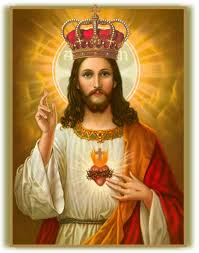
  • Our Lord Jesus Christ, King of the Universe

    Our Lord Jesus Christ, King of the Universe

    Today’s readings

    I wonder if this solemnity of Christ the King is one to which many people can relate these days.  In our day, many people don’t recognize or accept any authority outside of their own personal opinion of what is okay, let alone grasp the concept of a monarchical, top-down method of government.

    And even if we were looking for a king, what kind of king is this?  Our gospel reading today presents a picture of a king who, objectively speaking, seems to be rather a failure.  This is not a king who lived in a lavish palace and expected the blind obedience of all those around him.  This is not a king who held political office, or led a great army.  His message has always been quite different than that, and now we see him hanging on the cross between two hardened criminals.  That one of them thinks to ask Jesus to remember him when he comes into his kingdom is almost laughable.

    This wasn’t the kind of king the Jews were expecting, of course.  They were, indeed, expecting and eagerly awaiting an Anointed One, but never one like this.  Their whole picture of a Messiah had been one of political greatness and military strength, one who would restore the sovereignty of Israel and reestablish Jerusalem as the great political and religious city that it had once been.  That was the Messiah they were looking for, but what they got was one who was so much of a suffering servant that he ended up on a cross.  Pilate’s inscription, “This is the king of the Jews” was sarcastic and completely offensive to them, which of course is exactly what he intended.

    So it’s easy to see why the Jews might not have noticed that this one was their king.  It’s easy enough to even see why they would have chosen to ignore his kingship.  But we can’t be like that: we have heard the Word proclaimed all year long and we know that this is the way that God chose to save the world.  We have to be the ones to proclaim that Jesus is the king of our reality, not of our fantasy, and we recognize that he is not ashamed to herald the cross as the gateway to the kingdom and the instrument of our salvation.  Indeed it was the cross that lifted him up to his kingship, and so embracing the cross is the way of life for all of us who want to enter into the kingdom.

    And we have to admit that we are a people who need a king like this.  We might want a king to give us greatness and rest from our enemies, but that’s not real.  What’s real is our suffering, whether it’s illness, or grief, or job dissatisfaction, or personal troubles, or family strife, or broken relationships, or any other calamity.  Suffering happens, so maybe that’s why Jesus chose the image of the Suffering Servant as the motif of his kingship.  Saint Paul says today in our second reading from his letter to the Colossians that “in him all things hold together.”  Even when the world seems to be falling apart for us, we can trust in the Suffering Servant to walk with us and hold everything together.

    And so, as preposterous as it may sound to others, we know that Christ is our King.  His Kingship, he says in another gospel, is not of this world.  No, he was not a king who came with great fanfare, oppressing peoples and putting down vast armies.  No, he was not the king who restored Israel to the Davidic monarchy that began in our first reading.  His power was not exercised over the political forces of this world, as much as it was exercised over the forces of evil in the world.  He is the King who conquered, once and for all, the things that really plague us: evil, sin and death.  His Kingdom was not defined by his mortal life, but in fact begins just after he gives up that mortal life.  Unlike earthly kings, his power is everlasting.

    In our day, this feast of Our Lord Jesus Christ, King of the universe has us reasserting Christ’s sovereignty over all powers of cynicism, relativism, and apathy.  Jesus Christ our King is, as he says in another place, “the way, the truth, and the life” and there is no other way to the Father, no other way to the kingdom, no other way to life eternal than to take up our cross and follow our King through the sadness of sin and brokenness, through the pain of death, to the glory of his kingdom.  And so we have to say with boldness and conviction on this day that one religion isn’t as good as another; that it’s not okay to skip Mass to go to your child’s basketball game; that Sunday isn’t just a day to sleep in, or shop the malls, but rather a day to worship our King who is the only One who can give us what we really yearn for; what this life is all about.

    And so this is how we wrap up our Church year.  Next week we begin anew, the first Sunday of Advent.  On this last Sunday of the year, it makes sense that we stop for a minute, and look back at the year gone by.  How has it been for us?  Have we grown in faith?  Have we been able to reach out to the poor and needy?  Has our faith really taken root in our lives, have we been people who witness to the truth with integrity and conviction and fearlessness?  Have we put our King first in our lives or have we been worshipping false gods, attaching our hopes to impotent kings, recognizing false powers, and wandering off the path to life?

    If we have been lax about our faith this year, if we have given ourselves to relativism and apathy, then this is the time to get it right.  On this eve of the Church’s new year, perhaps we might make new year’s resolutions to worship our King in everything we say and everything we do.  Because nothing else is acceptable, and anything less is offensive to our King who gained his Kingship at the awesome price of his own precious life that we might be able to live with him in his kingdom.  Maybe we can resolve to get to Mass every Sunday and Holy Day of obligation, not just when it works out in our schedule.  Or perhaps we can resolve to reinvigorate our prayer lives, making time every single day to connect with our Lord, to seek his guidance in all our endeavors and plans, to strive to catch a glimpse of the Kingdom in the quiet moments of our prayer.  And certainly we must resolve to live the Gospel in its fullness: to reach out to the poor and needy, to live lives of integrity as we participate in our work and in our communities, to love every person God puts in our path.  On this “new Church year’s eve” we must resolve to be followers of the King in ways that proclaim to a cynical and apathetic, yet watching world, that Jesus Christ is King of kings and Lord of lords and that there is absolutely no other.

    Our prayer on this glorious Solemnity of Our Lord Jesus Christ the King must be the prayer of Saint Dismas, the “good thief” as he hung upon the cross: “Jesus, remember me when you come into your kingdom!”
  • The Transfiguration of the Lord

    The Transfiguration of the Lord

    Today’s readings

    Sometimes I think that, because of the limitedness of our minds, we accept a rather small view of Jesus.  I think that was true for the disciples too, although they had a good excuse: they didn’t have two thousand years of Church history to guide them!  So they were definitely familiar with the human side of Jesus: Over the time they had spent with him thus far, they had become close to him and saw him as a friend, a companion on the journey, and a great teacher.  But they were always having trouble with his divinity.

    Today’s feast changes all of that for them, and for us as well.  If there was any doubt about who Jesus was, it’s gone now.  That voice from the cloud is absolutely specific: “This is my chosen Son; listen to him.”  Jesus is the Son of God and his divinity must be embraced and proclaimed.  While it can be comfortable for us to have a picture of Jesus that is absolutely human, we must always keep in mind the Transfigured Christ, dazzling white, radiating glory, the lamp shining in a dark place.  He is the Son of Man of whom Daniel speaks, and to him belongs dominion, glory, and kingship.  If Jesus were only human, we would have no Savior, we would have no chance of touching divinity ourselves, that divinity for which we were created.

    On the way to the mountain, the disciples came to know Jesus in his humanity, and on the way down, they came to know Jesus in his divinity.  That trip down from the mountain took him to Calvary, and ultimately to the Resurrection, the glory of all glories.  Christ is both human and divine, without any kind of division or separation.  We must be ready to see both natures of our Jesus, so that we ourselves can transfigure our world with justice, compassion and mercy, in the divine image of our beautiful Savior.  No matter what challenges may confront us or what obstacles may appear along the way, we must be encouraged to press on with the words of the Psalmist: “The Lord is king, the Most High over all the earth.”

  • The Most Sacred Heart of Jesus

    The Most Sacred Heart of Jesus

    Today’s readings

    I remember when I was growing up, often visiting my dear grandmother.  She and I were best friends in so many ways.  I remember when we visited that she had a beautiful framed picture in the living room, given a spot of honor where everyone could see it, and that picture was of the Sacred Heart of Jesus.  Whenever I think of the Sacred Heart, I remember grandma, whose name was Margaret Mary, named after the saint who promoted veneration of the Sacred Heart in the first place.

    And so, today we celebrate, with incredible gratitude, the Sacred Heart of Jesus.  Through his most Sacred Heart, the love of God is made manifest among us.  This love is a pervasive love that burns in our hearts and changes our lives and leads us back to the God who made us for himself.  This love is irresistible if we give ourselves over to it.  It is a love that pursues us and a love that can go far beyond whatever distance we have fallen from grace.  It is a love that, seeks out the lost and strayed, and binds up the injured and the sick; and, as St. Paul tells us in the second reading, comes to us not by any merit of our own – God knows! – but only by the free gift of our God who made us precisely to receive this great love.  We who have been loved into existence must love others as we have been loved.  The love of God pours forth from the heart of Christ just as the water and blood poured forth from his side as he hung dead on the cross.  Death could not stop the outpouring of grace that he came to bring.

    Today’s Gospel reading gives us a beautiful picture of God.  God is that shepherd who does the unthinkable: leaves the 99 behind to follow their own devices while he seeks out the lost one.  That’s more love than any of us has a right to expect, yet it is freely poured out to us.

    Today’s feast of the Sacred Heart of Jesus finds us wholly consumed by grace.  We have been loved into existence by our God who made us like himself.  We have been loved into grace by Jesus who gave his life rather than live without us.  And we are being loved into heaven as we give ourselves over to the work of the Holy Spirit who is that love between the Father and the Son.  God is love and today we experience how powerful that love can be if we give ourselves over to it.

  • Saint Athanasius, Bishop and Doctor of the Church

    Saint Athanasius, Bishop and Doctor of the Church

    Today’s readings

    You surely recognize these beautiful words:

    I believe in one Lord Jesus Christ,
    the Only Begotten Son of God,
    born of the Father before all ages.
    God from God, Light from Light,
    true God from true God,
    begotten, not made, consubstantial with the Father;
    through him all things were made.

    These words emphasize the divinity of Christ, an essential truth of our faith.  The Liturgy also says: “Through the mystery of this water and wine, may we come to share in the divinity of Christ who humbled himself to share in our humanity.”  The Gospels show us time and time again that Jesus came to proclaim his divinity, his oneness with the Father, so as to be the means of salvation.  Almost all of his hearers rejected this message, except for all but one of his disciples, and the centurion who noticed that he was the Son of God as he hung dead on the Cross.

    The Arians, led by the priest Arius in the third century, did not believe in Jesus’ divinity.  They believed there was a time before Jesus existed, that he was not consubstantial with the Father, but rather was created by the Father.  This position denies the divinity of Christ, which is an unacceptable position for our faith.  If Christ is not divine, he has no power to save us, and we are still dead in our sins.  God forbid! – And he does forbid it!

    St. Athanasius was a great champion of the faith against the harmful teachings of Arius.  But it was a hard battle.  He was exiled not once but actually five times during the fight against Arius’s teachings.  His writings are almost all a great defense of the faith and are so sound that Athanasius was named a Doctor of the Church.

    We have St. Athanasius to thank for the wonderful words of our Creed.  We often say them, I think, without a whole lot of thought.  But we need to remember when we pray the Creed that each of those words was the result of dedicated work, intensive prayer, and hard fought defense against heresy.  Because of people like St. Athanasius, we may indeed come to share in the divinity of Christ.

  • The Feast of the Transfiguration of the Lord

    The Feast of the Transfiguration of the Lord

    Today’s readings

    How do you picture Jesus? We’ve never seen him face to face, but we have seen artwork depicting him. That artwork can be very inspiring. But that artwork can also give us a false, overly-familiar look at Jesus our God. I tend to think Peter, James and John also had a kind of familiar picture of their Jesus. Over the time they had spent with him thus far, they had become close to him and saw him as a friend, a companion on the journey, and a great teacher. But they were always having trouble with his divinity.

    Today’s feast changes all of that for them, and for us as well. If there was any doubt about who Jesus was, it’s gone now. That voice from the cloud is absolutely specific: “This is my chosen Son; listen to him.” Jesus is the Son of God and his divinity must be embraced and proclaimed. While it can be comfortable for us to have a picture of Jesus that is absolutely human, we must always keep in mind the Transfigured Christ, dazzling white, radiating glory, the lamp shining in a dark place. He is the Son of Man of whom Daniel speaks, and to him belongs dominion, glory, and kingship. If Jesus were only human, we would have no Savior, we would have no chance of touching divinity ourselves, that divinity for which we were created.

    On the way to the mountain, the disciples came to know Jesus in his humanity, and on the way down, they came to know Jesus in his divinity. That trip down from the mountain took him to Calvary, and ultimately to the Resurrection, the glory of all glories. Christ is both human and divine, without any kind of division or separation. We must be ready to see both natures of our Jesus, so that we ourselves can transfigure our world with justice, compassion and mercy, in the divine image of our beautiful Savior. No matter what challenges may confront us or what obstacles may appear along the way, we must be encouraged to press on with the words of the Psalmist: “The Lord is king, the Most High over all the earth.”

  • The Annunciation of the Lord

    The Annunciation of the Lord

    Today’s readings

    Fear keeps us from doing all sorts of things the Lord wants for us. If we would truly let go of our fear and cling to our God, just imagine what he could do in us and through us. Ahaz was King of Israel, a mighty commander, but yet was so afraid of God and what God might do that he refused to ask for a sign. He would prefer to cut himself off from God rather than give himself over to the amazing power of God’s presence in his life. Because of that perhaps, he never lived to see the greatness of God’s glory.

    But his weakness did not disrupt the promise. In the fullness of time, God’s messenger came to a young woman named Mary and proposed to accomplish in her life the sign that Ahaz was too afraid to ask for. She too was initially afraid, pondering what sort of greeting this was. She was also confused, not knowing how what the angel proclaimed could possibly take place in her life.  Our reaction to God’s will for us is quite often the same, isn’t it?

    The difference, though, was that Mary heeded the initial words of the angel that have resounded through Salvation history ever since: “Do not be afraid.” And, thanks be to God, Mary abandoned her fear and instead sang her fiat, her great “yes” to God’s plan for her, and for all of us. “Behold, I am the handmaid of the Lord. May it be done to me according to your word.” These words are reminiscent of what the Psalmist sings today: “Here I am, Lord; I come to do your will.”

    And we know what happened from there. Mary certainly wasn’t confident that any of that could be accomplished through her own efforts, but she absolutely knew that God could do whatever he undertook. Nothing would be impossible for God, and she trusted in that, and because of that, we have the great hope of our salvation. We owe everything to Mary’s cooperation with God’s plan for our salvation.

    And so the promise comes to us. We have the great sign that Ahaz was afraid of but Mary rejoiced in. We too are told that God can accomplish much in our own lives, if we would abandon our fears and cling to the hope of God’s presence in our lives. Can we too be the handmaids of the Lord? Are we bold enough to say, “Here I am, Lord; I come to do your will?” All we have to do is to remember the first thing the angel said to Mary: “Do not be afraid.”

  • The Sacred Heart of Jesus

    The Sacred Heart of Jesus

    Today’s readings

    I remember when I was growing up, often visiting my dear grandmother.  She and I were best friends in so many ways.  I remember when we visited that she had a beautiful framed picture in the living room, given a spot of honor where everyone could see it, and that picture was of the Sacred Heart of Jesus.  Whenever I think of the Sacred Heart, I remember grandma, whose name was Margaret Mary, named after the saint who promoted veneration of the Sacred Heart in the first place.

    And so, today we celebrate, with incredible gratitude, the Sacred Heart of Jesus.  Through his most Sacred Heart, the love of God is made manifest among us.  This love is a pervasive love that burns in our hearts and changes our lives and leads us back to the God who made us for himself.  This love is irresistible if we give ourselves over to it.  It is a love that pursues us and a love that can go far beyond whatever distance we have fallen from grace.  It is a love that, as Moses tells us in the first reading, does not come to us because we are great, but because God has chosen us, and, as St. John tells us in the second reading, must continue to be poured out by us onto the world around us.  We who have been loved into existence must love others as we have been loved.  The love of God pours forth from the heart of Christ just as the water and blood poured forth from his side as he hung dead on the cross.  Death could not stop the outpouring of grace that he came to bring.

    Today’s Gospel reading gives us a beautiful picture of God.  God is love, in fact God is a community of love.  The Father and the Son know each other in their loving, and the Holy Spirit then is the love between them.  God is love and creates us in love and sustains us in love.  In love, we long to return to him one day.

    Today’s feast of the Sacred Heart of Jesus finds us wholly consumed by grace.  We have been loved into existence by our God who made us like himself.  We have been loved into grace by Jesus who gave his life rather than live without us.  And we are being loved into heaven as we give ourselves over to the work of the Holy Spirit who is that love between the Father and the Son.  God is love and today we experience how powerful that love can be if we give ourselves over to it.


  • Our Lord Jesus Christ the King

    Our Lord Jesus Christ the King

    Today’s readings

    I wonder if this solemnity of Christ the King is one to which many people can relate.  In our American society, so many people don’t recognize or accept any authority outside of their own personal opinion of what is okay, let alone grasp the concept of a monarchical, top-down method of government.

    And even if we were looking for a king, what kind of king is this?  Our gospel reading today presents a picture of a king who, objectively speaking, seems to be rather a failure.  This is not a king who lived in a lavish palace and expected the blind obedience of all those around him.  This is not a king who held political office, or led a great army.  His message has always been quite different than that, and now today, look at him hanging on the cross between two hardened criminals.  That one of them thinks to ask Jesus to remember him when he comes into his kingdom is almost laughable, but, well, there it is.   There is our king.  This feast leaves us on the very last Sunday of the Church year with more questions than, it would seem, could ever possibly be answered.

    This wasn’t the kind of thing the Jews were expecting, of course. They had long been expecting an Anointed One, but never one like this. Their whole picture of a Messiah had been one of political greatness and military strength, one who would restore the sovereignty of Israel and reestablish Jerusalem as the great political and religious city that it had once been. That was the Messiah they were looking for, but what they got was one who was so much of a suffering servant that he ended up on a cross. Pilate’s inscription, “This is the king of the Jews” was sarcastic and completely offensive to them, which of course is exactly what he intended.

    So it’s easy to see why the Jews might not have noticed that this one was their king. It’s easy enough to even see why they would have chosen to ignore his kingship. But we can’t miss it: we have heard the Word proclaimed all year long and we know that this is the way that God chose to save the world. There are times, of course, when we could do with a bit more opulence and certainly a lot less suffering. But Jesus is the king of our reality, not of our fantasy, and so he is not ashamed to herald the cross as the gateway to the kingdom and the instrument of our salvation.

    And we have to admit that we are a people who need a king like this. We might want a king to give us greatness and rest from our enemies, but that’s not real. What’s real is our suffering, whether it’s illness, or grief, or job dissatisfaction, or personal troubles, or family strife, or broken relationships, or any other calamity. Suffering happens, and that’s why Jesus chose the image of the Suffering Servant as the motif of his kingship. St. Paul says today in our second reading from his letter to the Colossians that “in him all things hold together.” Even when the world seems to be falling apart for us, we can trust in the Suffering Servant to walk with us and hold everything together.

    And so, as preposterous as it may sound to others, we know that Christ is our King.  His Kingship, he says in another gospel, is not of this world.  No, he was not a king who came with great fanfare, oppressing peoples and putting down vast armies.  No, he was not the king who restored Israel to the Davidic monarchy that began in this morning’s first reading.  His power was not exercised over the political forces of this world, as much as it was exercised over the power of evil in the world.  He is the King who conquered, once and for all, the things that really plague us: evil, sin and death.  His Kingdom was not defined by his mortal life, but in fact begins just after he gives up that mortal life.  Unlike earthly kings, his power is everlasting.

    In 1925, Pope Pius XI, in the face of rising nationalism and Fascism, instituted the Feast of Christ the King to reassert Christ’s sovereignty over all forms of political governance.  Jesus Christ is not just one king among others, but rather he is the King of kings and Lord of lords.  Perhaps, if this feast had been instituted today, our Church might be reasserting Christ’s sovereignty over all powers of cynicism, relativism, and apathy.  Jesus Christ our King is, as he says in another place, “the way, the truth, and the life” and there is no other way to the Father, no other way to the kingdom, no other way to life eternal than to take up our cross and follow our King through the sadness of sin and brokenness, through the pain of death, to the glory of his kingdom.  And so we have to say with boldness and conviction on this day that one religion isn’t as good as another; that it’s not okay to skip Mass to go to your child’s basketball game; that Sunday isn’t just a day to sleep in, or shop the malls, but rather a day to worship our King who is the only One who can give us what we really yearn for; what this life is all about.

    And so this is how we wrap up our Church year.  Next week we begin anew, the first Sunday of Advent.  On this last Sunday of the year, it makes sense that we stop for a minute, and look back at the year gone by.  How has it been for us?  Have we grown in faith?  Have we been able to reach out to the poor and needy?  Has our faith really taken root in our lives, have we been people who witness to the truth with integrity and conviction and fearlessness?  Have we put our King first in our lives or have we been worshipping false gods, attaching our hopes to impotent kings, recognizing false powers, and wandering off the path to life?

    If we have been lax about our faith this year, if we have given ourselves to relativism and apathy, then this is the time to get it right.  On this eve of the Church’s new year, perhaps we might make new year’s resolutions to worship our King in everything we say and everything we do.  Because nothing else is acceptable, and anything less is offensive to our King who gained his Kingship at the awesome price of his own precious life that we might be able to live with him in his kingdom.  Maybe we can resolve to get to Mass every Sunday and Holy Day of obligation, not just when it works out in our schedule, and including those times when we travel (there are Catholic churches pretty much everywhere).  Or perhaps we can resolve to reinvigorate our prayer lives, making time every single day to connect with our Lord, to remember our Sunday worship, to seek his guidance in all our endeavors and plans, to strive to catch a glimpse of the Kingdom in the quiet moments of our prayer.  And certainly we must resolve to live the Gospel in its fullness: to reach out to the poor and needy, to live lives of integrity as we participate in our work and in our communities, to love every person God puts in our path.  On this “new Church year’s eve” we must resolve to be followers of the King in ways that proclaim to a cynical and apathetic, yet watching world, that Jesus Christ is King of kings and Lord of lords and that there is absolutely no other.

    Our prayer on this glorious Solemnity of Our Lord Jesus Christ the King must be the prayer of Saint Dismas, the “good thief” as he hung upon the cross: “Jesus, remember me when you come into your kingdom!” Pray that with me in song…

  • The Transfiguration of the Lord

    The Transfiguration of the Lord

    Today’s readings

    How do you picture Jesus? We’ve never seen him face to face, but we have seen artwork depicting him. That artwork can be very inspiring. But that artwork can also give us a false, overly-familiar look at Jesus our God. I tend to think Peter, James and John also had a kind of familiar picture of their Jesus. Over the time they had spent with him thus far, they had become close to him and saw him as a friend, a companion on the journey, and a great teacher. But they were always having trouble with his divinity.

    Today’s feast changes all of that for them, and for us as well. If there was any doubt about who Jesus was, it’s gone now. That voice from the cloud is absolutely specific: “This is my chosen Son; listen to him.” Jesus is the Son of God and his divinity must be embraced and proclaimed. While it can be comfortable for us to have a picture of Jesus that is absolutely human, we must always keep in mind the Transfigured Christ, dazzling white, radiating glory, the lamp shining in a dark place. He is the Son of Man of whom Daniel speaks, and to him belongs dominion, glory, and kingship. If Jesus were only human, we would have no Savior, we would have no chance of touching divinity ourselves, that divinity for which we were created.

    On the way to the mountain, the disciples came to know Jesus in his humanity, and on the way down, they came to know Jesus in his divinity. That trip down from the mountain took him to Calvary, and ultimately to the Resurrection, the glory of all glories. Christ is both human and divine, without any kind of division or separation. We must be ready to see both natures of our Jesus, so that we ourselves can transfigure our world with justice, compassion and mercy, in the divine image of our beautiful Savior. No matter what challenges may confront us or what obstacles may appear along the way, we must be encouraged to press on with the words of the Psalmist: “The Lord is king, the Most High over all the earth.”

  • The Sacred Heart of Jesus

    The Sacred Heart of Jesus

    Today’s readings

    I remember when I was growing up, often visiting my dear grandmother.  She and I were best friends in so many ways.  I remember when we visited that she had a beautiful framed picture in the living room, given a spot of honor where everyone could see it, and that picture was of the Sacred Heart of Jesus.  Whenever I think of the Sacred Heart, I remember grandma, whose name was Margaret Mary, named after the saint who promoted veneration of the Sacred Heart in the first place.

    And so, today we celebrate, with incredible gratitude, the Sacred Heart of Jesus.  Through his most Sacred Heart, the love of God is made manifest among us.  This love is a pervasive love that burns in our hearts and changes our lives and leads us back to the God who made us for himself.  This love is irresistible if we give ourselves over to it.  It is a love that pursues us and a love that can go far beyond whatever distance we have fallen from grace.  It is a love that, as Ezekiel tells us in the first reading, takes us out of the foreign land of our sinfulness and restores us to the promised land of grace, and, as St. Paul tells us in the second reading, is poured into our hearts from the heart of Jesus through the Holy Spirit.  The love of God pours forth from the heart of Christ just as the water and blood poured forth from his side as he hung dead on the cross.  Death could not stop the outpouring of grace that he came to bring.

    Today’s Gospel reading gives us a beautiful picture of God’s love for us.  This love seeks out the errant sinner.  The question Jesus asks is a trick question, because not many shepherds would leave ninety-nine sheep behind to seek one out for fear that he’d lose the other ninety-nine too.  But Jesus is the good shepherd, the one who seeks the wandering ones out and dances with joy when they are found.

    Today’s feast of the Sacred Heart of Jesus finds us wholly consumed by grace.  We have been loved into existence by our God who made us like himself.  We have been loved into grace by Jesus who gave his life rather than live without us.  And we are being loved into heaven as we give ourselves over to the work of the Holy Spirit who is that love between the Father and the Son.  God is love and today we experience how powerful that love can be if we give ourselves over to it.