Category: Liturgy

  • Saturday of the Third Week in Lent

    Saturday of the Third Week in Lent

    Today’s readings

    “O God, be merciful to me, a sinner.”

    These are perhaps the most important words of the spiritual life, uttered today by the repentant tax collector in the temple area. These words are so important, actually, that they form the basis of one of the most ancient acts of contrition that we have, called the Jesus Prayer. The Jesus Prayer comes out of the eastern and orthodox Church traditions, and the full version is “Lord Jesus Christ, be merciful to me, a sinner.” I want to put that in your prayer toolbox today: everyone should memorize this prayer.

    The Jesus Prayer, and our readings today, give us one of the great tools of Lent: humility. Humility is that great virtue that recognizes that I need a Savior. That because of my sins, I have no access to God, except for the fact that he loves me beyond anything I have a right to hope for. Humility recognizes that God loves us all so much that he gave everything for us, poured himself out for love of us, and desires to heal all of our sins and brokenness.

    All it takes is a little repentance: realizing my sinfulness, turning back to Christ, letting him love me, and accepting his forgiveness. The prayer that manifests that kind of attitude is not the prayer of the Pharisee in the Gospel reading today: his attitude is the antithesis of what prayer needs to be. The prayer that manifests the attitude we must have is that of the tax collector: “O God, be merciful to me, a sinner.”

    O God, grant us the great gift of humility this Lenten day.

  • Thursday of the Third Week in Lent

    Thursday of the Third Week in Lent

    Today’s readings

    How many times have you told someone in your life how to do something, and they chose another way, and you wanted more than anything to say, “I told you so!”? Maybe you’ve even gone so far as to actually say it. The whole thing about saying “I told you so!” is that it’s kind of a writing off of the other person, sort of washing your hands of the outcome of their decisions.

    But how much more could God say, “I told you so!” to us? How many ways have we been warned about doing the wrong thing, or been shown the path to the right thing, and have gone astray anyway? We have the Scriptures to show us the way – do we immerse ourselves in them? We have the Church to show us the way – do we look for her direction? We have prayer and Sacrament to show us the way – do we live in that? So how much more would God be justified in saying, “I told you so!” Yet, he doesn’t. Instead he keeps offering us mercy, keeps speaking to our hearts, through Scripture, the Church, prayer and Sacrament – he keeps on inviting us back.

    We are going to hear that invitation today, so let’s decide now that when we do, we will listen to it with all our attention, and let it permeate our hearts. May we let it guide the thoughts of our minds, the words of our lips, and the affections of our hearts.

    As the Psalmist invites us today: If today you hear God’s voice, harden not your hearts.

  • Tuesday of the Third Week in Lent

    Tuesday of the Third Week in Lent

    Today’s readings

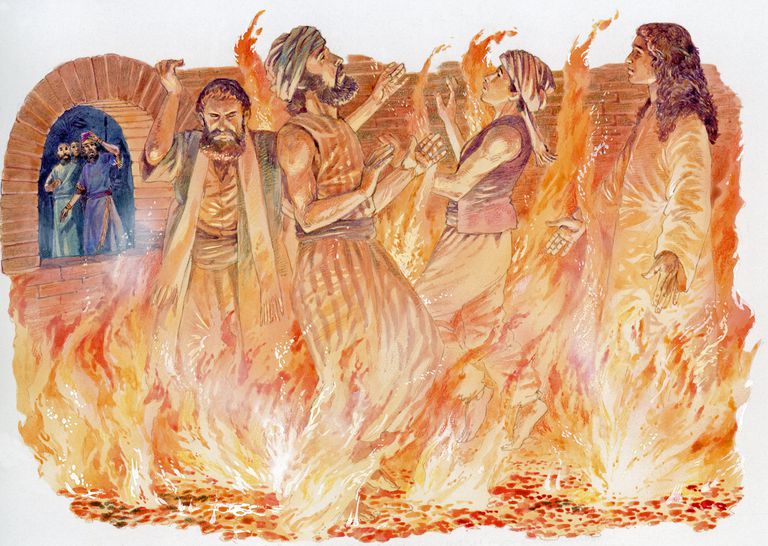
    Have you ever felt like you were certainly in the fire? Things in life may have gone from bad to worse. When we’re in those times of life, sometimes we know that the reason for it is that we have sinned. Now I’m not talking about when people in your life are sick or anything like that, God doesn’t punish sin by unleashing evil on us. Maybe it’s more like when relationships have gone bad, or things have gone wrong at work, or there’s financial hardship. You know the feeling, things are just piling up and you have no idea how to get out, it’s getting hotter all the time and it seems there is no salvation. But deep at the heart of it, you feel the weight of your own sin. I can testify to being in that place myself in my life on occasion. To that, the young man Azariah speaks:

    For we are reduced, O Lord, beyond any other nation,
    brought low everywhere in the world this day
    because of our sins.
    But with contrite heart and humble spirit
    let us be received;
    As though it were burnt offerings of rams and bullocks,
    or thousands of fat lambs,
    So let our sacrifice be in your presence today
    as we follow you unreservedly;
    for those who trust in you cannot be put to shame.

    We have to be a forgiven and forgiving people. When life crashes in on us, we have to confess our sins, and cry out for God’s pardon and mercy. And when it is given us – and it will be given us – we must become a merciful people who extend forgiveness to every single person in our lives without hesitation. We have to be a people who throw mercy around freely, because that’s just exactly how it’s been given to each of us.

  • The Third Sunday in Lent

    The Third Sunday in Lent

    Today’s readings

    There’s a lot of water in today’s Liturgy of the Word. The Israelites, near the beginning of their forty year journey through the desert, are beginning to miss some of the comforts of home, like water! So when they complain to the Lord, he gives them water in the desert. Which is pretty amazing – they had water in the desert! And in our Gospel today, our Lord stops along his own journey to get a drink of water from the Samaritan woman – and this whole interaction is less about Jesus’ physical thirst than it is about other kinds of thirst in the story – but more on that in a bit.

    We always have to think about why the Church is giving us these particular readings on this particular day. Why is it that we have part of the story of the Israelites wandering in the desert and the rather strange story of the interaction with the woman at the well today? Well, (no pun intended) whenever there’s this much water being mentioned in the readings, we need to think of a particular sacrament, and that sacrament of course is Baptism.

    Now maybe it makes a little sense. Today, throughout the Church, many people will experience the First Scrutiny of the Order of Christian Initiation. They are preparing to receive baptism at the Easter Vigil. But even that’s not the whole story, because this reading is for all of us. Lent itself is about baptism, and even if we’ve already been baptized, there’s still work to do. We are still being converted to become more like our Lord every day of our life. That’s what Lent is all about – getting back on the path and going a little farther forward. Lent points out for all of us that we’re still thirsty.

    For the Israelites, it’s hard to know what was going to help them. They’re just at the beginning of their journey and already they’re complaining. They get thirsty and the first thing they do is complain – not pray – and tell Moses that they’d rather be back in Egypt in slavery than out wandering around in the desert with nothing to quench their thirst. And it’s not like the slavery they experienced in Egypt was a minor inconvenience – it was pretty horrible and if they missed their quota even by a little bit, they were severely beaten. But sometimes it’s better the devil you know: sometimes we get stuck on what we’ve become used to and have given up yearning for something more.

    For the woman at the well, there’s a lot stacked against her and there is no reason Jesus should have been talking to her. In fact, the disciples, when they return and witness it, aren’t really sure what they should make of it. Because in that culture, nobody talked to Samaritans – it would be like striking up a casual conversation with an Isis member. And for a man to speak to an unaccompanied woman was unthinkable. But Jesus knew she was thirsty – see it wasn’t about his thirst at all, except, as Saint Augustine tells us, Jesus was thirsting for her faith.

    It’s a pretty weird conversation, to be honest. But in talking about her five previous husbands and the Samaritans’ practice of worshiping on the mountain, Jesus was pointing out how her own search for something to quench her thirst was so far pretty futile. She was looking for love in all the wrong places. The five men she was married to represented a history of failed attempts at finding love. And the guy she was shacked up with now represented the fact that she’d pretty much given up. But on some level, the fact that Jesus knew all this without her saying it woke her up a bit. And so then they talk about how the Samaritans worshiped. They were looking for God on the mountain, but the thing is, the God they were looking for is the same one that she had been searching for in her relationships, and he was standing right in front of her now.

    So what is it that is finally going to quench the thirst you have right now?

    Are you going to stay in the slavery of your former way of life, or do you want to journey on to the Promised Land? Are you going to continue to be content with failed or broken relationships, or are you going to refresh them with Living Water? Are you going to continue to leave God up on that mountaintop where he doesn’t get in the way of your daily life, until you need something? Or are you going to look him in the eye and ask him to give you what you really need so you’ll never thirst again?

    We’re all on a journey. All of us together are journeying on to the Promised Land of eternal life. And the only way we’re going to get there is by drinking deeply of the Living Water and allowing the One who gives it to us to lead us. It does mean, however, that we’ll have to leave Egypt, and our buckets, behind.

  • Friday of the Second Week in Lent

    Friday of the Second Week in Lent

    Today’s readings

    Today’s two readings remind us of what Lent is all about.  During Lent, we remember that our Lord, who came down from heaven to earth to save us from our sins and re-connect us with the love of God, paid the price for our many sins by laying down his own life.  And because of that, we have the promise of going to heaven one day, if we continue to follow Jesus.

    In our first reading, Joseph’s jealous brothers ended up selling him into slavery in Egypt, but in Egypt he became a powerful and talented government official who ended up saving many people, including his own brothers, from starvation during a famine.

    The parallels here between Joseph and Jesus are many.  Joseph was sold into slavery in Egypt; Jesus came to take away our slavery to sin.  Joseph’s own brothers plotted to kill him; Jesus was killed by us, his brothers and sisters.  Joseph fed the known world at that time by storing up grain for the day of famine; Jesus fed the multitudes, and us, with the bread that comes down from heaven.  Joseph was sold for twenty pieces of silver; Judas was given thirty pieces of silver to hand Jesus over to death.  Joseph, in many ways, was a foreshadowing of Jesus.

    In our Gospel today, Jesus tells a parable which tells the story of what will soon happen to him.  The vineyard owner is God the Father, and he is looking for the fruit of the harvest, which is our faith.  Instead, the people of old beat and murdered the prophets who came to give God’s word, just as the messengers of the vineyard owner were beaten and murdered.  And finally, when God, the vineyard owner, sends his own Son, he was killed too.   Just like Jesus.

    The people of Jesus’ day missed the message, they missed the parallels, they didn’t get that God was continually reaching out to them to gather them in faith.  But we know the story, all of it, and we can’t be like them.  We have to be ready to hear the truth and act on it, to see Jesus in other people and respond to him, to hear the Word he speaks to us and live that Word in faith each day.

    God loved us so much that he gave us his only begotten Son; we have to treasure that gift and let it make us new people.  That’s what Lent is all about, friends.  Lent means “springtime,” and so Lent should be a springtime of new growth in us, so that we can be a vineyard of faith to give joy to the world.

  • Thursday of the Second Week in Lent

    Thursday of the Second Week in Lent

    Today’s readings

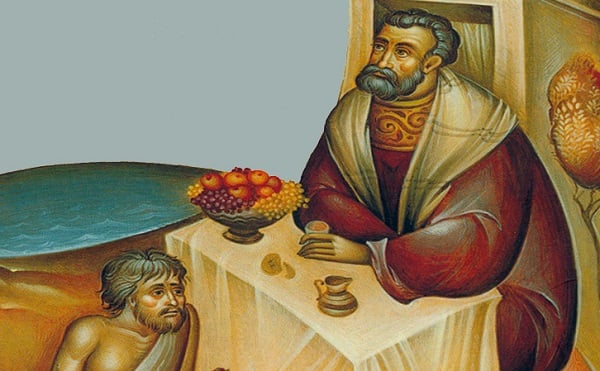
    You know, I don’t think the great sin of the rich man was the sin of neglecting poor Lazarus. Sure, that was certainly bad, but his greatest sin, I think, was that he trusted in himself instead of in God. That’s the deadly sin of pride, and the Fathers of the Church often tell us of the devastating effects of it. So the rich man thought he had everything he needed in life, and he trusted in himself and in his own means to get it. But he never had a relationship with God; he didn’t see that as something he needed. Would that he had heeded the prophecy of Jeremiah from today’s first reading. You don’t see him praying in the story or even giving thanks to God for his riches. All you see him doing is enjoying what he has amassed, to the neglect of the poor.

    So later on in the story, in death, he wants the good things God will provide for those who trust in him; people like Lazarus for example. Lazarus has suffered much, and as the Old Testament Prophets proclaim, God is especially close to the poor and needy, so now he is exalted. But the rich man isn’t exalted at all. He has already made his choice, and unfortunately now, trusting in himself doesn’t really help him.

    So the loud warning this morning is that we are all too often the rich man and not so often Lazarus. We have a lot of stuff, we are blessed on earth more than most of the people in the world today. But sadly that often puts us at odds with the things of heaven. We can’t reach out for those when we’re holding on to the passing things of this world. We can’t take the hand of Jesus when we’re grasping tightly the stuff life in this culture gives us.

    That’s why fasting is so important during Lent, as well as almsgiving: both bid us let go of passing things so that we can have, like Lazarus, things eternal. Both bid us trust in God, not in ourselves and other human beings. Jeremiah says it plainly today: “Cursed is the man who trusts in human beings, who seeks his strength in flesh, whose heart turns away from the LORD.” But, conversely, “Blessed is the man who trusts in the LORD, whose hope is the LORD.”

    So the question is, in whom do we trust? In ourselves? In other people? Or in God? “Blessed are they,” the Psalmist says today, “who hope in the Lord.”

  • The Second Sunday in Lent

    The Second Sunday in Lent

    Today’s readings

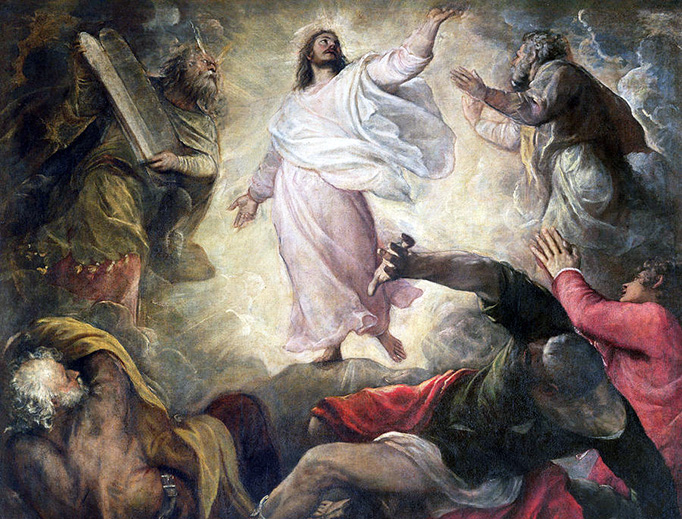
    Perhaps you recall last week’s Gospel reading, in which Jesus, having been baptized by Saint John the Baptist, was prompted and led by the Spirit into the desert for forty days and forty nights. He fasted and prayed and near the end of it, he was tempted by Satan. It’s a vivid image. Today’s Gospel has Jesus, on the way to Jerusalem and his death, take Peter, James, and John up a mountain and is transfigured before them. This is also a very vivid image. These images are so vivid, in fact, that they are presented on the first and second Sundays of Lent every single year. So the Church, I think, is giving us a framework for Lent and the spiritual life to which we should pay attention.

    There’s a connection between these two stories, these two images, that I have been reflecting on this week. It’s interesting that Satan waited until the end of the forty days of Jesus’ fast, when the Gospel says Jesus was hungry. That had to be the understatement of the millennium if Jesus fasted forty days and nights! But the point is that Satan waits until we are at a low point, just like Jesus was feeling all the physical and psychological effects of fasting so long. Then he makes his move to tempt us. When we are at a low point, we are more easily influenced by temptation.

    And that begins a cycle that I think we can all understand and perhaps relate to. I’m guessing most of us have experienced it ourselves. We are at a low point, so temptation comes to us. Without our strength, we give in to temptation. The Tempter lies to us, and promises things that he ultimately cannot and will not deliver, or tells us things about ourselves that are not true. Jesus was tempted with bread, immunity from harm, and all the kingdoms of the world. Satan has no power over any of this. He has no power, ultimately, over us, because his main weapons, sin and death, have already been overcome by the death and resurrection of Jesus Christ. Satan is a liar, but because we are at a low point, we believe the lies. Then, when we give in to the lies, Satan convinces us of another whopper of a lie, and that is that we are unworthy of God’s love and mercy. Which makes us feel even lower, so we get more temptation, and so on and so on and so on.

    But the Transfiguration gives us the foretaste and promise of what God is doing to break this sad cycle. First, as we see in the figures of Moses and Elijah who appear with Jesus Transfigured, God gives us the guidance of the Law and the Prophets. In these days, that means the guidance of the Church, who proclaims the Word and provides access to the Sacraments which provide healing and guidance and life.

    Then God takes our brokenness, our sin and transgression, the sickness of our spirit battered by the Tempter, and he transfigures it. He re-creates us into the glorified people we were created to be, so that we can be caught up in God’s life forever and live with him for eternity. Finally, in the Transfiguration, God promises us that we, who are worth far more than the passing things that Satan promises us, have hope of the Resurrection. Just as Jesus’ Transfiguration was a foreshadowing of the glorified body of his Resurrection, so it is for us a foreshadowing of the life of grace that we will inherit if we follow Jesus up that mountain.

    The cycle of temptation is a dirty, rotten thing. It eats at us all the time and invites us to lower the bar and accept the lies that Satan offers. But the Transfiguration proclaims that that kind of life is not what we were created for, and frankly a life not worth living. But through the disciplines of Lent, turning back to Christ, letting him interrupt the cycle of sin and shame in our lives, we can be transfigured into glory. That’s our real promise, and it’s made by the One who never lies.

    So hang in there on your Lenten promises. If you haven’t started, it’s not too late. All of our penance is turning down Satan’s lies in favor of God’s promises. And God is the One who keeps his promises.


  • Saturday of the First Week in Lent

    Saturday of the First Week in Lent

    Today’s readings

    So, there’s our mission statement for Lent: “Be perfect as your heavenly Father is perfect.” Our righteousness needs to exceed that of everyone else, or we will be missing out on the kingdom of God.

    So how far do we go with that? Love our enemies? Pray for those who persecute us? I mean, that’s real easy to hear until we actually think about doing it, isn’t it? Those people who gossip about us, cut us off in traffic, make a ruckus in our neighborhoods until all hours of the night, tell off-color jokes in social situations – well it’s nice to hold onto a grudge against them, isn’t it? And are we really supposed to be forgiving of terrorists, and all those people who hate us and our way of life?

    Well, yes we are. We are if we want to be called children of our heavenly Father. And who doesn’t want that? Who knows: maybe when we stop letting them irritate us and instead begin to pray for them and even forgive them, maybe then we will start seeing them in a new light. They might not change, but we will, and we need to be concerned about ourselves – our relationship with God – that’s what’s really at stake in all these situations.

    Who do I need to forgive today?

  • Friday of the First Week in Lent

    Friday of the First Week in Lent

    Today’s readings

    Today’s readings remind us that Lent is no time for “business as usual.” It’s not enough for us to merely claim to be righteous, because righteousness, literally a right relationship, means that righteous actions must back our lofty words. And so today we are called to a righteousness that surpasses the scribes and Pharisees, a righteousness that goes beyond our words and our reputations and what we want people to think about us. The righteousness that Jesus calls us to today is a righteousness that starts where everything must, and that is in the heart.

    Today’s Gospel comes from the sobering “but I say to you” section of Matthew’s Gospel. Here, Jesus reiterates the teachings of Moses and then “kicks them up a notch.” That means that harsh words, grudges, anger, backbiting, gossiping and slander share equal dishonor with outright murder. They all, Jesus tells us, violate the fifth commandment, because they all start with the same murderous inclination of the heart. The one who has harbored these evil thoughts and actions must repent of them and seek reconciliation before offering his or her gift at the altar, or the offering will be tainted, ruined, and ultimately rendered sacrilegious.

    Ezekiel’s prophecy in the first reading is good news for those of us who have gone astray. His prophecy holds out the possibility of a second chance for us sinners and calls us to a fundamental change of life. Even if we have been known for our wicked deeds, we have the opportunity to repent and change our hearts and lives.

    The Psalmist today rejoices in God who is trustworthy with his mercy and forgiveness. In this time of Lenten repentance, we can have confidence in our God who longs to bring us back:

    For with the Lord is kindness
    and with him is plenteous redemption;
    And he will redeem [all of us]from all [our] iniquities.

  • Thursday of the First Week in Lent

    Thursday of the First Week in Lent

    Today’s readings

    During this first week of Lent, our Liturgies of the Word are teaching us about the Lenten disciplines: fasting, almsgiving and prayer. On Tuesday, we heard the Lord’s prayer, and today we hear the prayer of Esther and Jesus’ injunction to persistence in prayer.

    I love the story of Esther, and as I often tell people, you should read the entire book of Esther from the Bible (it’s not very long). It reminds us that we need a Savior. Esther’s adoptive father Mordecai was a deeply religious man. His devotion incurred the wrath of Haman the Agagite, who was a court official of King Ahasuerus of Persia. Mordecai refused to pay homage to Haman in the way prescribed by law, because it was idolatry. Because of this, Haman developed a deep hatred for Mordecai, and by extension, all of the Israelite people. He convinced King Ahasuerus to decree that all Israelites be put to death, and they cast lots to determine the date for this despicable event.

    Meanwhile, Esther, Mordecai’s adopted daughter, is chosen to fill a spot in the King’s harem, replacing Queen Vashti. Esther, however, never had revealed her own Israelite heritage to the King. She would, of course, be part of the extermination order. Mordecai came to Esther to inform her of the decree that Haman had proposed, and asked her to intercede on behalf of her own people to the King. She was terrified to do this because court rules forbade her to come to the king without an invitation. She asked Mordecai to have all of her people fast and pray, and she did the same. The prayer that she offered is beautifully rendered in today’s first reading.

    Esther knew that there was no one that could help her, and that it was totally on her shoulders to intercede for her people. Doing this was a risk to her own life, and the only one that she could rely on was God himself. Her prayer was heard, her people were spared, and Haman himself was hung from the same noose that had been prepared for Mordecai and all his fellow Israelites. Next Monday evening is the beginning of the Jewish feast of Purim, which is a festive observance of this biblical story.

    God hears our own persistent prayers. We must constantly pray, and trust all of our needs to the one who knows them before we do. We must ask, seek and knock of the one who made us and cares for us deeply. Prayer changes things, and most of all, it changes us. It helps us to rely on God who gives us salvation through Jesus Christ, the One who shows us how to ask, seek, and knock.