Category: Liturgy

  • The Nativity of the Lord

    The Nativity of the Lord

    All during Advent, we have been yearning for the light. Advent reminds us that the world can sometimes be a very dark place, that war and terrorism and crime and disease and sin and death can really give us a beating, that very often we experience life much differently than God intended us to, and that all of this darkness has kept us from union with our God. But Advent also has reminded us that it’s not supposed to be that way, and that God has always intervened for love of the people he has created. And so in Advent, we came to see that God promises salvation for the people that are his own, and that he would do anything and everything to make that promised salvation happen for us.

    The Old Testament unfolds for us the many ways that God has intervened in history to save his people. He placed man and woman in the Garden of Eden, safe from all harm, should they choose to accept it (which, of course, they did not!). He brought eight people through the deluge of the great flood on Noah’s Ark. He promised Abraham his descendants would be as numerous as the stars of the sky. He led his people out of slavery in Egypt, through the desert and into the Promised Land, protecting them and guiding them through the hand of Moses all along the way. His love for his people, his desire that they be one with him, and his efforts to save them from their own folly have been abundant all through human history. But as numerous as his efforts have been, so have humankind’s failures to follow him been numerous as well.

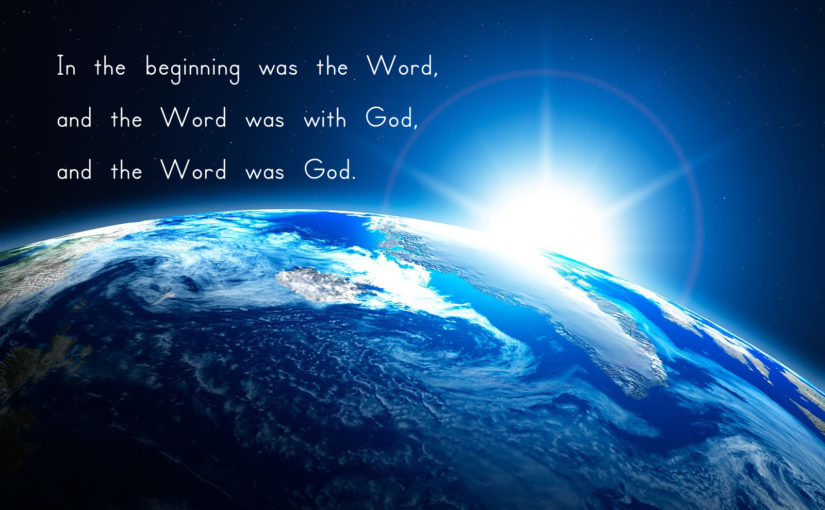
    Which brings us to why we are here this evening. Let’s be clear: this is not some last-ditch effort before God throws up his hands and leaves us to our own devices. This is the saving event, par excellence. This is the way to salvation that has always been intended and has been promised through the ages, from the very days of the creation of the world, when the Word, as Saint John tells us, was with God, and with God, was the Word through which everything in heaven and on earth came to be.

    This awesome event is the Incarnation: Jesus, the Word through which all were created, comes to be like his created ones. This is the primordial mystery of our faith: without the Incarnation, there could be no cross, no resurrection, no ascension, no salvation. None of the savings events of the Old Testament could be as efficacious as the Incarnation and the Paschal Mystery: in fact, those previous acts of salvation led up to the salvation we have in Christ Jesus, and paved the way for that saving act. In today’s feast, the great light of Christ has taken hold of the darkness this world brings to us and shatters it forever, shining great light into every corner of our dark world, and our sometimes very dark lives as well.

    This gift of the Incarnation is the best Christmas present we will receive – it is the best gift of any kind that we will ever receive, because in the Incarnation we have what’s necessary for us to be saved. This is so important a mystery and so great a gift, that at the words of the Incarnation in the Creed today, we are instructed to genuflect, not just bow. So, for those who are able, we will genuflect when we say the words, “by the power of the Holy Spirit, He was born of the Virgin Mary, and became man.” And we genuflect because we remember with great gratitude that if the Word didn’t become flesh, if he wasn’t born of the Virgin Mary, if he didn’t become one like us, if he didn’t pay the price for our sins, we would never have salvation, or hope of life with God. Praise God for this great gift!

    And so as we continue our prayer this evening, we offer God the darkness in our lives: our sins, our frustrations, our disappointments, our pain, our grief – and we hold up all of this to the great Light that is God’s Word, the one who became one like us, who pitched his tent among us, and who dwells with us now. We pray that the Light of the world would banish our darkness, and help us to see the way to God from wherever it is that we find ourselves on the spiritual path today. We celebrate that today and every day, Jesus Christ is the Light that shines in the darkness, and the darkness has not overcome it.

  • The Nativity of the Lord (Vigil Mass)

    The Nativity of the Lord (Vigil Mass)

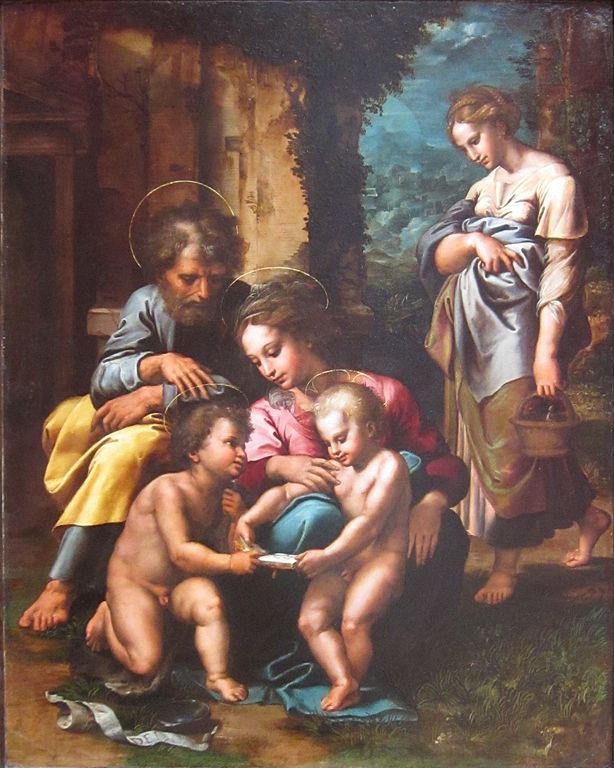
    In a town called Nazareth in Galilee, a long time ago, a girl named Mary lived with her parents, Joachim and Ann. Mary was just around fourteen years old or so.  She came from a quiet little area of the world, and just looking at Mary and her parents, you’d have to say nothing about her family was very special, although God knew that they really were!  She was engaged to be married to a man named Joseph, because that was when people got married in those days, but she wasn’t married or living with him yet.

    She was busy doing her chores one day, when she was surprised by the appearance of an angel named Gabriel.  As you can imagine, the appearing of an angel can be a little frightening, but Gabriel reassured her and told her that the Lord was with her.  He said, “Hail Mary, full of grace, the Lord is with thee.” He told her not to be afraid, because God wanted her to be the mother of his Son Jesus.  Jesus would become great and would rule over the kingdom of Israel forever.  Mary was confused how she could have a baby, because she was not living with Joseph, and she didn’t have relations with any man, but the angel reassured her that all things are possible with God.  She was amazed, but she had faith, and said to the angel, “Let it happen as you have said.”

    Mary sang a hymn proclaiming how great God was, and went in haste to visit her older relative Elizabeth, who was also going to have a baby, even though she was very old.  When she got there, the baby in Elizabeth’s womb leapt for joy, and Elizabeth said, “Blessed are you among women and blessed is the fruit of your womb!” Mary stayed with Elizabeth for three months and then returned home.

    When Joseph heard that Mary was pregnant, he was confused and upset.  He didn’t understand the message from the angel, and couldn’t see how this was all God’s will and God’s doing. He was going to break off the engagement, but he had a visit from the angel too, in a dream. The angel told him not to be afraid to take Mary into his home.  And so he did. When the emperor called for a census, a time when every person in the kingdom was counted, he took Mary with him into the city of David to be counted, because that was where he was from.  

    They had a terrible time finding a place to stay during the journey, because so many people were traveling to take part in the census.  Eventually, it became urgent: on the way, Mary gave birth to her baby, and had Jesus in a manger where the animals stayed.  It was the best they could do. Many people came to visit Mary and Joseph and Jesus, and gave the baby gifts and said wonderful things about him, things Mary would never forget.  She kept all of this very close to her in her heart.

    Mary and Joseph raised Jesus and watched him become a strong, healthy, and smart young man.  One time, when the family went to Jerusalem for a visit to the holy temple, Mary and Joseph lost track of Jesus.  They were on the way home when they discovered Jesus wasn’t with them or any of their friends or family.  They were so upset and frightened!  Returning to Jerusalem, Mary and Joseph found Jesus in the temple, talking about their faith, with all of the rabbis and teachers.  He was only twelve years old!

    Eventually Joseph died, and Mary stayed near Jesus.  She watched him start his ministry, the whole reason God had sent him to earth in the first place.  He called his disciples and taught all the people.  He cured the sick and fed many hungry crowds.  He worked many miracles and always talked about how good God was, and how much God loved people, and how they should all turn back to God and turn away from the bad things they had been doing.  Mary watched as he did all these wonderful things, and she saw how faithful he was to God’s work.

    But Mary also began to see that Jesus wasn’t making everybody happy.  She saw that when he cured people on the Sabbath day, the day of rest, the leaders of the temple became angry.  She saw that when Jesus told them to take care of the poor and the hungry and the homeless instead of worrying about what day it was, the religious leaders wanted to kill him.  Mary watched as eventually they did take hold of Jesus, carried him off for a trial before Pilate the governor, and nailed him to the cross.

    At the foot of the cross, Mary stood sorrowful, knowing what a wonderful gift she and the whole world had been given in Jesus.  But Jesus took care of Mary even then, and entrusted her to the care of his friend John.  After Jesus died on the cross, Mary along with some of the other women in the group were the first ones to see that Jesus rose from the dead!  Mary stayed with the other disciples and prayed with them that the whole world would come to know the message of Jesus.  Her sorrow turned to joy as she watched the community grow and live the things Jesus had taught them.

    Those disciples were the ones who passed the faith on to us.  Because of the courage of the disciples and especially of Mary, we today can believe in Jesus and receive the gift of everlasting life from him.  Because of the faith of Mary, we can live forever with God and never have to be afraid of death or be mastered by sin.  All of this happened because Mary said to the angel back at the beginning of it all, “I am the handmaid of the Lord, let it be done to me according to your word.”

    It is good for us to hear Mary’s story, because she lived her life following Jesus.  We’re supposed to do that too.  Mary got to see Jesus face-to-face, even hold him in her arms.  We might not be able to do that, but Jesus is close to all of us as long as we let him in.  Just like they made a place for Jesus to be born in a manger, we need to make a manger for Jesus in our own hearts so that he can be born in us and always be with us.  It’s very important that we all hear that just as God sent an angel to Mary, he sends angels to us all the time.  Those angels tell us, too, that we should not be afraid because God loves us and cares for us and wants to do great things with us, just like he did with Mary.  All he needs for us to do is to say, “Let it be done to me according to your word.”

  • Wednesday of the Second Week in Advent

    Wednesday of the Second Week in Advent

    Today’s readings

    The bane of our spiritual lives is the horrible thought that we have to handle all of life’s challenges and battles on our own. This stems from the sin of pride, which is a conviction that we are to take care of ourselves and depend on no one else, and that we are more than qualified to do so. But it’s a lie, right? We make ourselves sick trying to rely on our own strength. We may be strong people, but there’s a limit to what we can do, and in fact, a limit to what we are supposed to do.

    Dependence on God lets God take us where he wants us to be, which is always better for us in the long run. And Advent is all about letting God do this new thing in us. Advent calls us to step aside and let God be God, and depend on his strength, and let him answer our prayers the way he knows they should be answered.

    That’s what Isaiah has for us in our first reading. God has created all things, and by his might and the strength of his power, all things are held in being. God’s strength is infinitely greater than the strength of the strongest young person. Indeed, we are told “Though young men faint and grow weary, and youths stagger and fall, They that hope in the LORD will renew their strength… They will run and not grow weary, walk and not grow faint.” And that is the gentle yoke that Jesus offers us in the Gospel reading. His yoke is easy and his burden is light. All we need to do is to put down our own yokes and take up his.

    Advent calls us to rely on the strength of God in our own personal struggles and those in the world around us. We can’t do it on our own. We’re not supposed to.

    Maranatha! Come, Lord Jesus!

  • Wednesday of the Thirty-third Week in Ordinary Time

    Wednesday of the Thirty-third Week in Ordinary Time

    Today’s readings

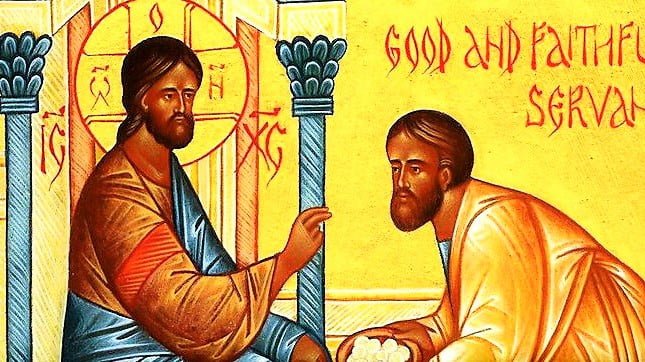
    Today’s Gospel reading presents us with Luke’s version of the Parable of the Talents from Matthew’s Gospel. Luke’s version seems a little confusing to our ears; perhaps even a bit harsh. One wonders if Jesus was hangry or something. But we know he’s simply turning up the fire on his disciples because the task is urgent. So we have a jumble. Ten men get coins, but only three get questioned at the end, there’s the whole story about the nobleman and the delegation that didn’t want him to be king, and then the slaying of those delegates at the end. If you’re scratching your head about all that, I think that’s most understandable!

    I think the pivotal moment is the command given the servants when they receive the coins: “Engage in trade with these until I return.” That’s what the nobleman says to the ten servants who received the ten gold coins. The ten gold coins are extremely valuable. Their value is more or less what a poor servant might make in his entire lifetime. So the real question today is, what is it that is really worth that much? With what have we been entrusted that could possibly be so valuable?

    Obviously those ten coins represent the Gospel to us, the command to engage in trade with them is our witness. And as we approach the end of the Church year, it would be a very good idea to see which of the servants we have been. Have we been hard at it, giving witness by the way we live our lives, the service we give without anyone knowing about it, the integrity with which we conduct our business, which has caused people to admire our way of life, to seek to find what we have? Or have we wrapped it all in a handkerchief and stored it away so that we won’t lose it and can find it when we need it, making it all about us, keeping our religion private, caving in to our fear, and never giving anyone a reason to suspect we are Christians? The Church year is ending, our Master will soon return. What return will we give him on his investment in our eternity?

    May our Master find us hard at work at his return, and say to us: “You have been faithful in this very small matter; take charge of more.”

  • Tuesday of the Thirty-third Week in Ordinary Time

    Tuesday of the Thirty-third Week in Ordinary Time

    Today’s readings

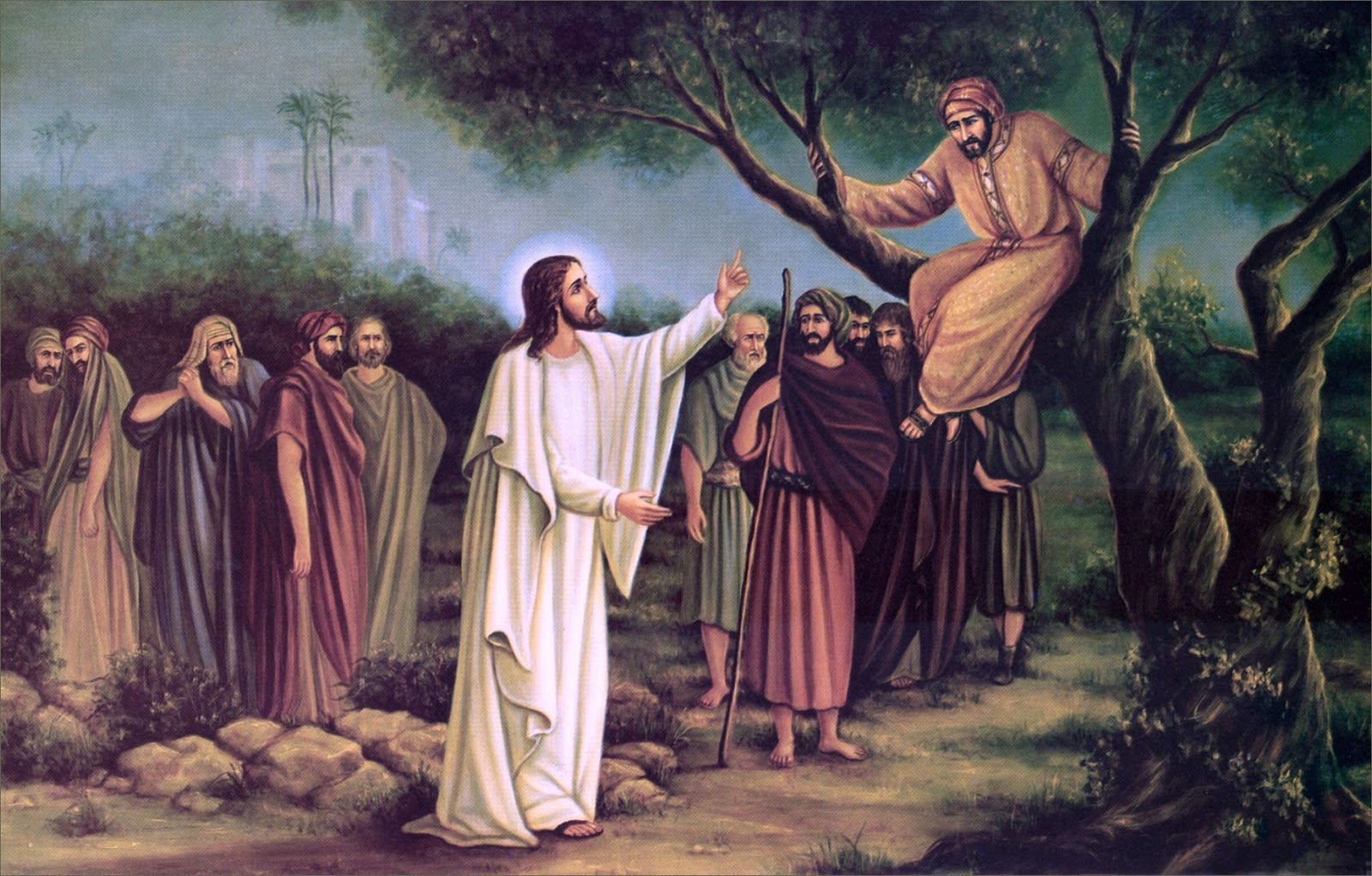
    I just love this story about Zacchaeus! In particular, there are two main components of the story that really stand out for me as hallmarks of the spiritual life.

    The first is Zacchaeus’s openness. First, he is so eager to see Jesus that he climbs up a tree to get a look at him. We don’t have to go that far. All we have to do is spend some time in Eucharistic Adoration, or even just some quiet moments reflecting on Scripture, or meditative prayer, even participating in Mass. All of those are ways to see Jesus, but like Zacchaeus, we have to overcome obstacles to get a look at him. For Zacchaeus, that meant climbing up a tree to overcome the fact that he was apparently vertically challenged! But for you and me, that might mean clearing our schedule, making our time with Jesus a priority. Zacchaeus’s openness also included inviting Jesus in, despite his sinfulness. He was willing to make up for his sin and change everything once he found the Lord. We might ask ourselves today what we need to change, and how willing we are to invite Jesus into our lives, despite our brokenness.

    The second thing that stands out for me is what Jesus says to those who chided him for going into a sinner’s house. “For the Son of Man has come to seek and to save what was lost.” What wonderful words those are for us to hear. Because we know how lost we have been at times, and how far we have wandered from our Lord. But the Lord seeks us out anyway, because we are too valuable for him to lose.

    And all we have to do is to be open to the Lord’s work in our lives, just like Zacchaeus was. What a joy it will be then to hear those same words Jesus said to him: “Today salvation has come to this house.”

  • The Feast of the Exaltation of the Holy Cross

    The Feast of the Exaltation of the Holy Cross

    Today’s readings
    Mass at Saint John the Baptist, Winfield

    Bishop Robert Barron tells about an interreligious dialogue between Catholics and Buddhists at which he was present. At one point, one of the Buddhists said to him, pointing to the Cross above the door in the meeting room, “Why is that obscene image on every wall in your buildings?” The Buddhist explained that it would be considered a mockery in his religion to venerate the very thing that killed their leader. The truth is, of course, that it is obscene. It is strange, and I don’t think we give that as much thought as we should. Just because it’s strange doesn’t make it wrong, and Barron wrote a whole book about it called The Strangest Way.

    And we all must have thought about this at one time or another. Why is it that God could only accomplish the salvation of the world through the horrible, brutal, and lonely death of his Son? That question goes right to the root of our faith. We know that we had been alienated from God, separated by a vast chasm of sin and death, which we freely chose. But into this obscene world, Jesus becomes incarnate; he is born right into the midst of all that sin and death. He walks among us, and goes through all of the sorrows and pains of life and death right with along with us. If sin and death have been the obscenities that have kept us from God, then God was going to use those very obscenities to bring us back. Jesus comes into our world and dies our death because God wants us to know that there is no place we can go, no depth to which we can fall, no experience we can ever have that is outside of the reach of God’s saving power and love.

    Today’s feast of the Exaltation of the Holy Cross, also called the Triumph of the Cross, was celebrated very early in the Church’s history. In the fourth century St. Helena, mother of the Roman Emperor Constantine, went to Jerusalem in search of the holy places of Christ’s life. She destroyed the Temple of Aphrodite, which tradition held was built over the Savior’s tomb, and her son built the Basilica of the Holy Sepulcher over the tomb. During the excavation, workers found three crosses. Legend has it that the one on which Jesus died was identified when its touch healed a dying woman. The Cross immediately became an object of veneration.

    About this great feast, St. Andrew of Crete wrote: “Had there been no Cross, Christ could not have been crucified. Had there been no Cross, life itself could not have been nailed to the tree. And if life had not been nailed to it, there would be no streams of immortality pouring from Christ’s side, blood and water for the world’s cleansing. The legal bond of our sin would not be canceled, we should not have attained our freedom, we should not have enjoyed the fruit of the tree of life and the gates of paradise would not stand open. Had there been no Cross, death would not have been trodden underfoot, nor hell despoiled.”

    Because of the Cross, all of our sadness has been overcome. Disease, pain, death, and sin – none of these have ultimate power over us any more. Just as Jesus suffered on that Cross, so we too may have to suffer in the trials that this life brings us – we know that. But Jesus rose from the dead and ascended into heaven to prepare a place for us, a place where there will be no more sadness, death or pain, a place where we can live in the radiant light of God for all eternity. Because of the Cross, we have hope, a hope that can never be taken away.

    The Cross is indeed a very strange way to save the world, but the triumph that came into the world through the One who suffered on the cross is immeasurable. As our Gospel reminds us today, all of this happened because God so loved the world.

    We adore you, O Christ, and we praise you, because by your Holy Cross you have redeemed the world.

    Fediverse Reactions
  • Wednesday of the Twenty-third Week in Ordinary Time

    Wednesday of the Twenty-third Week in Ordinary Time

    Today’s readings
    Mass at Saint John the Baptist, Winfield

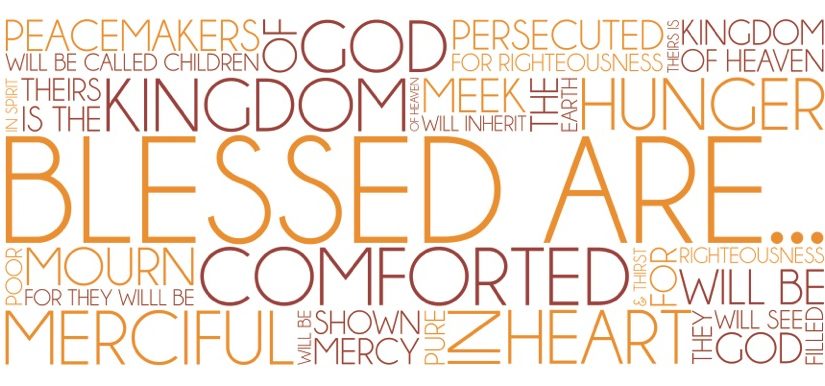
    Luke’s treatment of the Beatitudes is a little different than Matthew’s. While Matthew lists the blessings, it is only Luke who lists the woes. Whether we are looking at the blessings or the woes, it is clear that God’s wisdom is different than ours. How many of us would choose to accept hunger, grief, hatred and insult? How many of us would turn down wealth, plenty, laughter and good feelings? Yet the Lord makes it clear to us that what we choose may not ultimately be what we get.

    It’s kind of like my grandmother used to say, when we were playing and laughing a lot, “that laughing is going to turn into crying.” Usually, she was right. And that’s true of all of our lives. Time has a way of changing our circumstances and life comes with its ebbs and flows. But what Jesus is worried about here is a little more serious than that. He is concerned about those who make comfort and good feelings and wealth their number one priority, those who are addicted to these things. If this is what becomes our god, then what use have we for God our maker?

    Today’s Gospel is a call to get it right. To put our priorities in order. It’s not just about us; we have to take up the cross and follow Christ. That might indeed mean some hardship, some hunger, grief, hatred and insult. We might have to put aside the wealth, plenty, laughter and good feelings for a time. We are not home yet; we are mere travelers on this earth. And so the sufferings of this present time are but temporary. Our real reward is in heaven, and we pray that we don’t miss it by striving here on earth for all the wrong things.

  • The Twenty-first Sunday in Ordinary Time

    The Twenty-first Sunday in Ordinary Time

    Mass at Saint Petronille, Glen Elllyn | Today’s readings

    In my first priestly assignment, at Saint Raphael in Naperville, there was a huge football program for elementary school kids called Saint Raphael Football. It was not just a team, but a league, and lots of surrounding churches had teams in the league. You couldn’t live in Naperville and not have heard of Saint Raphael Football. It had a rather tangential relationship to the parish. So once in a while, in a social setting, someone would ask me what church I was from, and I’d tell them, Saint Raphael. And they would say to me, “Oh yes, we go there, our son is in that football league.” I always wanted to tell them, “How nice. By the way, we also celebrate the Eucharist there.” Maybe I should have. Today’s gospel reading makes me think I should.

    We – as a society – have it all wrong. Our priorities are all messed up. I think we’re in real danger, now more than ever, and today’s Liturgy of the Word is a wake-up call for us to get it right. We live in a society that has not just lost its moral compass, but has actually taken pains to bury it away and never look at it again. Everyone seems to think that something is okay if it works for them in their current circumstance, regardless of how it affects others, regardless of how it affects even them in the long-run. In many alarming ways, our moral compass has been buried for so long that we hardly know what it looks like anymore.

    So this homily is probably going to come off sounding kind of harsh to some of you, but if I don’t say what I have to say, I’m not doing my job as a priest. And I know, really I know, that most of you get this. So please indulge me; if this doesn’t apply to you, please pray for someone who needs to hear it, because you know someone who does.

    When Jesus is asked whether only a few will be saved, he deflects the question. His answer indicates that it’s not the number of those who will be saved – that’s not the issue. The issue is that some people think they will be saved because they call themselves Christian, or religious, or spiritual, or whatever. It’s kind of like the people I talked to who considered themselves practicing Catholics simply because their children played in a football league that was marginally affiliated with the parish.

    Jesus says that’s not how it works. We have to strive to enter the narrow gate. So what does that mean? For Jesus, entering eternity through the narrow gate means not just calling yourself religious; that would be a pretty wide gate. It certainly wouldn’t mean saying that you’re basically a good person, since that criterion is pretty subjective, and so widely misunderstood. The narrow gate means actually practicing the faith: taking time for prayer and worship, receiving the Eucharist for strength, living the gospel, reaching out to the needy, showing love to your neighbor. It means making one’s faith the first priority, loving God first, worshiping first, loving others first. Because “some are last who will be first, and some are first who will be last.”

    And I’ll be the first to tell you that it’s hard to do that. Saint Paul says today that we have to strengthen our drooping hands and weak knees; Jesus says that many will attempt to enter that narrow gate but won’t be strong enough to do it. That narrow gate of love is hard to enter: it takes effort, it takes grace; it takes strength, and we can only get that grace and strength in one place, and that place is the Church. That’s why Jesus gives us the Church: to strengthen us for eternal life.

    That’s not the best news, however, because so many people these days settle for simply calling themselves religious, or being “spiritual” – whatever that means. They’ll play football on the team, but won’t make an effort to come to Church to receive the strength they need to live this life and to enter eternal life. It is here, in the Eucharist, freely given by our gracious Lord, that we receive the strength we need to love, the strength necessary to live our faith and be united with our God. It is here, in the proclamation of the Word, that we find instruction to live as disciples and are more and more conformed into the image of Christ. But it’s hard to get to Church because Billy has a soccer game, or Sally has a dance recital, or because Mom and Dad just want to sleep in after a really trying week.

    But those decisions, friends, have eternal consequences. So let me be clear: God is more important than soccer, or football, or cheer, or whatever sport you’re playing; God is more important than the dance recital, and as for sleeping in on Sunday, well, as my grandfather used to say, you can sleep when you’re dead. And it’s not like it’s an either/or proposition: people don’t have to choose between soccer and Mass or dance and Mass or even sleeping and Mass. Certainly not in our section of the world. This parish has Mass on Saturday evening, on Sunday morning, and even Sunday evening. If those don’t work, there are a bunch of parishes within a short driving distance that have other schedules. There’s probably a church within a few driving minutes of every football or soccer field in the area; I know a lot of families choose to take that option when schedules are hectic.

    The point is, we make time for what’s important to us. And eternal life is the only thing that we have of lasting importance. So we have to build up the strength to get through that narrow gate one day. We’ve got to worship God with consistency; we have to live the gospel with consistency.

    We’re not going to be able to say one day: “We ate and drank in your company and you taught in our streets and we played football on your team.” We can’t just call ourselves Catholic; we have to live our faith. We have to worship and pray; we have to reach out to the needy, stand up for truth and justice, make a real effort to love even when it’s not convenient to love, or even when the person who faces us is not as lovable as we’d like.

    All of this requires commitment and effort and real work from all of us. We have to strive to enter through that narrow gate, because we don’t ever want to hear those bone-chilling words from today’s Gospel: “I do not know where you are from. Depart from me, you evildoers!” The good news is we don’t ever have to hear those words: all we have to do is nourish our relationship with Jesus that will give us strength to enter the narrow gate. After all, the narrow gate is love, and the love of God in Jesus is more than enough to get us through it.

  • Monday of the Thirteenth Week in Ordinary Time

    Monday of the Thirteenth Week in Ordinary Time

    Today’s readings

    Today’s first reading has always intrigued me, ever since I can remember hearing it as a child. God intends to destroy the city of Sodom because of its pervasive wickedness. Abraham, newly in relationship with God, stands up for the innocent of the city, largely because that was where his nephew, Lot, had taken up residence. In what seems to be a case of cosmic “Let’s Make a Deal,” Abraham pleads with God to spare the city if just fifty innocent people could be found there. God agrees and Abraham persists. Eventually God agrees to spare the city if just ten righteous people could be found in the city of Sodom.

    It is important, I think, to know that Abraham’s prayer does not really change his unchangeable God. Instead, God always intended to spare the city if there were just people in it.  What I love about this reading is Abraham’s line, “See how I am presuming to speak to my Lord, though I am but dust and ashes!”  It seems Abraham is testing the relationship, seeing how far it will go.  What happens is that he learns something great about our unchanging God: he learns that, as the psalmist sings today, “The LORD is kind and merciful.”

    All of this leads us to an important issue at stake for the praying disciple: that is, prayer must come out of a relationship with God.  Abraham may have been somewhat presumptuous to speak to God the way that he did.  But if he didn’t know God, if he didn’t have a relationship with God, well, then his conversation would have been completely offensive, wouldn’t it?  But he did know God, and was getting to know him better, so his pleas for the just people of Sodom were completely appropriate.

    We too are called to relationship with God, a relationship that finds its source in our prayer.  We can persistently plead for loved ones, but we also have to spend time in adoration and praise and thanksgiving, and even quiet contemplation so that this most important of our relationships can grow.  The LORD is kind and merciful, and he longs to reveal his mercy as we come to him in prayer.

  • Thursday of the Twelfth Week in Ordinary Time

    Thursday of the Twelfth Week in Ordinary Time

    Today’s readings

    So today we learn that just because we call on the Lord, that doesn’t mean that the Lord is at our whim, someone we can summon in the same way as we press a button on the remote and the television comes to life. That’s what the whole nasty business with Abram and Sarai was about. Instead of trusting the Lord’s promises that God would make Abram the father of many nations, they took matters into their own hands and then were displeased at the result. That’s what happens when we forget to trust in God and instead trust in ourselves and in our own ability to do something clever.

    The same is true for the scribes and Pharisees, and also for the wanna-be followers of Jesus. They might claim mighty deeds in Jesus’ name, but Jesus can see their hearts and knows that they are not really open to the fullness of the Gospel. Simply crying, “Lord, Lord” will not get them into the kingdom of heaven. If they’re not willing to set their house on the rock solid foundation of Christ, they will not stand, and they will fall apart with the first of the storms.

    And so we disciples have to be careful about our relationship with Christ. It’s not something we can neglect and expect it to be deep and rich enough to lead us to eternal life. We have to be people of integrity, spiritual people who know who our Lord is and who are open to the fullness of his teaching. He teaches with authority, not as the scribes of old, nor as the so-called authorities of our time – like Oprah or Dr. Phil. If we want teaching with authority, all we have to do is open the Bible, take some time in Adoration, or devote ourselves to prayer, and then fall in love all over again with our Lord who gave himself for our sakes so that we can all be one with him in the kingdom that has no end.