Category: Ordinary Time

  • Friday of the Fifth Week in Ordinary Time

    Friday of the Fifth Week in Ordinary Time

    Today’s readings

    “He makes the deaf hear and the mute speak.”

    This is good news for us, even if we can hear perfectly and speak without impediment. It is good news because we might just have to admit that we hear selectively and speak impetuously on occasion, right? We have to read this Gospel reading with attention to our spiritual lives in order for its message to live in our hearts.

    Maybe Solomon in our first reading (and the first readings the last couple of days) could have turned to God for healing from deafness. If he had, maybe he would have heeded the Lord’s command not to marry into the pagan families of the land and pick up their customs. Then he wouldn’t have lost all but one of the tribes of Israel for his family and splintered the nation.

    But it’s not just Solomon, not just the deaf mute, not just the Pharisees who need to have their hearing and speech healed. To those who turn a deaf ear to their family, or to the cry of the poor, Jesus says, “Ephphatha!” To those who sometimes gossip, or who have stuck their foot in their mouth in a social setting, or who have spoken ill of others, Jesus says “Ephphatha!” Jesus opens up the ears and mouths of those who turn to them so that they can hear the truth and proclaim it.

    What is the word we need to hear today? What is God saying to us? What words do we need to speak today? When should we be silent? Today we all pray that Jesus’ word of healing – “Ephphatha!” – would help us deaf ones hear and mute ones speak.

  • Saturday of the Fourth Week in Ordinary Time

    Saturday of the Fourth Week in Ordinary Time

    Today’s readings

    In our Gospel reading today, Jesus offers the Apostles an opportunity. They had been so busy, they had no opportunity to eat, let alone rest. They had just come from the mission he sent them out on back in Thursday’s Gospel reading. So he invites them on retreat: “Come away by yourselves to a deserted place and rest a while.” He gives them a chance to recharge, to rest and grow. Meanwhile, Jesus continued the ministry of preaching and teaching.

    I think that opportunity for rest is one that we often neglect in our daily lives. Like the apostles, we have so many things that demand our attention: the demands of family, work, and community. We need that sabbath rest in order to recharge, rest, and grow. If we neglect it long enough, we end up burnt out and bitter, not helpful to our salvation, or the good of those we are trying to serve and live with. So today, we come to be fed by the Eucharist and nourished in prayer; we come to receive the gifts that we need to live our lives and serve those we are meant to serve.

    None of us is meant to do what we are put on earth to do all by ourselves. Our Lord wants to give us what we need. That’s why he told the apostles on Thursday to “take nothing for the journey but a walking stick – no food, no sack, no money in their belts.” If they packed everything they’d ever need, they would be burdened carrying it all, and, they wouldn’t need him. But the only way they really could do what he needed them to do was to rely on him and the gifts he wanted to give them. At the beginning today’s gospel reading, it seems like they are absolutely bubbling with excitement, reporting all they had done and taught. Because they relied on Jesus.

    We too are called to rely on Jesus, and his gifts, and to come away by ourselves and rest in him.

  • Wednesday of the Fourth Week in Ordinary Time

    Wednesday of the Fourth Week in Ordinary Time

    Today’s readings

    Second Samuel, which we have been reading in our first readings over the last couple of weeks, paints King David, the ancestor of Our Lord, as a very human, very flawed man. Last Friday, we heard of his exploits with Bathsheba, which resulted in him murdering her husband, Uriah the Hittite. Yesterday’s reading, if it had not been Saint Blaise’s memorial, talked about the death of his son Absalom in battle.

    Today’s first reading shows a flawed David too, but maybe the flaw isn’t as easy to understand. But Joab, the leader of David’s army, can see it. In some of the verses that our first reading omits, Joab tries to dissuade David by saying: “May the LORD your God increase the number of people a hundredfold for my lord the king to see it with his own eyes. But why does it please my lord to do a thing of this kind?” Joab can see what David is choosing to ignore: that David should be content with the Lord’s blessings, and not try to take inventory. But David is convinced and the census takes place.

    What makes this even weirder is that in verse one of the 24th chapter of second Samuel, the verse that comes just before the reading we have, it is God himself who incites David to do this thing, because God is angry with the way the nation has been behaving. It’s almost like God used David to punish Israel for their sins.

    But it’s important to remember that David isn’t innocent in all this. He too has contributed to the sins of Israel, and so the punishment is warranted. Thank God that he has mercy at the end of the reading, putting an end to the pestilence.

    So here’s the thing. It’s a weird story, and it paints an Old Testament picture of a God who is quite different than the mercy we see in Jesus. But the message that we have to get is that the whole idea here is to stay in relationship with God. The Israelites wanted to ignore God unless they really, really needed him, relying instead on their alliances with pagan people, and committing the same sins as they did. Even good King David was caught up in that. The point of this reading is that God is not without mercy, but he wants his people to acknowledge their need for it. David does in the responsorial psalm, calling out to God, “Lord, forgive the wrong I have done.”

  • The Fourth Sunday in Ordinary Time

    The Fourth Sunday in Ordinary Time

    Today’s readings

    Today’s readings give us a little instruction on the virtue of humility. Humility is the virtue that reminds us that God is God and we are not. That might seem pretty obvious, but I think if we’re honest, we’d all have to admit that we have trouble with humility from time to time. The deadly sin that is in opposition to humility is pride, and pride is perhaps the most common sin, and really the most serious sin. We might think of all kinds of other sins that seem worse, but pride completely destroys our relationship with God because it convinces us that we don’t need God. That was the sin of the Israelites building the golden calf in the desert, it was the sin of the Pharisees arguing with Jesus, it was even the sin of Lucifer in the first place, and it is the sin of all of us, at some level, at some times in our lives.

    Pride is pretty easy to recognize when it’s blatant: it is the person boasting of their abilities or their possessions or their accomplishments or status, claiming all the glory for themselves, putting others down in the process, and never even mentioning God. But that’s not the only face of pride. Another face of pride realizes that we are in a sorry state, but doesn’t want to bother God with our problems so we try to figure them out ourselves. It never works, and so we continue to feel miserable, but we also offend God in the process. A similar face of pride looks to accomplish something important, maybe even something holy. But we go about it without immersing it in prayer and forge ahead with our own plans. Again, we often fail at those times, and we certainly offend God.

    The only antidote to pride is the virtue of humility. Humility is the way of living that accepts the difficulties and challenges of life as an opportunity to let God work in us. It is the state of being that admits that everything we are and everything we have is a gift from God, and spurs us to profound and reverential gratitude for the outpouring of grace that gets us through every day and brings us to deeper friendship with God.

    So today we hear the very familiar Beatitudes. I know that when I was learning about the Beatitudes as a child, they were held up as some kind of Christian answer to the Ten Commandments. I don’t think that’s particularly valid. One might say, however, that the Ten Commandments are a basic rule of life and the Beatitudes take us still deeper.

    I also remember thinking, when I was learning about the Beatitudes, that these seemed like kind of a weak way to live life. I mean, who can live up to all these things anyway? And who would want to? Do you know anyone who would actively seek to be poor, meek or mourning? And who wants to be a peacemaker? Those people have more than their share of grief.

    So I think when we hear the Beatitudes today, we need to hear them a little differently. We need to hear them as consolation and encouragement on the journey. Because at some point or another, we will all be called upon to be poor, meek and mourning. That’s just life. And the disciple has to be a peacemaker and seek righteousness. We will have grief in this lifetime – Jesus tells us that in another place. So what Jesus is saying here, is that those of us undergoing these sorts of trials and still seeking to be righteous people through our sufferings are blessed, even happy.

    So does anyone really believe that? I mean, it’s quite a leap of faith to engage our sufferings and still be sane, let alone happy. The ability to see these Beatitudes as true blessings seems like too much to ask. And yet, that’s what we disciples are being asked to do.

    I think a good part of the reason why this kind of thinking is hard for us, is that it’s completely counter-cultural. Our society wants us to be happy, pain-free and without a concern in the world. That’s the message we get from commercials that sell us the latest in drugs to combat everything from indigestion to cancer – complete with a horrifying list of side-effects. That’s the message we get from the self-help books out there and the late-night infomercials promising that we can get rich quick, rid our homes of every kind of stain or vermin, or lose all the weight you want in just minutes a day. That’s the message we get from Oprah, Dr. Phil, and Joel Osteen and their ilk, who encourage us never to be second to anyone and to do everything possible to put ourselves first. If this is the kind of message we get every time we turn on a television, or surf the internet, who on earth would want to be poor in spirit? Who would want to be meek? Who would even think to hunger and thirst for righteousness?

    Now this is an important point: Pride is just the way we live, culturally speaking. We are always right, and if we’re not, we certainly have a right to be wrong. We can accomplish anything we set out to do, and if we fail, it was someone else’s fault. We don’t need anyone’s help to live our lives, but when we’re in need, it’s because everyone has abandoned us. We are culturally conditioned to be deeply prideful people, and it is absolutely ruining our spiritual lives.

    Jesus is the One who had the most right of anyone to be prideful. He is God, for heaven’s sake – I mean, he really could do anything he wanted without anyone’s help. But he chose to abandon that way of living so that we could learn how to live more perfect lives. He abandoned his pride and in humility took on the worst kind of death and the deepest of humiliation.

    So what if we started to think the way Jesus does? What would happen if we suddenly decided it wasn’t all about us? What would happen if we decided that the utmost priority in life was not merely taking care of ourselves, but instead taking care of others, trusting that in that way, everyone – including ourselves – would be taken care of? What would happen if we were not completely consumed with ourselves and so did not miss the opportunity to come to know others and grow closer to our Lord? That would indeed be a day of great rejoicing and gladness, I can assure you that.

    And I’m not saying you shouldn’t take care of yourself. We all need to do that to some extent, and maybe sometimes we don’t do that as well as we should. But when we consume ourselves with ourselves, nothing good can come from it. Maybe this is a kind of balance that we could spend these weeks leading up to Lent striving to achieve.

    Today’s Liturgy of the Word calls us to a kind of humility that remembers that God is God and we are not. It is the only real antidote to the destructive, deadly sin of pride that consumes our society and us on a daily basis. This isn’t some kind of false humility that says we are good for nothing, because God never made anything that was good for nothing. Instead, it is a humility that reminds us that what is best in us is what God has given us. As St. Paul says today, “God chose the foolish of the world to shame the wise, and God chose the weak of the world to shame the strong, and God chose the lowly and despised of the world, those who count for nothing, to reduce to nothing those who are something, so that no human being might boast before God.” If we would remember that everything that we have and everything we are is a gift to us, if we would remember that it is up to us to care for one another, if we would remember that being consumed with ourselves only makes us feel worse than ever, if we would but humble ourselves and let God give us everything that we really need, we would never be in want. Blessed, happy are we; rejoice and be glad!

  • Friday of the Third Week in Ordinary Time

    Friday of the Third Week in Ordinary Time

    Today’s readings

    The story of David and Bathsheba and Uriah the Hittite is a compelling one. It almost seems like the kind of thing you’d hear on a soap opera or some kind of crime drama. But here we have it right at the beginning of our Liturgy of the Word today. This reading is teaching us the fact that we all need a Savior. Even the greatest among us is a sinner. David, the Lord’s anointed, the one from whose lineage the Savior was to be born, even he was tragically flawed and needed that very Savior.

    We see David’s sin grow in intensity. First he does not go down with his army on the campaign, even though the reading makes it clear that going on campaign with his army was something kings did at that time of the year. But instead, David takes a siesta in his palace. Then he rises and notices Bathsheba. And he notices her with something more than a passing glance. Then he lusts after her. He then sends for her and has relations with her – he may even have raped her, because we are not told how willing a participant Bathsheba was in this whole affair. Finally, when it became apparent that the affair would be known, he has Uriah the Hittite killed in battle to cover up the sin. This is the kind of thing that happens when sin is not confessed and is allowed to fester. David went from impure thoughts to murder pretty quickly.

    Today’s Psalm, Psalm 51, was written by David after the Lord convicted him of a different sin. But it is the model of how he made amends to God. He makes a perfect act of contrition: he confesses his sin, asks pardon for his offense, and prays that he would be restored to the rejoicing and gladness that God’s people are promised.

    The Kingdom of God is supposed to be like that tiny mustard seed, planted in the garden, that grows to a humongous plant that becomes a refuge for the birds of the air. The way to water and tend that seed is by confessing our sin, allowing God to work his mercy in our lives, and allowing him to restore us to the rejoicing and gladness that we were created for. Have mercy on us, O Lord, for we have sinned.

  • Thursday of the Third Week in Ordinary Time

    Thursday of the Third Week in Ordinary Time

    Today’s readings

    There’s a little line in the Gospel reading that could pass us right by, or at least puzzle us to the extent that we forget it and move on. But I don’t think we should. That line is: “Take care what you hear.” It closely follows Jesus’ other hearing-related line: “Everyone who has ears ought to hear.”

    Sometimes we choose to hear just what we want to hear, sometimes we pick news sources and podcasts that are less than ethical and cause us consternation and detract from the Truth, and that is absolutely the opposite of what our Lord is counseling today. Instead, we ought to be ready to hear the Truth, and to speak and witness to that Truth at all times, like a lamp on a lamp stand.

    And so we might spend less time on the internet and in front of the television, and instead devote more time to prayer, reading and studying scripture, and activities that help us to grow in our faith.

    This reminds me of the story of the conversion of Saint Ignatius of Loyola, who during recovery after injury in battle, read both romantic stories and stories of the saints. He discovered that reading the romantic stories left him feeling anxious and empty, but reading the stories of the saints left him uplifted and wanting to hear more. The Truth is like that. Take care what you hear.

    We will be measured by our willingness to be people of Truth, and when we have courage to bring the Truth to a world in need of hearing it, still more graces will be measured out to us.

    Take care what you hear.

  • The Third Sunday in Ordinary Time: Sunday of the Word of God

    The Third Sunday in Ordinary Time: Sunday of the Word of God

    Today’s readings

    Many years ago now, before I went to seminary, this parish put on a production of the musical Godspell, and somehow I found myself part of the cast. If you’ve ever seen the musical, you know that it is based on the Gospel of Matthew, the Gospel that we are reading during this current Church year. I remember the first song of the musical was kind of strange to me at the time. It’s called “Tower of Babel” and the lyrics are a hodge-podge of lots of philosophies and philosophers throughout time. I didn’t get, at the time, the significance of the song, but I do now. The song represents the various schools of thought about God, over time. It shows how philosophy at its worst has been an attempt to figure out God by going over God’s head, by leaving God out of the picture completely.

    The song ends abruptly and goes right into the second song of the musical, “Prepare Ye,” of which the major lyric is “Prepare ye the way of the Lord.” The message that we can take from that is that the useless, and in some ways sinful, babbling of the pagan philosophers was once and for all settled by Jesus Christ. If we want to know the meaning of life, if we want to know who God is, we have only to look to Jesus. That’s true of most things in life.

    That’s what is happening in today’s Liturgy of the Word too. The people in the first reading and in the Gospel have found themselves in darkness. Zebulun and Naphtali have been degraded. They have been punished for their sinfulness, the sin being that they thought they didn’t need God. They thought they could get by on their own cleverness, making alliances with people who believed in strange gods and worshiped idols. So now they find themselves in a tower of Babel, occupied by the people with whom they tried to ally themselves. Today’s first reading tells them that this subjection – well deserved as it certainly was – is coming to an end. The people who have dwelt in darkness are about to see a great light.

    The same is true in another sense for Peter and Andrew and the sons of Zebedee in today’s Gospel. These men have been fishermen all their lives. Reading the Gospels and seeing how infrequently they catch anything unless Jesus helps them, we might wonder how successful they were at their craft. But the point is that fishing is all they’ve ever known. These are not learned men, nor are they known for their charisma or ability to lead people. But these are the men who Jesus calls as apostles. One wonders if they had any previous knowledge about Jesus, because on seeing him and hearing him and recognizing the Light of the World, they drop everything, turn their backs on the people and work they have always known, and follow Jesus, whose future they absolutely could never have imagined.

    All of this is good news for us. Because we too dwell in darkness at times, don’t we? We can turn on the news and see reports of men and women dying in war, crime and violence in our communities, corruption in government, and so much more. Then there is the rampant disrespect for life through the horrific sin of abortion, as well as euthanasia, hunger and homelessness, racism and hatred, intolerance of people who have different opinions, and so much more. Add to that the darkness in our own lives: illness of a family member or death of a loved one, difficulty in relating to family members, and even our own sinfulness. Sometimes it doesn’t take much imagination to know that our world is a very dark place indeed.

    But the Liturgy today speaks to us the truth that, into all of this darkness, the Light of Christ has dawned and illumined that darkness in ways that forever change our world and forever change us. One of the Communion antiphons for today’s Liturgy speaks of that change. Quoting Jesus in the Gospel of John, it says this:

    I am the light of the world, says the Lord;
    whoever follows me will not walk in darkness,
    but will have the light of life.

    There is an antidote available for the darkness in our world and in our hearts, and that antidote is Jesus Christ. The limits that are part and parcel of our human existence are no match for the light that is God’s glory manifested in Christ. This is what we mean by the Epiphany, and we continue to live in the light of the Epiphany (which we celebrated three weeks ago) in these opening days of Ordinary Time. Now that Jesus Christ has come into the world, nothing on earth can obscure the vision of God’s glory that we see in our Savior.

    Pope Francis, of blessed memory, has made this particular Sunday each year a celebration of the Word of God. He means for us to spend time opening the Scriptures and finding the manifold riches that are there. That’s what our Mass is always about. Read carefully through the order of Mass and you’ll find scripture in every part of it. Not just in the Liturgy of the Word – that’s a given, but in each and every one of the prayers of Mass. Catholic worship isn’t something someone made up: it is literally a celebration of the Word of God from beginning to end. And that makes sense, when you think about it: if we are called to “Go and announce the Gospel of the Lord,” as one of the dismissal formulas invites us, we can do that with confidence because we have just been fed on the Gospel in every part of our Mass.

    The Mass, too, is an Epiphany celebration at every point of the liturgical year. Because when we’re attentive to the Word of God and the prayer of the Mass, we can’t possibly miss Jesus present among us. So Pope Francis on this Sunday of the Word of God encouraged us to devote ourselves to God’s word: to join a Bible study, to help others break open the word by leading that part of the OCIA, to teach the scriptures to children in our school and religious education programs, to proclaim the Word at Mass. Do any one of those things, sisters and brothers, and I guarantee you’ll grow in your knowledge of scripture. And, turning a famous saying of Saint Jerome around to the positive, knowledge of scripture is knowledge of Christ.

    Jesus came to be good news for us. He is the Word of God incarnate among us, not just two thousand years ago, but even now if we would give ourselves over to loving the scriptures. So for those of us who feel like every day is a struggle of some sort, and who wonder if this life really means anything, the Good news is that Jesus has come to give meaning to our struggles and to walk with us as we go through them. For those of us who are called to ministries for which we might feel unqualified – as catechists, Eucharistic Ministers, Lectors, OCIA team members, small group leaders or retreat leaders – we can look to the Apostles and see that those fishermen were transformed from the darkness of their limited life to the light of what they were able to accomplish in Christ Jesus. Wherever we feel darkness in our lives, the Good News for us is that Christ’s Epiphany – his manifestation into our world and into our lives – has overcome all that.

    As the Psalmist sings for us today, the Lord truly is our light and our salvation.

  • Wednesday of the Thirty-third Week in Ordinary Time

    Wednesday of the Thirty-third Week in Ordinary Time

    Today’s readings

    Today’s Gospel reading presents us with Luke’s version of the Parable of the Talents from Matthew’s Gospel. Luke’s version seems a little confusing to our ears; perhaps even a bit harsh. One wonders if Jesus was hangry or something. But we know he’s simply turning up the fire on his disciples because the task is urgent. So we have a jumble. Ten men get coins, but only three get questioned at the end, there’s the whole story about the nobleman and the delegation that didn’t want him to be king, and then the slaying of those delegates at the end. If you’re scratching your head about all that, I think that’s most understandable!

    I think the pivotal moment is the command given the servants when they receive the coins: “Engage in trade with these until I return.” That’s what the nobleman says to the ten servants who received the ten gold coins. The ten gold coins are extremely valuable. Their value is more or less what a poor servant might make in his entire lifetime. So the real question today is, what is it that is really worth that much? With what have we been entrusted that could possibly be so valuable?

    Obviously those ten coins represent the Gospel to us, the command to engage in trade with them is our witness. And as we approach the end of the Church year, it would be a very good idea to see which of the servants we have been. Have we been hard at it, giving witness by the way we live our lives, the service we give without anyone knowing about it, the integrity with which we conduct our business, which has caused people to admire our way of life, to seek to find what we have? Or have we wrapped it all in a handkerchief and stored it away so that we won’t lose it and can find it when we need it, making it all about us, keeping our religion private, caving in to our fear, and never giving anyone a reason to suspect we are Christians? The Church year is ending, our Master will soon return. What return will we give him on his investment in our eternity?

    May our Master find us hard at work at his return, and say to us: “You have been faithful in this very small matter; take charge of more.”

  • Tuesday of the Thirty-third Week in Ordinary Time

    Tuesday of the Thirty-third Week in Ordinary Time

    Today’s readings

    I just love this story about Zacchaeus! In particular, there are two main components of the story that really stand out for me as hallmarks of the spiritual life.

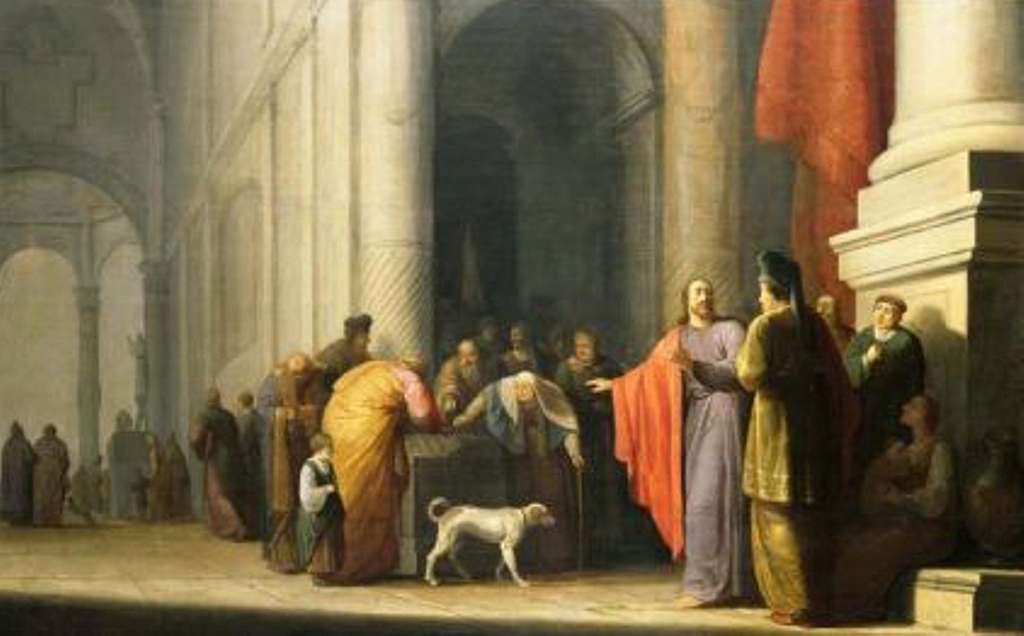
    The first is Zacchaeus’s openness. First, he is so eager to see Jesus that he climbs up a tree to get a look at him. We don’t have to go that far. All we have to do is spend some time in Eucharistic Adoration, or even just some quiet moments reflecting on Scripture, or meditative prayer, even participating in Mass. All of those are ways to see Jesus, but like Zacchaeus, we have to overcome obstacles to get a look at him. For Zacchaeus, that meant climbing up a tree to overcome the fact that he was apparently vertically challenged! But for you and me, that might mean clearing our schedule, making our time with Jesus a priority. Zacchaeus’s openness also included inviting Jesus in, despite his sinfulness. He was willing to make up for his sin and change everything once he found the Lord. We might ask ourselves today what we need to change, and how willing we are to invite Jesus into our lives, despite our brokenness.

    The second thing that stands out for me is what Jesus says to those who chided him for going into a sinner’s house. “For the Son of Man has come to seek and to save what was lost.” What wonderful words those are for us to hear. Because we know how lost we have been at times, and how far we have wandered from our Lord. But the Lord seeks us out anyway, because we are too valuable for him to lose.

    And all we have to do is to be open to the Lord’s work in our lives, just like Zacchaeus was. What a joy it will be then to hear those same words Jesus said to him: “Today salvation has come to this house.”

  • The Feast of the Exaltation of the Holy Cross

    The Feast of the Exaltation of the Holy Cross

    Today’s readings
    Mass at Saint John the Baptist, Winfield

    Bishop Robert Barron tells about an interreligious dialogue between Catholics and Buddhists at which he was present. At one point, one of the Buddhists said to him, pointing to the Cross above the door in the meeting room, “Why is that obscene image on every wall in your buildings?” The Buddhist explained that it would be considered a mockery in his religion to venerate the very thing that killed their leader. The truth is, of course, that it is obscene. It is strange, and I don’t think we give that as much thought as we should. Just because it’s strange doesn’t make it wrong, and Barron wrote a whole book about it called The Strangest Way.

    And we all must have thought about this at one time or another. Why is it that God could only accomplish the salvation of the world through the horrible, brutal, and lonely death of his Son? That question goes right to the root of our faith. We know that we had been alienated from God, separated by a vast chasm of sin and death, which we freely chose. But into this obscene world, Jesus becomes incarnate; he is born right into the midst of all that sin and death. He walks among us, and goes through all of the sorrows and pains of life and death right with along with us. If sin and death have been the obscenities that have kept us from God, then God was going to use those very obscenities to bring us back. Jesus comes into our world and dies our death because God wants us to know that there is no place we can go, no depth to which we can fall, no experience we can ever have that is outside of the reach of God’s saving power and love.

    Today’s feast of the Exaltation of the Holy Cross, also called the Triumph of the Cross, was celebrated very early in the Church’s history. In the fourth century St. Helena, mother of the Roman Emperor Constantine, went to Jerusalem in search of the holy places of Christ’s life. She destroyed the Temple of Aphrodite, which tradition held was built over the Savior’s tomb, and her son built the Basilica of the Holy Sepulcher over the tomb. During the excavation, workers found three crosses. Legend has it that the one on which Jesus died was identified when its touch healed a dying woman. The Cross immediately became an object of veneration.

    About this great feast, St. Andrew of Crete wrote: “Had there been no Cross, Christ could not have been crucified. Had there been no Cross, life itself could not have been nailed to the tree. And if life had not been nailed to it, there would be no streams of immortality pouring from Christ’s side, blood and water for the world’s cleansing. The legal bond of our sin would not be canceled, we should not have attained our freedom, we should not have enjoyed the fruit of the tree of life and the gates of paradise would not stand open. Had there been no Cross, death would not have been trodden underfoot, nor hell despoiled.”

    Because of the Cross, all of our sadness has been overcome. Disease, pain, death, and sin – none of these have ultimate power over us any more. Just as Jesus suffered on that Cross, so we too may have to suffer in the trials that this life brings us – we know that. But Jesus rose from the dead and ascended into heaven to prepare a place for us, a place where there will be no more sadness, death or pain, a place where we can live in the radiant light of God for all eternity. Because of the Cross, we have hope, a hope that can never be taken away.

    The Cross is indeed a very strange way to save the world, but the triumph that came into the world through the One who suffered on the cross is immeasurable. As our Gospel reminds us today, all of this happened because God so loved the world.

    We adore you, O Christ, and we praise you, because by your Holy Cross you have redeemed the world.

    Fediverse Reactions