Blog

  • Thursday of the Twenty-fourth Week of Ordinary Time

    Thursday of the Twenty-fourth Week of Ordinary Time

    Today’s readings

    It’s been a while now since I was thought of as “too young.” I remember on my ordination as a deacon, on my way to priesthood, the first reading was from the prophet Jeremiah in which he protests to the Lord that he is too young to prophesy. Bishop Kaffer, of happy memory, in his homily basically said, “you’re not too young at all; it’s about time we are here ordaining you!” So when I hear today’s letter from Saint Paul to Saint Timothy, I think it’s interesting that he enjoins him not to let anyone look down on his youth.

    Now for those of us who don’t have that problem, maybe we have another. Maybe we let people look down on our age, or our experience, or whatever. Maybe we come up with all sorts of excuses as to why people wouldn’t listen to us anyway, so why bother trying to teach them? Since we have all been gifted by the Lord in some way, we have to use that gift, and not worry about people dismissing us because we aren’t the same as they are. God works in all of us, and we have to persevere in our task, so that we will save both ourselves and others.

  • The Exaltation of the Holy Cross

    The Exaltation of the Holy Cross

    Today’s readings

    In a lot of ways, this is a strange feast we are celebrating today. Think about it. This is the Exaltation of the Holy Cross, which in Jesus’ day would have been as big an oxymoron as one could possibly imagine. It’s like us saying that we are going to celebrate the exaltation of a lethal injection chamber. There is nothing exalted about an instrument of execution: it’s tortuous, humiliating, and as dark as one can get.

    So to get from that to where we are now is nothing short of a miracle. A miracle, of course, of the highest order! God used this instrument of punishment to remit the punishment we deserved for our sins. God used the epitome of darkness to bathe the world in unfathomable light.

    And he didn’t have to. The cross is what we deserved for our many sins. Today’s first reading gives us just a glimpse into the problem. The Israelites, fresh from deliverance from slavery in Egypt, are making their way through the desert. Along the way, they pause to complain that God’s food, which he provided in the desert, wasn’t good enough for them. They had chosen slavery over deliverance; food that perishes over food that endures unto eternal life.

    But we’re there too, right? We often choose the wrong kind of food, get off the path, and choose slavery to our vices and sins over new life in Christ. In fact it was because of all that that Jesus came to us in the first place. God noticed our brokenness and would not let us remain dead in sin. So to put an end to that cycle of sin and death, he sent his only Son to us to die on the cross, paying the price for our sins. But that death may no longer have power over us, he raised him up, cheating the cross and the evil one of their power, and exalting the Holy Cross to the instrument not of our death, but of our salvation.

    Because of the Cross, all of our sadness has been overcome. Disease, pain, death, and sin – none of these have ultimate power over us. Just as Jesus suffered on that Cross, so we too may have to suffer in the trials that this life brings us. But Jesus rose from the dead and ascended into heaven to prepare a place for us, a place where there will be no more sadness, death or pain, a place where we can live in the radiant light of God for all eternity. Because of the Cross, we have hope, a hope that can never be taken away.

    The Cross is indeed a very strange way to save the world, but the triumph that came into the world through the One who suffered on the cross is immeasurable. As our Gospel reminds us today, all of this happened because God so loved the world.

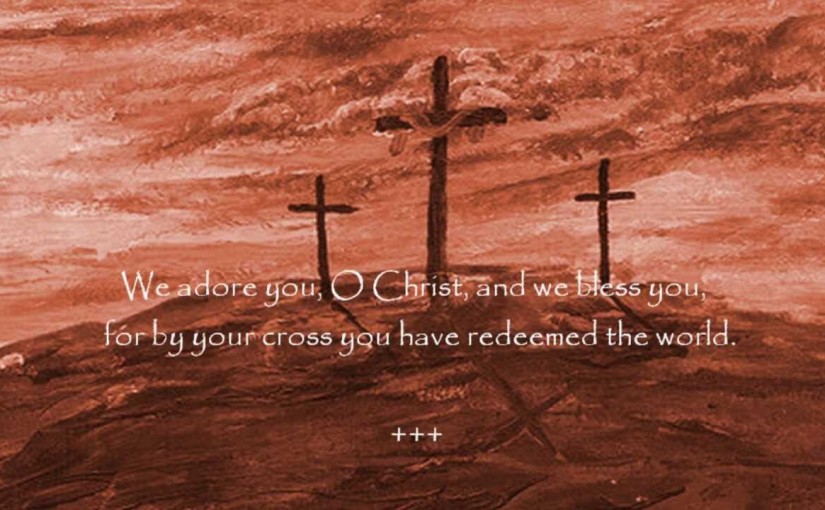
    We adore you, O Christ, and we praise you, because by your Holy Cross you have redeemed the world.

  • 9-11: Taking the Wooden Beams Out of Our Eyes

    9-11: Taking the Wooden Beams Out of Our Eyes

    Today’s readings

    When I hear today’s Gospel reading, I think about my dad. When he was alive, he was a guy who seemed to know everyone. Anywhere we went, he’d find someone he knew, even on vacation! But he wouldn’t just know their names, he’d also know something about them. He would know their talents, stuff they were good at; he’d also sometimes know if they were going through some kind of difficulty or hard time. But most often, he always was able to see what was good in them.

    That’s the kind of thing I think Jesus wants us to do in our Gospel reading. He wants us to know each other as brothers and sisters, instead of seeing everyone’s faults and sins and downfalls. Because we all have those things. And if we focus on them, we’ll never be the children of God we were created to be. He uses the hyperbole of seeing a splinter in the other person’s eye but missing the wooden beam in our own. We all have sins and downfalls, but we all have grace and blessing. We’ve got to look for that, look for the best in people, because that’s what makes us children of God.

    Fourteen years ago today, right around this time in the morning, I was in my room in seminary. Most of the other guys in my class had a class at that time, but I didn’t. So I was working on some homework, and then decided to go online and read some of the news. The first headline I saw said something like “Airplane Collides with World Trade Center.” I turned on the television and saw the tower down, and thought it had to be some kind of horrible accident. Then I saw the second plane fly into the second tower, and at that point everyone knew something terrible was happening. I will never forget that horrible moment.

    Over the course of the following days, we came to know that over three thousand people died that day, including many police and fire fighters. And our world has changed a lot ever since: there is more security when you get on an airplane, more security everywhere, it seems. And if we would listen to what Jesus is telling us today, maybe things like this wouldn’t have to happen.

    Even this week, a Sikh man was attacked right near here in Darien, because the attacker thought he was a terrorist. We have to learn to take the wooden beams out of our eyes so that we can see each other as brothers and sisters. Only then will we become everything that God intends for us.

    Today on this fourteenth anniversary of 9-11, we should do a lot of things. We should study what happened that day so that we won’t repeat the mistakes that were made. We should remember those who gave their lives that day, especially those who tried to help the victims, and we should pray for ourselves and all people that we can become peaceful people who love the Lord and see each other as brothers and sisters, without all those splinters or beams in our eyes.

  • The Twenty-third Sunday of Ordinary Time: Ephphatha!

    The Twenty-third Sunday of Ordinary Time: Ephphatha!

    Today’s readings

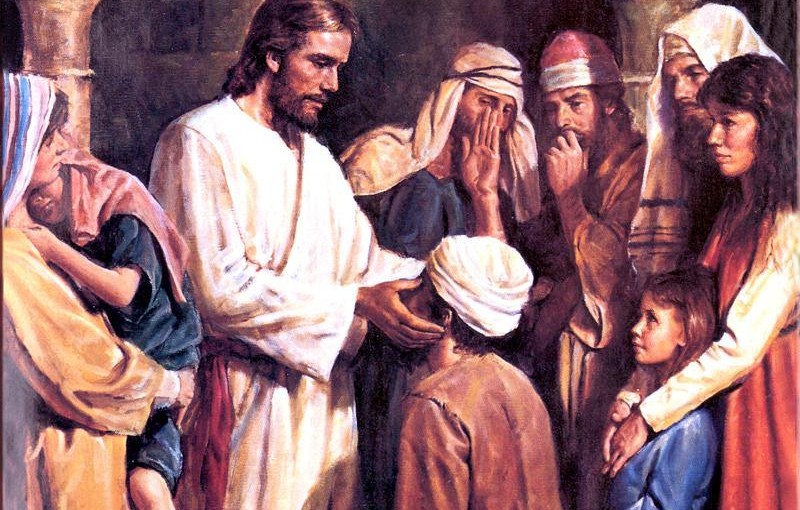
    Jesus’ ministry on earth was all about healing.  In today’s gospel, he heals a man who has been deaf and mute with the word of command: “Ephphatha!” – “Be opened!”  So you’ve heard me talk about this kind of thing before. The healing is not here just for us to say “how nice for that deaf and mute man.” The healing he intends, the command, “Be opened!” is for us too.  Mark brings us this story in his Gospel because Ephphatha is what Jesus is about.  He is about healing, and opening up a way for those who have been at odds with God to be back in relationship with him.  So whether the obstacle has been a physical illness or a spiritual one, he commands ephphatha, that the way be opened and the obstacle obliterated, and the illness of the broken one bound up and the way made straight for the person to be in communion with God.

    St. James today invites us to take a look at the issue from another angle.  Have we pre-judged people who are not like us when they come to the Church, or to us in any way?  Do we look down on those who don’t dress like us, or don’t speak like us, or don’t act like us?  Do these people have illness that needs to be healed?  Or is it we that have the illness, being unable to see them as Christ does, as brothers and sisters and children of God?  So whatever the illness is today, whether it is ours or someone else’s, Jesus commands it: ephphatha, be opened, that nothing may be an obstacle to the love of God and the healing of Jesus Christ.

    Since the readings lead us to a place of healing, I want to take this opportunity to speak of one of the sacraments of healing, namely the Anointing of the Sick. I want to do that because I think it’s a sacrament we don’t think of much, until someone is near death, and that’s not what the Anointing of the Sick is all about. In the days prior to Vatican II, that was the understanding of the Sacrament. It was called Extreme Unction, Latin for “Last Anointing” and that’s not what it was supposed to be all about.

    The impetus for the sacrament of Anointing of the Sick comes from the letter of Saint James. It says: “Is anyone among you sick? He should summon the presbyters of the church, and they should pray over him and anoint (him) with oil in the name of the Lord, and the prayer of faith will save the sick person, and the Lord will raise him up. If he has committed any sins, he will be forgiven.” (James 5:14-15) The sacrament is about healing: physical, sure, but also spiritual. Having God’s presence in the sacrament with us in our time of illness is of great value – just ask anyone who’s been through it!

    So I’d like to identify a few times when it would be appropriate to have the Anointing of the Sick. The first is before surgery that is either life threatening itself, or is for the healing of some illness or injury. Very often people will call, and they might come to a daily Mass before their surgery or the weekend before their surgery, and I’ll anoint them after Mass. This is a wonderful time to receive the sacrament, because they’ve just been to Mass and have received the Eucharist. The combination of those sacraments is a great source of grace and healing.

    Another time someone might be anointed is if they’ve come to the hospital with a life-threatening illness or injury, perhaps even after an accident. Or perhaps a patient is hospitalized for an addiction or mental illness. Very often there’s a priest on call at the hospital who can do that, or if it’s one of the local hospitals here, I’ll be called to go over. Being anointed at that time of crisis can be a great source of peace to both the patient and their loved ones.

    Another time for the Anointing is when a patient is home bound, or after they’ve come home from having surgery and there is going to be a long time of rehabilitation. Then I might come to the person’s home, anoint them, and then we can arrange for a parishioner to come give them Holy Communion each week. We have a number of parishioners who help us with that ministry, and it keeps the patient connected to the parish and to the Lord during difficult days. I always like to say, when you’re well, you can come to us, and when you’re sick, we can come to you.

    The final time for the Anointing is the one that most people think of, and that is near death. At the time of death, we have what is known as the Last Rites. The Last Rites are a combination of three sacraments: the sacrament of Penance, the Anointing of the Sick, and Viaticum, which is Latin for “bread for the journey,” one’s last Communion. If at all possible, it’s good if the patient is well enough to participate in all three sacraments, but very often that’s not the case. Then we just do what we can of them and trust in God’s mercy.

    It’s important that we know about the illness so that we can care for the patient. In today’s society that means a family member or the patient themselves, must call us. Hospitals can’t do that any more, due to privacy laws. So it’s very important that we know, and know soon enough that we can respond. With only one priest at the parish, it’s hard for me to respond at the spur of the moment because of other things going on, but I do want to be there. And if, unfortunately, a patient dies before the priest can get there, there are still prayers we can do. Sometimes we don’t know that the patient is going so quickly. I had that happen just recently, and we still prayed and I was there to spend some time with the family.

    The healing work of Christ is what the Church is all about. Today, he Jesus continues to work through the Church to bring healing to all those who need it. He cries out “Ephphatha” that we might all be opened up to his healing work and that every obstacle to relationship with him might be broken down.
  • Pope Saint Gregory the Great, Doctor of the Church

    Pope Saint Gregory the Great, Doctor of the Church

    Today’s readings

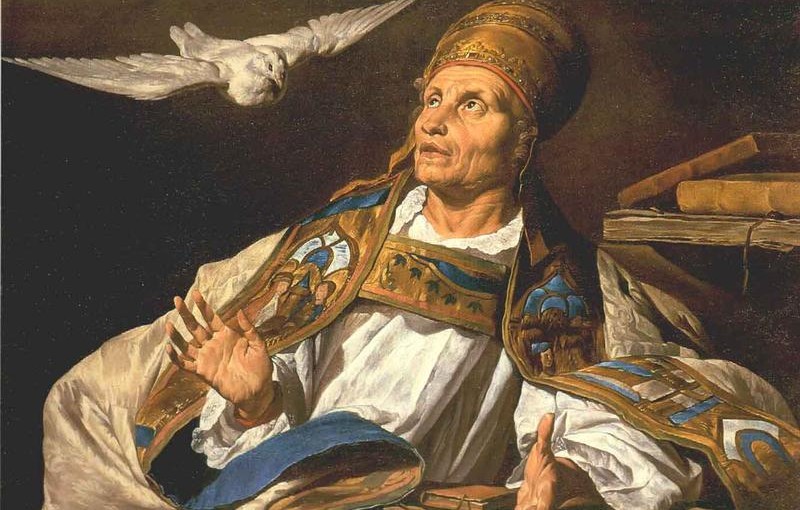
    “Do not be afraid; from now on you will be catching men.” These are words Saint Gregory took to heart. He was one of the foremost theologians and thinkers in Church history, and did much to spread the Gospel in an orthodox way throughout the world.

    St. Gregory showed a great deal of promise at a young age. He had a stellar political career, becoming prefect of Rome before the age of thirty. After a short time, he resigned his office and dedicated his life to the priesthood. He joined a Benedictine monastery and became abbot, founding several other monasteries during his time there. Eventually he was called to become the Bishop of Rome, the Pope, and he dedicated his papal ministry to reforming the Church, the Liturgy, and its priests. He spent a good deal of time and money ransoming political prisoners of the Lombards, and helped to stabilize the social climate somewhat during a time of great strife in the medieval world. He always stood ready to renounce his own ambitions to follow Christ, and spoke of himself as unworthy of the grace God had given him.

    Gregory gave himself to Jesus’ call in today’s Gospel reading, “from now on you will be catching men.” He is a wonderful model for all of us on spreading the Gospel through faithful prayer and participation in the Sacraments. The medieval world and the Church owe a great deal to Gregory’s faithful ministry, and for this we call him “Gregory the Great.”

  • Monday of the Twenty-second Week of Ordinary Time 

    Monday of the Twenty-second Week of Ordinary Time 

    Today Jesus tussles not with the scribes and Pharisees as he often does, but instead with the people of his own home town. They are amazed at his words and speak highly of him, right up until the time when he begins to challenge them. Then they have no more use for him. They become offended that he is making himself out to be better than they are, that he is making himself out to be God.

    God uses all kinds of people to make his message known. They may be strangers, but they might be people we know very well. We disciples today need to ask ourselves, who are those prophets among us and what message are they bringing us? God may well be using someone in our workplaces or homes or schools or wherever we find ourselves this day to speak a message to us. The question is, will we be open to hear it?

  • The Twenty-second Sunday of Ordinary Time

    The Twenty-second Sunday of Ordinary Time

    Today’s readings

    So often, when someone thanks us for something, we might say, “It’s the least I could do.” As if it were some kind of badge of achievement to do the least thing possible. I think it’s human nature to try to do as little as possible, without being perceived as lazy or something. Sometimes we want to do as little as possible, and have others feeling good about it.

    Well, I think it’s that kind of attitude that is behind today’s Liturgy of the Word. Certain things are expected of believers, and over the course of history, people have tried to get away with doing as few of those things as they absolutely need to do. The first reading sets the stage: Moses places the law before the people and tells them that they are a great nation, because they have a God so close to them, and who loves them enough to give them the whole law that they have received.

    Now the whole law is more than we might think. Perhaps when we hear that, we think of the Ten Commandments, to which we also are bound in our discipleship. But for the Jewish community back then, there were a total of over six hundred laws and precepts that made up the law. Because of that, there was constant discussion over which of the laws was most important, and often people would be concerned more about a tiny little precept than about the whole big picture that God was trying to accomplish.

    This is the attitude Jesus came to address with the Gospel. He wanted the people to get it right. He wanted them to have concern for people more than for semantics in the law. He wanted them to love as God loves, because if you do that, you’ll be keeping the law anyway. But people didn’t always accept that teaching. If they did, Jesus wouldn’t have had to go to the Cross, and there would have been no need to preach the Gospel.

    So in today’s Gospel reading, Jesus makes a major correction. There was a law of purifying vessels before festivals, which is not unlike the way the priest washes his hands before the Eucharistic Prayer or the way that the vessels for Mass are purified after Communion. But somewhere along the way, the precept got mangled, and everyone was bound to scrupulously wash themselves and every vessel they owned before a feast. And Jesus chastises them for having more concern about a human tradition than about the real intent of the law.

    The real intent of the law was obviously something way more important, way more personal. The real intent of that purification was the purification of our hearts. Jesus gives a rather horrifying list of sins at the end of the Gospel reading and notes that these are the things that defile; not some dirt on the outside of a cup or hands that had not been scrupulously cleaned. If we want to really purify ourselves for the festival, which is to say the Eucharist, then we have to be cleansed of our sins. That’s why we have the Sacrament of Penance, right?

    James, in the second reading, picks up on the theme. If we really want to be thought to be wise in regard to keeping the law, then we have to keep ourselves unstained by the world, which would be the same thing as Jesus was saying, but also to care for those in need, with which Jesus would certainly not disagree!

    The thing is, we are hearers of the Word. We have experienced the love of our Lord in so many ways. Everything that we have is a gift to us. We have to be wise in regard to all that, and to be certain that we keep the whole of the law. Not just those little minutiae, but the very spirit of the law, the law of love which binds all disciples and all people of good will.

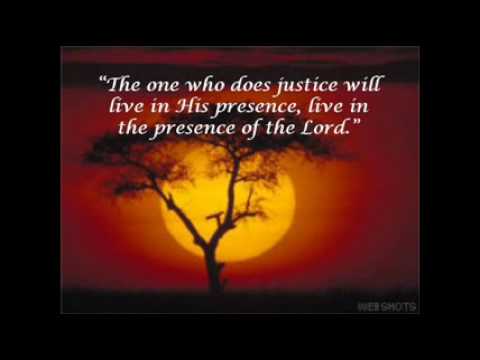
    Because, as the Psalmist says today, it is they who do justice who will live in the presence of the Lord. And that’s just where we all want to be.

  • Saint Augustine, Bishop and Doctor of the Church

    Saint Augustine, Bishop and Doctor of the Church

    Today’s readings
    (Mass for the school children.)

    “You made us for yourself, O Lord, and our hearts are restless until they rest in you.”

    This is one of the most famous lines from Saint Augustine’s writings. We celebrate his feast day today, and it is somewhat of a miracle that we celebrate his feast at all. He was the son of a Christian woman and a man who was a pagan, and a crabby pagan at that! His mother, Saint Monica, was persistent in prayer, and eventually her husband was converted to Christianity.

    But Augustine, a young man now, had not converted. He lived a rather immoral life, and had come to follow a particular heresy known as Manicheanism, which took ideas from all kinds of different religions and put them all together. He was a very smart man, and became a professor in Milan, Italy. His mother followed him there from where they lived in Africa, and continued to pray for him.

    Eventually Augustine came to know the man who would become known as Saint Ambrose, who was the bishop of Milan at the time. He learned a lot from Saint Ambrose, and was very taken by the way that he preached. Eventually through his preaching and Saint Monica’s prayers, Augustine was converted and was baptized at the Easter Vigil.

    After that, Augustine and his mother returned to Africa, where he lived a quiet life for about three years. Then he heard the bishop of that area, Valerian, talk about the priest shortage, and the people of the area said “Let Augustine be our priest!” So he became a priest, and eventually became the bishop when Valerian died.

    So when Augustine wrote that “our hearts are restless until they rest in you,” he knew what he was talking about. His life was a crazy mess until Saint Monica’s prayers were answered and he was baptized. Then the true purpose of Saint Augustine’s life was revealed, and he followed God’s call. God will call all of us to do something at some point in our life. It might take a while to figure out what that call is, but once we know, we absolutely will never be happy until we follow it.

    Today, Jesus tells the story about the wise virgins who were ready for the wedding feast, and the unwise virgins who didn’t come prepared. This is a story that is really about looking to God for our happiness. If we are ready and we wait for the Lord to lead us in our lives, we will be able to come in and feast with him in the life to come. Just like Saint Augustine, if we calm ourselves down and hear the voice of the Lord calling us, we can know a peace and happiness that nothing else in life can ever give us.

    “You made us for yourself, O Lord, and our hearts are restless until they rest in you.”

  • Saint Monica

    Saint Monica

    Today’s readings

    The kind of persistent prayer for those who were important to Saint Paul, as he speaks about in today’s first reading from his second letter to the Thessalonians, was something that Saint Monica practiced every day of her life. This was a woman in love with God and the Church, and her family, although the latter was pretty difficult for her. But her persistent prayer won them for Christ and the Church.

    Although she was a Christian, her parents gave her in marriage to a pagan, Patricius, who lived in her hometown of Tagaste in North Africa. Patricius had some redeeming features, but he had a violent temper. Monica also had to bear with a cantankerous mother-in-law who lived in her home. Patricius criticized his wife because of her charity and piety, but always respected her. Monica’s prayers and example finally won her husband and mother-in-law to Christianity. Her husband died in 371, one year after having been baptized.

    Monica’s oldest son was Augustine. At the time of his father’s death, Augustine was 17 and a rhetoric student in Carthage. Monica was distressed to learn that her son had accepted the Manichean heresy and was living an immoral life. For a while, she refused to let him eat or sleep in her house. Then one night she had a vision that assured her Augustine would return to the faith. From that time on she stayed close to her son, praying and fasting for him. In fact, she often stayed much closer than Augustine would have liked!

    Augustine, followed by his mother, eventually traveled to Rome and then Milan, where he came under the influence of the bishop, St. Ambrose, who also became Monica’s spiritual director. There Monica became a leader of the devout women in Milan as she had been in Tagaste.

    She continued her prayers for Augustine during his years of instruction. At Easter, in the year 387, St. Ambrose baptized Augustine and several of his friends. Soon after, his party left for Africa. Although no one else was aware of it, Monica knew her life was near the end. She told Augustine, “Son, nothing in this world now affords me delight. I do not know what there is now left for me to do or why I am still here, all my hopes in this world being now fulfilled.” She became ill shortly after and suffered severely for nine days before her death.

    Monica was a woman who accomplished much by her persistent prayer. She may well be a patron for all parents who have prayed much for the conversion of their children. It might be well for us today to ask for a portion of her spirit of prayer that we might accomplish God’s glory in our own time and place.