Tag: forgiveness

  • The Twenty-sixth Sunday of Ordinary Time

    The Twenty-sixth Sunday of Ordinary Time

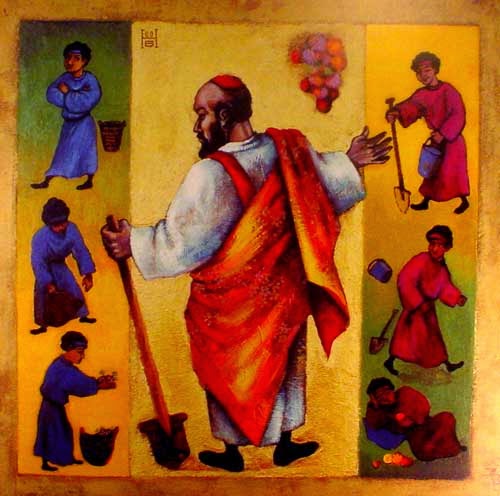
    Today’s readings

    Sometimes it’s hard to accept that something is in our best interest when we first hear of it.  I can remember often growing up not wanting to do something like go on a retreat or join the youth group, but my parents giving me that gentle nudge to do it anyway.  And then of course, when I went, I’d always have a really great experience, and then I had to admit to them that I liked it, which was harder still.

    I always think of that when I hear this week’s Gospel reading.  I think it’s a pretty human experience to resist what’s good for us, especially when it means extending ourselves into a new experience, or when it means having to inconvenience ourselves or disrupt our usual schedule.  We don’t want to go out into the field and work today, or go help at the soup kitchen, or go teach religious education, or go on that retreat, or get involved in a ministry at the church, or join a small Christian community, or whatever it may be that’s in front of us.

    I remember specifically an experience I had when I first started in seminary.  I became aware that some of the guys, as their field education experience, were serving as fire chaplains.  That scared the life out of me, and I said to myself that I’d never be able to do that.  Two and a half years later, one of my friends at seminary asked me to join him as a fire chaplain.  Figures, doesn’t it?  I told him I didn’t think I had the ability to do that, but he persuaded me to pray about it.  Well, when I prayed about it, of course the answer was yes, do it.  And so I did, and found it one of the most rewarding spiritual experiences of my time in seminary.

    People involved in ministries here at the Church can probably tell you the same kinds of stories.  Times when they have been persuaded to do something they didn’t want to.  They could probably tell you how much they grew as people, how much they enjoyed the experience.  When we extend ourselves beyond our own comfort level for the glory of God, we are always rewarded beyond what we deserve.  And that’s grace, that’s the work of God in our lives.

    What’s important for us to see here is this: God extends his mercy and forgiveness and grace and calling to us all the time. We may respond in four ways. First, we may say no, and never change, never become what God created us to be. This happens all the time because we as a people tend to love our sins and love our comfort more than we love God. We would rather not be inconvenienced or challenged to grow.

    We might also say no, but later be converted. That’s more okay. Let’s be clear: there is no time like the present, and we never know if we have tomorrow. But God’s grace doesn’t stop working on us until the very end. So we can have hope because God does not give up on us.

    We might say yes, with all good intentions of following God, being in relationship with him, and doing what he asks of us. But perhaps we get distracted by life, by work, by our sins, by relationships that are impure, or whatever. And then we never actually become what we’re supposed to be.

    Or we might actually say yes and do it, with God’s grace. We might be people who are always open to grace and work on our relationship with God. Then that grace can lead to a life of having become what God wanted of us, and that puts us on the path to sainthood, which is where we are all supposed to be.

    Today’s Gospel is a good occasion for a deep examination of conscience. Where are we on the spectrum? Have we nurtured our relationship with God and said yes to his call, or are we somewhere else? And if we’re somewhere else, what is it that we love more than God? What do we have to do to get us on the right path? We know the way of righteousness. We know the path to heaven. We just have to make up our minds and change our hearts so that we might follow Jesus Christ, our way to eternal life.
  • Thursday of the Twenty-fourth Week of Ordinary Time

    Thursday of the Twenty-fourth Week of Ordinary Time

    Today’s readings

    Simon the Pharisee had committed a grave error in hospitality, and a serious error in judgment. In those days, when a guest came to your home, you made sure to provide water for him or her to wash their feet, because the journey on foot was often long and hot and dirty, and it was pretty much always made on foot. But Simon had done no such thing for Jesus.

    Simon’s intentions were not hospitable; rather he intended to confront Jesus on some minutiae of the Law so as to validate his opinion that Jesus was a charlatan. He judged the woman to be a sinner, and reckoned Jesus guilty of sin by association. But Jesus is about forgiveness. He didn’t care about the woman’s past; he just knew that, presently, she had need of mercy. Her act of love and hospitality, her posture of humility, her sorrow for her sin, all of these made it possible for Jesus to heal her.

    But the one who doesn’t think he is in need of healing can never be healed. And so that’s our examination of conscience today. Are we aware of our need for healing, or have we been thinking we are without sin, without brokenness, without openness to God’s mercy? If so, our moments of reflection today need to guide us to honest and open acceptance of God’s mercy, and a pouring out of the best that we have in thanksgiving.

  • Monday of the Third Week of Ordinary Time

    Monday of the Third Week of Ordinary Time

    Today’s readings

    This is a tough text from the Gospel today.  Jesus says that “whoever blasphemes against the Holy Spirit will never have forgiveness…”  This seems to be an incongruous statement from Jesus, who came to be all about forgiveness.  That he would withhold it from any sinner is shocking, I think.

    But we have to remember what it is that Jesus was addressing here.  The scribes who had come from Jerusalem catch up with Jesus and begin to make trouble for him.  They are being obstinate in their unbelief, even to the point of being intellectually dishonest.  They know that Satan cannot cast himself out, but that’s just what they’re accusing Jesus of being and doing.  They would rather say foolish things than to believe that Jesus came to cast out sin and forgive sinners.

    Salvation and forgiveness are a gift, and gifts must be accepted.  If one refuses to be forgiven, he or she will never have forgiveness.  If one refuses to believe that he or she needs a Savior, then he or she will never come at last to eternity.

    May we never forget how much we need our Savior.

  • Saturday of the First Week of Ordinary Time

    Saturday of the First Week of Ordinary Time

    Today’s readings

    In today’s Gospel, we have the continued Epiphany of Jesus manifested as one who identifies with sinners.  That is not, of course, to say that he was a sinner; quite the contrary, because we know that Jesus was like us in all things but sin.  But today we see that he is certainly concerned with calling sinners to the Kingdom, and concerned enough that he will be known to be in their company.  He eats with them, talks with them, walks with them.

    This of course, riles the Pharisees.  And, to be fair, for good reason; Jewish law taught that sinners were to be shunned; they were cast out of the community.  But Jesus has come to say that he hates the sin but loves the sinner; that nothing in us is beyond the power of God to redeem.  Nothing that we have done can put us so far away from God that we are beyond God’s reach.  And God does reach out to us, in tangible ways, in sacramental ways, in the person of Jesus and through the ministry of the Church.

    Sin is a terrible thing.  It’s often cyclical.  Because not only does the judgment of the Pharisees – and others – make sinners feel unworthy; but also does the guilt that comes from inside the sinner.   The more one sins, the less worthy one often feels of God’s love, and so the more does that person turn away from God, and then they sin more, feel less worthy, turn away again, and so on, and so on, and so on.

    But Jesus won’t have any of that – he has come to put an end to that cycle once and for all.  Jesus is the One who walks into the midst of sinners, sits down with them and has a meal.  He is the divine physician healing our souls, and those who do not sin do not need his ministry.  But we sinners do, so thanks be to God for the manifestation of Jesus as one who came to dine with sinners.

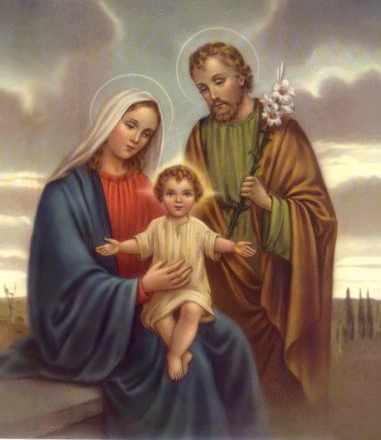
  • The Holy Family of Jesus, Mary and Joseph

    The Holy Family of Jesus, Mary and Joseph

    It’s certainly appropriate that we celebrate the Holy Family today, just a few days after Christmas.  This feast helps to underscore that Jesus came to live among us in a very ordinary way: by taking flesh and becoming one of us, even to being part of a family.  So we look on the manger scenes that still are on display here in church and in our homes, and we see Jesus, Mary and Joseph beginning their lives together.  We still sing Christmas carols that extol the peace of his coming.

    As we praise the Holy Family today – and we certainly should – I’m aware that some families who are here today may have just managed to get here on time, or a little after.  Maybe there was the constant argument with the kids about why they have to go to church.  It might have been hard to turn off the television or tear someone away from the latest toy they just got for Christmas.  And so, as they hustle in here to church and sit down, maybe the holiness of the family is the furthest thing from our minds.

    So maybe it’s hard to relate to the Holy Family.  Maybe you’re thinking, “How do I get one of those?”  There are all sorts of families out there: families broken by divorce or separation, families marked by emotional or physical abuse, families fractured by living a great distance apart, families grieving the loss of loved ones or agonizing over the illness of one of the members, families of great means and those touched by poverty, homelessness and hunger, families torn by family secrets, grudges and age-old hurts.  Some are trying to form a family: they want to have children, but are unable.  There are healthy families and hurting families, and every one of them is graced by good and touched by some kind of sadness at some point in their history.

    Even the Holy Family, whose feast we celebrate today, was marked with challenges.  An unexpected – and almost inexplicable – pregnancy marked the days before the couple was officially wed; news of the child’s birth touched chords of jealousy and hatred in the hearts of the nation’s leaders and caused the young family to have to flee for their lives and safety.  Even this Holy Family was saddened, in some ways, by an extremely rocky beginning.

    The institution of the family is an extremely precarious thing.  We know this.  God knows this.  Yet it was into this flawed but holy structure that the God of all the earth chose to come into our world.  Taking our flesh and joining a human family, Christ came to be Emmanuel, God with us, and to sanctify the whole world by his most merciful coming.

    St. Paul exhorts us all to be marked by holiness, part of the family of God. We do this, he tells us, by showing one another “heartfelt compassion, kindness, humility, gentleness, and patience, bearing with one another and forgiving one another, if one has a grievance against another; as the Lord has forgiven you, so must you also do.”  Living in a family, living the Christian life, requires sacrifice.  Some days we don’t feel very compassionate, but we are still called to be that way.  We might not feel like showing someone kindness, or patience, or being humble.  But that’s what disciples do.  But the real sticking point is that whole forgiveness thing.  Because all of us are going to fail in compassion, kindness, humility, gentleness and patience at one time or another.  So just as the Lord has forgiven us, so many times and of so many things, so must we forgive one another.  We live our whole lives trying to figure out how to do this.

    The Holy Family is the model for us in all of this.  Because I think what we’re supposed to be seeing in the Holy Family today is not some kind of idyllic perfection.  Certainly they attained more perfection than any of us could ever possibly hope for in this life, but that’s not what we’re supposed to be focusing on.  What I think is worth focusing on is that, even though they knew there would be hard times ahead for them, they faithfully lived their lives through it all.  They continued to be a family, Jesus continued to grow and become strong in his human nature, and to be filled with wisdom and the favor of God.  And that, for us, is something worth striving for.  Being perfect might seem unattainable, but being faithful is in our grasp and faithfulness leads us to holiness.

    For Jesus, Mary and Joseph, their faithfulness helped them to absorb the challenges of an unplanned pregnancy and the dangers of oppression from the government, and still shed light on the whole world.  For us, faithfulness can help us to get through whatever rough spots life may have in store for us and not break apart.

    I am aware, however, that as I speak about faithfulness, that it all can still seem insurmountable.  Why should you be faithful when the hurts inflicted by other members of your family still linger?  That’s a hard one to address, but we’re not told to be faithful just when everyone else is faithful.  Sometimes we are called to make an almost unilateral decision to love and respect the others in our families, and let God worry about the equity of it all.  I know that’s easier to say than to do, but please you have your Church family to support you with prayer and love as you do it.

    Every single one of us is called to be holy, brothers and sisters.  And every single one of our families is called to be holy.  That doesn’t mean that we will be perfect.  Some days we will be quite far from it.  But it does mean that we will be faithful in love and respect.  It means that we will unite ourselves to God in prayer and worship.  It means we will love when loving is hard to do.  Mary loved Jesus all the way to the Cross and watched him die.

    That holiness will make demands of us. It did for Jesus, Mary and Joseph.  Simeon and Anna were quite clear that sorrow lay in store for them.  But they continued to live their lives, aided by the Spirit of God, and they all grew strong in wisdom and grace.  Those same blessings are intended for us to, all of us who do our best to live according to the Spirit in our own human families, no matter what those families may look like.

  • Thursday of the Twenty-fourth Week of Ordinary Time

    Thursday of the Twenty-fourth Week of Ordinary Time

    Simon the Pharisee had committed a grave error in hospitality, and a serious error in judgment.  In those days, when a guest came to your home, you made sure to provide water for him or her to wash their feet, because the journey on foot was often long and hot and dirty, and it was pretty much always made on foot.  But Simon had done no such thing for Jesus.

    Simon’s intentions were not hospitable; rather he intended to confront Jesus on some minutiae of the Law so as to validate his opinion that Jesus was a charlatan.  He judged the woman to be a sinner, and reckoned Jesus guilty of sin by association.  But Jesus is about forgiveness.  He didn’t care about the woman’s past; he just knew that, presently, she had need of mercy.  Her act of love and hospitality, her posture of humility, her sorrow for her sin, all of these made it possible for Jesus to heal her.

    But the one who doesn’t think he is in need of healing can never be healed.

  • Monday of the Nineteenth Week of Ordinary Time

    Monday of the Nineteenth Week of Ordinary Time

    Today’s readings

    The fathers of the Church teach us to “love what Jesus loved when he was on the cross, and despise what Jesus despised when he was on the cross.”  We get that same kind of message from Moses today in the first reading.  He tells the Israelites that their God loves the widow, the orphan, and the alien, and because of that, they too must love the widow, the orphan, and the alien.  That is actually becomes a common theme of all of the prophets.

    In our day, loving what Jesus loved when he was on the cross might mean reaching out to those in need: the poor, the hungry, the homeless, those oppressed in any way.  It might mean binding up wounds: old hurts, casual slights, or pervasive anger.  It means forgiving as we have been forgiven, freely and perhaps unilaterally.  We are called upon to extend ourselves and to go beyond our own pettiness to love sacrificially.  We might not be nailed to a cross, but we may well have to die to our own interests and needs in order to love as Jesus calls us.

    What do we have that is not God’s gift to us?  The Psalmist says today: “He has granted peace in your borders; with the best of wheat he fills you.”  We benefit eternally from the great sacrifice of Jesus on the cross.  As we remember the grace we have been given in celebrating the Eucharist today, let it be our prayer that we would come to love as he has loved, no matter what the cost.

  • The Eleventh Sunday of Ordinary Time

    The Eleventh Sunday of Ordinary Time

    Today’s readings

    Today’s Scriptures speak to us all about our need for a Savior.  If we didn’t need a Savior, this would be a pretty strange gathering.  Why bother getting out of bed and dragging ourselves here?   Even  good King David knew that he needed a Savior and he, very appropriately, helps us to pray in today’s Psalm response: “Lord, forgive the wrong I have done.”

    At the bottom of this need for a Savior is the fact that we are all sinners, every one of us.  We may not have done anything notorious, but we have to know that we all fall short of God’s expectations of us – and not just sometimes, but way more often than we’d like to count.  I know that’s not easy to hear, but it’s also not easy to argue against, is it?  It’s not popular to talk about sin even from the pulpit these days, because in our society everything is someone else’s fault.  In days gone by, if a child misbehaved in school, woe to him when he got home.  Today, if a child misbehaves in school, woe to the teacher when the parents find out the child has been held accountable.  If we spill coffee on ourselves and it burns us, we sue the purveyor who sold it to us.  Personal responsibility is not something we are ready to accept, let alone teach to our children.  Lord, forgive the wrong we have done indeed!

    And so all of us sinners who are in great need of a Savior have gathered here for this weekend Liturgy.  What we hear from today’s Scriptures is all about sin.  First, sin has consequences.  Second, repentance is crucial.  Third, forgiveness is freely given.  And finally, reconciliation brings joy.

    Sin has consequences.  This was what King David heard in today’s first reading.  You may know the story.  While the war was raging and his army was fighting for his own survival, David looked out and saw the wife of Uriah the Hittite, who was very appealing to him.  He sent for her, and had his way with her.  In the society of that day, such an act was an offense primarily against the woman’s husband, because it ended his blood line.  When that happened, the man’s property would not be passed on to his heirs after death, and would instead be given to the state.  King David was the state, so David’s taking of Uriah’s wife also meant that he stole his inheritance.  And just to make the deed complete, he arranged for Uriah to be “accidentally” killed in battle.  This was not just a minor sin or a tiny indiscretion.  What God says to David in today’s first reading is that yes, his sin is forgiven because God is mercy.  But, because of his wrong choices, David has unleashed a chain of events that will result in violence being part of his family’s inheritance forever.  That is not punishment for his sin, but rather the consequence of it.  Even when our sins have been forgiven, we often unleash consequences we could not have foreseen.  That’s how insidious and destructive sin can be, and that is why there is no such thing as a victimless or private sin in which no one else is affected.

    Repentance is crucial.  We see that move to repentance in King David’s behavior today.  When confronted by God, David is quick to repent: “I have sinned against the LORD,” David says.  And this is the crucial step.  God is always ready to forgive, but we have to recognize that we need to be forgiven.  We have to know that we need a Savior.  I think we struggle with this.  I remember the first Ash Wednesday after the new Roman Missal came out, and the words were changed for the giving of ashes.  A couple of people were really angry with me for saying “Repent and believe in the Gospel.”  I am so aware of my own need for repentance that I didn’t really know what to say to them.  God’s forgiveness takes two: God to offer it, and us to receive it.  That’s why the Sacrament of Penance is so important.  You have to get to confession at least once a year, and I say it should be more like once a month.  We should always put ourselves in the presence of God’s mercy.  If you want God’s grace, all you have to do is to make a move to receive it.  We all need a Savior, and we are all promised one if we will just ask for it.

    Forgiveness is freely given.  God’s response to David didn’t even take a minute.  As soon as he says that he had sinned against the Lord, God’s response comes through Nathan the prophet, loud and clear: “The LORD on his part has forgiven your sin: you shall not die.”  And notice, please, that the Lord doesn’t say, “OK, I forgive you,” as in “now that you’ve said ‘I’m sorry’ I will forgive you.”  No.  The message is that David’s sin has been forgiven; that is, the forgiveness has already happened.  It is not necessary that we repent, or do anything, in order that we be forgiven.  But it is crucial that we repent in order to receive that forgiveness and grace that is given to us freely, without a moment’s hesitation, by our God who is at his core, forgiveness and grace.  We should not, of course, commit the further sin of presumption by assuming that that it does not matter what we do because we are always forgiven.  But above all, we should not deprive ourselves of the grace of forgiveness by choosing not to confess and repent and receive what is offered to us.

    Reconciliation brings joy.  I think what is so important in today’s Gospel is for us to see how great is the joy that comes from sin forgiven and mercy received.  The unnamed “sinful woman” is not bathing and anointing the Lord’s feet so that he will then forgive her sins.  She is bathing and anointing him because she is overjoyed that her many sins have been forgiven.  The little parable Jesus tells to Simon the Pharisee makes that clear: the one who was forgiven the greater debt loves more.  He loves not to have his debt forgiven, but instead he loves because the debt has already been canceled.  And so we too come together with joy this day because the debt of our sin has been erased.  We pour out our time, talent, and treasure, and especially our own lives, on this altar of sacrifice, because our sins have been forgiven and the debt has already been paid by our Savior who stretches out his arms on the cross so that we might have salvation and might be reconciled with our God who created us for himself.  Today in that silent time after Communion, we should all be filled with joy because of the great forgiveness that is ours when we sinful people realize that we need a Savior and turn to find his arms already open to us.  What other response is there to that grace but tears of joy?

    It might not be popular to talk about sin these days but, brothers and sisters in Christ, it’s the only reason we’re here together this day.  If we don’t need a Savior, then we don’t need to waste an hour in Church, do we?  But the truth is we are a sinful people, a people in need of a Savior, who gather together to sing the words of King David, “Lord forgive the wrong I have done.”  In our gathering we can cry out in tears of joy for forgiveness freely given and mercy abundantly bestowed. “Blessed” – indeed happy – “is the one whose fault is taken away, whose sin is covered.”

  • The Fifth Sunday of Lent

    The Fifth Sunday of Lent

    Today’s readings

    Back in the sixth century before the birth of Christ, the Israelites were in a bad way.  They had been separated from their God by sin: against God’s commands, they had betrayed their covenant with the Lord and made foreign alliances, which he had forbidden them to do.  He forbade this because he knew that as they made these alliances, they would give in to the temptation to worship the so-called gods of the people they with whom they allied themselves.  As punishment, God separated them from their homeland: the cream of the crop of their society was taken into exile in Babylon, and those left behind had no one to lead them and protect them.  Because they moved away from God, God seemed to move away from them.  But he hadn’t: I think it was really they who had exiled themselves from God.  In today’s first reading, God shows them that he still loves them and cares for them, and promises to make them a new people . I love the line: “See, I am doing something new! Now it springs forth; do you not perceive it?”  God would indeed bring them back and create their community anew.

    The Israelites were in exile, but exile can take so many forms.  And Saint Paul had a good sense of that.  For him, the exile was anything that was not Christ; a sentiment we should embrace.  Saint Paul knows that he has not yet taken possession of the glory that is promised him by Christ, and so he wants to leave behind the exile of the world and strains forward to all that lies ahead, the goal and prize of God’s calling in Christ.

    Which brings us back to the woman caught in adultery.  We certainly feel sorry for her, caught in the act, dragged in front of Jesus and publicly humiliated.  But the truth is, just like the Israelites in the sixth century before Christ, she had actually sinned.  And that sin threatened to put her into exile from the community; well, it even threatened her life.  The in-your-face reversal in the story, though, is that Jesus doesn’t consider her the only sinner – or even the greatest sinner – in the whole incident.  We should probably wonder about the man with whom she was committing adultery; that sin does, after all, take two.  And as serious a sin as adultery certainly is, Jesus makes it clear that there are plenty of serious sins out there, and they all exile us from God.  As he sits there, writing in the sand, they walk away one by one.  What was he writing?  Was it a kind of examination of conscience?  A kind of list of the sins of the Pharisees?  We don’t know.  But in Jesus’ words and actions, those Pharisees too were convicted of their sins, and went away – into exile – because of them.

    Sin does that to us.  It makes exiles out of all of us.  The more we sin, the further away from God we become.  And it doesn’t have to be that way.

    Jimmy and Suzy went to visit their grandparents for a week during the summer.  They had a great time, but one day Jimmy was bouncing a ball in the house, which he knew he shouldn’t be doing.  It didn’t take long for the ball to hit grandma’s favorite vase, knocking it off the table and breaking it.  He picked up the pieces and went out back and hid them in the woodshed.  Looking around, the only person who was around was his sister Suzy.  She didn’t say anything, but later that day, when grandma asked her to help with the dishes, Suzy said “I think Jimmy wanted to help you,” giving him a rather knowing look.  So he did.  The next day, grandpa asked Jimmy if he wanted to go out fishing.  Suzy jumped right in: “He’d like to, but he promised grandma he would weed the garden.”  So Jimmy weeded the garden.  As he was doing that, he felt pretty guilty and decided to confess the whole thing to grandma.  When he told her what had happened, grandma said, “I know.  I was looking out the back window when you were hiding the pieces in the woodshed.  I was wondering how long you were going to let Suzy make a slave of you.”

    That’s how it is with sin: it makes a slave of us, and keeps us from doing what we really want to do.  It puts us deep in exile, just as surely as the ancient Israelites.  And it doesn’t have to be that way.  You see, it’s easier than we think to end up in exile.  All we have to do is a good examination of conscience and then think about the way those sins have affected us.  Have they made us feel distant from God, family and friends?  Have they caused us to drift in our life and not feel God’s presence in times of hardship?

    Exile is heartbreaking.  And to the exile of sin, God has three things to say today:

    First, “Go, and from now on, do not sin anymore.”  That sounds like something that’s easy to say but hard to do.  But the fact is, once we have accepted God’s grace and forgiveness, that grace will actually help us to be free from sin.  Of course, that’s impossible to do all on our own.  But God never commands us to do something that is impossible for us, or maybe better, he never commands us to do something that is impossible for him to do in us.  God’s grace is there if we but turn to him.

    Second, God says: “Forget what lies behind and strain forward to what lies ahead.”  Once sin is confessed and grace is accepted, the sin is forgotten.  God is not a resentful tyrant who keeps a list of our offenses and holds them against us forever.  If we confess our sins and accept the grace that is present through the saving sacrifice of Jesus, the sins are forgotten.  But it is up to us to accept that grace.  We truly have to confess so that we can forget what lies behind and be ready for the graces ahead.

    Third, God says: “See, I am doing something new.  Now it springs forth, do you not perceive it?”  We are the ones who get stuck in the past, always fearing to move forward because of past sins, hurts, and resentments.  We are called today to be open to the new thing God is doing in our lives.  The way to open up is to confess our sins and get rid of the past.

    For a long time in my young life, I didn’t go to confession.  I didn’t think I needed to.  I grew up in that whole time of the church when it was all about how you felt about yourself.  Garbage.  I knew something was wrong when I was in my young adulthood and felt lost.  I took a chance and went to confession at a penance service, and the priest welcomed me back.  In that moment, I knew exactly the new thing God was doing in me, and it felt like a huge weight was lifted off of me.  In fact, I was released from the exile of all my past sins and hurts.

    I never forgot that, and whenever anyone comes to me in confession and says it’s been a long time since they went, I am quick to welcome them back.  Because that’s what God wants, and it’s a great privilege for me to be part of that.  He wants to lift that weight off of you, to end your exile.  All it takes is for you to see that new thing he is doing in you, and to strain forward to what lies ahead.

    So we have just a few times left to receive that grace before Holy Week and Easter.  On Monday evening at 6:30, we will hear confessions until all are heard.  Saturday, as usual, we will hear confessions from 4:00 to 4:45pm before Mass.  And next Sunday, Palm Sunday, we will hear confessions after the 7:30, 9:30 and 11:30 Masses until all are heard.  Would that we would all take this opportunity to forget what lies behind, and strain forward to what lies ahead.  God is doing a new thing in all of us these Lenten days.  Let us all be open to it.

  • Monday of the Second Week of Lent

    Monday of the Second Week of Lent

    Today’s readings

    Today’s Gospel reading is one that gives me pause, to say the least.  The whole notion of the measure that we use will be the measure that God uses to measure  is more than a little a little scary. Think about it: how often do we fail to give people a break? How often do we forget that the person who just crossed us may be having trouble at home, or might be facing the illness of a loved one, or any number of things.  Those mitigating circumstances may not excuse bad behavior, but they may explain a lapse in judgment.  God gives us grace when we go through those things; we should do no less.

    We confess our sins and long to be forgiven, just like Daniel did in today’s first reading. And our God longs to forgive us those sins. But God’s expectation is that the mercy he has shown us will be the mercy we show to others.  We are called to the same perfection that is present in God himself.  The crux of that perfection is love and mercy.  We know what it looks like, because God has given those to us.  We then need to imitate that in our lives.

    If we would pray with the Psalmist today, “Lord, do not deal with us according to our sins,” then we should be willing to let go of the sins others have committed against us.  It’s not easy, but the letting go frees us in much better ways than vengeance ever could.

    “Be merciful, just as your Father is merciful.”